Quick Summary: The safest way to pick up a puppy in Colorado is through a direct, transparent process with the original breeder or a licensed rescue, preferably in person. Buyers should verify breeder records, see the puppy’s environment, and review health documents before finalizing the handoff. Clear communication, proper documentation, and avoiding rushed or vague arrangements help ensure a safe, ethical transfer. Colorado’s regulations support these standards, making careful vetting essential for a stress-free experience.
If you are planning a Colorado pickup for a Havanese, Havapoo, or Cavapoo puppy, the safest handoff is usually quiet, clear, and well documented. A rushed meetup in a random lot should raise questions, not confidence.
This guide solves the main problem buyers face: knowing which pickup option is safe, ethical, and worth trusting. Many families see cute photos first and ask hard questions later. That is where mistakes happen.
You will learn how to check breeder records, confirm the puppy’s identity, review health and pickup details, and spot red flags before you leave home. The goal is simple: help you bring home a small-breed family companion with less stress and more confidence.
This advice is built for careful puppy families who want a premium breeder experience, not a fast sale. It also reflects the standards serious breeders use to keep pickup day calm, transparent, and safe.
1. Confirm That the Seller Is the Original Breeder or an Ethical Rescue Partner
Start here. For Colorado buyers, the safest path is usually a direct relationship with the puppy’s original breeder or a licensed rescue partner. Colorado’s 2026 law update says a broker cannot transfer ownership of a dog or cat, while sales by the original breeder and adoptions through a shelter or pet animal rescue are still allowed under HB26-1011.
A real breeder relationship should feel clear, not layered. You should know:
- Who bred the litter
- Where the puppy was raised
- Who owns the parents
- Who handled early care and socialization
If a seller cannot answer those points directly, slow down. Ethical programs do not hide the chain of custody.
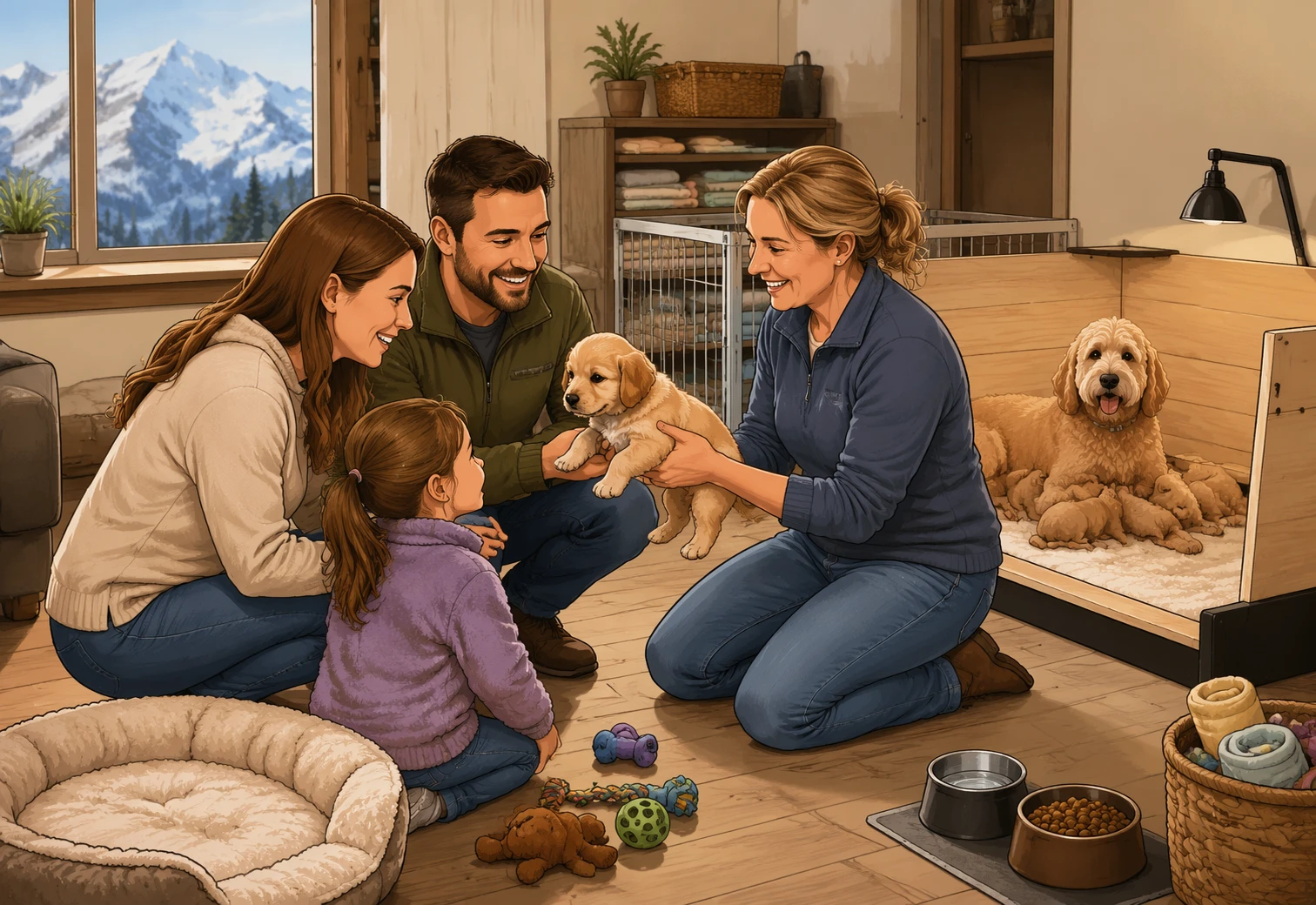
Third-party resale is riskier because details get blurry fast. One person advertises, another transports, and a different source bred the puppy. That makes it harder to confirm health history, living conditions, and who is truly responsible if something feels off. Colorado PACFA also requires licensed facilities to keep acquisition and transfer records, including source details and transfer dates, under state recordkeeping rules.
If the seller says, “We partner with many breeders,” ask who bred this exact puppy. If they dodge, walk away.
The first questions should be simple and direct:
- Are you the original breeder of this puppy?
- If not, are you a licensed rescue, and what is your role?
- Can you name the breeder, location, and litter birth date?
- Can I review parent information and pickup records before I place a deposit?
- Has this puppy been transferred between homes, handlers, or facilities?
A trustworthy answer is short, specific, and easy to verify.
| Seller type | Usually safer for pickup? | What you should receive first |
|---|---|---|
| Original breeder | Yes | Parent details, litter info, pickup terms |
| Licensed rescue partner | Yes, if documented | Intake history, foster or shelter records |
| Broker or reseller | No | Often vague or incomplete source details |
Also Read: Family-Raised Puppy Contracts: Key Terms to Review First
2. Review the Pickup Location Before You Commit
Why an on-site pickup is usually the clearest option
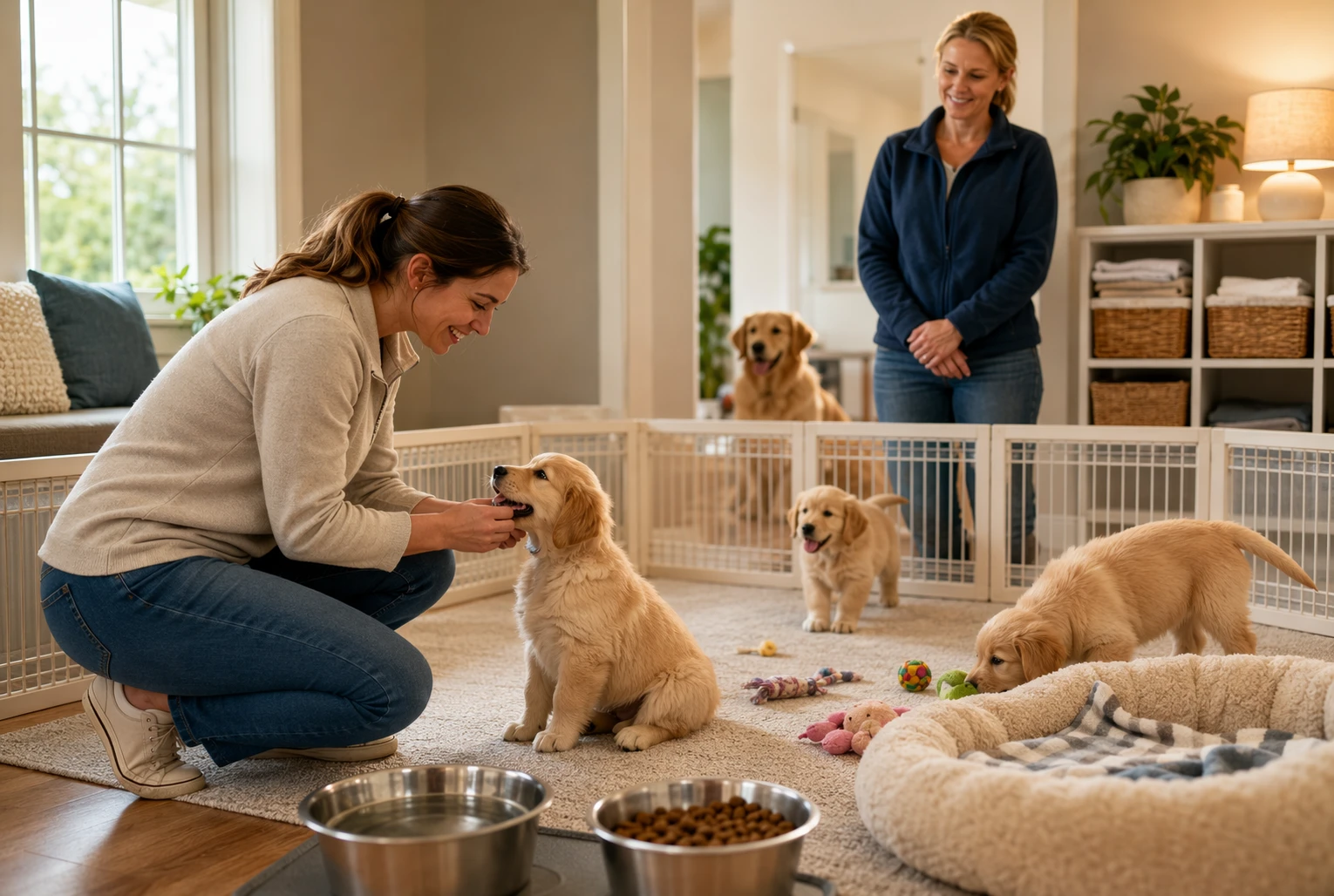
An on-site pickup gives you the best chance to verify what is real. You can see where the puppy lives, how clean the space is, and whether the dogs look calm, social, and well handled. Colorado’s PACFA rules define a facility broadly and require licensed facilities to meet care standards under state oversight, which helps give buyers a clearer trail to check through Colorado PACFA rules.
Ask to observe a few basics before you hand over final payment:
- Where the puppy rests and plays
- How the breeder handles the litter
- Whether water, bedding, and temperature look right
- Whether parent dogs are available to meet, if appropriate
A real home or facility does not need to look fancy. It does need to look safe, clean, and consistent.
If a breeder like Sage Puppies offers pickup, the strongest version is simple: you know the address, the plan, and who raised the puppy.
When a public meeting place can be acceptable
A public pickup is not always a red flag. It can make sense when weather, distance, airport timing, or safety logistics make a home visit hard. In Colorado, recent legislative guidance also tightened rules around pet transfers and aimed to limit risky public-space selling by unlicensed actors, while still allowing transfers by the original breeder in lawful situations Colorado pet transfer law.
A public handoff is more acceptable when the breeder has already given you:
- A full name and real business location
- Health records and pickup instructions in advance
- Video proof of the puppy in its home setting
- A clear reason for not doing the handoff at the breeding location
Use this quick check:
| Acceptable public pickup sign | Why it helps |
|---|---|
| Daytime meeting | Safer and easier to verify |
| Prior video call | Confirms puppy and environment |
| Full paperwork ready | Shows planning and transparency |
| Breeder answers direct questions | Reduces surprise and pressure |
Pickup signs that deserve extra caution
Some pickup setups deserve a hard pause, even if the puppy looks cute.
Watch for these signs:
- The seller wants to meet in a parking lot with no prior video call
- They refuse to share the exact town or breeding address
- They offer multiple breeds and multiple litters with vague answers
- They push same-day payment before you review records
- They say, “I can’t let buyers see where puppies are raised,” with no solid reason
- The puppy arrives with a handler who did not raise it and cannot answer basic questions
If the pickup feels rushed, hidden, or interchangeable, treat that as useful information.
A good breeder makes the transfer feel organized, calm, and traceable. A bad seller makes it feel like a quick exchange you are not supposed to question.
Also Read: 10 Things to Know Before Buying Puppies for Sale in Idaho – Sage Puppies
3. Verify Health Records and Contract Details Before the Handoff
Ask for the paperwork before you leave home. If a breeder says, “We’ll go over it at pickup,” slow down. In Colorado, PACFA is the state licensing and inspection program for many pet animal facilities, and its rules require recordkeeping and safe transfer standards through the Colorado Department of Agriculture PACFA program.
The core records to request in advance
Request clear copies, not phone photos sent at the last minute. You want enough time to read names, dates, and signatures.
Ask for:
- The puppy’s vet exam record
- Vaccination and deworming dates
- Microchip details, if already placed
- Parent health testing summaries, if promised
- Feeding instructions and current food
- A copy of the signed sales contract
- Pickup identity details, including who is handing off the puppy
Colorado rules also require key transfer records, including date of birth and the recipient’s signature in many licensed-facility situations under Colorado recordkeeping rules.
If the breeder will not send records until after payment clears or until you are in the parking lot, treat that as a trust problem.
| Record | What to check | Red flag |
|---|---|---|
| Vet record | Puppy name, date, clinic info | No clinic name or unreadable notes |
| Vaccine log | Dates match puppy age | Too many shots too early or no dates |
| Deworming log | Product and date listed | “Dewormed” with no details |
| Contract | Health terms and pickup terms | Vague promises only |
What a strong puppy contract should answer
A good contract should answer the awkward questions up front. If it does not, you carry the risk.
Look for:
- Who owns the puppy until handoff
- What happens if the puppy gets sick before pickup
- The exact health guarantee window
- What proof your vet must provide
- Whether refund, replacement, or credit applies
- Whether deposits are refundable
- Spay-neuter or breeding restrictions, if any
Read for limits, not just promises. A “health guarantee” can sound great and still leave you with almost no real remedy.
How to judge whether the health discussion is credible
Credible breeders sound calm and specific. They do not dodge basic questions. They can explain what they tested, what they did not test, and why.
Use this quick check:
- Ask the breeder to walk through the records live
- Match vaccine dates to the puppy’s age
- Confirm the puppy is at least 8 weeks old before transfer
- Ask which vet clinic saw the litter
- Check that the contract matches the verbal promises
Weak sellers lean on pressure:
- “This is standard, don’t worry.”
- “No one else asks for that.”
- “You’ll lose the puppy if you wait.”
If a program like Sage Puppies or any other breeder welcomes record review before pickup, that usually signals a safer, more transparent handoff.
4. Ask the Right Questions During the Final Pickup Conversation
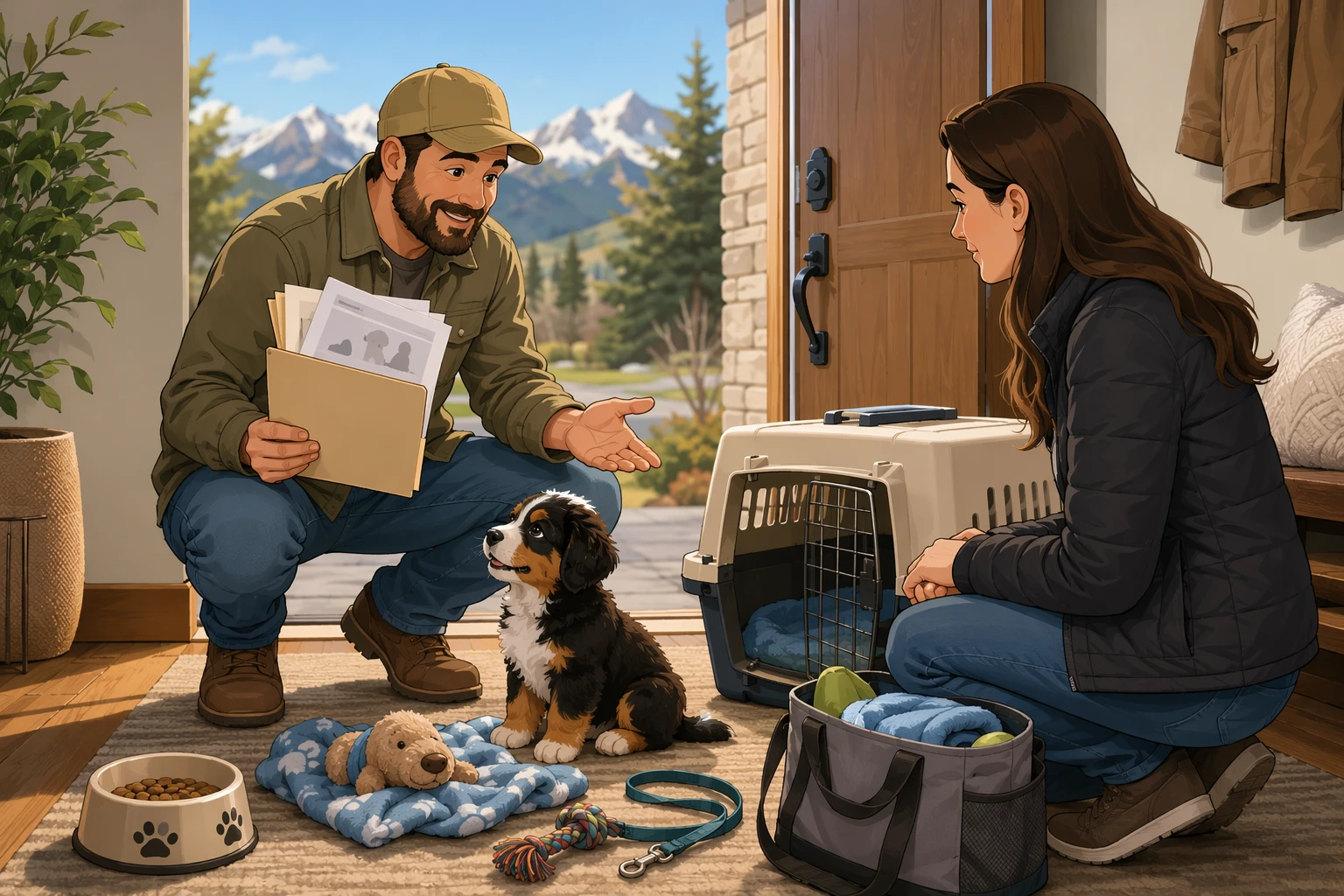
This last talk matters. It tells you if the breeder knows the puppy as an individual or is just closing a sale. In Colorado, licensed facilities must keep transfer records, and dogs cannot be transferred under eight weeks, so your questions should test both care and paperwork Colorado recordkeeping rules.
Questions about temperament and daily life
Ask what the puppy is like today, not what the breeder hopes it becomes.
- “How does this puppy act after a nap, during play, and when things get quiet?”
- “What startles them?”
- “What helps them settle?”
- “How do they do with gentle handling, kids, or household noise?”
- “Have you seen any guarding, fear, or rough play?”
Good breeders answer with real examples. They should know sleep patterns, energy level, and how the puppy handles new things.
If the answer sounds vague, copied, or too perfect, slow down.
A useful final question is: “Which home fits this puppy best, and which home does not?” That shows whether the breeder matches puppies on temperament, not just color or size.
Questions about feeding, transition, and first-week support
Your goal is a smooth first seven days. Ask for the exact routine.
- “What food is the puppy eating right now?”
- “How much, how often, and at what times?”
- “What stools, appetite, and energy looked normal this week?”
- “What should I expect the first night?”
- “When should I call you versus my vet?”
If the puppy came from outside Colorado into a licensed facility, ask to see the health paperwork. Colorado requires a valid Certificate of Veterinary Inspection for many incoming dogs, and the inspection must be done in person by an accredited veterinarian Colorado CVI standards.
- Ask for:
- feeding instructions
- vaccine and deworming dates
- comfort items or scent blanket
- pickup day contact plan
Questions that reveal whether the breeder is relationship-focused
Ask questions that make a breeder show their standards.
- “If this puppy struggles to adjust, how do you help families?”
- “Do you want updates after pickup?”
- “If my situation changes later, what do you want me to do first?”
- “What kind of homes do you turn down?”
Strong breeders welcome these questions. They care where the puppy goes and what happens next. Programs like Sage Puppies often stand out here because they focus on fit, transition, and clear follow-up, not just handoff logistics.
The best final pickup conversation feels calm, specific, and two-sided.
If you feel rushed, brushed off, or pushed past your questions, treat that as useful information.
Also Read: 10 Small Breed Puppies That Stay Friendly and Easy Going – Sage Puppies
5. Choose the Pickup Option That Fits Your Family Best
If you can manage it, Colorado pickup is usually the best choice for peace of mind. You get to see the handoff, ask final questions, and head home on your own schedule. It also gives you one more chance to confirm records, puppy condition, and travel setup in person. Colorado families often prefer this because the state regulates many pet animal facilities under PACFA, including breeders and transporters through licensing and inspection rules. That does not replace your own vetting, but it gives you a stronger baseline.
Colorado pickup makes the most sense if:
- You live within a reasonable drive
- You want a calm, direct transition home
- You have kids and want the first meeting to stay low-stress
- You want to verify paperwork before leaving
Read the parent guide first if you still need help comparing safe Colorado pickup paths.
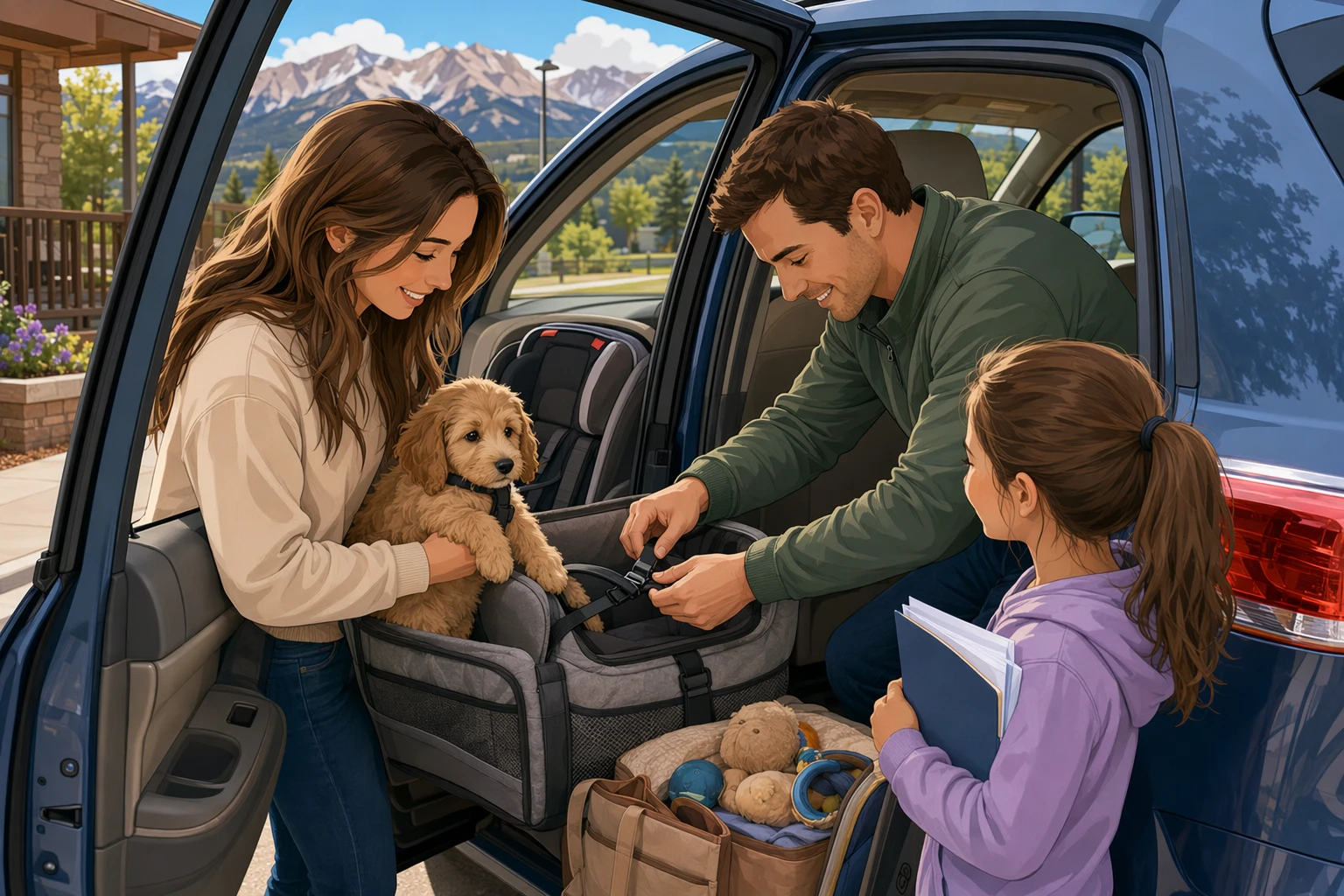
Coordinated delivery may fit better if distance, weather, or family logistics make a same-day pickup hard. This is common for buyers outside Colorado or for families with tight work and school schedules. It can also reduce stress if winter roads, mountain driving, or long return trips would make the puppy’s first day harder. Colorado rules also cover pet transporters as a PACFA license category, which helps frame what a legitimate transport setup should look like under state licensing standards.
Delivery may be the better fit if:
- Your drive would be long enough to tire the puppy
- You cannot safely travel in current conditions
- You need a planned handoff closer to home
- The breeder clearly explains who handles transport and how
Use this quick comparison:
| Option | Best for | Main watchout |
|---|---|---|
| In-person pickup | Nearby Colorado families | Long same-day drive home |
| Coordinated delivery | Out-of-state or time-tight families | Weak transport details |
| Meet partway | Families in neighboring states | Confusing handoff plans |
Keep the choice simple. Pick the option that gives you the clearest chain of care from breeder to your home.
- Confirm who handles the puppy at each step.
- Match the plan to your drive time and family schedule.
- Ask for records before travel day.
- Choose the option with fewer handoffs, not more.
If a pickup or delivery plan feels vague, keep looking. Clear answers are part of a safe puppy process.
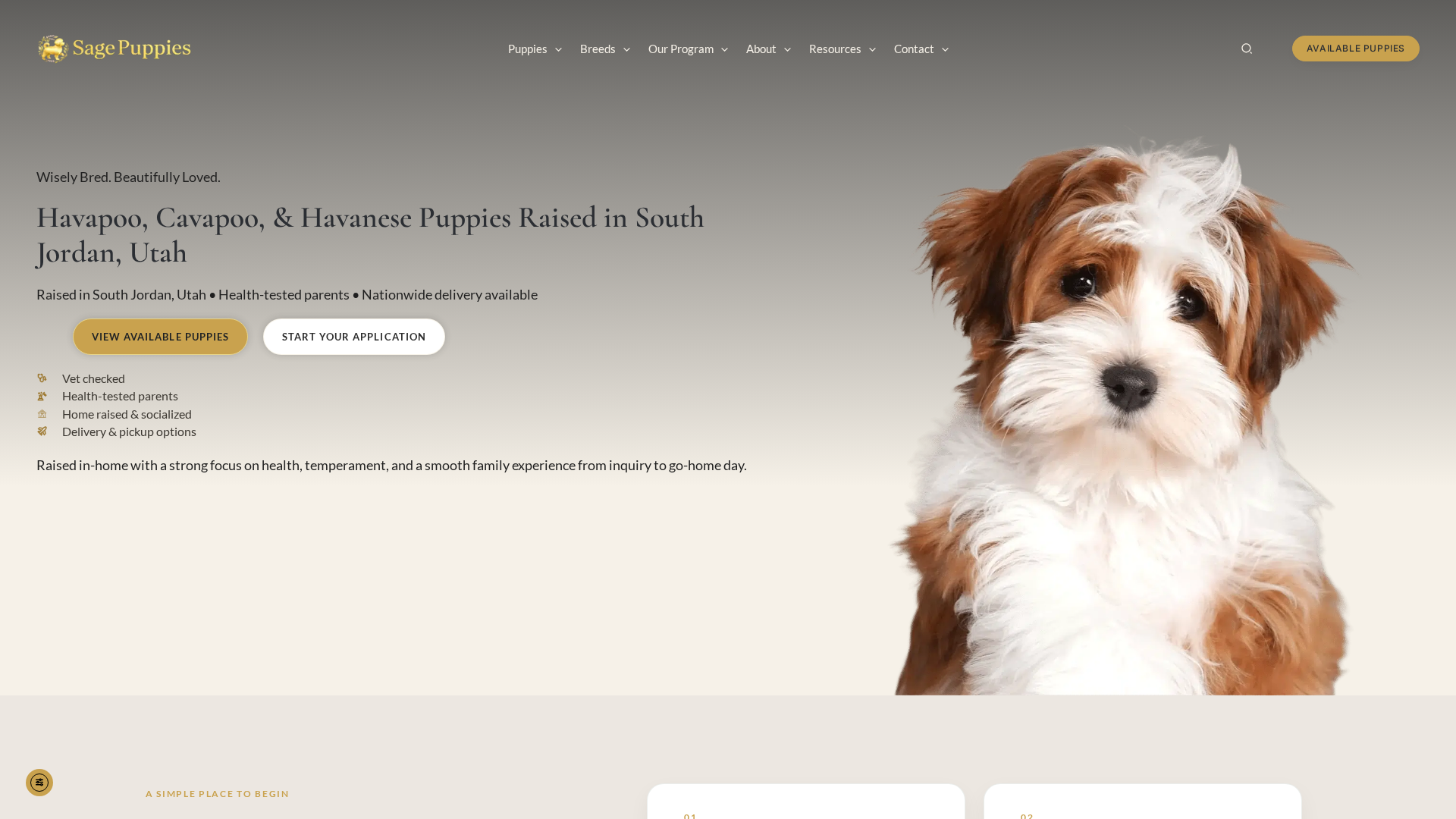
If you want a safer, clearer pickup plan, start with a breeder who makes every step easy to verify. Sage Puppies helps qualified families with health-tested, home-raised Havanese, Havapoo, and Cavapoo puppies, plus transparent pickup and delivery options. View available puppies, review the process, and apply when you are ready.
Frequently Asked Questions
Q1: What are the safest options for purchasing puppies in Colorado?
The safest option is pickup from a breeder’s home or approved meeting process after you confirm identity, health records, and parent information. Avoid cash-only parking lot handoffs. Ask for clear pickup terms, recent puppy photos, and a signed agreement before travel.
Q2: How can I verify the health and ethical standards of Colorado puppy sellers?
Ask for health testing on the parents, vaccine and deworming records, and details on how puppies are raised. Good sellers answer direct questions well. If a program like Sage Puppies shares family-raised care and process details clearly, that is a strong sign.
Q3: What questions should I ask when buying a puppy from Colorado breeders?
Ask who raised the puppy, what socialization started, what food the puppy eats, and what support comes after pickup. Also ask about pickup timing, refund terms, and any red flags in temperament, litter health, or recent vet notes.
Q4: Is it safer to meet at the breeder’s home or a public place?
A home pickup is usually better because you can confirm the setting and how puppies are kept. A public meetup can work for safety logistics, but only after records, identity, and pickup details are confirmed in writing.
Q5: What should I bring on pickup day in Colorado?
Bring a crate or carrier, towel, water, paper towels, leash if age fits, and the seller’s contact info. Confirm the puppy’s records, food sample, and pickup checklist before leaving so the ride home stays calm and simple.
Conclusion
A safe Colorado puppy pickup comes down to proof, planning, and patience. You want a breeder who welcomes questions, shares records, explains the handoff clearly, and never rushes you. Colorado’s PACFA rules set licensing and care standards for regulated pet animal facilities, and the state kept that system in place through 2034 under HB26-1183. The rules also require licensure, inspection, and key facility details for covered operations under Colorado’s PACFA regulations.
The big takeaway is simple:
- Verify the seller
- Confirm the pickup process
- Review health and identity records
- Walk away from pressure or gaps
That is how qualified families protect both their puppy and their peace of mind.