Quick Summary: Trustworthy puppy listings in Texas clearly show breeder details, health records, and specific puppy info. They avoid pressure tactics, require proof before payment, and offer transparent pickup or delivery options. Scam listings often hide key facts, use fake photos, and push for quick payments without verification. Buyers should verify breeder licensing, ask for live videos, and review health documentation to avoid scams and find honest sellers like Sage Puppies.
A trustworthy Texas puppy listing should help you check facts, not just admire photos. If you are looking at a Havanese, Havapoo, or Cavapoo, the listing should show real breeder names, clear puppy details, and simple proof you can verify before you send any deposit.
That is the problem this guide solves. Many listings look polished but hide key facts, rush buyers, or make it hard to confirm who is actually raising the puppy. First-time families often do not know what should appear in a safe, honest listing and what should make them pause.
This article gives you a calm way to judge a listing fast. You will learn which trust signals matter most, how to spot gaps in breeder info, what documents should be easy to explain, and how Texas buyers can verify a seller before moving forward. It also connects back to the main Puppies for Sale in Texas guide so you can compare any listing against the full buyer checklist.
We focus on small-breed puppy standards, ethical breeder signals, and practical buyer questions that protect families from scams and poor breeding practices.
What a Trustworthy Texas Puppy Listing Should Show Up Front
A good listing should help you verify the seller before you fall in love with the puppy. In Texas, that means real names, real contact details, and enough facts to check whether the breeder is operating like a professional.
Clear breeder identity and reachable contact details
Start with the seller, not the puppy photo. A trustworthy Texas listing should show:
- The breeder or business name
- A real phone number
- A working email
- A clear city or region in Texas
- A website or social page that matches the same name
If the breeder falls under Texas licensed breeder rules, you should expect to see licensing details. Under the Texas Dog or Cat Breeders Act, a breeder is generally covered if they have five or more adult intact female animals and breed for sale, according to the Texas breeder law summary. Texas also requires pre-license inspection and ongoing inspections for licensed facilities, as shown by TDLR inspection rules.
| Good sign | Why it matters |
|---|---|
| Full breeder name | Lets you verify who you are dealing with |
| Texas location | Helps confirm where the puppy is raised |
| Phone and email | Makes direct contact easy |
| License info when applicable | Shows the breeder is not hiding basic facts |
If a listing gives only a first name, a text-only number, or “message for details,” slow down.
Real puppy specifics, not vague marketing language
The puppy part of the listing should be concrete. You want facts you can check, not soft phrases like perfect family pet or rare teddy bear look.
Look for these details up front:
- Breed or mix
- Date of birth
- Sex
- Price
- Current age
- Photos of that exact puppy
- Parent information
- Vaccination or vet record status
- Pickup or delivery location
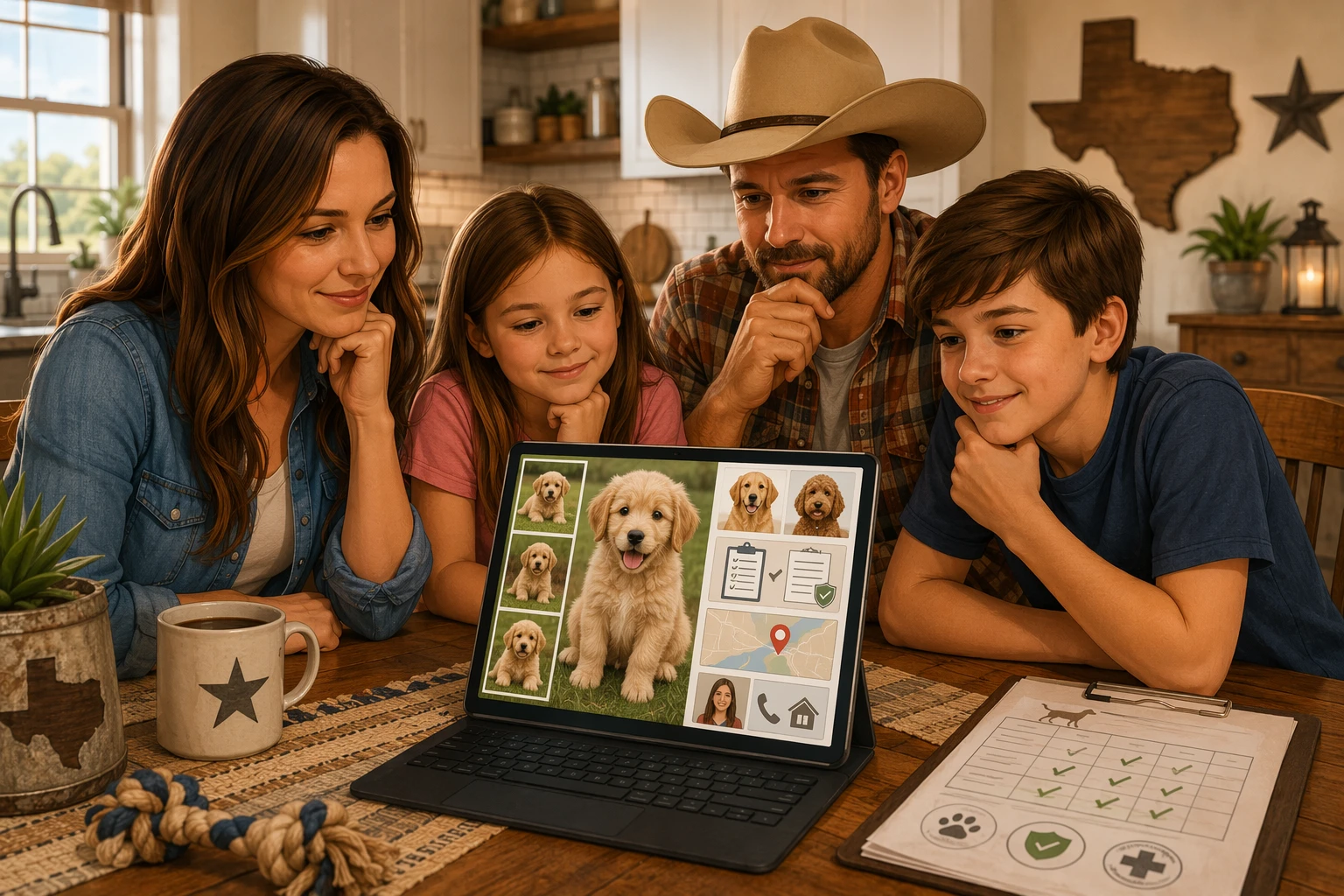
A reliable listing also explains what is known and what is not. For example, it should not promise final adult size, exact coat outcome, or perfect temperament.
Stock photos, repeated ad copy, and missing health details are common scam clues.
A clear next step that does not feel rushed
A trustworthy listing tells you how to move forward without pressure. That usually includes:
- How to ask questions
- Whether an application is required
- Deposit terms
- Pickup or delivery options
- What records you receive at go-home
Good breeders screen buyers too. That is a plus, not a hassle.
Avoid listings that push you to:
- Send money right away
- Pay by gift card, wire, or unsafe app
- Decide before a call or video chat
- Accept surprise shipping fees later
A calm process is usually the safer one. Sage Puppies, for example, fits this better when it clearly explains availability, application steps, and delivery or pickup before asking for commitment.
The Proof You Should Expect Before Sending a Deposit
Ask for proof before you send money. A good breeder will expect that. A bad seller will dodge, rush, or send blurry screenshots.
Health records and veterinary proof
Start with the puppy’s health file. You should see clear records, not promises in a text message.
Expect:
- A dated vaccine record with the puppy’s age listed
- Deworming dates and product names
- A vet exam note or signed health check
- Any microchip details, if already placed
- A sample health guarantee or purchase contract
If shipping or ground transport is involved, ask what health paperwork travels with the puppy. USDA rules require licensed dealers to keep detailed records on dogs and cats, including identity and movement records under 9 CFR 2.75 recordkeeping rules.
If a seller says, “The vet papers come after the deposit,” pause right there.
You do not need every page on day one, but you should get enough proof to confirm the puppy has had real care and that records match the listing.
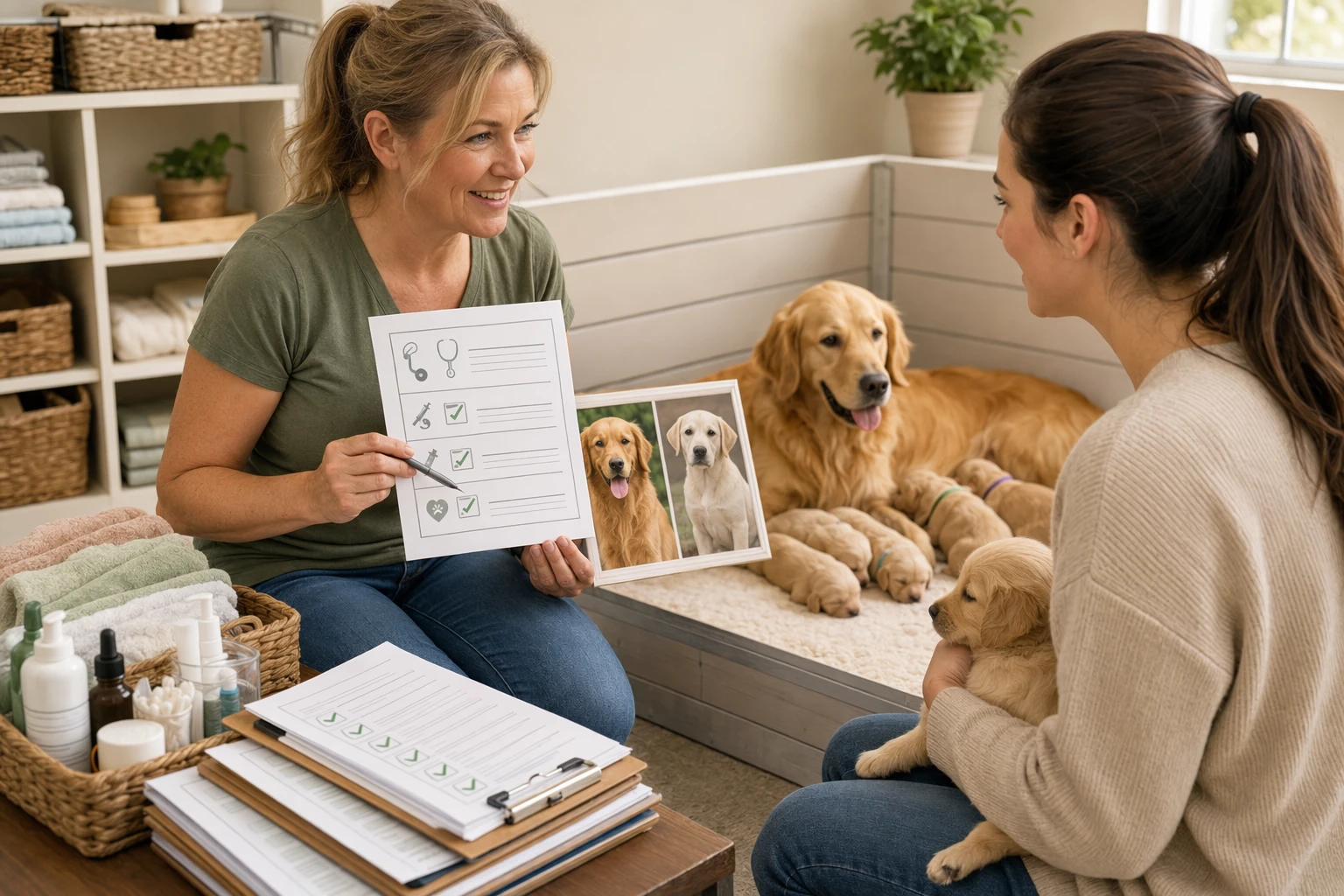
Parent information and breeding transparency
Next, ask about the parents. This is where honest breeders stand out fast.
You should get:
- The dam and sire names or call names
- Recent photos or video of each parent
- Basic health testing details relevant to the breed mix
- The litter’s birth date and where it was raised
- A clear answer on who owns the parents
If the breeder is USDA licensed, you can check whether they appear in the USDA Animal Care Public Search Tool. APHIS also posts inspection records for licensed entities. That does not replace your own review, but it helps confirm the operation is real.
| Proof item | What it tells you | Red flag |
|---|---|---|
| Parent photos or video | The breeder knows and has access to the dogs | Only stock-style images |
| Health testing summary | The breeder plans pairings, not random litters | Vague claim with no detail |
| Litter details | The puppy was actually raised there | Dates or stories keep changing |
References, reviews, and proof of real-world experience
Last, ask for proof that other families actually got puppies from this breeder.
Look for:
- Recent buyer reviews with details, not one-line praise
- Photo updates from past families
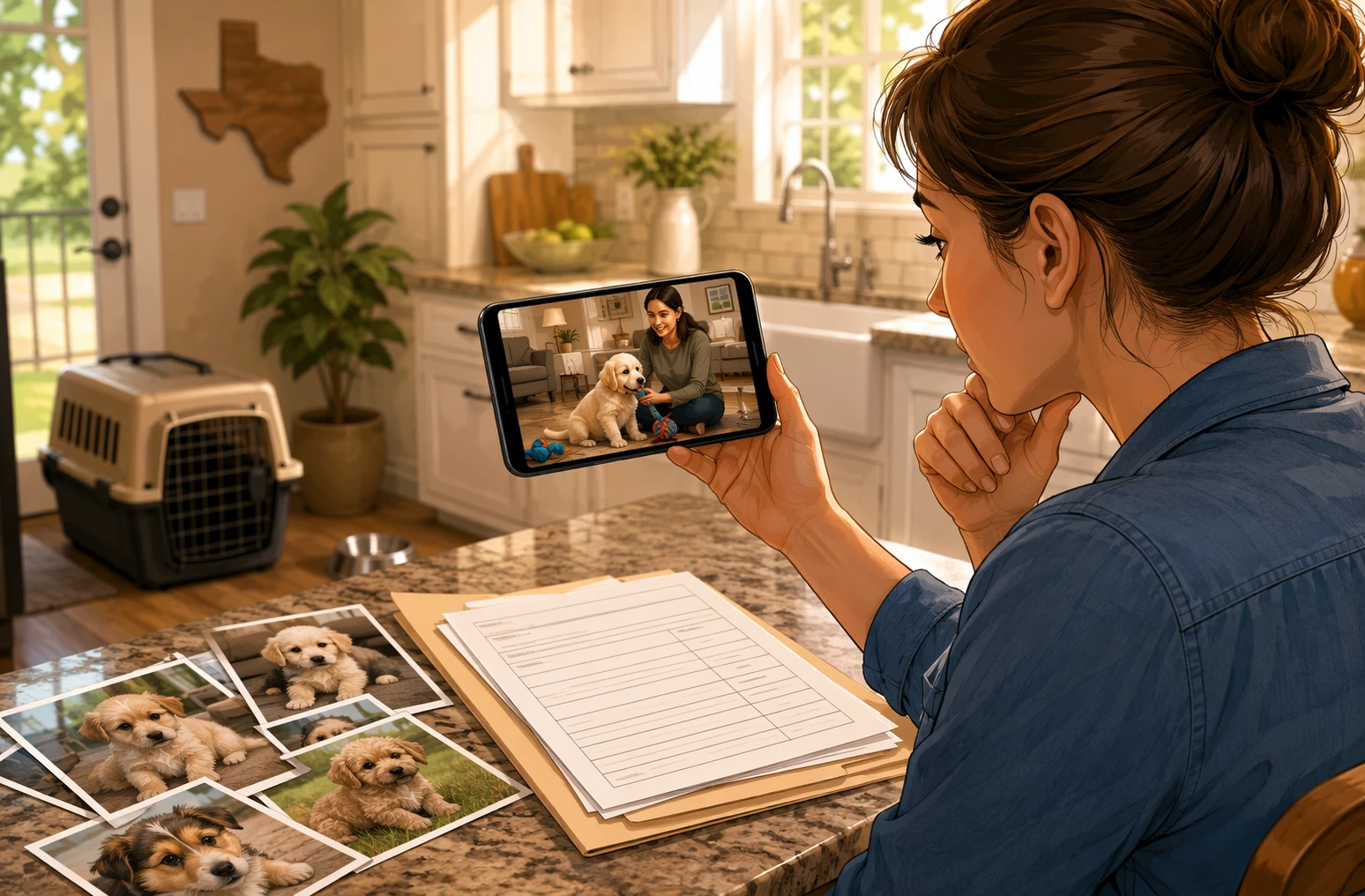
- A live video call with the puppy
- A phone call, not just DMs
- Clear pickup or delivery steps in writing
Reviews matter most when they match the breeder’s process, photos, and paperwork.
A trustworthy breeder, including boutique programs like Sage Puppies, should be calm under questions. If you feel rushed to lock in a deposit, walk away.
Also Read: 10 Adorable Havapoo Colors You Need to See (2026 Guide) – Sage Puppies
How to Tell a Scam Listing from a Real One
A real puppy listing holds up when you test it. A scam listing falls apart fast. Start with three checks: how the seller talks to you, whether the listing details stay consistent, and how they ask for money. For the bigger buyer framework, go back to the parent guide on Puppies for Sale in Texas: What Makes a Listing Trustworthy.
Communication that avoids the phone or video
Scam sellers love text, email, and direct messages. That keeps them vague and hard to verify. The FTC says a legit seller should be open to an in-person or video meeting, and refusal is a major warning sign according to the FTC.
Watch for these red flags:
- They dodge a phone call more than once
- They claim the camera is broken or the puppy is “already with the shipper”
- They answer your questions, but never answer them directly
- They push for a deposit before you see the puppy live
A real breeder usually does the opposite:
- Takes a call
- Shows the puppy on live video
- Shows the home or whelping area
- Asks you questions too
If the seller will not do a live video call with the puppy and the mother, assume the listing is unsafe until proven otherwise.
Photos, wording, and location clues that do not add up
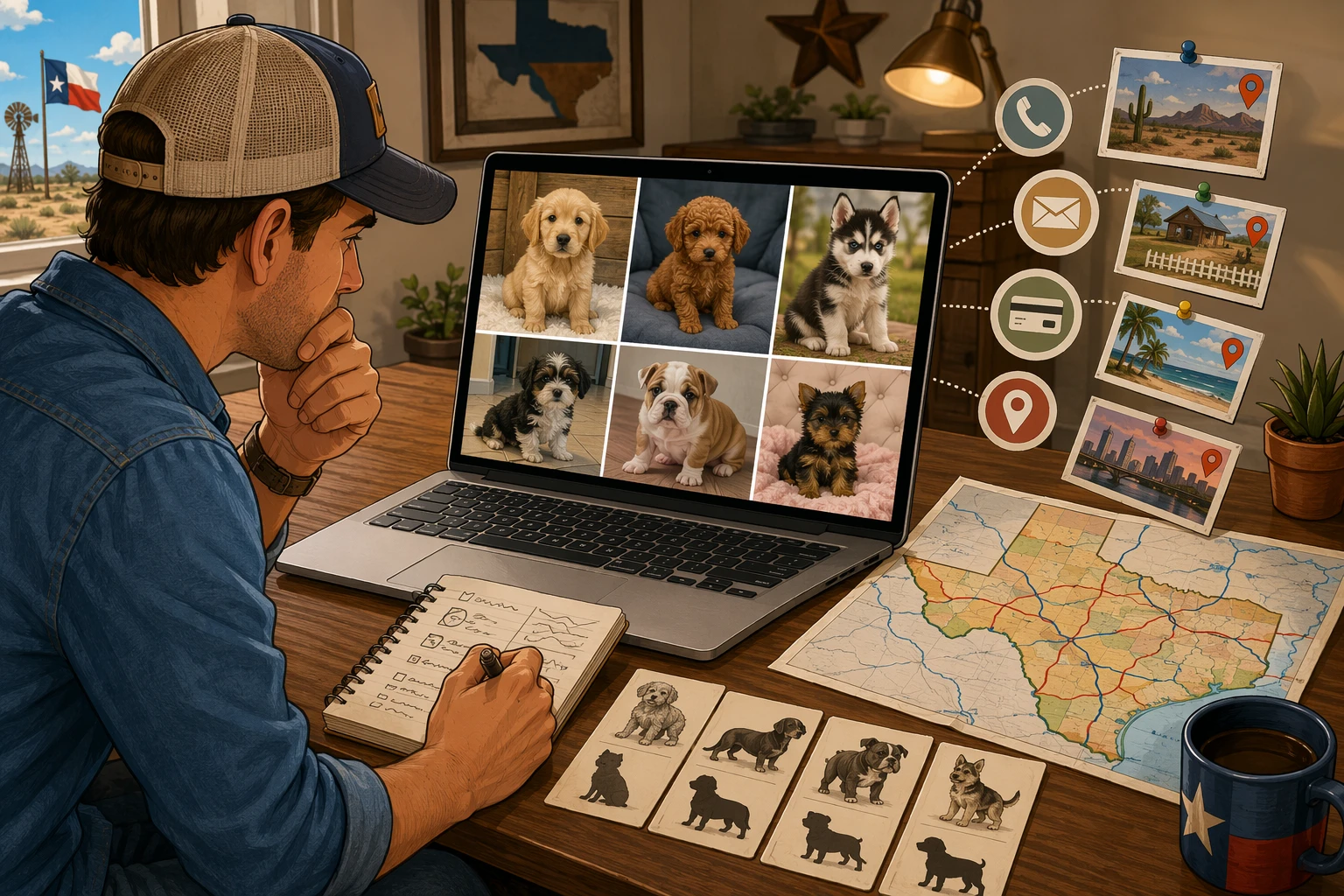
Most fake listings look polished at first. The trouble shows up in the small stuff.
Check the listing for:
- Photos that look too perfect, staged, or unrelated to each other
- Repeated wording you can search and find on other sites
- A Texas location in the headline, but a different area code, bank name, or email signature
- Breed details that do not match the puppy in the photos
Use this quick screen:
| Clue | Real listing | Scam listing |
|---|---|---|
| Photos | Same puppy across ages and angles | Mixed puppies or copied images |
| Wording | Specific details about parents and timing | Generic lines repeated across ads |
| Location | City, pickup terms, clear contact info | Vague Texas claim, shifting story |
The BBB warns that fake pet sellers often copy photos, clone real websites, and refuse meaningful proof, including a live view of the animal in its pet scam guidance.
Payment pressure and shipping bait
This is where many scams become obvious. The seller asks for fast payment, then keeps adding new fees.
Common lines include:
- “Send the deposit now so I can hold her”
- “The puppy is free, just pay shipping”
- “You need crate insurance, airport clearance, or climate control fees”
Use this rule: unexpected fees after your first payment mean stop.
Safer buyers do this instead:
- Ask for the full price in writing
- Confirm pickup or delivery terms before paying
- Avoid gift cards, wire transfers, crypto, and person-to-person cash apps
- Keep screenshots, invoices, and messages
The FTC says scammers often demand payment methods that are hard to reverse, like gift cards, wire transfers, crypto, or payment apps.
If you want a calm benchmark, ethical programs like Sage Puppies make the process easy to verify because pickup, delivery, records, and next steps are discussed clearly before money changes hands.
Texas-Specific Checks That Add Confidence
Texas gives you a few concrete ways to test whether a listing is real and responsible. For the full trust framework, go back to the parent guide on trustworthy Texas puppy listings.
Ask whether the breeder is licensed when licensing applies
Start with a direct question: Are you licensed by TDLR if your setup requires it? In Texas, breeders who possess five or more adult intact female dogs or cats and breed them for sale generally must hold a license through the Texas Department of Licensing and Regulation, according to the TDLR breeder licensing page.
Use this as a filter:
- Ask for the license number
- Ask where it appears in their ads or contract
- Ask if buyers can verify it publicly
If the seller says licensing does not apply, ask why. Some breeders may be exempt, but a clear answer matters.
A vague response like “we do not need one” is not enough. A trustworthy seller can explain their status without getting defensive.
| What to ask | Good sign | Red flag |
|---|---|---|
| License number | Shares it fast | Avoids it |
| Why no license | Gives a specific reason | Changes the subject |
Use pickup or delivery details as a trust test
The handoff tells you a lot. A solid Texas seller gives clear details on where, how, and who handles transport.
Texas rules for licensed breeders include transport standards for crates, ventilation, and safety during travel under Texas transportation standards. You do not need to inspect every rule. You do need clear answers.
Ask:
- Can I pick up in person?
- Who delivers the puppy?
- What crate setup is used?
- What records come with the puppy?
Good listings explain pickup windows, delivery routes, and what happens if weather changes. Scam listings stay fuzzy until payment clears.
If a seller refuses video calls, avoids showing the puppy in its current setting, or pushes only same-day deposit links, slow down.
Check whether the seller matches the small-breed buyer experience you want
Small-breed families usually want more than a puppy. They want guidance, calm handling, and clean next steps.
Look for sellers who match that experience:
- They know Havanese, Havapoo, or Cavapoo temperament
- They talk about socialization, not just color
- They explain pickup or delivery without pressure
- They welcome thoughtful questions
This is where boutique programs can stand out. A program like Sage Puppies fits buyers who want a family-raised process, not a rushed marketplace feel.
The right seller should make you feel informed, not hurried.
Also Read: 10 Things to Know Before Buying Puppies for Sale in Idaho – Sage Puppies
Common Mistakes Buyers Make When Judging a Listing
Buyers often misread a puppy listing because emotion takes over before proof does.
- Trusting cute photos more than proof
A polished listing can still be fake. The BBB warns that scammers use stolen photos and flashy websites, so pictures alone mean very little BBB Tip: Buying a puppy. Ask for dated videos, parent details, health records, and a real phone call before you believe the listing.
- Confusing speed with convenience
Fast replies, same-day deposits, and “delivery already arranged” can feel helpful. They often signal pressure. In Texas, BBB reports show scam sellers push rushed payments, then add shipping or crate fees after the first transfer Texas puppy scam surge report. Slow the process down.
If a seller resists a video visit or pickup discussion, walk away.
- Assuming a high price guarantees quality
A high price can reflect care, but it can also hide weak standards. Price does not prove health testing, socialization, or honest breeder support. Check what the fee includes:
- parent testing
- vet records
- contract terms
- pickup or delivery details
If you want a calmer way to judge puppy listings, start with a breeder that makes the details easy to verify. Sage Puppies helps families compare Havanese, Havapoo, and Cavapoo puppies with clear health-testing standards, home-raised care, and a transparent adoption process. Review available puppies, pricing, and delivery options, then apply when the fit feels right.
Frequently Asked Questions
Q1: How can I identify a trustworthy puppy listing in Texas?
Look for full breeder details, clear puppy photos, parent health testing, vaccine records, and a real phone conversation. A solid listing explains pickup or delivery, pricing, and timeline. If details stay vague or rushed, move on.
Q2: What red flags indicate a puppy scam when buying in Texas?
Big warning signs include stolen photos, very low prices, pressure to pay fast, and no video call. Be careful if the seller avoids questions about parents, health, or location. Gift cards, wire transfers, and weird shipping stories are major red flags.
Q3: Which online platforms are safest for buying small breed puppies in Texas?
The safest option is usually a breeder’s own website with clear policies, real reviews, and direct contact. Marketplace-style sites can work, but you still need to verify the breeder yourself. Compare transparency, not just cute photos.
Q4: Should I ask for a video call before reserving a puppy?
Yes. Ask to see the puppy live, the home setup, and how the breeder handles the litter. A real-time call helps confirm the puppy exists and shows whether the environment feels clean, calm, and family-raised.
Q5: What paperwork should a serious breeder provide?
Expect health records, vaccine and deworming history, a sales agreement, and parent testing details when available. Good breeders explain each document in plain language. Programs like Sage Puppies also make pickup or delivery steps clear before you commit.
Conclusion
A trustworthy Texas puppy listing should make you feel clear, not rushed. The best listings show the breeder’s real name, location, health details, contract terms, pickup or delivery process, and a puppy that matches the story being told.
Your safest path is simple:
- Verify the breeder
- Check the listing for gaps or pressure
- Ask for records and proof
- Confirm how payment, pickup, and support work
Texas gives buyers useful clues. Licensed breeders must include their license number in ads and contracts, keep records, and face inspection requirements under TDLR breeder rules. That makes vague or hidden listings harder to trust. Scam pressure is also real – BBB reporting in Texas showed more than 35 puppy scam reports and over $31,000 in losses during one recent winter period, according to Texas news coverage of the BBB warning.
Slow down, verify everything, and let transparency be the standard.