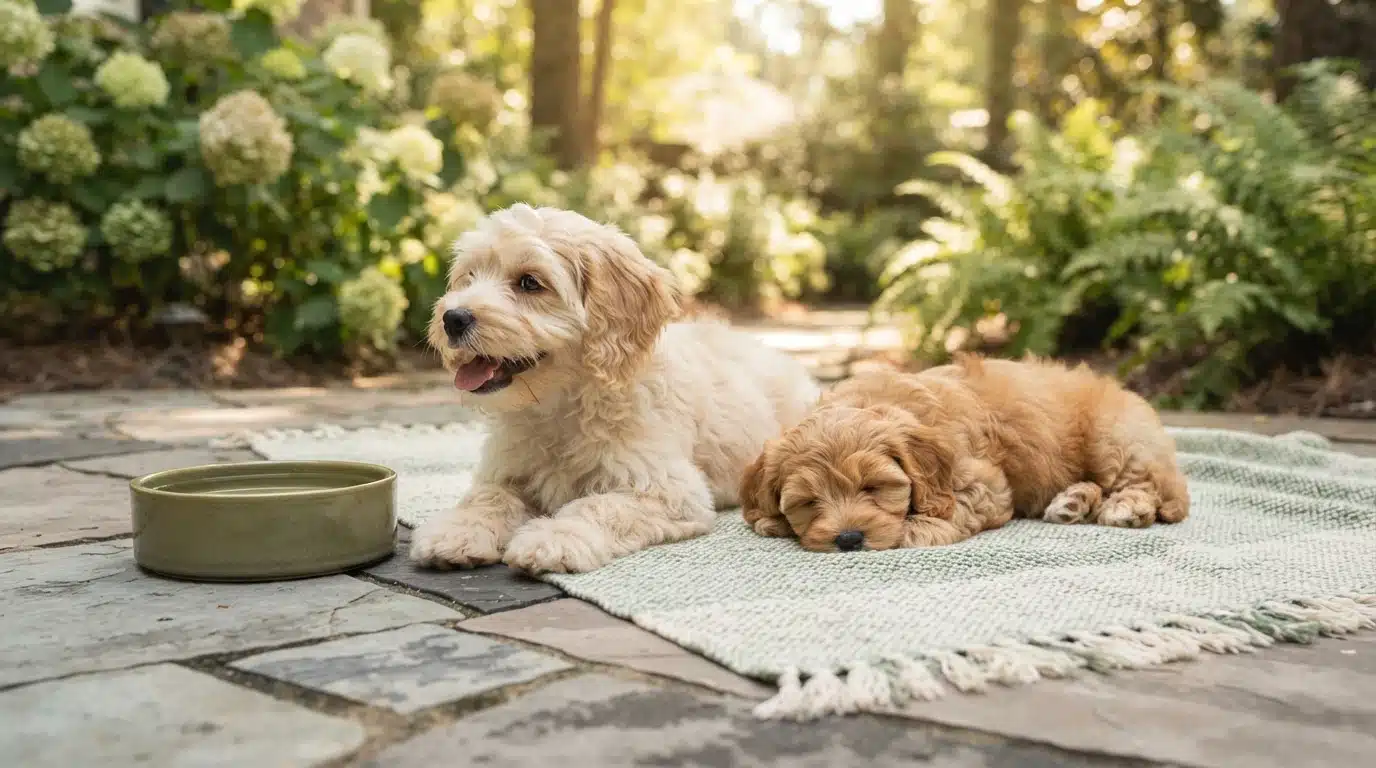
Quick Summary: Choosing safe winter gear for Maine puppies means prioritizing fit and function over brand, with a waterproof coat covering the belly, properly sized booties for road salt protection, and a growth-aware kit since puppies outgrow gear fast. The article stresses measuring neck, chest, and back before buying, introducing gear indoors weeks ahead, and ending walks at the first shiver, especially for small breeds like Havanese or Havapoo. For severe conditions like wind chills below 20°F, it’s safer to keep puppies inside, and paw balm plus a cleared path work well for quick potty breaks. Sage Puppies, a breeder mentioned in the guide, offers size notes from weigh-ins to help new owners, but the core advice applies to any small-breed puppy owner.
A South Jordan family moving to Maine gets a quick lesson on the first cold snap: a wet, salted sidewalk turns a five-minute potty break into a real safety decision. Small breeds like a Havanese, Havapoo, or Cavapoo feel the chill fast, and a cute sweater alone won’t cut it.
This guide covers what actually matters. We’ll walk through picking puppy winter coats, getting puppy sweater sizing right for a body that’s still growing, and puppy paw protection against ice, snow, and road salt. As a home-raised, health-tested breeder, we’ve seen how well these small breeds handle winter when their gear fits right. Here’s how to choose it.
1. Assess Your Maine Puppy Before Buying Winter Gear
Before you shop, look at your puppy. Small breeds like Havanese, Havapoo, and Cavapoo puppies lose body heat fast because they’re small, low to the ground, and still growing. A good assessment saves you money and keeps winter walks safe.
Why Puppies Feel Maine Cold More Quickly
Puppies can’t regulate body temperature the way adult dogs can, and they carry very little body fat. Cornell’s veterinary team lists young dogs and small breeds among those most at risk in cold weather. Bellies close to snowy ground lose heat even faster. That’s why puppy winter coats aren’t a luxury here – they’re basic equipment for a Maine winter, especially below 32°F.
Use Weather and Behavior Together
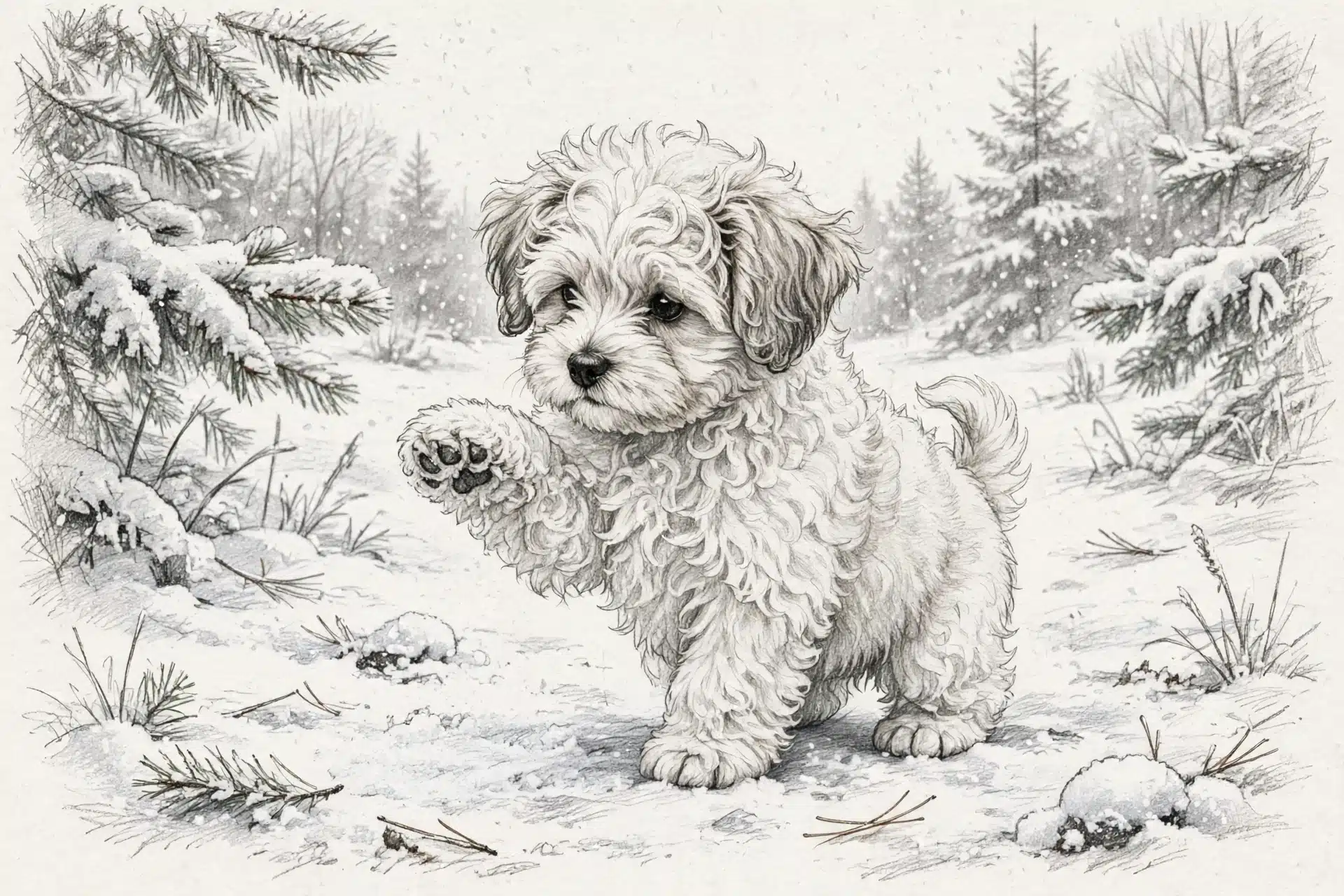
A thermometer alone won’t tell you when to bundle up. The AVMA recommends adjusting for wind chill, wet fur, and your pet’s own tolerance. Watch your puppy on short test outings and note the signals:
- Shivering, whining, or a tucked tail
- Lifting paws off frozen ground
- A hunched posture or refusal to walk
- Sudden anxiety on a walk that felt fine yesterday
If you see any of these, end the outing and warm up indoors. Your notes become your buying guide: coats, booties, or both.
Also Read: Havanese, Havapoo & Cavapoo Puppy Care Blog
2. Choose a Puppy Winter Coat That Protects Without Restricting Movement
Puppy winter coats are not an accessory for Havanese, Havapoo, or Cavapoo puppies in Maine. They are gear. Small breeds lose body heat fast, and vets point out that puppies regulate temperature even less reliably than healthy adults. The trick is finding a coat that warms your puppy without changing how he moves.
Sweater, Jacket, or Insulated Coat?
Match the layer to the day:
- Sweater: best for dry, calm days above freezing. Great for quick potty breaks.
- Lightweight jacket: good for windy or damp weather on shorter walks.
- Insulated, waterproof coat: your go-to for snow, sleet, and single-digit mornings.
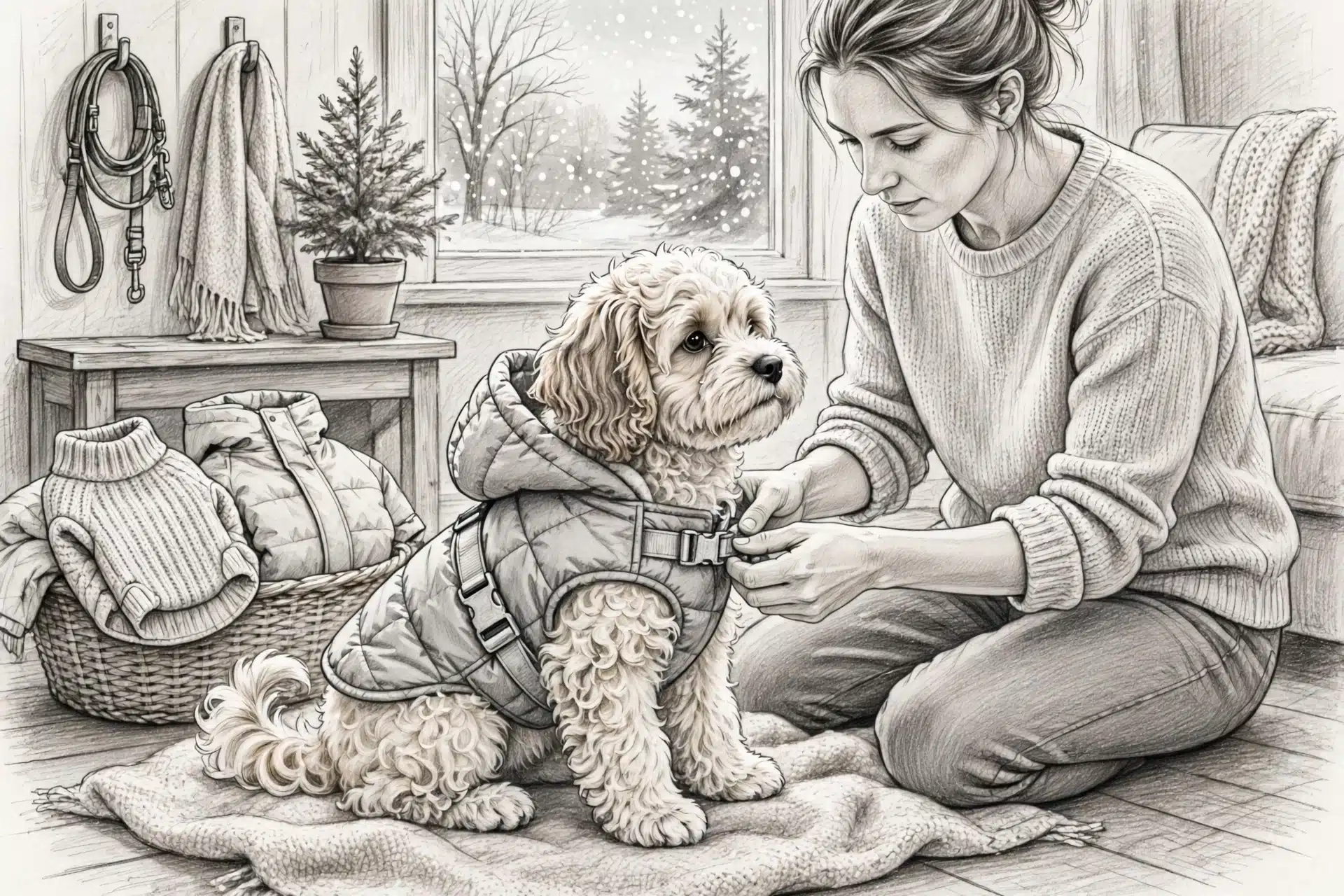
Vets at VCA Animal Hospitals recommend waterproof jackets for real winter weather and sweaters for added warmth indoors or in milder conditions. Avoid anything bulky. A coat that is too stiff or heavy can make walking hard, per PetMD.
Features That Matter for Maine Conditions
Maine winters punish cheap gear. Look for these:
- Waterproof outer shell so wet snow does not soak through.
- Belly coverage to protect against slush your puppy wades through.
- Harness port or leash opening so you never strap a harness over a coat.
- Reflective trim for dark January afternoons.
- Adjustable closures with no buttons or buckles a puppy could chew off.
Measure neck, chest, and back length before buying, then check the brand’s chart instead of the size label. Your puppy should sit, turn, and potty normally. If he scratches at it or freezes in place, size up or try a softer cut.
Also Read: Minnesota Puppies for Sale: Winter Paw Care for New Owners
3. Measure for Puppy Sweater Sizing Before You Order
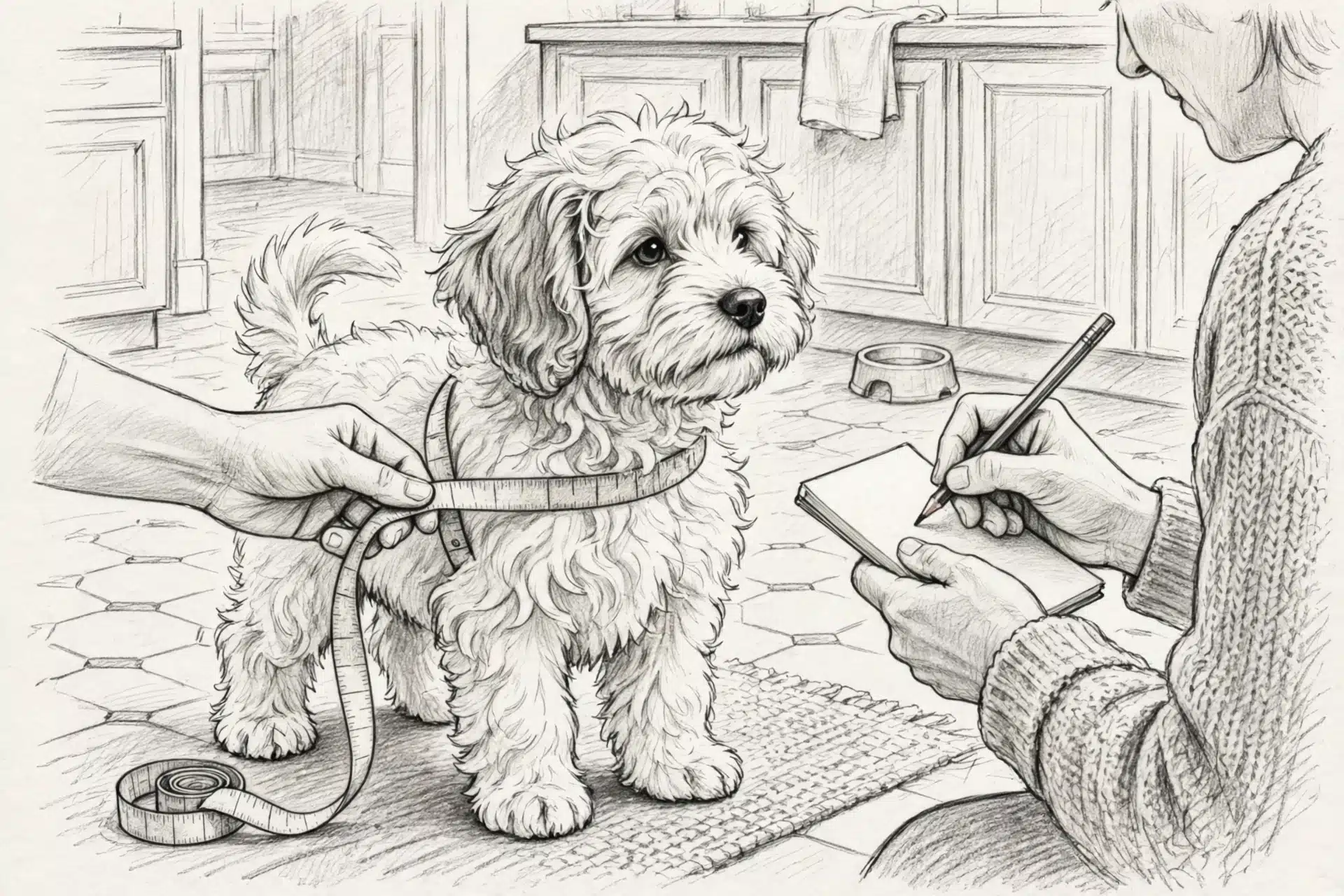
Guessing your puppy’s size by weight or breed is the fastest way to buy a sweater that gets twisted off in the driveway. A soft tape measure and five quiet minutes give you real numbers instead. Have your puppy stand on all fours, offer a treat, and follow the steps the AKC recommends for measuring dogs for gear.
Take Four Measurements
Write each number down in inches, and measure twice if your puppy wiggles.
- Back length: from the base of the neck where the collar sits, straight along the spine to the base of the tail. Do not include the tail.
- Chest girth: around the widest part of the ribcage, just behind the front legs. This is the number that decides the fit.
- Neck circumference: around the base of the neck where a collar rests.
- Belly length: from chest to groin, if the sweater has a full coverage panel.
Keep the tape snug but never tight. You should slip two fingers under it, the same rule Chewy’s fitting guide uses for every garment. Between sizes? Size up slightly, since Havanese and doodle puppies grow fast.
Check the Fit While Your Puppy Moves
Once the sweater arrives, put it on indoors and watch your puppy do normal things. Walk. Sit. Shake. Pounce on a toy. A good fit stays in place through all of it.
- You can fit two fingers under the neck and belly straps.
- The hem sits above the tail, so bathroom breaks stay clean.
- Leg openings do not rub or shorten the stride.
- The sweater does not twist sideways or bunch at the shoulders.
If your puppy freezes, scratches at it, or walks stiff-legged, the fit is wrong, not the puppy. Swap the size before you head into a Maine winter.
4. Select Puppy Paw Protection for Ice, Snow, and Road Salt
Puppy paws are small, soft, and close to the ground. In a Maine winter, that means direct contact with ice, sharp snow crust, and road salt. Rock salt can irritate paw pads, and if your puppy licks it off her feet afterward, it can cause vomiting and diarrhea, according to ASPCA poison control experts. Protection is not optional. It just comes in more than one form.
When Boots Are the Best Choice
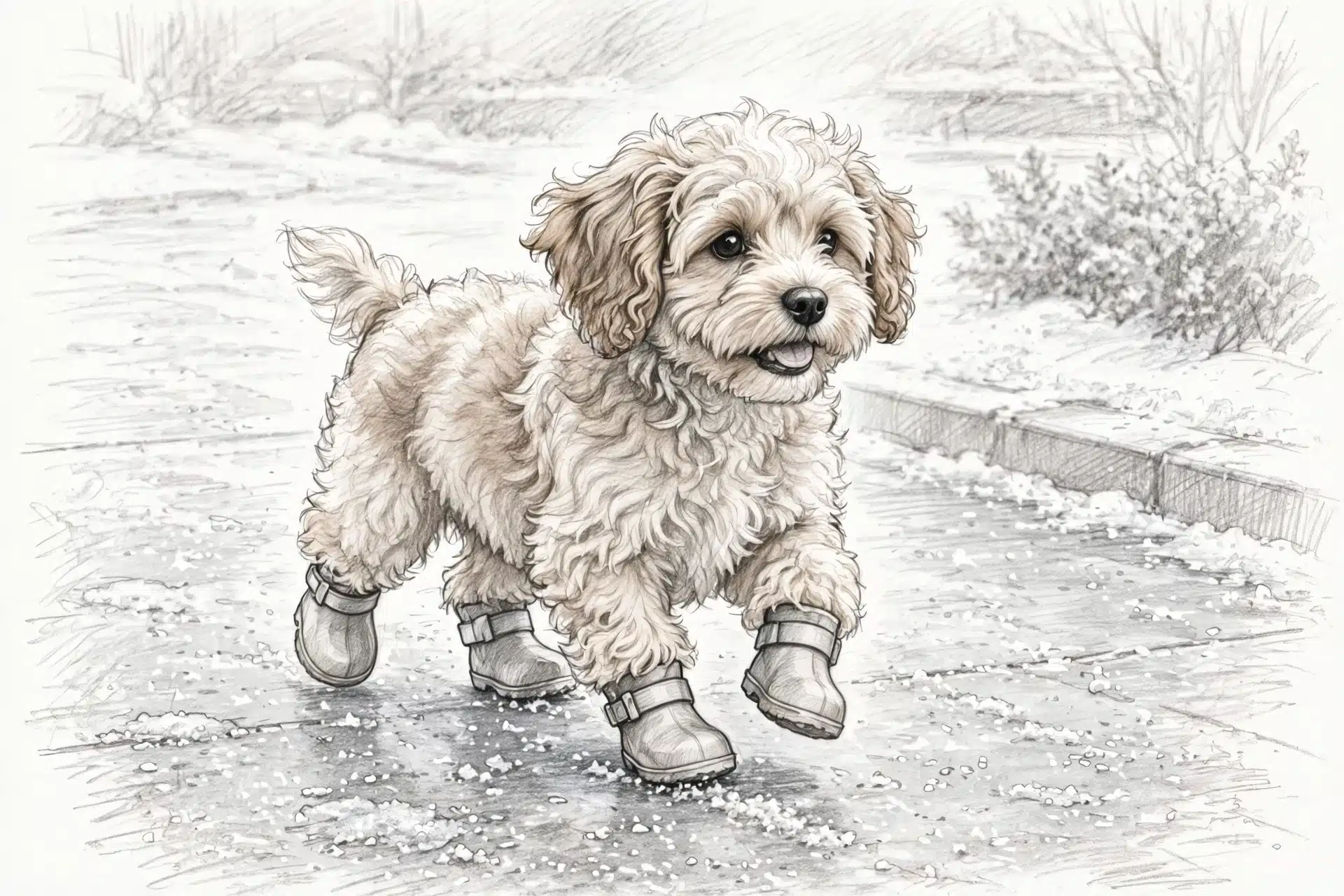
Boots make sense when you cannot control the ground under your puppy’s feet. Think salted parking lots, plowed sidewalks, and long walks on treated roads. The ASPCA’s cold weather guidance notes that booties also keep salt and sand from lodging between toes, which is a real problem for fluffy breeds like Havanese and Cavapoos.
Start slow. Let your puppy wear boots indoors for a few minutes with treats. Most puppies walk like robots at first. That is normal. Keep sessions short and positive.
When Paw Balm or a Cleared Path Helps
If your puppy only steps outside for quick potty breaks on your own property, boots may be overkill. A thin layer of vet-approved paw balm on the pads works well as a barrier, and shoveling one clear path to the grass removes the salt problem entirely.
Either way, wipe paws with a damp cloth after every trip outside.
How to Measure and Test Puppy Boots
- Press your puppy’s paw on paper and trace it, then measure the width.
- Match the trace to the manufacturer’s size chart, not age.
- Fit boots snug enough that they do not slip, but loose enough for one finger.
Also Read: Winter Puppy Pickup in Maine: Car Safety and Travel Essentials
5. Introduce Coats and Boots Before the First Maine Snowstorm
Don’t wait for the first nor’easter to try new gear. A puppy’s first coat fitting should happen indoors, on a mild October day, with treats nearby. The AKC recommends introducing gear weeks before cold weather, starting in a quiet room and building up wear time slowly. Winter coats and boots protect small breeds from Maine’s road salt, ice, and wind, but only if your puppy will actually wear them.
Build Comfort With the Coat
- Set the coat on the floor and let your puppy sniff it. Reward any interest.
- Drape it on, treat, then take it right off.
- Repeat daily, adding a few seconds each time.
- Once they ignore it indoors, head outside for a short walk.
If your puppy freezes or scratches at the coat, go back a step. The AKC notes that gear-shy dogs do better with step-in styles that skip the head hole. Keep every session short and end on a win.
Make Boots Predict Good Things
Boots are harder. Start by handling your puppy’s paws for a few seconds, then treat. Put on one boot, reward heavily, and remove it. Build to two boots, then four, always pairing boots with play and praise. Trainer-backed guides suggest starting this as soon as your puppy comes home. Practicing indoors means the first real snow feels routine, not scary.
Also Read: How to Keep Puppies Safe During Extreme Weather and Temperature Changes
6. Use a Maine-Specific Before, During, and After Walk Routine
Maine winters bring salted sidewalks, black ice, and short daylight hours. A simple routine around each walk keeps a small puppy safe without much extra effort.
Before Leaving the House
- Trim the fur between the toes so snow and ice balls cannot collect there.
- Rub a thin layer of paw balm on the pads to block salt and lock in moisture.
- Fit the coat snugly across the chest without limiting movement.
- Pick your route: cleared paths and grass edges beat heavily salted main roads.
VCA Animal Hospitals recommends cleaning paws after every walk so puppies cannot lick off chemical residue.
During the Outing
- Keep the leash on and walk a familiar route. Ice hides puddles, curbs, and thin pond edges.
- Watch the puppy, not the scenery. Lifting a paw, limping, or stopping means check the foot now.
- Sidestep slushy puddles. They are often salt solutions, and antifreeze tastes sweet but is deadly.
- Keep outings short. Multiple brief walks work better than one long trek in deep cold.
- Stick to daylight when you can, and use reflective gear on the coat and leash.
Per PetMD, puppies are more prone to cold problems than adult dogs, so end the walk at the first shiver.
At the Door
Set up a small station by the entry: a towel, a shallow bowl of lukewarm water, and wipes. Dip each paw, dry between the toes, then check for cracks or red spots. Reapply balm once the pads are dry.
Make the routine the same every time. Puppies trained this way from week one accept booties, balm, and paw checks without a fight.
Also Read: 10 Red Flags to Avoid When Visiting a Local Puppy Breeder
7. Replace Gear With a Safer Plan When Conditions Are Too Severe
Some Maine days beat any coat. Ice storms, single-digit wind chills, and wet nor’easters call for a plan change, not better gear. Skip the outdoor trip entirely and shift potty breaks indoors on pee pads until the weather breaks.
When to Keep a Puppy Inside
- Wind chills drop below 20°F, when frostbite risk climbs fast
- Freezing rain, sleet, or wet snow is falling – damp fur loses heat quickly
- Your puppy hesitates at the door, shivers, or lifts its paws off the ground
Puppies under four months can’t regulate body temperature well, so treat them as more fragile than adult dogs. Washington State University’s veterinary hospital advises limiting pets’ exposure to freezing weather to 10-15 minutes, and young puppies need even less.
Signs That Need More Than a Warm Towel
Mild shivering usually stops once your puppy warms up inside. Call your vet if you see:
- Shivering that continues for more than a few minutes indoors
- Pale or gray gums, or skin on the ears, tail, or paws
- Slowed breathing, unusual drowsiness, or trouble standing
These can signal hypothermia or frostbite, both of which need professional care. Per PetMD’s cold-weather guide, small dogs lose body heat faster than big ones, so don’t wait to see if it resolves on its own.
Also Read: 10 Signs a California Puppy Listing Is a Scam – Sage Puppies
8. Build a Small, Growth-Aware Winter Gear Kit
You do not need a store’s worth of gear for a Havanese, Havapoo, or Cavapoo puppy. A short list covers most Maine winters. The AVMA recommends a sweater or coat for short-coated dogs and properly fitted booties for paw protection.
The Essential Items
- Waterproof coat or sweater that covers the chest and belly, where snow hits first.
- Well-fitted booties to block road salt and ice, plus a paw balm as backup.
- A soft towel by the door for wiping feet, legs, and belly after every walk.
- A snug, reflective collar with ID tags, since snow masks scent trails.
Keep two coats if you can. A wet coat chills a puppy instead of warming it.
Recheck Fit as Your Puppy Grows
Small breeds grow fast in the first year, and a coat that fit at ten weeks will bind by spring. Once a month, check that you can slip two fingers under every strap and that the hem clears the tail. Cornell’s winter safety guidance notes small dogs lose heat quickly, so a tight, damp, or gap-filled coat defeats the purpose. If you brought your puppy home through Sage Puppies’ delivery or pickup process, ask us for size notes from your pup’s last weigh-in.

Winter in Maine is easier with a well-started puppy. The health-tested, family-raised Havanese, Havapoo, and Cavapoo puppies at Sage Puppies arrive confident and socialized, ready for your gear checklist. Browse available puppies or start your application today.
Frequently Asked Questions
Q1: What winter gear is essential for a puppy in Maine?
A fitted coat or sweater, booties or paw balm, and a collar light for dark walks. Small breeds like Havanese need an extra layer sooner.
Q2: How cold is too cold for a puppy in Maine?
Below 20°F, keep outings short. Puppies under six months chill fast. Watch for shivering, hunching, or paw lifting, and head inside.
Q3: How do I protect my puppy’s paws from Maine road salt?
Rinse and dry paws after every walk, or use booties. Dog-safe paw balm before walks adds a helpful barrier.
Q4: How do I know if the coat fits right?
Two fingers should slide under each strap. No rubbing at the armpits, and full shoulder movement.
Q5: Can my puppy wear a coat indoors?
No. Puppies overheat quickly indoors. Layer up just before heading out, and remove it right after.
Conclusion
Winter in Maine is very doable for a small-breed puppy when you plan for it. Fit matters more than brand, puppies need time to grow into gear, and road salt deserves a spot on your daily routine. Watch your puppy, not just the thermometer. Cornell’s veterinary team points out that cold tolerance varies by age, size, and coat, so adjust exposure to your individual pup. Check paws after every walk, keep trips short on bitter days, and add layers as needed. Done well, winter becomes safe, shared adventure instead of a season to survive.