Quick Summary: Picking up a small puppy like a Havanese or Cavapoo in a Maine winter demands a secure, warm car setup and a solid plan. Use a crash-tested carrier or harness, pre-heat the cabin to 65-70°F, and never let the puppy ride loose. Pack the night before with essentials like a blanket, food, and vet records, and plan stops every 2-3 hours for short, controlled potty breaks. Keep the puppy leashed at all times, avoid leaving it alone in a cold car, and stay calm if it cries, as scolding can create lasting fear.
Picking up a Havanese, Havapoo, or Cavapoo puppy in winter means snow-covered lots, salted pavement, dark roads, and hours in a moving vehicle before you ever reach home. That first ride is a big day for a small dog, and a good plan starts before the car arrives at the breeder. This guide covers winter car safety for the drive itself, puppy travel safety gear like a crash-tested harness or secured crate, escape prevention at handoff, and a packing checklist tailored to Maine winter driving. We draw on our experience placing home-raised puppies with families across the country, including those traveling long distances in cold weather. Read it through, pack the night before, and your puppy’s first trip home will be calm, warm, and safe.
Step 1: Set Up a Secure, Warm Vehicle Before Pickup
Winter car safety starts before you leave the driveway. A Havanese or Cavapoo puppy weighs just a few pounds, so the setup matters more than it would for a big dog. Get three things right: the restraint, the seating spot, and the cabin temperature.
Choose a Carrier or Vehicle Restraint That Fits the Puppy
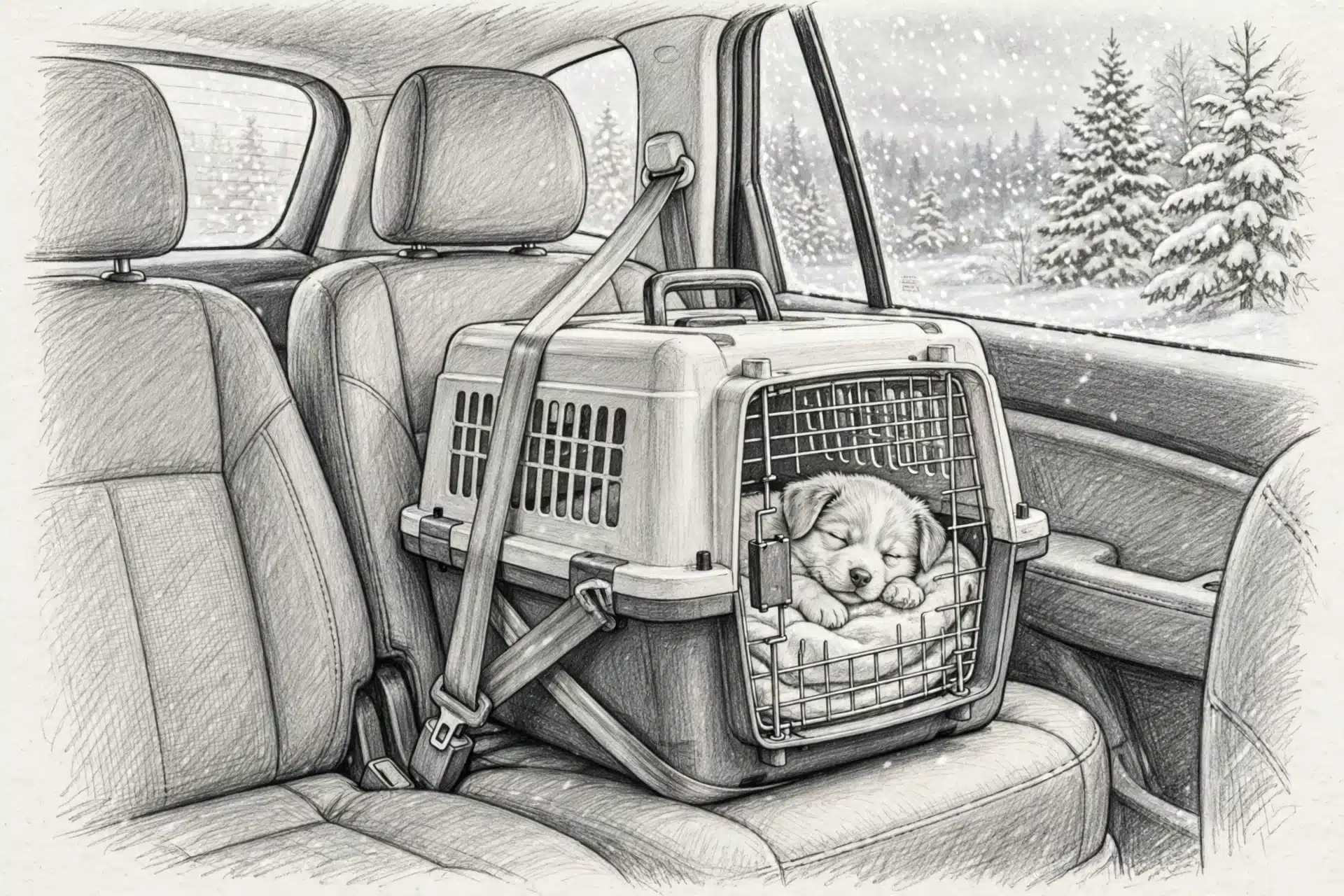
For a small breed puppy, a crash-tested carrier is usually the smartest choice. It contains a squirmy puppy, doubles as a cozy den, and works in any car, including a rental. If you prefer a harness, pick one that is actually vehicle-rated. In independent testing, the Center for Pet Safety found that many harnesses marketed as “crash-tested” failed, so check for real certification rather than packaging claims. Size the carrier so your puppy can stand, turn, and lie down, then anchor it with the seat belt.
Place the Puppy Safely in the Back Seat
The back seat is the only spot that makes sense. Front airbags can seriously injure a small dog in a crash, and the AVMA warns that loose pets also distract the driver and can be thrown forward in a sudden stop. Seat the carrier on the back seat, buckle it in, and give it a gentle shove to confirm it does not slide. Face it forward, and keep the leash clipped and ready for arrival.
Warm the Cabin Without Overheating the Puppy
Pre-heat the car before the puppy gets in, aiming for a cool-but-comfortable 65-70°F. Layer a blanket in the carrier instead of blasting the heater. Small puppies overheat quickly, so check between your fingers for signs they feel too warm.
Never leave the puppy alone in the parked car while you run inside, even for a minute. Plan who holds the puppy during paperwork.
Also Read: How to Spot Ethical Puppy Socialization Practices in Maine
Step 2: Pack the Winter Puppy Pickup Bag
A good bag turns a long winter drive from stressful to simple. Pack it the night before, not the morning of. Cold hands and an excited family forget things. Winter car safety starts with what you bring, not just how you drive.
Pack the Safety and Warmth Essentials
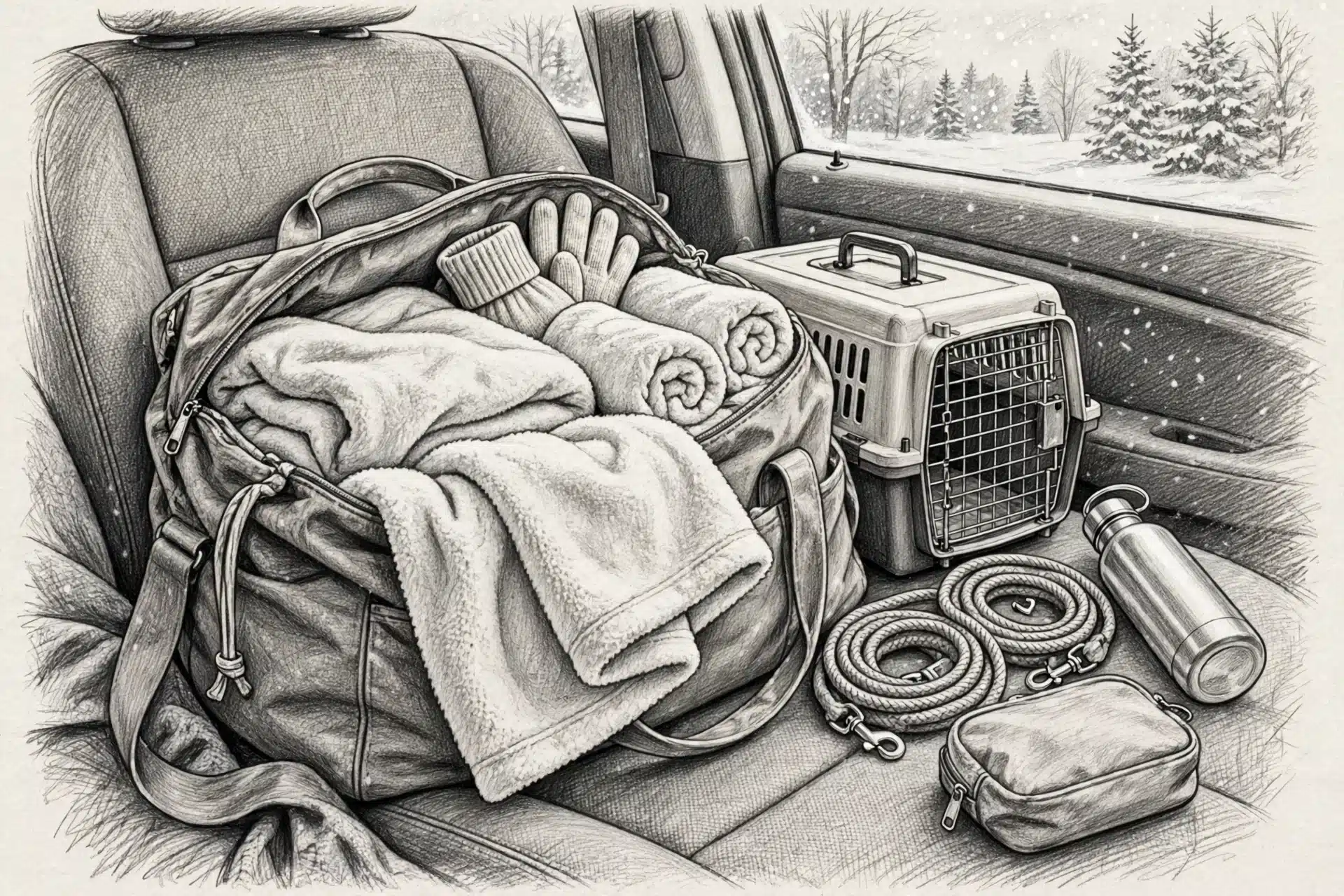
Start with the items that keep your puppy secure and warm:
- A small travel crate or carrier, secured with a seatbelt
- A soft harness and a short leash
- Two towels and a fleece blanket
- A warm water bottle wrapped in a towel
- Disposable gloves and spare towels
Small breeds like Havanese, Havapoos, and Cavapoos lose body heat fast. Keep the blanket over the crate during stops so cold air does not settle in. PetMD recommends crates or harness restraints for every ride, plus two leashes and a pet first aid kit as basic travel gear.
Bring Food, Water, and Cleanup Supplies
Ask your breeder what food the puppy eats and bring a small bag of the same brand. Sudden food changes upset young stomachs. Add these to the bag:
- Collapsible water bowl and a bottle of water
- Poop bags for potty stops
- Paper towels and enzymatic cleaner for accidents
- A small pouch of soft treats
Skip a big meal right before the drive. A slightly empty stomach lowers the chance of carsickness on a twisty winter road.
Keep Records and Handoff Information Together
Put every paper item in one folder before you leave. You will want it handy at the handoff, not buried in the trunk. Include:
- Vaccination and health records from the breeder
- Your contract and payment confirmation
- The breeder’s contact details saved in your phone
- Your vet’s name and first appointment date
One folder, one place. That is the whole trick.
Also Read: 10 Red Flags to Avoid When Visiting a Local Puppy Breeder
Step 3: Complete the Handoff and First Loading Safely
The handoff is quick, but it’s also the moment your puppy is most exposed. Ice, wind, and an unfamiliar parking lot all add up. Work through it in order and you’ll be on the road in ten minutes.
Review the Puppy Care Information Before Leaving
Before you carry the puppy out, sit with the breeder for a few minutes. Go over the feeding schedule, the food they’ve been eating, and when the puppy last ate. Ask about house training progress and any habits you should expect on the drive. Confirm you have the health records and vaccination paperwork in hand, not mailed later.
At Sage Puppies, families get a full care sheet and a live walkthrough at pickup, so nothing important is left to memory. If you’re traveling to Maine from out of state, this is the time to ask questions, not after you’ve buckled in.
Take photos of the paperwork with your phone as a backup before you leave the driveway.
Move From the Handoff to the Car Without an Escape Gap
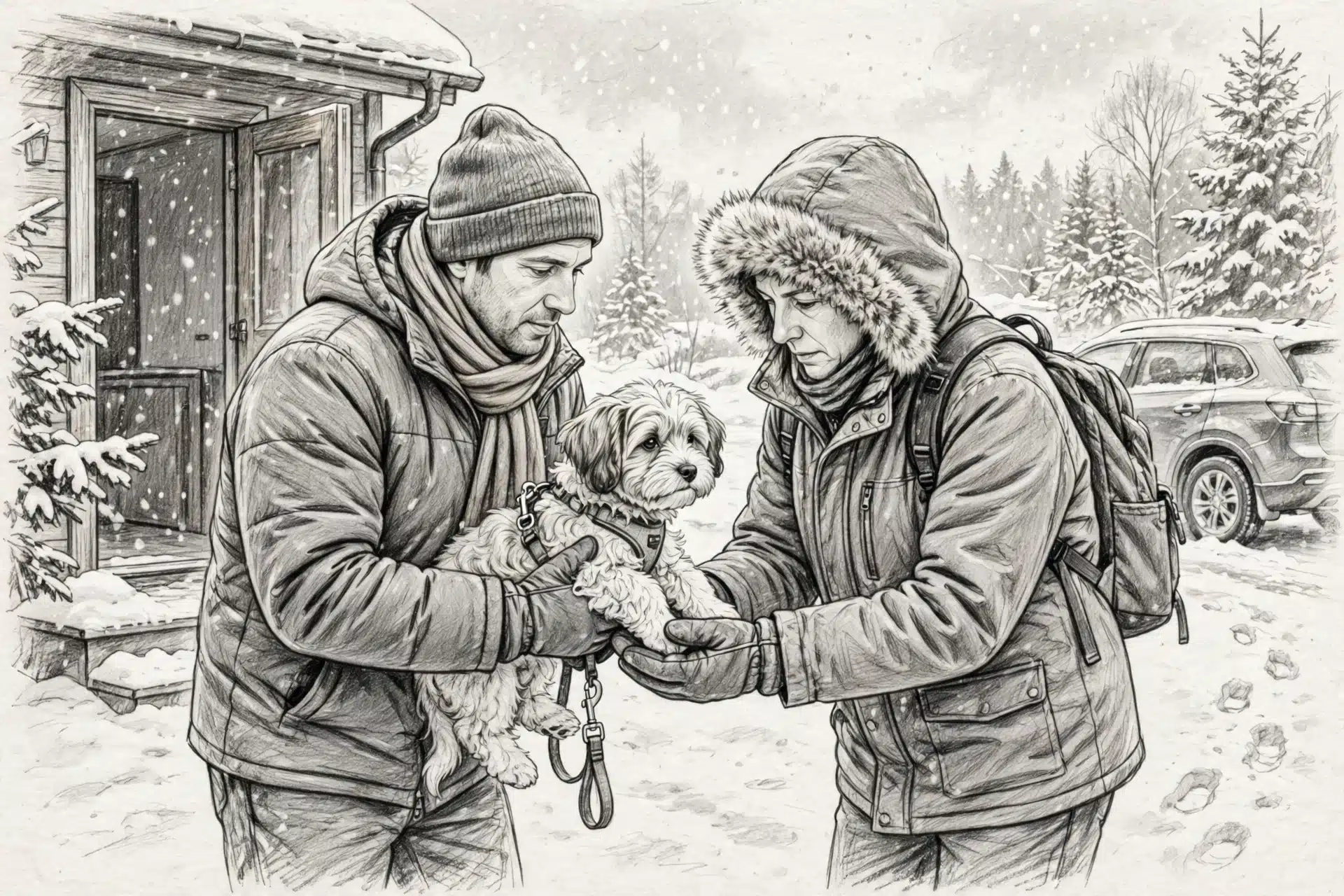
The gap between the breeder’s door and your car is where puppies slip loose. An eight-week-old Havanese or Cavapoo is small, quick, and has no recall yet. Close that gap with a few habits:
- Clip the leash on before the puppy leaves the house, not in the yard.
- Carry the puppy across icy or salted pavement. Small paws get cold and salt burns.
- Open the car door first, then transfer the puppy directly from your arms into the carrier or harness.
- Shut the door before you adjust anything else.
The American Humane Society notes that more dogs are lost in winter than any other season, and leash control is the simplest prevention.
Settle the Puppy Before Starting the Engine
Once the puppy is secured, take two minutes to let it relax. Put the familiar-scented blanket from the breeder in the carrier. A puppy that smells its littermates usually settles faster and cries less. Warm the car up before the ride if you can, since puppies chill faster than adult dogs, and a cold car adds stress to an already big day.
Then start the engine, keep the first stretch of driving calm and quiet, and let your puppy sleep through its very first ride home.
Also Read: Puppy Care Blog & Resources | Sage Puppies
Step 4: Drive Through Maine Winter Conditions With a Puppy
You have the puppy. Now you have the drive, and Maine winter roads do not forgive hurry. Speed is a leading cause of winter crashes, and MaineDOT warns that stopping on snow or ice takes extra time and distance. Build that margin into every part of the trip home.
Plan for Weather, Daylight, and Delays
Check the forecast and road conditions the night before and again the morning of pickup. The 511 system gives live road updates from plow operators and state troopers, so you know what the route actually looks like. Sunset comes early in a Maine winter, and black ice hides on bridges, ramps, and shaded stretches, so plan to arrive before dark if you can.
- Check road conditions before you leave and keep a charged phone in the car.
- Keep your fuel tank at least half full.
- Stay behind plow trucks. Give them room and never crowd them.
- If a storm hits hard, waiting a day beats white-knuckling it with a puppy on board.
Keep the Puppy Comfortable Without Distracting the Driver
A loose puppy in the car is a distraction, and distracted driving is exactly what winter roads punish. Keep your Havanese, Havapoo, or Cavapoo in a secured travel crate or a crash-tested harness clipped to a seatbelt. Position the crate out of direct heater airflow and away from doors. Skip cruise control on slick roads, drive smoothly, and let a second adult handle puppy needs. If you drive alone, pull over before you reach into the crate.
Use a Conservative Rest-Stop Routine
Young puppies need potty breaks every two to three hours, but winter stops need structure.
- Park close to the door and carry the puppy out on a leash and harness.
- Pick a cleared, lit spot away from traffic.
- Keep the outing short. Two minutes outside is plenty.
- Towel off paws and belly, then offer a little water back in the warm car.
Never leave the puppy alone in a cold car, even briefly. Calm, short stops keep the drive predictable and keep your new companion settled all the way home.
Step 5: Protect the Puppy From Cold, Salt, and Roadside Hazards
A small Havanese, Havapoo, or Cavapoo puppy loses body heat fast, and winter rest stops bring extra risks. Plan each stop before you open the car door, and keep every outdoor moment short and controlled.
Monitor for Chilling and Overheating
Watch your puppy at every stop. Shivering, a hunched posture, or lifted paws mean it’s too cold. Wrap the puppy in a fleece blanket and head back to the car quickly.
Heat is the surprise risk in winter. A warm car with a running heater, a crate blanket, and a fluffy coat can push a small puppy into overheating. Check for heavy panting or restlessness, and feel the ears. Adjust layers as needed so your puppy stays comfortable, not bundled to the extreme.
Check Paws and Belly After Every Winter Stop
Road salt and ice melt can irritate paws and get licked off. At each stop, check between the toes, the paw pads, and the belly.
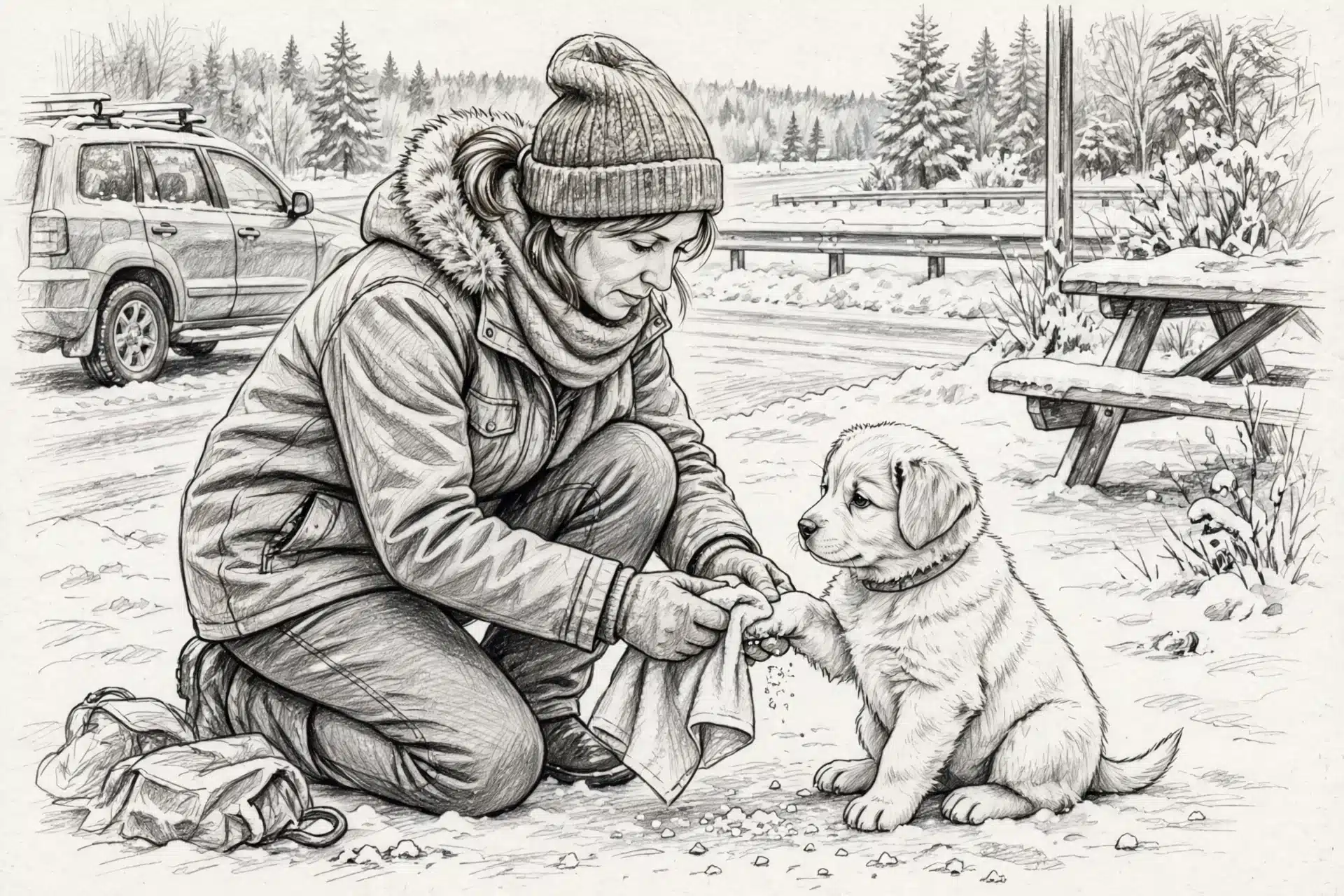
- Wipe paws and belly with a towel or pet-safe wipes
- Look for salt clumps, ice balls, or cracked pads
- Keep pickups short: potty, a brief hold, back inside
Avoid Antifreeze and Other Winter Toxins
Antifreeze tastes sweet to dogs, and even a small lick of ethylene glycol can be fatal. Watch for green or rainbow-tinted puddles near parked cars, pumps, and gas stations, and never let your puppy drink from puddles or snowbanks.
If you suspect your puppy licked antifreeze, go straight to an emergency vet. Treatment only works within hours of ingestion, so waiting for symptoms can be too late.
- Keep the puppy leashed and away from parking lots and garage floors
- Note the product or take a photo if exposure happens
The ASPCA explains why antifreeze is so dangerous and lists its hidden sources, like windshield fluid and snow globes. Treatment works best when started fast, so know the warning signs before your trip. If exposure happens, do not wait: emergency care matters because the antidote works only within hours.
Also Read: Havanese, Havapoo & Cavapoo Puppy Care Blog
Step 6: Handle Motion Sickness, Stress, and Unexpected Problems
Recognize Early Motion-Sickness Signals
Most young puppies get carsick because their inner ears are still developing. Many outgrow it by about a year old, so one rough ride home is normal and not a red flag VCA Animal Hospitals.
Catch it early and you can often prevent vomiting:
- Excessive drooling or lip licking and smacking
- Whining, pacing, or yawning that starts once the car moves
- Lethargy or refusing treats
- Hunching or restlessness in the crate
If you spot these signs, slow down, crack a window for fresh air, and pull over sooner rather than later. Keep the car cool and quiet. A puppy who vomits once and settles is fine. Watch for the pattern, not the single incident.
Respond to Accidents Without Losing Temperature Control
An accident in the crate is messy but manageable. Pull over safely, keep doors closed until the leash is on, then clean up outside the vehicle. Pack paper towels, gloves, enzyme wipes, and sealable bags for soiled bedding.
Stay calm. Dogs pick up on your mood, and scolding turns one bad ride into a lasting fear of the car AKC.
- Swap in the spare blanket from your kit
- Wipe the puppy with a warm, damp cloth and dry fully
- Get the car warm again before you drive on
In winter, wet fur plus a cold cabin is a real risk. Never skip the dry-down step.
Know When to Stop the Trip or Seek Care
Stop for the day if your puppy vomits repeatedly, seems weak, or can’t settle even after an hour of rest. Pushing through a long drive in those conditions isn’t worth it. Find a pet-friendly hotel, offer small sips of water, and let everyone sleep.
Call a vet if you see blood in vomit or stool, vomiting that continues hours after the car stops, trouble walking, a head tilt, or a puppy who refuses water. These point to something beyond motion sickness.
Ask your breeder for the vet records before pickup so any clinic can see vaccine dates. Sage Puppies families also get a written care summary for exactly this reason. And never leave a puppy alone in a parked car, even briefly, since a parked car in cold weather holds the chill like a refrigerator.
Also Read: Maine Puppies for Sale Near You: A Guide to Seasonal Travel Planning
Step 7: Complete the Arrival Routine at Home
Unload Calmly and Keep the First Evening Simple
When you pull into the driveway, carry your puppy straight to the potty spot before anything else. Praise quietly when they go. Then bring them inside to one puppy-proofed room with their crate and bed. Skip the welcome party for now. Experts at the AKC recommend a low-key first day so your puppy can settle without feeling overwhelmed. Keep kids calm, hold short cuddle sessions, and let naps happen.
If your puppy cries at night, don’t ignore it. Vets suggest checking for potty needs and offering comfort instead of letting a young puppy “cry it out.”
Continue the Familiar Feeding and Care Routine
Feed the same food the breeder sent home, at the usual times. Sudden food switches cause stomach upset, so any change should wait a week or more. Offer a small meal if the ride was long, then a final potty trip before bed. Place the crate or sleep space near your bed so your puppy can hear you.
Save the Travel Setup for Future Positive Rides
Keep the harness, crate, and scent blanket you used for the trip home. Per the AAHA, crates help puppies feel safe during vet visits and car rides. Short, happy drives now make future travel easy.

Ready to plan your winter pickup day right? At Sage Puppies, every Havanese, Havapoo, and Cavapoo puppy comes home well-started and family-raised, with clear pickup and delivery guidance from our team. Browse available puppies, submit your application, and we’ll help you map out a safe, warm welcome.
Frequently Asked Questions
Q1: What car safety essentials do I need for a winter puppy pickup in Maine?
A crash-tested crate or a small dog harness clipped to a seat belt, plus a blanket-lined carrier for an 8-12 week old puppy. Never let a puppy ride loose or on a lap.
Q2: How do I keep my puppy warm during a winter drive home?
Keep the cabin at 68-72 degrees. Drape a blanket over the crate, block vents blowing directly on it, and check paws and ears at stops. Overheating is a real risk too, so watch for panting.
Q3: What should I pack for a winter puppy pickup?
Pack puppy food, water, a collapsible bowl, pee pads, towels, an extra blanket, paper towels, treats, and a snug sweater for potty breaks outside.
Q4: How long can a puppy safely travel in a car?
Plan stops every 2-3 hours for water and a quick potty break. Most young puppies settle and sleep once the car is moving.
Q5: Should I feed my puppy right before the drive?
Give a light meal 2-3 hours before pickup. A full stomach plus car motion often causes nausea, especially on a first ride.
Q6: Can cold weather potty stops be a problem for a small puppy?
Yes. Havanese and doodle mixes are small, so keep breaks under five minutes, clear a patch of snow, and dry paws afterward to remove ice melt salt.
Q7: What if my puppy cries in the crate during the drive?
Stay calm and keep driving. Comfort with a soft voice at stops, but avoid unzipping the crate mid-trip. Most puppies settle within 20 minutes.
Conclusion
A winter pickup day goes smoothly when the basics are set before you drive. Secure your puppy in a crash-tested harness or carrier, keep the cabin warm, and never leave a young dog alone in a parked car. As the AVMA explains, puppies are especially vulnerable to cold, and a car can chill them fast in Maine winter air. Restraint matters just as much: the AVMA notes that unrestrained pets are unsafe in any sudden stop. Pack the checklist, plan your handoff, and stay close on rest breaks. A small Havanese, Havapoo, or Cavapoo settled safely in the back makes the whole drive home feel calm from the first mile.