Quick Summary: Ethical puppy socialization in Maine means planned, gentle, and positive exposure, not just claiming a puppy is ‘well socialized.’ Ask breeders for specific, dated evidence like weekly logs, videos, and notes on each puppy’s comfort, and watch for red flags like vague language or forced greetings. A well-socialized puppy shows curiosity, recovers from mild surprises, and accepts gentle handling at its own pace. Use a simple scorecard rating seven categories to compare breeders, and continue calm, reward-based socialization at home after pickup.
When a Maine breeder says a puppy is well socialized, ask what that looked like on a rainy day. Ask about nail trims, car rides, unfamiliar visitors, and the quiet breaks a small puppy needed.
The problem is that puppy socialization can sound impressive while hiding a rushed or one-size-fits-all routine. Ethical breeders can show how each puppy met new sights, sounds, handling, and rest with care.
This guide helps families compare Maine puppy breeders using clear questions and real proof. You will learn what healthy puppy socialization looks like for Havanese, Havapoos, and Cavapoos, plus warning signs to avoid.
Good puppy socialization builds confidence without pushing a puppy past its limits. That is the standard ethical breeders should be ready to explain.
What Ethical Puppy Socialization Should Look Like
Exposure Is Not the Same as Socialization
A puppy does not become well socialized by being passed around, taken to busy stores, or placed with every dog it meets. Ethical socialization is planned, gentle, and positive. The puppy meets new people, safe surfaces, household sounds, calm dogs, grooming tools, and short car rides without being overwhelmed.
Ask a breeder how they introduce each experience and how they track each puppy’s response.
| Marketing phrase | Meaningful evidence |
|---|---|
| “Raised with lots of exposure” | A dated plan with calm, age-fit experiences |
| “Great with everyone” | Notes on each puppy’s comfort and personality |
| “Socialized daily” | Positive handling, play, rest, and safe exploration |
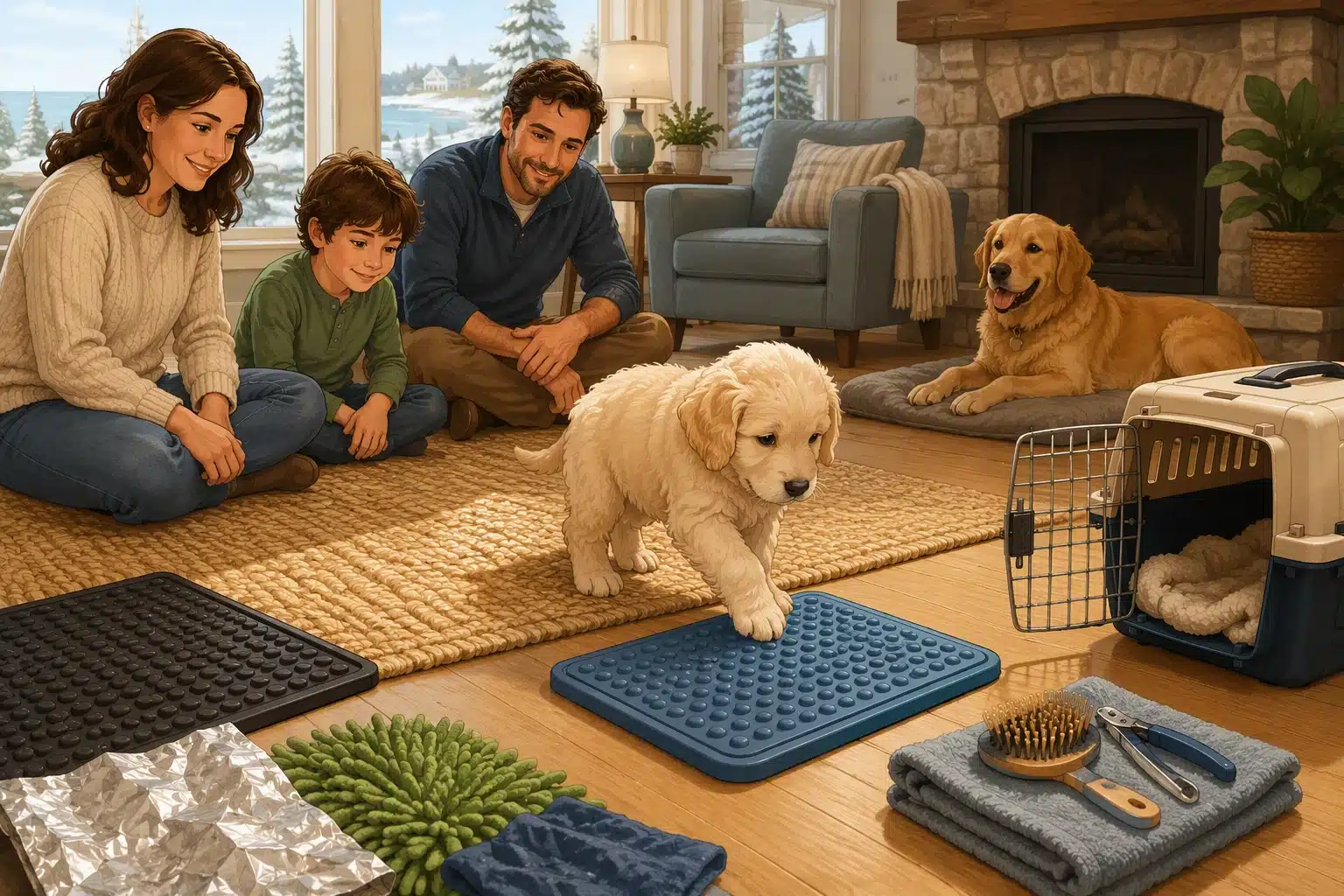
A puppy that freezes, hides, struggles, or repeatedly retreats needs space, not more pressure.
The Puppy Should Have Choice, Support, and Rest
Watch for a breeder who lets puppies approach new things at their own pace. A caring adult stays close, uses food or play to build trust, and ends the session before a puppy is tired or worried.
Ethical care includes:
- A quiet place to retreat
- Short, one-on-one handling sessions
- Gentle touch of paws, ears, and coat
- Plenty of naps between new experiences
The AVMA review of puppy socialization notes that fearful puppies should move at their own pace and receive rewards during social encounters.
The First Three Months Matter, But Socialization Continues
Early weeks matter because puppies are especially open to learning from new people, dogs, and settings. Still, bringing home a puppy is not the finish line. Your family should keep building calm, safe experiences through adolescence.
Use this simple next-step checklist:
- Invite quiet visitors.
- Practice brief car rides.
- Pair handling with treats.
- Ask your veterinarian about safe class options.
Good socialization builds confidence. It does not promise that every puppy will enjoy every situation.
Also Read: Georgia Puppies: How to Assess Early Puppy Socialization
Ask How the Breeder Socializes Puppies From Birth to Pickup
A good breeder can explain the routine by age, not just say puppies are “well socialized.” The first three months are a key learning period, according to the AVSAB puppy socialization statement.
Birth to Three Weeks: Gentle Handling and Early Observation
Ask how often each puppy is gently held and checked. Early care should be calm, clean, and centered on the mother and litter.
Look for a breeder who watches each puppy’s comfort level and notes changes in feeding, sleep, and handling response.
- Are paws, ears, and mouth touched briefly?
- Who handles the puppies each day?
- How do you keep the space sanitary and quiet?
Green flag: The breeder describes small, regular handling sessions, not constant activity or forced interaction.
Three to Eight Weeks: People, Littermates, Surfaces, and Sounds
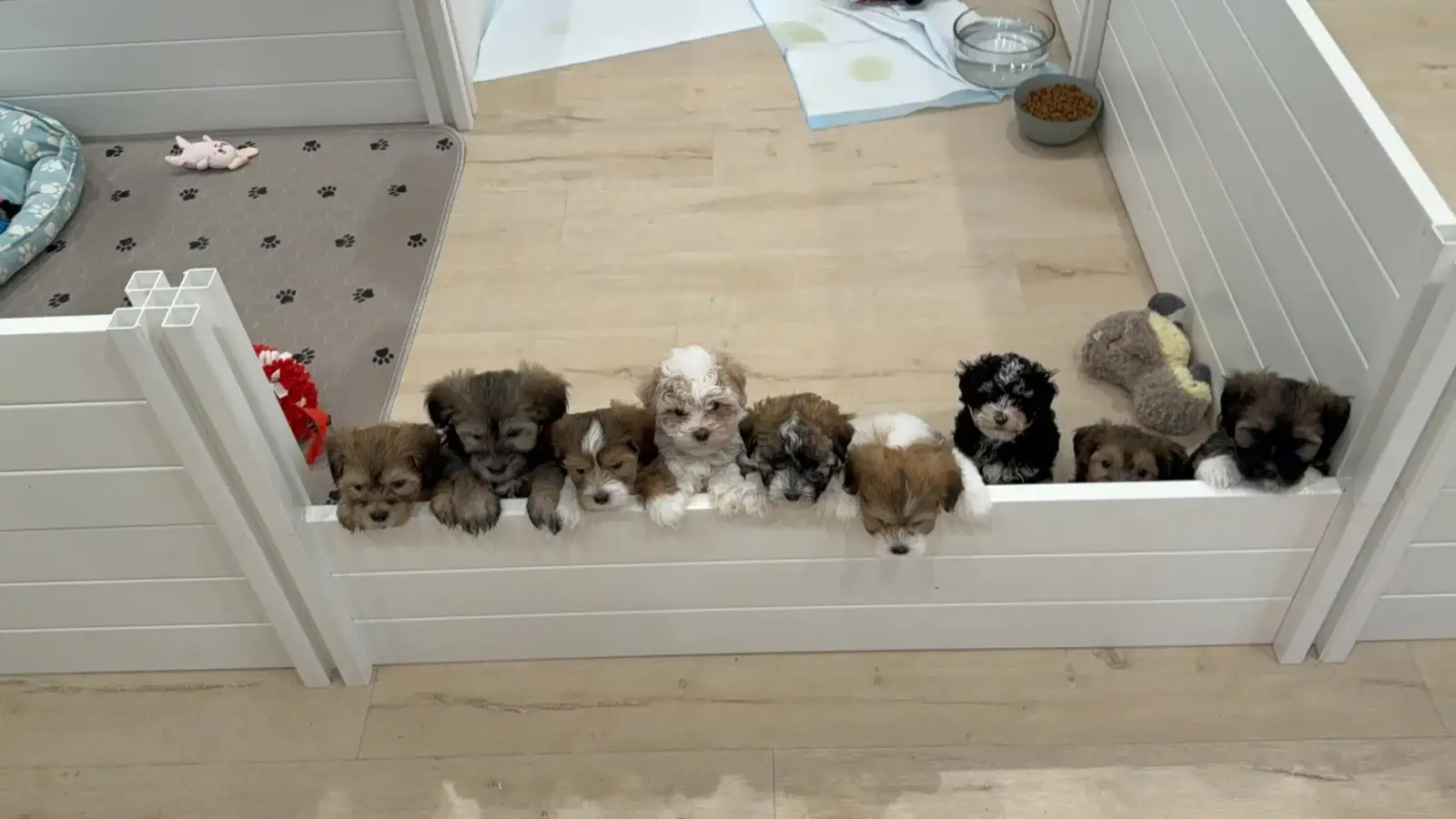
This is where marketing claims need proof. Ask for videos or updates showing puppies safely meeting varied people, playing with littermates, and exploring new surfaces at their own pace.
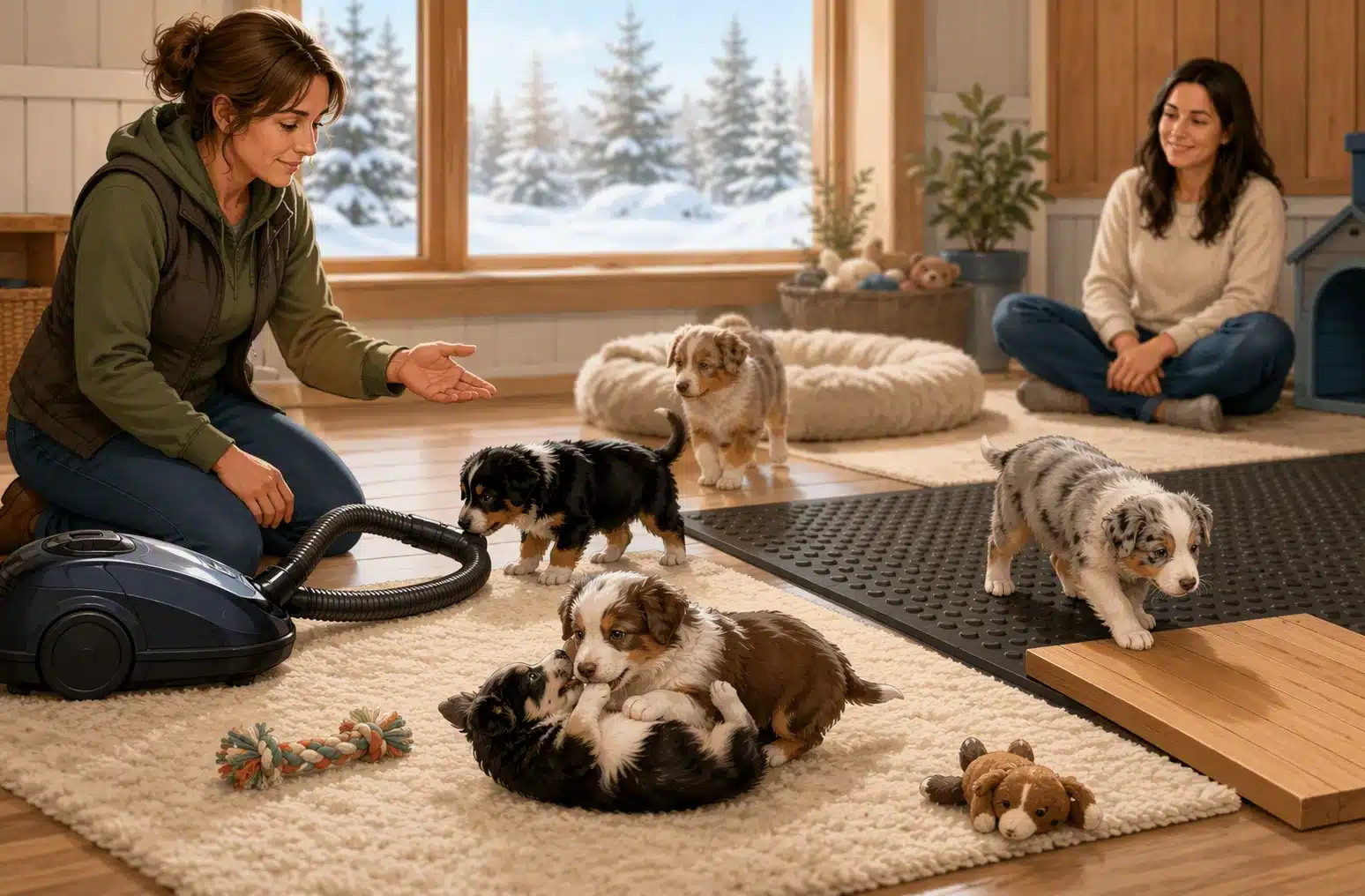
| Ask for evidence of | What ethical practice looks like | Warning sign |
|---|---|---|
| New sounds | Low-volume, brief household noises with calm breaks | Loud noise used to “toughen up” puppies |
| New surfaces | Clean mats, grass, rugs, and stable footing | Puppies kept only in one pen |
| Human contact | Gentle visits from different ages, supervised closely | Crowded handling or no details |
A good program uses rewards, rest, and choice. AVSAB guidance stresses that exposure alone is not enough. Puppies should stay relaxed, not overwhelmed.
The Final Weeks: Travel, Crates, Grooming, and Household Skills
Ask what happens before pickup or delivery. Small companion breeds benefit from short, positive crate sessions, gentle brushing, nail-touch practice, car rides, and simple household rhythms.
- Ask how crate time begins and how staff respond to fussing.
- Ask whether puppies have short vehicle practice before travel.
- Ask how grooming handling is introduced without restraint or fear.
Watch for specifics. “They are used to everything” is not an answer. A responsible breeder can tell you what each puppy has experienced, what still needs practice, and how to continue the work at home.
Also Read: Havanese, Havapoo & Cavapoo Puppy Care Blog
Look for Evidence, Not Just Socialization Vocabulary
Words like enriched, confidence-building, and Puppy Culture sound good. Ask what the breeder actually does, how often, and how each puppy responds. Ethical socialization is calm, age-right, and adjusted for the puppy in front of them.
What Useful Documentation Can Include
Ask to see simple, dated proof rather than a polished promise. Good records can be digital or handwritten.
- A weekly exposure log with surfaces, sounds, handling, crate time, and short car rides
- Notes on each puppy’s comfort level and recovery after something new
- Photos or short videos taken across several weeks
- A record of grooming, nail trims, and potty-area habits
- A take-home plan for continuing work after pickup or delivery
The AKC’s early socialization guidance favors positive, individual attention over forcing puppies through stressful events.
Warning: A long checklist means little if nobody can explain how a shy puppy was supported.
What to Observe During a Visit or Video Call
Look beyond a clean room. Watch the puppies rest, play, eat, and approach people at their own pace. You should see clean water, safe play space, and room to move away from littermates.
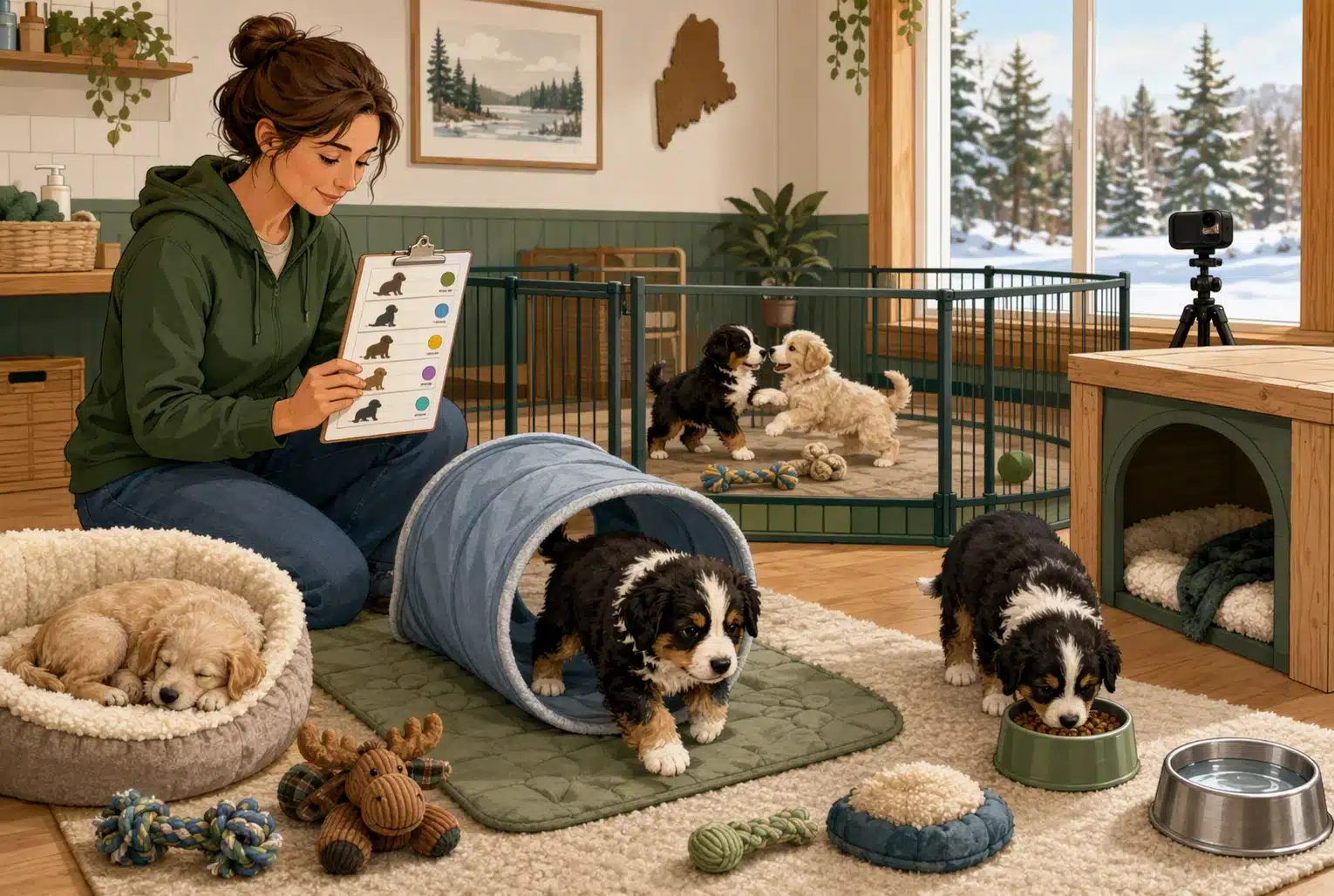
Ask the breeder to show a brief, normal interaction:
- Gentle handling of paws, ears, and coat.
- A puppy entering an open crate for a treat.
- A new object introduced without chasing or cornering the puppy.
The goal is not fearless behavior. It is a puppy that can pause, assess, and recover with patient support.
How the Breeder Talks About Individual Puppies
Listen for detail. A careful breeder can describe each puppy’s play style, energy, touch comfort, and response to new things. They should also explain what they are still working on.
| Meaningful answer | Marketing-only answer |
|---|---|
| “She watches first, then joins after a minute.” | “All our puppies are perfectly socialized.” |
| “He enjoys brushing but needs short crate sessions.” | “He is great with everything.” |
Individual attention and gentle pacing matter more than a claim that every puppy fits every home.
Check Safety: Socialization Before Full Vaccination
The Right Question Is How Risk Is Managed
A responsible breeder does not keep puppies isolated until every vaccine is complete. They also do not take them to dog parks or let them meet unknown dogs. The key is managed exposure.
The AVMA notes that socialization and disease risks can be balanced with careful safeguards. Ask how the breeder handles:
- Cleaning of floors, bedding, toys, and hands
- Visitor health rules and shoe controls
- Contact only with healthy, known, vaccinated dogs
- Immediate separation of any puppy showing signs of illness
Ask for specifics. “We socialize them safely” is not a plan.
Healthy Variety Is Better Than Chaotic Exposure
Good socialization is calm, short, and tailored to each puppy. It should build trust, not overwhelm a small Havanese, Havapoo, or Cavapoo puppy.
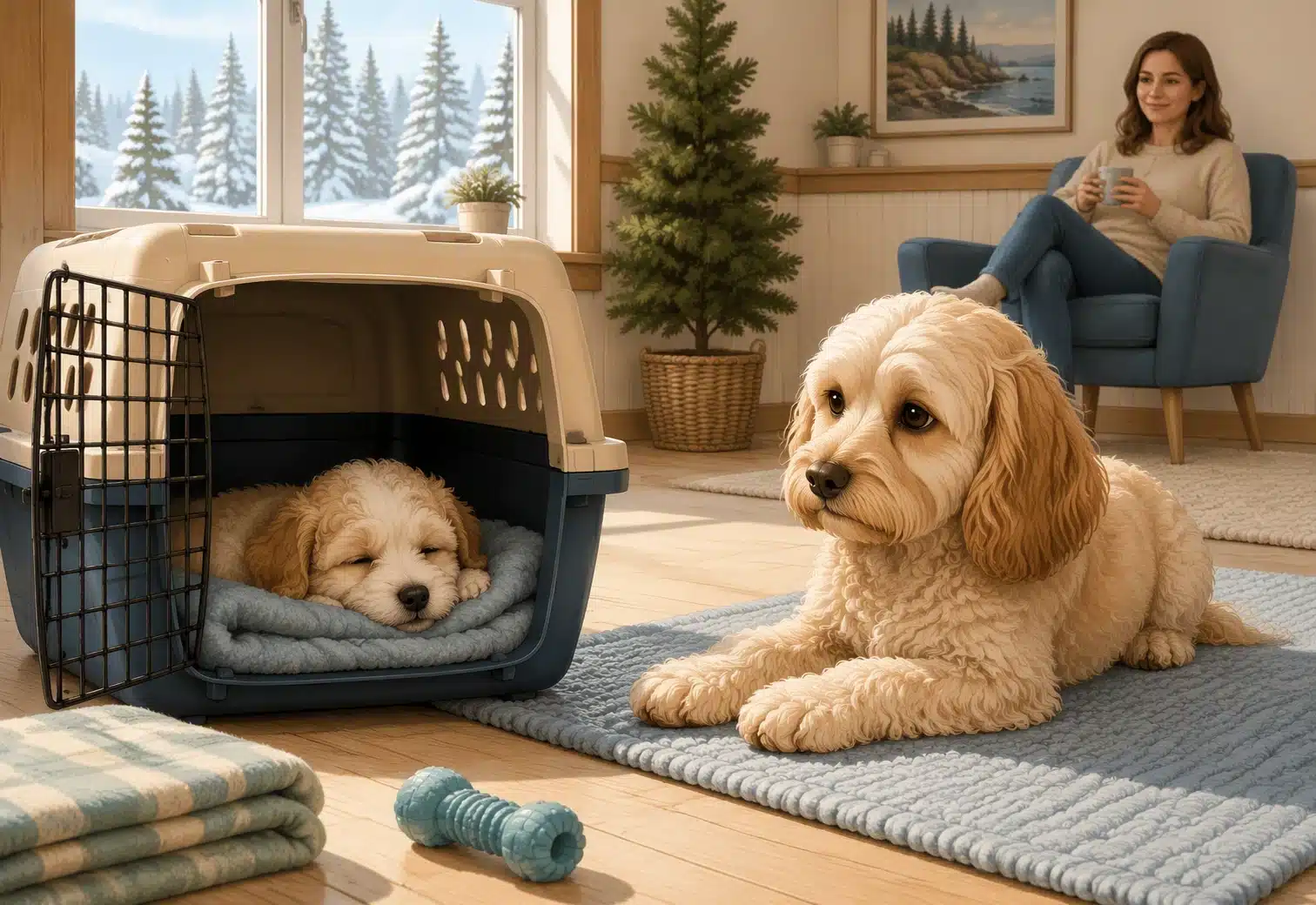
Look for safe variety such as:
| Healthy exposure | Why it helps | Risk control |
|---|---|---|
| Gentle handling by adults | Builds comfort with people | Clean hands, brief sessions |
| Household sounds | Reduces later fear | Low volume, puppy can move away |
| Car rides | Prepares for travel | Clean crate, limited stops |
| Healthy known dogs | Teaches dog cues | Verified vaccine status |
AVMA guidance says positive, varied early experiences help reduce later fear.
A Maine Plan Should Include Real Travel and Weather
For a Maine-bound puppy, ask how the breeder prepares for cold, wind, car travel, and new surfaces. A thoughtful plan may include short crate rests, safe handling in a coat or blanket, and calm rides before delivery.
Avoid claims that a puppy has been “everywhere.” Unvaccinated puppies should not visit dog parks, pet-store floors, or areas used by dogs with unknown health records. The AVMA recommends caution in these settings before the vaccine series is complete.
Also Read: Family-Raised Puppies for Sale Near Me: What to Look For
Recognize the Signs of a Well-Socialized Puppy
A well-socialized puppy is not fearless or busy all the time. They show interest, recover from small stress, and accept kind human contact at their own pace.
Curiosity Without Recklessness
Watch the puppy enter a new room or meet a calm visitor. A good sign is a pause, sniff, then a choice to explore. They may check in with their caregiver before moving closer.
Look for:
- Loose body movement and soft eyes
- Interest in toys, surfaces, and gentle sounds
- A willingness to move away when unsure
Avoid mistaking frantic jumping, nonstop barking, or charging at every person for confidence. Those behaviors can mean the puppy is overstimulated.
Recovery After a Mild Surprise
A dropped spoon or new sound may make any puppy pause. What matters is the recovery. The puppy should look, take a moment, then return to play, sniffing, or interacting without being pushed.
The AKC calls this ability to recover from an initial fright “bounceback,” a useful sign of resilience during early learning. Read its puppy socialization guidance
Ask the breeder:
- What new sounds and surfaces has each puppy met?
- How do you respond if one puppy seems worried?
- Can I see a short video of the puppy after a mild, everyday surprise?
Comfort With Gentle Handling and Calm Separation
A prepared puppy does not need to love every touch. Still, they should usually accept brief, gentle checks of paws, ears, and coat, then settle again. They should also handle a short, age-fit break from littermates without panic.
| What you see | What it can suggest |
|---|---|
| Puppy relaxes after a brief paw touch | Positive handling practice |
| Puppy settles with a toy in a crate | Early comfort with quiet alone time |
| Puppy freezes, screams, or fights hard | Slow down and ask for more context |
For small companion breeds, gentle handling and safe, short separation practice matter. It helps prepare them for grooming, travel, and life in a family home.
Also Read: 10 Red Flags to Avoid When Visiting a Local Puppy Breeder
Know the Red Flags in Maine Puppy Breeder Claims
Vague Language With No Examples
“Raised with love” and “well socialized” sound good, but they prove nothing. Ask what each puppy actually experiences, when it starts, and how staff respond to fear.
Look for clear answers such as:
- Gentle handling by different adults
- Short, calm exposure to home sounds
- Grooming, crate, and car practice
- Notes on each puppy’s comfort and progress
The AVMA review stresses that positive, varied early experiences help reduce later fear.
A breeder should explain the process without relying on broad marketing phrases.
Forced Greetings, Overstimulation, or Punishment
A confident puppy is not one pushed into every new person, dog, or noise. Watch for claims that puppies must “get used to it” through forced contact, loud settings, or corrections for fear.
Ethical socialization lets a puppy pause, move away, and try again at its own pace. Reward-based handling builds trust. Punishment or harsh corrections can increase fear and aggression, according to AVMA reporting on behavior experts.
| Claim | Better question |
|---|---|
| “They meet everyone” | “Can a shy puppy opt out?” |
| “We correct bad behavior” | “What reward-based steps do you use?” |
No Openness About Health, Environment, or Matching
Walk away if a breeder will not discuss parent health testing, living conditions, or each puppy’s temperament. They should also ask about your household, children, pets, work hours, and travel plan to Maine.
- Request health records and parent information.
- Ask how they match a quieter or bolder puppy.
- Confirm support for a safe pickup or delivery transition.
Compare Breeders With a Simple Socialization Scorecard
Seven Categories to Rate Consistently
Give each breeder 0, 1, or 2 points in each area. A clear, specific answer earns 2. A vague claim earns 1. No proof earns 0.
| Category | What a 2 Looks Like |
|---|---|
| Daily handling | Gentle, routine human contact from early life |
| People | Safe exposure to varied adults and children |
| Home sounds | Positive practice with normal household noise |
| New surfaces | Safe chances to walk on varied textures |
| Individual time | Short one-on-one sessions away from littermates |
| Care skills | Calm practice with brushing, feet, ears, and nails |
| Transition skills | Positive crate, car, potty, and separation practice |
A strong score is 11 or more out of 14. Quality matters more than a long checklist. AKC guidance stresses short, positive experiences that do not overwhelm the puppy.
A breeder should explain how they adjust for a shy puppy, not promise every puppy will be fearless.
Questions That Reveal the Difference
Ask each breeder the same questions:
- “What does a normal week of socialization look like for this litter?”
- “How do you tell if a puppy needs a break?”
- “What happens during individual handling time?”
- “Which grooming and travel skills have puppies practiced?”
- “What notes will I receive about my puppy’s own responses?”
- “How should we continue the routine after pickup or delivery?”
Listen for calm, practical details. Ethical breeders describe choices, pacing, and each puppy’s needs. Marketing-heavy answers lean on labels, such as “raised with love,” without explaining the work behind them.
Also Read: Puppy Care Blog & Resources | Sage Puppies
Continue the Foundation After Your Puppy Comes Home
Build a Gentle First-Week Plan
Keep the first week small, calm, and repeatable. Your puppy needs sleep, steady meals, short potty trips, and time to learn your home.
- Set up one quiet sleep area and one puppy-safe play space.
- Follow the breeder’s food and potty routine at first.
- Introduce one new sound, surface, person, or room at a time.
- Reward calm choices with tiny treats, praise, or play.
- Give your puppy breaks before they become tired or worried.
Socialization is not a packed schedule. A relaxed puppy who can choose to approach is learning more than a puppy pushed through new events.
| Puppy response | Your next step |
|---|---|
| Loose body, curious sniffing | Continue briefly and reward |
| Pauses, looks away, seeks space | Increase distance and slow down |
| Freezes, hides, or refuses treats | End the activity and offer quiet rest |
Work With Your Veterinarian and Watch the Puppy in Front of You
Book a new-puppy visit soon after arrival. Ask your veterinarian about vaccines, parasite prevention, safe local outings, and puppy class timing. The AVSAB socialization guidance supports safe, positive exposure during early puppyhood, not isolation.
Keep a simple note on what your puppy enjoys and what feels hard. Watch for tucked tail, stiff posture, repeated yawns, or retreating. Reduce the challenge before fear grows.
Use reward-based training only. Calm, short practice builds trust and helps your puppy carry Sage Puppies’ early foundation into family life.

Choose a breeder who can show how puppies are raised, not just promise it. Sage Puppies offers home-raised Havanese, Havapoo, and Cavapoo puppies with health-tested parents, early socialization, and clear delivery or pickup options. Explore available puppies and start your application.
Frequently Asked Questions
Q1: How can I tell if a puppy breeder in Maine uses ethical socialization practices?
Ask for specific routines, not broad claims. Ethical breeders explain how each puppy meets people, home sounds, handling, rest, and gentle new surfaces. They should welcome questions and avoid rushing puppies into stressful events.
Q2: What are the signs of a well-socialized puppy from a Maine breeder?
Look for curious, people-friendly behavior and a puppy that recovers after a mild surprise. A well-started puppy may be cautious at first, but should not freeze, panic, or stay shut down.
Q3: Why is early puppy socialization important for dogs adopted in Maine?
Early practice helps puppies handle Maine life, including visitors, winter gear, car rides, household noise, and new places. It builds a base for training, but families must continue socialization after adoption.
Q4: Should a breeder let me meet the puppy’s mother?
Yes, when practical and safe. Meeting the mother can show her comfort with people and home life. If a visit is not possible, ask for clear, current information about her temperament and care.
Q5: Can a puppy be too socialized?
Yes. Constant activity can overwhelm a young puppy. Good programs balance brief positive experiences with naps, quiet time, and familiar routines. A puppy needs time to rest and process new things.
Conclusion
Ethical puppy socialization in Maine is easy to recognize when you ask for proof, not promises. Look for calm, age-right exposure to home life, gentle handling, clean spaces, rest breaks, and records that show what each puppy has experienced.
A good breeder watches each puppy’s response and adjusts the pace. Socialization should build comfort, not force bravery. The AVSAB socialization guidance supports safe, positive exposure during a puppy’s first three months.
Choose transparency, thoughtful care, and a breeder who can explain the why behind every routine.