
Quick Summary: When comparing Virginia puppies for sale, ask breeders specific questions about their week-by-week early-development plan rather than trusting vague terms like ‘socialized’ or ‘well loved.’ The article ranks seven questions, starting with the breeder’s overall developmental timeline and covering handling, household exposure, responses to stress, temperament observations, post-go-home routines, and verifiable records. A strong breeder provides concrete examples, individual notes, and a clear continuity plan, while vague answers signal caution. Virginia law also requires puppies to be at least eight weeks old and accompanied by vaccination records.
Comparing Virginia puppies for sale? Look past the photo and ask what each puppy has actually experienced in its first eight weeks. Words like socialized, home-raised, and well loved sound reassuring, but they do not prove a puppy has practiced calm handling, heard everyday household sounds, or explored new surfaces safely. They also say nothing about how early routines will continue after pickup or delivery. The seven questions below help you evaluate early development in a calm, practical order. You will learn what to ask, what a thoughtful answer sounds like, what evidence to request, and when a vague response is a signal to slow down. Each question is ranked by how directly it reveals the puppy’s foundation, and the framework reflects guidance from the American Kennel Club, the early-development approach at Sage Puppies, and Virginia requirements for puppy age and care records. Whether you pick up locally or arrange delivery from Virginia puppies for sale listings nationwide, this checklist keeps you focused on what matters most.
Quick Comparison
| Question | Best for | What to verify | Strong answer | Buyer signal |
|---|---|---|---|---|
| What is your week-by-week early-development plan? | Evaluating the breeder’s overall early-development process | Age-appropriate handling, exposure, rest, routine, and observation | A clear progression from newborn care to go-home preparation | Specific examples and willingness to explain the process |
| How do you introduce handling, grooming, and veterinary touch? | Preparing a puppy for grooming, family care, and veterinary handling | Brief touch sessions involving paws, ears, mouth, coat, and body | Positive handling paced to each puppy’s comfort | The breeder can explain stress cues and recovery |
| Which household sounds, surfaces, and routines have the puppies experienced? | Assessing readiness for everyday household life | Sounds, surfaces, routines, crate time, travel, and recovery | Short, gradual exposure matched to puppy comfort | Examples that reflect the family’s actual home |
| How do you respond when a puppy seems uncertain or overwhelmed? | Assessing whether socialization is gentle and individualized | Stress signals, recovery steps, pacing, and positive methods | The breeder reduces pressure and lets the puppy recover | The breeder can explain individual differences without labeling a puppy unfairly |
| How do you observe and describe each puppy’s temperament? | Matching a puppy’s developing personality to the family | Repeated observations of confidence, energy, handling, play, and recovery | Balanced description without guaranteed outcomes | The breeder asks about your lifestyle before recommending a match |
| What early routines and foundations will continue after go-home day? | Preparing for pickup, delivery, and the first week at home | Food, sleep, potty, crate, rest, handling, and transition guidance | Written or clearly explained continuity instructions | The breeder prepares the family instead of ending communication at payment |
| What records or updates can I review before reserving? | Verifying claims before sending a deposit or application | Current updates, individual notes, health records, age, and travel details | Organized information that matches the puppy and the written process | The breeder welcomes careful review without pressure |
What to know about early puppy development
Early development is not a promise that a puppy arrives fully trained. It is the quiet foundation built through gentle handling, age-appropriate exposure, predictable routines, real rest, and calm recovery after each new experience. Those first weeks shape how your puppy handles stress, people, and change for life.
That is why it matters so much when you compare Virginia puppies for sale. Every breeder uses the phrase. Few can show you exactly what it looked like day to day for their litters.
As you read the seven questions below, listen for specifics. A breeder who can describe a single puppy’s week in detail is telling you something far more useful than one who repeats broad claims.
1. What is your week-by-week early-development plan?
A specific timeline is stronger evidence than a general claim that puppies are socialized. Ask the breeder to walk you through what happens from the newborn stage all the way to go-home day.
A thoughtful answer explains how care changes as puppies mature: gentle contact, time with the mother and littermates, household exposure, safe exploration, rest, and one-on-one observation. Sage Puppies follows an age-appropriate progression that starts with warmth, nursing, cleanliness, and calm human presence, then adds handling, sounds, textures, play, routine, and potty foundations as each puppy is ready.

Highlights
- Ask what happens during each developmental stage, not only the final week before pickup.
- Look for a balance of exposure, sleep, cleanliness, nursing, and predictable routines.
- Ask how the plan adapts for a puppy who is more cautious or sensitive.
- Request examples, dated updates, videos, or notes instead of trusting program names alone.
Pros
- Gives you a framework for comparing breeders fairly.
- Makes vague socialization claims easier to test.
- Shows whether the breeder thinks about developmental readiness, not just marketing.
Cons
- A written plan does not replace observing the puppies or reviewing real evidence.
- Early development supports confidence, but it cannot guarantee adult behavior.
This ranks first because it reveals whether early development is an intentional process or just a phrase. A breeder who can explain timing, progression, and how each puppy responds is far easier to evaluate than one who offers broad reassurance.
Last updated: September 17, 2026
Also Read: How to Evaluate a Puppy’s Socialization Plan Before Buying
2. How do you introduce handling, grooming, and veterinary touch?
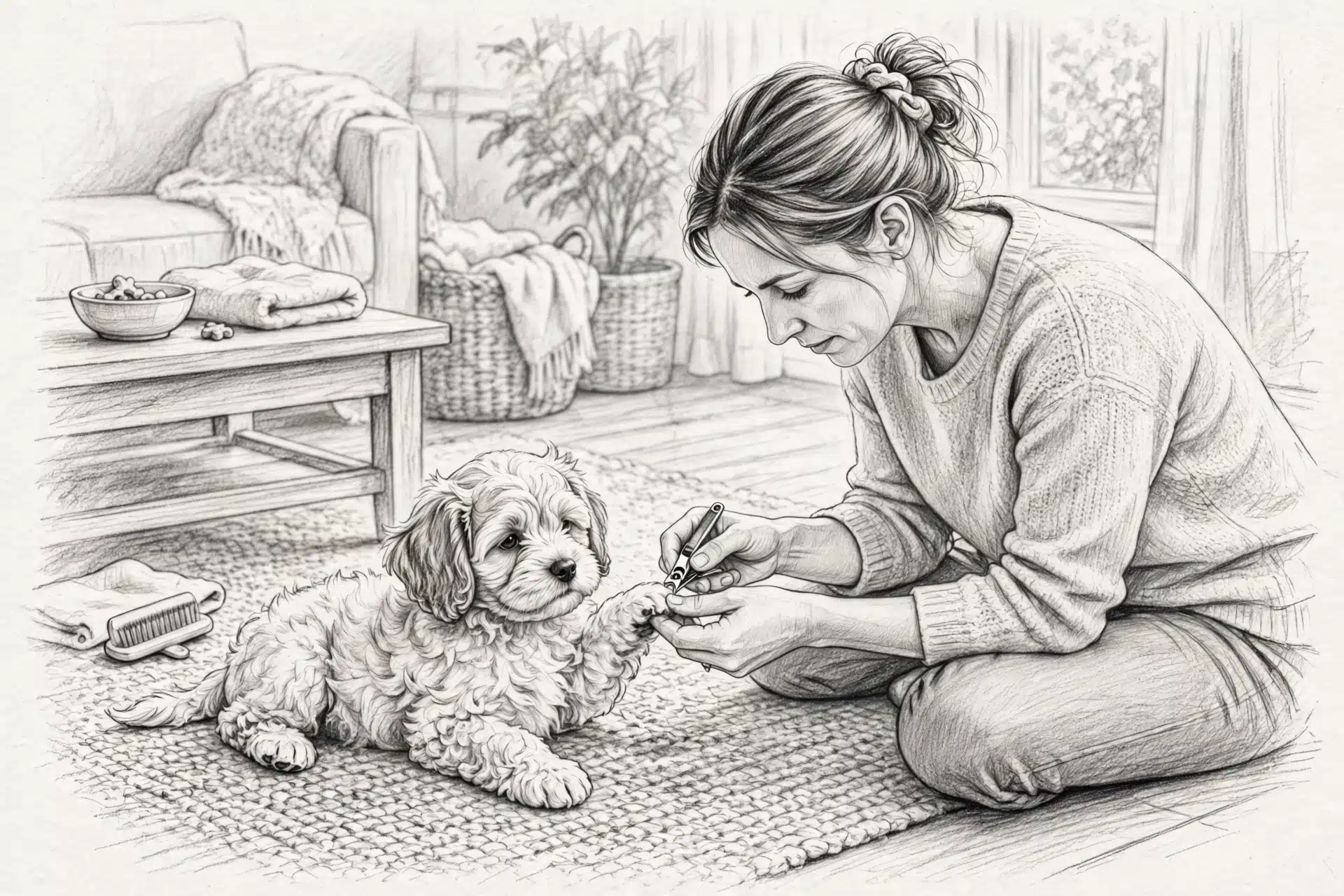
Gentle handling prepares a puppy for ordinary care without forcing contact. Ask whether the puppies get brief, positive practice with paws, ears, mouth, coat, and body. Small companion breeds like Havanese, Havapoo, and Cavapoo need regular brushing, nail trims, and vet exams, so early comfort with touch pays off for years.
Highlights
- Ask how often caregivers handle paws, ears, mouths, coats, and tails.
- Find out whether grooming touch is paired with calm praise, food, or another positive experience.
- Ask how the breeder notices stress and ends a session before the puppy feels overwhelmed.
- Request guidance for continuing short handling sessions at home.
Specs
- Best for: Preparing a puppy for grooming, family care, and veterinary handling
- What to verify: Brief touch sessions involving paws, ears, mouth, coat, and body
- Strong answer: Positive handling paced to each puppy’s comfort
- Buyer signal: The breeder can explain stress cues and recovery
Pros
- Supports calmer grooming and veterinary routines.
- Applies especially well to small companion breeds.
- Gives families an easy foundation to continue at home.
Cons
- Handling alone does not replace professional grooming or veterinary care.
- Some puppies may still need a slower introduction after moving homes.
It ranks second because handling shapes daily care, grooming, and future vet visits, and it shows you the difference between respectful preparation and forced restraint.
Last updated: September 17, 2026
Also Read: Puppy Care Blog & Resources | Sage Puppies
3. Which household sounds, surfaces, and routines have the puppies experienced?
Everyday, gradual exposure beats a crowded list of impressive activities. Ask the breeder for ordinary examples: voices, doors, footsteps, television, a vacuum heard from a comfortable distance. Puppies raised around normal household sounds and textures adjust faster in their new homes.

Highlights
- Ask which sounds and surfaces puppies have encountered, and at what stage.
- Check that exposure is brief, gradual, and paired with calm, positive moments.
- Ask whether puppies have practiced short, easy crate time and car rides.
- Look for preparation that resembles your real home, not a show.
Pros
- Helps you continue familiar routines after go-home day.
- Shows whether the program is practical rather than performative.
- Supports a smoother adjustment to Virginia homes and travel.
Cons
- Early exposure does not promise comfort in every new setting.
- Families still need to introduce new experiences gradually at home.
A strong answer sounds like a day in a real house: rugs and tile underfoot, grass outside, short crate naps, and a calm car ride. The AKC notes socialization during the breeder’s weeks builds confidence for life, so concrete examples matter more than the phrase “raised with our family.” At Sage Puppies, our Havanese, Havapoo, and Cavapoo puppies grow up amid the normal rhythm of a South Jordan home, which makes go-home day feel familiar instead of frightening.
Specs
- Best for: Assessing readiness for everyday household life
- What to verify: Sounds, surfaces, routines, crate time, travel, and recovery
This ranks third because a puppy’s first home already has its own sounds, surfaces, and schedule.
Last updated: September 17, 2026
Also Read: Guides – Sage Puppies
4. How do you respond when a puppy seems uncertain or overwhelmed?
A list of socialization activities can sound impressive and still hide poor judgment. What matters more is how a breeder responds when a puppy freezes, hides, or struggles to settle. A thoughtful answer should include creating distance, lowering the intensity, letting the puppy recover, then trying again later at an easier level.

Highlights
- Listen for patience, distance, rest, and gradual reintroduction.
- Be cautious of answers centered on forcing, flooding, or making a puppy endure an experience.
- Ask whether the breeder can describe how different puppies respond to the same activity.
- Request examples of how a worried puppy was supported.
What to verify
- Stress signals: Does the breeder recognize a tucked tail, yawning, lip licking, or avoidance as signs to slow down? The AVSAB position statement favors positive exposure during the sensitive window before 14 weeks, which only works when each puppy’s comfort sets the pace.
- Recovery steps: A strong answer is simple: the breeder reduces pressure and lets the puppy recover. Puppies learn confidence from safe exits, not endurance. See Penn Vet’s puppy development guidance for how early experiences shape adult behavior.
- Pacing and records: Ask how the breeder tracks each puppy’s responses and how those notes shape the family match. A sensitive puppy does best with a calm household, and a breeder who knows the difference will say so.
Pros
- Helps identify humane, thoughtful handling.
- Shows whether the breeder observes behavior rather than checking boxes.
- Supports better expectations for a sensitive or reserved puppy.
Cons
- A cautious response is not automatically a serious problem.
- Keep consulting your veterinarian or a qualified trainer if concerns persist.
This ranks fourth because an activity list can sound impressive while hiding poor judgment. A puppy-centered breeder knows confidence grows through safe recovery, not overwhelm.
Last updated: September 17, 2026
5. How do you observe and describe each puppy’s temperament?
Individual observations matter more than picking by coat color or the most outgoing photo. A good breeder can tell you what each puppy is actually like because they see them every day, in ordinary moments. Ask them to describe confidence, energy, handling response, curiosity, play style, sensitivity, and how quickly each puppy settles.

Highlights
- Ask what the breeder has noticed about confidence, energy, affection, play, and rest
- Find out whether observations come from repeated time in normal settings, not one dramatic test
- Explain your household routine, children, other pets, and activity level so the breeder can discuss fit honestly
- Ask how breed tendencies and each puppy’s own personality are considered together
What to verify
- Repeated observations of confidence, energy, handling, play, and recovery after new experiences
Pros
- Helps families think beyond appearance
- Supports better fit for children, apartments, and companion homes, which matters for families considering Havapoo puppies in Virginia or Cavapoos
- Creates a more honest conversation about uncertainty
Cons
- Temperament observations cannot predict every adult behavior
- A puppy’s personality keeps developing after placement
Watch for one strong buyer signal: the breeder asks about your lifestyle before recommending a match. At Sage Puppies, that conversation comes first, because a balanced description without guaranteed outcomes is the most truthful answer anyone can give. A puppy is not a finished personality, but careful observation helps families choose a realistic fit instead of selecting by urgency. This ranks fifth because early development should lead to a thoughtful family match.
Last updated: September 17, 2026
Also Read: Georgia Puppies: How to Assess Early Puppy Socialization
6. What early routines and foundations will continue after go-home day?
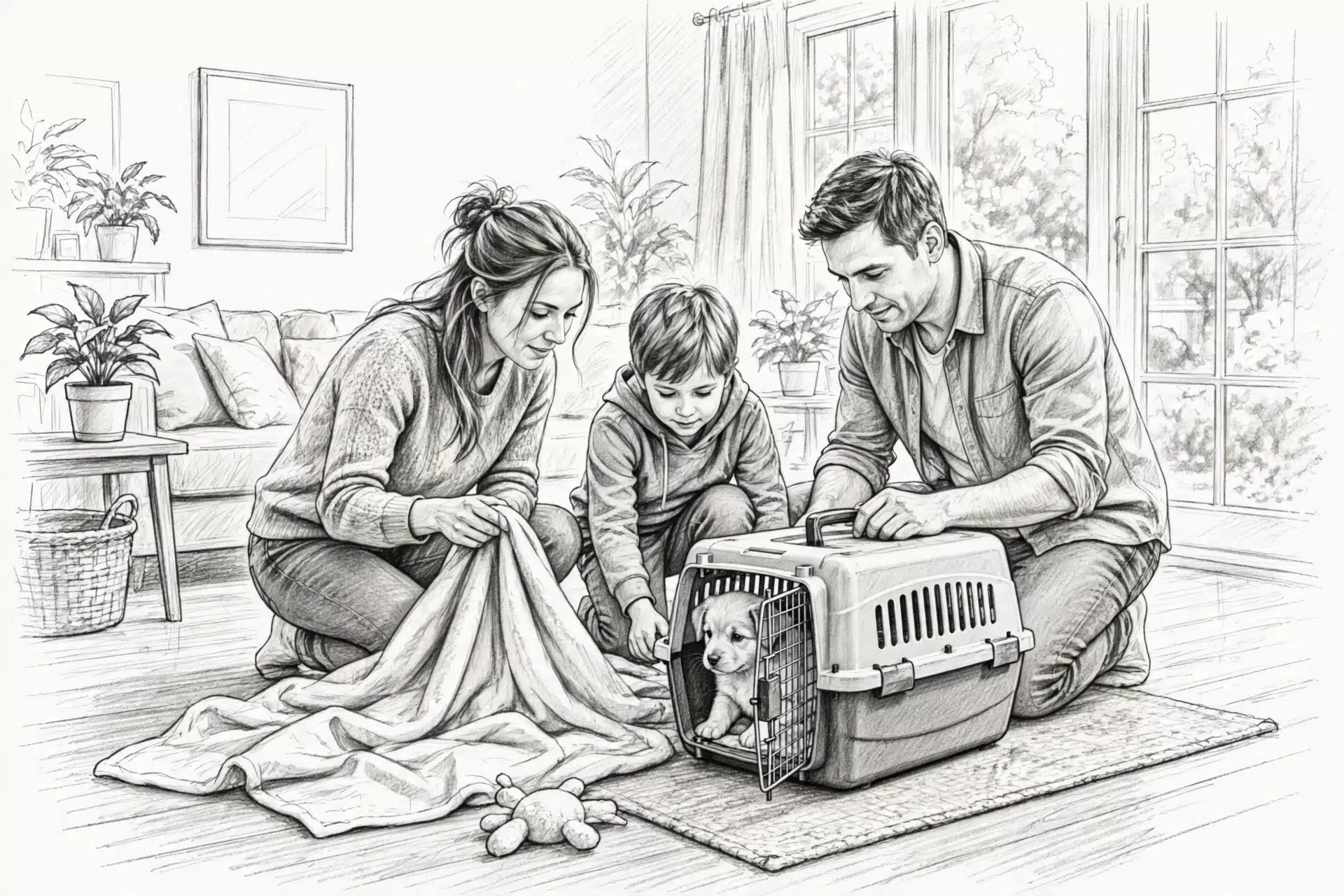
A familiar routine can make pickup or delivery day feel far less abrupt for a young puppy. Ask exactly what your puppy already knows, then repeat it at home for the first several days. This matters most for families in Virginia who receive a puppy through delivery or drive to meet one.
Highlights
- Ask for the current feeding schedule and the exact food the puppy eats, so you can avoid sudden diet changes.
- Find out what potty area, sleep routine, crate exposure, and rest expectations the puppy already knows.
- Ask which familiar items, like a blanket or toy, can travel with the puppy to ease the trip.
- Request a simple first-week plan in writing that your veterinarian can review and adjust.
A strong breeder hands you continuity, not just a puppy. AVMA guidance on bringing home a new puppy stresses keeping diet and routine steady during transitions, and the AKC’s puppy first-week advice points to consistent sleep and potty schedules as the fastest way to settle a new pup.
Pros
- Makes travel and the first days more predictable
- Helps families preserve familiar routines
- Connects breeder care with responsible home preparation
Cons
- Every puppy still needs individualized adjustment after arrival
- Your own veterinarian’s advice should guide ongoing care
This ranks sixth because early development only sticks when your family can keep it going at home.
Last updated: September 17, 2026
Also Read: How Missouri Puppies Learn Confidence Through Early Socialization
7. What records or updates can I review before reserving?
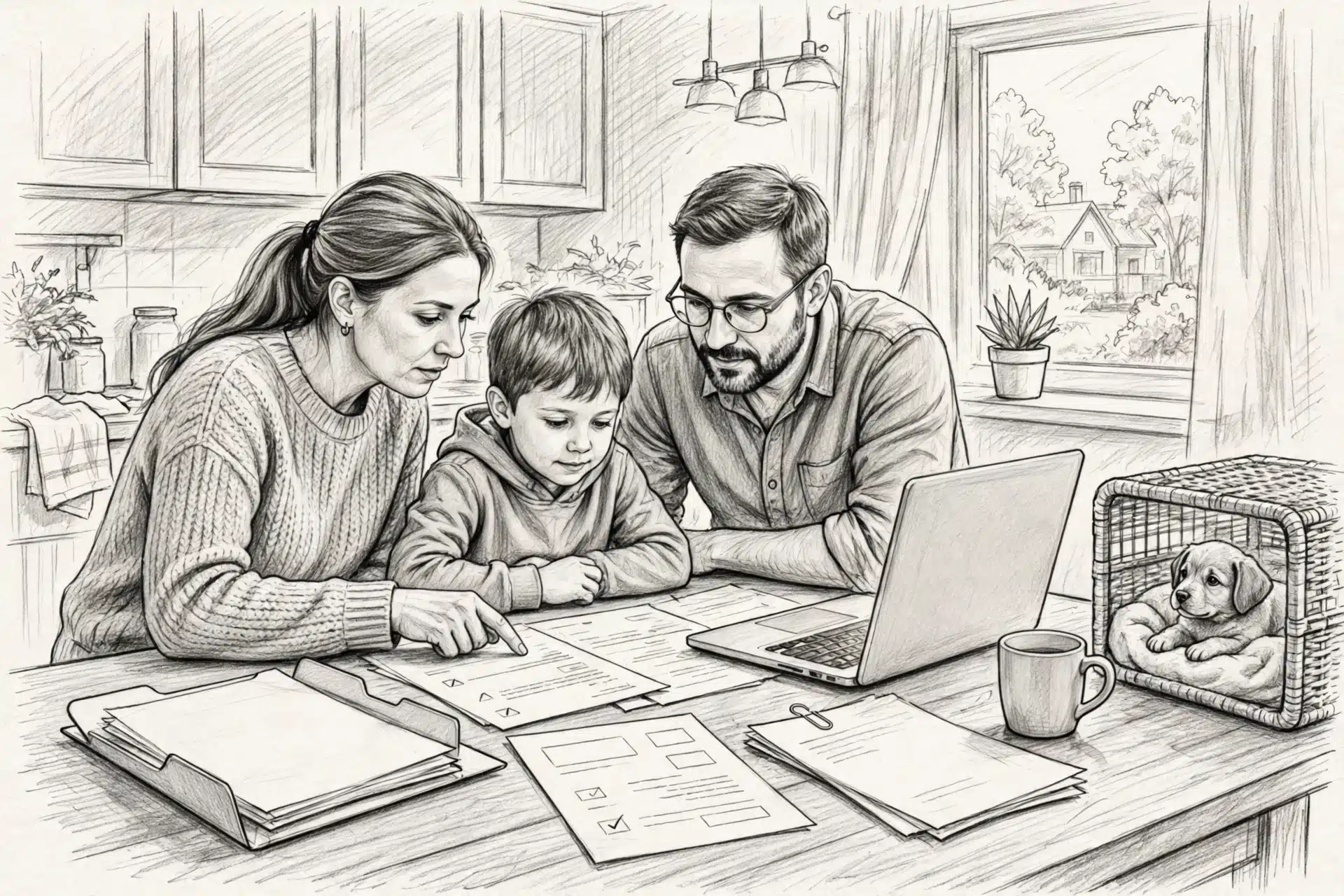
Records don’t create early development, but they prove whether a breeder keeps it. Before you send a deposit, ask exactly what you can see: recent videos, written development notes, vet records, and parent health information. A strong answer is organized, current, and matches your specific puppy, not just the litter.
Highlights
- Request current, unedited video when an in-person visit is not practical.
- Ask whether notes identify the individual puppy, not only the litter.
- Review veterinary records, vaccination history, and parent health information before reserving.
- Confirm go-home timing, pickup or delivery details, and the paperwork you will receive.
Pros
- Creates a clearer record for your veterinarian.
- Helps remote Virginia buyers evaluate a breeder from a distance.
- Makes age, care, and handoff expectations easier to confirm.
Cons
- Documents should supplement, not replace, a real conversation about the puppy.
- State and travel requirements vary, so confirm current rules.
Specs
- Best for: Verifying claims before sending a deposit or application
- What to verify: Current updates, individual notes, health records, age, and travel details
For Virginia buyers, two rules matter here. The state prohibits transporting a dog for sale under eight weeks without its mother, under Virginia’s animal sale code. Virginia also requires dealers to provide age-appropriate vaccinations and an immunization history to the new owner. Ask the breeder which documents apply to your transaction.
Last updated: September 17, 2026
How to choose the right early-development program
Pick a breeder who describes an age-by-age plan, not just the phrase well socialized. Ask what the puppies experienced each week: calm handling, household sounds, gentle grooming practice, and plenty of rest.
Use these criteria:
- Specific progression – they can explain what happens at 3, 5, and 7 weeks.
- Evidence – current videos, individual temperament notes, and vaccination records.
- Clear go-home plan – age at handoff, pickup or delivery steps, and paperwork.
- Fit – honest matching to your kids, pets, schedule, and grooming routine.
If you’re in Virginia, also confirm delivery details and any documents needed at the handoff.
Sage Puppies checks every box: health-tested parents, home-raised Havanese, Havapoo, and Cavapoo litters in South Jordan, Utah, and transparent nationwide delivery. Browse Available Puppies and review How It Works before you commit.

Ready to find a puppy raised the right way from day one? Explore available Havanese, Havapoo, and Cavapoo puppies at Sage Puppies. Ask us about health testing, early socialization, pickup, or delivery. Submit your application today.
Frequently Asked Questions
Q1: puppies for sale in Virginia
Ask each Virginia breeder how puppies are raised at home, whether parents are health tested, and what daily socialization looks like during the first eight weeks.
Q2: What age should a puppy come home?
Most breeders release puppies between 8 and 10 weeks. Extra weeks with mom and littermates build confidence, bite control, and early manners.
Q3: How do I know a puppy was socialized?
Ask for videos of puppies handling new sounds, surfaces, and people. Well-socialized pups approach rather than hide.
Q4: Can Sage Puppies deliver to Virginia?
Yes. Families can arrange nationwide delivery or travel to South Jordan, Utah, for local pickup.
Q5: What documents should I receive?
Request parent health testing records, vaccination and deworming dates, and a written care plan.



