Quick Summary: Early socialization builds a confident puppy through brief, positive experiences, not overwhelming exposure. Start with gentle handling at 2-3 weeks, then add calm visitors, car rides, and new surfaces while watching for stress signals like freezing or hiding. Avoid dog parks until a vet approves, and let the puppy set the pace. Ask breeders for specific timing and stress-monitoring details to verify their socialization claims.
A Havanese puppy who accepts a winter coat, car ride, grooming table, visitors, and a new home with ease did not get there by accident. Those calm responses start with gentle, well-timed experiences in the first weeks of life.
Families searching for Havanese puppies Missouri often worry about doing too much too soon, especially before vaccines are complete. The real goal is not to expose a puppy to everything. It is to build trust through safe, short, positive moments.
This guide explains developmental timing, health-conscious outings, and confidence cues to watch for. It also helps families comparing Havapoo puppies Missouri and Cavapoo puppies Missouri prepare for the same thoughtful start. Well-raised Havanese puppies Missouri benefit from calm handling, home sounds, and patient support before they ever meet their new family.
Step 1: Start With Calm Foundations From Birth to 3 Weeks
What Puppies Learn Before Their Eyes and Ears Fully Develop
The first three weeks are about safety, warmth, scent, and steady care. Puppies cannot yet explore the world in the usual way. During the first two weeks, they cannot see or hear, but they can smell, feel, crawl, and respond to touch. Their eyes and ears begin opening during the transition toward week three, according to Texas A&M veterinary guidance.
For families seeking Havanese puppies Missouri, this early stage explains why a calm breeder home matters long before a puppy comes home.
- A settled mother teaches puppies that people nearby are safe.
- Littermates provide warmth, contact, and early body awareness.
- Gentle, brief handling helps puppies accept human touch.
- Clean bedding and a stable routine reduce needless stress.
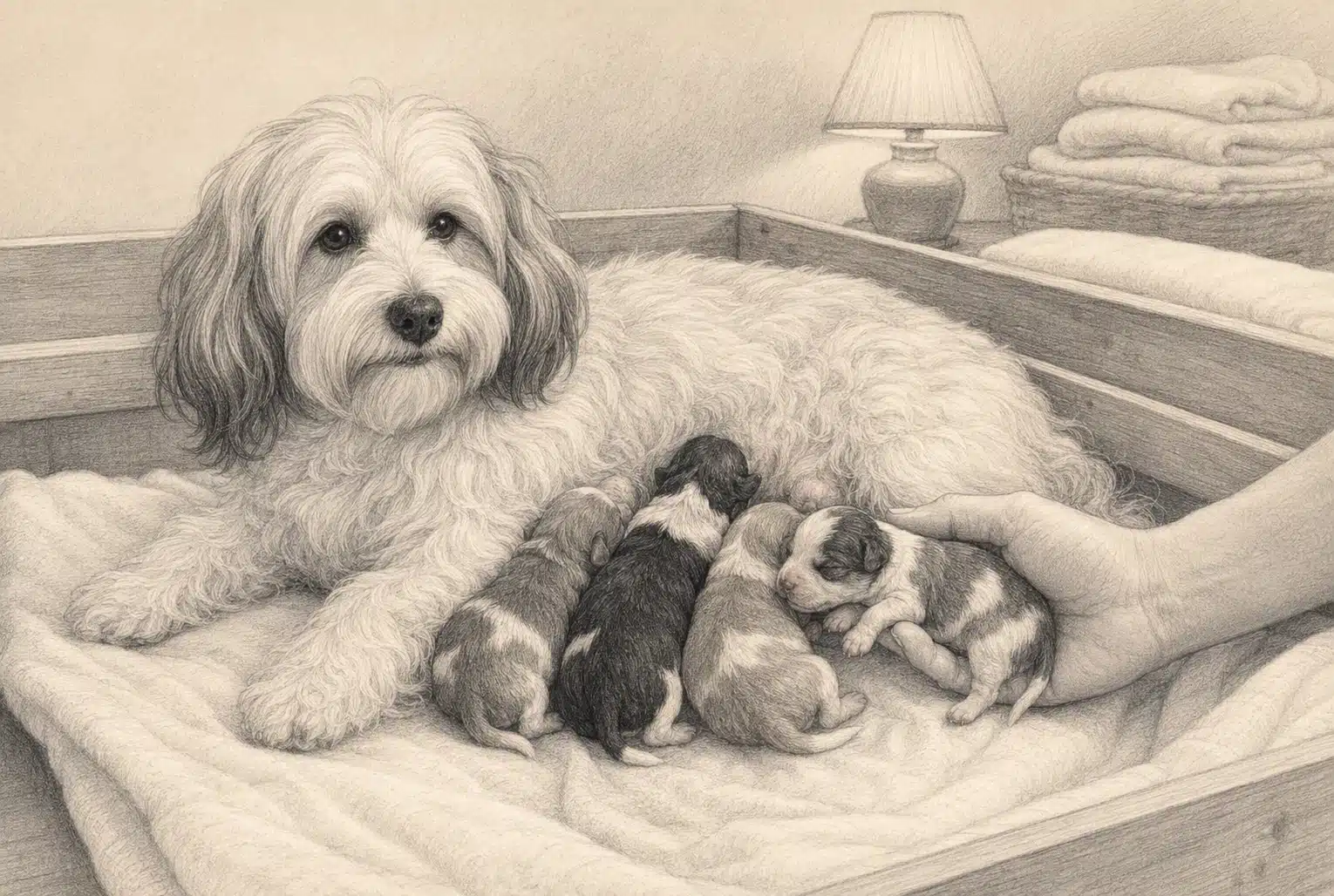
Key insight: Early handling should be calm and brief. Newborn puppies need rest and nursing far more than constant stimulation.
The Breeder’s Role in Building a Secure Start
A breeder’s first job is not to create a bold puppy. It is to protect a secure beginning. That means watching nursing, weight gain, warmth, cleanliness, and the mother’s comfort every day.
At Sage Puppies, a home-raised setting supports quiet contact without turning the whelping area into a busy visitor space. As puppies begin walking and their senses open, caregivers can add small, low-pressure changes.
| Age | Calm exposure | What it supports |
|---|---|---|
| Birth to 2 weeks | Gentle handling and steady household sounds | Trust in touch and routine |
| 2 to 3 weeks | Safe textures, brief room changes, soft voices | Curiosity without overload |
Keep unfamiliar dogs, public floors, and crowded visits out of this stage. Puppies rely on their mother for everything during the first month, including nourishment and comfort, notes Cornell’s canine health center.
Also Read: 10 Adorable Havapoo Colors You Need to See (2026)
Step 2: Expand Positive Experiences From 3 to 6 Weeks
People, Touch, and Everyday Handling
At three weeks, puppies begin to see, hear, and move with purpose. This is the time for short, gentle one-on-one contact while they still stay close to their mother and littermates. The American Kennel Club notes that this early period supports positive human interaction and dog-to-dog learning.
Keep each session calm and brief:
- Let the puppy sniff your hands first.
- Lift with full support under the chest and rear.
- Gently touch paws, ears, mouth, and tail.
- End before the puppy becomes tired or fussy.
Invite a few healthy, calm adults to visit. Ask every visitor to wash hands and remove outdoor shoes. Skip visits from anyone who has been around sick dogs, dog parks, or crowded dog events.
A confident puppy may relax, explore, or return for more contact. Freezing, repeated squeaks, or trying to hide means the session needs to get easier.
Sounds, Surfaces, and Safe Novel Objects
Add one or two new items each day, not a crowded obstacle course. Rotate soft toys, a cardboard tunnel, a low wobble board, and safe household textures such as carpet, rubber matting, vinyl, and artificial turf.
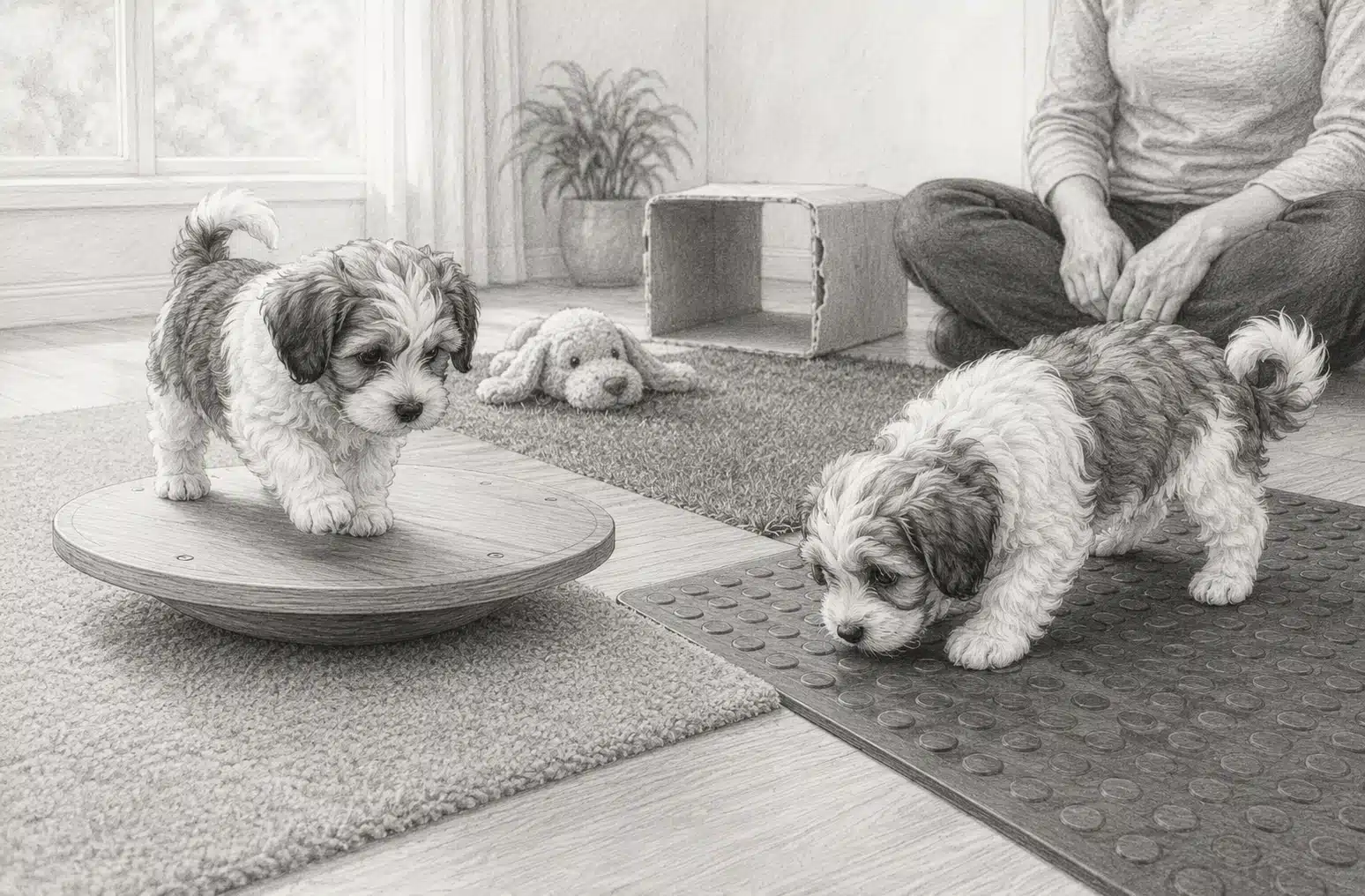
Pair new sounds with food, play, or a relaxed cuddle. Start quietly with a television, vacuum in another room, soft music, and a dropped spoon. Increase volume only when the litter stays loose and curious.
| Experience | Start Small | Positive Response |
|---|---|---|
| New surface | One paw on a rubber mat | Puppy steps forward willingly |
| Household sound | Low-volume vacuum nearby | Puppy looks, then resumes play |
| Novel object | Cardboard box with open sides | Puppy sniffs or climbs inside |
The goal is not to make puppies “tough.” It is to teach them that new things are safe. Varied surfaces, toys, and gentle handling can build useful confidence during these weeks.
Also Read: Havanese, Havapoo & Cavapoo Puppy Care Blog
Step 3: Build Flexibility From 6 to 8 Weeks
Practice Short Separations Without Creating Pressure
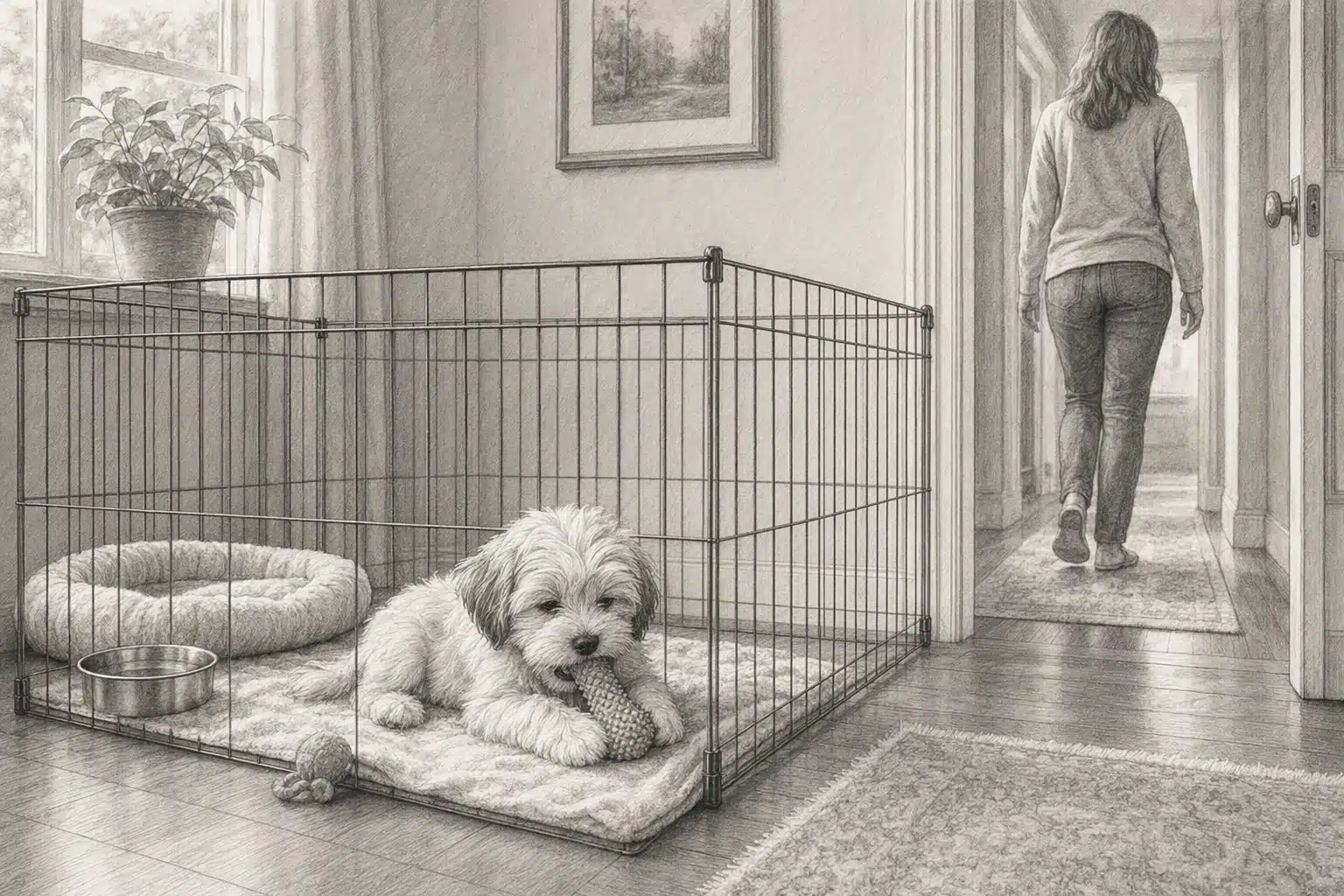
At six to eight weeks, puppies can learn that brief alone time is safe. Start while they are calm, full, and ready to rest. A few quiet moments apart matter more than long sessions.
The AVMA socialization review advises positive exposure at each puppy’s own pace. Do not force a worried puppy to “push through.”
- Set a puppy in a clean pen with a safe chew.
- Step away for 30 to 60 seconds.
- Return before distress builds.
- Slowly add time only when the puppy stays settled.
Look for a loose body, quiet chewing, or a puppy who naps. Pause and shorten the session if you see frantic pacing, repeated screaming, or attempts to climb out.
Keep departures and returns low-key. Big goodbyes can make separation feel like a major event.
| Calm practice | Avoid |
|---|---|
| Brief rests in a familiar pen | Leaving a puppy alone after scary activity |
| A safe chew or soft bedding | Forcing a crying puppy to wait it out |
| Gradual time increases | Sudden, lengthy isolation |
Prepare for Grooming, Travel, and Home Routines
Small companion dogs need calm handling from an early age. Build it into normal daily care, not a single big lesson.
Practice these short routines:
- Touch paws, ears, tail, and muzzle, then offer a treat.
- Brush for a few gentle strokes.
- Let puppies enter and rest in a carrier with the door open.
- Take brief, secured car rides around the block.
- Introduce household sounds at a low level, such as a vacuum in another room.
The AVMA recommends gentle handling of paws, ears, and tail to help dogs prepare for nail trims, medicine, and vet exams. Keep exposure clean and controlled. Puppies have higher disease risk in shared dog spaces, so avoid dog parks, unknown dogs, and soiled public ground until your veterinarian guides you on safe outings.
End every session while the puppy is still relaxed. Confidence grows from many easy wins.
Also Read: Sage Puppies vs Blue Star Pups: Which Offers Better Puppy Support?
Step 4: Use the 8-to-12-Week Window for Safe Exploration
Low-Risk Ways to Meet People and See the World
At 8 to 12 weeks, your puppy is ready to notice new sights, sounds, and people. Keep each outing short, calm, and positive. The AVMA review of puppy socialization notes that puppies are especially open to unfamiliar social and physical settings during this stage.
Start with controlled exposure:
- Invite one calm visitor at a time to offer a treat.
- Carry your puppy through a busy area instead of placing them on public ground.
- Sit in a parked car, then take short rides.
- Play low-volume sounds such as a doorbell, vacuum, or traffic.
- Let your puppy walk on safe indoor surfaces like tile, carpet, and a rubber mat.
- Practice gentle touches of paws, ears, and tail.
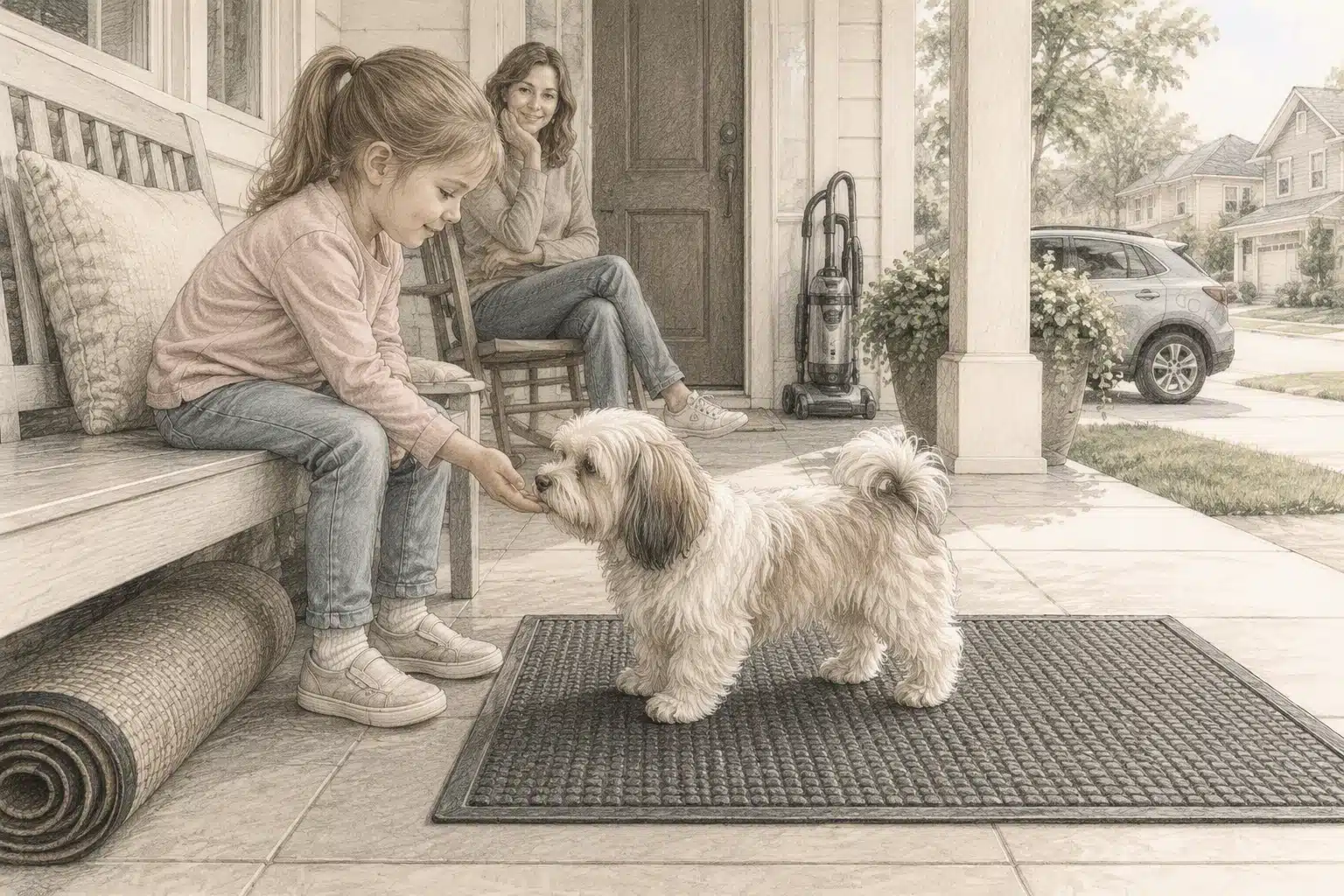
Watch your puppy closely. Loose muscles, a soft face, and curiosity are good signs. A tucked tail, frozen body, or repeated retreat means the experience is too much.
Keep new experiences brief. End while your puppy still feels safe and interested.
Choosing Dogs, Classes, and Locations Carefully
Social time should never mean uncontrolled dog contact. Until the vaccine series is complete, avoid dog parks, pet-store floors, shared water bowls, and areas with unknown dogs or feces.
Choose exposure with care:
| Option | Safer choice | Skip it if |
|---|---|---|
| Dog meeting | Healthy, calm, known vaccinated dog | Dog is rough, sick, or unknown |
| Puppy class | Clean class with vaccine rules | Staff cannot explain hygiene rules |
| Outdoor trip | Private yard or clean patio | Busy dog park or shared grass area |
| Visitor | Calm adult or gentle child | Person pushes handling or play |
The AVMA advises that puppies face higher disease risk in group settings because they explore with their mouths and immune systems are still developing. Read its guidance on disease risks in canine social settings before choosing a class.
Ask your veterinarian what fits your puppy’s vaccine plan and Missouri area risks. Reward calm looking, sniffing, and walking away. Your goal is not a puppy who greets everyone. It is a puppy who feels secure around the world.
Step 5: Follow the Puppy’s Signals Instead of Forcing Confidence
Green Signals That a Puppy Is Learning
Confidence grows when a puppy can explore at their own pace. Watch the whole body, not just a wagging tail. A relaxed puppy may pause, look around, then choose to move closer.
Green signals include:
- A loose, wiggly body and soft eyes
- Sniffing, taking treats, or checking back with you
- Choosing to approach after a short pause
- Recovering quickly after a new sound or sight
- Playing or settling once the new thing is nearby
Reward these small choices with calm praise and a tiny treat. The American Veterinary Society of Animal Behavior advises graded exposure that matches each puppy’s response, rather than rushing every greeting.
Let your puppy watch from a safe distance first. Curiosity is progress, even if they do not want to say hello.
Yellow and Red Signals That Mean Slow Down
Yellow signals mean lower the challenge. Increase distance, shorten the visit, or give the puppy a quiet break.
| Signal level | What you may see | Your next move |
|---|---|---|
| Yellow | Lip licking, yawning, looking away, low body | Step back and offer a treat |
| Red | Freezing, trembling, tucked tail, retreating | End the interaction calmly |
| Urgent | Growling, snapping, hard stare | Create space and seek qualified help |
Do not carry a worried puppy toward a person, dog, cart, or noisy event. Avoid telling them to “get over it.” Fear can worsen when exposure feels too intense. AVSAB notes that excessive fear, withdrawal, and avoidance show a puppy is overstimulated during socialization in its puppy socialization statement.
A retreat is useful information, not bad behavior. Give your puppy distance, then try an easier version another day.
Also Read: Georgia Puppies: How to Assess Early Puppy Socialization
Step 6: Continue Socialization From 12 to 16 Weeks and Beyond
Turn New Experiences Into a Weekly Habit
Keep socialization going after your puppy comes home. The key is short, safe, positive practice, not a packed schedule. Puppies remain open to learning well beyond 12 weeks, especially when they can explore at their own pace, according to the AVMA socialization review.
Each week, choose two or three small new experiences:
- Meet a calm visitor wearing a hat or using a cane.
- Hear household sounds from a comfortable distance.
- Ride in the car, then enjoy a treat and go home.
- Walk on a clean new surface, such as gravel or a store mat.
- Watch friendly dogs from a distance.
Stop before your puppy feels overwhelmed. A loose body, soft eyes, and interest show comfort. Freezing, tucked tail, or repeated retreat means create more space.
Until your vet confirms the vaccine plan is complete, avoid dog parks, shared water bowls, and areas with unknown dog traffic. Puppies are more at risk in group settings, so choose clean, controlled exposure instead.
Match Experiences to the Dog You Hope to Share
Build practice around your real life. A Havanese who will join family outings needs calm exposure to people, traffic sounds, and polite greetings. A puppy who will travel needs easy car rides, a carrier, and brief stays in new places.
| Your Family Life | Useful Practice |
|---|---|
| Young children | Gentle handling, dropped toys, supervised play |
| Frequent guests | Settle on a mat while visitors enter |
| Road trips | Short drives and calm rest breaks |
| Apartment living | Elevators, hallway sounds, polite leash walks |
Reward brave choices with a tiny treat, praise, or play. Never force a greeting.
Confidence grows when your puppy learns, “I can look, decide, and stay safe.”
Also Read: 10 Red Flags to Avoid When Visiting a Local Puppy Breeder
Step 7: Compare Socialization Claims When Choosing Missouri Puppies
Questions That Reveal the Quality of a Puppy’s Start
“Well socialized” should mean more than puppies being held often. Ask for clear examples, timing, and how the breeder keeps each experience safe. The key social learning window begins early, and positive exposure helps reduce later fear. The AVMA’s review of puppy socialization notes that puppies are especially open to new experiences from 3 to 14 weeks.
Ask each Missouri breeder:
- Which people, sounds, surfaces, and handling routines have puppies met?
- When did those experiences begin, and how often do they happen?
- How do you watch for stress, such as freezing, hiding, tucked tails, or refusing treats?
- What is your disease-control plan before the vaccine series is complete?
- What records and home-transition guidance will you provide?
| Strong answer | Concern to explore |
|---|---|
| Specific weekly routines and calm exposure | “They are socialized” with no examples |
| Puppy-paced sessions with rest breaks | Forced greetings or overwhelming groups |
| Clear cleaning, vaccine, and visitor rules | Casual contact with unknown dogs |
Good breeders balance confidence-building with health protection. Puppies face higher illness risk in group settings, so exposure plans should limit contact with unknown dogs and contaminated areas, as AVMA guidance explains.

Give your family a confident, well-started companion. Sage Puppies raises Havanese puppies with early socialization, health-tested parents, and family-focused care. Explore available puppies, ask about pickup or delivery, and choose a puppy prepared for a calm, connected home.
Frequently Asked Questions
Q1: What is the critical socialization window for puppies, and how does early positive exposure shape a puppy’s lifelong confidence and behavior?
The key period runs from 3 to 16 weeks. Gentle, rewarding exposure helps puppies view new sounds, people, handling, and places as safe.
Q2: How do you safely socialize an unvaccinated puppy with other dogs and people without risking their health?
Choose healthy, vaccinated dogs you know. Invite calm visitors home, carry your puppy in public, and avoid dog parks, pet-store floors, and unknown waste areas.
Q3: Can you outline a week-by-week socialization schedule for puppies from 3 to 16 weeks of age?
Add one small positive experience daily. Start with home sounds and handling, then calm visitors, car rides, safe outings, and short puppy classes after your vet approves.
Q4: What if my puppy seems scared during an outing?
Increase distance, stay calm, and offer treats. Never force greetings. End while your puppy can still recover and try an easier version later.
Q5: Should children help socialize a Havanese puppy?
Yes, with close adult guidance. Teach children to sit quietly, use gentle hands, and let the puppy choose contact.
Conclusion
A confident Havanese puppy learns that new people, sounds, surfaces, handling, and short outings are safe. Start early, keep each experience brief, and let the puppy choose the pace.
Watch for relaxed body language, curiosity, and quick recovery after a surprise. If your puppy freezes, hides, or will not take treats, create more space and make the next exposure easier.
The key is balance. Early social contact matters, but so does smart disease control. The AVMA’s socialization review notes that positive exposure in the early weeks can help prevent later fear, while safe settings reduce health risks. Calm, steady practice builds trust that lasts.