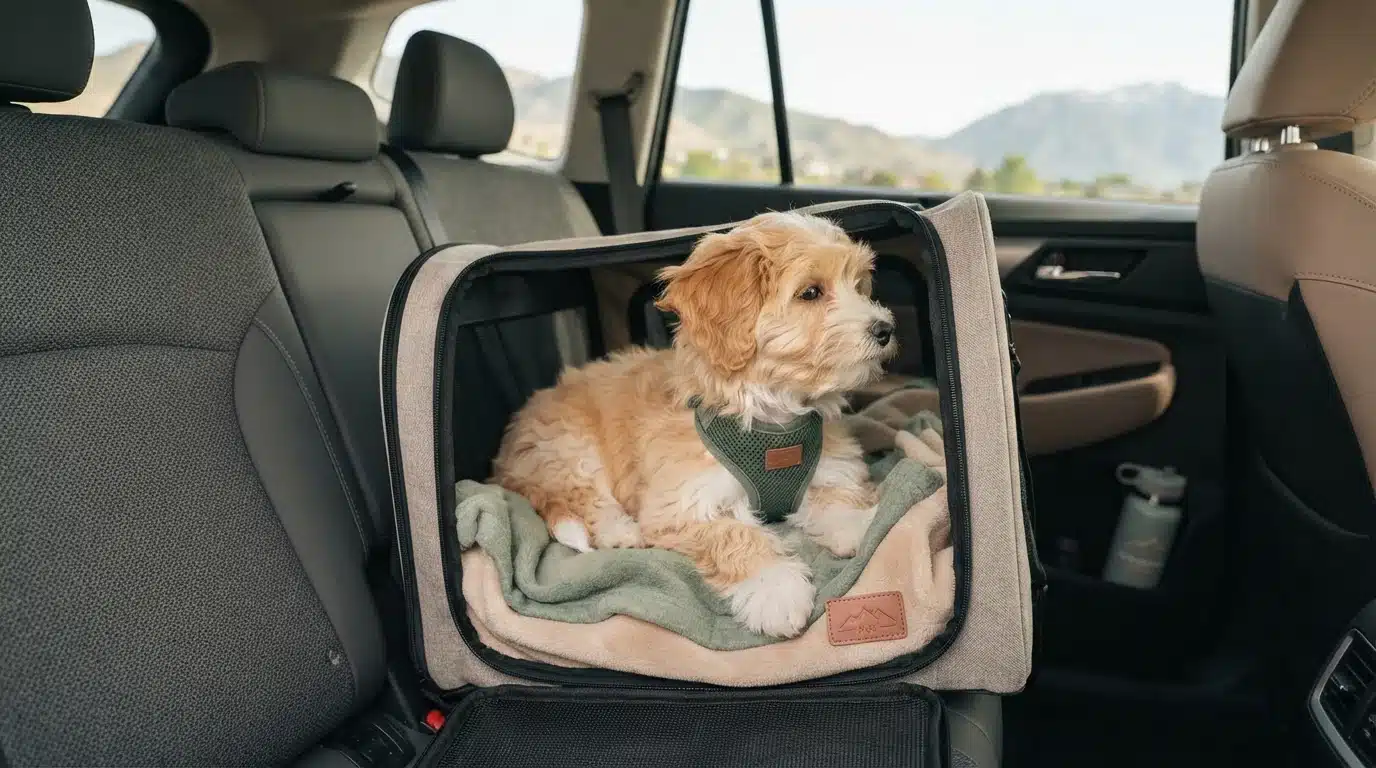
Quick Summary: A safe first Louisiana summer road trip with a Havanese, Havapoo, or Cavapoo puppy starts before the car moves: practice short rides, secure the puppy in a properly sized crate or harness, and never leave it alone in a parked car, which can heat up 20°F in 10 minutes. Plan stops every two to three hours for water, leash walks, and quiet potty breaks in shade, and pack a functional tote with food, records, and cleanup supplies. Check the destination state’s entry rules, like health certificates, well before crossing state lines, and watch for heat-stress signs like heavy panting or weakness, stopping to cool the puppy and call a vet if they appear.
A Louisiana summer drive can become hard fast if a small puppy rides loose, misses breaks, or waits beside a hot parking lot. Havanese, Havapoo, and Cavapoo puppies need more than a leash and water bowl for their first long ride.
This guide solves the common gaps in Havanese summer care: safe car restraint, heat-aware stop plans, short puppy-friendly travel blocks, and a packing setup that keeps essentials close. You will also find practical Cavapoo travel essentials for food, cleanup, comfort, and rest.
Good planning protects a young puppy’s body and helps build calm travel habits. For Havanese summer care, start before the car moves, not after your puppy shows stress.
Step 1: Build Positive Car-Ride Experience Before Departure
Make the Carrier or Restraint Familiar at Home
Start several days before the trip. Your puppy should see the carrier or vehicle harness as a calm, normal place, not a signal that something scary is about to happen.
Leave the carrier open in a quiet room with a thin, washable mat and a safe chew. Toss treats inside, then let your Havanese, Havapoo, or Cavapoo choose to enter. Do not close the door at first.
- Feed a few treats in the carrier.
- Practice brief door closures while your puppy stays relaxed.
- Build up to a minute or two, then release before fussing starts.
- Use the same setup in the vehicle.
The AVMA recommends a carrier large enough for a dog to stand, turn, and lie down, secured so it cannot slide.
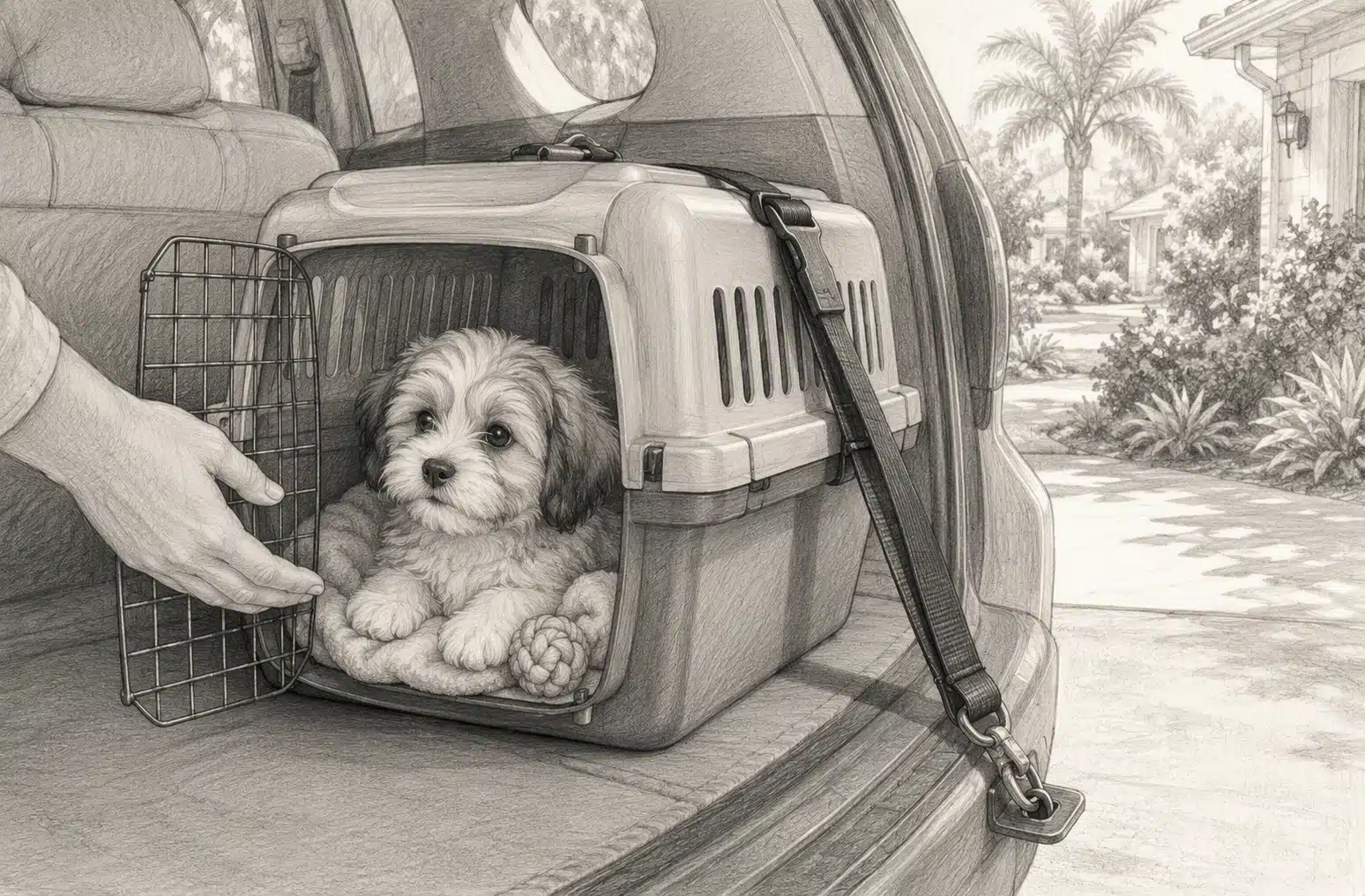
Havanese summer care starts before the road trip. A familiar, well-ventilated restraint helps your puppy stay calmer when Louisiana heat and new sounds add stress.
Progress From a Parked Car to Short Drives
Keep the first car sessions short and uneventful. Sit with your puppy in the parked, air-conditioned car for two to five minutes. Offer a treat, speak softly, then go back inside.
Next, start the engine without moving. If your puppy remains loose-bodied and quiet, take a slow loop around the block. End at home or somewhere pleasant, such as a shaded patch of grass for a potty break.
Use this simple plan:
| Practice stage | Goal | Stop if you see |
|---|---|---|
| Parked car | Calm settling | Trembling or nonstop crying |
| Engine on | Comfort with sound | Drooling or frantic escape attempts |
| Five-minute drive | Relaxed restraint time | Repeated vomiting or distress |
Never let a puppy ride loose or on a lap. A restraint protects your puppy and keeps you focused on driving. For Havanese summer care, run the AC before loading and never leave your puppy alone in the car.
Also Read: Puppy Care Blog & Resources | Sage Puppies
Step 2: Set Up a Safe, Cool Vehicle for the Puppy
Choose and Secure the Right Vehicle Restraint
Your puppy should never ride loose, on a lap, or in the front seat. A sudden stop can turn a small Havanese, Havapoo, or Cavapoo into a serious distraction or cause an injury.
Use one of these setups:
| Restraint | Best use | Setup check |
|---|---|---|
| Secured travel crate | Most young puppies | Secure it near the vehicle center so it cannot slide |
| Seat-belt harness | Calm puppy used to a harness | Clip it to the rear-seat belt, never the collar |
| Soft carrier | Short trips with a tiny puppy | Use only if it can be firmly secured and well ventilated |
Choose a crate that lets your puppy stand, turn, and lie down. Add a washable pad and one familiar blanket. Remove loose chew toys that could become a hazard while you drive.
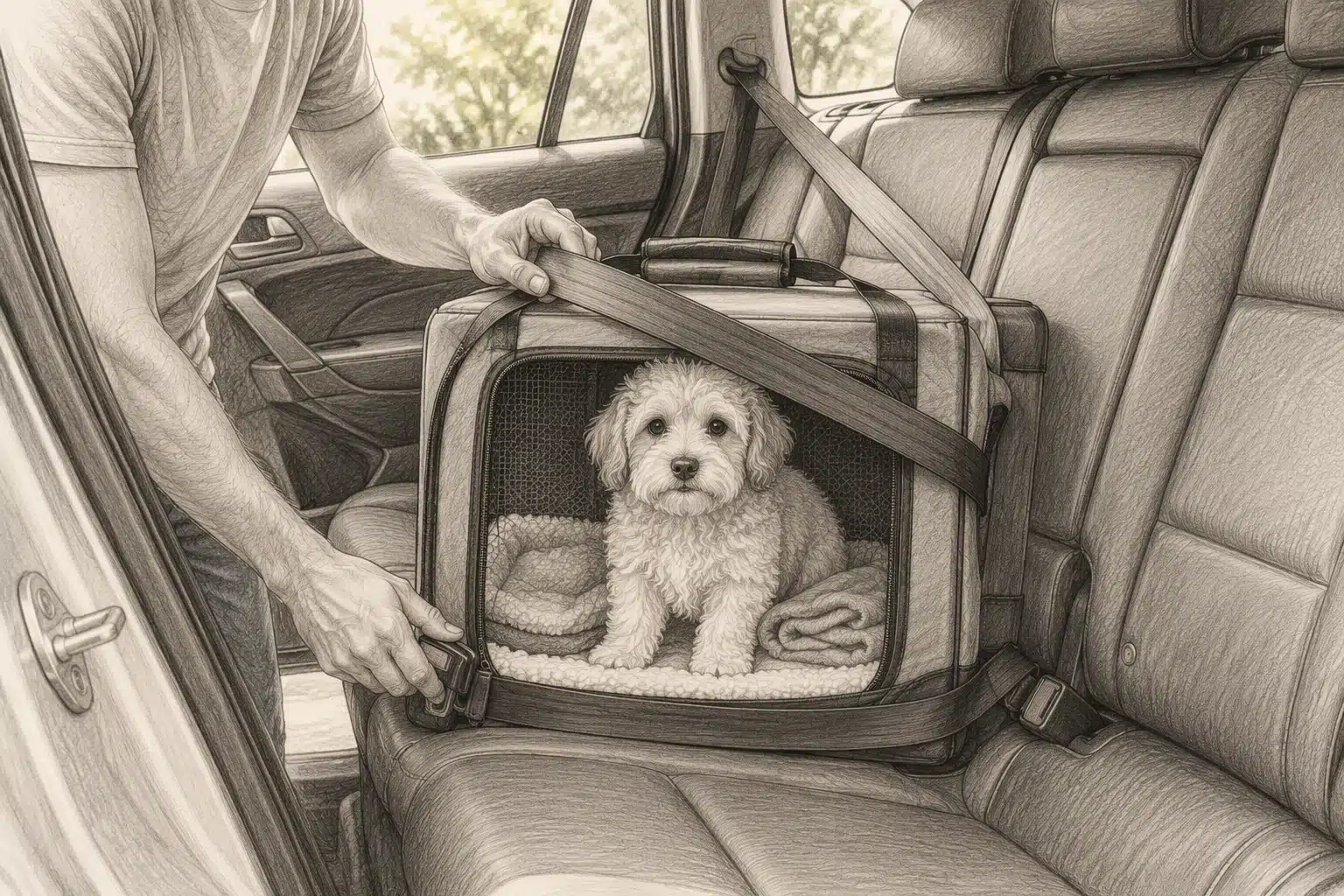
The AVMA recommends a proper harness, crate, or carrier, secured to prevent movement. Keep the restraint in the back seat or rear cargo area, never in front of an active airbag.
Test the whole setup on a 10-minute drive before trip day. You want to fix fit, noise, or motion issues at home.
Control Heat Before the First Stop
Cool the car before your puppy gets inside. Start the air conditioning, then load your puppy once the cabin feels comfortable.
Use this quick check:
- Aim rear vents toward the crate or carrier, without blowing hard on your puppy.
- Block direct sun with rear-window shades.
- Keep fresh water ready for rest stops.
- Park only where one adult can stay with the puppy if you must stop.
A cracked window is not a heat plan. The AVMA notes that a car can rise about 20°F in 10 minutes, even in shade, and pets should never be left alone inside. Watch for heavy panting, drooling, weakness, or unsteady movement. If you see them, move to air conditioning and seek urgent veterinary help.
Also Read: 8 Seasonal Hazards Every New Puppy Owner Should Prepare For
Step 3: Pack the Puppy Road-Trip Kit by Function
Pack one easy-to-reach tote, not loose items scattered through the car. Group supplies by what you need them to do, then keep the tote near a passenger seat.
Safety and Identification Supplies
Bring the gear that keeps your puppy contained, found, and secure at each stop:
- A fitted harness, standard leash, and backup slip lead
- Collar with current ID tag
- Microchip number and registry login
- Recent photo of your puppy on your phone
- Seat-belt-secured crate or travel carrier
- Small flashlight and a basic first-aid kit
The AVMA advises up-to-date tags, microchip details, and a travel carrier for pets on the road. Their travel checklist is a useful final check.
Never open the car door before the leash is clipped on. A frightened puppy can bolt in seconds.
Food, Water, and Comfort Items
Keep your puppy on their normal food during the trip. New treats or a sudden diet change can cause an upset stomach.
| Item | What to pack |
|---|---|
| Food | Full trip supply, plus one extra day |
| Water | Bottled water and a spill-resistant bowl |
| Feeding | Measuring scoop, collapsible bowl, familiar treats |
| Comfort | Small blanket, safe chew, and one familiar toy |
| Heat help | Cooling mat or damp towel, stored clean and dry |
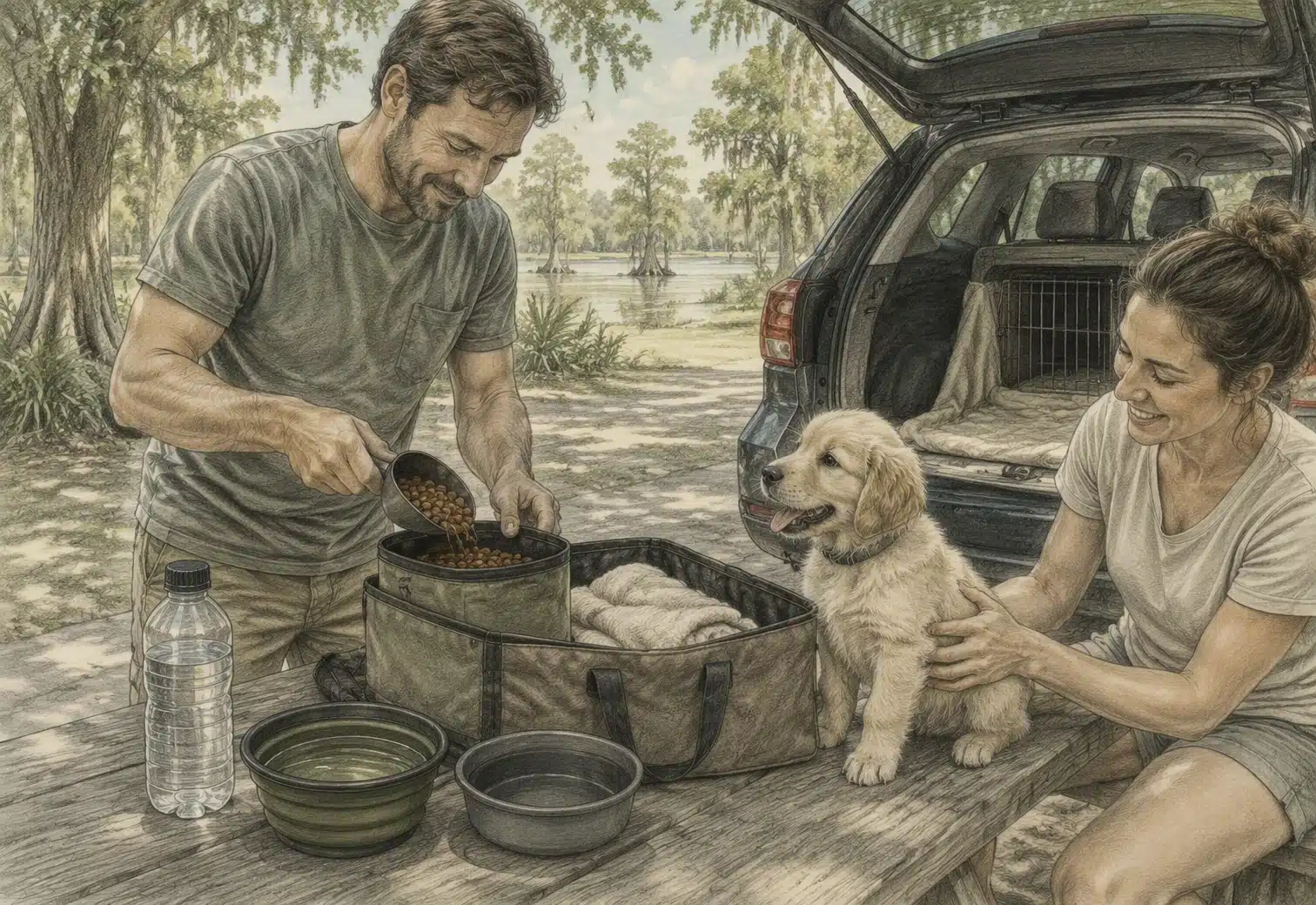
Offer water often during summer stops. Feed modest meals at your usual times rather than a large meal right before a long drive.
Records, Medications, and Cleanup Supplies
Put papers in a waterproof zip pouch. Carry vaccine records, your vet’s number, proof of microchip registration, and any health certificate required by your destination. Interstate rules can differ, so check them well before leaving Louisiana.
Pack all prescribed medicine in its original label container. Bring enough for the full trip plus a few extra doses. The AVMA also recommends a travel-size first-aid kit and emergency clinic contacts for the area you will visit. Review its first-aid guidance.
Include:
- Puppy pads, poop bags, paper towels, and trash bags
- Enzyme cleaner and disposable gloves
- A spare towel for muddy paws or accidents
- Hand sanitizer and a sealed laundry bag
Step 4: Plan a Puppy-Friendly Stop Rhythm
Use a Repeatable Stop Sequence
Plan stops before you leave Louisiana. A young puppy does better with the same calm routine each time, not long, busy breaks.
At each safe stop:
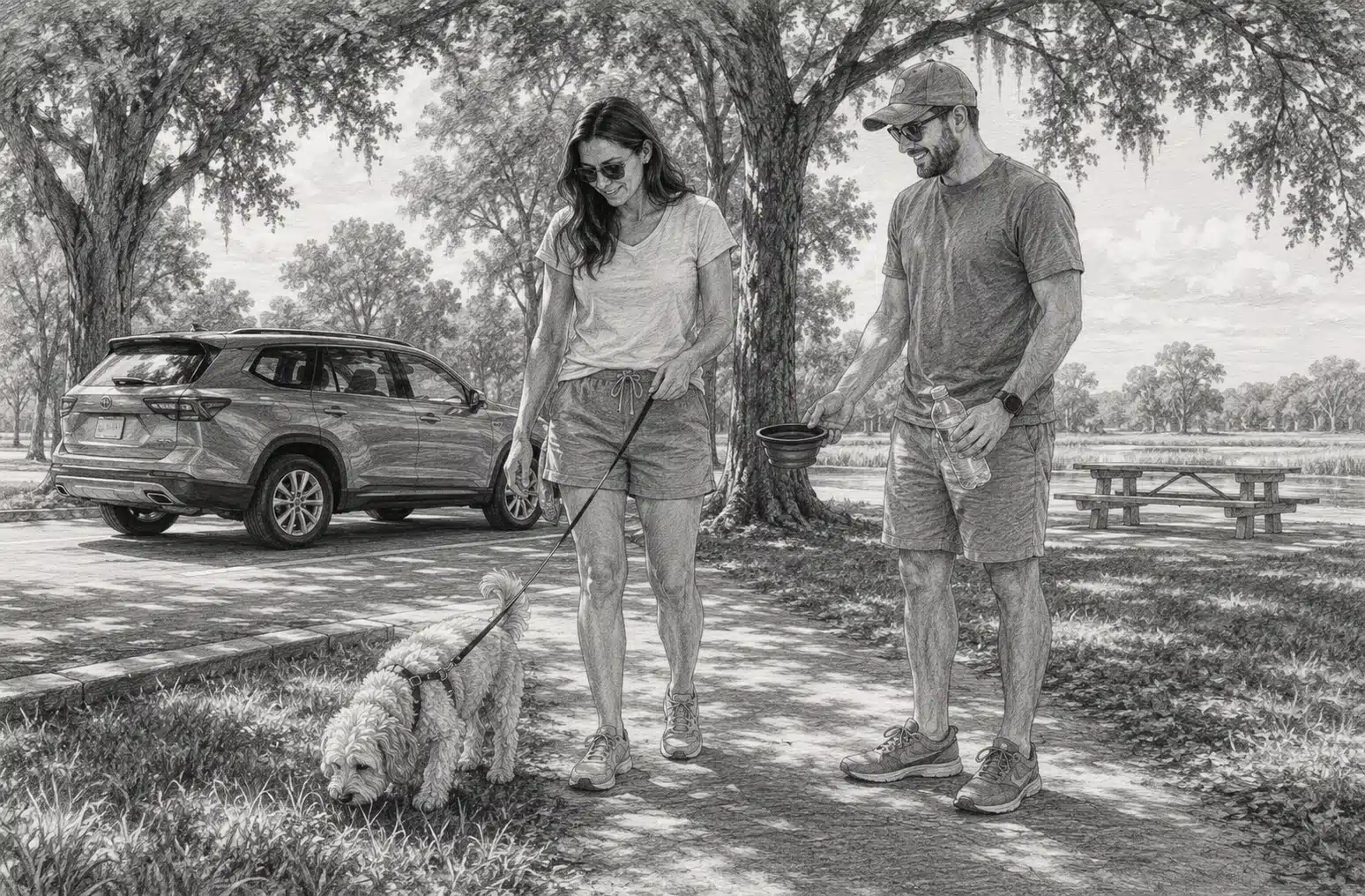
- Park in shade if possible, then take your puppy out on a secure leash.
- Go straight to a low-traffic potty spot.
- Offer a few sips of water.
- Give your puppy two to five quiet minutes to sniff and reset.
- Return them to their secured carrier or crate before you get back on the road.
Choose clean rest areas, private grassy spots, or a family member’s yard over crowded dog zones. Keep breaks short in summer heat. The AVMA warns that a parked car can heat up fast, even in shade, so never leave your puppy inside while you run errands AVMA vehicle safety guidance.
| Stop need | What to do | Keep it simple |
|---|---|---|
| Potty | Use leash and one quiet spot | Praise softly |
| Water | Offer small amounts | Avoid a large gulp |
| Reset | Let puppy sniff briefly | Skip busy greetings |
Pack a towel for wet grass and a spare leash by the car door.
Adapt Stops for Age, Vaccination Status, and Symptoms
Very young puppies may need more frequent potty chances, but they do not need public dog areas. Until the puppy vaccine series is complete, use caution around places where dogs gather, advises the American Veterinary Medical Association.
Watch for signs that call for a change of plan:
- Repeated vomiting, diarrhea, or marked sleepiness
- Heavy panting that does not ease in air conditioning
- Refusing water or struggling to stand
Stop traveling, cool your puppy safely, and call a veterinarian for advice. Do not push to reach the next hotel.
Also Read: Havanese, Havapoo & Cavapoo Puppy Care Blog
Step 5: Handle the First Arrival Without Overwhelming the Puppy
Unload in the Right Order
Park in shade, turn off the car, and have one adult carry the crate inside. Bring the puppy in before bags, coolers, or excited visitors.
- Take the puppy to the planned potty spot on leash.
- Offer water and let them sniff quietly.
- Lead them to one cool, puppy-proofed room with their crate, bed, and a familiar blanket.
- Keep greetings calm and brief.
A young Havanese, Havapoo, or Cavapoo does not need a house tour on arrival. Let them choose when to explore. Positive, low-pressure exposure helps puppies learn without fear, according to the AVMA socialization review.
Keep children seated and ask them to let the puppy approach first.
Observe, Record, and Ask for Help When Needed
For the first few hours, note potty trips, water intake, energy, and any vomiting or loose stool. Travel fatigue can look like shyness, so give the puppy time to rest.
| Watch for | What to do |
|---|---|
| Quiet resting, normal interest in water | Keep the room calm |
| Heavy panting, weakness, vomiting | Call a veterinarian promptly |
| Diarrhea that persists or worsens | Contact your veterinarian |
The AVMA advises calling a veterinarian or local emergency hospital when urgent care is needed.
Also Read: 10 Red Flags to Avoid When Visiting a Local Puppy Breeder
Step 6: Check Interstate Travel Requirements Before Crossing State Lines
Verify the Destination State, Not Just the Origin
Your destination state sets the entry rules. Do not assume Louisiana records are enough. The USDA explains that each receiving state or territory may require items such as a health certificate, current vaccines, testing, or treatment before entry. Check the USDA state-by-state pet travel page as soon as you confirm your route.
If you will sleep in another state, review its rules too. A brief overnight stop can still affect your plan.
Use this quick check:
| What to confirm | Why it matters |
|---|---|
| Destination entry rules | Requirements differ by state |
| Certificate timing | Some documents have short valid periods |
| Rabies record rules | Young puppies may not yet be eligible for vaccination |
| Hotel pet policy | Properties may request vaccine proof |
Call the destination state’s animal health office if a rule feels unclear. Get the answer before your puppy is in the car.
Prepare the Document Folder With Your Veterinarian
Book the vet visit early. Ask what your specific route and puppy’s age require. Keep paper copies in a waterproof folder, plus clear phone photos.
Bring:
- Health certificate, if required
- Vaccination record
- Rabies certificate, if age-appropriate
- Microchip number and registration details
- Your veterinarian’s phone number
A Certificate of Veterinary Inspection, when required, must travel with the animal and includes owner, destination, and animal details, according to USDA APHIS guidance.
Common Mistakes to Avoid on a Louisiana Summer Puppy Trip
Mistakes That Create Immediate Safety Risk
Never leave your puppy in a parked car, even for a quick stop. A vehicle can heat up fast, shade and cracked windows do not make it safe. The AVMA warns that a car’s interior can rise about 20°F in 10 minutes.
- Letting a puppy ride loose or on someone’s lap
- Skipping water breaks or walking on hot pavement
- Ignoring heavy panting, drooling, weakness, or unsteady movement
Stop, cool the puppy in air conditioning, and call an emergency vet if heat-stress signs appear.
Mistakes That Make the Trip Harder Than Necessary
Do not plan adult-dog distances for a young Havanese, Havapoo, or Cavapoo. Build in calm potty stops, shade, water, and quiet crate breaks.
| Mistake | Better choice |
|---|---|
| Long midday stops | Travel early or later |
| New food on the road | Pack familiar meals |
| No backup supplies | Carry extra water, pads, and towels |
The AVMA advises cooler-hour walks and frequent breaks in warm weather.
Also Read: Driving vs Flying Home With an Arizona Puppy: Which Is Better?
Make the First Road Trip Part of a Thoughtful Puppy Plan
Choose a Puppy Experience That Starts With Preparation
A calm first trip begins before pickup day. Choose a breeder who raises puppies in a home setting and helps families plan the transition, not just the handoff.
At Sage Puppies, families can ask clear questions about pickup or nationwide delivery, early routines, and what their Havanese, Havapoo, or Cavapoo puppy knows so far. Then build on that start:
- Set up the crate at home before travel day.
- Bring familiar food, bedding, and a secure carrier.
- Plan cool, short stops and confirm your destination accepts puppies.
The AVMA recommends crate practice and short car rides before longer travel.
Never leave a puppy alone in a parked car, even briefly.
Choose Your Next Step
A well-planned trip is one part of a good beginning. Review available puppies, learn how Sage Puppies matches families, and submit an application when the timing feels right.
| Next step | What it helps with |
|---|---|
| Available Puppies | See current companion options |
| Application | Share your home and travel plans |
| Delivery/Pickup | Choose a clear route home |

Bring home a puppy with a calm, family-first start. Sage Puppies raises Havanese, Havapoo, and Cavapoo puppies for confident transitions, whether you pick up locally or plan a summer road trip home. Review available puppies and begin your application today.
Frequently Asked Questions
Q1: What should I pack for my puppy’s first road trip?
Pack a secured travel crate, water, bowl, food, leash, waste bags, towels, cleaning wipes, familiar bedding, chew toys, records, and any prescribed medicine.
Q2: How do I keep my puppy safe in the car during a road trip?
Secure your puppy in a properly sized crate or crash-tested harness. Never allow lap riding, loose roaming, or travel in an open truck bed.
Q3: How often should I stop on a road trip with my puppy?
Plan a stop every two to three hours for water, a leash walk, and a calm potty break. Young puppies may need more frequent breaks.
Q4: Can my puppy stay in the car while I run inside?
No. Louisiana summer heat can become dangerous within minutes, even with cracked windows. Bring your puppy with you or use pet-friendly stops.
Q5: Should I feed my puppy right before leaving?
Offer a small meal several hours before departure. Avoid a full meal just before driving, especially if your puppy gets carsick.
Conclusion
A safe first summer road trip starts before you leave Louisiana. Build short car rides first, secure your Havanese, Havapoo, or Cavapoo in a properly fitted carrier or restraint, and plan cool, quiet stops.
Pack water, records, cleaning supplies, and familiar comfort items. Keep the cabin cool, never leave your puppy parked alone, and watch for heavy panting, drooling, weakness, or unsteady steps. The AVMA advises that pets should be restrained in vehicles and never left inside a parked car. A slower schedule protects your puppy’s comfort, confidence, and health.