Quick Summary: Puppy-proof your Georgia home by getting down to floor level and removing hazards like cords, small objects, toxic plants, and chemicals before your puppy arrives. Set up one controlled zone with a crate, chew toys, and a potty area, and secure doors, stairs, and fence gaps to prevent escapes. Keep early outdoor time private and clean, avoiding public dog areas until your vet clears the vaccine schedule, and watch for Georgia-specific risks like heat, standing water, and azaleas. Finish with a final walk-through indoors and outdoors, then set clear family rules for supervision and potty routines.
Before your puppy reaches the kitchen, porch, or yard, crouch to their level. Spot the loose cord, gate gap, azalea leaf, puddle, and hot pavement they will notice first.
Georgia homes bring risks that are easy to miss, especially for small Havanese, Havapoo, and Cavapoo puppies. Indoor clutter, humid yards, toxic plants, standing water, and early vaccine limits can turn normal exploring into a problem.
These practical puppy proofing tips help you puppy proof home spaces room by room. You will learn safer yard checks, smart outdoor rules, and arrival-day routines that fit Georgia weather and family life.
Good puppy proofing is not about making your home perfect. It is about removing preventable risks before curiosity takes over. Use these puppy proofing tips to set calm boundaries, then repeat the check before your puppy comes home.
Step 1: Create a Controlled Puppy Zone First
Choose the First Room and Boundaries
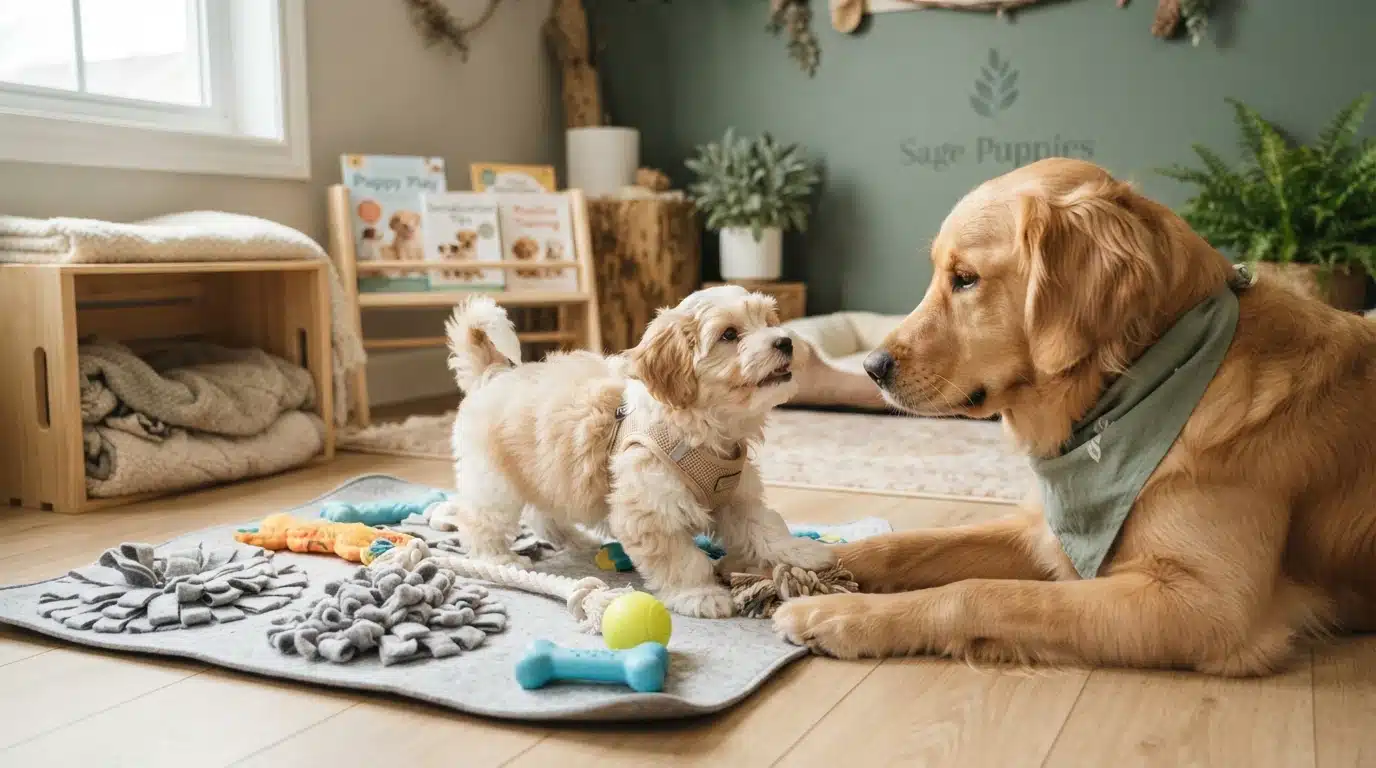
Start with one calm, easy-clean room near family life, such as a kitchen corner or gated den. A small-breed puppy does not need the whole house on day one. Fewer rooms mean fewer cords, shoes, and hiding spots to manage.
Use a sturdy exercise pen or baby gate. Block stairs, open doors, and spaces behind furniture. Remove plants, chargers, rugs, and anything small enough to swallow.
Keep this zone calm, not lonely. Your puppy should see and hear normal home life while staying safely contained.
These puppy proofing tips also make supervision simpler during busy arrival-day moments.
Set Up Rest, Chewing, and Potty Areas
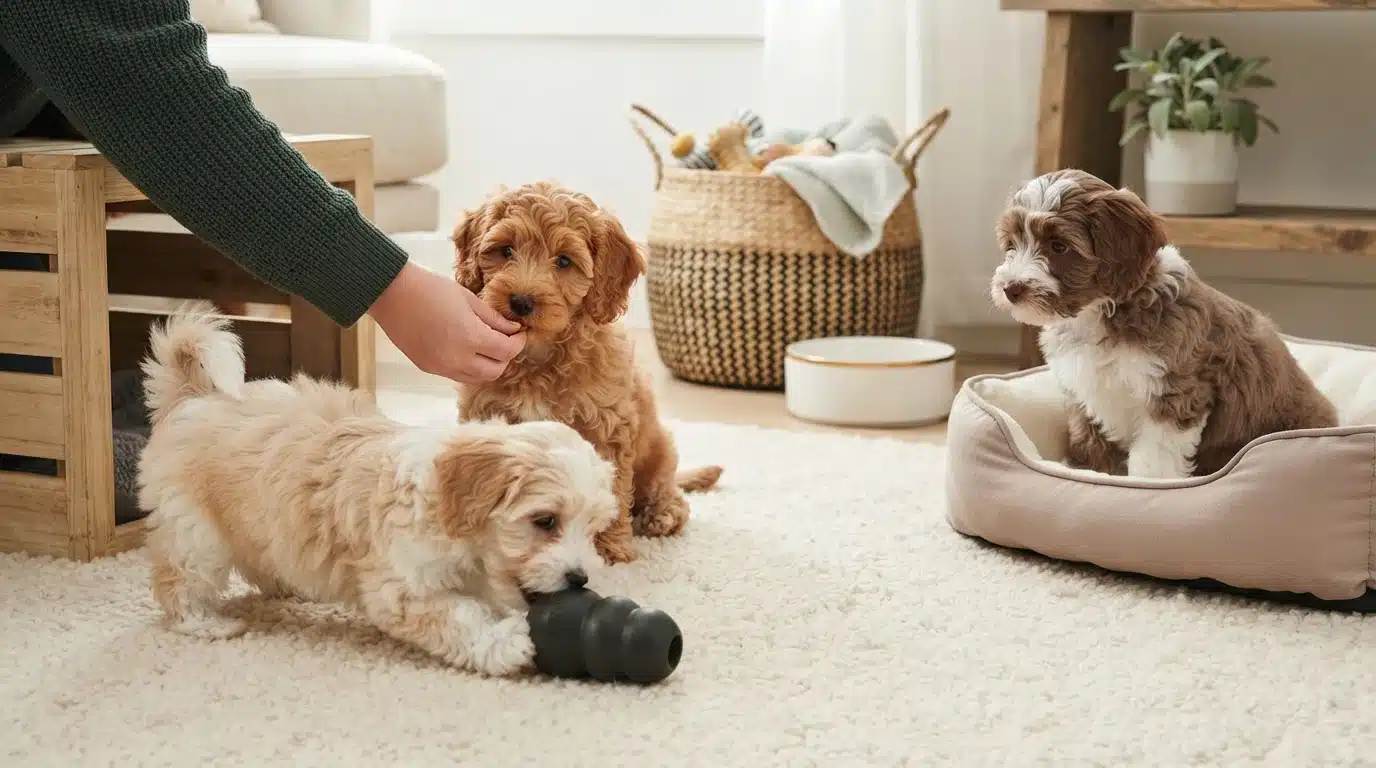
Give each need its own clear spot. Place a crate or open bed at one end, with water nearby but not inside the sleeping space. Add only durable, puppy-safe chew toys. Rotate them daily so they stay interesting.
| Zone item | Where it goes | Why it helps |
|---|---|---|
| Crate or bed | Quiet end of the pen | Builds a safe rest routine |
| Chew toy | Center of the zone | Redirects nipping and chewing |
| Potty pad or tray | Far from bedding | Creates a clear toilet area |
Use a washable mat under the setup. For outdoor potty trips, follow your veterinarian’s vaccine advice. Puppies face higher disease risk in shared dog areas because they often sniff and lick contaminated surfaces, notes the American Veterinary Medical Association.
Check the zone from floor level. If you can reach it, chew it, or pull it down, your puppy probably can too.
Also Read: 8 Seasonal Hazards Every New Puppy Owner Should Prepare For
Step 2: Remove Indoor Hazards at Puppy Height
Get on the floor and look through each room at puppy level. Small Havanese, Havapoo, and Cavapoo puppies can slip under furniture, reach dropped items fast, and chew before you notice.
Secure Food, Trash, and Personal Bags
Put food in closed cabinets, not on low tables or open pantry shelves. Use trash cans with tight, locking lids in the kitchen, bathroom, and home office.
Check bags every time you come home. Purses, backpacks, gym bags, and lunch totes may hold gum, snacks, medication, or loose change.
- Clear counters after meals.
- Empty bedroom and bathroom bins often.
- Hang bags on hooks or store them in a closed closet.
The ASPCA puppy-prep checklist also advises keeping garbage covered and inaccessible.
Tip: Ask visitors to place bags on a high counter or in a closed room, not on the floor.
Lock Away Medications, Cleaners, and Chemicals
Use childproof latches on low cabinets. Store all pills, vitamins, toothpaste, laundry pods, cleaners, pest products, and garage chemicals behind a closed door.
Do a quick floor check after taking medicine. A single dropped tablet can be easy for a small puppy to find.
| Area | Common risk | Safer setup |
|---|---|---|
| Bathroom | Pills, toothpaste, floss | Closed medicine cabinet |
| Laundry room | Pods, dryer sheets | Latched cabinet |
| Kitchen | Cleaners, dish pods | Locked lower cupboard |
| Garage | Antifreeze, bait, paint | Keep puppy out entirely |
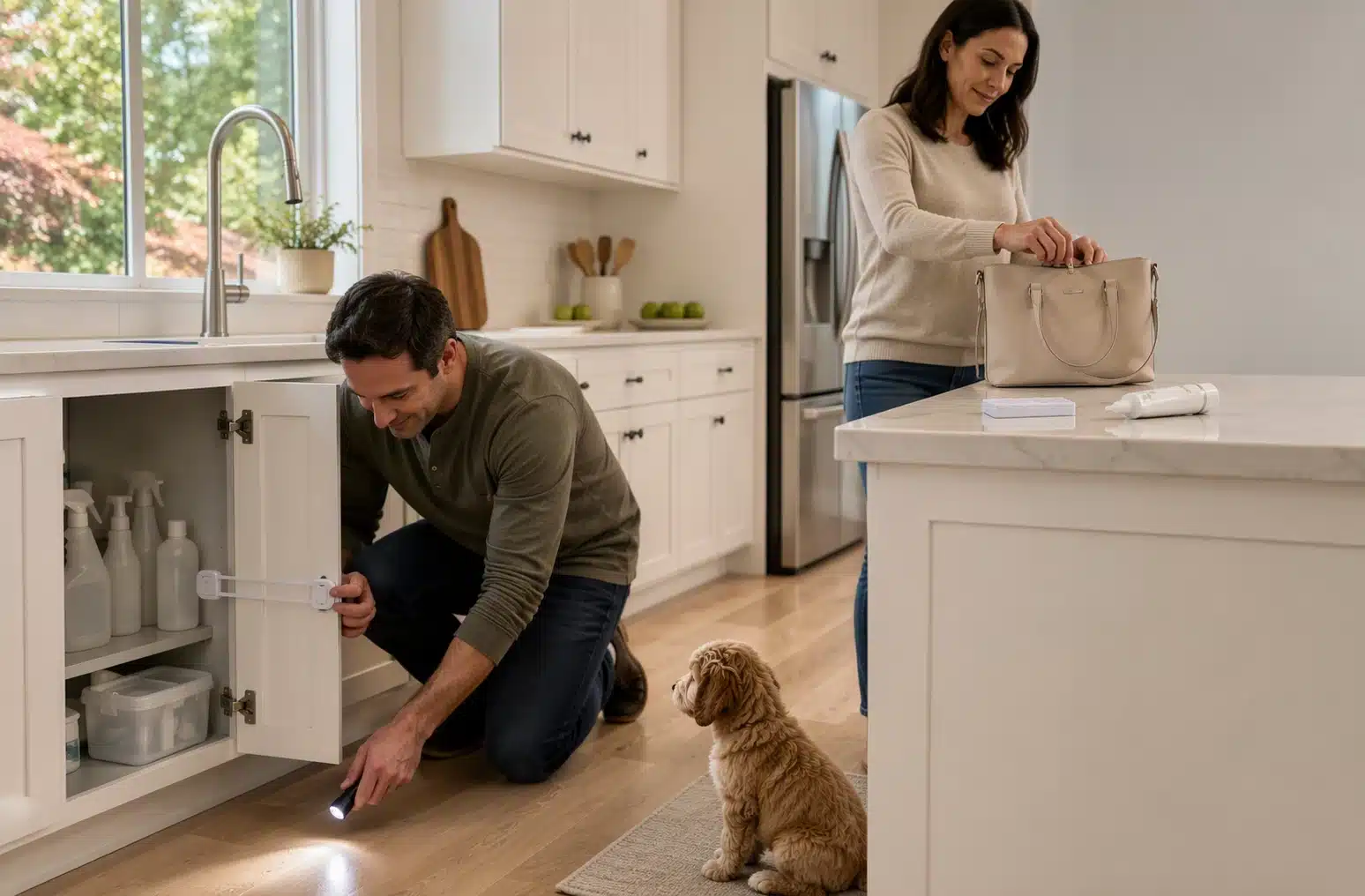
The ASPCA reports that over-the-counter medications and supplements made up 16.9% of pet toxin exposures reported in 2025. Keep them in closed cabinets.
Warning: If your puppy swallows a suspected toxin, call your veterinarian or pet poison service right away. Do not wait for signs.
Cover Cords, Secure Furniture, and Remove Small Objects
Use cord covers or route cables behind furniture. Tie up blind cords and curtain pulls. Secure bookcases, TVs, and tall lamps so a climbing or tugging puppy cannot tip them.
Make a daily sweep for objects small enough to swallow:
- Pick up coins, hair ties, batteries, socks, and children’s toys.
- Check beneath couches, beds, and recliners.
- Keep remotes, charging cables, and earbuds off the floor.
- Close recliners before your puppy enters the room.
Tip: Put a lidded toy bin in each main room. A fast cleanup habit prevents most small-object risks.
Also Read: 10 Signs a California Puppy Listing Is a Scam – Sage Puppies
Step 3: Secure Doors, Windows, Stairs, and Other Escape Routes
Block Stairs, Balconies, and Drop-Offs
Small puppies do not judge height well. Block stairways at both ends with a firmly mounted baby gate. Choose bars close enough that a Havanese, Havapoo, or Cavapoo puppy cannot squeeze through.
Keep balcony doors shut and never leave a puppy alone on a raised deck. Check rail gaps, loose boards, and open crawl spaces under porches.
| Area | What to check | Best fix |
|---|---|---|
| Stairs | Open access or wide gate gaps | Secure, walk-through baby gate |
| Balcony | Rail gaps and open doors | Closed door and supervised access |
| Deck | Loose boards or spaces below | Repair gaps and block underside |
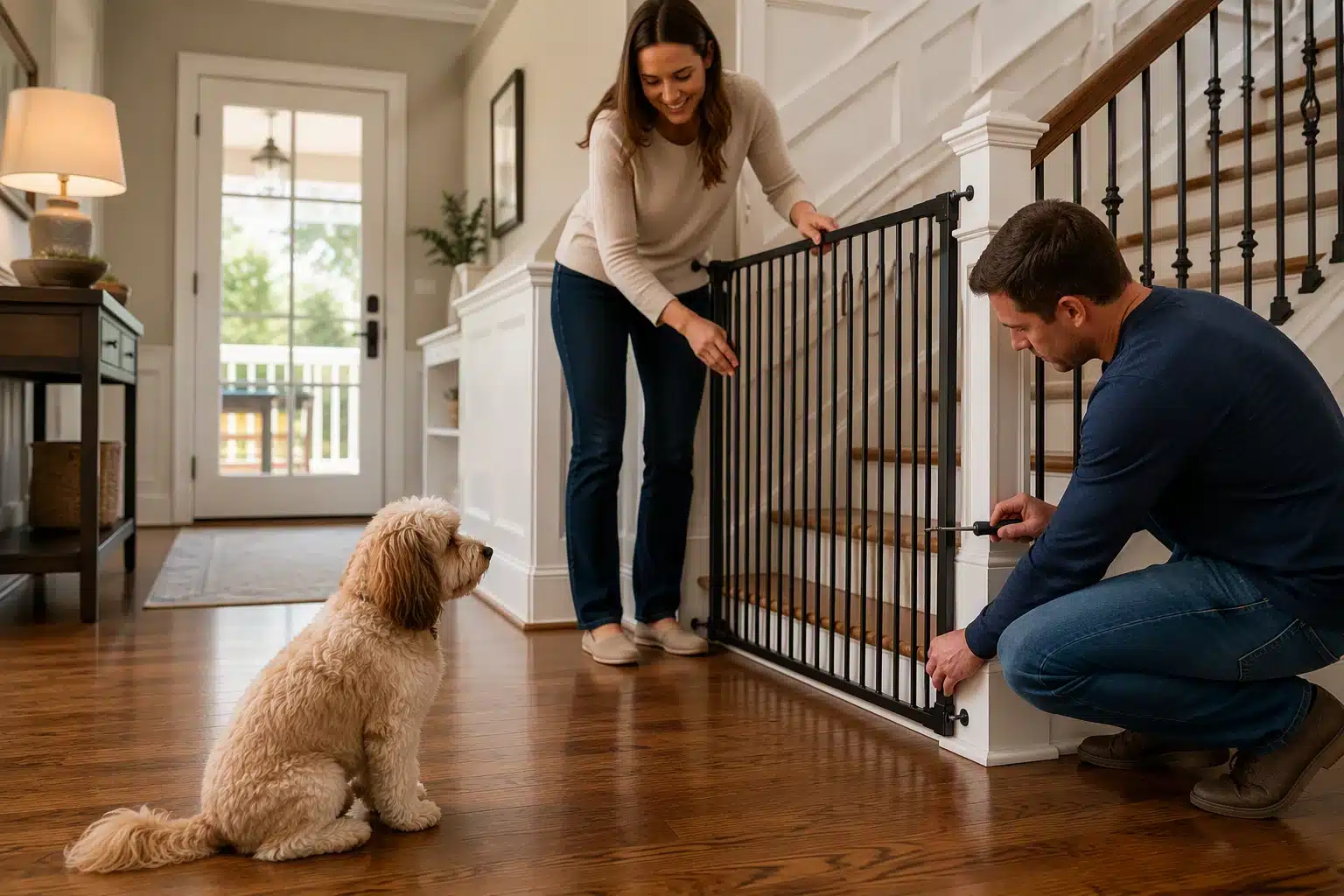
A gate is not a substitute for supervision. Carry a young small-breed puppy on stairs until it can manage them safely.
Make Doors and Windows Escape-Resistant
Use door latches that children and guests can remember. Put a simple note near exterior doors: “Puppy inside. Close door fully.” This matters during busy arrivals, deliveries, and family gatherings.
Check window screens before opening windows. Screens can loosen, and they are not designed to hold a puppy’s weight. Falls from windows can cause serious injury, as documented in an AVMA journal review of high-rise injuries in dogs.
- Test every exterior door latch.
- Keep keys and remotes out of reach.
- Close garage doors before bringing your puppy outside.
- Add current ID tags and keep microchip details updated.
Give every visitor one clear rule: enter, close the door, then greet the puppy.
Also Read: Georgia Puppies: How to Assess Early Puppy Socialization
Step 4: Puppy-Proof the Georgia Yard and Outdoor Areas
A Georgia yard needs the same care as your indoor space. Small Havanese, Havapoo, and Cavapoo puppies can slip through gaps, chew plants, and overheat fast.
Inspect Fences, Gates, and Ground-Level Gaps
Walk the full fence line at puppy height, not adult height. Check where panels meet the ground, corners, deck steps, and gate latches.
- Close gaps with buried wire or sturdy garden barriers.
- Test every gate latch twice.
- Remove loose boards, sharp wire, and broken sprinkler heads.
- Block access under sheds, decks, and crawl spaces.
Keep the first outdoor play area small and easy to watch.
A fenced yard is not a safe yard until you inspect it for a puppy that can fit through a hand-sized gap.
Remove Georgia Plant, Chemical, and Water Hazards
Pick up fallen fruit, mushrooms, sticks, mulch chunks, and lawn gear before each outing. Secure fertilizer, weed killer, insect spray, gasoline, and pool chemicals in a locked area. Keep your puppy off recently treated grass until the product label says it is safe.
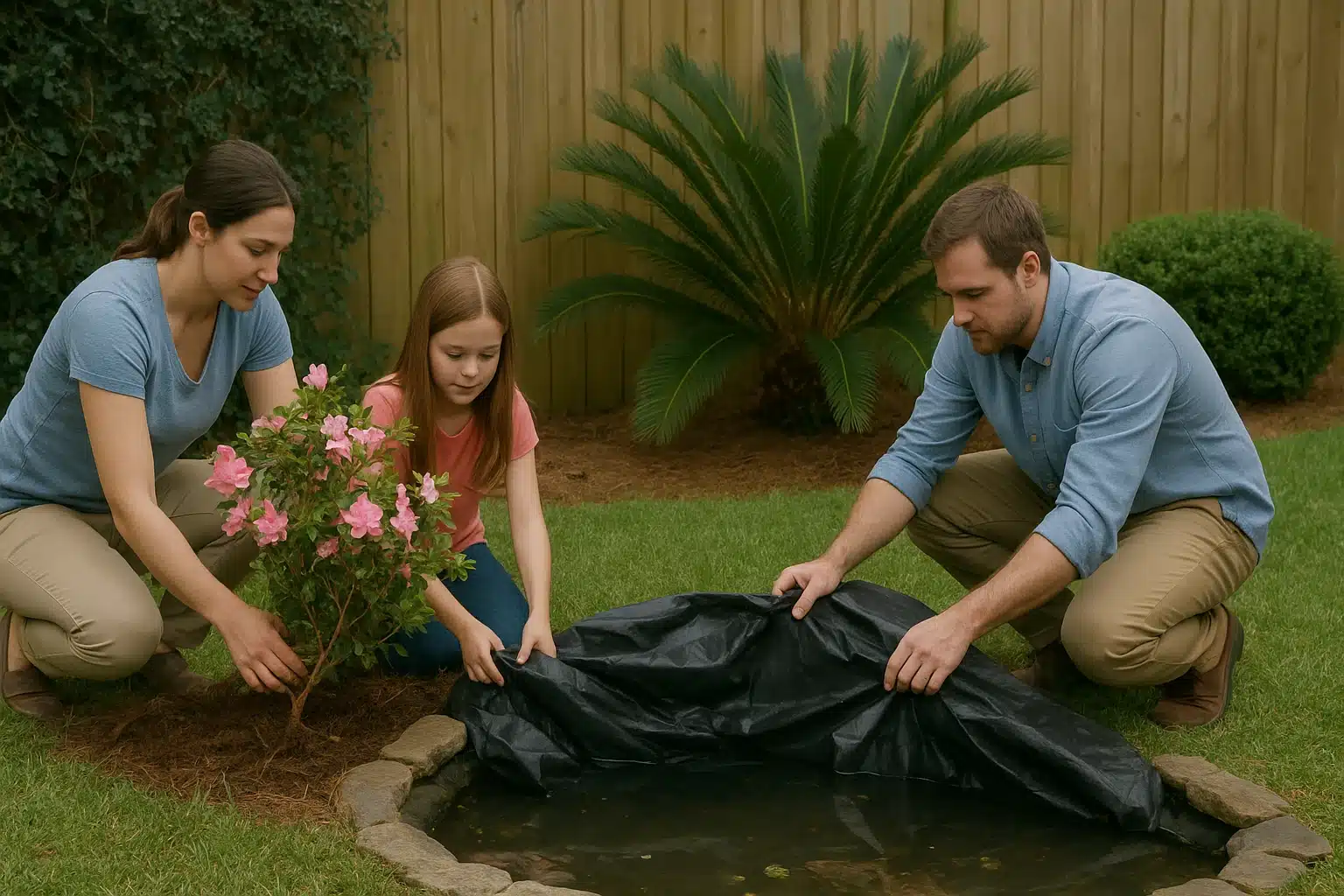
UGA Extension notes that common landscape plants, including azalea, English ivy, oleander, sago palm, and yew, can harm pets if eaten. Use fencing to block access or remove the plant entirely. See its Georgia pet-safe plant guidance before planting.
| Yard hazard | Safer setup |
|---|---|
| Open pond, pool, or birdbath | Cover it, fence it, or supervise closely |
| Compost pile | Use a lidded bin outside puppy reach |
| Mulch and pinecones | Clear loose pieces from the puppy zone |
| Garden tools | Store them in a latched shed |
Do not let a young puppy drink from standing water. It may hold germs, chemicals, or wildlife waste.
Plan for Heat, Humidity, Parasites, and Wildlife
Schedule potty trips and play for early morning or evening. Provide cool water and full shade, then bring your puppy inside for breaks. Heat and humidity make panting less effective, so watch for heavy panting, weakness, vomiting, or bright red gums. UGA vets advise water, shelter, and indoor time during severe heat. Read their summer dog safety tips.
Keep grass short, clear brush, and ask your vet about age-appropriate flea, tick, and heartworm prevention. Georgia ticks thrive in tall grass and brush.
- Scan paws, ears, belly, and collar area after outdoor time.
- Never leave food outside overnight.
- Supervise closely around snakes, hawks, coyotes, and unfamiliar wildlife.
- Use a leash until your puppy reliably stays near you.
Step 5: Separate Safe Private Socialization from Risky Public Ground
Use the Private Yard Carefully
A clean, enclosed yard can give your puppy safe outdoor practice before public outings. Keep sessions short and supervised. For Havanese, Havapoos, and Cavapoos, check gaps under fencing and watch for birds of prey, fire ants, standing water, and wildlife droppings.
Use your yard to build calm habits:
- Let your puppy explore on a lightweight leash.
- Practice their name, recall, and potty cues.
- Invite healthy, known, fully vaccinated adult dogs only after your veterinarian agrees.
- Remove poop right away and block access to compost, mulch, and puddles.
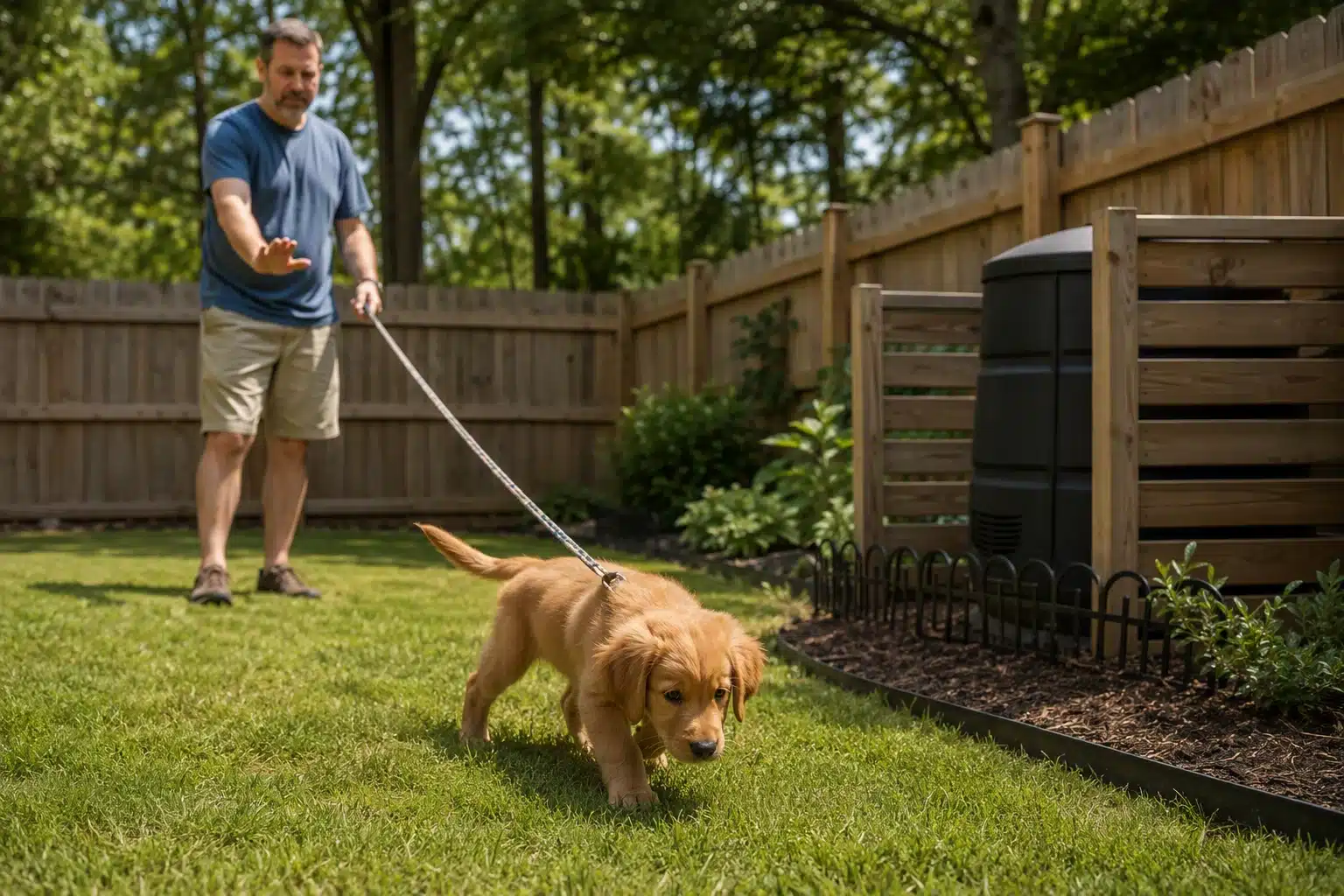
Important: A private yard is lower risk, not zero risk. Do not let your puppy sniff or eat animal waste.
Delay High-Risk Public Ground Until Your Veterinarian Clears It
Socialization should start now, but it does not require paws on public ground. Puppies are especially open to new experiences early in life, so offer safe sights, sounds, people, and car rides while you follow your veterinarian’s vaccine plan. AVMA socialization research supports positive, age-appropriate exposure.
Avoid dog parks, pet-store floors, shared water bowls, apartment dog runs, and busy sidewalks with dog waste. Parvovirus can spread through infected feces and contaminated surfaces, and it can persist in the environment for long periods, according to the American Veterinary Medical Association.
- Carry your puppy through public spaces.
- Sit outside a cafe on a clean blanket.
- Arrange calm visits with vaccinated dogs in a known home.
- Ask your veterinarian when local public-ground walks are appropriate.
Your puppy can meet the world safely before they walk through every part of it.
Also Read: How to Check Georgia Puppy Health Records and Vaccination History
Step 6: Prepare the Family, Supplies, and First Veterinary Visit
Agree on House Rules and Supervision
Set the rules before your puppy arrives. Small breeds can slip through gaps, swallow small items, and tire fast, so every family member needs the same plan.
| Rule | Family agreement |
|---|---|
| Puppy access | Use gates and close off unsafe rooms |
| Potty trips | Take the puppy out after sleep, meals, and play |
| Handling | Children sit on the floor and let the puppy come to them |
| Supervision | An adult watches during all free-roam time |
- Pick one potty spot in your Georgia yard.
- Choose the puppy’s sleep area and quiet nap space.
- Keep shoes, cords, coins, and medicines off the floor.
- Give children a simple job, such as refilling water with an adult.
No one should carry a small puppy up and down stairs while holding other items. Use both hands and move slowly.
Book Care and Prepare the Arrival Handoff
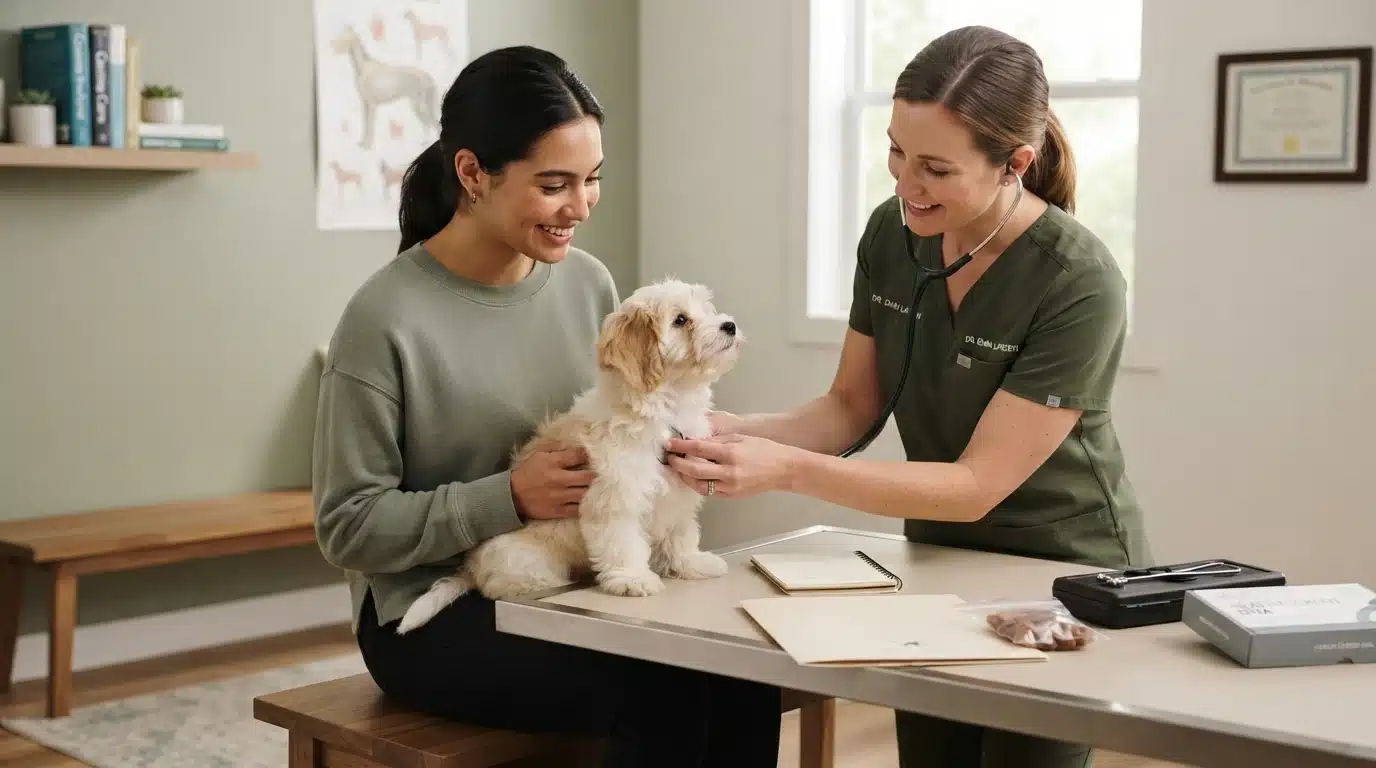
Choose a local veterinarian and book the first visit soon after arrival. Bring the breeder’s health records, feeding notes, and vaccine history. Your vet can set care based on your puppy’s age, lifestyle, and local risks. The AVMA notes that puppy vaccines usually begin at 6-8 weeks and continue through at least 16 weeks.
Have these supplies ready:
- Crate, bed, collar, leash, and ID tag
- Same food used before pickup
- Small-breed-safe toys and enzyme cleaner
- Carrier or secured crate for the ride home
Until your veterinarian says otherwise, avoid dog parks and areas with dog waste. Parvovirus can spread through contaminated surfaces and feces, according to the AVMA.
Also Read: 10 Adorable Havapoo Colors You Need to See (2026)
Step 7: Complete the Final Puppy-Proofing Walk-Through
Indoor Sign-Off
Get down to puppy height and move through every room slowly. Small Havanese, Havapoo, and Cavapoo puppies can slip behind furniture, chew cords, and swallow items adults miss.
- Pick up coins, batteries, hair ties, socks, and small toys.
- Secure cords, close trash lids, and lock away cleaners and medicine.
- Block stairs, fireplaces, and rooms that are not ready.
- Check that crate, bed, water bowl, and chew-safe toys are in place.
- Set a family rule: shut doors, watch feet, and never leave children alone with the puppy.
Keep food prep areas off-limits. CDC advises washing hands after handling dog supplies and keeping pet items away from places where people prepare food. See CDC’s dog safety guidance.
Outdoor and Arrival Sign-Off
Walk the yard with the same low-level view. Check each fence line for gaps, loose boards, sharp wire, standing water, mushrooms, and dropped yard tools.
| Checkpoint | Sign-Off Standard |
|---|---|
| Fence and gate | Secure latch with no small escape gaps |
| Potty area | Clean, shaded, and free of waste |
| Plants and lawn | No reachable chemicals, mulch, or unknown plants |
| Arrival space | Quiet crate area ready before the puppy enters |
Plan one calm potty spot close to the door. Until your veterinarian advises otherwise, avoid unknown dog areas. Pick up waste promptly, even in your own yard, since it can spread germs. CDC recommends regular cleanup.

Your Georgia home is ready. Now choose a puppy raised with care from the start. Sage Puppies offers home-raised Havanese, Havapoo, and Cavapoo companions with health-tested parents, clear guidance, and nationwide delivery or pickup options.
Frequently Asked Questions
Q1: What is the best way to puppy-proof a Georgia home before bringing a puppy home?
Start at floor level. Remove cords, meds, cleaners, small objects, and toxic plants. Set gates, secure trash, and give your puppy one calm, safe room first.
Q2: Which common household items are dangerous for puppies in Georgia?
Watch for ant bait, rodent poison, lawn chemicals, azalea leaves, mushrooms, gum, batteries, and peach pits. Keep handbags and guest items off the floor.
Q3: How do I create a safe outdoor space for a puppy in Georgia?
Check fence gaps, shade, standing water, and plant hazards. Use a leash until vaccines and recall skills are ready.
Q4: When can my puppy use public grass?
Ask your vet about local disease risk and the vaccine schedule. Avoid dog parks and shared pet areas early.
Q5: Should I crate my puppy on arrival day?
Yes. Set up a correctly sized crate in a quiet family area, with safe bedding and scheduled potty breaks.
Conclusion
A safe Georgia home starts with small details. Secure cords, food, cleaners, medicines, plants, gates, and any gap a small puppy could enter. Check the yard for wildlife access, standing water, toxic products, and weak fence spots.
Set clear family rules before arrival: supervised play, a calm rest space, closed doors, and one consistent potty routine. Keep early outdoor time private and clean. Puppies need a veterinarian-led vaccine plan, and the AVMA advises caution around dog gathering places until the initial series is complete.
Do one last floor-level walk-through on arrival day. If a puppy can reach, chew, swallow, or slip through it, fix it first.