Quick Summary: Havanese, Havapoo, and Cavapoo are all manageable for first-time owners, but the best choice depends on training, grooming, health screening, and household fit. The Havanese learns fastest but needs the most coat care, the Havapoo balances trainability with a lower-shedding coat, and the Cavapoo has the gentlest energy but requires attention to Cavalier-related heart risks. Sage Puppies recommends comparing written parent health results with your schedule and grooming budget, then using consistent training and care during the first 90 days.
If you are picking your first puppy, the honest answer is that the three easiest small dog breeds to raise, Havanese, Havapoo, and Cavapoo, are all trainable and manageable. But they are not equally easy. Among these easiest small dog breeds to raise, the Havapoo stays tidiest, the Havanese is calmest indoors, and the Cavapoo is the most sociable, if you accept coat work and Cavalier-influenced health questions.
Most lists of easiest small dog breeds to raise grade temperament alone. They skip what easy actually means: house training length, weekly grooming hours, health screening, and daily exercise. This comparison defines ease across five concrete criteria, compares all three on each, then gives a clear pick by household type plus the first-90-days steps that make any of them easier.
Havanese vs Havapoo vs Cavapoo: Ease of Raising Compared
| Havanese | Havapoo | Cavapoo | |
|---|---|---|---|
| Training responsiveness | High; clever and people-focused, responds well to reward-based work | Very high; Poodle influence adds problem-solving focus and quick learning | High; eager to please and strongly people-oriented |
| House training and apartment fit | Strong for apartments; small size and moderate activity suit indoor routines | Very good for apartments; Poodle influence often improves focus and reliability indoors | Good for apartments; very social and prefers company, so alone time needs planning |
| Grooming and coat care | High grooming load; long silky double coat needing regular brushing | Medium; low-shedding coat still needs brushing and scheduled professional grooming | Medium to high; curl-prone coat mats easily and needs regular professional grooming |
| Health considerations | AKC lists prone conditions including eye disorders, chondrodysplasia, deafness, heart murmurs, and Legg-Calve-Perthes | No official breed standard; health discussion should cover both the Havanese and Poodle parent lines | No official breed standard; health planning should address Cavalier-influenced heart and airway concerns |
| Energy and exercise needs | Moderate; short walks and indoor play with regular socialization | Moderate; alert and playful with short daily walks and puzzle work | Moderate; sociable play and two or more daily walks |
| Best suited to | Calmer households, apartments, owners ready for coat maintenance | First-time owners wanting trainability and a lower-shedding coat | Families wanting a sociable, affectionate dog that stays close to home |
Meet the Contenders
Havanese
The Havanese is the AKC-recognized Cuban companion breed: small, silky-coated, and famously people-focused. It suits calmer households and apartments, as long as you can keep up with a high grooming load.

Key strengths
- High training responsiveness with reward-based work
- Strong apartment fit and moderate energy
Havapoo
The Havapoo crosses a Havanese with a Poodle, producing a small, smart companion that usually sheds less than a purebred Havanese. First-time owners wanting quick learners and a lower-shedding coat tend to match best.
Cavapoo
The Cavapoo blends a Cavalier King Charles Spaniel with a Poodle, giving you a warm, social small dog that stays close to home. It fits families who want affection and company, with planned alone time.
What Actually Makes a Small Breed Easy to Raise

The five variables behind an easy-to-raise puppy
Ask five breeders what “easy” means and you’ll get five different adjectives. So this comparison skips adjectives and measures ease across five variables: how fast a puppy learns, how consistent house-training progress is, how much weekly grooming the coat demands, which health screenings the breed needs, and whether its energy level matches your household. A breed that scores well on four of the five but drains you on the fifth is still a hard puppy. Weigh all five before you commit, because the variable you ignored is usually the one that frustrates you at month three.
Where small size helps and where it complicates
Small size cuts both ways. A 10-to-15-pound adult is easier to exercise, lift, and travel with, which is why many people start their search with small breed puppies in the first place. But small bladders mean more potty trips, tiny joints need protection from stairs and hard landings, and Luxating patella shows up more often in little dogs. Small also means easier to spoil, so boundaries matter more, not less.
Breed is only half the equation
Genetics set the range; your first 90 days set the outcome. Any of these three breeds can be easy or exhausting depending on consistency in those early weeks. The comparison below shows where each breed starts, not where it must finish.
Training Responsiveness: Havanese, Havapoo, and Cavapoo Compared
Short answer: the Havanese usually learns commands fastest of the three, the Cavapoo responds best to people-motivated praise, and the Havapoo works well with patient, positive routines. All three are bright enough for first-time owners, but they respond to different things.
- Havanese: learns new cues in a few sessions, thrives on tricks and games
- Cavapoo: eager to please, responds best to reward-based training and soft corrections
- Havapoo: smart but sometimes independent, so short, upbeat sessions work best
The fast learner of the three
The Havanese earns its reputation as the quickest study. This breed picks up new commands after just a few short sessions and genuinely enjoys learning tricks, which makes early progress feel rewarding. Havanese thrive on attention and interactive games, so training becomes a bonding activity rather than a chore. A Havanese puppy needs daily practice and mental stimulation to stay engaged, and consistent sessions from eight weeks onward build a responsive, well-mannered adult dog.
Eager to please, easily distracted
The Cavapoo inherits the Cavalier King Charles Spaniel’s people-focused, affectionate nature and the Poodle’s intelligence, so this breed responds well to praise, food rewards, and gentle guidance. Cavapoos want to get it right, which makes house training and basic commands go smoothly. The challenge is distraction: interesting smells, new people, and other dogs can pull focus during a session. Keep lessons short, around five to ten minutes, and practice in quiet spaces first before adding real-world distractions.
An independent streak with patient results
The Havapoo blends the Havanese’s cleverness with the Poodle’s sharp mind, but can carry a stubborn, independent streak that slows early progress. Progress is steady with a calm, patient owner and a fixed routine, and Havapoos respond well to short, positive, reward-based sessions. This breed suits a household willing to repeat exercises and stay consistent rather than expect instant results. Over a few weeks of regular practice, a Havapoo becomes just as responsive as the other two.
Sage Puppies raises all three of these breeds with early socialization and foundational training, so puppies arrive with a head start on responsiveness at home.
House Training and Small-Space Living
Why small size means more breaks
Small breed puppies have small bladders, so the schedule runs tighter than it would for a larger dog. A common rule of thumb, backed by Ohio State’s indoor pet guidance, is one hour of bladder control per month of age. An 8-week-old Havanese may need a potty trip every 2 to 3 hours, and breeders who raise litters in the home often start this routine before you do.
Apartment realities for each breed
All three breeds suit small dog breeds for apartments, but the details differ. Havanese pick up the routine quickly and handle pad backups in bad weather. Havapoos are eager and consistent once a fixed potty spot exists. Cavapoos are capable but can be sensitive, so calm, reward-based puppy training matters more than intensity here.

The house-training system that works across all three
One puppy house training schedule covers every breed in this comparison. Carry the puppy to the same outdoor spot after waking, eating, and playing, then reward within seconds. Use a crate for naps and overnight, since dogs avoid soiling where they sleep. Watch for sniffing or circling between breaks. The AKC’s potty training timeline estimates most puppies are reliable by 4 to 6 months if you stay consistent, and a step-by-step crate guide like the one covering Cavapoo crate training shows the setup in detail.
Grooming and Ongoing Care: Where Small Breeds Quietly Cost the Most
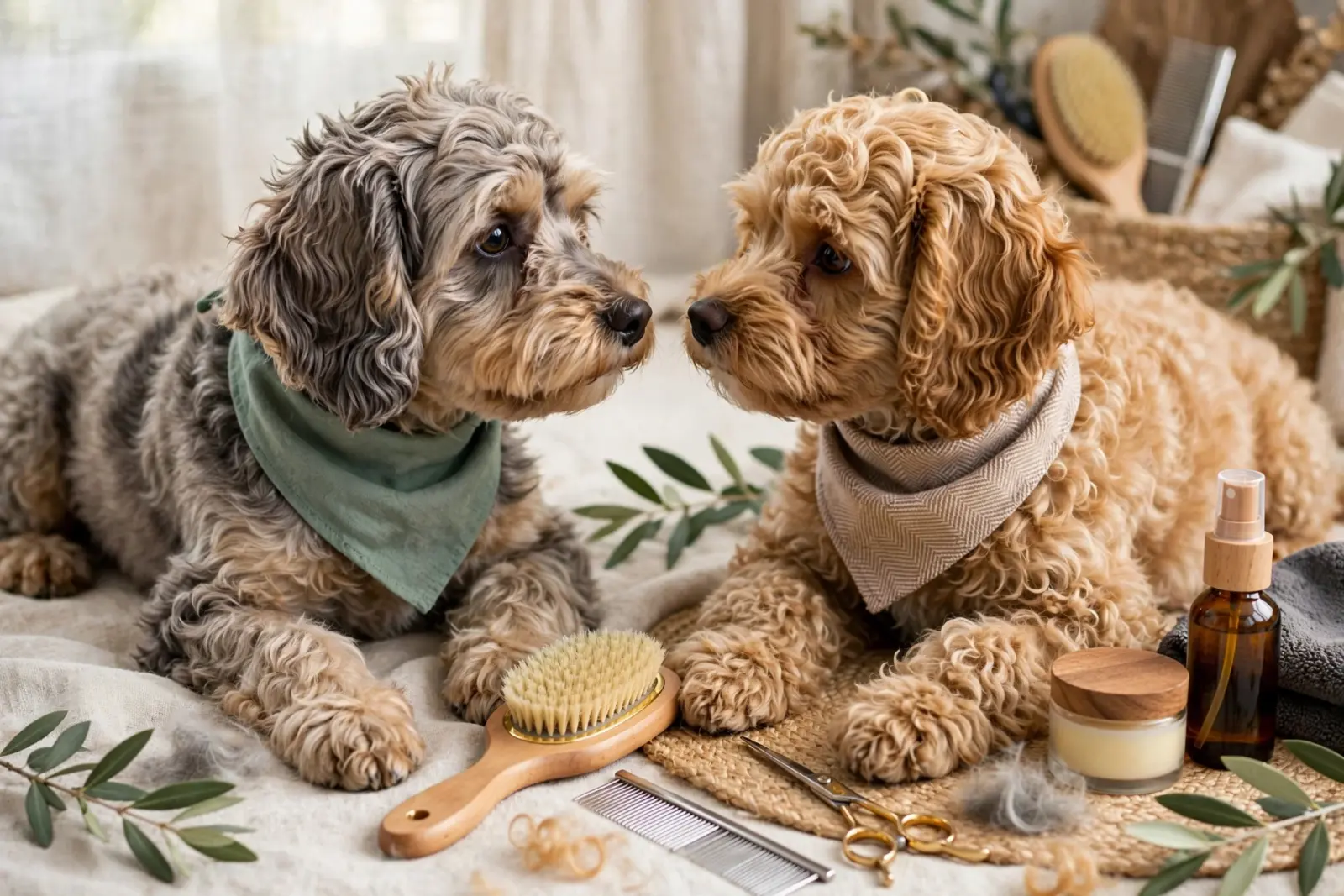
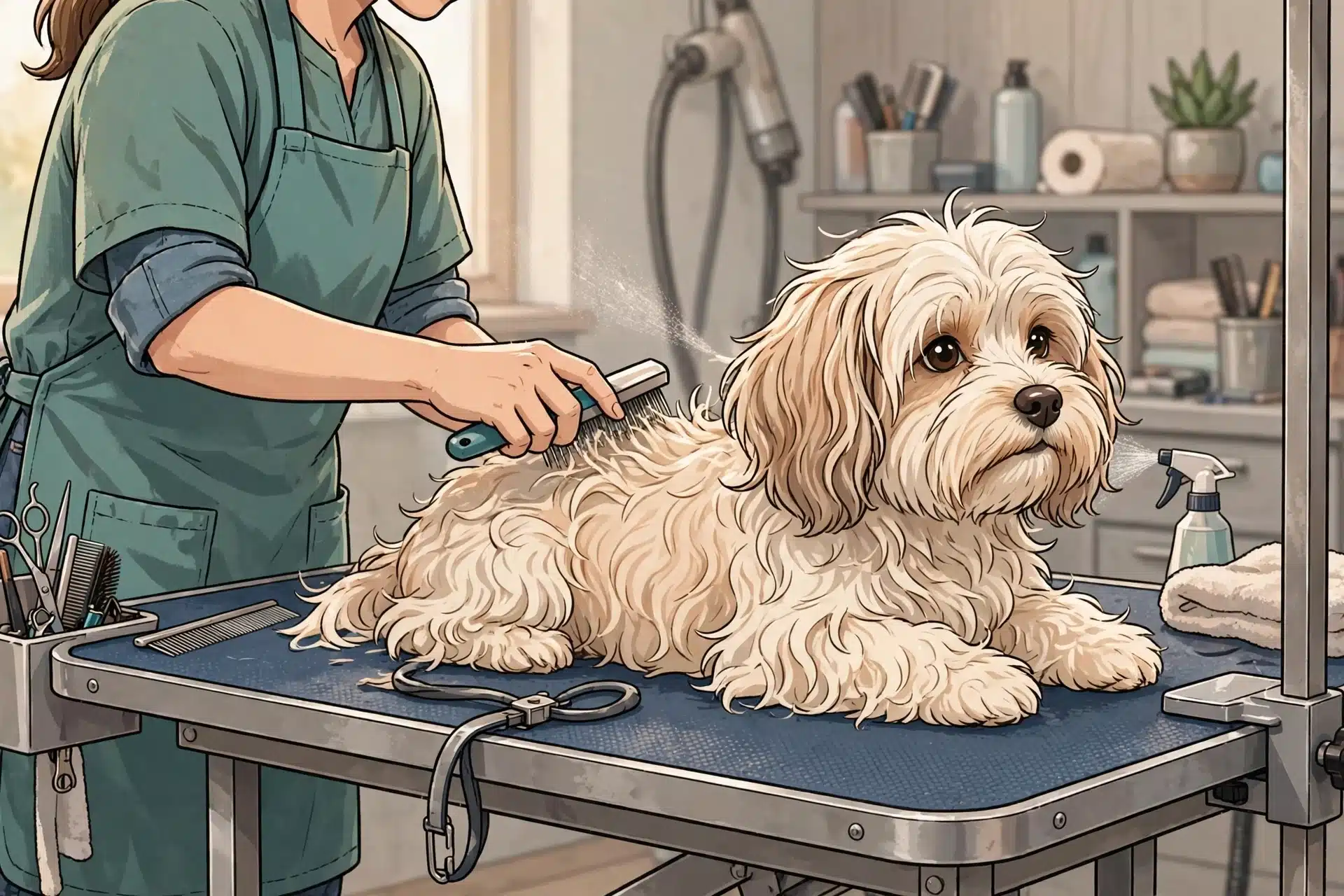
Grooming is where these three breeds differ the most. Havanese carry the highest coat commitment: their long, silky double coat needs brushing most days and a trim every 4 to 6 weeks, or mats form fast behind the ears and under the legs. Budget roughly $50 to $90 per professional groom, more in larger cities.
| Breed | Brushing | Pro Grooming | Shedding |
|---|---|---|---|
| Havanese | Daily to every other day | Every 4-6 weeks | Very low |
| Havapoo | 3-4 times weekly | Every 6-8 weeks | Low |
| Cavapoo | 3-4 times weekly | Every 6-8 weeks | Low |
The mixes shed less and still need trims. A Havapoo or Cavapoo inherits the low-shedding coat people want from low maintenance small dog breeds, but “low shed” never means “no work.” Loose hair gets trapped in the curls instead of falling out, so weekly brushing several times and a trim every 6 to 8 weeks keep the coat comfortable.
Cavalier coats are easy to love, easy to tangle. A Cavapoo’s soft wavy coat feels wonderful and mats just as easily as any of these breeds if you skip sessions. Run a slicker brush through the armpits, belly, and behind the ears twice a week minimum, and check for burrs after outdoor play. Learning to trim around the face and paw pads yourself can stretch the time between grooms. For a full routine, our puppy grooming and care guide walks through tools and schedules.
Health Screening and the Conditions Each Parent Line Brings
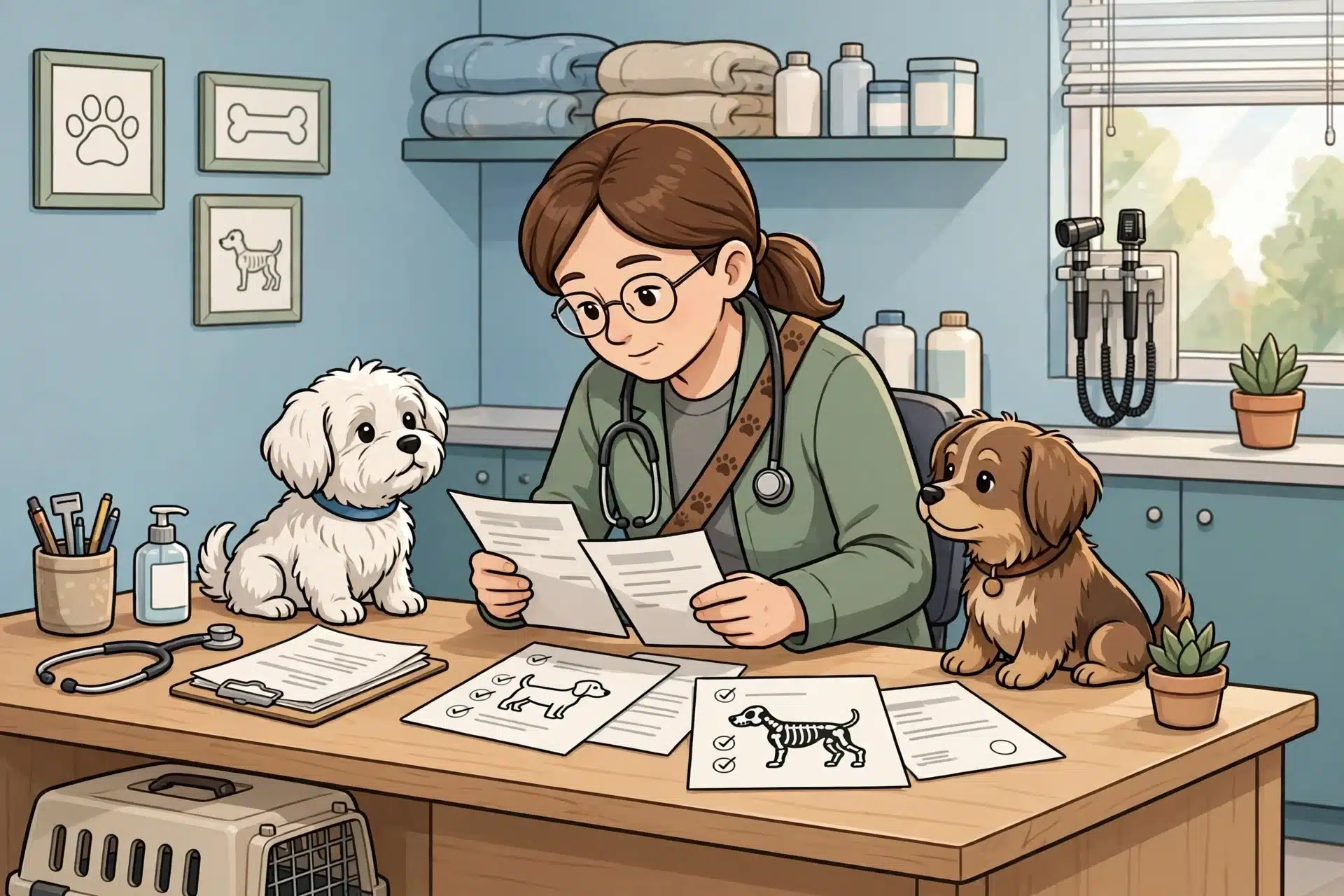
Health tested small breed puppies share a short list of conditions worth checking before you commit:
- Patellar luxation (loose kneecaps) in Havanese and both poodle mixes
- Eye disease, confirmed by an annual OFA CAER exam by a veterinary eye specialist
- Heart problems, including murmurs in Havanese lines
- Mitral valve disease and airway issues in Cavalier lines behind Cavapoos
The parent dogs’ test results matter more than the puppy’s age.
Havanese-specific conditions worth discussing
Havanese breeders should screen patellas, eyes, hearing, and hearts on both parents. Patellar luxation is highly heritable, so the Havanese Club of America’s testing guide treats the OFA CAER eye exam and patella checks as core, not optional. Dental crowding shows up too, which is why early tooth care matters. Ask how each parent scored, not just whether testing “was done.”
Cavalier-influenced risk in Cavapoo pairings
Cavapoos add the Cavalier side to the ledger. That line brings the two conditions Cavaliers are most known for: mitral valve disease, a gradual heart valve leak that often appears with age, and syringomyelia, a spinal fluid disorder tied to the breed’s skull shape. A responsible Cavalier parent has a clear cardiac exam and, ideally, an MRI history you can review.
What documentation a responsible seller provides
Expect written proof, not promises. That means OFA or equivalent test results for each parent, a vet exam record for your puppy, and a health guarantee and contract that states what is covered and for how long. Programs like Sage Puppies document each parent’s screening before a litter is ever planned, and we break down how Havanese risks compare with other breeds in our Havanese health overview. Ask for these papers in writing.
Energy, Children, and Schedule Fit
Daily exercise minutes and play style
All three breeds are moderately active, not hyper. A common breeder guideline is about five minutes of structured exercise per month of age, twice a day, until your puppy is grown, per the guidelines vets use for growing pups. Adult dogs then settle at 30 to 60 minutes daily, split between walks and play. Havanese lean bouncy and people-focused; Havapoos bring poodle energy that needs a game or puzzle; Cavapoos are the gentlest match for quiet homes.
Small dogs and young children
Any dog under 15 pounds can be hurt by a fall, so toddlers need supervised time with the puppy, always. Havanese are sturdy for their size and famously patient. Havapoos and Cavapoos are affectionate but small-boned. Teach children to sit on the floor, let the puppy come to them, and never carry the dog unsupervised. Small-breed care guides recommend short daily walks plus interactive play, which even young kids can help with under your eye.
Matching the breed to your hours
Judge by your real week, not your best week. If you work from home, all three fit. If you leave for 6 to 8 hours daily, plan a midday break or dog walker, because no young puppy holds it that long. Busy families with school-age kids usually do best with a Cavapoo or Havapoo. Breeders who raise litters in the home, as we do at Sage Puppies, can tell you which puppy’s energy matches your schedule.
Which Small Breed Puppy Is Easiest to Raise?
The three breeds compare closely, so the honest answer is: the easiest puppy is the one matched to your routine. Havanese learn fast and bond deeply, Havapoos balance trainability with a slightly easier coat, and Cavapoos tend toward a softer, gentler energy. All three are small, people-focused, and quick to train with reward-based puppy training.
Best overall for a first-time owner
The Havanese takes this one. It ranks among the quickest of the toy breeds to pick up house routines and basic cues, and its eagerness to please makes training forgiving for beginners. The trade-off is the coat: brushing most days and a trim every 4 to 6 weeks, around $50 to $90 per professional groom. If grooming feels like a lot, a Havapoo gives you the same temperament in an easier package.
Best for a calm home and a quiet apartment
A Cavapoo usually fits best here. Its Cavalier side brings a soft, easygoing energy that settles well in apartments, and adult exercise needs stay modest. Expect 3 to 4 coat brushings weekly and a trim every 6 to 8 weeks. Ask breeders about health testing for Cavalier heart conditions, since that side of the family carries known risks worth screening for.
Best for an involved, sociable household
The Havapoo suits busy families. Its poodle heritage adds cleverness and a low-shedding coat, while the Havanese side supplies playfulness and a strong desire to be included. This puppy thrives when someone is around most of the day, so households with kids, visitors, and flexible schedules see the best results. Just supervise any dog under 15 pounds around toddlers.

Still weighing Havanese, Havapoo, or Cavapoo? Sage Puppies matches your household, schedule, and grooming budget to the right health-tested puppy. Start the application today and bring home the easiest fit for your family.
Frequently Asked Questions
Q1: Which easy small breed puppies should first-time owners compare?
Compare the Havanese, Havapoo, and Cavapoo on five variables: learning speed, house-training consistency, grooming load, health screening, and energy match. All three are manageable, but the best fit depends on your schedule and coat budget.
Q2: Which small dog breed sheds the least?
The Havapoo and Cavapoo shed less than the Havanese because their Poodle-influenced coats trap loose hair. Low shed never means no work: brush three to four times weekly and trim every 6 to 8 weeks.
Q3: How long does house training take for small breed puppies?
Most small breed puppies are reliable by 4 to 6 months with a consistent schedule. Small bladders mean trips every 2 to 3 hours at eight weeks, so carry your puppy out after waking, eating, and playing.
Q4: Are Havanese, Havapoos, or Cavapoos better for apartments?
All three suit apartments. The Havanese adapts quickly to indoor routines, the Havapoo is very consistent once a potty spot exists, and the Cavapoo settles calmly but needs planned alone time.
Q5: What health tests should I ask a breeder about?
Ask for patella, eye (OFA CAER), hearing, and cardiac results on both parents. For Cavapoos, request a Cavalier cardiac exam for mitral valve disease. Expect written proof, a vet exam record, and a puppy health guarantee and contract.
Q6: How much does grooming cost for these small breeds?
Professional grooms run roughly $50 to $90 for a Havanese every 4 to 6 weeks, and the mixes every 6 to 8 weeks. Brushing between visits keeps mats from forming behind ears and under legs.
Q7: Which breed fits a busy family with school-age kids?
A Cavapoo or Havapoo usually fits best. Both handle active households well, but no young puppy holds its bladder for a full workday, so plan a midday break or dog walker.
Conclusion
“Easy” depends on five measurable things: learning speed, house-training consistency, grooming load, health screening, and energy match. The Havanese trains fastest but needs the most coat care; the Havapoo balances trainability with a lower-shedding coat; the Cavapoo brings the gentlest energy but warrants Cavalier heart screening. Match the breed to your real weekly schedule and grooming budget, then stay consistent through the first 90 days. Whichever you choose, ask for written parent test results before you commit, because the right fit beats the “easiest” breed every time.