Quick Summary: Vet the seller before choosing a puppy, requiring a live video call, verifiable parent health tests, vaccination records, and a written contract with clear deposit and refund terms. Havanese, Havapoo, and Cavapoo can suit first-time owners, but each needs regular grooming, training, companionship, and careful attention to small-breed health risks such as patellar luxation. Budget $1,300 to $3,300 for first-year expenses beyond the $3,500 to $4,500 purchase price from Sage Puppies, then plan safe transport and a calm, routine-based first month at home.
Two puppies can look identical in a listing photo and still cost thousands of dollars apart, because one seller hands over health records and a signed contract and the other hands over a screenshot. The difference is decided before you ever meet the puppy. That gap is the problem this guide solves. For small breed puppies for beginners, the real work starts with vetting the seller, not picking a coat color. You will learn which health evidence to request, which contract terms protect you, what first-year costs to expect, and how Havanese, Havapoo and Cavapoo fit first-time owners. This small breed puppies for beginners framework comes from Sage Puppies, a Utah program built on documented breeding and breeder experience. Treat it as your small breed puppies for beginners checklist, from deposit to first month home.
What Counts as a Small Breed, and Why the Definition Matters
The Categories Breeders and Vets Actually Use
Breeders and vets sort dogs by adult weight. The American Kennel Club places its tiniest dogs in the Toy group, mostly under 15 pounds, while “small breed” usually stretches to about 25 pounds. Havanese, Havapoo and Cavapoo puppies all land in that small range, though exact adult size varies by mix and by parent.
Size Does Not Predict Temperament or Care Level
A small dog is not automatically an easy dog. Some toy breeds are bold, busy and vocal, while some larger dogs are calm couch companions. Size also shapes health risks, since small breeds face issues like patellar luxation and tracheal collapse that bigger dogs rarely see. Judge each breed on its own traits, not its weight class, and compare breeds before you commit to one.
Writing Your Own Requirement Statement
Before you contact any breeder, write down what your household actually needs. List your adult weight limit, activity level, grooming budget and hours home alone. A short statement like “under 20 pounds, low-shedding, happy with kids” keeps you focused. Sage Puppies matches families within Havanese, Havapoo and Cavapoo lines, so knowing your non-negotiables first makes that conversation faster.
Choosing a Small Breed That Fits Your Household
Pick the breed whose daily needs match your routine, not just the cutest face in a photo. All three of the breeds below stay small, bond closely with people, and suit a first-time owner. The differences show up in coat care, energy, and how much alone time they tolerate.
The Long-Coated Companion
The Havanese is a purebred toy dog from Cuba, known for a silky coat and a people-first nature. The AKC breed profile describes an affectionate, trainable companion that does well with children and other dogs. Expect daily brushing and regular grooming, since that lovely coat mats fast. If you want a breed with a long, documented history and predictable size, this is your dog.
Havanese Crossed with Poodle
A Havapoo blends the Havanese temperament with poodle smarts, often producing a wavy, low-shedding coat. Many first-time families like the mix because grooming is usually a bit easier than a full Havanese coat, though no crossbreed comes with guarantees. Sizes vary with the poodle parent, so ask about both parents. Our guide to Havapoo traits and temperament breaks down what to expect at each size.

Cavalier Crossed with Poodle
A Cavapoo pairs the gentle Cavalier King Charles Spaniel with a poodle, and the result is usually a soft, sociable dog that loves laps and playtime equally. Cavapoos tend to be eager helpers with kids and adapt well to apartment life. Their ears and coat still need steady grooming attention, so build that into your weekly schedule before you commit.
One honest caution: no puppy is completely allergy-safe or maintenance-free. Ask each breeder what health screening the parents have, especially for knees and hearts, and compare answers across breeders rather than trusting a sales page.
Where Small Breed Puppies Come From and How to Vet the Source
Small breed puppies reach buyers through three doors: a breeder, a shelter, or a rescue. Each door leads to a healthy dog, but each comes with trade-offs you should understand before you fall for a photo.
Breeder, Shelter or Rescue: Honest Differences
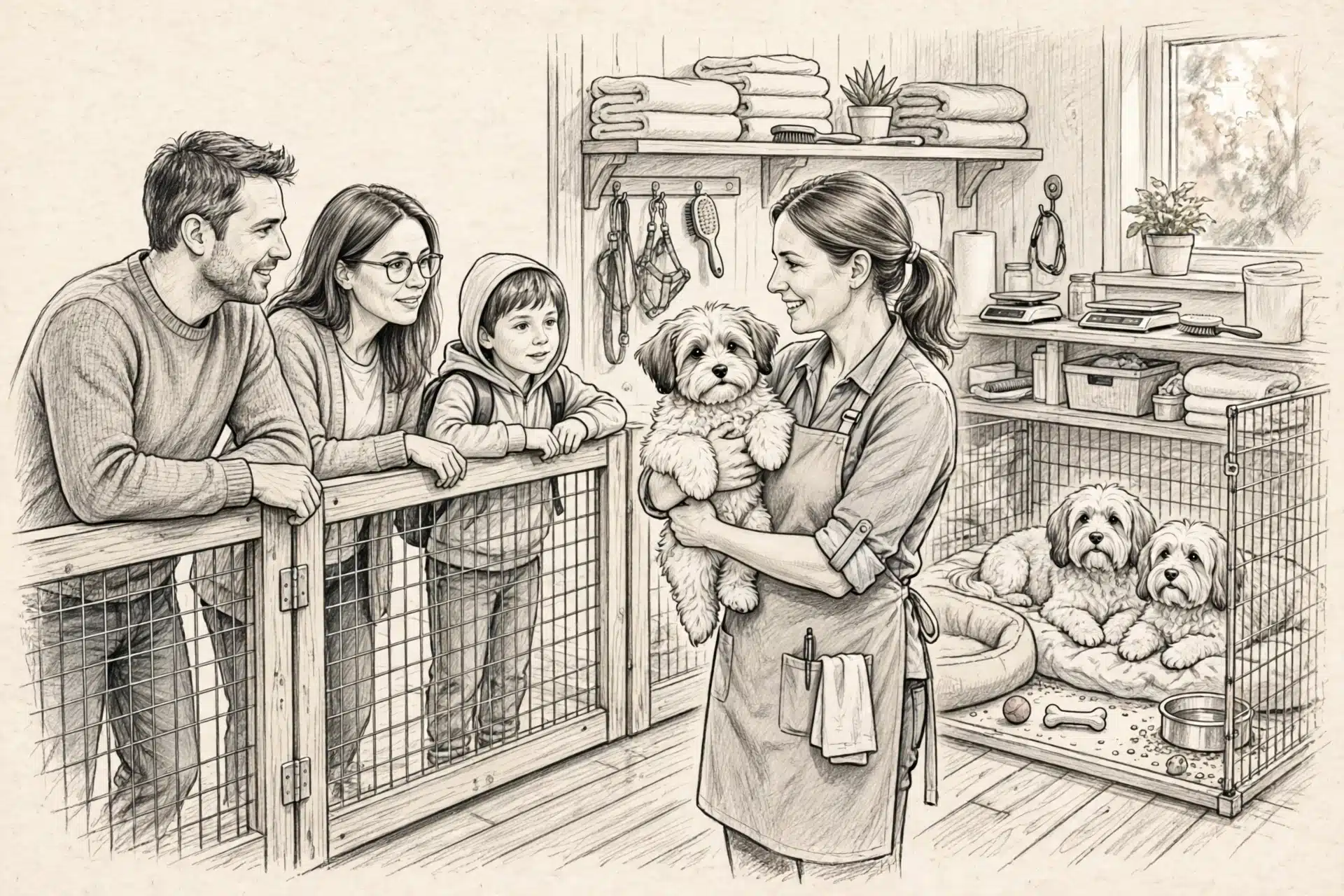
A good breeder lets you meet the parents, review health testing, and see where the puppy was raised. A shelter or rescue offers a lower fee and a dog that needs a home now, but history is often thin. Neither choice is wrong. Pick based on how much you want documented ancestry and early care records.
The Verification Sequence
Vet any source in the same order. First, ask to see the puppy and its mother on a live video call. Second, request health screening results for the parents, such as OFA checks for patellar luxation. Third, ask for vaccination records and a written contract that spells out deposit and refund terms. A step-by-step adoption process shows what this sequence looks like in practice. Any breeder who stalls on these steps gives you your answer.
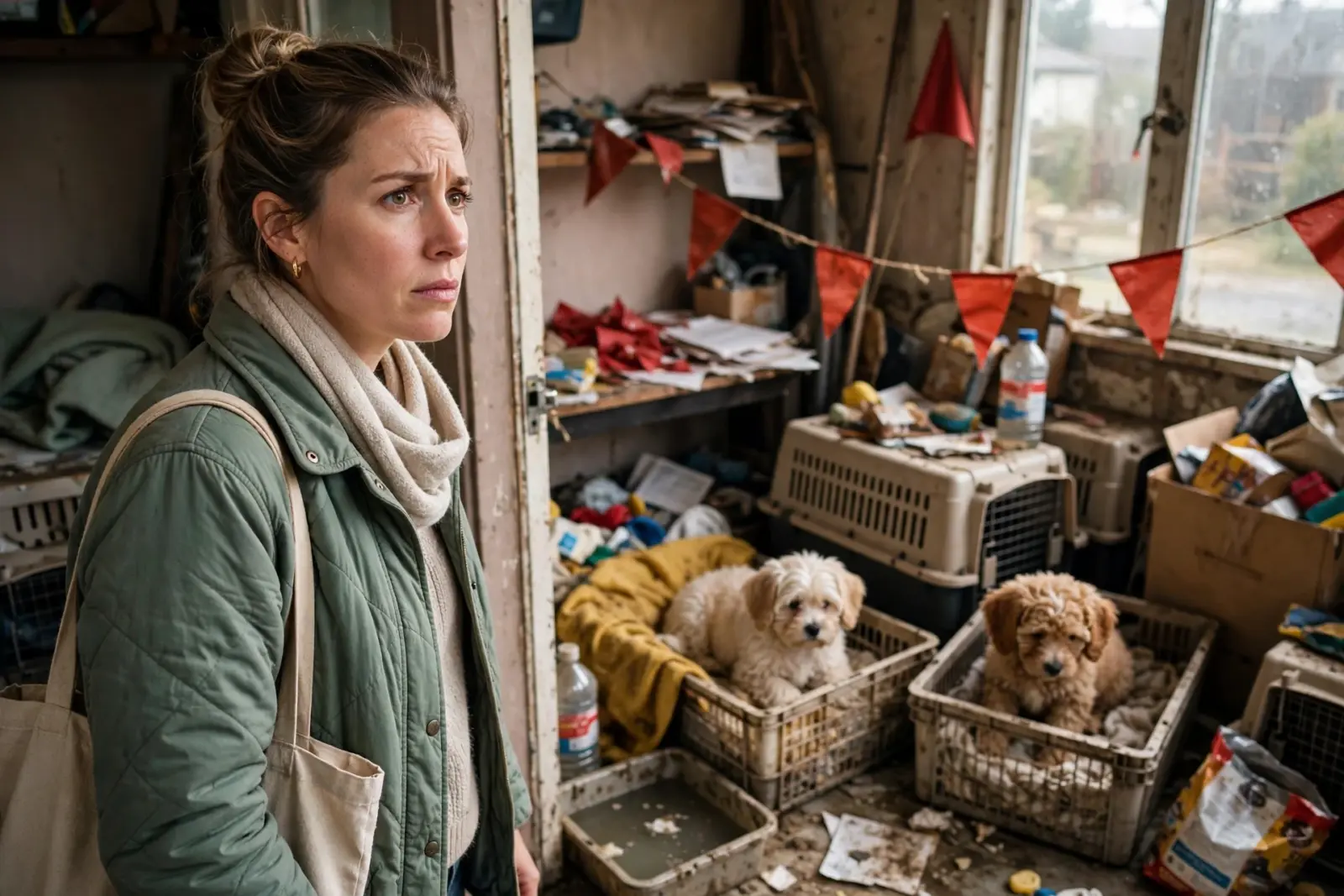
Puppy Scam Warning Signs
How do I spot a puppy scam? Most follow the same pattern: a cute photo, a price that seems too low, and a demand for money before you ever meet the dog.
- Only-text communication, with no live video call of the puppy
- Stolen or stock photos, or a mismatched photo history
- Wire transfers, gift cards or payment apps instead of traceable payment
- Extra “shipping” fees asked for after you pay
The BBB’s puppy scam study urges buyers to see an animal in person and pay by credit card. The AKC’s scam guide adds that refusing a phone call is a classic red flag. If any sign shows up, walk away.
Health Evidence: What to Ask For and How to Read It
What health tests should you ask a small breed breeder about? Ask for patellar luxation and cardiac evaluations, a BAER hearing test, eye exams by a veterinary ophthalmologist, and DNA tests for breed-specific conditions such as those covered in genetic health tests every puppy should have. Ask for the paperwork, not a verbal “parents are healthy.”

Three Kinds of Health Evidence, Not One
Serious breeders show three separate records. First, DNA test results on the parents. Second, physical exams: knees, heart, eyes and hearing. Third, puppy-level proof like vaccination records and a recent vet check. A clean vet visit is not a substitute for parent testing, and “the vet checked them” means the vet saw the dog once, not that it was screened.
Small Breed Conditions to Ask About
Small breeds carry specific risks, so ask directly. Patellar luxation, where the kneecap slips out of place, is common in toy breeds and often appears by adulthood. Tracheal collapse affects the windpipe and worsens with weight and collar pressure. Heart conditions, especially mitral valve disease in small breeds, deserve a cardiac exam, not just a stethoscope listen. For Havanese and mixes like the Havapoo and Cavapoo, ask about hereditary cataracts and heart defects, plus DNA tests for any conditions common to both parent breeds.
Screening Programs and What They Cover
CHIC certification means a dog completed the breed-specific screening protocol set by the OFA’s Canine Health Information Center. It does not mean every result was normal; results are published either way, so you can read them yourself. For Havanese, the breed club’s health and testing guide lists required tests, including patella, cardiac, hearing and eye screening. Ask for the parents’ OFA or CHIC numbers and look them up.
Contracts, Deposits and the Real Cost of a Small Breed Puppy
A good puppy contract protects you, not just the seller. When you read one, look for clauses that carry real weight:
- Health guarantee terms and what condition must be met by your vet
- Return or rehome policy if the match fails
- Spay or neuter requirements and timing
- Vaccination and deworming records documented in writing
- Delivery and pickup responsibilities, including who pays
If a breeder hesitates to put any of this in writing, walk away.
Deposits, Guardian Arrangements and Safe Payment
Deposits usually range from a few hundred dollars to about half the purchase price, so ask exactly when a deposit is refundable and get that answer in writing. Be careful with guardian home offers, where you raise a breeding dog for the breeder; read every term before signing. Pay by traceable method, and treat pressure to send gift cards or wire money as a classic puppy scam warning sign.
Budgeting for Year One and Beyond
Sage Puppies prices its Havanese, Havapoo and Cavapoo puppies at $3,500 to $4,500. The puppy is only the start, so plan for these first-year cost categories:
| Category | Typical Year One Cost |
|---|---|
| Vet visits and vaccines | $300 to $700 |
| Spay or neuter | $150 to $500 |
| Food and treats | $250 to $700 |
| Grooming | $300 to $600 |
| Supplies and crate | $200 to $500 |
| Training classes | $100 to $300 |
The AKC estimates ongoing annual costs average about $2,500 for a small dog, so budget past year one too. Small companions also need regular trims and ear care, so factor grooming into your monthly plan from the start.
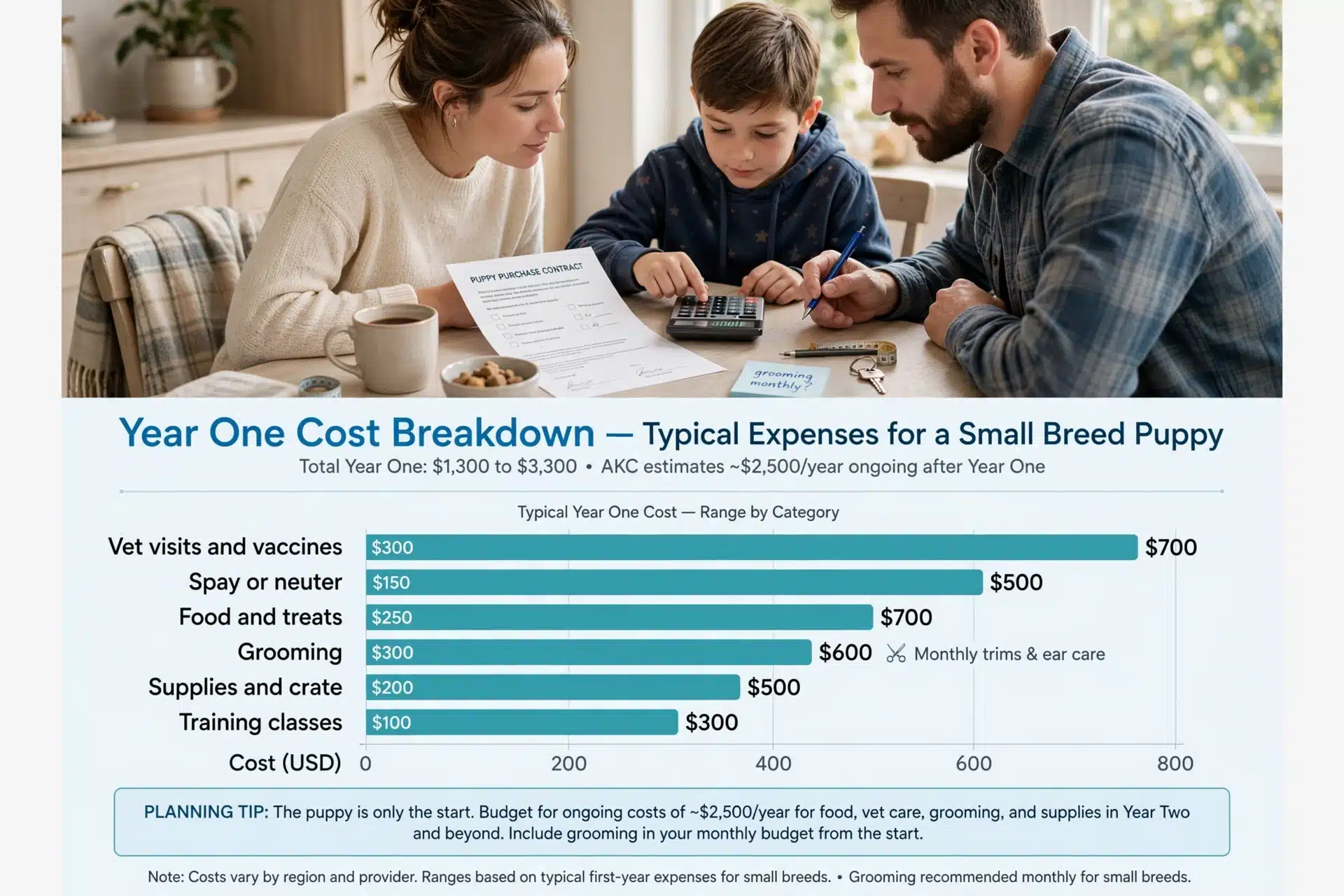
Ongoing care averages roughly $2,500 a year according to the AKC’s cost data, so budget past year one. Small companions also need regular trims and ear care, so build grooming into your monthly plan from the start.
Getting the Puppy Home Safely
The safest trip for a young small breed puppy is the shortest one. Plan how your puppy will travel before you pay a deposit.
Local Pickup in South Jordan and Across Utah
If you live in Utah, pick up your puppy in person. A short car ride in a secured crate or carrier is easiest on a puppy who has just left her litter. You also meet the breeder, see where she was raised and ask last-minute questions face to face. Utah families can arrange local pickup with Sage Puppies in South Jordan; see what to expect from Cavapoo puppy delivery for Utah families if a longer trip applies.
Ground Transport and Flight Nanny Delivery
Nationwide families usually choose ground transport or a flight nanny. A flight nanny flies in the cabin with your puppy beside her, so the puppy never rides as cargo. Ask who handles the puppy, how long the trip lasts and what updates you get along the way.
Air Travel With a Very Young Small Breed Puppy
If you fly yourself, know the rules. Federal regulations require dogs to be at least 8 weeks old and weaned at least five days before flying, according to the AVMA, and many airlines set stricter limits.
Preparing Your Home and the First Month With Your Puppy
The first month sets the tone for the next decade, so plan it before pickup day. A Havanese or Cavapoo puppy arriving at your house needs a safe space, a steady routine and gentle handling from day one.
Supply Categories and the First 72 Hours
Shop by category instead of by brand: a crate for sleeping, baby gates to block stairs, food and water bowls, a harness, a leash, chew toys and an enzyme cleaner for accidents. For the first 72 hours, keep the world small. One room, short play sessions, frequent potty breaks outside and lots of rest. Puppies sleep 18 to 20 hours a day, so guard those naps.
House Training and Daily Routine
Take your puppy out after every meal, nap and play session, then reward the moment they finish. Most small breeds catch on within a few weeks if you stay consistent. Feed at the same times daily and follow each meal with a trip outside. Never punish accidents; clean them thoroughly and adjust the schedule instead.
Grooming, Handling and Early Socialization
Havanese, Havapoos and Cavapoos all carry coats that mat fast, so start a puppy grooming routine early: brushing a few times a week, gentle touches to paws, ears and mouth, and short nail trims. Make each session calm and paired with treats. Between 3 and 14 weeks, introduce new people, sounds, surfaces and car rides in small, positive doses. This socialization window matters more than any other month of your puppy’s life.
Medical Follow-Through After Pickup
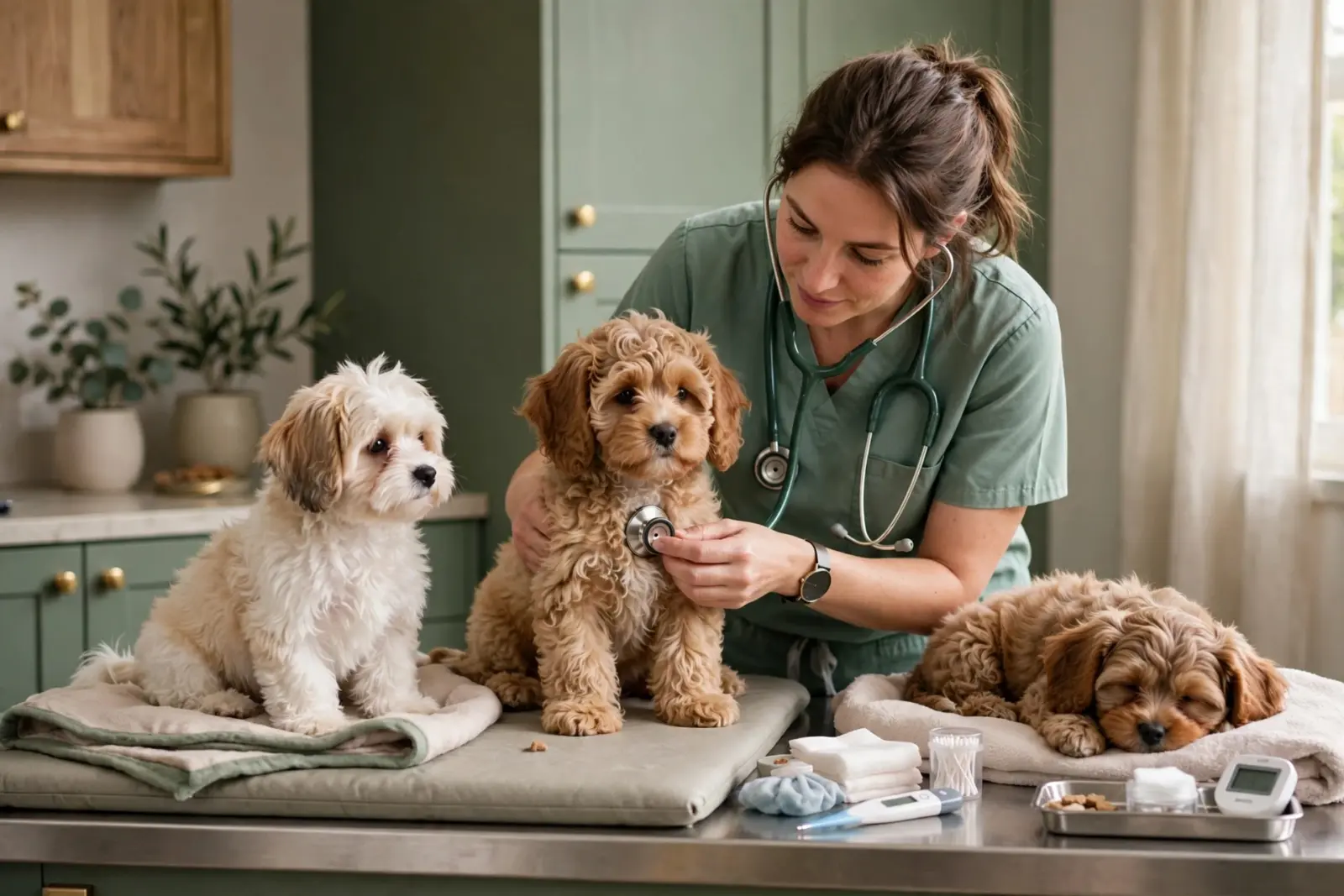
Book a vet visit within the first few days, even if your breeder already supplied health records. Bring the vaccination records you received and ask your vet to set the remaining puppy vaccine schedule. Ask about heartworm prevention, dental care and patellar luxation checks, which matter for small breeds.
Before any puppy joins your home, confirm the health evidence and contract terms covered earlier in this guide so the vet visit continues work that is already documented.
Common Mistakes First-Time Small Breed Buyers Make
Most first-time buyer mistakes come down to two things: picking the wrong seller and skipping the planning a small dog needs. Fix both and the rest of this buying guide gets much easier.
Errors in Choosing the Seller
The biggest error is trusting a cute photo. Puppy scams are common online, and red flags include sellers who refuse phone calls, use stock photos, or push payment by wire or gift card, according to AKC guidance on spotting puppy scams. The FTC also warns buyers to skip anyone who won’t let you see the puppy or meet the parents before paying, a pattern they flag in advice on avoiding pet scams. Beyond outright fraud, watch for vague health histories and no written contract. Ask for vaccination records, parent health testing and the puppy deposit and refund terms in writing. A small program that answers questions openly, as Sage Puppies does with its application process, makes this step far less risky.
Errors in Planning for the Dog
Buyers often choose a breed by looks instead of fit. A Havanese, Havapoo or Cavapoo still needs daily grooming, training and company. Other common slips: underestimating first year costs, skipping pet insurance decisions early, and forgetting small breeds are prone to patellar luxation, so jumping off furniture matters. Plan your schedule before the puppy arrives.

Ready to meet your puppy? Sage Puppies raises healthy, well-socialized Havanese, Havapoo and Cavapoo puppies in South Jordan, Utah, with local pickup or nationwide delivery. Start your application at Sage Puppies, and we’ll help you find the right small companion for your family.
Frequently Asked Questions
Q1: What should a beginner know before buying a small breed puppy?
Vet the seller first: request a live video call, parent health testing, vaccination records and a written contract with clear deposit and refund terms. This small breed puppies for beginners checklist matters more than coat color.
Q2: How much does a small breed puppy cost in the first year?
Beyond the purchase price, plan roughly $1,300 to $3,300 for vet care, grooming, food, supplies and training, plus about $2,500 yearly after that.
Q3: How do I spot a puppy scam?
Refusal of video calls, stock photos, wire transfers and surprise shipping fees are classic red flags. Walk away.
Q4: Which small breed suits first-time owners?
Havanese, Havapoos and Cavapoos all bond closely and stay small; choose by grooming time and energy fit.
Q5: When can a puppy fly or travel home?
Federal rules require puppies to be at least 8 weeks old and weaned five days; shorter trips are safest.
Q6: What health tests should small breed parents have?
Ask for patellar luxation, cardiac, hearing and eye exams plus DNA tests, with OFA or CHIC numbers you can verify yourself.
Conclusion
Buying a small breed puppy well comes down to evidence, not luck. Vetting the seller first beats picking a coat color, and three checks do most of the work: a live video call, parent health testing with verifiable OFA or CHIC numbers, and a written contract with clear deposit and refund terms. Budget for first year puppy costs beyond the purchase price, plan a safe trip home, and keep the first month calm and routine-driven. Choose Havanese, Havapoo or Cavapoo based on fit, then hold every breeder to the same standard before you pay anything.