Quick Summary: Group puppy classes are generally best for social, confident small-breed puppies because they develop leash skills, focus, and comfort around distractions. Private training is more beneficial for fearful, reactive, or overwhelmed puppies and can address household issues such as barking, leash walking, and potty training. A hybrid approach-often one private session before a six-week group course, plus 10 to 15 minutes of reward-based practice twice daily-may be most effective.
For a Havanese, Havapoo or Cavapoo, group puppy classes usually speed up leash skills and settling around distractions. Private puppy training works faster when your puppy is fearful, reactive or overwhelmed indoors. If you are standing in a South Jordan home with an eight-week-old puppy and no free weekends, the format you choose this month shapes everything after it.
Most first-time owners face this choice under pressure: a pickup date looms, and other owners offer conflicting advice. This comparison breaks the decision into environment, cost, socialization safety, in-home skill transfer and small breed behavior. As breeders of these exact breeds since 2025, we match each puppy’s temperament, your schedule and your budget to the right puppy training sessions before you book the first one.
Group Puppy Classes vs Private Puppy Training Sessions: At a Glance
| Private puppy training sessions | Group puppy classes | |
|---|---|---|
| Typical cost | Often billed per hour, frequently packaged across several sessions | Usually sold as a multi-week course at a lower per-session price |
| Schedule flexibility | High, sessions are booked directly with the trainer | Lower, the cohort meets on fixed days and times |
| Distraction level | Low, the puppy works in a controlled home or one-on-one setting | High, other puppies, people and noise are part of the exercise |
| Individual attention | Full attention on one puppy and one household | Shared, the trainer divides attention across the group |
| Socialization exposure | Limited to the people and dogs present in the session | Broad, built-in contact with other dogs and handling |
| Best for | Fearful, reactive or easily overwhelmed small breed puppies | Social, confident puppies ready for real-world distractions |
How Private puppy training sessions and Group puppy classes Compare
Private puppy training sessions
A trainer works with one puppy and one household, usually by the hour or in a package. The setting is quiet and controlled, so lessons move at your puppy’s pace. This format suits fearful, reactive or easily overwhelmed small breeds like a sensitive Havanese.
Key strengths
- Full trainer attention on one puppy
- Flexible scheduling booked directly with the trainer
- Low-distraction environment for focused learning
Group puppy classes
A trainer coaches a small cohort of puppies and their owners across a fixed multi-week course. Distractions are the point: other dogs, people and noise are built into every session. This format fits social, confident puppies ready to practice skills in a busy room.
Key strengths
- Broad socialization with dogs and handlers
- Lower per-session cost
- Real-world distraction practice built in
The Learning Environment Changes What a Small Breed Puppy Can Absorb
A Havanese puppy can sit perfectly at home and then fall apart in a class of eight barking dogs. That is not stubbornness. It is how learning works: your puppy absorbs cues best in a setting that matches its current stage, and the setting either supports that or swamps it.
Why small breeds are often distracted before they are trained
Small breed puppies arrive with big feelings and short focus. A Havapoo or Cavapoo is small enough that the world looms large, so every sound, person and dog competes for attention. The American Veterinary Society of Animal Behavior notes that the first three months are the main window for socialization, when sociability outweighs fear, and it encourages safe exposure even before vaccines finish (AVSAB statement). The catch is timing. An eight-week-old puppy cannot yet hold attention for long, so a busy class can teach it that other dogs are more exciting than you. Keep home sessions to two or three minutes, several times a day, and treat structured classes as socialization first, skills second. A well-run puppy socialization class will expect exactly that.
Matching the setting to the puppy’s temperament
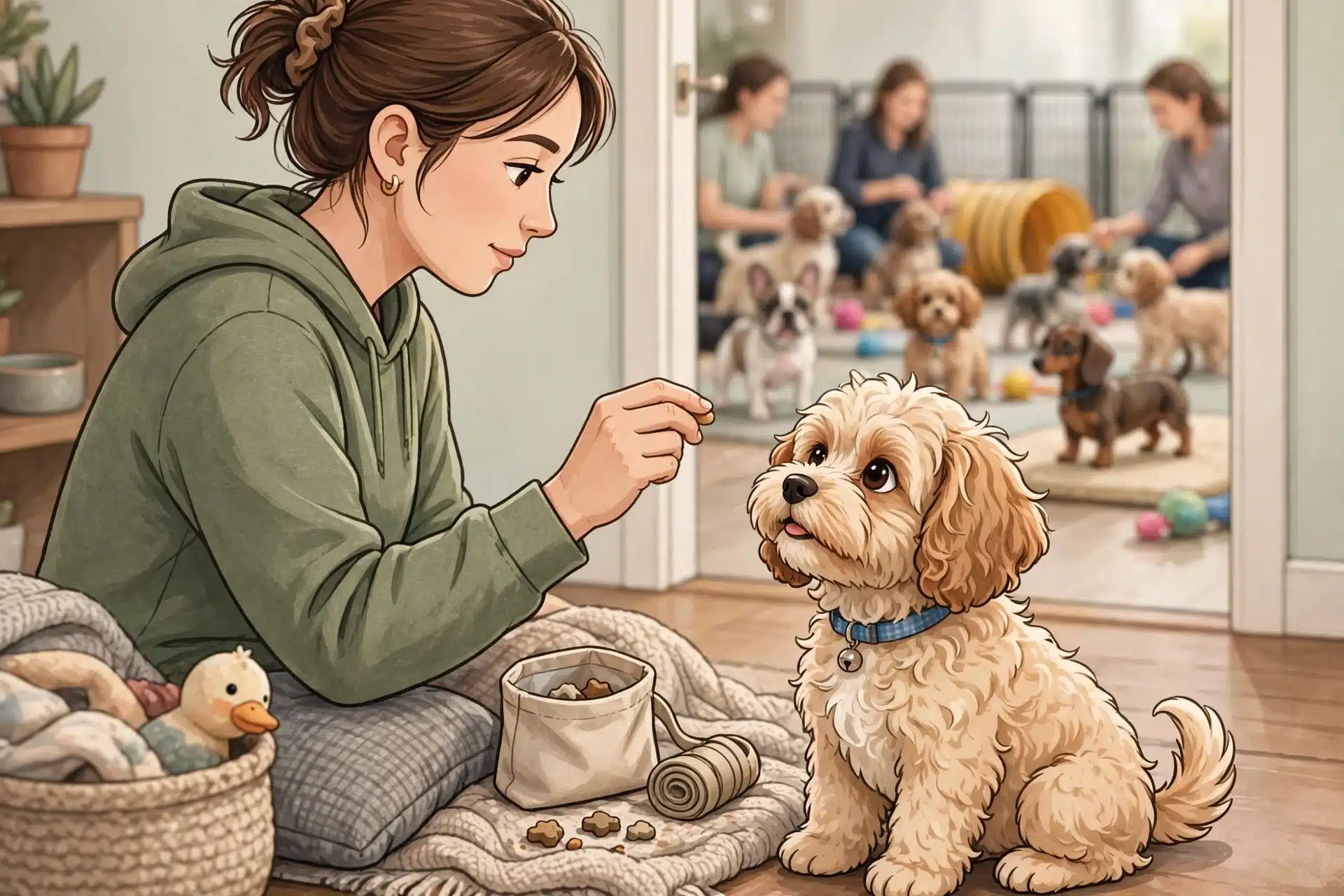
Let your puppy’s personality pick the format. A bold puppy that charges toward other dogs often does well in a group class, where a trainer can shape greetings and build focus around mild distraction. A shy or cautious puppy learns faster in short private training sessions first, then joins a class once it can settle. Many families blend the two, which is how small breed puppy training usually succeeds: calm reps at home, controlled exposure outside, then group practice. Small breeds like Havanese and their mixes respond to the same reward-based puppy training as big dogs, just in shorter, quieter doses.
Watch for the stress signals small dogs show first: lip licking, yawning and sniffing the ground. If you see them, shrink the environment, not the goal.
Every puppy you bring home, whether from Sage Puppies or elsewhere, starts learning from the environment on day one, so plan it as deliberately as you plan meals.
| Setting | Best fit | Watch out for |
|---|---|---|
| Quiet home sessions | New cues, shy puppies | Too little real-world exposure |
| Small group class | Bold, settled puppies | Overwhelming young or timid dogs |
| Private lesson, then class | Cautious or sensitive pups | Cost and scheduling |
Cost, Scheduling and the Real Weekly Commitment
Price depends on the format you pick. Here are current US ranges, so you can budget before your puppy comes home:
| Format | Typical cost |
|---|---|
| Group puppy class | $120-$360 for a 6-week course |
| Private session | $100-$165 per hour |
| Group session rate | About $30-$80 per single class |
The first range comes from Bark’s 2026 price survey; the private and group rates are from Dognition’s cost guide. Most trainers quote packages, not single sessions, so ask what a full course includes.
Published price ranges for each format
Group classes are the cheaper route for most families. A six-week block usually lands between $150 and $300, and you get supervised play with other puppies, which is worth real money for a Havanese or Cavapoo.
Private sessions cost more per hour but target exactly what you need. If your Havapoo struggles with leash walking or the crate, two or three focused lessons may beat six general classes. Some trainers bundle private work with a class for the best of both.
Ask whether the fee covers written homework and follow-up questions. A $150 class with no support costs more in the end than a $250 one with it.
The time cost that never appears on the price list
Money aside, the real commitment is daily practice. Plan on 10-15 minutes of reward-based puppy training, twice a day, between lessons. Sessions and classes only work if you rehearse at home.
Group classes add travel time and a fixed weekly slot for 4-6 weeks, which matters for busy families. Private sessions flex around your calendar but shift more practice onto you. Budgeting for that time, and for early costs like gear, matters more than the sticker price; a solid budget plan for puppy ownership should include both.
Sage’s small breed puppy buying guide covers the first-month expenses alongside training choices.
Socialization Safety and the Vaccine Question
Short answer: most puppies can start a group class after their first vaccine round, around 8 to 10 weeks of age. The AVSAB position statement says early socialization should be the standard of care, so waiting until the full series ends usually costs more than it protects.
What the AVSAB socialization position actually says
The American Veterinary Society of Animal Behaviorists reviewed the evidence in 2008 and stood by it since. Their core claim: the primary socialization window closes near 14 weeks, and behavioral problems now kill more dogs under three than distemper and parvovirus combined.
So the group the vets trust most recommends puppy socialization classes before the vaccine series is complete, as long as the class requires vaccines and health checks. AVSAB advises starting as early as 7 to 8 weeks, one week after the first vaccine.
Public exposure before the full vaccine series
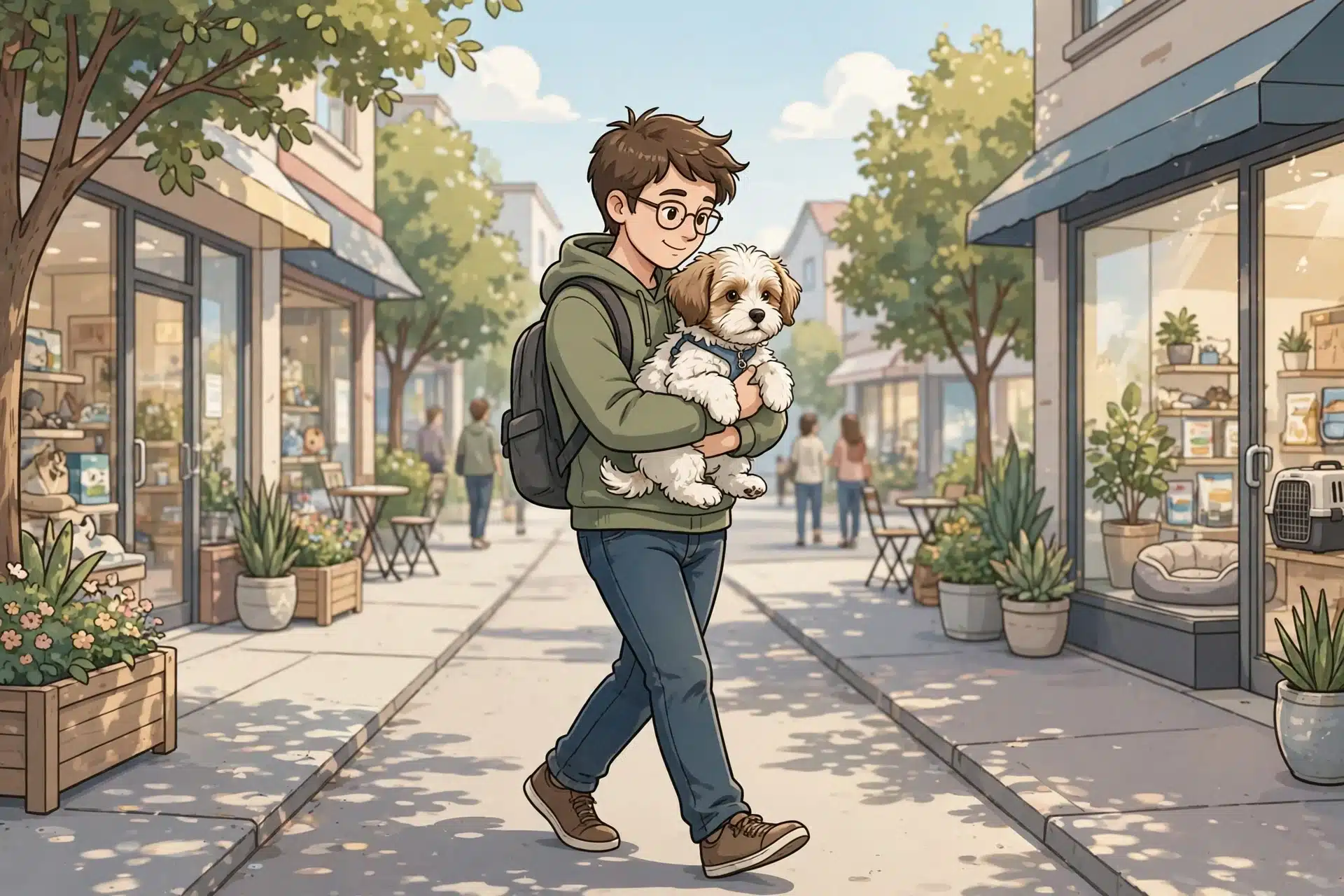
Class is the easy part. Everyday outings need more thought. Carry your puppy through hardware stores and sidewalks rather than walking them, and skip parks where unknown dogs relieve themselves until your vet clears it.
At home, host healthy, vaccinated dogs and a steady stream of calm visitors. Sounds, surfaces, car rides and gentle handling all count as socialization and carry no infection risk.
This is the window where a well-run puppy socialization class does work no private lesson can, because your puppy needs other puppies, not just a trainer. Ask any class about its puppy class vaccination requirement before you enroll, and follow a week-by-week socialization plan so nothing slips through.
Whether the Skill Actually Transfers to Your Home
The handler is the trained variable
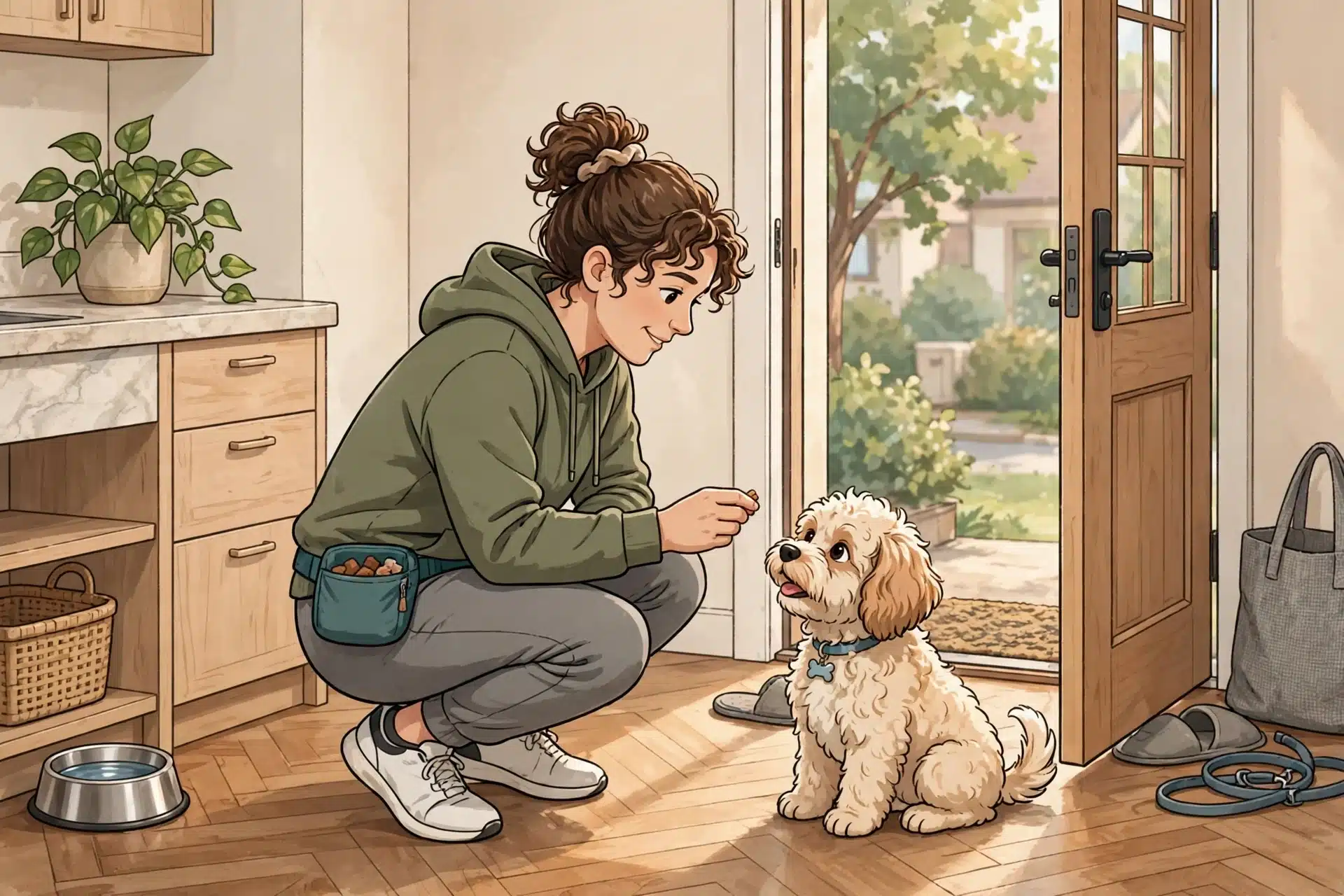
Here’s the honest answer: classes and private sessions do not train your puppy. They train you, and you train the puppy at home. A trainer might get a perfect sit in 30 minutes. That means little if no one repeats it in your kitchen tomorrow.
This is why either format fails without daily practice. Dogs learn cues in context, so a recall polished in a quiet room may vanish at a busy park until you practice there too. Consistency matters more than the setting, and dogs struggle when family members use different words for the same behavior, a point trainer certification programs stress in guidance on consistency.
The upside: this works the same for both formats. A $150 group class and a $160 private hour both depend on the same thing, your 10-15 minutes of reward-based practice twice a day between lessons. If nobody at home follows through, the format you picked was never the problem.
Tailoring to a small breed household routine
Small breeds add a few wrinkles. A Havanese or Cavapoo practices life at ankle height, so knee-level rewards and a low-key voice beat tall, loud cues. Private puppy training shines here because the trainer watches your actual routines: the door-dashing at school pickup, the begging at the dinner table.
Group classes teach you to work around distractions, which helps, but your house stays the main training ground. Fold practice into real moments: a sit before meals, a name response before fetch. Board-and-train advocates admit the same limitation of any program: skills hold only where they get rehearsed, and for your puppy, that place is home.
Small Breed Realities: Barking, Potty Needs and Being Handled
Small breeds learn the same skills as big dogs, but the details that trip them up are different. Alarm barking, tiny bladders, and a habit of picking things up off the floor all shape how well any training format works for a Havanese, Havapoo or Cavapoo.
Indoor alarm barking and attention-seeking
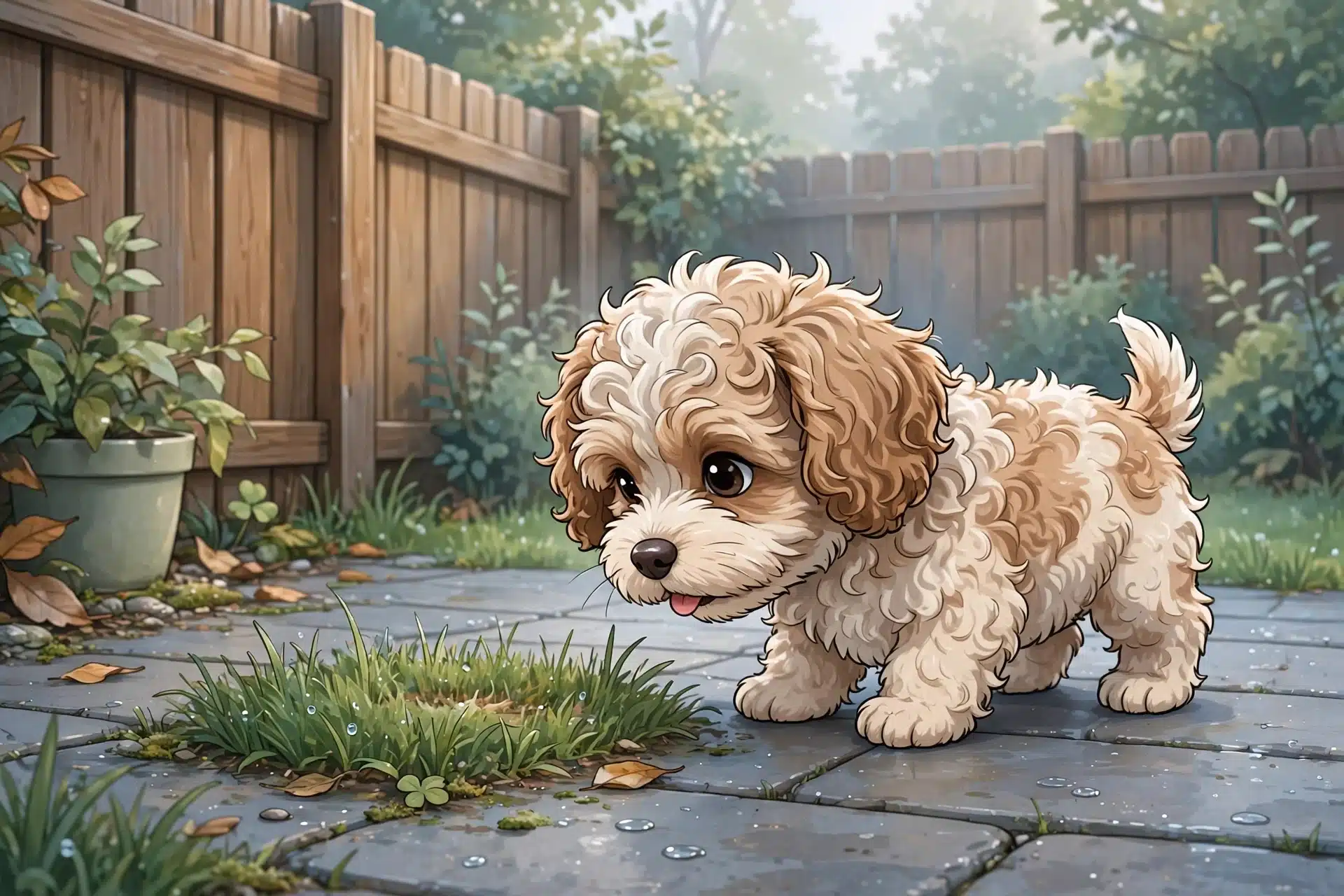
Small dogs notice everything. A delivery knock, a neighbor in the hallway, or a leaf blowing past the window can set off a barking streak, and it usually starts in the first few weeks home. The pattern is simple: the puppy barks, something happens, and the barking gets rewarded, either by attention or by the sound going away.
Group classes rarely fix barking, because most puppies are too busy to rehearse it there. Private sessions help more, since a trainer can watch the trigger happen in your actual living room and show you how to interrupt it before it becomes a routine. Between lessons, reward calm behavior and avoid scolding, which often adds excitement instead of removing it. Reward-based puppy training works here too: mark the quiet moment, then pay it.
Potty training for small breeds with small bladders
A small bladder is the biggest practical difference. Tiny breeds need a potty break far more often than a large dog, sometimes every hour or two at eight to ten weeks old, plus right after eating, playing and waking up. Miss one window and you get an accident, which is normal and not a setback in the plan.
Pick one outdoor spot, carry the puppy to it, and reward the moment she finishes. Consistency beats intensity here. If you live in an apartment or work through a busy week, a setup guide for small breed puppy potty training in an apartment can save weeks of trial and error. Private trainers can help you build this schedule; a group class cannot.
Which Should You Choose: Group Puppy Classes or Private Sessions?
There is no single winner for small breed puppies. Most Havanese, Havapoo and Cavapoo puppies do best with group classes first, plus private sessions when you need to fix a specific problem at home or protect a shy pup before the socialization window closes near 14 weeks.
Choose group classes when:
- Your puppy is 8 to 10 weeks old and meets the class vaccination requirement
- You want supervised play with other puppies in a safe setting
- Distractions are the problem: sits that work at home fall apart around other dogs
- Your budget favors the shared cost of a six-week course
- You both need practice settling in busy places, which small breeds often find hard
Choose private sessions when:
- Your puppy has not finished vaccines, or you adopted an older puppy past the window
- Fear, nipping or house training needs a plan built around your own home
- Leash and recall training for small dogs keeps failing in public
- Your schedule cannot fit a fixed weekly slot for 4-6 weeks
- Your trainer flagged skills, like a calm settle on a lap, that group play rarely teaches
A sensible hybrid and how to start. Book one private session before class begins if your puppy seems worried about new dogs or people. Then join a group course for social play and distraction work. Finish with one follow-up private hour to move class skills into your kitchen and hallway. Before you pick either format, review a simple puppy socialization checklist and confirm what proof of vaccines the trainer wants on week one.

Still weighing formats, or ready to bring home the right puppy to practice with? Sage Puppies matches Havanese, Havapoo and Cavapoo puppies with families through a clear application and honest guidance. Start there, and pair your new pup with the training mix that fits your schedule.
Frequently Asked Questions
Q1: Are group puppy classes or private sessions better for small breed puppies?
Most social, confident puppies do best in group classes first. Choose private puppy training when your pup is fearful, reactive or overwhelmed, then blend the two for lasting results.
Q2: How much do puppy training sessions cost for small breeds?
Group classes run about $120-$360 for a six-week course. Private sessions cost $100-$165 per hour, so a focused package can suit targeted problems.
Q3: When should a small breed puppy start group training classes?
Around 8 to 10 weeks, one week after the first vaccine round, provided the class requires vaccines and health checks.
Q4: Can a puppy join class before finishing vaccines?
Yes. The AVSAB supports early socialization in vaccine-required classes, since the window closes near 14 weeks.
Q5: How much daily practice do these formats require?
Plan 10-15 minutes of reward-based practice twice a day between lessons; that homework matters more than the format.
Conclusion
Group puppy classes build focus around distractions for social puppies, while private puppy training suits fearful or overwhelmed pups and fixes problems at home. Cost, schedule and temperament decide the fit, not a universal rule. Most small breed puppies do best with a hybrid: a class for socialization, plus one or two private hours to move skills into your kitchen. Whatever you pick, your 10-15 minutes of reward-based practice twice a day drives the results. Before your Havanese, Havapoo or Cavapoo arrives, review the skills worth teaching early so the first week sets the pattern.