
Quick Summary: Before you sign an Iowa puppy contract, make sure it names one specific puppy, lays out the health guarantee’s deadlines and remedies, and spells out pickup, delivery, and return terms in writing. Vague language about identity, breeding rights, or liability caps is a red flag, and the contract should include a lifetime return-to-breeder clause, not just a 72-hour vet exam window. Legal fine print, like governing law and liability limits, matters as much as health coverage, so ask questions and get every verbal promise in writing before paying a deposit.
Before you send a reservation payment for a Havanese, Havapoo, or Cavapoo puppy headed to Iowa, the contract should let you identify the exact puppy, understand the health coverage, confirm what happens during delivery, and know your responsibilities after pickup. Most Iowa puppy contracts look similar at a glance, but the puppy contract terms buried in the fine print vary widely. This guide walks through what a fair dog adoption contract should cover, section by section, so you can spot gaps before you sign. It draws on years of breeding Havanese, Havapoos, and Cavapoos and answering buyer questions about health, money, and delivery.
Start With the Parties, the Puppy, and the Sale Details
The first page of any puppy contract matters most. If the basics are wrong, every later clause is shaky. Careful buyers of Iowa puppy contracts should check these three blocks before anything else. Per AKC guidance, every solid contract should contain identification details, purchase price, and the puppy’s key records.
Confirm Who Is Signing and Who Is Responsible
Look for the full legal names, addresses, and contact details of both buyer and seller. If the breeder uses a business or kennel name, it should appear alongside their personal name. The person taking your deposit must match the seller named in the contract.
| Check | What you should see |
|---|---|
| Seller name | Matches the breeder or program you applied with |
| Buyer name | The adult who will legally own the puppy |
| Contact info | Current phone, email, and mailing address |
Make Sure the Contract Identifies One Specific Puppy
The contract should describe one puppy, not “a puppy of this breed.” At minimum, it should list breed, sex, color and markings, exact birth date, and the microchip number if assigned. LegalClarity notes the microchip number is the most reliable identifier if ownership is ever questioned. Vague language is a red flag.
Match the Price, Deposit, and Transfer Date to the Written Terms
Confirm the total price, deposit amount, refund policy, balance due date, and pickup or delivery date all match what you discussed. A promise that lives in a text message is not enforceable. Ask for it in writing before you sign.
Also Read: 10 Red Flags to Avoid When Visiting a Local Puppy Breeder
Read the Health Section as a Process, Not a Promise
A health guarantee is not a feeling. It is a checklist of deadlines, documents, and actions you must complete on time. Many guarantees sound generous but fail the moment you miss one step. Read the health section with a pen in your hand and mark every deadline you find.
Check the Pre-Transfer Veterinary Baseline
Start with what the breeder promises before you ever take the puppy home. Look for a recent exam by a licensed vet, age-appropriate vaccines, and deworming. Some contracts, like this sample purchase agreement, promise a pre-transfer vet check in writing. Ask what happens if the puppy cannot be examined that week. A clear answer shows the breeder follows their own process.
Verify Vaccinations, Deworming, and Other Care Records
Records matter more than verbal reassurance. The contract should state that you will receive dated vaccination and deworming records at pickup or delivery. Check that the schedule listed matches the puppy’s age. A puppy going home at eight weeks should have its first round of shots, not a full series. Keep these records safe. Several contracts void the guarantee if you cannot show continued vet care later, so file them the day you get them.

Understand Coverage, Exclusions, and the Required Veterinary Visit
Almost every guarantee requires a vet exam within a set window, often 72 hours, and missing it voids everything. That is standard, and it protects both sides. Next, read the exclusions list carefully. Many contracts exclude parasites, stress-related issues, and illness after transfer, while covering serious genetic or congenital conditions for one to two years. A typical health guarantee and sales agreement shows how detailed these exclusions get. Know which conditions are covered before you need to know.
Find the Remedy and Its Timeline
Finally, ask what you actually receive if something goes wrong. Common options include a refund, a replacement puppy, or partial payment toward vet costs. Each remedy has its own deadline for filing paperwork. Note who pays return transport, whether the original puppy must be returned, and how long a replacement might take. Write these answers on the contract itself.
Also Read: What to Include in a Connecticut Puppy Purchase Agreement
Clarify Breeding, Registration, and Ownership Restrictions
Some of the most restrictive contract terms hide in this area. Read it closely before you sign.
Identify Companion-Only and Breeding Rights
Most family puppies are sold as companion-only, meaning no breeding rights. That’s normal and often protective. But the contract should say so plainly, in its own clause. Look for the spay/neuter deadline, who sets it, and what proof the breeder wants. Watch for harsh penalties, too. Some contracts attach large fines or void every health guarantee if a litter happens, even by accident. Ask what happens if breeding rights might matter to you later, so nothing catches you off guard.
Confirm Registration and Pedigree Language
Registration terms deserve their own line. AKC limited registration lets your dog compete in most events but bars registering any offspring, and some breeders hold papers until you prove the dog was fixed. Note whether the kennel name appears in your puppy’s registered name, and whether you keep the right to choose the call name. A good contract states the sire, dam, and litter details clearly.

Question Broad or Vague Control Clauses
Some contracts go past breeding terms and try to control your dog for life: required weight checks, banned grooming, or a right to reclaim the dog over any disagreement. Attorney and AKC Breeder of Merit Bobby Lewis has called many such provisions too burdensome. A right of first refusal before rehoming is reasonable. Blanket control isn’t. Ask for wording that protects the dog without taking away your ownership.
Also Read: Sage Puppies vs Happytail: Which Iowa Breeder Serves Families Better?
Review Pickup, Delivery, and Post-Transfer Responsibilities
A good contract spells out exactly how the puppy gets to you and what you owe after that. Vague handoff language is where most disputes start, so read this part closely.
Put the Handoff Plan in Writing
Look for three things: the date, the location, and who pays for travel. Many contracts set pickup no earlier than eight weeks of age, which matches state law in Iowa. Ask these questions before signing:
- What happens if the puppy isn’t ready on the set date?
- Is there a daily boarding fee if pickup slips?
- If you use delivery, who books it, and who carries the risk in transit?
Some contracts void the sale entirely if the balance isn’t paid before travel, so confirm payment timing too. Breeders like Sage Puppies and Crockett Doodles put pickup and delivery terms in plain language up front.
List Every Document and Item Delivered With the Puppy
The contract should list what comes home with your puppy. A solid checklist includes:
- Vaccination and deworming records
- The vet exam report from the breeder’s clinic
- Microchip number and registration instructions
- Registration papers, usually limited for a pet puppy
- A starter bag of the current food
Many breeders also send a scented blanket and care instructions. If an item is missing at handoff, note it in writing that day.
Understand Your First-Day and Follow-Up Duties
Most contracts require a vet exam within 72 hours of pickup, and skipping it can void the health guarantee. The contract should also state where the puppy goes if you ever can’t keep it. Ethical breeders, including Sage Puppies, want that dog back rather than in a shelter.
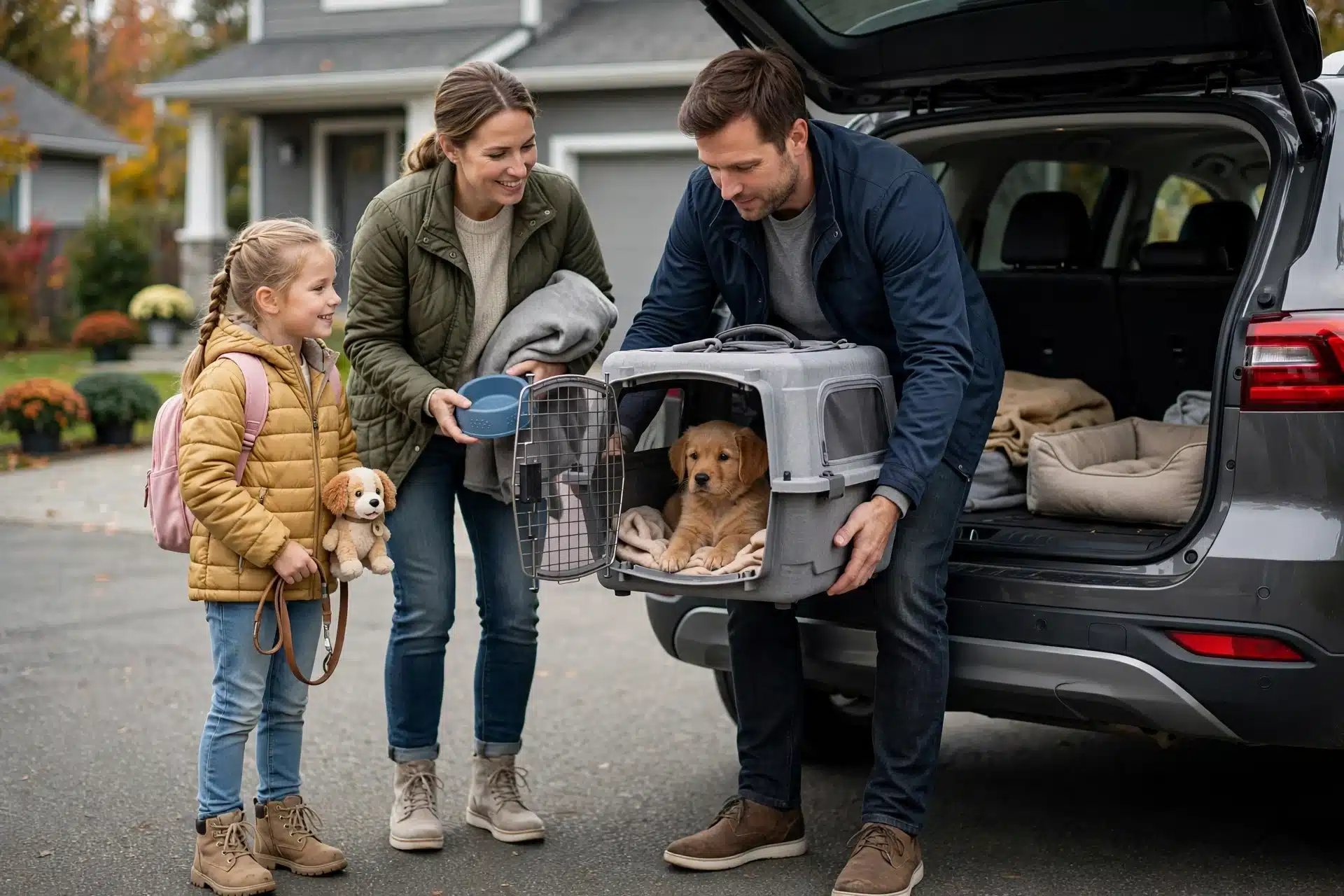
Ask for the handoff checklist in writing before pickup day. If the breeder hesitates to put it in the contract, treat that as a signal.
Check Return, Rehoming, and Support Clauses
Life happens. Moves, health changes, and family shifts can make even a loving home the wrong one. A good contract plans for that day now, not later.
Know What Happens If You Cannot Keep the Dog
Look for a return-to-breeder clause that lasts the dog’s whole life. Responsible breeders almost always require the dog come back to them first if you cannot keep it, according to the Kennel Club’s contract guide. The clause should state:
- Who to contact and how fast to notify the breeder.
- Whether the breeder takes the dog back or helps rehome.
- Who pays transport and whether any refund applies.
Separate Lifetime Support From Financial Guarantees
Read these two sections apart. A health guarantee usually covers defects for a set window, often one to two years. Return terms cover the dog’s whole life. Many contracts offer a replacement puppy or refund within that window but no refund on a later return, which is normal and fair. The AKC’s breeder contract overview notes that remedies, refund windows, and who absorbs costs should all be written down. Ask the breeder to explain each one before you sign. At Sage Puppies, we keep these terms plain so families know exactly what support looks like years down the road.
Look for a Humane Plan for Unexpected Circumstances
The best contracts do more than ban shelters. They spell out a real plan: the breeder gets first call, keeps the right to take the dog back, and helps find a vetted new home. Some contracts add a penalty for unauthorized rehoming, which protects the dog from ending up in a bad sale. That structure is a sign of an ethical program.

Also Read: How to Evaluate Iowa Breeder Reviews and Puppy Buyer Feedback
Read the Legal and Dispute Language Before You Sign
The health and identity sections matter most day to day, but the legal fine print decides what happens when something goes wrong. Skim it and you can end up bound by terms you never noticed. Slow down here.
Find the Governing Law and Dispute Process
Look for two things: the governing law clause (which state’s rules apply) and the venue clause (where any lawsuit gets filed). These matter because puppy sales often cross state lines. Without a venue clause, a buyer in another state can be hauled to court far from home under someone else’s rules. A good contract also spells out the dispute steps, usually mediation first, then arbitration or litigation. The AKC notes that buyers should be able to review the full contract before they commit, so ask for it early rather than at pickup (AKC).
Spot Liability Limits and Financial Exposure
Most breeder contracts cap the seller’s total liability at the purchase price. That means you cannot recover years of vet bills or training costs later. Know that limit going in. Also check for liquidated damages clauses, which set a fixed dollar penalty if you break a term, such as breeding a pet-only dog. Courts generally uphold these amounts only when they roughly match real harm, so a huge penalty on a small puppy price is a red flag worth questioning (LegalClarity).
Confirm the Final Agreement and Signature Process
Verify the version you sign matches every verbal promise. Ask these questions:
- Is there an “entire agreement” clause stating oral promises do not count?
- How are changes made later, and do they need both signatures?
- Does each party get a fully signed copy?
- Are e-signatures accepted, and is the signer authorized to bind the breeder?
A transparent breeder welcomes these questions. We hand Sage Puppies families the full contract early, well before deposit day, so there are no surprises at handover.
Also Read: Puppy Care Blog & Resources | Sage Puppies
Use a Five-Minute Red-Flag and Question Checklist
Pause When Key Information Is Missing
Some gaps matter more than others. If the contract never states the health guarantee length, the remedy, or who pays vet costs for a covered condition, stop before you sign. Vague puppy identity details are another warning sign. The Royal Kennel Club recommends buyers confirm the full puppy pack before money changes hands, and that advice applies here. Missing records, a missing signature line, or a seller who pressures you to “just sign it” all deserve a pause.
Ask These Questions Before Signing
Bring these five questions to every breeder conversation:
- What exactly does the health guarantee cover, and for how long?
- What proof do you need if a covered problem appears?
- Is the deposit refundable, and under what conditions?
- What is your return-to-breeder policy if I can’t keep the dog?
- What records come home with the puppy?
A confident breeder answers all five without hesitation. Good ones expect the questions and welcome a buyer who asks.
Decide Whether to Sign, Request Changes, or Walk Away
Score the contract in three buckets. If the terms are clear and fair, sign. If one clause seems off but the breeder is open, request a written change and wait for the corrected copy. If you see a broad “as is” waiver, missing health terms, or evasive answers, walk away. A program like Sage Puppies puts these terms in plain language up front, and that is the standard to hold any seller to.

A good contract protects your family. At Sage Puppies, every Havanese, Havapoo, and Cavapoo adoption includes clear written terms, health-tested parents, and honest answers. Browse our available puppies or apply today – pickup in South Jordan, Utah, or nationwide delivery.
Frequently Asked Questions
Q1: What should Iowa puppy contracts include before signing?
A solid Iowa puppy contract should cover health guarantees, vaccination records, parent health testing, identity (microchip and registration), spay or neuter terms, and a written return policy. Get everything in writing before you pay.
Q2: What are the key clauses in a puppy sales contract?
Look for a health guarantee with a clear timeline, a genetic defect clause, a take-back or return provision, breeding rights limits, and payment or delivery terms. If a clause is vague, ask for it in plain language first.
Q3: How do I protect myself when buying a puppy in Iowa?
Request a written contract, verify vet records yourself, ask to see the parents or a video call, and pay with a traceable method. Ethical breeders like Sage Puppies welcome these questions openly.
Q4: Should a puppy contract include a health guarantee?
Yes. A good one gives you 24 to 72 hours for a vet exam and covers serious genetic conditions for one to two years. Read the exclusions carefully before signing.
Q5: Can I get my deposit back if I change my mind?
Depends on the breeder’s written policy. Some deposits transfer to a future litter, others are refundable. Confirm the rule in writing before you send any money.
Conclusion
A good puppy contract is not fine print. It is the clearest window into how a breeder works. Before you sign, make sure the paperwork covers health guarantees, identity details, payment terms, delivery plans, breeding rights, and return options.
Iowa adds its own layer of protection. The state sets disclosure rules for pet dealers under Iowa Code chapter 162, and consumer fraud laws can apply to puppy sales too, as an Iowa Attorney General case confirmed. Contract law also applies to every pet sale, so your written terms matter, as the Animal Legal & Historical Center explains.
Read it slowly. Ask questions. A transparent breeder will welcome both.





