
Quick Summary: Picking an apartment puppy in Maine comes down to fit, not breed size: check your lease rules in writing first, then match the individual puppy’s temperament and potty needs to your real weekday schedule. Small companion breeds like Havanese, Havapoo, and Cavapoo suit condo life, but they still need 30 to 45 minutes of daily activity and a potty plan that works through a snowy January. Sage Puppies raises those three breeds in a home setting with early socialization and offers pickup in South Jordan, Utah or nationwide delivery to Maine. If you can say yes to six of the article’s seven fit-checklist questions, you’re ready to choose.
A puppy in a third-floor Portland apartment needs a different daily plan than one in a ground-floor unit with a private door. A Maine winter makes every potty trip more deliberate, and every stairwell a bit louder. Choosing well matters more than it might first appear.
The real challenge with Maine puppy adoption in an apartment is not finding a small dog. It is matching an individual puppy’s temperament, energy, and potty needs to your building rules, your schedule, and four months of snow.
This apartment puppy guide walks you through that match, step by step. We raise Havanese, Havapoo, and Cavapoo puppies in a home setting, health-test parents, and offer puppy delivery Maine families can plan around, along with clear pickup options.
Start With Your Building and Daily Routine
Before you fall for a face, look at your lease. The two biggest reasons apartment puppy plans stall are building rules and a schedule that does not match a young dog’s needs. Both are easy to check now, and both shape every choice that follows.
Check lease rules and shared-space access
Start by reading your lease line by line. Many Maine apartments and condos set weight limits, restrict certain breeds, or require written approval from the landlord or association before a puppy moves in. Get that approval in writing. A verbal “should be fine” protects no one.
Ask about shared spaces too. Find out where dogs are allowed to relieve themselves, whether there is a grass strip, courtyard, or designated pet area, and how far it is from your door. In a third-floor unit, a puppy with a small bladder needs that trip several times a night at first. If your building has no outdoor relief area, a potty pad setup on a balcony or in a bathroom becomes part of the plan, not a backup.
Also check elevator and hallway rules, pet deposits, and monthly pet rent. These costs are small alone but add up. If you are planning a Maine puppy adoption from out of state, confirm delivery details with your building ahead of time so go-home day is smooth. Our step-by-step adoption process covers exactly what to expect, from application to delivery day.
Match the puppy’s needs to your weekday
Next, write down an honest picture of a normal Tuesday. Not your best day. Your average one.
Note when you leave, when you return, and whether anyone can come home midday. A young puppy cannot hold it for a full workday, so plan for a dog walker, a lunch break, or a neighbor who helps for the first few months.
Small companion breeds like a Havanese, Havapoo, or Cavapoo fit apartment life well, but they still need daily walks, play, and company. Match the breed’s energy to your routine, not your wishlist. A calm, people-focused puppy suits a quiet condo; a busier household can handle more. When the fit is right, both of you settle in faster.
Choose Temperament and Routine Fit Before Size
Two puppies of the same breed can grow into very different adults. Size tells you what fits your floor plan. Temperament and daily routine tell you whether the match actually works. So start with how a puppy reacts to the world, then confirm size last.
Use breed tendencies as a starting point, not a promise
Havanese, Havapoo, and Cavapoo puppies tend to be people-oriented, adaptable, and content with indoor play, which is why they suit apartment life so well. Treat those traits as likely, not guaranteed. Every litter mixes personalities, and our Havanese vs Cavapoo temperament comparison shows how much the differences matter within one breed. Some puppies lean bold and curious. Others watch first, then join in.
Ask the breeder which puppy in the litter matches your pace. A busy household with kids usually wants an easygoing pup that recovers fast from surprises. A quieter home may suit a softer, more watchful puppy. At Sage Puppies, we raise each litter in our home in South Jordan, Utah, so we can describe how every puppy already handles noise, handling, and new situations before it travels to a Maine puppy adoption family anywhere in the country.
Breed choice still matters, but it narrows the field. It should not make the final call for you.
Ask how this puppy responds to everyday stimulation
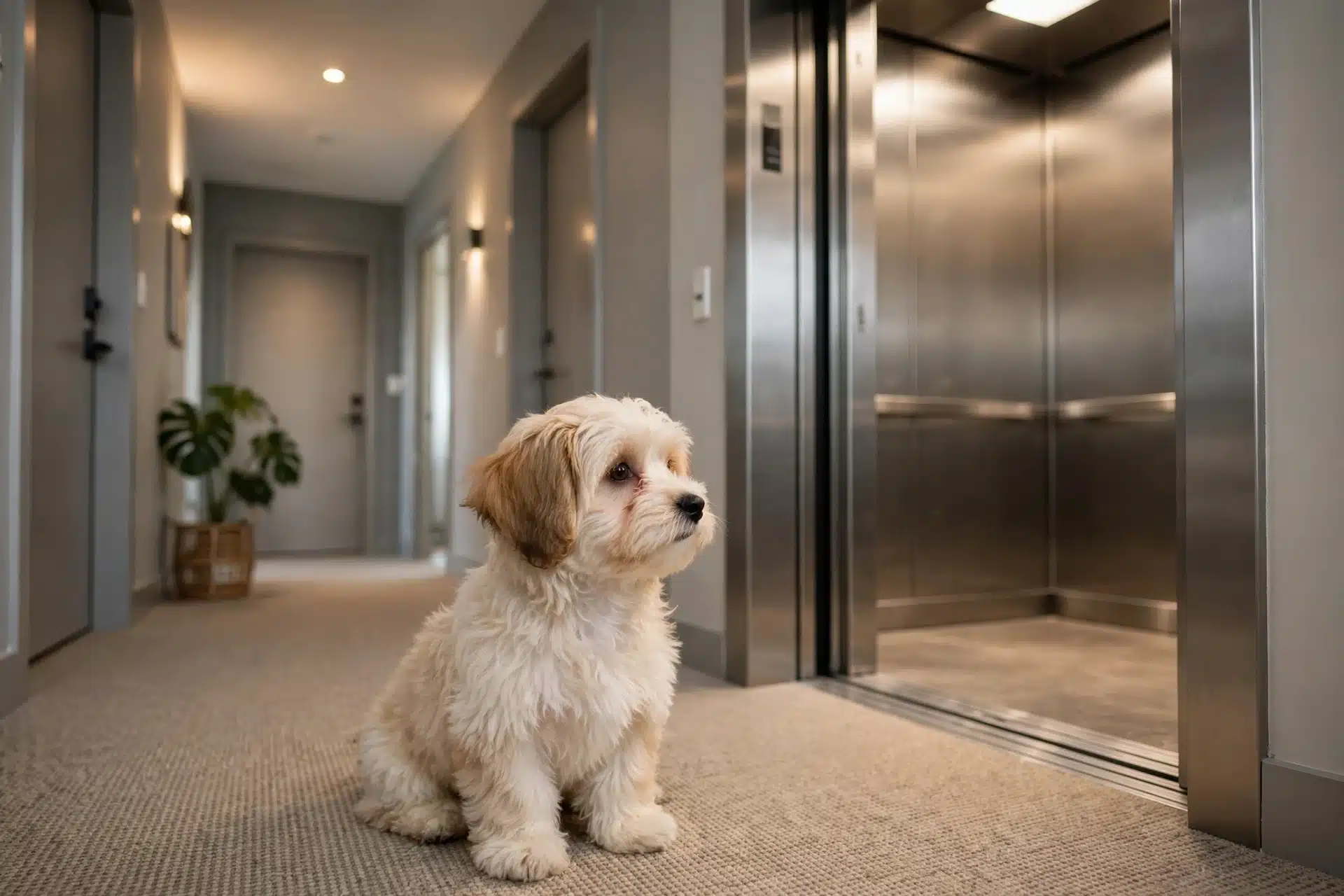
Apartment life runs on repeated small stressors: elevators, hallway sounds, neighbors, delivery knocks, icy sidewalks. The puppy you choose should already show steady responses to this kind of stimulation. Watch for three signals.
- Recovery speed. A startle is normal. A puppy that resets within seconds is the one you want.
- Curiosity over fear. Does it approach a new object, or freeze and stay stuck?
- People focus. Puppies that check in with humans handle training and city noise better.
Ask for video of the puppy meeting something new. Reputable breeders keep these clips and share them gladly. If a breeder cannot describe each puppy’s individual temperament in detail, keep looking. A puppy’s daily responses predict apartment success far better than its adult weight ever will.
Plan Exercise and Enrichment for a Puppy, Not a Postcard Breed Profile
A breed label tells you a general energy range. It will not tell you how this puppy handles a third-floor walk-up or a January ice storm. Plan around the individual dog in front of you and the building you actually live in.
Build a flexible rhythm of movement and rest
Small companion breeds like the Havanese, Havapoo, and Cavapoo do well on short, repeated activity rather than one long outing. Aim for three to four brief sessions a day: a potty walk, a short play burst, a sniffy stroll, and a calm training moment. Puppies also need far more sleep than adults, so guard nap time in a crate or pen. Overtired puppies get nippy and loud, and noise complaints in an apartment usually trace back to a missed nap.
Watch your puppy, not the calendar. If she flops mid-game, end it. If he bounces off the walls after dinner, add a puzzle toy or a five-minute sniff session instead of more laps around the hallway. Sniffing is real exercise and it settles dogs quickly.
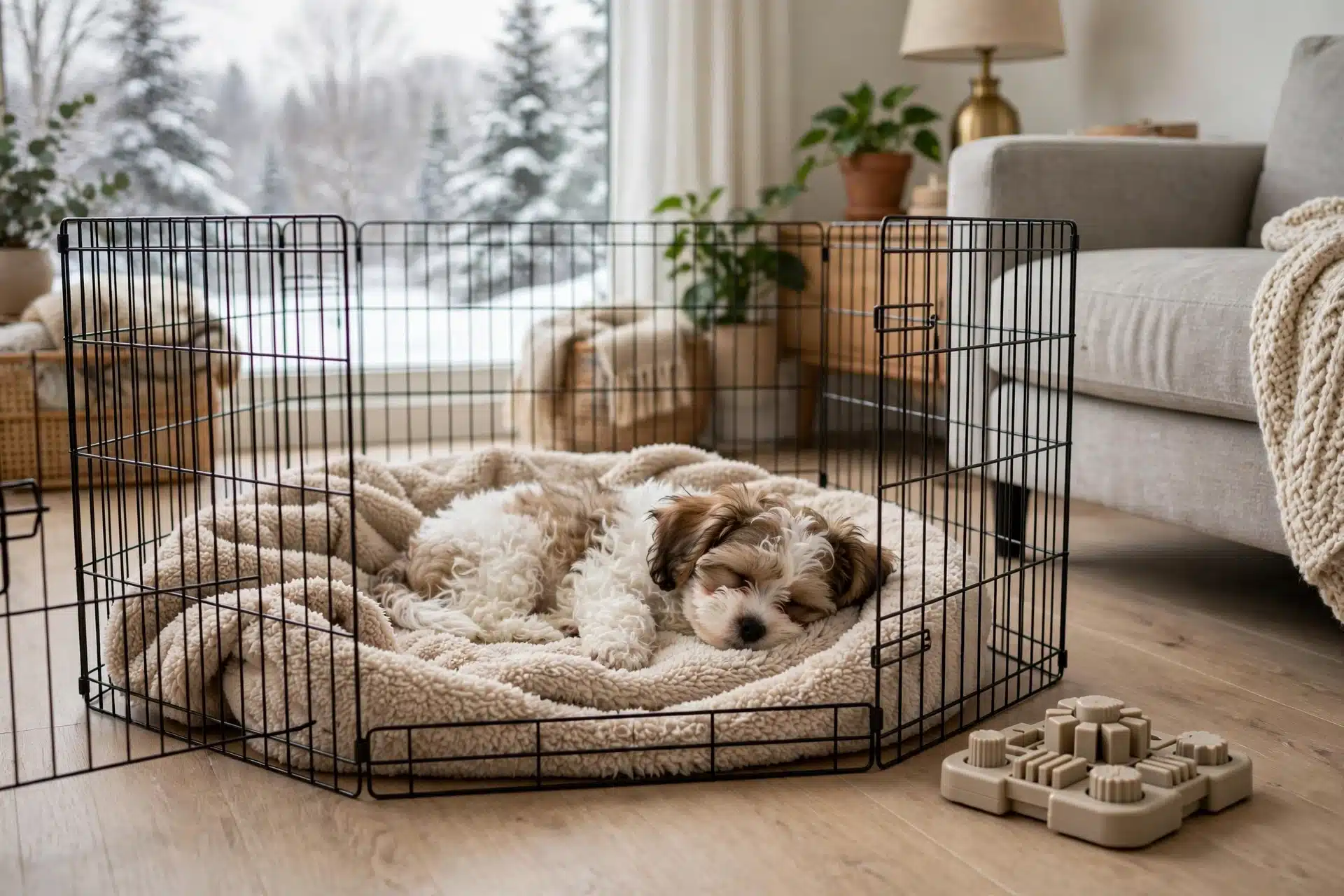
A puppy raised in a family home with steady early socialization usually settles into a routine faster, which matters when your routine includes shared walls.
Adjust the plan for Maine weather and access
Maine winters change the math. Ice, salt, and short daylight can cut walks to two minutes, so build indoor options early: hallway recall games, treat-scattering in the kitchen, and short trick sessions. Booties or a quick paw rinse handle road salt. When a storm keeps you inside for a day, you can see how Sage Puppies prepares each puppy for family life before pickup or delivery, and add mental work that tucks a puppy out just as well as a walk.
Plan your potty backup now: a grass patch on a balcony or a lobby tray for storms. A calm puppy who can rest, play, and potty in any weather fits apartment life in Maine.
Make a Realistic Potty-Training Plan for Your Floor and Front Door
Apartment potty training works when you pick one method and stick to it. Small breeds like a Havanese or Cavapoo can learn either an indoor spot or an outdoor routine, but mixing both too early slows progress.
Choose one primary potty approach and plan for transitions
Decide before your puppy arrives. If you have quick access to grass, train outdoors from day one. If your building’s elevator, hallway, or winter ice makes every trip a five-minute event, start with an indoor pad or grass patch by the door.
Pick the spot carefully. It should be far from food and bedding, easy to clean, and always in the same place. Puppies learn by location, so consistency matters more than the material.
If you plan to move training outdoors later, do it gradually. Slide the pad a few feet toward the door each day, then outside. Sudden switches confuse a young puppy, and confusion means accidents.
Set up frequent opportunities and reward the right place
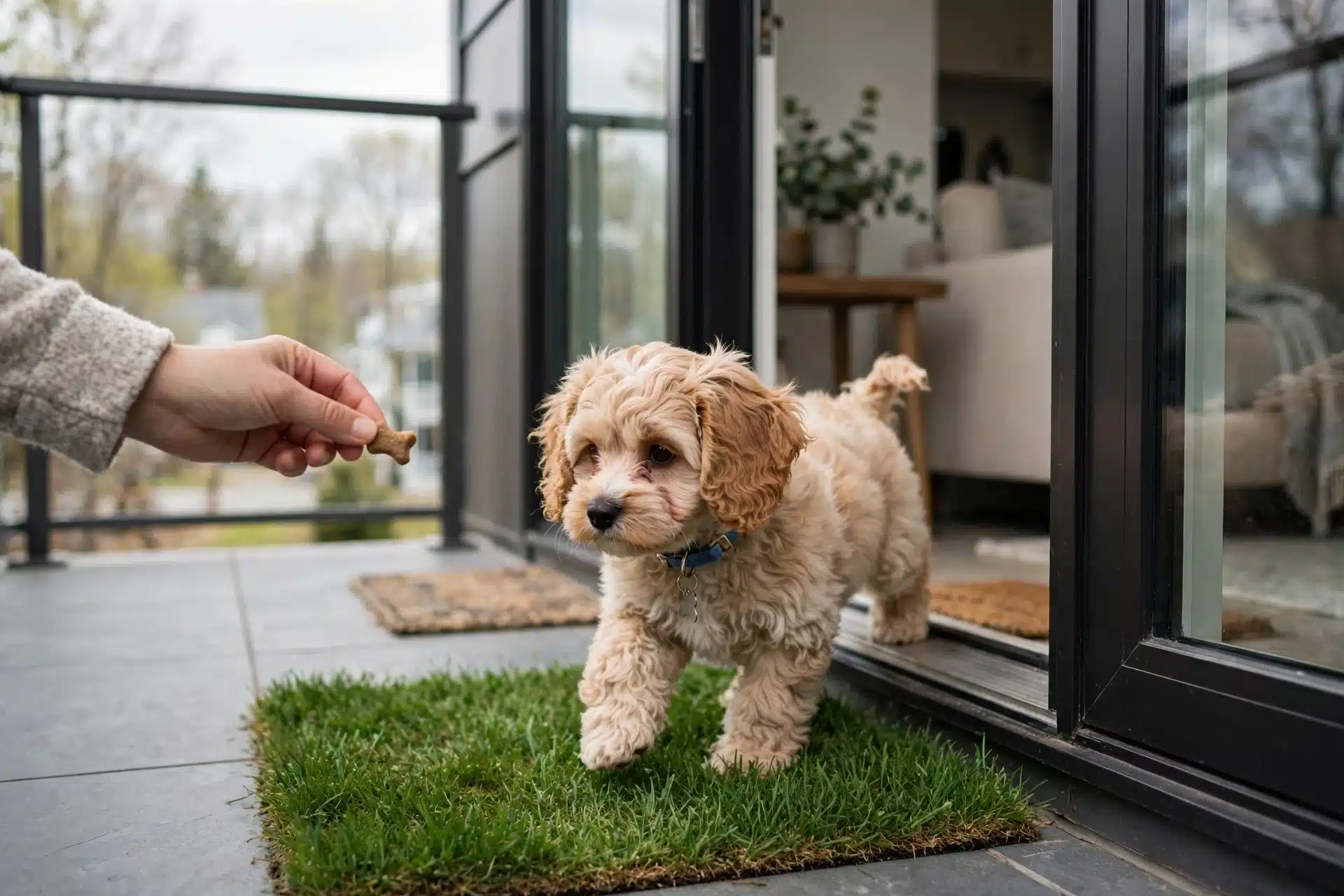
A young puppy needs a potty break every one to two hours, plus after meals, naps, and play. Set phone reminders at first. In an apartment, every trip takes effort, so build the schedule around your real day, not an ideal one.
Reward within two seconds of success. Carry small treats on every trip and mark the moment your puppy finishes in the right spot. Praise alone works for some dogs, but food is faster.
Watch for sniffing, circling, or heading to a corner, then move calmly to the potty area. If an accident happens, skip scolding. Clean it with an enzyme cleaner so no scent remains, and tighten your schedule instead.
Families who choose a Sage Puppies puppy often find the early crate and routine work already underway, which makes this stage smoother.
Ready to plan ahead? See our available puppies before your schedule fills up.
Prepare for Quiet Shared-Space Living
Apartment life rewards a puppy that can stay calm through noise, tight hallways, and surprise encounters. You can build that calm before day one, using short, planned practice sessions in the spaces your puppy will actually use.
Teach calm responses to common building sounds
Elevators chime, doors slam, and snow plows scrape outside at 6 a.m. Your puppy should hear all of it and settle, not startle. Start with recordings of door knocks, elevator dings, and hallway voices at low volume while your puppy eats or plays. Keep the sound gentle enough that your puppy stays relaxed, then raise the volume over a week. Pair every sound with something good: a treat, a lick of a stuffed toy, or a short game. If your puppy freezes or hides, drop back to an easier level. A well-started puppy from a program with early socialization arrives already used to household noise, so this work goes faster.
Practice polite encounters in close quarters
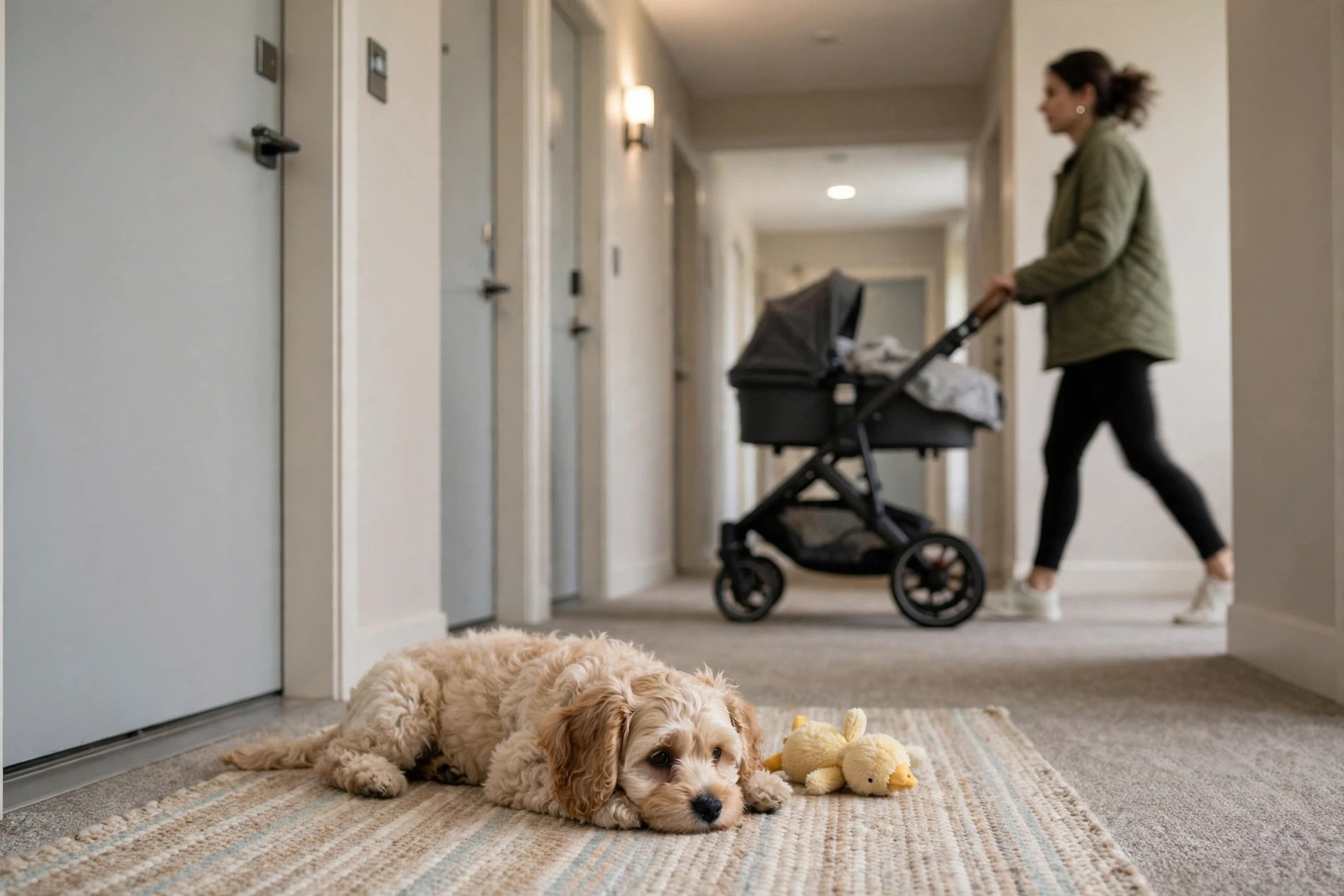
Shared hallways mean your puppy will pass strangers, strollers, and other dogs within a few feet. Practice loose-leash walking past a helper at a comfortable distance, then close the gap as your puppy stays settled. Teach a simple “watch me” cue so your puppy can check in with you instead of staring at the other dog. In elevators, ask for a sit against your leg and reward quiet. Keep these sessions under five minutes, and always end on a win. Short, frequent reps build a puppy that greets building life with soft confidence rather than tension.
If Your Puppy Is Coming to Maine, Confirm the Arrival Plan
A long-distance adoption works well, but only when both sides know exactly how the puppy travels and who meets her where. Before you apply, get the logistics in writing.
Ask for clear delivery or pickup details before applying
Ask how the puppy will travel. A breeder you trust will explain the options plainly: pickup in South Jordan, Utah, a flight nanny who carries the puppy in-cabin, or ground transport along a planned route. Each method has a different cost, timeline, and handoff process, so ask for the full picture.
Request the specific details that matter to an apartment family in Maine:
- Which airport or meeting point the puppy arrives at, and the day and time window
- What the puppy eats, when she was last fed, and her travel crate setup
- What documents come along, including health records and vaccination dates
- The contingency plan if a flight is delayed or weather closes in
Sage Puppies offers both local pickup and nationwide delivery, so ask which route your puppy would take and who will call you at each step. A confident breeder answers these questions without hesitation. Vague answers are a signal to slow down.
Set up a calm first day in the apartment
Plan the arrival day before the puppy lands. Puppies tire fast, and a new home is a lot of stimulus. Set up a small pen or gated corner with a crate, water, and a potty spot mapped out in advance.
Keep the first day quiet. One family member handles the handoff, then everyone lets the puppy explore at her own pace. Short potty trips every hour, soft voices, and an early bedtime do more for confidence than a weekend of visitors.
Call or text the breeder once you are home. A good program wants the update and will talk you through the first night.
Use a Final Fit Checklist Before You Choose
Before you commit, run through these questions in one sitting:
- Does your building allow puppies, and do you have the pet addendum in writing?
- Can you reach outdoor grass within five minutes for potty breaks, even in February?
- Does the individual puppy’s temperament match a calm apartment routine?
- Who handles midday potty trips on your busiest workdays?
- Is there a quiet spot for a crate where barking won’t disturb neighbors?
- Have you budgeted for grooming, food, and vet visits on top of the purchase price?
- Do you know the pickup or delivery plan and what comes home with your puppy?
If you answered yes to six or more, you’re ready. If not, wait a few weeks. The right puppy fits your real life, not your ideal one. When you’re ready, browse our available Havanese, Havapoo, and Cavapoo puppies and take the next step with confidence.

Apartment life in Maine can absolutely work with the right puppy. A well-bred Havanese, Havapoo, or Cavapoo from Sage Puppies comes home adaptable, socialized, and ready for your routine. Explore current Available Puppies and start your application today.
Frequently Asked Questions
Q1: What are the best small dog breeds for apartment living in Maine?
Havanese, Havapoos, and Cavapoos adapt well to apartment life. They stay small, bark less than many toy breeds, and settle indoors between walks, which matters during long Maine winters.
Q2: How much exercise does an apartment puppy need each day?
Plan for two or three short walks plus a few minutes of play. Most small companion puppies do well with 30-45 total minutes, split up so young joints stay protected.
Q3: Which apartment-friendly puppy breeds are easy to potty train indoors?
Havanese and their mixes are eager to please and quick to learn routines. Consistent trips to the same spot, plus a bell or pad backup for storms, speeds things up.
Q4: Can I get a puppy delivered to Maine?
Yes. Sage Puppies offers safe nationwide delivery alongside local pickup in South Jordan, Utah, with clear steps explained before you commit.
Q5: How noisy is a Havanese or Cavapoo puppy in an apartment?
Well-socialized puppies are usually quiet. Ask the breeder about early sound exposure, because puppies raised in busy homes startle less and bark less in shared buildings.
Choose a Puppy Who Fits Your Maine Apartment Life
The right puppy for a Maine apartment is less about breed rankings and more about fit. Check your building’s rules first. Then look at temperament, realistic exercise needs, and a potty plan that survives a snowy January. Small companion breeds like Havanese, Havapoo, and Cavapoo puppies adapt well to condo life when they’re health-tested and raised with early socialization.
Ask breeders how puppies spend their first eight weeks, and how delivery or pickup works before you commit. A calm, well-bred puppy from a transparent family-raised program settles into apartment routines far faster than one chosen on impulse. Match the puppy to your household’s daily rhythm, and Maine winters become just another walk.





