Quick Summary: The first week home with a Havapoo revolves around three habits: frequent potty trips every 45 to 60 minutes, 18 to 20 hours of daily sleep on a potty-eat-play-nap loop, and a fixed routine you repeat without changing. Expect loud crate crying for the first few nights, a rough patch around Days 4 and 5 when the novelty fades and nipping picks up, and a vet visit within the first few days for vaccines and a patella check. Sage Puppies, a Utah program placing Havanese, Havapoo, and Cavapoo puppies with first-time families, draws on its placement experience to back this day-by-day roadmap. By Day 7, a puppy who potties on schedule, naps in the crate, and runs to you has locked in the basics that carry into week two.
You just placed a 4- to 6-pound Havapoo puppy into a crate in the back seat, drove home, set up the travel pen, and now you are staring at a tiny, wide-eyed dog with no idea where he is. Welcome to the Havapoo adoption first week.
This stretch matters more than any other. Your puppy is leaving his mother and littermates, learning where to potty, and deciding whether people are safe, all at once. Most first-week stress comes from not knowing what is normal.
This guide walks through your Havapoo adoption first week day by day, with breed-specific notes on small-bladder potty trips, soft coat care, and crate size, plus a sample schedule you can copy. It draws on the documented experience behind Sage Puppies, a Utah program that places Havanese, Havapoo, and Cavapoo puppies with first-time families. Consider it your roadmap for the first week of Havapoo adoption.
Day 1: The Ride Home and the First Few Hours
Pickup Day Basics
The ride home sets the tone for your whole Havapoo adoption first week, so keep it boring. Ask the breeder to let your puppy potty right before you leave, then load a 4- to 6-pound Havapoo into a small travel crate in the back seat. Never ride with the puppy loose on someone’s lap. Stop every 90 minutes to 2 hours for a quick leash potty break and a sip of water, which matches what experienced puppy owners recommend for young puppies. Skip food during the drive; most 8-week-olds will just get carsick.
Keep the whole pickup short. Handle paperwork, ask your questions, load up, and go. Calm energy now pays off all week, because if you’re planning a long drive home, it helps to map your stops before you meet the puppy. One useful step is reviewing crate, road and arrival planning so travel day runs on a plan instead of guesses.
The First Two Hours Inside
Arriving home, resist the urge to invite the neighbors over. Your puppy needs one quiet potty trip in the yard first, then a short sniff of the room where the crate and playpen live. Keep everyone calm and low to the ground.
Offer water, let the puppy potty again after drinking, and then expect a crash. Most puppies sleep hard within the hour because the car ride drained them. That’s good. Tuck them into the crate and let them nap.
Follow the same loop the rest of the day: potty outside, brief calm play, water, then potty again before the crate. Puppies this age need to relieve themselves after eating, sleeping, and playing, so predict it instead of reacting to accidents. Feed the first meal at home if pickup was early, then take the puppy out within ten minutes of finishing.
Day 2 and Day 3: Settling In and the First Real Schedule
Build a Repeatable Daily Rhythm
Day 2 is when the schedule starts. Puppies this age thrive on predictability, and your Havapoo will settle faster once meals, potty trips, naps, and play happen in the same order each day.
A workable rhythm looks like this:
- Wake and potty as soon as your puppy stirs, usually 6:00 to 6:30 a.m.
- Breakfast, then another potty trip 10 to 15 minutes later.
- Play and training for a short burst, 15 to 20 minutes.
- Nap in the crate, one to two hours.
- Repeat the potty-play-nap cycle through the day.
- Last potty right before bed, around 10 p.m.
Havapoos have tiny bladders, so an 8- to 10-week-old typically needs a potty break every 45 minutes to an hour while awake, plus after every meal, drink, and nap. If you want a full breakdown by age, our guide to a small-breed puppy potty schedule covers it in more depth.
Start the Crate on Day 2, Not Day 1
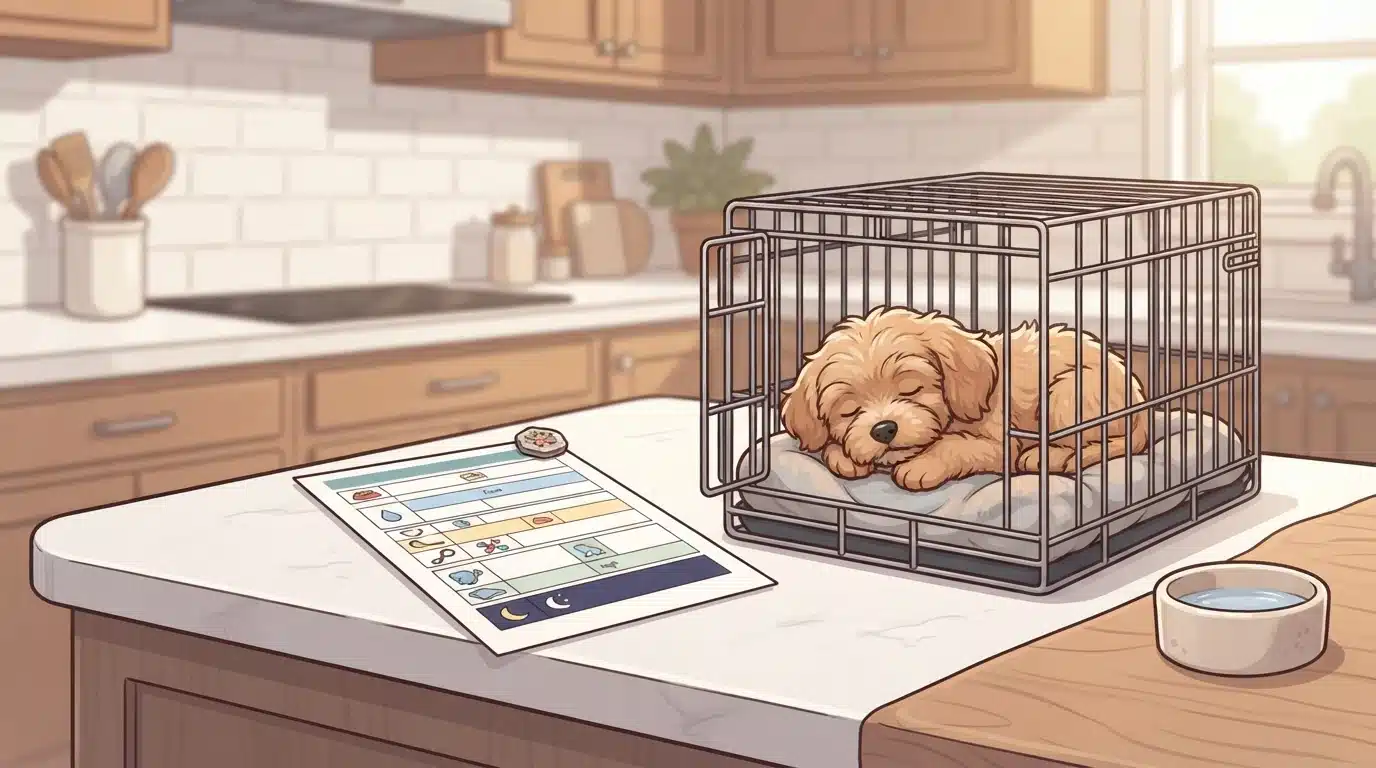
Let Day 1 stay calm. Your puppy just left its littermates and everything familiar, so on Day 2 it’s time to introduce the crate as a normal part of life, not a punishment.
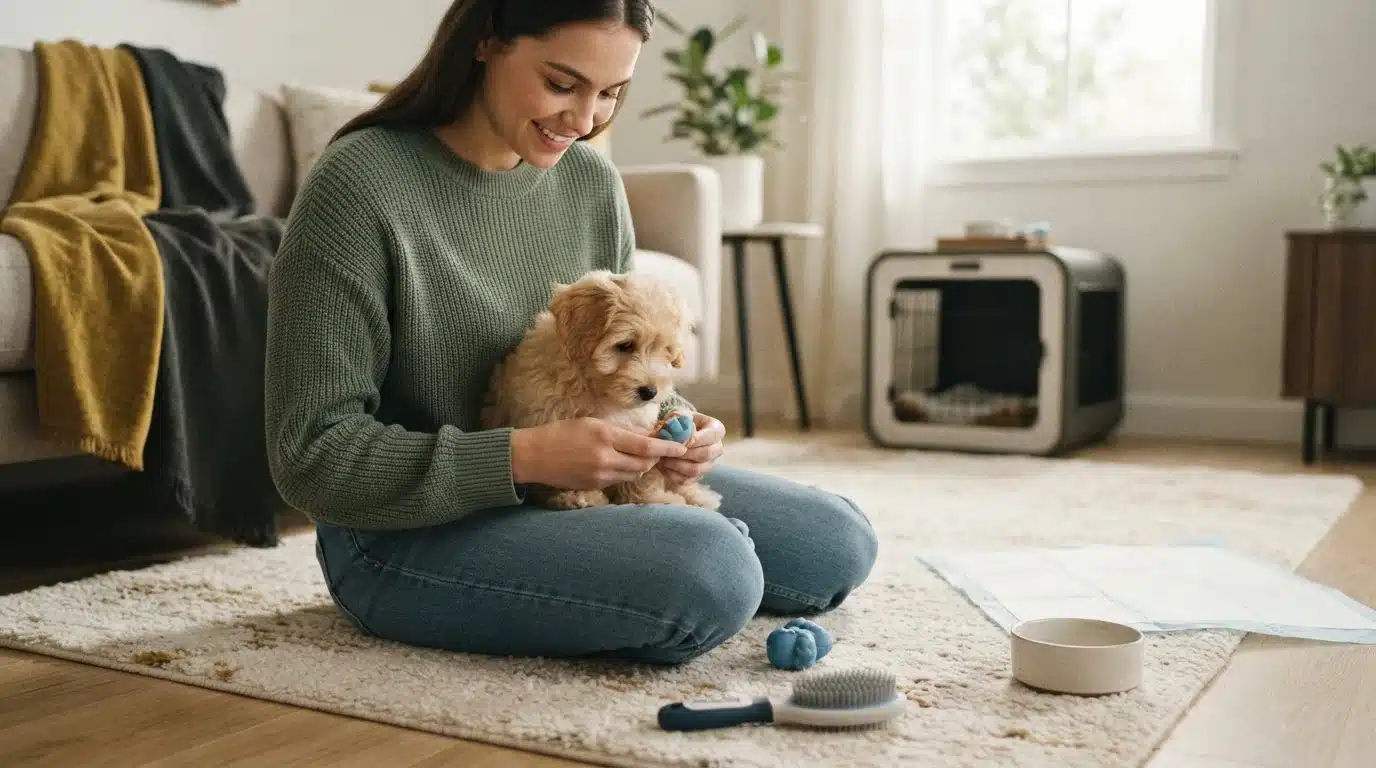
Keep it short and positive. Toss a treat inside, let your puppy walk in and out, and close the door for just a minute or two. Build up to naps, then to short periods while you’re in another room. A crate just big enough for your puppy to stand, turn around, and lie down works best, since extra room invites potty accidents. If you’re still weighing options, compare a puppy crate vs a playpen before you buy.
Expect some whining the first few nights. Check that potty needs are met, then wait out the fussing. Most Havapoo puppies adjust within three to five days.
Day 4 and Day 5: The Hard Middle of the First Week
Why Days 3 to 5 Often Feel Worse
If Day 4 leaves you wondering whether you made a mistake, you are in good company. Trainers often describe a dip around Day 3, when the novelty wears off and your puppy starts testing the new routine. The first two days, most Havapoos are quiet and a little shell-shocked. By Day 4, they have found their voice, learned where the treats live, and decided the rules are negotiable.
You may also be tired. Broken sleep plus hourly potty trips to the yard catch up with everyone around midweek. That tiredness makes normal puppy behavior feel bigger than it is.
Expect three things this stretch: a puppy who cries louder in the crate, accidents that seem to come out of nowhere, and bursts of wild energy in the evening. None of it means the schedule is failing. It means your puppy is settling in enough to push back, which is actually progress.
Tip: Lower the bar on Days 4 and 5. Keep the potty routine exact, and let play and training stay short. You are building habits, not finishing them.
Handling the First Real Nipping Phase
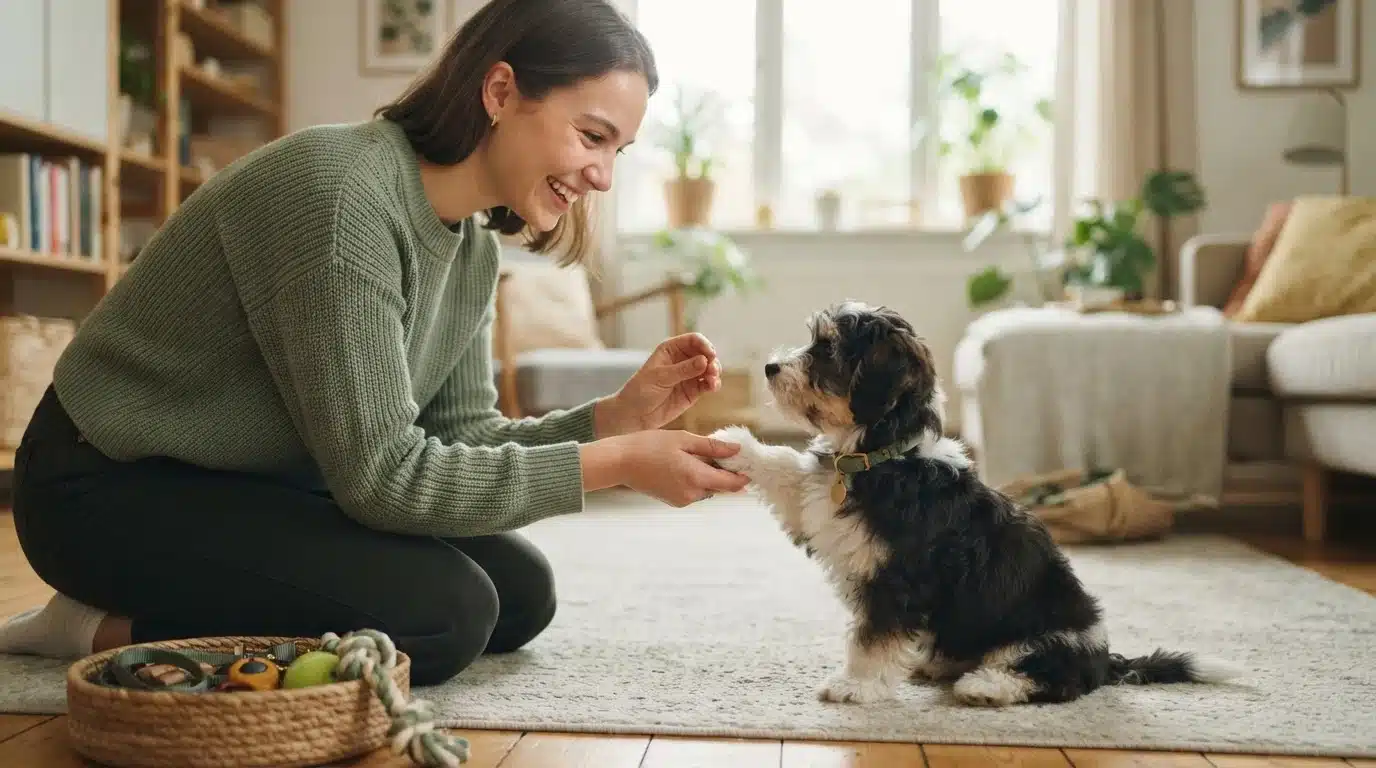
By now the shyness is gone, and the needle teeth have found your hands, sleeves, and kids’ ankles. This is normal. Puppies explore with their mouths, and the ASPCA recommends ending play the moment biting starts, then resuming a few seconds later.
A workable pattern looks like this:
- Yelp or say “ouch” when teeth touch skin, then stop all play.
- Redirect to a chew toy right away so your puppy learns what is fair game.
- Walk away for 10 to 20 seconds if the biting keeps up. Attention is the reward, so removing it works.
- Watch for overtired nipping. An 8-week-old who gets mouthy and frantic usually needs a crate nap, not more play.
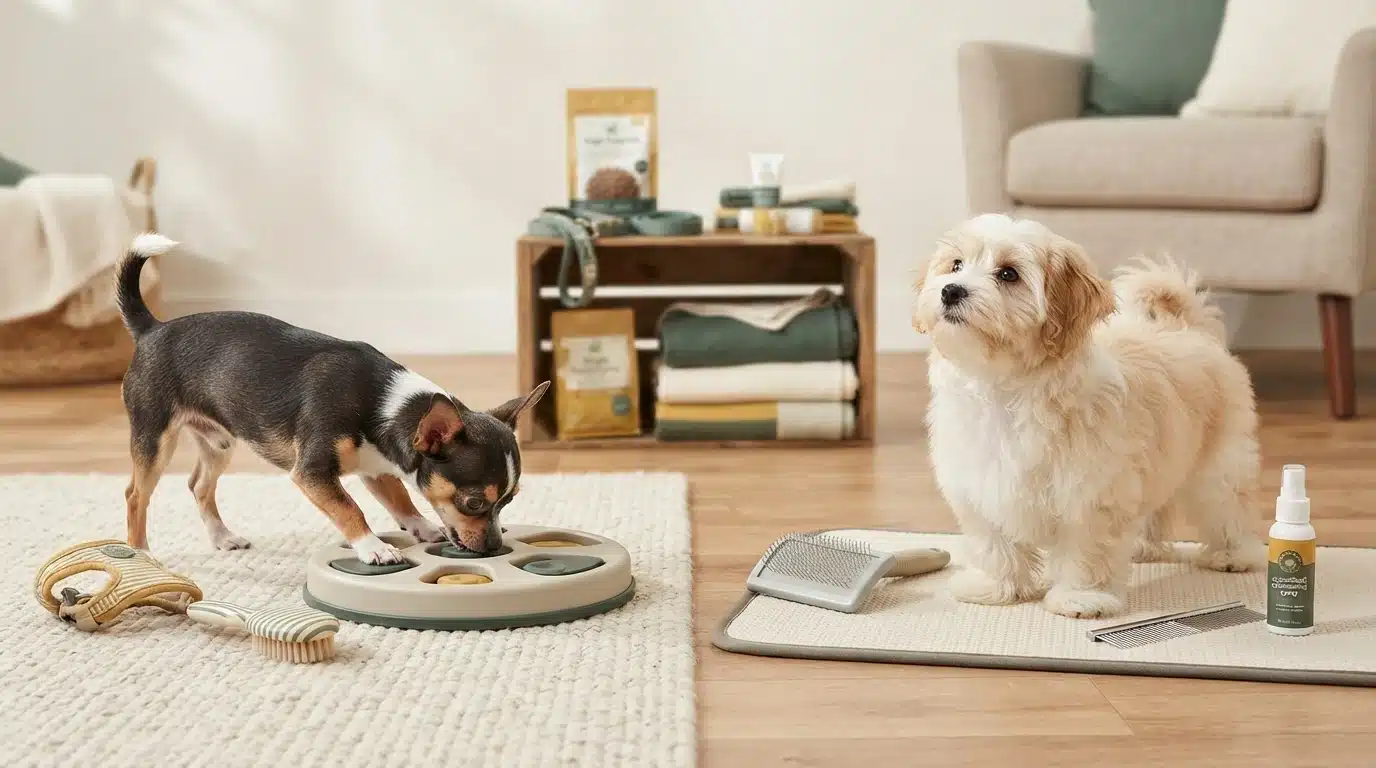
Havapoos are soft-mouthed by nature, but they are also people-focused, so consistent responses calm this phase fast. Most families see real improvement within a week or two of steady, boring repetition. If you want a supply list for chew toys and other must-haves, the Havapoo puppy checklist covers what to have ready before nipping season starts.
Day 6 and Day 7: Trust, the First Vet Visit, and a Real Routine
By now something quiet has shifted. Your puppy runs to you instead of away, and the crying at 2 a.m. has faded to a quick whimper. Days 6 and 7 are when the bond stops being survival and starts being trust, so protect the calm while you finish the two big jobs left this week.
The First Well-Puppy Vet Visit
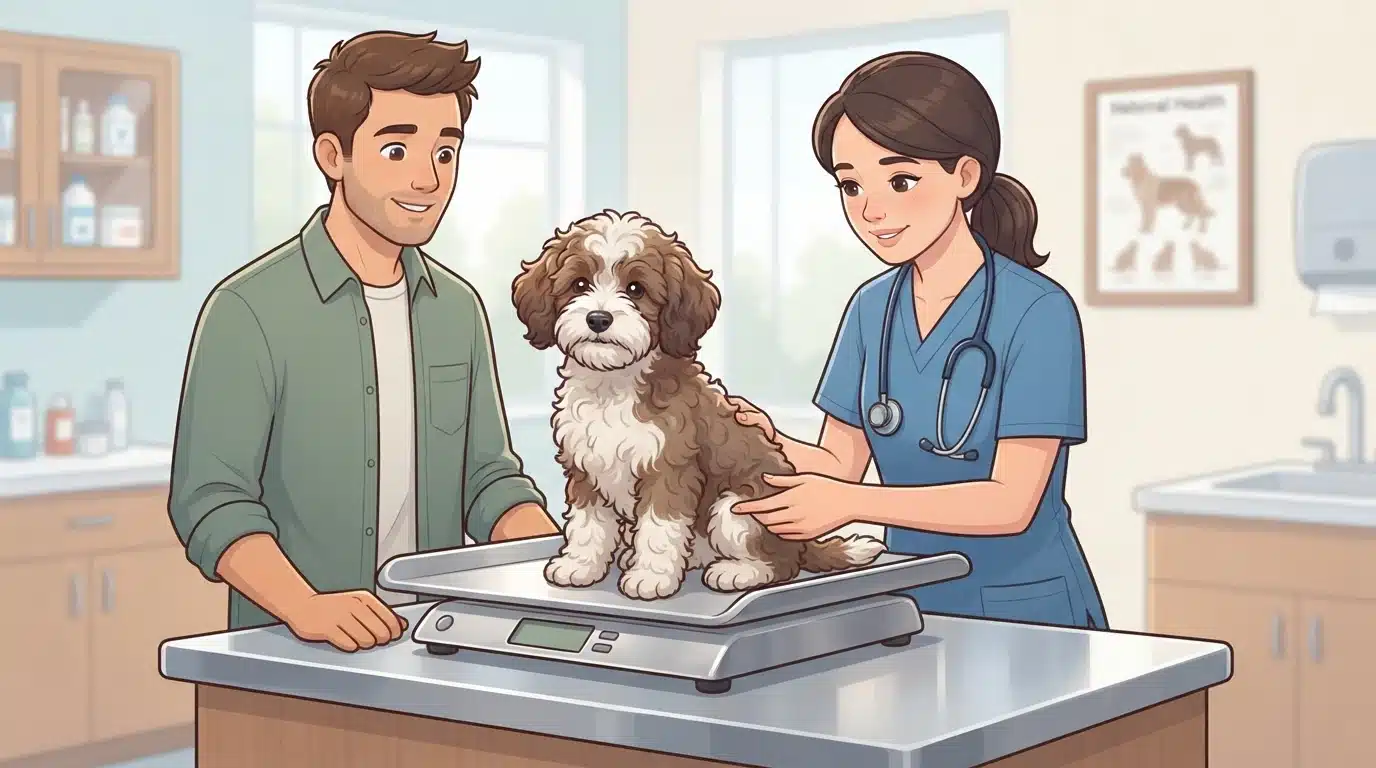
Book the well-puppy exam within your first few days home if your breeder’s timeline allows. At 8 to 10 weeks, your Havapoo is due for the next round of core vaccines, which protect against distemper, parvovirus, and adenovirus, with boosters repeated every 3 to 4 weeks until about 16 weeks old, according to Banfield’s vaccine schedule. Bring the vaccine and deworming records from your breeder so the vet can plan instead of guess.
Expect a nose-to-tail check: heart, hips, knees, eyes, ears, teeth, and a stool sample for parasites. Ask three questions before you leave. Is my puppy’s weight on track? When is the next vaccine due? What should I feed and how much? Small breeds like the Havapoo also deserve a quick patella check, since toy breeds can be prone to loose kneecaps. For a deeper walkthrough, our guide to a Havapoo puppy’s first vet visit covers the breed-specific details.
Locking In the Week-One Routine
Day 7 is your checkpoint. If wake time, potty trips, meals, naps, and the 10 p.m. last potty mostly hold without reminding yourself, the routine is working. Keep the same feeding times and potty breaks through the weekend so your puppy’s body clock stays locked in.
Then plan for week two. Same schedule, slightly longer play sessions, and one new experience a day, like a car ride or meeting a calm neighbor. Consistency now is what makes week three feel easy.
Tip: Carry treats on every vet visit. Rewarding calm behavior in the exam room teaches your puppy that the clinic is a normal place, not a threat.
First-Week Feeding and Potty: Havapoo-Specific Notes
Feeding and potty training are the two jobs that fill most of week one, and a Havapoo’s small size changes the math. This section covers both.
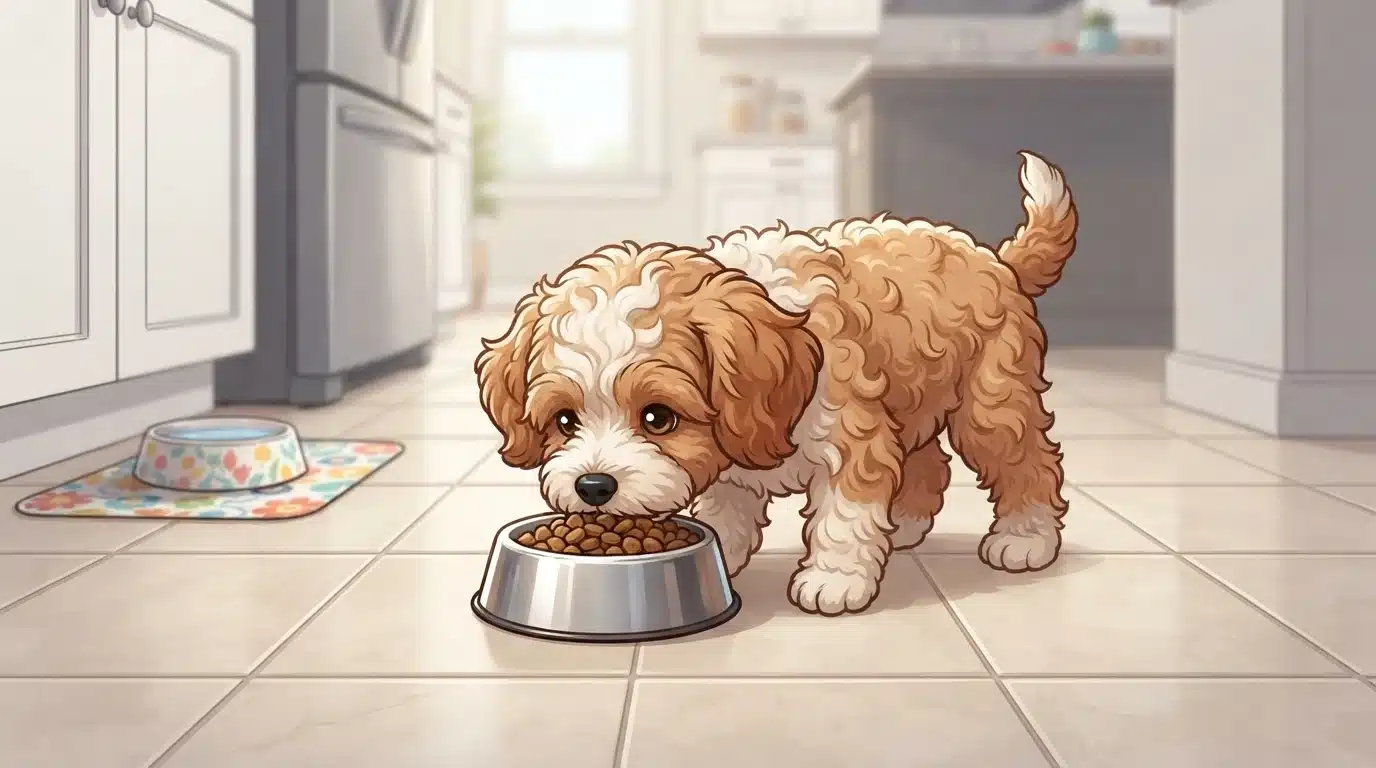
Meals, Water, and Treats in Week One
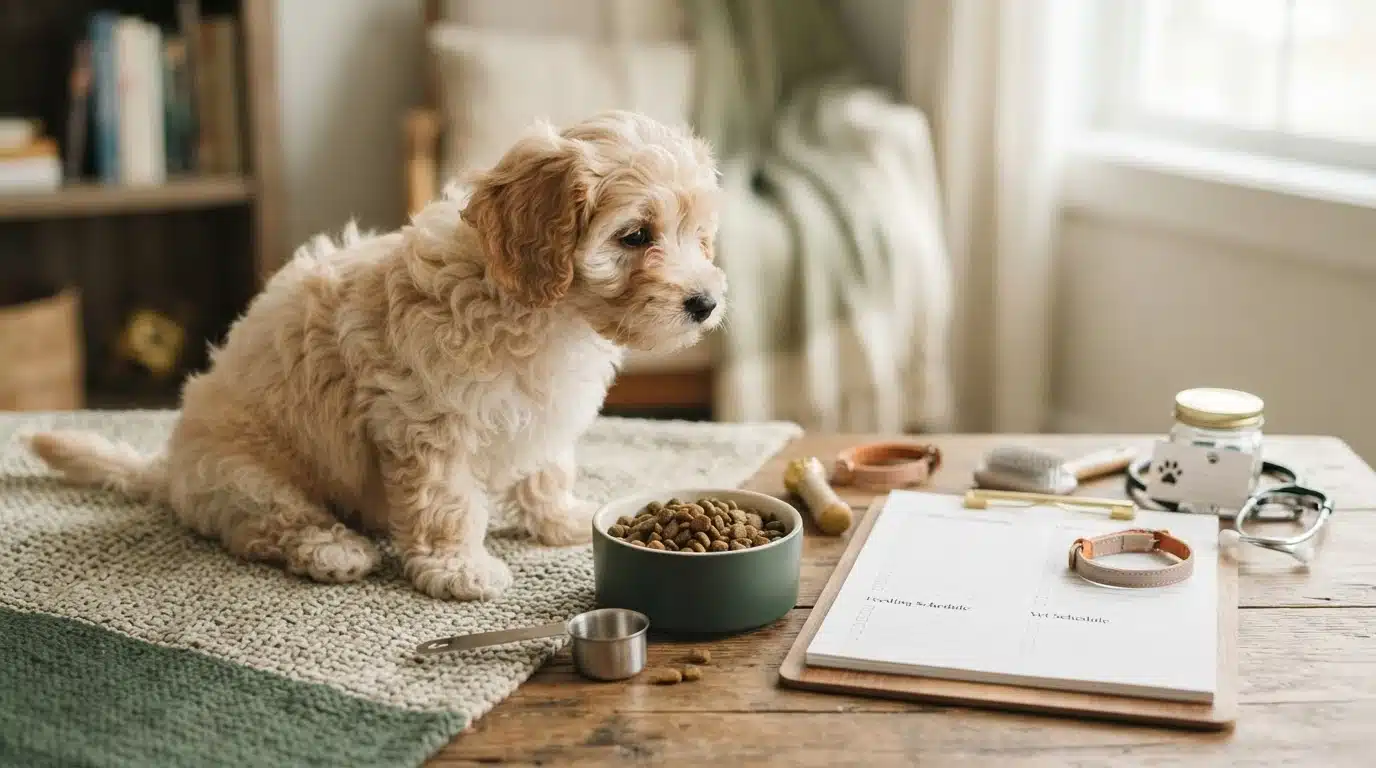
Puppies 8 to 12 weeks old need three to four meals a day, so split the daily portion into breakfast, lunch, and dinner at set times, per PetMD’s puppy care guide. Keep the food the breeder started. If you want to switch brands, blend the new food in over about a week, because an abrupt change plus a new home often means loose stools.
Measure each meal with an actual cup, not a scoop. A 4- to 6-pound Havapoo needs far less food than most families guess, and free-feeding makes potty timing impossible to predict.
Pick up the water bowl about two hours before bedtime. During the day, leave fresh water down so your puppy can drink after play.
Treats count. Keep them pea-sized and subtract a little from meals on heavy training days.
Potty Breaks and a Simple Tracking Sheet
An awake 8- to 10-week-old Havapoo needs a potty trip every 45 minutes to an hour, plus after every meal, drink, and nap. Chewy’s potty training guide recommends at least every 30 minutes for young puppies, so more often is fine.
Tape a simple sheet to the door: time, pee, poop, accident. After two days you will see your puppy’s pattern and can get ahead of it.
Sleep, Crying, and the First Week With Your Family
Total Sleep and the Sleep, Eat, Play Cycle
An 8- to 10-week-old Havapoo needs 18 to 20 hours of sleep a day, and most get less than that in a busy house. Overtired puppies get mouthy, frantic, and harder to settle, so enforced naps are not cruel. They are the tool. Run the day on a simple loop: potty, then eat, then 15 to 20 minutes of play, then a crate nap for an hour or two. Because Havapoos have tiny bladders, start every cycle with a trip outside. Watch for the tell-tale signs of a crashing puppy: zoning out, nibbling at the floor, or sudden zoomies. That is your cue to settle the crate, not to add another game.
Night One Through Night Seven
Night one is usually the loudest. Expect crying when you close the crate, and plan to carry your puppy out for a potty break every 2 to 3 hours, including once or twice around 2 a.m. Most experts suggest keeping night breaks to one or two quiet trips so the puppy learns that wake-ups mean potty, then straight back to bed.
By night three or four, most Havapoos stretch to a single break. Keep the crate near your bed this week, skip midnight play, and stay boring. Calm consistency is what shortens the crying, night after night.
Common First-Week Mistakes to Avoid
Most first-week problems are not puppy problems. They are timing problems, and they are easy to fix once you know what to watch for.
Mistakes People Make in the First 72 Hours
The biggest one is overhandling. Everyone in the house wants to hold the puppy, play, and invite neighbors over, but a tired Havapoo gets mouthy and frantic fast. Keep Day 1 calm and cap play sessions at 15 to 20 minutes. Another common slip is punishing accidents. Rubbing a nose in it teaches nothing; it only teaches your puppy to hide from you. Take him out, clean the spot with an enzymatic cleaner, and move on. Skipping potty breaks is the third trap. An 8- to 10-week-old needs a break every 45 minutes to an hour while awake, so set a timer if you have to.
Mistakes That Show Up by Day Five
By Day 4 or 5, consistency starts to slip. The schedule loosens, treats double, and rules become negotiable. Stay steady: same potty trips, same crate naps, same bedtime near 10 p.m. Also watch the crate. Using it as punishment poisons the one tool that saves you. And do not skip a nap just because your puppy seems fine; overtired puppies bite harder, not less.

Your first week sets the tone for years, and you don’t have to guess your way through it. Follow this day-by-day plan, trust the routine, and reach out to Sage Puppies when questions come up. Cassie is happy to help each puppy family settle in, because Wisely Bred. Beautifully Loved. means support after pickup too.
Frequently Asked Questions
Q1: what to expect first week with a havapoo
Expect hourly potty trips, 18 to 20 hours of sleep, some crying, and a rough patch around Days 4 and 5. Follow a potty-play-nap loop and stay consistent; most puppies settle by Day 7.
Q2: How often should I take my Havapoo out to potty?
Every 45 minutes to an hour while awake, plus after meals, drinks, and naps.
Q3: When should I start crate training?
Day 2. Keep sessions short and positive, never use the crate as punishment.
Q4: Should I wake my puppy to potty at night?
Yes, once or twice until about night three, keeping trips quiet and boring.
Q5: Why is my Havapoo biting so much?
Normal nipping plus overtiredness. Redirect to a chew toy and enforce naps.
Q6: When is the first vet visit?
Within the first few days, for vaccines, a stool check, and a patella exam.
Closing Thought for the First Seven Days
The first week with a Havapoo comes down to three things: frequent potty trips, plenty of sleep, and a routine you repeat without changing it. Expect crying the first few nights, a rough patch around Days 4 and 5, and nipping that fades with boring, steady responses. None of that means the plan is failing. By Day 7, a puppy who potties on schedule, naps in the crate, and runs to you has learned the big lessons. Keep the same feeding times, potty breaks, and 10 p.m. bedtime into week two, and the habits you built this week will carry your puppy through the months ahead.