Quick Summary: Plan your puppy’s first car ride around a properly sized, hard-sided crate secured in the back seat, not just the route. Practice short drives before pickup day, stop every 2-3 hours for potty breaks on quiet grass, and keep the leash on before any door opens. Pack essentials like food, water, and paperwork within reach, and skip busy dog areas to protect an unfinished vaccination routine. A calm, boring first day at home helps your Havanese, Havapoo, or Cavapoo settle in smoothly.
The most important item on your Missouri pickup day may already be in your garage: a puppy travel crate, correctly sized, secured in the car, and tested before your Havanese, Havapoo, or Cavapoo takes the first ride home. Most families plan the pickup route but skip the details that matter most, like where the crate sits and when to stop. This guide walks you through puppy travel essentials step by step, from crate setup and vehicle safety to stop timing and arrival prep. We raise these breeds in a home setting at Sage Puppies, and we help families plan pickup and nationwide delivery every week, so the advice here comes from real trips, not guesswork. Good puppy car safety starts before you ever leave the driveway.
Step 1: Choose the Right Puppy Travel Crate Before Pickup Day
Your puppy travel crate does more than hold your puppy in the car. It keeps them contained in a sudden stop, gives them a den during a long drive, and makes the first trip home feel calm instead of scary. Pick it before pickup day, not the morning of.
Measure for Comfortable, Controlled Movement
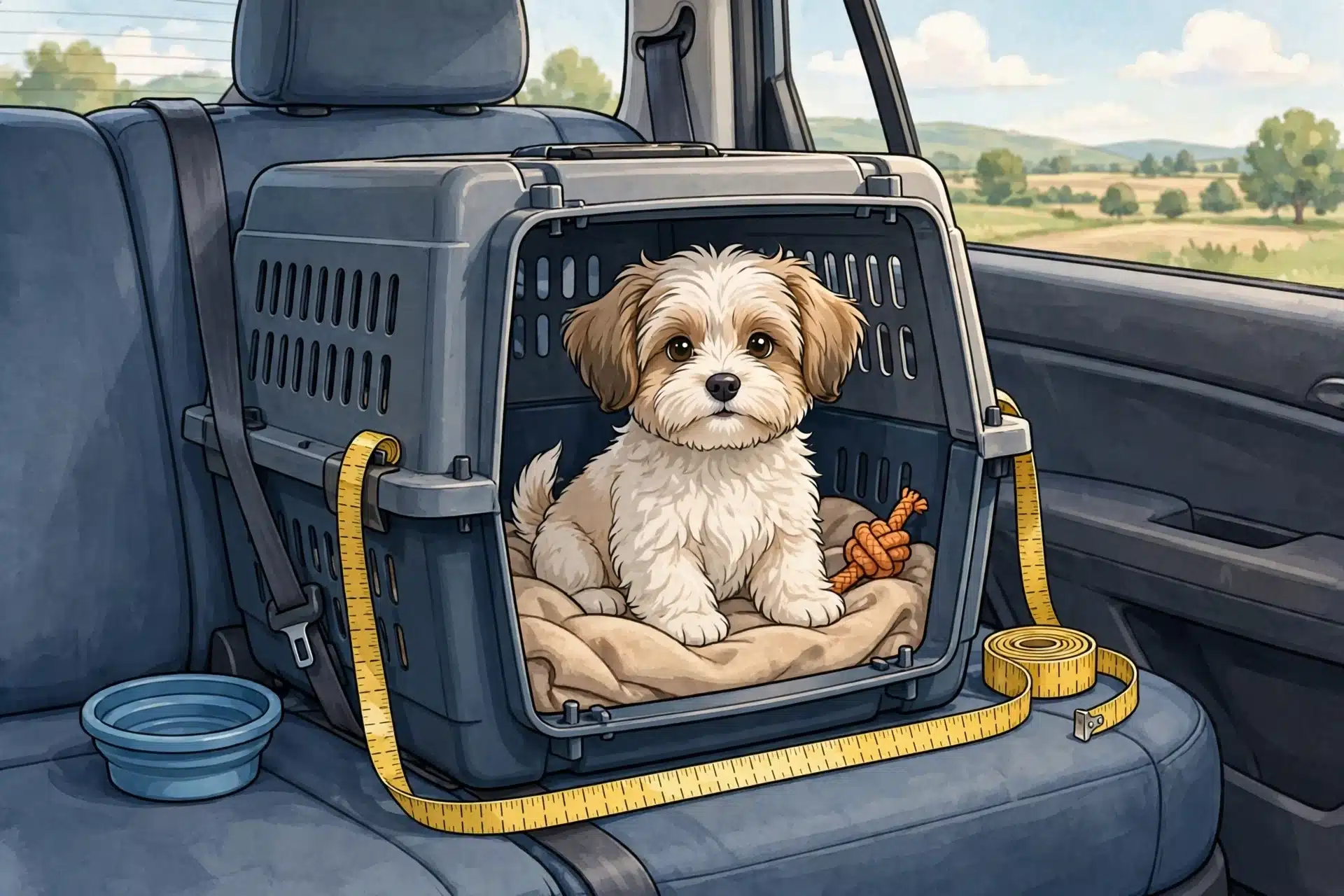
Small breeds like a Havanese or Cavapoo need a snug crate, not a big one. Too much room lets a puppy slide around on turns. Too little stops them from settling.
Follow the same logic airlines use for pet travel. A dog should be able to stand up, turn around fully, and lie down in a natural position. Most puppy transport sizing guides start with body length from nose to tail base, then add clearance for comfort.
- Measure length from nose tip to the base of the tail
- Add 2 to 4 inches for a growing 8 to 12 week puppy
- Check the internal dimensions, since labels list exterior size
When in doubt between two sizes, size up slightly. A hard-sided crate also gives better protection than a soft bag for a long Missouri drive home.
Check Ventilation, Door Security, and Cleanup
Airflow matters as much as size. Crate safety standards call for ventilation on multiple sides, with openings in the upper portion so your puppy gets fresh air without drafts at floor level.
Run this quick check before you buy:
- Ventilation: mesh or vent slots on at least two sides
- Door: a secure latch a puppy nose cannot bump open
- Floor: solid and leak-proof, with room for an absorbent pad
- Cleanup: a smooth base you can wipe out at rest stops
Tip: Set the puppy travel crate up at home a few days before pickup. Feed a treat or two inside so it smells familiar on drive day.
Also Read: Puppy Care Blog & Resources | Sage Puppies
Step 2: Practice the Crate and Car Routine Before the Journey
A long pickup or delivery day is the wrong time for firsts. Vets recommend building travel comfort before the real trip, starting in a parked car with treats and calm time (VCA Animal Hospitals). Two weeks of short rehearsals will do more than any gear upgrade.
Build Calm Associations in Small Rehearsals
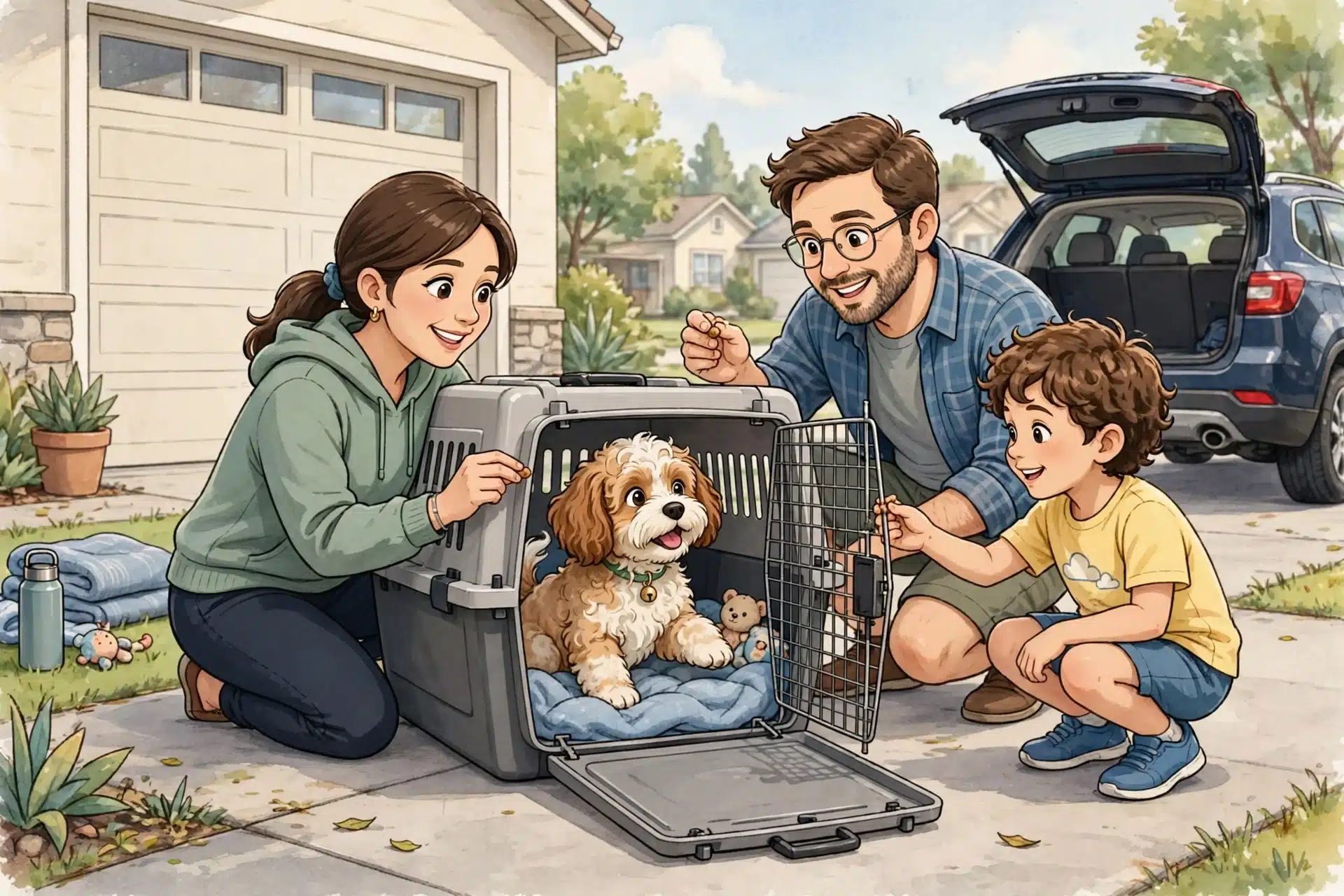
Set the crate up at home first, open, with no door pressure. Toss treats inside and let your puppy wander in and out on its own.
Then move the routine to the car:
- Sit in the driveway with the engine off. Reward calm sniffing and settling.
- Start the engine while the car is parked. This makes noise and vibration normal.
- Keep sessions short, five to ten minutes, and always end on a win.
Breeders who start car and crate exposure early give their puppies a head start, which is part of the early socialization we build into every Havanese, Havapoo, and Cavapoo here in South Jordan (Purina).
Use Short Drives to Learn Your Puppy’s Signals
Start with a slow loop around the block. Gradually extend to fifteen and then thirty minutes as confidence grows. Have a passenger sit near the crate.
Watch for these signals:
- Drooling or lip licking: early motion sickness
- Restlessness or pacing: needs a break
- Whining that settles fast: normal adjustment
- Vomiting: shorten trips and ask your vet
Learn what your puppy looks like at ease. Then, on pickup day, you will spot trouble early and know exactly how to respond.
Also Read: 10 Red Flags to Avoid When Visiting a Local Puppy Breeder
Step 3: Secure the Crate and Set Up the Vehicle
A loose crate is a projectile. In a crash, an unsecured 10-pound crate plus a 3-pound puppy keeps moving at highway speed. The Center for Pet Safety recommends anchoring every crate with strength-rated straps, never bungee cords or zip ties.
Install the Crate According to Its Instructions
Your crate’s maker knows exactly how it should ride. Follow their steps in order:
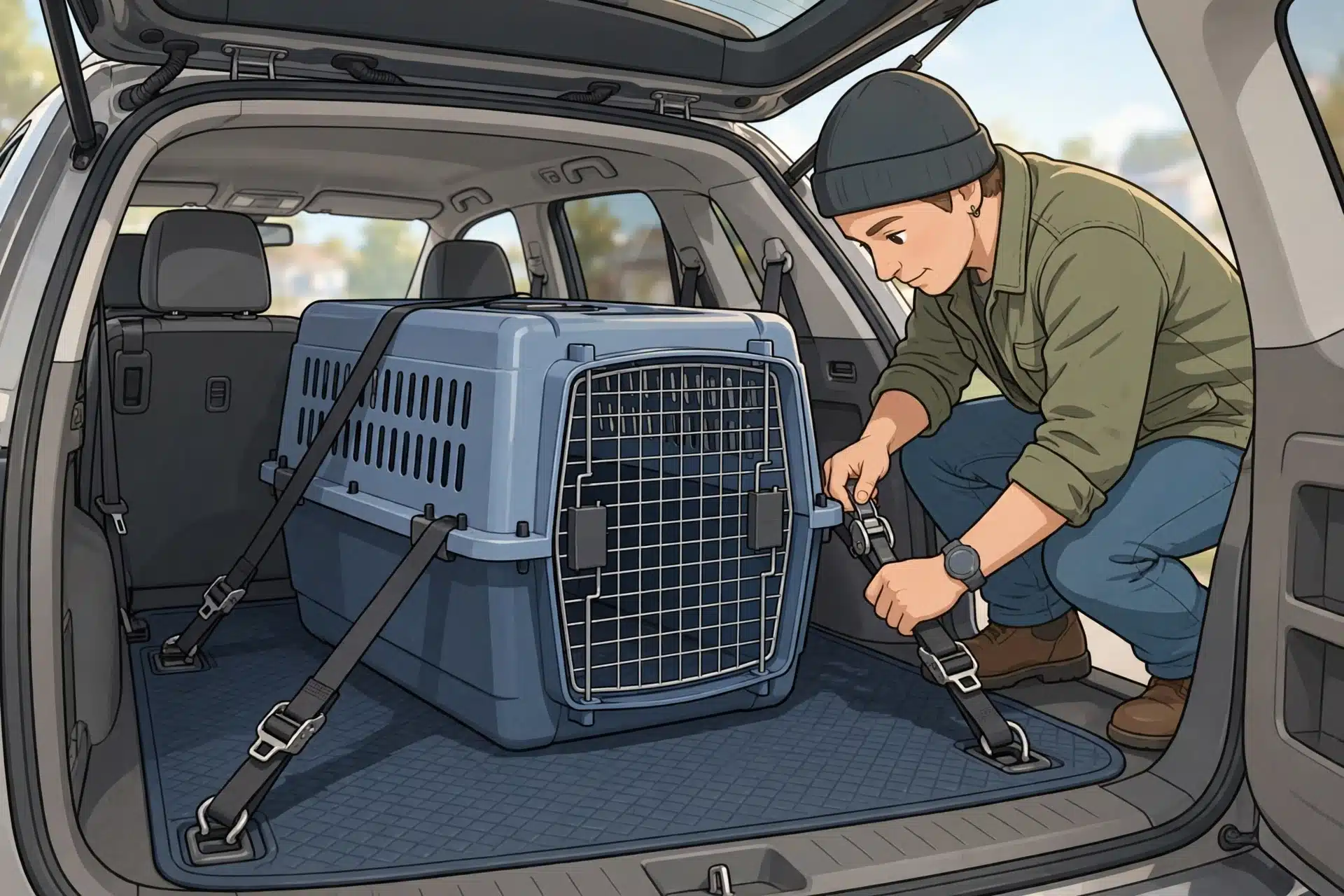
- Place the crate in the back seat or cargo area, never the front seat. Front airbags can injure a small dog.
- Thread the vehicle seat belt or anchor straps through the crate’s built-in slots.
- Buckle or ratchet everything tight, then push the crate hard from two sides. It should not shift more than an inch.
- Lay a non-slip mat underneath for extra grip.
If your crate rides in the cargo area, confirm with your vehicle maker that the cargo anchors are strength-rated. Some are not.
Key tip: A crate that shifts on a hard corner will slide in a sudden stop. Test it before puppy day, not during the drive.
Create a Safe Loading and Unloading Sequence
Pickup day moves fast, and excitement makes people sloppy. Decide your sequence before you arrive at the breeder.
- Park flat, engine off, parking brake set.
- One adult opens and latches the crate door fully.
- The breeder hands you the puppy; you settle it in with a towel and a low-value chew.
- Latch the crate, close the tailgate or door, then confirm the latch a second time.
- Start the drive calmly, no loud music.
Unloading reverses the order. Open doors only when the leash is already clipped. Havanese, Havapoo, and Cavapoo puppies are small and quick, so doors stay closed until someone is holding the lead. Many Missouri breeders will walk your family through their loading routine; match it and your puppy starts the trip feeling secure.
Step 4: Plan Stops Around the Puppy, Not Just the Mileage
A long drive across Missouri or beyond is not one trip. It is a series of short ones, broken up by stops your puppy actually needs. Plan for potty breaks, water, and calm time every 2 to 3 hours, and build extra minutes into the schedule so you never feel rushed. Pick your stops before you leave, and favor quiet grassy areas over crowded rest stop dog runs. The AVMA’s travel guidance recommends planning routes and rest stops around the animal’s age and stress levels, not just the map.
Use the Same Leash-First Stop Protocol Every Time
Puppies bolt. A highway rest area is the last place you want to learn that. So follow the same sequence at every stop:
- Clip the leash and harness on before any door opens.
- Carry the puppy out or keep a firm grip on the lead.
- Walk to your chosen grassy spot, offer water, and wait for a potty break.
- Give a few minutes of sniffing time, then back into the crate.
VCA veterinarians note that even dogs who are not escape artists can bolt in an unfamiliar setting, so the leash goes on first, every single time. Predictability also calms your puppy. Same steps, same order, every stop, and by the third break the routine will feel familiar.
Protect an Unfinished Vaccination Routine
Your Havanese, Havapoo, or Cavapoo puppy leaves for your home before the vaccine series is complete. That means the ground at busy dog areas can carry real risk, especially parvovirus. Skip rest stop pet areas, dog parks, and pet store floors entirely. Let the puppy toilet on quiet grass away from high dog traffic, or use a clean mat inside the car. Ask your vet about local disease risk along your route before travel day, as PetMD advises. Careful stop choices protect the healthy start your breeder worked to give.
Also Read: 10 Adorable Havapoo Colors You Need to See (2026)
Step 5: Pack the Puppy Travel Essentials in Reach
A packed crate means little if the supplies you need are buried under luggage. Keep everything urgent within the driver’s arm’s length, and everything else stowed so it cannot shift.
Keep a Driver-Access Travel Bag
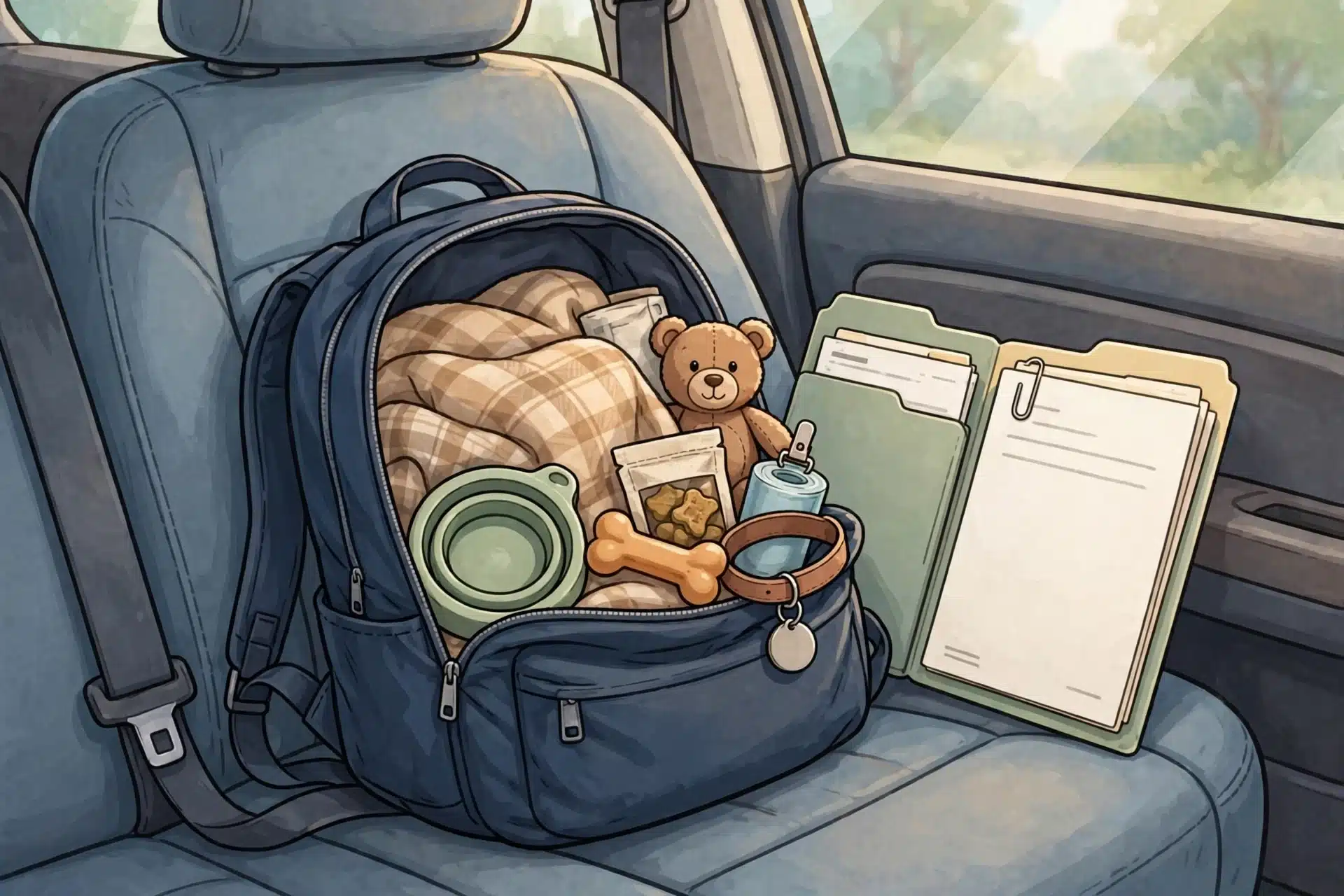
Use one small backpack or duffel that rides in the front seat or footwell, never the cargo area. Load it with:
- Collapsible water bowl and a bottle of water from home
- Puppy food in a sealed bag, portioned into pre-measured servings
- Treats for calm behavior at stops
- Puppy pads, paper towels, and enzyme cleaner for accidents
- Leash and flat collar or harness (no retractables for a new pup)
- Wet wipes and a spare towel
- Phone charger and your breeder’s contact info saved offline
If your puppy came home from a breeder like Sage Puppies, keep their feeding notes in this bag too. Small breeds like Havanese and Cavapoos do best on the same food and schedule they already know.
Bring Records, Identification, and Familiar Comforts
Keep paperwork in a zip pouch, either in the glove box or the same travel bag. Bring the vaccination and deworming record, the health certificate if one was issued, and your breeder’s written feeding and care sheet. Photograph every document before you leave, in case the paper copy goes missing.
Identification matters even on day one. A well-fitted collar with a tag that lists your cell number is a smart backup. Consider a microchip if your breeder has not already placed one.
Comfort items reduce stress more than anything else on this list. Pack the blanket or toy that carries the scent of the puppy’s mother and littermates. Tuck it into the crate. A familiar smell helps a nine-week-old puppy settle during a long ride home.
Also Read: Winter Puppy Pickup in Maine: Car Safety and Travel Essentials
Step 6: Make Pickup or Delivery Day Calm and Predictable
Confirm the Handoff Details Before Leaving
A calm day starts with a short confirmation call or message 24 to 48 hours ahead. Lock down the basics so nothing surprises you on the road:
- Time and location: Pin the exact meeting spot or delivery address, plus a backup contact number.
- Paperwork: Ask which documents come with your puppy, such as health records and feeding notes.
- What to bring: Your crate, towels, water, and a leash sized for a small breed.
- Payment and questions: Settle any balance early and write down what you want to ask the breeder.
If you are picking up a Havanese, Havapoo, or Cavapoo puppy from Sage Puppies in South Jordan, Utah, you will leave with the food the puppy already eats. Keeping that same food matters. Vets recommend staying consistent during the first week to avoid stomach upset during an already stressful change (PetSmart).
Keep the First Journey Simple
Your puppy’s first car ride is a big deal. Keep it short on stimulation and long on comfort. Experts advise using a crate rather than holding the puppy in your lap, since it is safer and contains any motion sickness mess (AKC Reunite).
- Let the puppy potty before the drive home.
- Keep the ride quiet, with soft voices and no loud music.
- Stop for short potty breaks on long trips, leash on.
- Once home, show the potty spot, offer quiet crate time, and skip the visitor parade. Small breeds settle best when the first day stays boring.
Step 7: Arrive Safely and Settle In at Home
The trip ends at your front door, but your puppy’s adjustment is just starting. Keep the first day calm, small, and predictable.
Give the Puppy a Quiet First Hour
Carry your puppy straight to the potty spot before anything else. After a long drive, a toilet break comes first, and vets at PDSA recommend rewarding it right away to start house training on a good note. Then show your puppy one prepared room: water bowl, crate, bed, a toy or two. Skip the full house tour. Introduce family members one at a time, sitting low and speaking softly.
Let your puppy set the pace. A tired puppy may skip a meal or nap more than usual on day one. That is normal. Keep the food the same and the routine boring.
Watch, Record, and Ask for Help When Needed
For the first 48 hours, note when your puppy eats, potties, sleeps, and acts off. Write things down. The AKC advises keeping the first day low-key and calling your vet if appetite, energy, or stools stay abnormal. Sage Puppies families also get a breeder to text, so ask questions early rather than guessing.
Also Read: How Missouri Puppies Learn Confidence Through Early Socialization
Step 8: Use This Final Puppy Travel Safety Checklist
Before pickup day, run through everything one last time. Print this out or save it to your phone.
Before you leave:
- Crate sized for a small breed, secured in the back seat.
- Health records and vaccination paperwork in a folder.
- Collar with ID tag plus a temporary travel tag with your cell number.
- Food, bottled water, bowls, leash, spare leash, and poop bags.
- Pee pads, paper towels, and wipes for accidents.
- A blanket or toy that smells like the breeder’s home.
On the road:
- Stop every 2-3 hours for potty and water.
- Keep the puppy leashed before any car door opens.
- Never leave the puppy alone in the vehicle, even briefly. The AVMA warns car interiors can heat up fast, even on mild days.
- Feed a light meal 3-4 hours before driving, per ASPCA travel guidance.
One final note: at Sage Puppies, we confirm crate setup, paperwork, and your arrival plan with every family before delivery day, so nothing gets missed. Safe travels home.

A well-planned trip makes pickup day calm for both of you. At Sage Puppies, every Havanese, Havapoo, and Cavapoo puppy goes home well-started, with clear pickup and delivery guidance. Browse our available puppies or start your application today.
Frequently Asked Questions
Q1: What is the best travel crate for a puppy?
A hard-sided, airline-style crate sized so your puppy can stand, turn around, and lie down comfortably. Secure it with a seatbelt or anchors, and line it with a soft, washable pad.
Q2: How do I prepare my puppy for a long car ride?
Start with short drives days before pickup. Feed lightly beforehand, offer a potty break right before loading, and keep the crate calm and covered. Keep each session positive and brief.
Q3: What should I pack for a road trip with my puppy?
Pack water, a bowl, food for the day, potty bags, towels, wet wipes, a leash, ID tags, and your puppy’s health paperwork. Include a comfort item that smells like home.
Q4: How often should I stop during the trip?
Plan a stop every two to three hours. Offer water and a quick potty break, then get back on the road. For an 8-hour drive, budget four to five short stops.
Q5: Can I feed my puppy during a long drive?
Keep meals light and small until you arrive. Travel can upset young stomachs, so feed a modest portion at a rest stop and stick to water the rest of the way.
Q6: How do breeders handle puppy delivery safely?
Reputable programs, including Sage Puppies, schedule pickups or delivery around the puppy’s readiness and share care instructions so the first ride home goes smoothly.
Conclusion
A safe trip home comes down to a few basics: the right size crate, a secure spot in the vehicle, short and well-timed stops, and paperwork ready before you leave. Federal standards back this up. USDA rules require puppies to be at least 8 weeks old and weaned before travel, and they spell out crate size, ventilation, and temperature limits your trip should mirror. Whether you pick up in Missouri or arrange delivery, planning each leg keeps a small Havanese, Havapoo, or Cavapoo calm and secure. Prepare the crate, pack the kit, and the first ride home becomes a smooth start instead of a stress point.