Quick Summary: Missouri puppies need a DHPP vaccine series starting at 6-8 weeks, with boosters every 2-4 weeks until at least 16 weeks, plus rabies by 4 months, because maternal antibodies fade at different rates and repeat doses ensure immunity. Public spaces like dog parks should be avoided until about two weeks after the final core shot, but controlled socialization with known vaccinated dogs is safe earlier. Keep detailed vaccine records from the breeder, review them with your vet, and if a dose is missed, continue the series rather than restarting.
Your Missouri puppy might come home with a vaccine card that already shows a visit or two. Those dates are a good start, but they do not always mean the puppy series is done. Some litters get early doses, and some breeders time shots a bit differently. What matters is what happens next.
This guide walks you through a typical puppy vaccination schedule from 6 to 16 weeks, why repeat doses matter, and where puppy vaccine intervals can flex. You will also find simple tips for managing early outings safely and keeping clean records for your vet.
We raise Havanese, Havapoo, and Cavapoo puppies in a home setting and walk new families through puppy shots questions all the time. Whether you pick up locally or your Missouri puppy arrives by delivery, a clear plan takes the guesswork out of those first few vet visits.
The Puppy Vaccine Timeline, from 6 to 16 Weeks
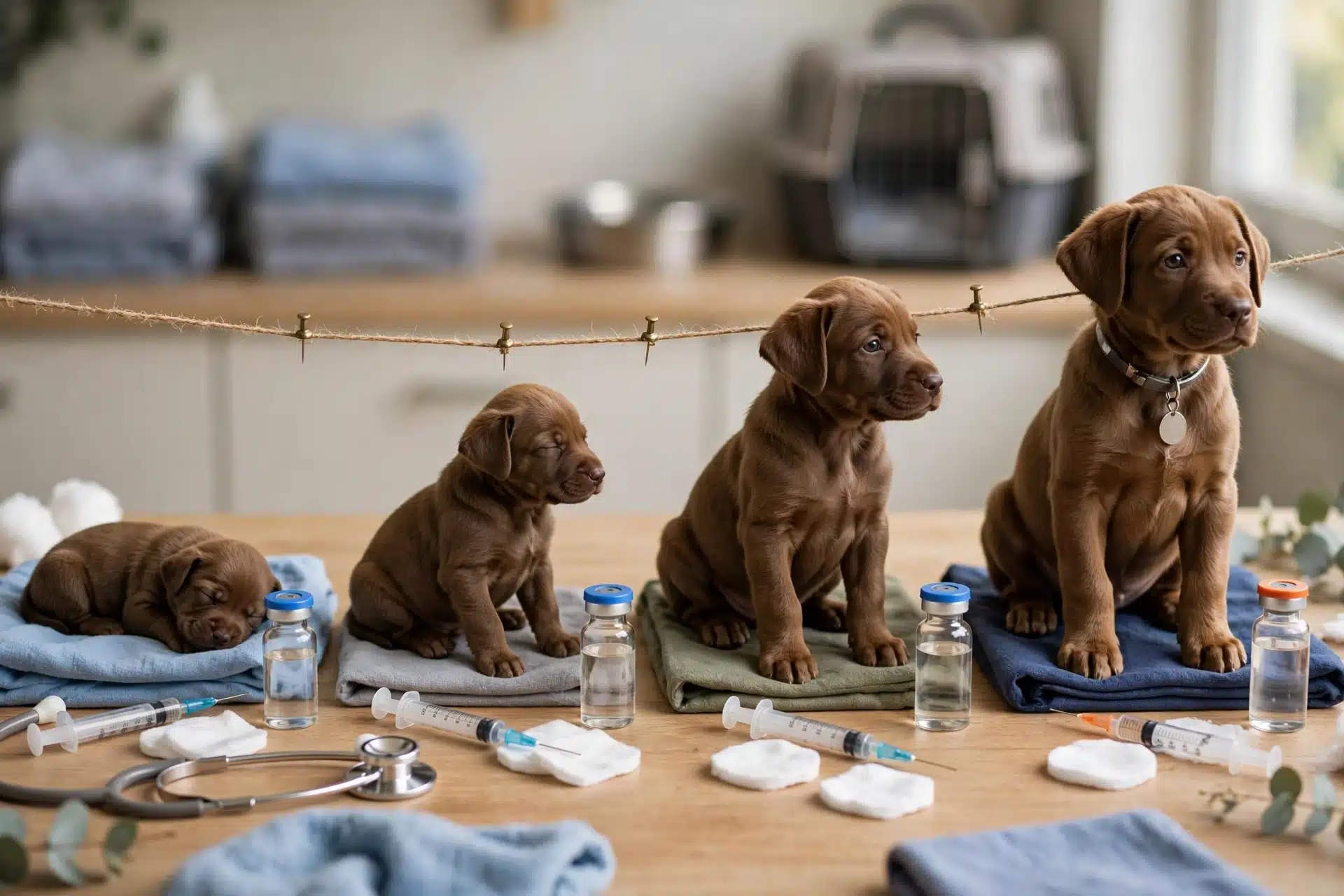
Puppies are not fully protected after one visit. The standard puppy vaccination schedule spans roughly ten weeks, with repeat doses of the same core vaccine. Maternal antibodies from nursing fade at different rates in every puppy, so the series overlaps that window. Here is how the timeline usually unfolds.
| Age | Visit | What Happens |
|---|---|---|
| 6-8 weeks | First round | DHPP (distemper, adenovirus, parvovirus, parainfluenza) |
| 10-12 weeks | Second round | DHPP booster; discuss leptospirosis and Bordetella |
| 14-16 weeks | Final round | DHPP booster; rabies vaccine per Missouri law |
| 6-12 months | Booster | One-year booster, then boosters every 1-3 years |
At 6 to 8 Weeks: Begin the Core Series
The first round of Missouri puppy shots usually lands at 6 to 8 weeks, sometimes at the breeder, sometimes at your first vet visit. The core vaccine is a combination shot, often called DHPP. It protects against distemper, adenovirus, parvovirus, and parainfluenza. Per the 2022 AAHA guidelines, puppies need at least three doses of this combination between 6 and 16 weeks, spaced 2 to 4 weeks apart. Keep your puppy home and away from unknown dogs at this stage. Parvovirus is hardy and spreads easily in public places.
At 10 to 12 Weeks: Continue the Series and Review Risk-Based Vaccines
The second dose lands around 10 to 12 weeks. This is also when your vet will discuss lifestyle vaccines. Leptospirosis is now treated as a core concern for most dogs, including small breeds in suburban areas, and typically starts at 12 weeks. Bordetella may come up if you plan on boarding or puppy classes. Missouri adds ticks and standing water in warmer months, so ask about Lyme disease too. If your puppy came from Sage Puppies, bring the health record we send home so your vet can align the next dose without gaps or repeats.
At 14 to 16 Weeks and Beyond: Complete the Initial Core Series
The final round happens at 14 to 16 weeks, and the last DHPP dose cannot come earlier than 16 weeks. Rabies is given here as well, usually at 12 to 16 weeks, because most Missouri cities require it by 4 months of age. A booster follows one year later, then moves to every three years for most core vaccines. UC Davis researchers note that some vets add one more dose at 6 months as a safety net, since a few puppies still carried maternal antibodies at 16 weeks UC Davis vaccination guidelines. Finish the series before free socializing – the last week is when protection finally sticks.
Also Read: Missouri Puppy Travel Planning: Crates, Stops, and Safety Essentials
Why Puppy Vaccine Intervals Matter
A puppy vaccination schedule is not a single shot. It is a short series of doses spaced a few weeks apart, and the spacing is what makes it work. Vets recommend at least three combination doses between 6 and 16 weeks, given 2 to 4 weeks apart, according to the AAHA canine vaccine guidelines.
Maternal Antibodies Create a Window of Uncertainty
Here is the puzzle every new owner runs into. Your puppy got antibodies from his mother’s first milk. Those antibodies protect him early on, but they also block vaccines. If you vaccinate while maternal antibody levels are still high, the dose does not “take.”
Nobody can tell from the outside when those antibodies drop low enough in an individual puppy. Levels fall at different rates in different pups, and they can persist 13 to 15 weeks or longer for parvovirus, per AAHA’s parvovirus guidance.
Repeat doses solve the guessing game. Each visit gives your puppy a chance to respond as maternal protection fades. When at least one dose lands after antibodies drop, your puppy builds real, lasting immunity. Skip the last doses, and you may end up with a puppy who looks vaccinated but is not protected.

If a Dose Is Missed, Delayed, or Unclear
Life happens. You move, work travel collides with a vet visit, or paperwork gets lost. Do not panic, and do not restart from scratch on your own.
- Call your vet first. They will usually continue the series rather than begin over.
- Keep records from the breeder. Ask for dates, vaccine names, and lot numbers.
- When history is unknown, treat the puppy as unvaccinated. AAHA’s rule of thumb is simple: “when in doubt, vaccinate.”
At Sage Puppies, every puppy leaves South Jordan with a documented health record, so your Missouri vet knows exactly where the series stands.
Also Read: Puppy Care Blog & Resources | Sage Puppies
Core, Rabies, and Lifestyle-Based Vaccines in Missouri
Core Vaccines and the Local Veterinary Plan
Core vaccines are the ones every puppy needs, no matter where it lives or how it spends its days. Under the 2022 AAHA Canine Vaccination Guidelines, that list includes distemper, adenovirus, parvovirus, parainfluenza, rabies, and – as of a 2024 update – leptospirosis.
The core combination shot (often called DA2PP) follows a simple rhythm:
- Start between 6 and 8 weeks of age.
- Repeat every 2 to 4 weeks until at least 16 weeks.
- Boost within one year, then every 3 years.
Lepto starts at 12 weeks and needs two doses, 2 to 4 weeks apart, then an annual booster. Why the change? Leptospirosis now shows up in city and suburb dogs of every size, not just farm dogs. The AAHA task force moved it to core after seeing the disease spread across North America.
Your Missouri vet will take these national standards and build the exact plan. Missouri’s mix of warm summers, standing water, and wildlife (raccoons, skunks, rodents) makes lepto vaccination a smart default, not an add-on.
Rabies and Noncore Vaccines Depend on Rules and Risk
Rabies is different. It is required by law, not just recommended. Missouri counties set their own rules, so ask your vet when your puppy’s first rabies shot is due – most products are labeled for 3 months of age and up. A booster follows one year later, then usually every 3 years.
Noncore vaccines depend entirely on your puppy’s life:
- Bordetella and parainfluenza: needed for boarding, daycare, or grooming.
- Canine influenza: same triggers, based on local outbreaks.
- Lyme disease: worth discussing if you hike tick-heavy areas of the Ozarks.
Tip: If your puppy came from a breeder like Sage Puppies with written vaccine records, bring that paperwork to your first vet visit. It tells your vet exactly which doses are done and which come next, so nothing gets repeated or missed.
When Can a Puppy Go Outside After Vaccinations in Missouri?
Most puppies can explore public spaces safely about two weeks after their final core vaccine, which usually lands between 18 and 22 weeks of age. If the last DHPP dose happens at 16 weeks, add two weeks. That buffer gives the immune system time to respond. Until then, your yard and controlled outings are fair game, but dog parks, pet stores, and shared grass are not, since parvovirus survives in soil and on surfaces for long periods and hits puppies under 20 weeks hardest.
Avoid High-Risk Shared Spaces Until Your Veterinarian Advises Otherwise
The rule is simple: skip anywhere unfamiliar dogs gather. In Missouri that includes dog parks, rest-stop grass along I-70, groomers, daycares, and the aisles of pet supply stores. Parvo and distemper travel through feces and contaminated surfaces, not just direct contact.
A fenced private yard is different. If no unknown dogs have been there, your puppy can start potty training outside right away. Apartment dwellers without a private yard should ask their vet for a workaround, such as a designated patch or puppy pads indoors.
Watch for a gap in protection, too. Maternal antibodies wear off at different times in every puppy, which is why vets space the series every 2 to 4 weeks until 16 weeks or older. One early shot does not equal full coverage.
Plan Controlled Socialization Around Your Puppy’s Risk
Full isolation until 16 weeks creates its own problem. The socialization window closes around 14 to 16 weeks, and puppies who miss it often grow into fearful adults. So you socialize safely instead of staying home:
- Carry your puppy into public places in your arms or a sling, paws off the ground.
- Arrange playdates with known, fully vaccinated, gentle dogs.
- Enroll in a puppy class that requires at least one vaccine set plus deworming.
- Ride in the car and watch the world from a blanket or porch.
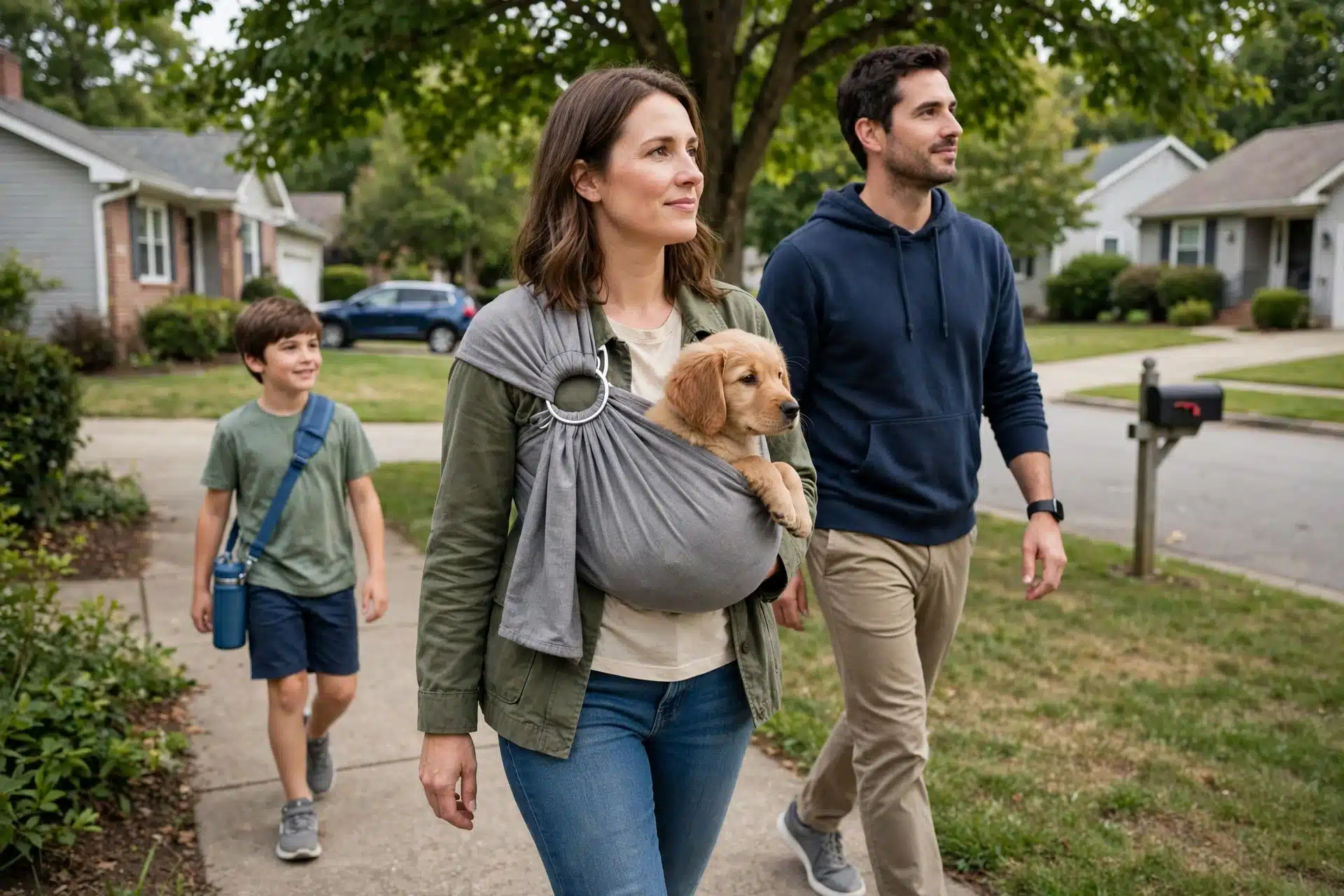
Ask your vet to weigh your local parvo risk, then build a plan that protects health and confidence at once.
Also Read: How to Assess Missouri Puppy Breeder Socialization Practices
How to Check Your Puppy’s Vaccine Record
Your puppy’s vaccine record is more than paperwork. It tells you what protection already exists and what comes next. Before your first vet visit, sit down with the record your breeder gave you and read it closely. A careful five-minute review now prevents skipped doses and repeated shots later.
Check Dates, Vaccine Details, and Who Administered Each Dose
Start with the basics on the record. A complete entry should show four things:
- The date each dose was given.
- The vaccine name, such as DHPP (distemper, hepatitis, parainfluenza, and parvovirus) or bordetella.
- The manufacturer and lot number, usually printed on a sticker.
- Who gave the shot – a licensed veterinarian, a trained assistant under vet supervision, or the breeder.
If a dose was given by the breeder rather than a clinic, that is common and often fine, but ask for details. A trustworthy breeder will gladly walk you through it. At Sage Puppies, every puppy leaves with a written health record, and we encourage families to review it with their own vet right away.
Watch for gaps or red flags:
- Missing dates or blank lot numbers.
- A single shot listed as covering “all puppy vaccines.”
- No mention of deworming dates, which usually run alongside puppy shots.

Book a Veterinary Review and Confirm the Next Due Date
Once you have read the record, schedule a vet visit within the first few days home. Bring the paperwork with you. Your vet will verify what was given, decide whether any early doses need repeating, and set the schedule for the remaining rounds. According to AAHA’s canine vaccination guidelines, puppies typically need a series of doses, so the exact next date matters more than the first visit alone.
Ask two questions before you leave the clinic:
- When is the next dose due? Write it on your calendar and set a phone reminder.
- Which vaccines are still pending? Most puppies finish DHPP around 16 weeks, with rabies scheduled separately.
Keep every record in one folder, digital or paper. You will need proof of vaccination for training classes, grooming, boarding, and travel. If your puppy arrives through our nationwide delivery option, we send records ahead so your vet has everything before pickup day.
Tip: Photograph each vaccine page and save it to your phone. Lost paperwork is the most common reason puppy owners repeat doses unnecessarily.

Bringing home a well-started puppy makes those first vaccine visits easier. At Sage Puppies, our home-raised Havanese, Havapoo, and Cavapoo puppies arrive with clear health records and early socialization. Browse our available puppies, ask questions, and see whether one of our South Jordan-raised companions fits your family.
Frequently Asked Questions
Q1: What is the puppy vaccination schedule by age in weeks?
Most puppies start the DHPP shot at 6 to 8 weeks, repeat it every 3 to 4 weeks until 16 weeks, and get rabies between 12 and 16 weeks. Your vet confirms exact dates.
Q2: Which shots do puppies need at 6, 8, 12, and 16 weeks?
Expect DHPP at 6 to 8 weeks, DHPP plus optional Leptospirosis and Bordetella around 12 weeks, and a final DHPP with rabies near 16 weeks.
Q3: When can a puppy go outside after vaccinations in Missouri?
Keep puppy away from public dog areas until about a week after the 16-week shot. Quiet spaces like your yard or a friend’s porch are fine earlier.
Q4: Does Missouri law require rabies shots for puppies?
Yes. Most Missouri cities and counties require rabies vaccination by 4 to 6 months, and many vets give it at the 16-week visit.
Q5: What if my puppy misses a vaccine dose?
Don’t restart from scratch. Call your vet; they’ll schedule a catch-up dose and adjust the remaining dates so protection stays on track.
A Clear Next Step for Your Puppy’s Vaccine Plan
Missouri puppy vaccine schedules come down to three things: start the core series between 6 and 8 weeks, finish it at 16 weeks or later, and keep good records along the way. Repeat doses matter because maternal antibodies fade at different rates in every puppy, not because your vet likes extra visits.
You have some flexibility. Rabies timing follows state law, and extras like Bordetella depend on your dog’s lifestyle. The AAHA canine vaccination guidelines confirm that plans should fit each dog’s risk, so pair the milestones here with your veterinarian’s judgment.
Keep every receipt, and ask your breeder for the puppy’s shot history before pickup day. One neat folder now saves confusion later.