Quick Summary: Don’t trust a breeder’s claim of “well socialized” without proof. Ask for a specific week-by-week plan starting at three weeks old, covering handling, sounds, surfaces, and grooming, and request dated logs or videos. Watch puppies for calm recovery after new experiences, not just boldness, and avoid breeders who give vague answers or force shy puppies. Reserve only when the breeder’s answers, evidence, and puppy behavior align with your non-negotiables.
A breeder’s “well socialized” claim needs proof. Ask what happened from about three weeks old to go-home day: who handled the litter, which home sounds and surfaces puppies met, how each puppy reacted, and what records support the story.
Many Missouri puppy breeders use the same reassuring words, but their breeder socialization practices can differ greatly. A puppy raised in a busy home may still lack calm, guided exposure to people, handling, noises, and new spaces.
This guide turns puppy socialization into clear questions, observable signs, and sensible red flags. You will learn how to compare breeder socialization practices without relying on polished photos or broad promises, using evidence-based standards that fit family companion homes.
1. Ask for a Specific Socialization Plan, Not a Promise
“Raised with love” is not a socialization plan. Ask a Missouri breeder to explain exactly what each litter experiences before going home. Early, positive exposure matters: the AVMA literature review notes that puppies are most open to unfamiliar dogs from roughly 3 to 14 weeks.
What a Credible Answer Should Include
A thoughtful breeder can name activities, timing, and how they watch each puppy’s response. Look for a plan that includes:
- Gentle daily handling by adults and, when appropriate, calm children
- Normal home sounds, such as a vacuum, doorbell, TV, and kitchen activity
- Safe surfaces, toys, tunnels, steps, and short crate sessions
- Grooming basics for a Havanese, Havapoo, or Cavapoo
- Brief car rides and calm exposure to new people
- Notes on each puppy’s comfort level and pace
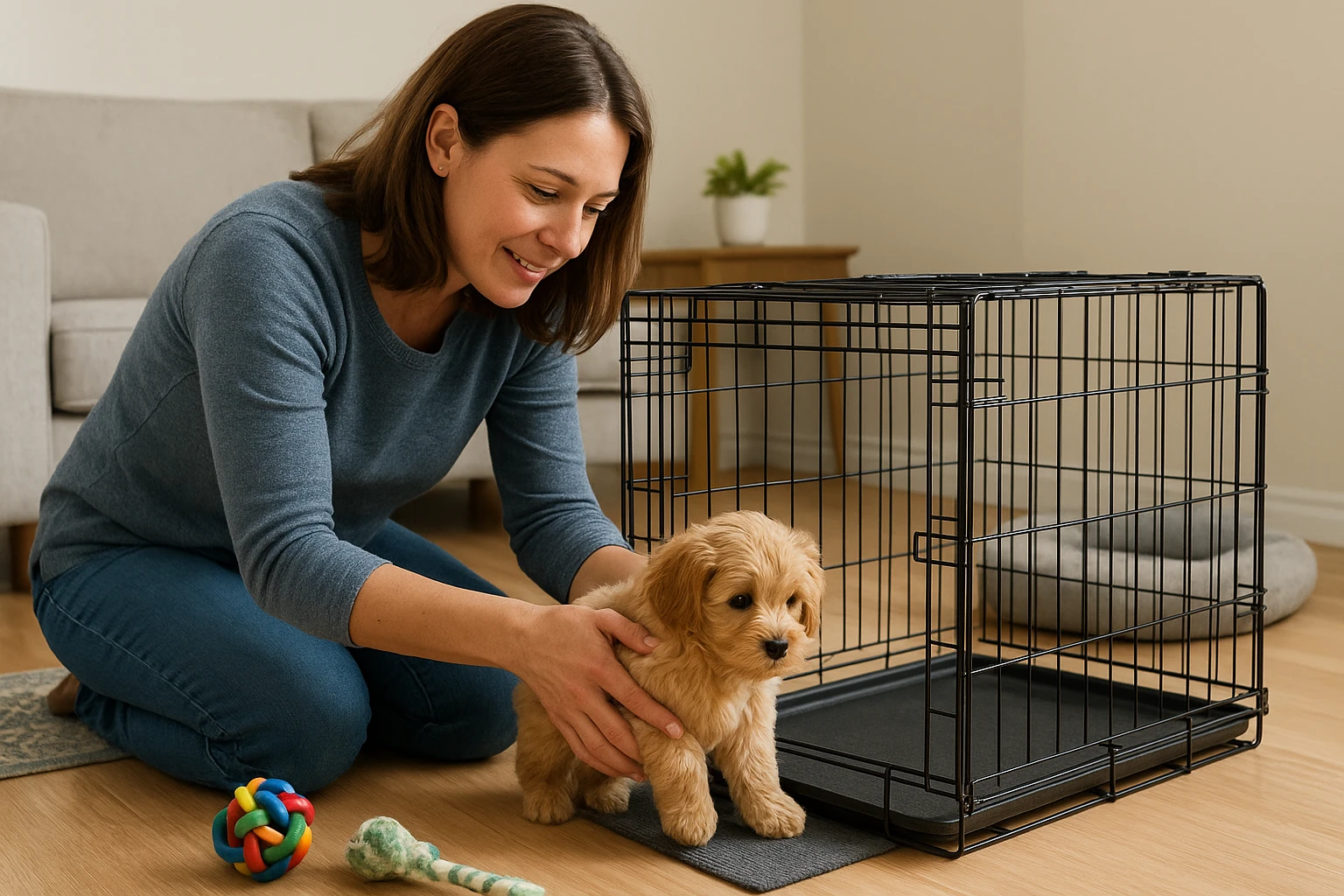
Tip: Exposure is not the same as flooding. A good breeder lets a hesitant puppy pause, recover, and pair new things with food, play, or calm praise.
| Strong answer | Weak answer |
|---|---|
| “We begin handling at three weeks and add crate games at six weeks.” | “They are very social.” |
| Photos, videos, logs, or a live visit | Only polished listing photos |
| Explains what happens after pickup | Says training is finished before go-home |
Questions That Separate a Program from Marketing Language
Ask these questions before placing a deposit:
- What new experiences do puppies have each week?
- How do you introduce crates, grooming, and household sounds?
- Can I see recent video of the litter during a normal activity?
- How do you respond if one puppy seems worried?
- What should we continue during the first two weeks at home?
A breeder should welcome these questions, not rush past them. The AVMA’s breeder guidance includes early training and socialization opportunities as sound breeding practices.
Also Read: 10 Signs a California Puppy Listing Is a Scam – Sage Puppies
2. Check Whether Socialization Starts During the Right Developmental Window
What to Look For From Birth Through Go-Home
Ask for a week-by-week plan, not a vague promise that puppies are “well socialized.” The key window starts at about three weeks, when puppies begin to see, hear, move, and seek people. AKC breeder guidance stresses that early, gentle exposure should begin then.
Look for proof of gradual, positive experiences:
| Puppy age | Meaningful breeder work |
|---|---|
| Birth to 3 weeks | Calm handling, clean routine, time with mother and littermates |
| 3 to 6 weeks | Gentle human contact, safe sounds, new textures, short play sessions |
| 6 to 8 weeks | Crate time, grooming touch, visitors, car exposure, recovery after new sounds |
| Go-home period | Clear notes on what the puppy has met and what your family should continue |
Warning: Loud, forced, or nonstop exposure is not socialization. Ask how the breeder watches for stress and lets each puppy opt out.
Why Timing Matters for Missouri Buyers
Most puppies go home near the first fear period, often around eight to eleven weeks. That makes a smooth handoff vital. AKC guidance on fear periods recommends safe, low-pressure exposure rather than forcing a worried puppy closer.
For Missouri pickup or delivery, ask these questions:
- What has the puppy experienced before travel day?
- Has the puppy rested calmly in a crate and ridden in a vehicle?
- Which new experiences should we introduce first at home?
A breeder should give you a simple continuation plan. Your family then carries the work forward with calm guests, safe surfaces, brief car rides, and rewards.
Also Read: 10 Small Breed Puppies That Stay Friendly & Easygoing
3. Evaluate the Variety and Quality of the Experiences
A strong program is not a long list of activities. It gives each puppy calm, brief, repeatable experiences and watches how the puppy responds. The goal is relaxed curiosity, not flooding a puppy with stimulation. The AVSAB puppy socialization guidance supports safe exposure to varied people, settings, and stimuli during the first three months.
People and Gentle Social Interaction
Ask who handles the puppies and how often. A home-raised litter should meet more than one calm adult, plus supervised, gentle children where appropriate.
Look for proof of:
- Individual lap time and play
- Calm greetings from different people
- Positive contact with well-mannered adult dogs
- Puppies allowed to approach at their own pace
Ask for short videos, not just posed photos. Watch for loose bodies, curiosity, and easy recovery after a new event.
A breeder should never force a shy puppy to be held or passed around. Retreating, freezing, or tucked tails mean the experience needs to slow down.

Household Sounds, Surfaces, and Objects
Missouri family homes have vacuums, doorbells, dropped pans, steps, slick floors, and busy weekends. Ask what puppies hear and explore before they leave.
| Experience type | Useful examples | What to request |
|---|---|---|
| Sounds | Vacuum, TV, doorbell, kitchen noises | Video showing calm responses |
| Surfaces | Tile, carpet, grass, rubber mat | Photos of the puppy area |
| Objects | Toys, tunnels, low steps, grooming tools | A written routine or log |
Quality matters more than volume. A puppy should have room to move away, then choose to investigate again. Avoid breeders who call a puppy “socialized” but cannot name specific exposures.
Handling, Grooming, Travel, and Independence
Small companion breeds need calm practice with touch. Ask whether puppies receive gentle paw, ear, mouth, and brush handling, with praise or treats.
Also ask about:
- Short crate rests with safe toys.
- Brief car rides or travel preparation.
- Time settling apart from littermates.
- Calm recovery after handling or new sounds.
Reward-based practice is the right standard. AVSAB advises positive methods and warns that overwhelming exposure can build fear rather than confidence. A breeder should explain both the puppy’s progress and what your family must continue after pickup or delivery.
4. Watch the Puppies’ Responses, Recovery, and Individual Differences
A breeder’s setup matters, but the puppies’ behavior tells you whether it is working. Ask for a live video, a recorded session, or watch in person. Look for a puppy that can notice something new, pause, and then settle or explore again. The ability to recover after a surprise is a valuable sign during early development, as AKC guidance on puppy socialization explains.
Green Flags in Puppy Behavior
Watch the whole litter, then focus on each puppy.
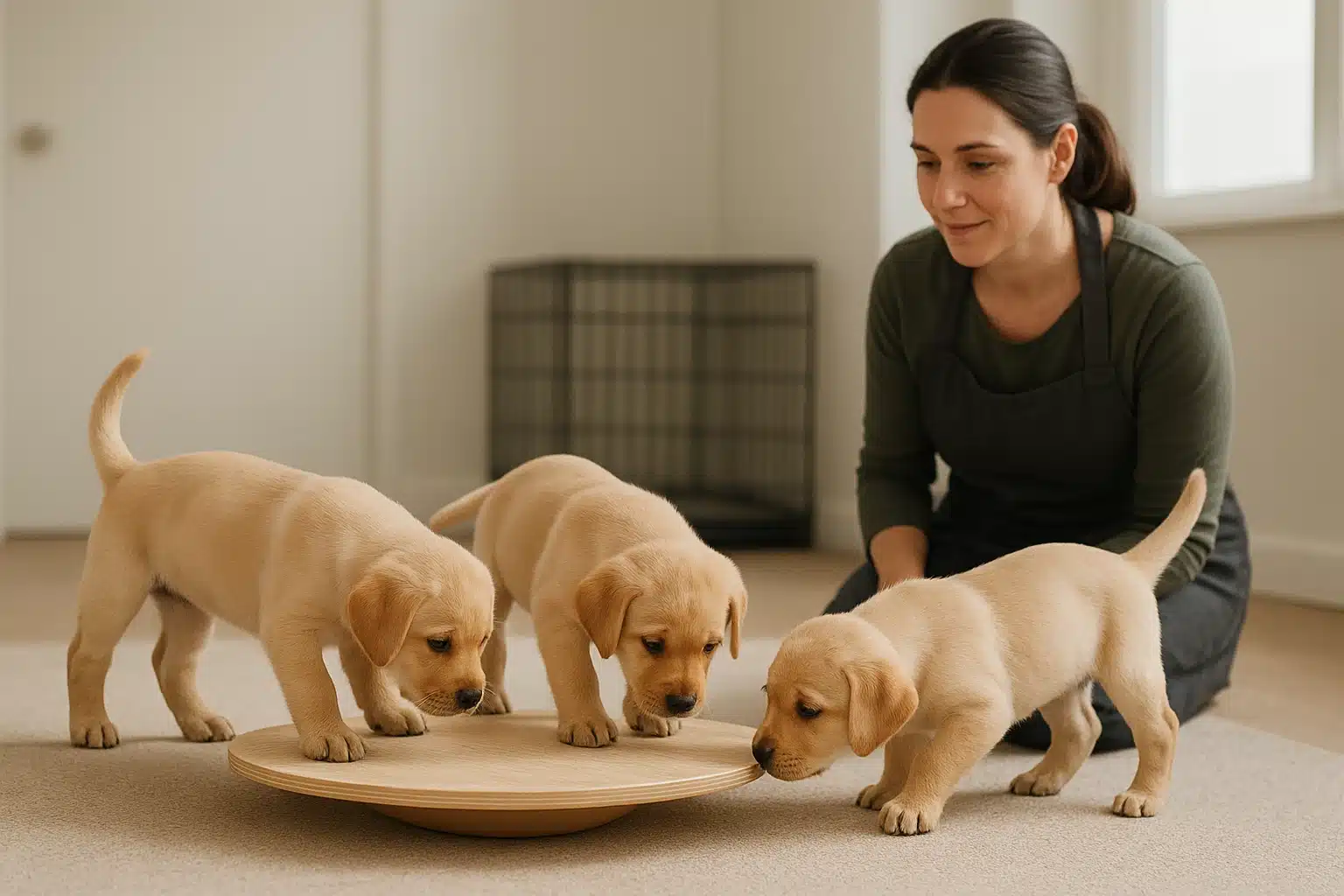
- Puppies explore at their own pace.
- They show loose bodies, soft faces, and natural curiosity.
- A puppy may startle at a sound, then look around, sniff, play, or rejoin people.
- They can take a short break and return to the activity.
- The breeder lets puppies choose contact instead of forcing greetings.
A brief pause is normal. Recovery matters more than instant boldness.
Signs the Experience May Be Too Much
One shy puppy does not prove poor care. Repeated stress without relief deserves closer questions.
| What you see | What to ask |
|---|---|
| Puppy freezes, hides, or cannot rejoin play | “How do you lower the challenge next time?” |
| Repeated lip licking, yawning, or turning away | “Do puppies have quiet spaces and breaks?” |
| Adults push a frightened puppy closer | “Can the puppy choose its distance?” |
| Every puppy faces the same intense task | “How do you adjust for each puppy?” |
Do not confuse a wagging tail with comfort. Look at the full body and whether the puppy can move away. For small-breed puppies, safe escape spaces and short sessions help prevent overload, according to AKC small-dog socialization advice.
How Individualization Should Look
A thoughtful Missouri breeder does not label one puppy “bad” or force all puppies through the same plan.
Ask for clear, plain answers:
- Which puppy is most people-focused, playful, or cautious?
- What helps each puppy reset after a new event?
- Which home would suit each puppy best?
A breeder should describe patterns, not promise a fixed adult personality. Your family’s calm handling and steady routine will still shape the puppy after pickup or delivery.
Also Read: How Missouri Puppies Learn Confidence Through Early Socialization
5. Verify Safety, Welfare, and Ethical Boundaries
Health and Hygiene Questions
Ask to see where puppies sleep, eat, play, and toilet. The space should look clean, dry, well lit, and free of strong odor. Ask how often bedding is changed, how surfaces are cleaned, and how sick puppies are kept apart.
A responsible breeder can explain their vet care, parasite plan, vaccine records, and what happens if a puppy seems unwell. The AVMA’s breeder guidance calls for clean, safe, low-stress spaces and careful health records.
| Ask | Reassuring answer | Red flag |
|---|---|---|
| Can I see the puppy area? | A live visit or clear video tour | Repeated excuses |
| How do you manage illness? | A clear isolation and vet plan | “That never happens” |
| Can I review records? | Records match each puppy | Vague verbal claims |
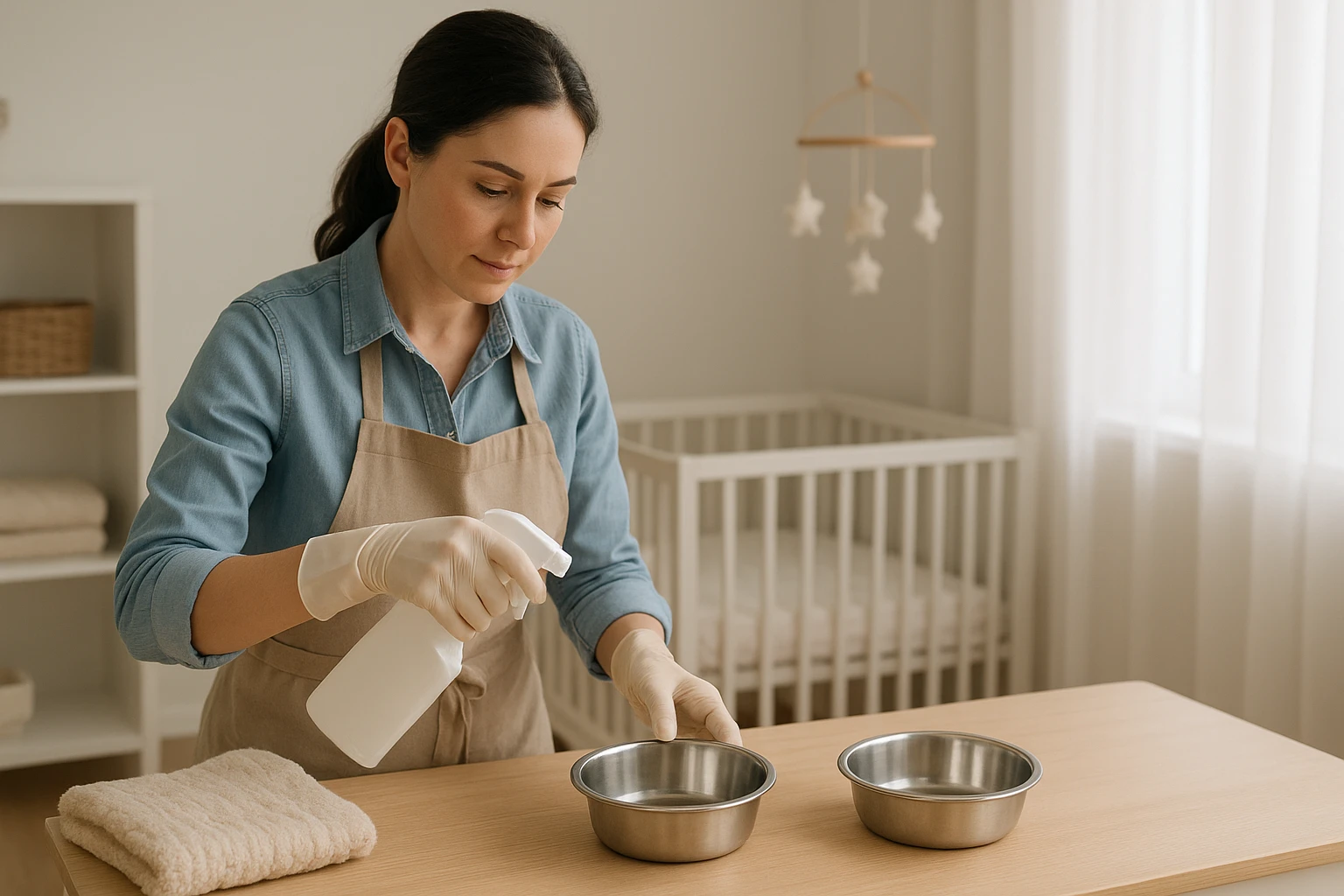
A spotless photo is not proof. Look for routine, records, and calm, healthy puppies.
Rest, Choice, and Positive Reinforcement
Socialization should not mean constant handling or forced “bravery.” Puppies need naps, quiet time, and the choice to step back from a new person, sound, or object.
Ask the breeder how they spot stress. Good signs include slowing down, turning away, or resting. The response should be a break, not pressure.
- Are puppies allowed to approach new things at their own pace?
- What rewards do you use for calm behavior?
- How do you handle a worried puppy?
Reward-based training supports welfare, while aversive methods can cause stress, according to veterinary behavior experts.
Walk away if a breeder laughs about fear, uses harsh corrections, or treats shutdown behavior as obedience.
Also Read: Havanese, Havapoo & Cavapoo Puppy Care Blog
6. Request Evidence You Can Actually Evaluate
Useful Evidence to Request
Ask for proof tied to the current litter, not broad claims about past puppies. Early socialization should include safe, varied exposure before three months of age, according to the AVSAB puppy socialization statement.
Request:
- A dated socialization log showing people, sounds, surfaces, grooming, crate time, and short car rides
- Notes on each puppy’s response, including caution or fear
- Details on how the breeder uses treats, praise, and rest breaks
- Parent temperament information and health-testing records
- The puppy’s daily routine, feeding area, sleep space, and potty setup
| Evidence | What good looks like | Concern |
|---|---|---|
| Socialization log | Specific dates and calm exposure steps | Vague claims with no examples |
| Handling notes | Gentle body, paw, ear, and mouth handling | “They get used to it” |
| Training method | Rewards and choice-based practice | Fear, force, or punishment |
A breeder should explain how they prevent overload, not just list activities.
How to Use a Visit or Video Call
Watch the puppies before anyone picks them up. Look for a clean, calm space and puppies that can explore, rest, and recover after mild excitement.
Ask the breeder to show:
- How a puppy responds to a new person.
- A brief handling routine.
- Where puppies sleep and use the potty area.
- How they introduce a new sound or surface.
A shy puppy is not automatically a poor match. What matters is whether staff notice stress and slow down. AVSAB guidance stresses gradual exposure based on each puppy’s response.
Also Read: 10 Red Flags to Avoid When Visiting a Local Puppy Breeder
7. Recognize Red Flags Before You Reserve
Claims That Sound Impressive but Stay Vague
“Raised with love” is not a socialization plan. Ask what puppies experience, when it starts, and how each pup responds. Early, positive exposure matters because puppies are especially open to new people, dogs, sounds, and places during their first weeks, according to the AVMA socialization review.
Watch for claims such as:
- “Our puppies are highly socialized,” with no examples
- “Family raised,” but no details on daily handling
- “Health tested,” without records or parent results
- “Great with kids,” based only on breed type
A careful breeder can explain the routine in plain language, not just repeat a sales phrase.
Responses That Should Make You Pause
Step back if a breeder rushes your deposit or avoids direct questions. A good match matters more than a fast sale.
| Response | Why it is a concern | Better sign |
|---|---|---|
| “Just trust us” | No proof follows the claim | Clear records and direct answers |
| “Visits are never allowed” | You cannot assess care or handling | A safe, planned way to connect |
| “Any puppy will fit” | Temperament matching is skipped | Questions about your home and routine |
The AVMA says responsible breeders should share health and behavior information and help match puppies to families through informed breeder guidance.
Never reserve because you fear losing a puppy. Reserve when the answers make sense.
Also Read: How to Evaluate a Puppy’s Socialization Plan Before Buying
8. Turn Your Findings Into a Confident Reservation Decision
A Simple Decision Framework
Reserve only when the breeder’s claims match what you saw, heard, and received in writing. Responsible breeders should welcome questions about socialization, health testing, contracts, and home fit, as AKC guidance explains.
| Check | Ready to Reserve | Pause or Walk Away |
|---|---|---|
| Socialization | Clear routine with real examples | Vague claims or no details |
| Puppy behavior | Curious, clean, and comfortable | Extreme fear, poor condition, or shutdown |
| Breeder contact | Answers directly and asks about your home | Pressures payment or avoids questions |
| Paperwork | Terms, records, and pickup or delivery plan are clear | Deposit terms feel rushed or unclear |
Use this final filter:
- Compare each breeder to your non-negotiables.
- Ask for any missing proof before sending money.
- Read reservation terms slowly.
- Choose temperament and fit over color or urgency.
A good breeder also screens you. That two-way process helps create a better family match.
If doubts remain, wait. The right puppy and breeder relationship should feel calm, clear, and well supported.
Also Read: Puppy Care Blog & Resources | Sage Puppies

Use the same careful questions with every breeder. For a transparent, family-first option, explore Sage Puppies. Their home-raised Havanese, Havapoo, and Cavapoo puppies receive early socialization, with pickup in Utah and nationwide delivery available.
Frequently Asked Questions
Q1: What should I look for in a Missouri puppy breeder’s socialization practices?
Look for daily home handling, gentle exposure to household sounds, people, surfaces, grooming, and calm play. Ask what happens each week, who handles puppies, and what records the breeder keeps.
Q2: How do I know if a breeder properly socializes puppies?
A good breeder gives clear, specific examples instead of broad claims. They can explain each puppy’s comfort level, routines, and the steps families should continue after pickup.
Q3: What are the signs of poor puppy socialization in a breeder?
Red flags include vague answers, puppies kept apart from normal home life, fearful behavior, filthy spaces, and no plan for handling, grooming, or new people.
Q4: Can a puppy still need socialization after coming home?
Yes. Keep exposure calm and gradual. Pair new sounds, visitors, car rides, and safe outings with treats and rest.
Q5: Should delivery change what I ask the breeder?
Ask how the puppy travels, rests, eats, and stays comfortable. Request a clear handoff plan and transition guidance.
Conclusion
Choose a Missouri breeder based on what you can see, verify, and discuss clearly. Ask for proof of daily handling, calm exposure to normal home life, gentle grooming practice, and age-fit play. Watch how puppies respond to people, new sounds, and brief separation.
Good socialization is not a long checklist of busy events. It is safe, gradual, reward-based learning that respects each puppy’s comfort level. The American Veterinary Society of Animal Behavior identifies the first three months as a key socialization period. A thoughtful breeder gives your family a stronger, more confident start.