
Quick Summary: To verify an Oklahoma puppy seller, collect their exact street address, then match it against the state’s commercial breeder license records and confirm the location is a working facility via live video or an in-person visit. Oklahoma law ties each license to one specific property, so a mismatch between the license and address is a major red flag. Scammers often use borrowed addresses and photos, so insist on a live walkthrough and record all evidence before paying a deposit. If red flags persist, walk away, and never pay by gift card or wire transfer.
A polished website can’t tell you much. Puppy seller scams often use borrowed photos, copied testimonials, and even a real Oklahoma street address lifted from a business that has nothing to do with the litter. The question that matters is simpler: can the seller connect that address to a real facility, a consistent business identity, and puppies actually cared for there?
This guide gives you a location-first way to verify breeder location before you pay a deposit. You’ll learn how Oklahoma breeder verification works, which licenses and inspection records to check, and what proof to expect whether you pick up in person or arrange delivery. These are the same standards we’d want any family to hold us to.
Step 1: Capture the Seller’s Exact Identity and Address
Most puppy seller scams fall apart the moment you write down the details. Before you fall in love with a photo, collect the seller’s full legal name, business name, phone number, email, and exact street address in one place. A screenshot of a listing is not enough. It can be deleted, edited, or stolen from a real breeder.
Build a Location Record, Not Just a Screenshot
Create a simple document for every seller you contact. Include:
- Full name and kennel or program name
- Street address, city, state, and ZIP code
- Phone number and how long they’ve had it
- Website URL and the date the domain was created (check with a WHOIS lookup)
- The Oklahoma kennel license number they claim to hold
The FTC recommends asking any pet seller for their full name, phone number, and mailing address before you pay, then searching that name with the word “scam” (FTC Consumer Advice).

Ask the Address Questions a Real Seller Can Answer
Call and ask directly. A genuine breeder answers without hesitation:
- “What’s the exact address where the puppies live?”
- “Can I visit the home or kennel in person?”
- “Which vet do you use, and can I list them as a reference?”
- “What county is the property in?”
Vague answers, a PO box only, or “we’ll just ship the puppy” are classic signs of puppy seller scams. Ethical programs, like our South Jordan home-raised setup, welcome visits and video calls because location is proof of care.
Also Read: How to Check Delaware Puppy Breeder Credentials Before You Visit
Step 2: Match the Address to Oklahoma Licensing Records
A license number alone doesn’t tell you much. What you really want is a match: the exact address your breeder gave you should appear on a valid Oklahoma license. Oklahoma makes this possible because its law ties every license to one specific property.
Understand What an Oklahoma Commercial Breeder License Connects
Oklahoma’s Commercial Pet Breeders and Animal Shelter Licensing Act requires a breeder with eleven or more intact females to hold a state license. The key detail for buyers is that each license covers a single facility, which the law defines as one location with all its buildings and confinement areas. A breeder cannot use one license for multiple properties. The state issues a separate license for every facility where animals are kept, per Oklahoma Statutes §4-30.6.
The license application itself asks for more than a mailing address. It requires the physical address of the facility where dogs actually live, plus driving directions from the nearest town, according to Oklahoma’s license application rules. So when you check records, compare the breeder’s stated location against the physical facility address, not a P.O. box.
Use the Active Facility Report Carefully
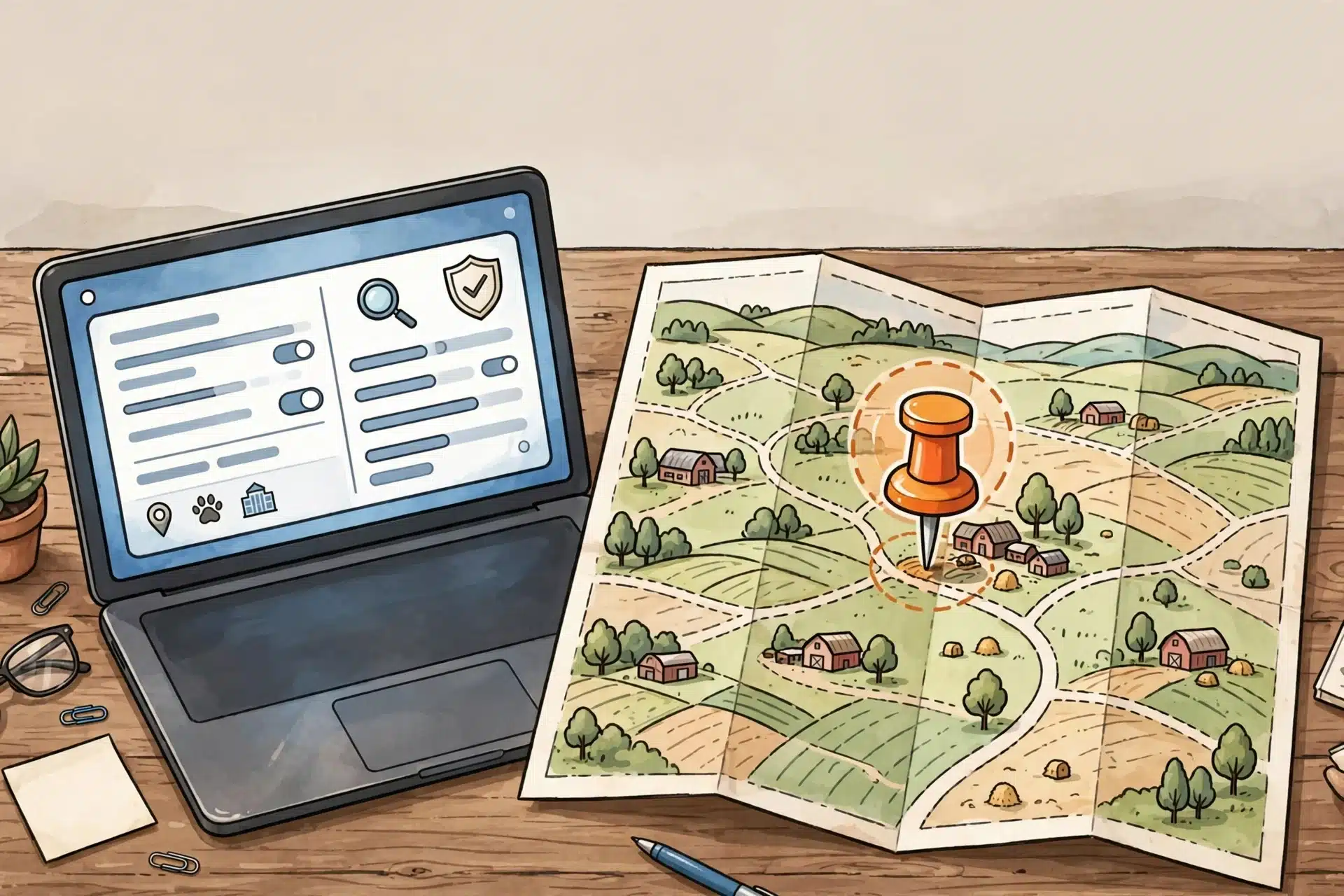
Oklahoma’s Department of Agriculture, Food, and Forestry publishes lists of licensed breeders. Before you trust a match, walk through this quick checklist:
- Confirm the license shows an active or current status, not expired or revoked.
- Match the city, county, or street name to what the seller told you.
- Note that a mailing address can differ from the facility address.
- Check whether the license number appears in the seller’s ads, as Oklahoma requires.
If nothing matches, ask the seller directly. A smaller program with ten or fewer intact females isn’t required to hold this license, so an honest explanation is possible. Silence or a changed story is a red flag.
Also Read: Puppy Temperament Testing Review: Assessing Oklahoma Breeder Reports
Step 3: Confirm the Location Is a Working Puppy Facility
A real address on paper is a start. What you actually want is proof that puppies live, play, and get daily care at that address. Scammers borrow addresses, reuse photos, and refuse live video for a reason, which is why the FTC urges buyers to research the seller’s name, phone, and address before paying anything (FTC consumer advice). This step shows you how to confirm the location is a real, working breeding home, not a mailing drop.
Compare Maps, Photos, and Current Video
Start with three layers of evidence and see if they match.
- Map view. Enter the exact address on Google Maps or Apple Maps. Street View shows you the lot size, buildings, and surroundings. A “rural breeder” whose address resolves to a shopping center is a problem.
- Photos. Ask when each photo was taken. Reverse image search a few puppy photos; if they appear on older listings or other websites, walk away.
- Live video. This is the strongest test. Ask for a real-time video walkthrough of the whelping area, adult dogs, and outdoor space, not a pre-recorded clip. A legitimate breeder will happily do it on the spot. Sellers who only communicate by text or email and dodge calls are a known scam signal.
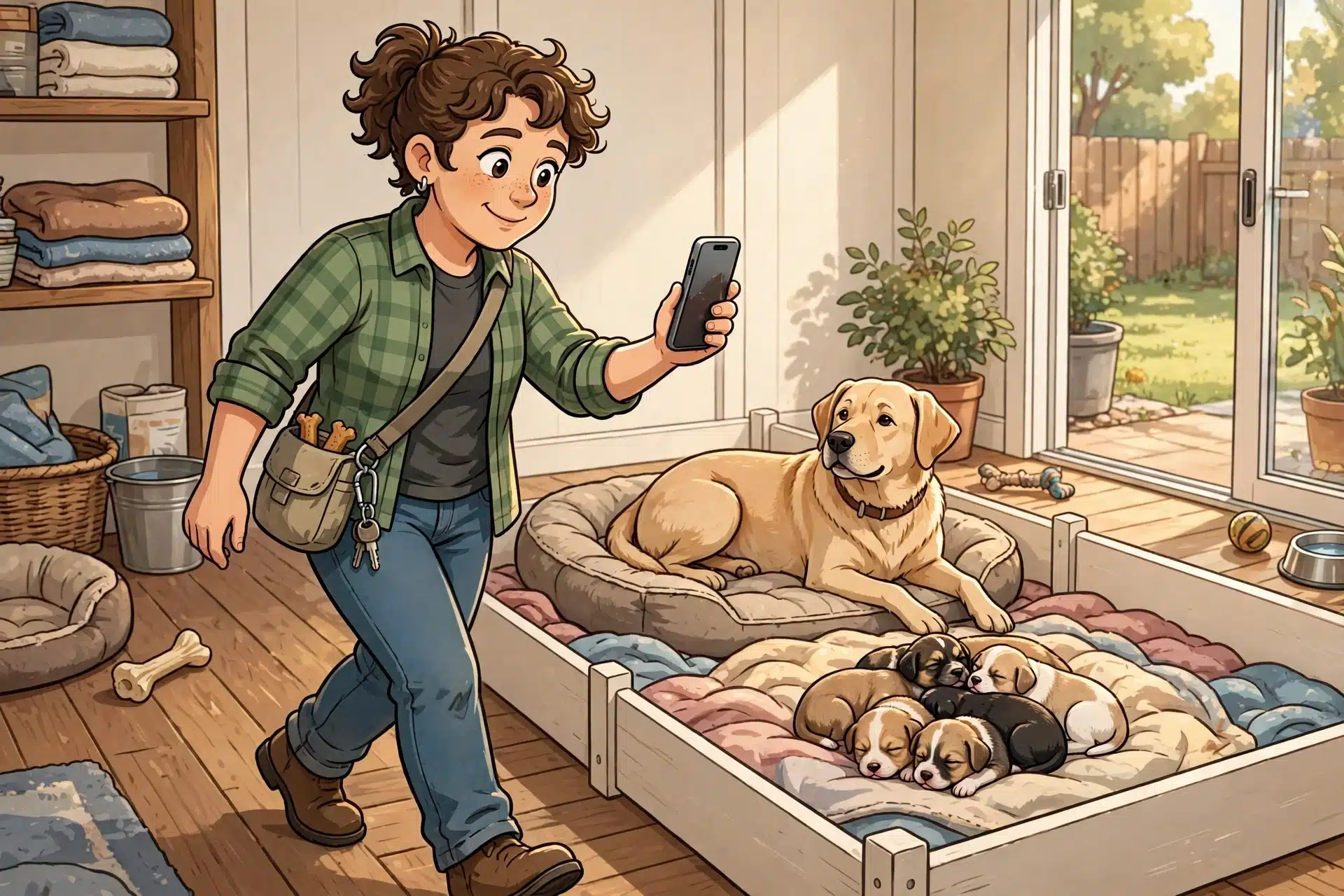
Notice details in the video: fresh water, clean bedding, calm adult dogs, room to move. The AKC notes that real breeders welcome calls and meetings because they have nothing to hide.
Pre-recorded video proves nothing. Insist on live, and ask the breeder to show something current, like today’s date written on a note.
At Sage Puppies, we do scheduled live video tours from our South Jordan home so out-of-state families can see exactly where their puppy is being raised.
Visit Safely When You Can
If you live within driving distance of Oklahoma, an in-person visit settles the question completely. Most ethical breeders encourage it.
Follow these basics for a safe, useful visit:
- Schedule in advance. Breeders with puppies limit visits to protect young immune systems. A planned visit is normal; instant access requests can be unfair to the litter.
- Bring a second person. It is safer, and a second set of eyes catches more.
- Meet during daylight. You want to see the actual living conditions, not a porch conversation.
- Look for the mother. Meeting the dam tells you volumes about temperament and care.
- Watch how puppies respond. Well-socialized puppies approach people with curiosity, not fear.
If you cannot travel, ask the breeder if a trusted third party, such as a vet or a trainer near the facility, can visit on your behalf. Any seller who refuses both an in-person visit and a live video tour is giving you your answer.
The same standard applies to us and to every breeder you consider: a working facility should stand up to an unannounced question, a live camera, and a personal visit.
Step 4: Reconcile the Facility With the Puppy You Are Considering
You confirmed the location exists. Now connect it to the actual puppy. A licensed, tidy facility means nothing if the dog on the website never lived there.
Tie the Puppy to the Seller and Litter
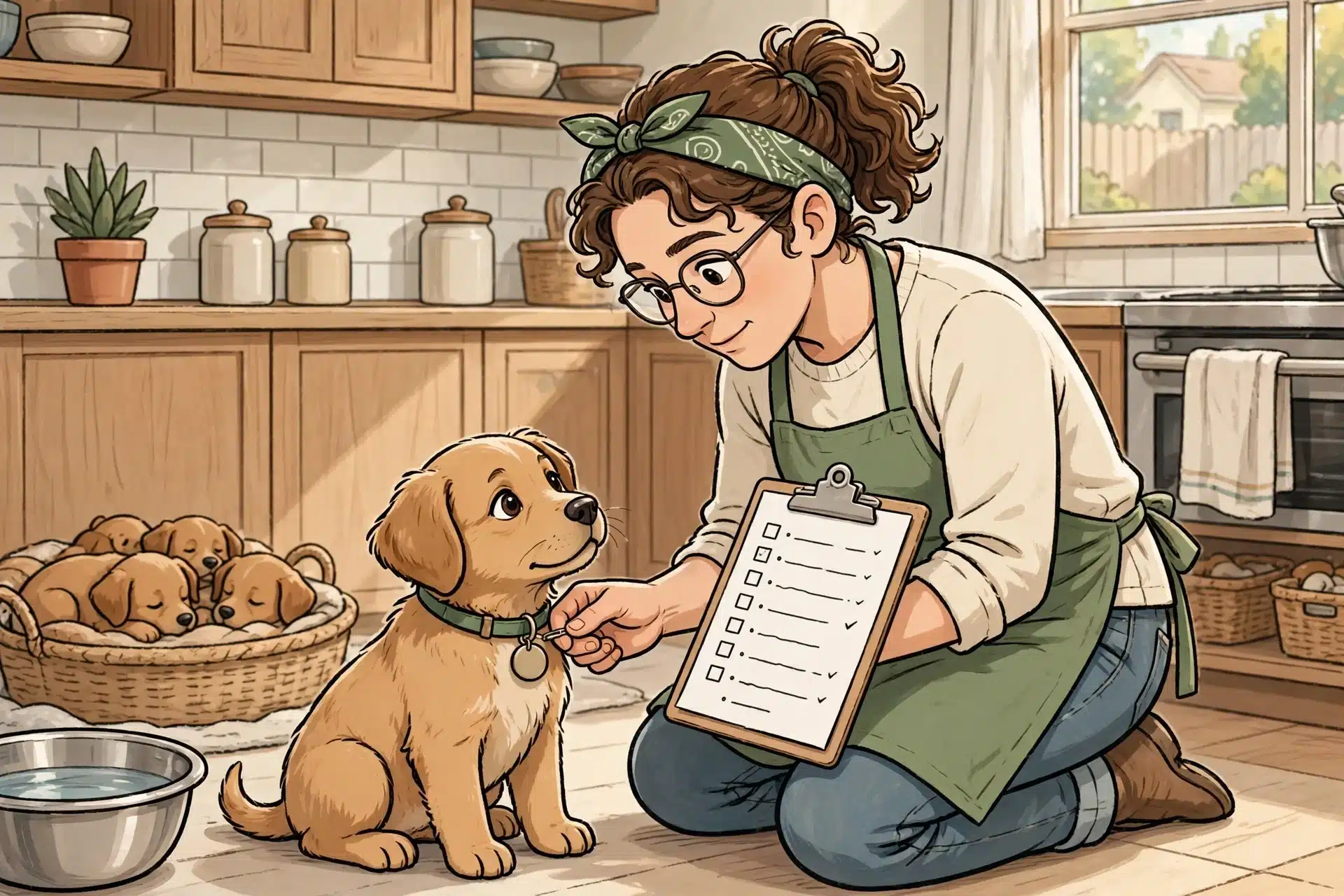
Ask one question: does the trail from facility to puppy hold up? Good breeders keep written records that identify each puppy by breed, sex, date of birth, color, and markings. Federal record rules for dog dealers require exactly this kind of detail, not just a litter count, under 9 CFR 2.75. So ask to see:
- The litter record showing the date the litter was born on the premises
- The dam you can meet, and her connection to that litter record
- Your puppy’s individual ID, whether a collar tag, microchip, or written description
- A bill of sale naming the same breeder who holds the license
If the seller claims to be a family home in Oklahoma City but the paperwork traces to another address, you have your answer.
Separate Location Proof From Health Proof
Location verification and health verification are two different jobs. Passing one does not cover the other. A puppy can come from a real, clean facility and still lack proper vet records. And a puppy with strong health paperwork can be sourced from a broker somewhere else entirely. Check both tracks separately:
| Check | What it proves | What it does not prove |
|---|---|---|
| Facility address matches license | The puppy was raised where claimed | The puppy is healthy |
| Vet exam and vaccine records | The puppy got real care | The records came from that facility |
| Parent health tests | Planned breeding decisions | The puppy lives at that address |
We built Sage Puppies around keeping both trails clean and visible to families, whether they pick up in South Jordan or order delivery out of state. A complete document packet should name the parents, the vet, and the dates so every page agrees.
Also Read: Puppy Care Blog & Resources | Sage Puppies
Step 5: Use a Remote Verification Process if You Cannot Travel
Can’t drive to Oklahoma? You can still verify a seller without leaving home. The FTC says legitimate breeders welcome video visits, so treat a refusal to video chat as a serious warning sign. Here’s how to do it right.
Request a Live, Two-Way Walkthrough
Ask for a video call where you can see and hear each other in real time. Pre-recorded clips and photo galleries don’t count. Scammers reuse stolen photos and dodge live calls, so the real-time format is the whole point.
During the call:
- Ask the seller to walk through the space where puppies eat, sleep, and play.
- Request specific angles on the spot, like “show me the puppy’s face up close” or “step outside the back door.”
- Interact with the puppy live. Ask the seller to pick it up so you can see how it moves.
- Notice small details. Address numbers, a town landmark, or a veterinary certificate with a clinic name help confirm the location matches what you were told.
A confident seller will happily follow along. Hesitation, excuses, or “the camera is broken” means you should keep looking.
Verify Delivery and Handoff Details in Writing
If the logistics check out, get everything in writing before money moves. BBB’s 2025 scam study found that fake sellers often invent extra charges after the deposit, like crates, insurance, or shipping fees. Put the total cost in the agreement so surprises have nowhere to hide.
Your written summary should include:
- The exact pickup location or delivery method, plus who meets the puppy.
- Full price, deposit, and payment method. Pay by credit card, never gift cards, wire transfers, or payment apps.
- Health records, vaccination dates, and vet contact info.
- A named person and phone number you can reach on delivery day.
Sellers who do this well, like the home-raised programs at Sage Puppies, share these details up front because they have nothing to hide.
Also Read: How to Verify a Colorado Puppy Breeder Before Paying
Step 6: Stop When Location Red Flags Do Not Resolve
Most sellers will resolve a small mismatch once you ask. A breeder who moves house, a typo on a form, a kennel name registered to a spouse. Give them one clear chance to explain, then judge the answer. If the location story keeps shifting, walk away. The FTC’s pet scam guidance is blunt about this: if a seller refuses visits, video chats, or even phone calls, move on to someone else.
Identity and Address Red Flags
- The name on the license, website, and payment app does not match.
- The listed address is a PO box, a vacant lot, or a strip mall.
- The county on the address does not match the county on the license.
- Reverse image searches show puppy photos stolen from other sites.
- The seller changes their story about which town the puppies live in.
- Searching the seller’s name plus “scam” or “complaint” turns up patterned reports.
One mismatch is a question. Two or three unresolved ones are an answer.
Access and Verification Red Flags
- They will not do a live video call from the actual puppy area.
- Every video they send is pre-recorded, short, or too dark to see anything.
- They refuse the address or give a different one each time you ask.
- Pickup “can’t happen at the house,” only a parking lot meet.
- They push a deposit before you have verified anything.
- The Oklahoma license number they give does not come up in the state lookup.
Trust the pattern, not the promise. An ethical program like ours welcomes video tours, shares our South Jordan location, and invites pickup – because honest breeders have nothing to hide.
Also Read: 10 Red Flags to Avoid When Visiting a Local Puppy Breeder
Step 7: Record Your Evidence Before Sending a Deposit
Before any money moves, get organized. If something goes wrong, this file is your proof. State consumer protection teams recommend keeping every record of the sale, from screenshots to receipts, so you can document fraud if it happens.
Use a Five-Part Go-or-No-Go Checklist
- Location proof. Save the street address, map screenshots, and any visit or video call that shows the actual facility.
- Breeder identity. Capture the seller’s full name, phone number, and license number, including Oklahoma kennel license details.
- Health records. Request vet exam dates, vaccination records, and parent health testing results before you commit.
- Payment trail. Never pay by gift card, wire transfer, Zelle, or Venmo. These are nearly impossible to reverse, a warning repeated by the FTC’s pet scam guidance. Use a credit card when possible.
- Written terms. Keep the contract, refund policy, and health guarantee in writing, plus every message you exchange.
| Evidence | Why It Matters |
|---|---|
| Address and visit records | Confirms the facility is real |
| Payment receipts | Supports a dispute later |
| Contracts and guarantees | Defines what the seller promised |
At Sage Puppies, we encourage every family to collect these records. A good breeder welcomes it.
Also Read: Oklahoma Puppies: How to Verify Breeder Availability Online
Common Mistakes to Avoid
Even careful buyers slip up on location checks. Watch for these.
- Trusting a mailing address. A PO box or “service area” listing is not a kennel. Oklahoma requires commercial breeders to hold a license for each specific physical location where dogs are kept, and the facility address appears on the application itself, so ask for it directly.
- Accepting a screenshot as proof. Anyone can edit a license image. Ask for the license number and verify it with the Oklahoma Department of Agriculture.
- Skipping the video call. A live walkthrough of the exact space where puppies are raised reveals far more than staged photos.
- Meeting in a parking lot. This hides the kennel, the mother, and the living conditions.
- Ignoring small-scale loopholes. Breeders with fewer than 11 intact females fall outside state licensing, so other evidence standards matter even more.
Avoid these, and the red flags get much easier to spot.

Verification matters no matter where you buy. At Sage Puppies, we invite you to see exactly how we work: home-raised Havanese, Havapoo, and Cavapoo puppies from health-tested parents, with local pickup in South Jordan or nationwide delivery. Browse our available puppies and start your application today.
Frequently Asked Questions
Q1: How can I verify an Oklahoma puppy seller’s physical location?
Ask for the exact street address, then cross-check it on Google Maps street view. Request a live video tour showing the yard and living spaces. A seller who hesitates at either step likely isn’t who they claim.
Q2: What are red flags for fake Oklahoma puppy breeders?
Watch for meeting “halfway” at parking lots, stock photos, refusal to show the mother, multiple litters always available, and payment by gift cards or wire transfer. These signals almost always point to a broker or scam.
Q3: How to check if an Oklahoma puppy seller is licensed?
Search the Oklahoma Department of Agriculture’s commercial pet breeder license database. Licensed facilities display a license number and are subject to facility inspections tied to that specific address.
Q4: Should I visit in person before buying?
If you’re within driving distance, yes. Seeing the puppy’s home, parents, and living conditions is the strongest proof of an ethical setup.
Q5: Can I safely buy an Oklahoma puppy remotely?
Yes, but require video calls at the breeder’s address, health records, and references. At Sage Puppies, we offer guided video tours and nationwide delivery with clear pickup details at every step.
Conclusion
Verifying a seller’s physical location comes down to a few hard facts: a real street address, an ODAFF license number that matches that facility, and evidence the dogs actually live there. Oklahoma’s rules help you here – each breeder must license every facility separately and pass a pre-license inspection before the state issues a license. So a mismatch between the license and the address is a real red flag. Visit in person or request a live video tour, and keep the same standard whether you pick up locally or arrange delivery to Utah. Small, home-raised programs make this easy – large-scale operations rarely do.



