Quick Summary: Pick a Cavapoo when your family wants a calmer, smaller companion around 9 to 18 pounds, needs only two 30-minute walks a day, and prefers a cuddly lap dog that suits toddlers or first-time owners. Pick a Cockapoo when your household is active, has school-age kids who love fetch, and can commit to 45 to 60 minutes of daily exercise with a sturdier dog up to 25 pounds. Both mixes shed little, train quickly, and live 12 to 15 years, so matching the dog’s energy and alone-time needs to your real weekly routine matters more than the breed label. Cavapoos from Sage Puppies in South Jordan, Utah come pre-screened on parent health, which gives them a real edge on the Cavalier side’s heart and spine risks.
Quick verdict: in a Cavapoo vs Cockapoo for families matchup, the Cavapoo usually wins for a household that wants a calm, cuddly companion and a steady routine. The Cockapoo usually fits an active family that wants a sportier, playful dog. Your energy level, your kids’ ages, and how long the dog will be alone each day decide it.
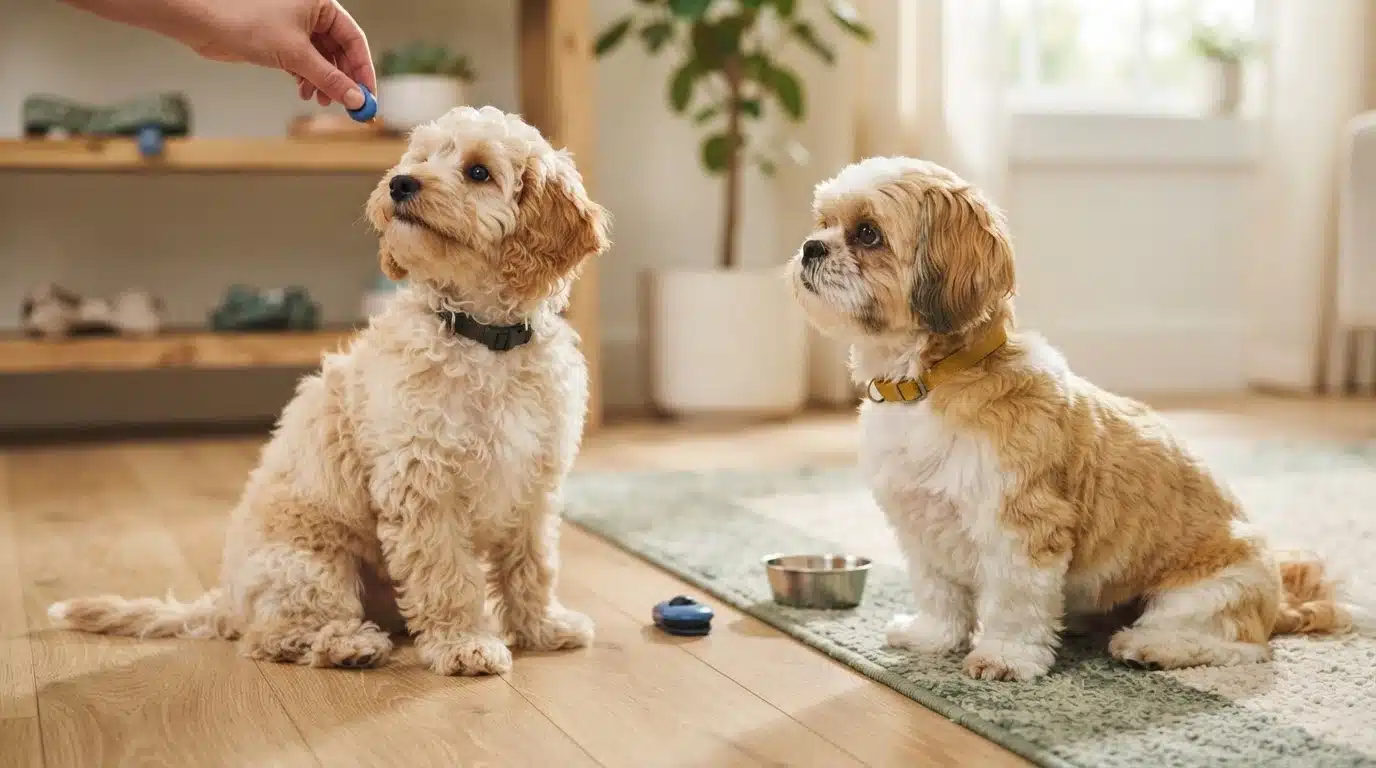
Both are small, low-shedding Poodle mixes that look alike in photos. That’s the trap. Families pick from a picture and then meet a very different dog at home.
This guide covers the seven differences that change daily life most, matches each one to real household scenarios, and ends with a fit-check for your actual week. It draws on what we see every day raising Cavapoo puppies at Sage Puppies in South Jordan, Utah.
Cavapoo vs Cockapoo for Families: At a Glance
| Cavapoo | Cockapoo | |
|---|---|---|
| Parent breeds | Cavalier King Charles Spaniel x Poodle (toy or miniature) | Cocker Spaniel x Poodle (toy or miniature) |
| Adult size range | Usually small; many fall around 9 to 18 lb | Small to medium; many fall around 12 to 25 lb |
| Typical energy level | Moderate; daily walks and play, then a long cuddle | Moderate to high; enjoys longer walks, games, and training sessions |
| Temperament with kids | Gentle, affectionate, people-oriented; tends to enjoy calm handling | Playful, social, often great with active kids who respect the dog |
| Shedding and grooming | Low to moderate shedding; brushing a few times a week and routine trims | Low to moderate shedding; similar brushing and routine trimming needs |
| Family-fit match | Calmer households, families wanting a close companion, often good for first-time owners | Active families, homes that enjoy outdoor time, kids who like to play |
| Common health watch areas | Heart screening from the Cavalier side, hip and knee concerns, ear care | Ear health, eye screening, allergies, hip concerns |
How Cavapoo and Cockapoo Compare
Cavapoo
The Cavapoo crosses a Cavalier King Charles Spaniel with a toy or miniature Poodle. It suits calm households and first-time owners who want a soft, people-oriented companion. In the cavapoo vs cockapoo for families question, this is the gentler, lower-key option. Many weigh around 9 to 18 lb as adults.

Key strengths
- Gentle, affectionate temperament with kids
- Moderate energy with a love of cuddles
- Often a great fit for first-time dog owners
Cockapoo
The Cockapoo crosses a Cocker Spaniel with a toy or miniature Poodle. It tends to bring more bounce, which works well for active families and kids who love to play. Most fall between 12 and 25 lb, so some run a bit sturdier. Expect a social dog that thrives on walks, games, and training.

Key strengths
- Playful, social nature with active kids
- Higher stamina for outdoor family time
- Similar low-shedding coat, easy to groom on a routine
Temperament and How Each Breed Acts With a Family
Both crosses tend to be affectionate, but the parent breeds shape how that shows up at home. The Cavalier parent is a gentle companion breed, so a Cavapoo usually wants to be wherever the family is. The Cocker parent adds a playful, sporting streak, so a Cockapoo often brings more energy and a stronger interest in games and fetch.
What the Cavalier and Cocker Parent Breeds Bring
The American Kennel Club describes the Cavalier as sweet, gentle, and affectionate, and friendly with strangers and other animals. Cavaliers were bred to be companions, so they seek out laps and soft beds. Cockers were bred to work alongside hunters, which gives Cockapoos a busier, more game-driven temperament.

Toddlers, School-Age Kids, and Older Children
Both breeds can do well with respectful children, but the fit differs. A Calm Cavapoo often suits a toddler household, because the dog is less likely to knock over a wobbly two-year-old during play. The tradeoff is companionship: Cavaliers struggle with long hours alone, so a parent always working from an office may see more stress behaviors. A Cockapoo suits school-age kids who want a playmate. Older children can channel that energy into fetch, short training games, and family walks. Neither breed is a toy. Supervise all dog-and-toddler time, and teach kids to pet gently and give the dog space while eating or sleeping.
Multi-Pet Homes and Meeting New People
Cavapoos usually accept other pets easily and greet guests warmly, which suits busy households. Cockapoos are also friendly, but their higher energy can overwhelm a quiet cat or a shy visitor. Early socialization smooths both.
Energy, Exercise, and How Busy Your Week Will Be
Both breeds are small companion dogs, but they do not ask for the same week. Cockapoos generally need more movement, often 45 to 60 minutes a day, while Cavapoos settle for less, with two 30-minute sessions a day covering most of their needs.

A Realistic Weekly Routine for Each Breed
A Cavapoo week looks like a morning walk, a short afternoon play session, and easy evenings. Around 30 to 45 minutes of activity most days keeps them content. A Cockapoo needs a bit more planning: brisk walks, fetch, and games that work the brain. Aim for 60 minutes or more of real activity daily, split across two outings.
Working Parents and Alone-Time Planning
Neither breed is built to spend nine hours alone every day. Cavapoos are usually content to nap between your absences if you cover a midday break. Cockapoos tend to get restless sooner, so they need that midday outlet even more. A dog walker, a lunchtime visit from a neighbor, or a doggy day-care day makes the difference between a tired dog and a chewed baseboard. Puppies of both breeds need far more company than adults do.
Weekend Adventures: Hikes, Backyards, and Quiet Days
Cockapoos make better trail partners and usually want the longer hike. Cavapoos enjoy a shorter outing, then a lazy afternoon. If your weekends lean quiet, the calmer Cavapoo fits more easily. If they lean outdoorsy, the Cockapoo will happily keep pace.
Trainability and How Each Puppy Learns at Home
What the Poodle Side Gives Both Breeds
Both mixes inherit sharp minds from the Poodle parent, so training goes faster than with many small breeds. The difference is motivation. Cavapoos work to please you, while Cockapoos often want a game or a treat in return. Both learn quickly with short, positive sessions, as Petplace notes.
Everyday Obedience in a Household With Kids
Picture school mornings with cereal on the floor and a backpack missing. A Cavapoo usually watches you and waits for direction, which helps when kids open doors or drop food. A Cockapoo may treat the chaos as an invitation to play, so it needs more practice settling on cue. Teach one household rule set that every family member uses, and both breeds catch on. Keep sessions under five minutes and let the kids run them.
Barking, Chewing, and Bored-Behavior Cues
Both breeds chew and bark when under-stimulated, but the triggers differ. A bored Cockapoo invents jobs, like digging at the couch. A Cavapoo leans toward attention barking. Rotate puzzle toys, and set up a simple potty and routine plan like the one in our small breed puppy potty training guide to prevent setbacks.
Shedding, Grooming, and What Coats Mean for Allergy-Prone Homes
Coat Types and What “Low Shedding” Means in Practice
Both breeds usually inherit the Poodle’s low-shedding coat, but the range runs from curly to straight. Curly coats shed the least because loose hair stays trapped, while wavy coats shed a little more and straight coats can shed noticeably. Thanks to their Poodle parentage, some Cavapoos stay low-shedding and others do not, so judge the puppy, not the breed name.
Brushing, Bathing, and Professional Grooming
Low shedding still means real work. Plan on brushing three to four times a week to prevent mats, since trapped hair tangles fast near the ears and collar. Most families book a professional groom every six to eight weeks for a trim, nail care, and a bath. Skipping the brushing between visits is what turns a fluffy puppy into a matted one.

Allergies at Home: Honest Expectations
No dog is truly hypoallergenic, and reactions come from dander and saliva, not just hair. Spend time with the exact puppy before committing, and keep the dog out of the child’s bedroom as a test period. Our guide to the Cavapoo coat for allergy sufferers explains how generations affect shedding.
Health and Lifespan: What Each Parent Breed Contributes
Both mixes tend to be sturdy, but each parent breed passes down its own risks. Knowing them helps you screen breeders with better questions.

What Comes From the Cavalier Side vs the Cocker Side
The Cavalier side brings the bigger concerns. Myxomatous mitral valve disease, a heart valve problem that worsens over time, and syringomyelia, a fluid-filled condition of the spinal cord, are both inherited traits in Cavaliers, according to ACKCSC’s health overview. The Cocker side adds ear infections, because long, floppy ears trap moisture, plus eye conditions like progressive retinal atrophy. Neither issue should disqualify a puppy, but both should shape what you ask for.
Screening Questions to Ask Any Breeder
Ask these five questions and listen for specifics:
- Are both parents’ hearts cleared by a board-certified cardiologist?
- Have parents been MRI-screened for syringomyelia?
- Are eye exams current, and do parents have hip and patella checks?
- Can you see the actual health test results, not just a promise?
- What happens if a genetic condition appears later?
A breeder who answers easily and shows documents is a good sign. Vague answers are not.
Lifespan and Long-Term Planning
Both mixes commonly live 12 to 15 years. Plan on a small dog who stays with your family well into your kids’ teens, which makes early health screening worth every question.
Cost, Care Costs, and What a Family Should Really Budget
Purchase Price Ranges and What Drives Them
Expect to pay roughly $1,500 to $4,000 for a well-bred puppy of either mix, per Petful’s 2026 price guide. Coat color, parent health testing, and breeder experience move the number more than the breed choice does. Sage Puppies prices its Cavapoo puppies between $3,500 and $4,500, which reflects health-tested parents and hands-on raising.
Year-One and Lifetime Cost Categories
The purchase price is only the start. Budget for vet visits and vaccines, spay or neuter, food, a crate, gear, grooming every six to eight weeks, and pet insurance. Rover estimates a small dog’s lifetime care at about $19,840, and with a 12 to 15 year lifespan, both mixes land in that range. For a deeper breakdown, see the Cavapoo puppy price guide.
When Adoption or Rescue Makes Sense Instead
If the upfront price stretches your budget, rescue is worth a look. Breed-specific doodle rescues occasionally have Cavapoos and Cockapoos, though adult temperament history varies. You trade predictability for lower cost, which suits calmer homes with patient kids.
Home, Apartment, and Household-Fit Scenarios
Both mixes fit most homes. The real question is how your daily space and routine match each dog’s energy and need for company.
Apartments, Condos, and Close Quarters
A Cavapoo usually wins here. It’s smaller, calmer, and content with two 30-minute walks, which suits a third-floor walkup. Bark training still matters, because both mixes can get vocal when bored. If your family has a toddler and a smaller living room, the Cavapoo’s gentler energy is the easier fit.
Houses With Yards and Suburban Setups
A yard flatters the Cockapoo. School-age kids who love fetch, weekend hikes, and 45 to 60 minutes of daily activity all line up with its sporting spaniel side. A fenced yard helps, but it doesn’t replace walks or playtime. Either mix thrives here, so let family energy level make the call.
Households That Are Home vs Out Most of the Day
Both mixes are companion dogs, so long solo hours are hard on either one. A Cavapoo may cope with a calmer, partly-home household, while a working family should plan dog walkers or midday visits before choosing either puppy.
Both mixes can be wonderful. The right pick depends on your kids’ ages, your schedule, and how much daily movement your household can honestly give a dog.
Choose a Cavapoo If Your Family Looks Like This
A Cavapoo fits households with toddlers or preschoolers, calmer homes, and first-time owners. If two 30-minute walks a day sound realistic, and you want a smaller lap-size companion around 9 to 18 pounds, this gentle mix is the easier match.
Choose a Cockapoo If Your Family Looks Like This
A Cockapoo suits school-age kids who love fetch, weekend hikers, and busier families. If you can commit 45 to 60 minutes of daily activity and don’t mind a sturdier dog up to 25 pounds, its playful sporting side shines.
Next Steps for Families Leaning Cavapoo
List your household’s real energy level, then compare it honestly with each mix’s needs. Review our Cavapoo guide for temperament details, and browse our /available-puppies/ page to see current litters. When a puppy feels right, start the application early.

If a smaller, gentler companion fits your family best, a Cavapoo may be the match. See our available puppies and pricing at Sage Puppies, or start an application to talk through your family’s routine with Cassie.
Frequently Asked Questions
Q1: cavapoo vs cockapoo family differences
Cavapoos suit calmer households with toddlers and first-time owners. Cockapoos fit active families with school-age kids who can give 45 to 60 minutes of daily activity.
Q2: Which breed is better for a toddler household?
A Cavapoo. Its gentler energy and smaller size mean less chance of knocking over a wobbly two-year-old during play.
Q3: How much exercise does each mix need?
Cavapoos do well with two 30-minute sessions daily. Cockapoos need 45 to 60 minutes or more, split across two outings.
Q4: Are either of these mixes truly hypoallergenic?
No. Both shed less, but reactions come from dander and saliva too. Spend time with the exact puppy before committing.
Q5: How long do Cavapoos and Cockapoos live?
Both commonly live 12 to 15 years, so plan for a companion well into your kids’ teens.
Q6: Which breed handles being alone better?
Neither handles nine-hour days well. A Cavapoo may cope with a midday break; a Cockapoo needs that midday outlet even sooner.
Summary
The Cavapoo vs Cockapoo decision comes down to your household’s real rhythm. Choose a Cavapoo if you have toddlers, a calmer home, or less time for exercise, since these 9 to 18 pound companions thrive on two 30-minute walks and plenty of cuddles. Choose a Cockapoo if school-age kids want a playful fetch partner and your family can give 45 to 60 active minutes a day. Both mixes shed less, learn fast, and live 12 to 15 years, so neither is a wrong pick. Match the dog’s energy and alone-time needs to your honest weekly schedule, screen breeders on health testing, and the right puppy will fit your family for years.