
Quick Summary: Ask breeders about health testing, socialization, and their support after bringing home a puppy. Verify records, visit the environment if possible, and ensure clear contracts that prioritize the dog’s welfare. Responsible breeders answer tough questions openly and focus on long-term care, helping families make confident choices.
If you are comparing Colorado puppy breeders for a Havanese, Havapoo, or Cavapoo, start with the litter behind the photos, not the puppy’s color or how soon one is ready. The real questions are about health testing, early socialization, and the contract you will sign.
That is where many families get stuck. Listings can look polished, but they often leave out the details that matter most. Good Puppy Buyer Tips help you spot what is clear, what is vague, and what needs a direct follow-up. Strong Puppy Adoption Questions can save you from a rushed choice.
This guide walks you through the Dog Breeder Questions that matter most, including testing, parent dogs, home care, pickup or delivery, and breeder support after you bring your puppy home. These Puppy Buyer Tips are built for real family conversations, not guesswork.
At Sage Puppies, we focus on ethically raised Havanese, Havapoo, and Cavapoo puppies, so these Puppy Buyer Tips come from the standards serious families should expect.
What a Responsible Breeder Should Be Ready to Explain
A good breeder should answer hard questions without getting vague, rushed, or defensive. If they know their dogs well, that shows up fast.
Ask about the breeder’s experience with the breed
Start with breed knowledge, not just years in business. Ask why they chose this breed, what health issues they watch for, and what traits they are trying to improve. A serious breeder should explain:
- common temperament patterns
- coat and grooming needs
- likely size range
- breed-specific health testing
The AKC notes that health testing should follow each breed parent club’s guidance through its breed health testing requirements.
| Ask This | Strong Answer Sounds Like |
|---|---|
| Why this breed? | Clear reasons tied to temperament, structure, and family fit |
| What do you test for? | Specific tests, records, and why they matter |
| What puppies fit first-time homes? | Honest, nuanced answer, not “all of them” |
Ask what they look for in a puppy home
A responsible breeder should screen you, too. That is a good sign. They should ask about your work schedule, kids, yard, past dog experience, and what kind of companion you want. If they never ask, they may care more about payment than placement.
A breeder who says yes to every buyer is not being careful.
Look for a matching process like this:
- learn your home routine
- explain the litter’s temperaments
- suggest the best puppy fit
- say no if the fit is wrong
Programs like AKC Bred with H.E.A.R.T. stress health, education, accountability, and responsibility, which is the mindset you want.
Ask how they support buyers after pickup
Support should not stop at pickup or delivery. Ask what happens if feeding, sleep, crate training, or adjustment gets rough in week one. Good breeders usually offer:
- transition guidance
- food and routine notes
- help reading early behavior
- a clear return policy if life changes
At Sage Puppies, that kind of calm, ongoing support matters because first-time families often need real help, not just paperwork.
Also Read: https://sagepuppies.com/havapoo-vs-cavapoo-for-california-families
Which Health Testing Questions Matter Most
Ask about parent testing first. Puppies are too young for many inherited disease screens, so your best clue is the health work done on the sire and dam.
Which tests were done on the parents and why?
A good breeder should name the exact tests, not just say “they’re health tested.” Ask for both DNA tests and exam-based clearances such as eyes, heart, hips, or patellas if those fit the breed or line. The AKC notes that breeders should focus on tests that are relevant to the breed, not random giant panels, and parent club guidance helps set that list breed-specific health testing recommendations.
Use this quick check:
| Ask this | Good answer sounds like | Red flag |
|---|---|---|
| What tests were done? | Names each test clearly | “Everything” with no detail |
| Why those tests? | Ties tests to breed risks | “That’s what our vet said” |
| Were both parents tested? | Yes, sire and dam | Only one parent tested |
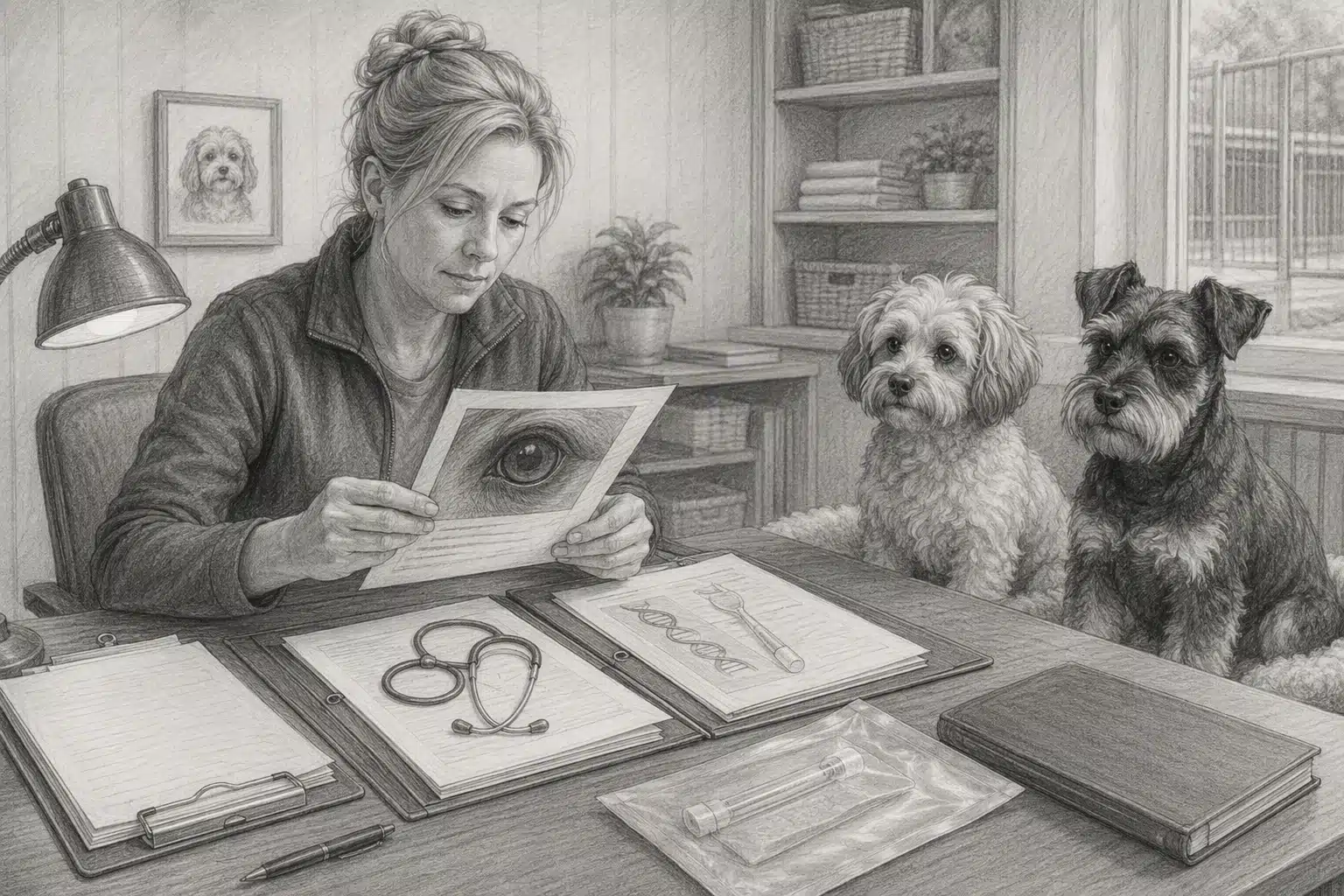
Can I see the actual results or clearances?
Say this plainly: “Can you send the actual records?” You want certificates, lab reports, or public database entries. OFA tells puppy buyers to ask for proof and be cautious if results cannot be verified OFA breeder interview guidance.
A verbal “clear” is not enough. Real breeders expect this question.
Look for:
- The dog’s registered name or microchip match
- The date of the test
- The result itself, not a summary screenshot
- Records for both parents, even if one lives elsewhere
If a breeder hesitates, changes the subject, or says results are private, pause the process.
What health issues appear in the line, and how are they managed?
This question matters because even careful lines can have issues. What you want is honesty and a plan. A strong breeder can tell you what has shown up, how often, and what they changed in future pairings.
Ask for:
- Eye issues
- Luxating patellas
- Heart concerns
- Allergy or skin patterns
- Digestive sensitivity
- Temperament-linked health concerns
No line is perfect. The safer answer is not “never had anything.” It is “here’s what we track and how we breed to lower risk.”
For families comparing programs, this kind of openness usually tells you more than polished puppy photos ever will.
Also Read: https://sagepuppies.com/florida-puppy-pickup-guide-for-safe-in-person-handover
How to Evaluate Socialization and Early Development
Ask for specifics, not vague claims like “very social.” Good breeders can explain what puppies see, hear, and do each day. The key window starts early. According to the AKC puppy socialization guide, the first three months help shape how a puppy reacts to the world later.
How are the puppies handled and introduced to everyday life?
Ask whether puppies are handled by adults, older kids, and gentle visitors. You want calm, regular contact, not random chaos.
Look for exposure to:
- normal home sounds
- different floor textures
- grooming tools
- short crate time
- car rides
- supervised outdoor time
A breeder should tell you how they keep new things positive and never force a scared puppy through overwhelm.
| Good answer | Weak answer |
|---|---|
| “We introduce sounds, surfaces, and handling in small steps” | “They’re around people a lot” |
| “Each puppy gets one-on-one time” | “They mostly stay with the litter” |

What is the puppy’s routine before going home?
A solid routine matters as much as affection. Ask what the day looks like from morning to night. Puppies do best with a pattern of meals, naps, potty starts, play, and rest.
Use this checklist:
- Feeding on a set schedule
- Clean sleep area
- Early potty habit building
- Short separation practice
- Gentle grooming and body handling
Texas A&M notes that positive exposure to toys, leashes, brushes, short car rides, and safe new settings helps puppies build confidence during early growth socialization timeline.
What should I ask about temperament and match?
Ask how the breeder decides which puppy fits your home. The right breeder watches each puppy over time, not just on pickup day.
Ask:
- Which puppy is more easygoing?
- Which one bounces back fast after surprise?
- Which one prefers people over rough litter play?
- Which one suits kids, retirees, or first-time owners?
Good matching is about energy, confidence, and recovery, not coat color first.
If you want a calmer companion, a thoughtful program like Sage Puppies should be able to explain why a puppy fits your home.
Also Read: https://sagepuppies.com/havapoo-puppies-near-los-angeles-how-to-choose-a-reputable-breeder
What to Confirm About Vaccinations, Vet Care, and Records
Ask for specifics, not vague answers. According to AAHA canine vaccination guidance, core puppy vaccines include distemper, adenovirus, parvovirus, leptospirosis, and rabies by law and age.
What vet care has the puppy already received?
Confirm each item in plain writing:
- Exam date and clinic name
- Vaccines already given
- Deworming or parasite care
- Any illness, injury, or treatment
- Whether the puppy has a health issue being watched
A good breeder should tell you what was done, when, and what is still due. If they say “up to date,” ask for the exact products and dates.
A vaccine record is not the same as “fully vaccinated.” Many puppies still need follow-up shots after pickup.
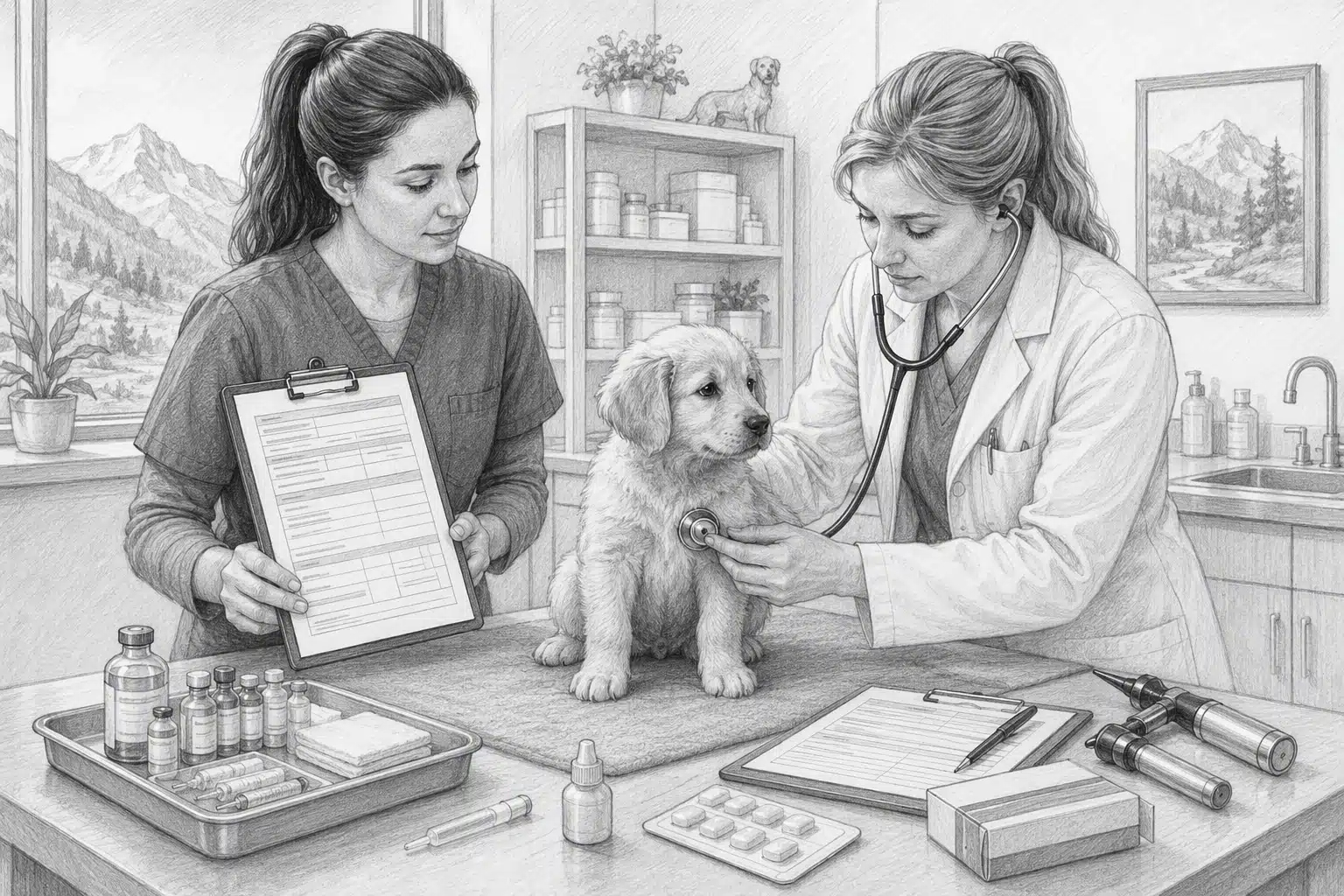
What paperwork should I receive at pickup?
You should leave with organized records, not promises to send them later.
| Record | Why it matters | What to check |
|---|---|---|
| Vaccine record | Shows timing and products used | Dates, stickers, signatures |
| Vet exam note | Confirms recent health check | Exam date and findings |
| Deworming record | Tracks parasite care | Product names and dates |
| Microchip info if applicable | Helps with registration | Chip number matches paperwork |
If available, ask for feeding notes and the breeder’s routine. AAHA life stage guidance also notes fecal testing is part of puppy preventive care in the first year.
What follow-up care does the breeder recommend?
Ask for a simple next-steps list:
- Your next vaccine due date
- When to book your first vet visit at home
- What food the puppy is eating now
- Any stress, stool, or appetite signs to watch
Clear follow-up advice usually signals a breeder who plans beyond pickup, which is what careful families want.
What the Contract Should Actually Protect
A good puppy contract should protect the dog first, then set clear duties for both sides. The American Kennel Club notes that strong breeder agreements put obligations in writing and often focus on the puppy’s lifelong welfare, not just the sale itself (AKC contract guidance).
What does the health guarantee cover?
Ask for the exact terms in plain English. A real health guarantee should spell out:
- What conditions are covered
- How long coverage lasts
- What proof is required
- What remedy applies – refund, replacement, or partial credit
It should also match the records you receive at pickup. USDA APHIS requires regulated facilities to keep written veterinary care plans and medical records for dogs, including vaccination and exam schedules (USDA APHIS veterinary care rules).
If the guarantee sounds broad but the remedy is vague, slow down.
Is there a return-to-breeder expectation?
This clause matters more than most families think. If life changes, the contract should say the breeder must be contacted before the dog is rehomed, surrendered, or sold.
That protects the puppy from ending up in a shelter or passed around online.
Look for terms like:
- Return to breeder at any age
- No resale without notice
- Transfer process and records required

A breeder who wants the dog back if needed usually thinks long term.
Are there spay/neuter, registration, or care requirements?
Many contracts include pet-only terms. These often cover:
- Spay/neuter timing
- Limited registration
- Routine vet care
- Safe housing and exercise
- Microchip updates
Those rules are not always red flags. They can show the breeder is trying to prevent careless breeding and poor placement. Still, every rule should be specific, reasonable, and easy to follow. If a clause feels one-sided or hard to explain, ask for it in writing before you sign.
Also Read: Health-Tested Puppies for Sale Near Me: Questions to Ask Breeders
Questions That Help You Verify the Breeder’s Reputation
A breeder’s reputation shows up in how they answer simple, direct questions. Ask for proof, not polished promises. The BBB puppy scam update warns that fake or misleading sellers often use glowing reviews while avoiding real contact and clear details.
- Can I speak with past puppy families?
Ask for two or three recent families, not hand-picked quotes on a website. Good questions:
- Did the breeder stay in touch before pickup?
- Was the puppy as described?
- Were health records and contract details clear?
If a breeder refuses references or only offers screenshots, pause. A strong program should have happy families willing to share a short, honest experience.
- Does the breeder share the environment openly?
Ask to see where puppies are raised and where the mother lives. If you cannot visit, ask for a live video call. The Michigan consumer alert on puppy scams says not to buy sight unseen and warns against sellers who avoid showing the premises or want to meet only in a public place.
A breeder can protect privacy and still be transparent. Clear answers matter more than perfect staging.
- Do they have a clear process and timeline?
Reputable breeders can explain each step in order:
- application
- approval
- deposit
- match timing
- pickup or delivery
- go-home records
Use this quick check:
| Question | Good sign | Red flag |
|---|---|---|
| References | Recent families available | Only written testimonials |
| Home setup | Open explanation of raising area | Vague or defensive answers |
| Timeline | Clear steps and dates | Changes often or feels rushed |
Also Read: https://sagepuppies.com/how-to-find-a-reputable-havapoo-breeder-serving-california
Ask Better Questions, Choose with Confidence
The right breeder will answer clearly, show proof, and ask you questions too. The AKC says responsible breeders should discuss health testing, let you meet the mother when possible, and avoid sending puppies home before eight weeks in most cases according to AKC guidance.
Use this quick checklist:
- Ask for breed-specific health test results
- Ask where the puppies are raised
- Ask how they handle early socialization
- Ask what happens if you cannot keep the puppy
- Ask for the full contract before you place a deposit
OFA also advises buyers to verify records, visit if possible, and trust hesitation as a warning sign in its breeder interview guide.
A good breeder welcomes careful questions. A rushed seller avoids them.
Also Read: 10 Questions to Ask Before Buying a Puppy Locally

If you want a breeder who welcomes careful questions, start with Sage Puppies. Their family-first process, health-tested parent dogs, early socialization, and clear pickup or nationwide delivery options make it easier to compare with confidence. Review available puppies, pricing, and how it works, then submit an application when you’re ready.
Frequently Asked Questions
Q1: What key questions should I ask Colorado puppy breeders regarding health testing and genetic clearances?
Ask which breed-specific tests both parents completed, who reviewed results, and whether you can see records before placing a deposit. Also ask about family history, eye and heart checks, and what happens if a genetic issue appears later.
Q2: How can I verify a Colorado breeder’s reputation and responsibility before buying a puppy?
Check reviews, ask for recent buyer references, and look for clear answers about pickup, delivery, contracts, and vet care. A good breeder welcomes questions, shows where puppies are raised, and never pressures you to send money fast.
Q3: What questions about socialization and early training should I ask Colorado breeders for puppies?
Ask how puppies meet people, hear home sounds, start crate routines, and learn gentle handling. You should also ask what the breeder is doing between weeks 3 and 8, since that window shapes confidence and recovery from stress.
Q4: Should I ask to meet the puppy’s parents?
Yes, or at least the mother if the sire lives elsewhere. Parent temperament matters. Ask how each parent acts with strangers, kids, and noise. Calm, friendly parents often give you a better clue than cute puppy photos.
Q5: What deposit and waitlist questions matter most?
Ask if deposits are refundable, when puppy choice happens, and what could change your place. Get every detail in writing. > If the breeder avoids simple money questions, treat that as a warning sign and keep looking.
Conclusion
The best breeder conversations are simple. Ask for proof, not promises. You want clear health testing, honest answers about the parents, early social care, and a contract you understand. If a breeder avoids questions, rushes your deposit, or will not show records, move on.
Colorado families should also know the state keeps rules for licensed pet animal facilities through PACFA, including licensing and inspection standards under Colorado regulations. That matters, but good buyers still need to verify details themselves. Responsible breeding also means home-raised care, transparency, and thoughtful placement, which aligns with the ASPCA criteria for responsible breeding. The right puppy starts with the right questions.



