
Quick Summary: Ask detailed questions about a breeder’s health testing, living conditions, and parent temperament before buying a puppy in California. Look for clear records, honest answers, and a willingness to meet the parents. Responsible breeders provide thorough documentation, screen buyers, and support families after the sale, helping ensure a healthy, well-socialized puppy.
If a California breeder cannot plainly tell you which health tests the parents passed, what shots and worming the puppy already had, and whether the sale comes with a written disclosure, pause right there. That gap matters. Good breeders expect these Puppy Buyer Questions and answer them with clear records, not vague promises.
That is the hard part for many families. Breeder websites can look polished, but first-time buyers still struggle to tell real care from smart marketing. In California, that gets even more important because disclosures, health details, and timing around a sale can affect what you agree to before you bring a puppy home.
This guide helps you sort strong answers from weak ones. You will get practical Puppy Buyer Questions to ask before you place a deposit, plus the Puppy Breeder Questions that reveal how a litter was raised, how health was tracked, and whether the breeder is open about paperwork, pickup, and support.
We work from the standards careful families already use when comparing ethical, family-raised puppies, including the kind of health-first approach trusted breeders follow with small companion breeds. These Puppy Buyer Questions also reflect real Dog Breeding Tips that help you judge transparency, temperament, and fit. If you want the wider checklist, start with our parent guide on choosing a reputable breeder, then use this California-focused version before you reserve.
1. Start With the Questions That Reveal Whether the Breeder Is Legitimate
Ask who bred the litter and where the puppies were raised
Start here because vague answers usually mean trouble. Ask, “Did you breed this litter yourself?” and “Where were these puppies born and raised?” You want a clear, direct reply.
A good breeder should tell you:
- who owns the mother
- whether they also own the father
- the exact home, nursery, or kennel space where puppies spend their first weeks
- who handles daily feeding, cleaning, and social time
California buyers should also ask for the written source and health disclosures required at sale. Under California’s 2026 rules, sellers must disclose the breeder, the dog’s origin, and basic health and treatment records, and contracts cannot require a nonrefundable deposit for a California purchaser under AB 506 and the related code text.
If the seller dodges basic origin questions, offers to meet only in a parking lot, or cannot explain where the litter lived, pause right there.
| Question to ask | Good sign | Red flag |
|---|---|---|
| Who bred this litter? | Same person selling answers clearly | “A partner handled that” with no details |
| Where were puppies raised? | Specific home or facility description | Vague or changing story |
| Can I see records? | Shares them willingly | Says records come later |

Ask to meet the mother and learn about the parents’ temperaments
You may not always meet the father, but you should ask about both parents’ temperaments. The mother matters most because her behavior shapes the puppies every day.
Ask:
- Can I meet the mother with the litter?
- How does she act with guests?
- Has either parent shown fear, sharp reactivity, or stress around children?
- What traits are you trying to keep or improve?
The ASPCA says responsible breeders encourage buyers to meet at least one parent, see where dogs are raised, and review health and history information through a transparent process in a home environment when puppies are bred as pets, according to its responsible breeding criteria.
A calm, social mother is not a bonus. It is a basic clue about the litter’s start.
Look for a breeder who interviews you back
A legitimate breeder does not just take payment. They screen for fit. That protects the puppy and your family.
Expect questions like:
- Who lives in your home?
- Do you rent or own?
- Have you raised a puppy before?
- What size, energy level, and grooming needs fit your life?
- What happens if the dog is not a match?
That back-and-forth is a good sign. At Sage Puppies, this kind of conversation helps families choose the right Havanese, Havapoo, or Cavapoo, not just the first available puppy.
Also Read: Find a Reputable Puppy Breeder Near You: Step-by-Step
2. Verify Health Testing, Medical Records, and Veterinary Care
Ask for proof, not promises. A good breeder should show you what was tested, what care the puppy has already had, and what California buyers should receive in writing before pickup or delivery. This section pairs well with the main checklist in the parent guide.
Ask what health tests were done on the sire and dam
Start with the parents. Ask which breed-relevant health tests were done on both the sire and dam, when they were done, and whether you can see the results.
For small companion breeds, ask about:
- Patella checks
- Eye exams
- Cardiac screening
- Any breed-specific DNA screening the breeder uses
Do not settle for “our dogs are healthy” or “the vet checked them.” A routine vet visit is not the same as planned parent health testing.
Use this quick screen:
| Question | Good answer | Weak answer |
|---|---|---|
| Were both parents tested? | Yes, here are records | They’ve never had issues |
| What tests were done? | Specific named tests | General wellness check |
| Can I review results? | Yes, before deposit | After pickup maybe |
If a breeder hesitates, changes the topic, or cannot match each test to each parent, slow down.
You should also ask whether any past puppies from the same line had known inherited issues. Honest breeders answer clearly. At programs like Sage Puppies, this kind of parent transparency should feel normal, not special.
Ask for the puppy’s vaccination, worming, and veterinary record
Next, ask for the puppy’s own file. In California, dog breeders must provide written disclosure that includes inoculations, worming treatments, and veterinary treatment or medication received while in the breeder’s care under the California Health and Safety Code disclosure rules.
Ask for:
- Vaccination dates and product names
- Deworming dates and medication names
- Vet exam date
- Any illness, treatment, or medicine given
- Microchip number, if already placed
A clean breeder record should let you hand the file to your own vet without filling gaps yourself.
If the puppy traveled into California for sale or transfer, a licensed vet health certificate dated within 10 days before entry is required under California’s 2026 dog import health certificate law.
Know what California disclosure information should be provided
California buyers should expect more than a receipt. Starting in 2026, sellers to buyers located in California must provide written notice of the animal’s original source, including the breeder, the state where the dog was born, inoculation and worming records, and any veterinary treatment while in the seller’s possession. The same 2026 law also says a contract with a nonrefundable deposit is void for covered sales to California purchasers.
Use this checklist:
- Breeder name
- Birth state
- USDA number, if applicable
- Vaccine record
- Worming record
- Vet treatment record
- Signed health disclosure
- Deposit terms in writing
Common record checks to request in writing
- Parent test results
- Puppy medical file
- California disclosures
Also Read: https://sagepuppies.com/florida-puppy-pickup-guide-for-safe-in-person-handover
3. Review the Contract, Deposit Terms, and Return Policy Before Paying Anything
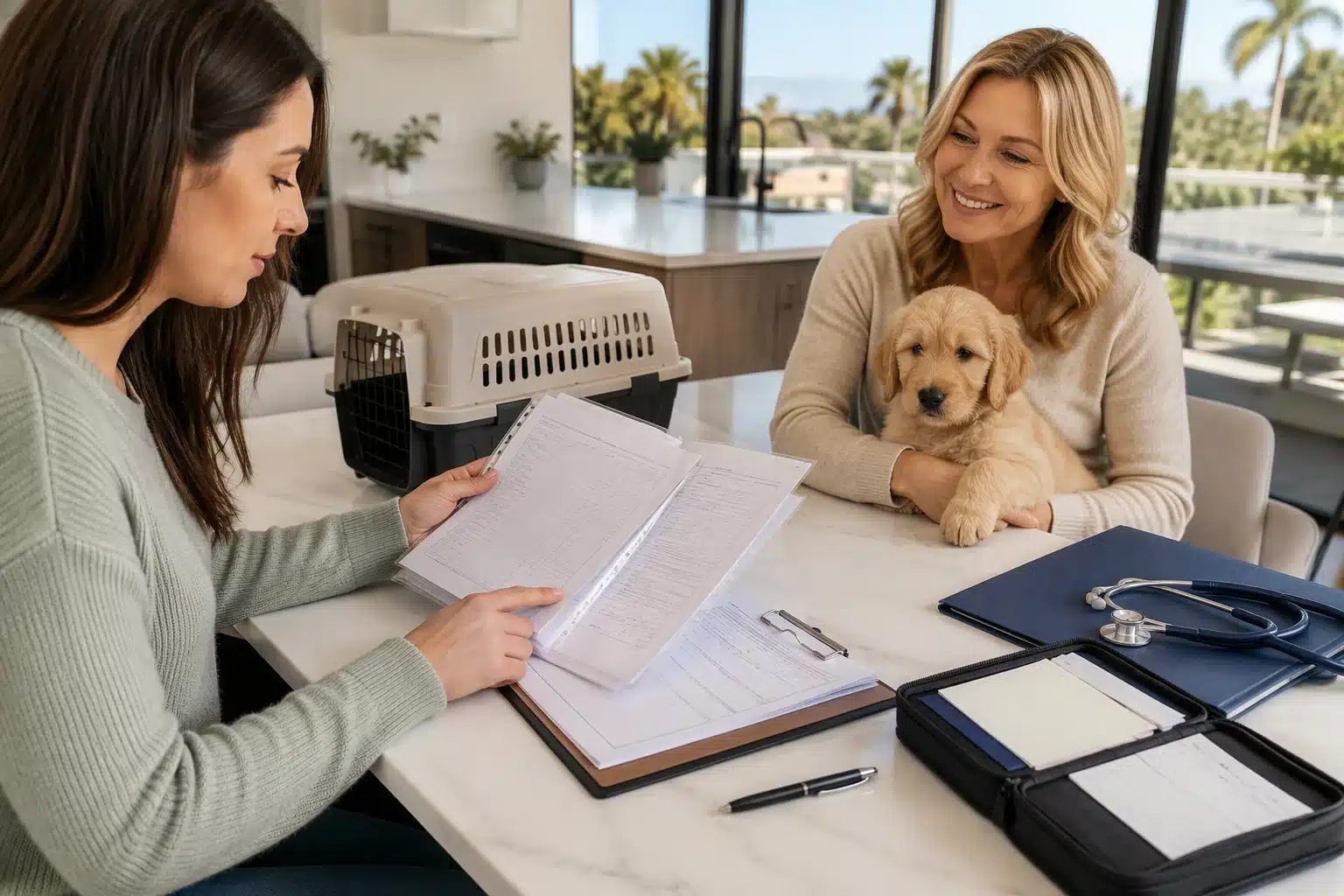
Ask to review the contract before you commit
Get the full contract before you send money. A good breeder should expect this. If they only show the contract after your deposit, slow down.
Read it line by line and look for plain answers to these points:
- Purchase price and what is included
- Pickup or delivery terms
- Spay-neuter or breeding restrictions
- Health disclosure records
- Refund, replacement, or credit terms
- Who pays vet costs if a problem shows up early
- Return policy if your family cannot keep the puppy
California gives buyers strong disclosure rights. State law requires written disclosure about the breeder, the puppy’s birth date, vaccines, worming, vet treatment, and known illness or hereditary issues under the California breeder disclosure law.
If a breeder rushes you to “reserve now, read later,” treat that as a warning sign.
| Contract item | What you want to see | Red flag |
|---|---|---|
| Health section | Clear written disclosures | Vague promises only |
| Payment terms | Exact amounts and dates | Surprise fees |
| Return terms | Specific steps and timing | “All sales final” with no context |
Ask how the deposit works in California
This matters more in 2026 than it used to. For contracts entered into on or after January 1, 2026, California says a contract is void if it includes or requires a nonrefundable deposit when the purchaser is in California, under AB 506 and the current code text.
Ask these questions before paying:
- Is the deposit refundable, transferable, or applied to the final price?
- What happens if the breeder cancels?
- What happens if the puppy fails a health check?
- What happens if timing changes and you need to wait for another litter?
A fair answer is specific and written down. A weak answer sounds like “we handle that case by case.”
In California, “nonrefundable deposit” language is a serious issue. Get the payment terms in writing before you send anything.
Ask about health guarantees and what happens if the puppy needs help
Do not stop at “we offer a health guarantee.” Ask what that means in real life.
Use this quick checklist:
- How many days do I have for my first vet exam?
- What conditions are covered?
- Is there a deadline for congenital or hereditary issues?
- Do I get a refund, replacement, reimbursement, or a mix?
- Do I have to return the puppy to use the policy?
California law also outlines buyer remedies if a licensed vet finds the dog unfit due to certain illness, disease, or hereditary conditions within set timeframes, including possible refund, replacement, or vet-fee reimbursement under Section 122070.
Ask whether the breeder requires a return-to-breeder commitment
This is one of the best signs of a responsible program. It means the breeder wants the puppy back if your situation changes.
Ask for these details:
- Do you require the dog to come back to you?
- Can I rehome the puppy myself?
- Is there any fee or time limit?
- Will you help with transport if I live out of state?
Strong breeders care where their puppies end up for life, not just on go-home day.
Also Read: 8 Tips for Buying Puppies for Sale in California Safely
4. Ask About Socialization, Early Care, and the Puppy’s Day-to-Day Start
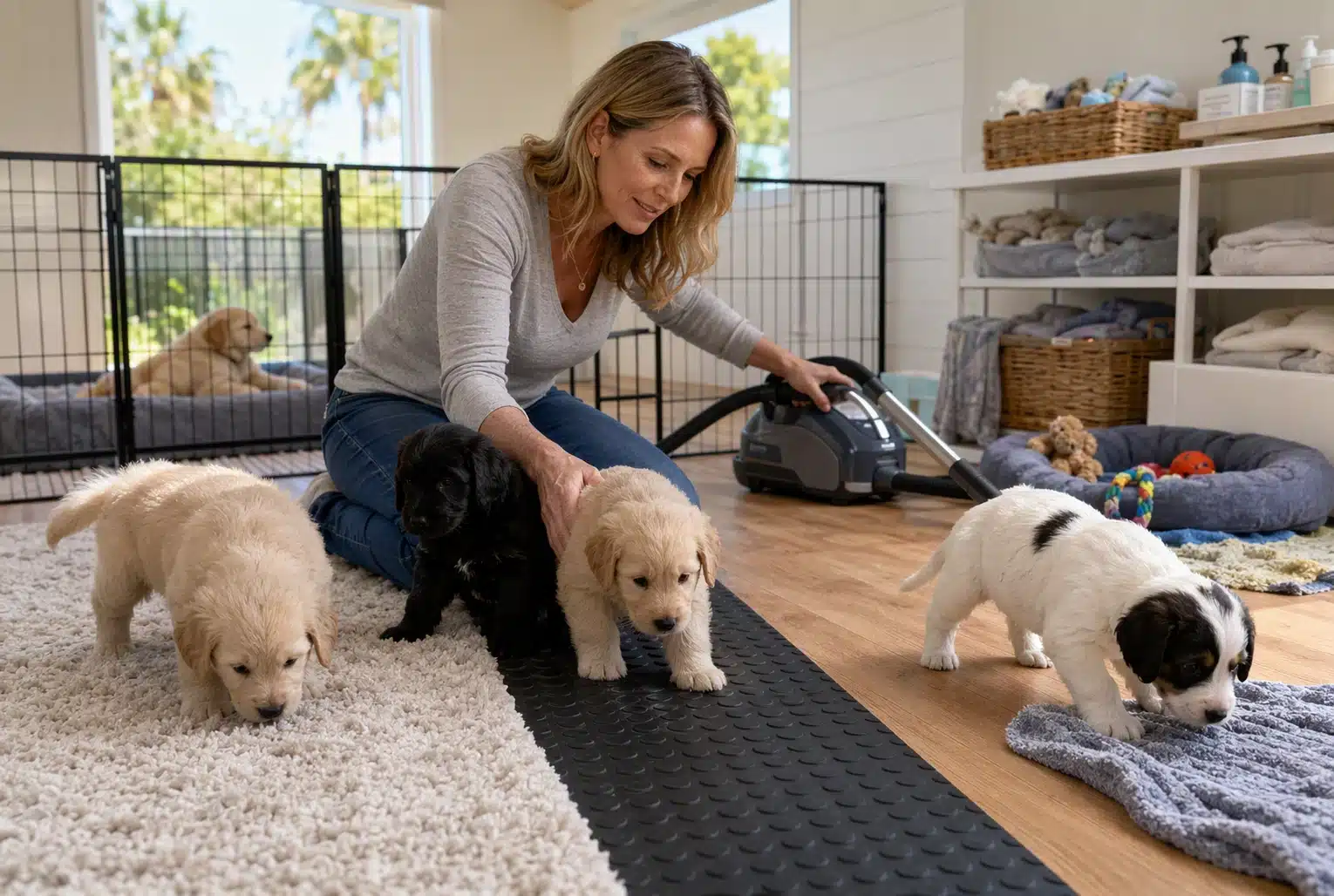
A puppy’s first weeks shape confidence, recovery from stress, and how smoothly life goes after pickup. Ask the breeder exactly what the puppy experiences each day, not just whether it is “well socialized.” The best answers are specific.
Ask:
- Who handles the puppies daily and how often
- What they hear and see each week, like vacuum noise, grooming tools, crates, car rides, and normal home sounds
- Which people they meet, including men, women, and calm children
- What surfaces they walk on, such as tile, grass, rugs, and ramps
- How the breeder responds to fear if a puppy startles
According to the AVMA’s 2024 review, early positive exposure during the sensitive period helps lower later fear and behavior problems, and those experiences should begin very early and continue with the new family AVMA review on puppy socialization.
Good socialization is not overstimulation. Puppies should meet new things in a calm, safe way.
| Ask this | Strong answer |
|---|---|
| What is a normal day like? | Clear routine for meals, naps, play, handling, and cleanup |
| Do you start crate or pen time? | Short, positive practice |
| Do you do grooming prep? | Gentle brushing, nail, face, and paw handling |
Ask when the puppy will be ready to go home, and why that timing fits this litter. Most puppies do best leaving between 8 and 10 weeks, though some small breeds may benefit from a little longer with the breeder AKC guidance on best age to bring a puppy home.
In California, ask for the care record in writing. State law requires breeders covered by the act to disclose inoculations, worming, and known health information at sale. That makes your timing question more than a preference. It is part of checking readiness.
Ask:
- Is the puppy fully weaned and eating well alone?
- Has sleep, stool, and weight stayed steady?
- Will pickup be delayed if the puppy needs more time?
Ask what help you get after pickup.
Look for:
- A clear transition guide for feeding, sleep, and potty routine
- Advice for the first 72 hours
- Support if your puppy seems shy, stressed, or carsick
- Delivery or pickup instructions that protect rest and safety
A thoughtful breeder does not disappear after payment.
If you want a smoother start, this is also a good point to read the parent guide and compare the breeder’s answers against your full interview checklist before you reserve.

If you want a breeder who welcomes smart questions, start with Sage Puppies. Their family-first process helps you review health testing, puppy raising, reservation details, and pickup or delivery plans before you commit. If you are comparing breeders in California or beyond, this gives you a clear benchmark. Check Available Puppies, read Pricing and Reservation details, then submit an application when the fit feels right.
Frequently Asked Questions
Q1: What are key questions to ask a California puppy breeder before purchasing?
Ask about parent health testing, vaccine and deworming records, temperament, early socialization, living conditions, contract terms, pickup timing, and refund rules. Also ask who raised the litter, what support comes after pickup, and whether you can review records before reserving.
Q2: How can I verify if a California puppy breeder is responsible and reputable?
Look for clear answers, not vague promises. A good breeder shares health records, explains how puppies are raised, screens buyers, and welcomes questions. Check consistency across reviews, paperwork, and communication. If details shift or pressure starts, step back and keep looking.
Q3: What health tests should California breeders perform on parent dogs?
The right tests depend on breed, but responsible breeders should do breed-relevant screening before breeding. That often includes patella, hips, heart, eyes, and DNA panels for known inherited issues. Ask for named results, test dates, and which parent carries what.
Q4: Should I avoid a breeder if they always have puppies available?
Not always, but ask why. A strong program plans litters carefully and can explain timing, pairing goals, and waitlist flow. Constant availability across many breeds may signal volume breeding, outside sourcing, or weak screening, which raises risk for buyers.
Q5: What paperwork should I receive before bringing a puppy home?
You should get a sales contract, health record, vaccine and deworming history, feeding details, microchip information if used, and parent testing proof when promised. Breeders like Sage Puppies also make pickup, delivery, and next-step instructions clear before handoff.
Conclusion
The right first questions help you spot a good breeder fast. You want clear answers on health testing, parent temperament, puppy raising, records, contract terms, and pickup timing. If a breeder gets vague, rushed, or defensive, treat that as useful information.
California buyers also need to check the paperwork, not just the puppy photos. State law already requires breeders covered by the breeder warranty rules to give written health and treatment disclosures, and keep records for each dog sold under California Health and Safety Code. Starting January 1, 2026, California also bars contracts that require a nonrefundable deposit when the purchaser is in California under AB 506.
A strong breeder interview should leave you with facts, not pressure. Ask enough to confirm the puppy is healthy, well matched to your home, and coming from a breeder who values honesty as much as care.



