Quick Summary: The article provides a detailed guide for safely picking up a puppy in Florida, emphasizing preparation before travel, confirming paperwork, securing the puppy during transport, and creating a calm environment at home. It highlights the importance of clear communication with breeders, proper travel gear, and a low-stress first day to ensure the puppy’s well-being. Following these steps helps make the handover smooth, ethical, and low-stress for both the puppy and owner.
Driving to Florida for an 8-to-10-week-old Havanese, Havapoo, or Cavapoo puppy should feel calm, not rushed. The safest pickup day starts before you leave home. Your documents, carrier, route, hotel plan, and first-night setup should already be ready.
That is the gap this Puppy Pickup Guide solves. Many families focus on the puppy and forget the handoff details that matter most once they arrive. A smooth In-Person Puppy Handover depends on timing, clear records, safe travel gear, and realistic Puppy Transport Tips for a very young dog.
This Puppy Pickup Guide walks you through what to confirm before travel, what to bring to pickup, and how to protect your puppy on the drive home. It also covers Florida-specific pickup realities and common first-time mistakes. As a breeder-focused Puppy Pickup Guide, it is built for careful families who want a safe, ethical, low-stress handover from start to finish.
Step 1: Confirm the pickup plan in writing before you leave
A safe handoff starts before you get in the car or book a flight. Get the full pickup plan in writing by text or email so nothing feels vague once you arrive.
Ask for the exact handoff details
Ask for the date, time, address, contact name, and backup phone number. Confirm where the puppy changes hands – home, airport, hotel lobby, or another agreed spot. If the breeder wants to switch locations at the last minute, pause and ask why.
Use a simple checklist:
- Full pickup address
- Arrival window
- Who will meet you
- Puppy’s call name and color
- Final balance and payment method
- What to bring for the ride home
A short written plan also helps if you are crossing state lines. Florida says dogs entering the state usually need an official health certificate within 30 days unless an exception applies, and dogs 3 months or older need current rabies proof, according to FDACS dog and cat movement rules.
If any part of the pickup plan stays fuzzy, do not leave yet.
Verify the paperwork you should receive
Before travel day, ask the breeder to list every paper you will take home. In Florida, ownership transfers tied to sale require an Official Certificate of Veterinary Inspection, and the state says evidence of compliance must accompany the animal or agent during transfer under Florida Statute 585.145.
Ask for these items in writing:
- Health certificate or OCVI
- Vaccine and deworming record
- Microchip details, if used
- Sales contract and receipt
- Feeding instructions and next vet date
| Document | Why it matters | Check before pickup |
|---|---|---|
| OCVI | Supports legal transfer and health review | Name, date, puppy details match |
| Vaccine record | Helps your vet continue care | Dates are readable |
| Contract | Sets terms clearly | Signed copy is ready |
Ethical breeders, including careful programs like Sage Puppies, make this easy and clear.
Also Read: Puppies for Sale in Florida: What Buyers Should Check First
Step 2: Prepare the car and puppy travel kit
Choose a secure carrier or crate
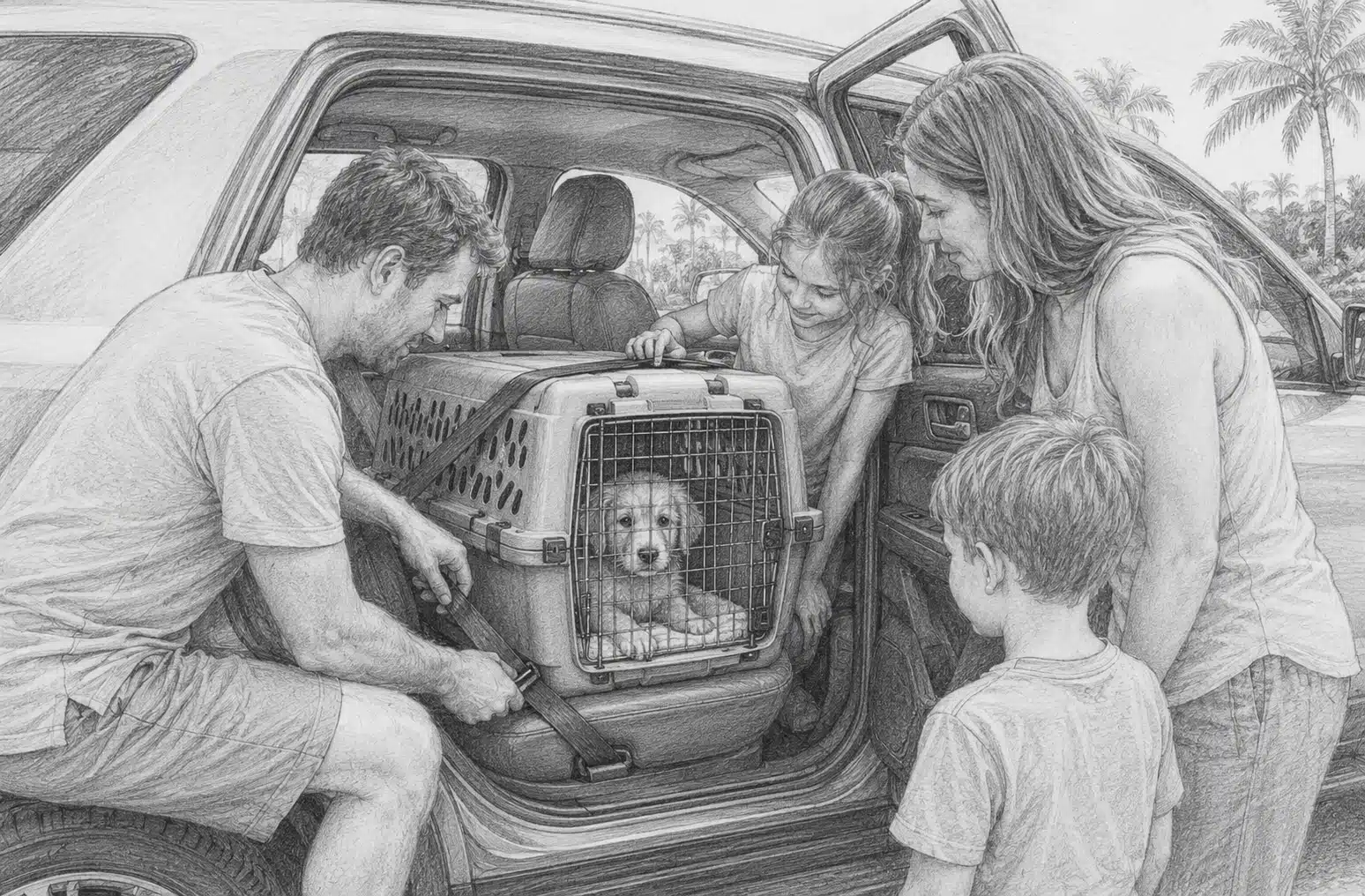
Use a hard-sided carrier or sturdy travel crate for pickup day if your puppy is small enough. It gives better protection than holding a puppy on your lap. The CDC says a crate should let your puppy stand, sit, lie down, and turn around, and it should be secured so it does not slide during stops or turns CDC pet travel safety guidance.
Pick a setup with these basics:
- Good airflow
- Solid latch
- Non-slip floor
- Absorbent pad or towel
- Seat belt routing or tie-down points
Federal transport rules also stress ventilation, leak-proof bottoms, and safe interior surfaces in dog enclosures federal enclosure standards.
| Option | Best for | Watch for |
|---|---|---|
| Hard-sided carrier | Small puppies, first rides | Check latch strength |
| Soft carrier | Very short, calm trips | Less crash protection |
| Travel crate | Longer Florida drives | Needs secure anchoring |
Never let a new puppy roam loose in the car or ride in the front seat.
Pack for comfort, not overpacking
Keep the kit simple. You do not need a whole nursery in the car.
Bring:
- Paperwork folder
- Bottled water
- Small bowl
- A few training treats
- Waste bags
- Pet-safe wipes
- Extra towel
- Spare pee pads
- Leash and backup leash
- A familiar blanket from the breeder, if offered
Skip big meals right before the drive. The CDC advises feeding pets 3 to 4 hours before travel to help lower car sickness risk. Pack enough for the ride home, not for a week.
A smart pickup bag looks like this:
- One comfort item with familiar scent
- One cleanup pouch
- One hydration setup
- One document folder
If you are flying home from Florida after pickup, keep the travel kit even tighter so you can move fast through the airport.
Also Read: Puppies for Sale in Florida: How to Choose a Safe Breeder
Step 3: Handle the handover calmly and review the puppy carefully
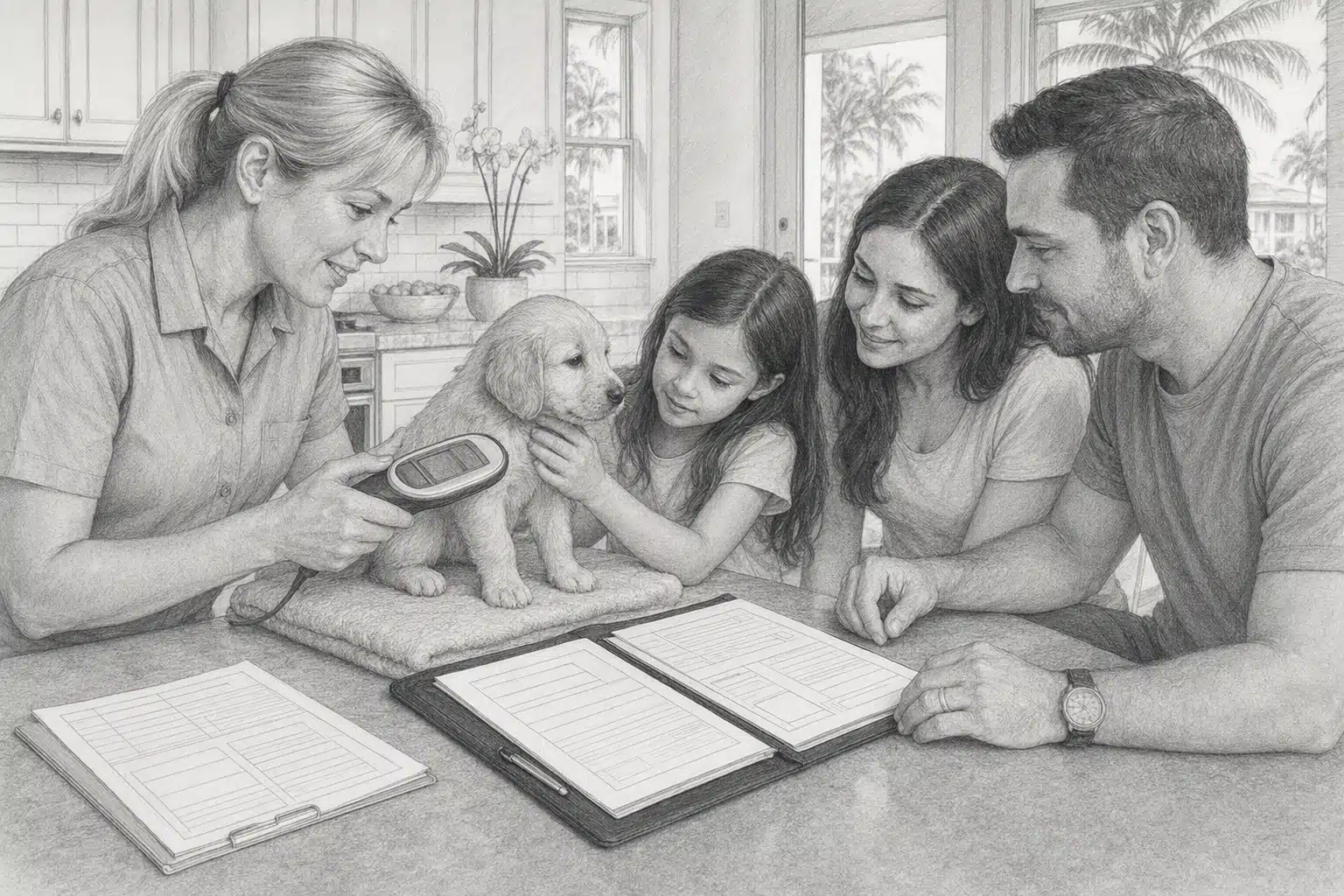
Confirm you received the right puppy
Start with identity, not excitement. Before you buckle in or take photos, confirm this is your puppy.
Use a short checklist:
- Match the puppy’s color, markings, sex, and birth date to your records.
- Check the microchip number if one was placed.
- Compare the puppy to the breeder’s recent update photos or videos.
- Confirm the puppy’s name on paperwork, if the breeder used one.
Florida paperwork matters here. For dogs sold within Florida, the sale should be tied to an Official Certificate of Veterinary Inspection, and that form includes fields for breed, age or birth date, sex, color, and optional microchip details on the Florida OCVI form.
If anything does not match, pause the handover and ask about it on the spot. Do not assume you can sort it out later.
Review health information and home instructions
Next, sit down and review the health file slowly. In Florida, dogs brought in for sale must meet state health rules, and evidence of compliance should travel with the dog under Florida’s dog and cat movement requirements.
Ask for these items before you leave:
- Health certificate
- Vaccine and deworming record
- Date of last meal
- Potty routine
- Current food brand and amount
- Any recent loose stool, coughing, or stress signs
- Medication or supplement instructions
- Your next vet visit timeline
A calm breeder should be able to explain:
- What is normal for this puppy today
- What might change after travel stress
- When to call if something seems off
Keep all papers together in one folder or zip pouch. You do not want to hunt for them at a rest stop or airport check-in.
Take your time before leaving
Give yourself 10 to 15 quiet minutes. Hold the puppy. Watch how they breathe, move, and settle.
Look for:
- Bright, open eyes
- Clean nose area
- Easy breathing
- Normal walking for age
- A soft, relaxed body after a minute or two
Use that time to test your setup:
- Place the puppy in the carrier.
- Adjust bedding.
- Offer a small drink if advised.
- Confirm who to contact if you have questions on the way home.
If you are picking up from Sage Puppies or another careful breeder, this part should feel unhurried. That is a good sign.
A rushed handoff is a red flag. A calm one usually means the breeder expects you to look closely.
Step 4: Drive home safely and keep the first trip low stress
The ride home should feel calm, simple, and boring. That is the goal. Car travel can raise stress in dogs, and even short rides can trigger stress signs like whining and lip licking, according to this PubMed study on car travel stress in dogs.
Keep the puppy secure and quiet
Use one safe setup and stick with it:
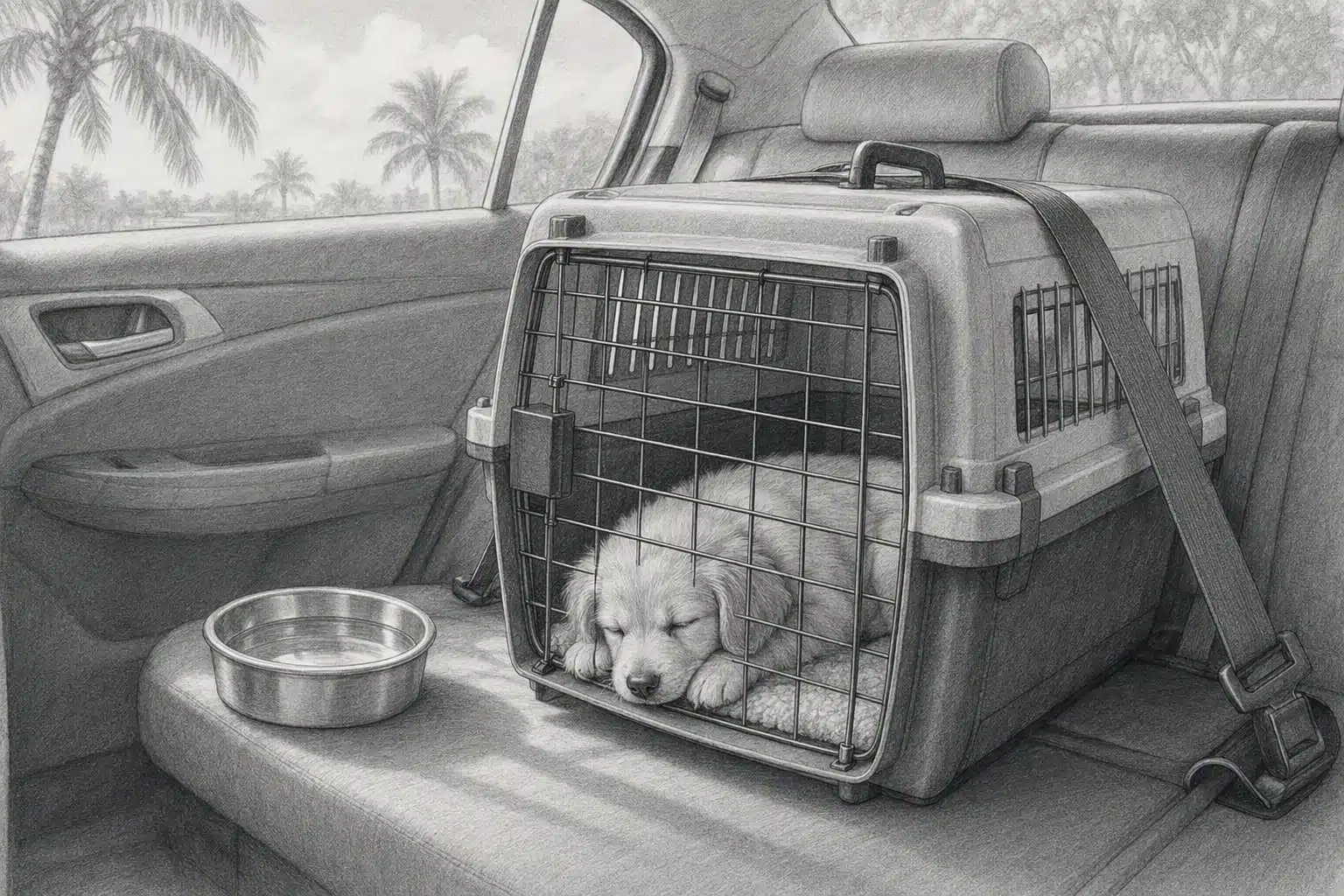
- A hard-sided or crash-tested carrier secured so it cannot slide
- A small towel or blanket that smells familiar
- A soft chew toy only if your breeder says it is safe
- Low noise in the car
The CDC says pets should ride secured in the back seat, and crates should let them stand, sit, lie down, and turn around while staying well ventilated and fixed in place during car travel.
Do not pass the puppy around the car. One safe spot is better than comfort from many hands.
Keep the temperature cool and steady. Skip strong air fresheners. Talk softly if needed, then let the puppy rest.
Plan stops around the puppy’s needs
For a short drive, go straight home if the puppy is settled. For a longer drive, plan simple stops:
- Pick quiet areas, not busy gas station corners.
- Keep the puppy on a secure leash before opening any door.
- Offer a small drink of water.
- Give a fast potty chance on a clean patch, then get back on the road.
Bring a small cleanup kit:
- Paper towels
- Waste bags
- Wipes
- Spare bedding
A little motion sickness, drooling, or whining can happen on day one. That alone does not mean something is wrong.
Decide what not to do on pickup day
Skip the extras. Pickup day is not the day for errands, restaurants, dog parks, or meeting friends.
Avoid these common mistakes:
- Do not stop to shop
- Do not let strangers hold the puppy
- Do not feed a big meal in the car
- Do not leave the puppy alone in a parked vehicle
Go from breeder to home or hotel as directly as you can.
That first ride sets the tone. A quiet, careful trip helps your puppy arrive tired, safe, and ready to settle in.
Also Read: Florida Puppy Buyer Checklist for Safe Local Listings
Step 5: Set up the first 24 hours at home
Create a quiet landing zone
Your puppy does not need a house tour right away. Start with one calm space like a kitchen corner, playpen, or small room with easy-to-clean floors. The AKC recommends limiting access at first so your puppy is not flooded with new smells, rooms, and people all at once in their first day home guidance.
Set up the area with:
- A bed or open crate
- Water bowl
- A safe chew
- A towel or blanket with a familiar scent
- Puppy pads only if your plan includes them
Keep lights soft and voices low. Ask kids to sit, not chase. Skip visitors.
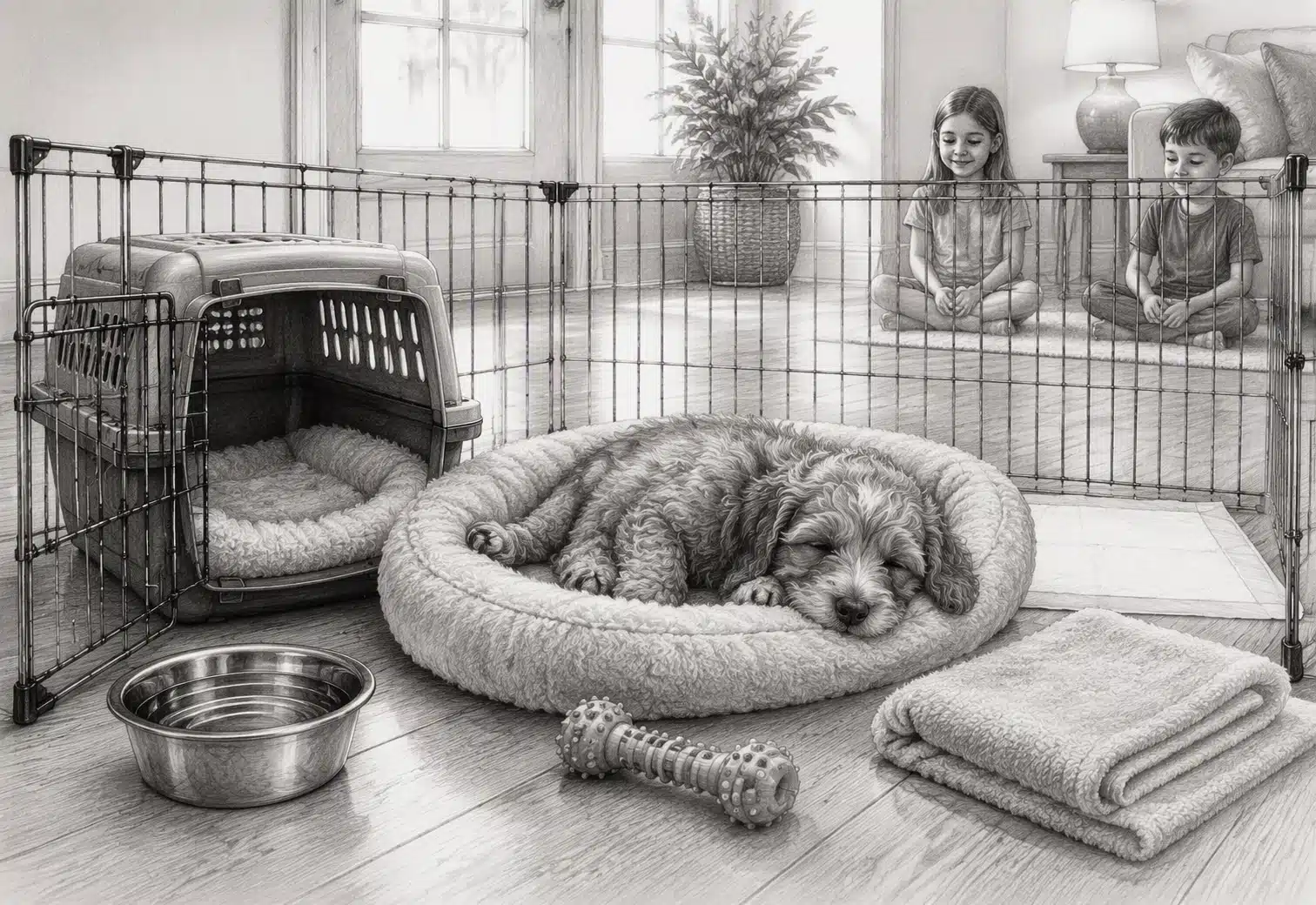
Let your puppy come to you. Early trust grows faster when you do less, not more.
Keep food, water, and routine familiar
Feed the same food your breeder sent home for the first few days. Sudden diet changes plus travel stress can upset a puppy’s stomach. Keep water available, but show the bowl often after the ride home, after naps, and after play.
For the first day, stick to a simple rhythm:
- Potty trip
- Quiet rest
- Small meal
- Short play
- Potty trip again
- Nap
AAHA notes that dogs adjust better with a quiet safe space and a steady routine, and that some may eat less at first in a new home during the early adjustment period.
| What to keep the same | Why it helps |
|---|---|
| Food brand and timing | Reduces stomach upset |
| Potty spot cue | Builds fast routine |
| Bedtime rhythm | Lowers stress |
Watch for adjustment signs
Some puppies settle fast. Others seem clingy, sleepy, or unsure. That can be normal. Watch body language more than energy alone.
Good signs include:
- Drinking water
- Taking treats
- Curious sniffing
- Relaxed naps
Call your breeder or vet if you see:
- Repeated vomiting
- Frequent diarrhea
- Refusing food and water
- Extreme lethargy
- Ongoing distress that does not ease
The first day is about safety and settling in, not training perfection.
Also Read: 10 Questions to Ask Before Buying a Puppy Locally
Common Questions About Florida Puppy Pickup
Should the whole family come to pickup?
Yes, if everyone can stay calm and keep the handoff low stress. Pickup is a good time to make the first meeting feel safe, not loud or rushed. One or two adults should lead, while kids sit nearby and let the puppy come to them.
- Bring the family members who will live with the puppy
- Skip extra guests, especially young children who may get overstimulated
- Keep voices soft and first cuddles short
A quiet pickup usually helps the puppy settle faster in the car and at home.
What if I am flying in or driving from far away?
Plan the trip around the puppy’s comfort, not speed. If you are driving, map out potty, water, and stretch breaks every 2 to 3 hours. If you are flying home from Florida, confirm airline pet rules before booking. For dogs entering Florida from another state, the Florida Department of Agriculture says most pets need an official health certificate and current rabies proof. If you are returning to the U.S. from abroad, CDC rules may also apply, including the CDC Dog Import Form.
- Pack wipes, paper towels, a leash, and a small blanket
- Avoid heavy feeding right before travel
- Keep the puppy in a secure carrier
What should I ask before I leave?
Leave with every paper, supply, and answer you need for the first 72 hours. This is the moment to slow down and double-check details.
- What food is the puppy eating, and how much per meal?
- When was the last potty break, meal, and nap?
- What vaccine and deworming record should I show my vet?
- What routine helps this puppy settle at night?
- Who should I contact if I have questions after pickup?
| Ask About | Why It Matters | What to Take |
|---|---|---|
| Feeding plan | Prevents upset stomach | Food sample and schedule |
| Health records | Helps your vet continue care | Printed records |
| Comfort routine | Eases first-night stress | Blanket or familiar item |

If you want a Florida pickup that feels clear, safe, and calm, start with Sage Puppies. You can review available puppies, pricing, pickup options, and the step-by-step process before you travel. Apply when you’re ready, ask your questions, and plan a handoff that puts your puppy’s comfort first.
Frequently Asked Questions
Q1: What are the essential steps for a safe in-person puppy handover in Florida?
Confirm the pickup address, ID, records, payment method, and timing first. Meet in a calm, clean place. Check the puppy’s eyes, nose, energy, and paperwork. Bring a secured carrier, water, towel, and cleanup supplies for the ride.
Q2: How can I prepare my home for a puppy pickup in Florida for a smooth transition?
Set up one quiet puppy zone before you leave. Have food, bowls, crate, leash, pee pads, and a safe sleep spot ready. Keep the first day simple, with low noise, short potty trips, and no crowd of visitors.
Q3: What questions should I ask a Florida breeder before picking up my puppy?
Ask what the puppy eats, when it last pottied, how it handles car rides, and what routine it knows. Also ask for vaccine and deworming dates, parent health testing, and what support you can expect after pickup.
Q4: Should I fly home or drive after pickup?
Choose the option that keeps the puppy calm and secure. Driving works well for many families because you control breaks and temperature. If flying, confirm airline pet rules, carrier size, and the shortest route home.
Q5: What if the puppy seems nervous at handoff?
That is normal. Keep your voice soft and handling gentle. Do not pass the puppy around. Offer a small drink, let it rest in the carrier, and follow the breeder’s feeding schedule so the first day feels steady and safe.
Conclusion
A safe Florida puppy pickup comes down to four things: verify the breeder, confirm the paperwork, protect the puppy’s comfort, and keep the handoff calm and clear. If you are flying or driving across state lines, check your destination rules early. The USDA notes that interstate pet travel rules are set by the receiving state, so timing matters for health paperwork and vet planning USDA APHIS interstate pet travel guidance. In Florida, dogs entering for sale must meet added import and health certificate rules, and puppies transported for sale must meet minimum age and health standards under Florida dog and cat movement requirements. Good pickup days feel organized, not rushed.