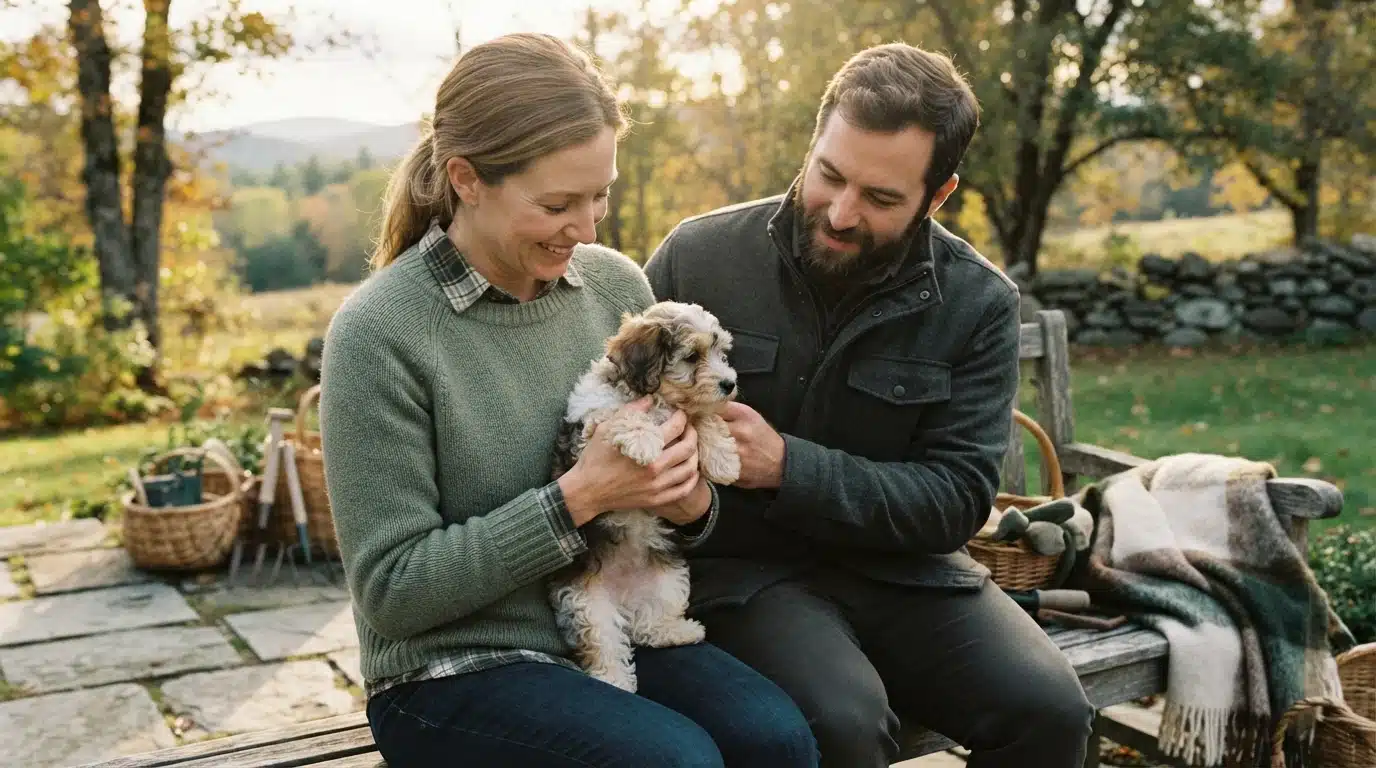
Quick Summary: Before buying a puppy in Florida, verify health records, ask about daily raising routines, review contracts carefully, and confirm pickup or delivery details. Responsible breeders provide transparent health testing, real socialization, and clear policies, helping buyers avoid scams and risky listings. Taking these steps ensures a safer, more confident purchase process.
Before you buy puppies in Florida, ask this first: can the breeder show the parents’ health testing, the puppy’s vet records, and the full reservation terms in writing? That one question rules out a lot of risky listings fast.
Many families who want to buy puppies in Florida run into the same problem. Cute photos come first. Clear proof comes later, or never. Some listings hide weak contracts, vague pickup details, missing health records, or no real information about the puppy’s home life.
This guide helps you slow down and check the right things first. You will learn what papers matter, what breeder answers should sound like, and where buyers often miss red flags. If you plan to buy puppies in Florida, this checklist will help you compare sellers with more confidence and less stress.
We write from a buyer-first view shaped by what responsible small-breed families ask most: health, temperament, raising style, and clear next steps. If you are comparing Havanese, Havapoo, or Cavapoo options, this guide will help you buy puppies in Florida with better questions and safer standards.
1. Start With Health Testing You Can Verify
A breeder’s “healthy puppies” claim means very little without proof. Ask for the exact test names, the parents’ results, and where those results can be checked. The best answer is not a screenshot. It is a public record, often through OFA and CHIC. The OFA explains that a CHIC number means a dog completed the breed’s required screenings and that the results are public in the database, even though that does not promise a perfect dog OFA CHIC Program.
Use this quick buyer checklist:
- Ask for the sire and dam’s full registered names.
- Ask which tests were done, by name.
- Ask for result dates, not just “cleared.”
- Ask if the records are public.
- Ask what the breeder does if a health issue shows up later.
If a breeder gets vague, changes the subject, or only says “vet checked,” slow down.
Match the testing to the breed and your puppy’s future life. The AKC’s breed health pages show that small breeds do not all need the same screening. For example, Havanese commonly need patella, hip, and eye evaluations, while Cavalier King Charles Spaniels commonly need patella, hip, cardiac, and eye testing AKC breed health testing requirements. That matters if you are comparing a Havanese, Havapoo, or Cavapoo.
Use a simple lens:
- Companion home: focus on eyes, knees, heart, hips, and family history.
- Small children at home: ask extra about temperament and orthopedic soundness.
- Travel or service-style routine: ask how the parents handle stress, noise, and new places.
| Breed type | Tests buyers often expect to see discussed | Why it matters |
|---|---|---|
| Havanese lines | Patella, hips, eyes | Supports sound movement and eye health |
| Cavalier-based lines | Heart, eyes, patella, hips | Heart screening matters in this breed background |
| Poodle-mix small breeds | Patella, eyes, breed-related DNA panels | Helps buyers compare mixed-breed planning |
Use the records to compare breeders side by side. Build a one-page chart before you place a deposit.
- Parent names listed
- Tests named clearly
- Public database or document proof
- Dates current and readable
- Contract explains health terms in plain English
A clean contract plus real health records beats a polished puppy ad every time.
Sage Puppies stands out more when families compare this way, because transparent, family-raised programs are easier to verify than vague listings.
Also Read: Puppies for Sale in Florida: How to Choose a Safe Breeder
2. Review How the Puppies Are Raised Day to Day
Ask a simple question first: Where do the puppies actually spend their day? You want a clear answer, not a vague sales line. Puppies raised in a home setting usually get more normal human contact, household sounds, and routine handling than puppies kept apart from daily family life. The AKC notes that early breeder handling and safe exposure to sounds, crates, surfaces, and car rides can shape a more confident dog later on according to AKC.
Ask the breeder:
- Do the puppies live in the home, a kennel, or a separate building?
- Who handles them each day?
- How often are they held, groomed, and checked?
- Are children or other adults part of their routine?
If a breeder cannot clearly explain the puppies’ daily life, treat that as a warning sign.
Look for socialization that feels like real family life, not staged playtime for photos. The goal is not nonstop stimulation. It is steady, positive exposure to common things a puppy will meet in your home. The AVMA review explains that puppies benefit from diverse, positive experiences starting by or before 3 weeks of age, and poor early exposure can raise the risk of fear later in the AVMA literature review.
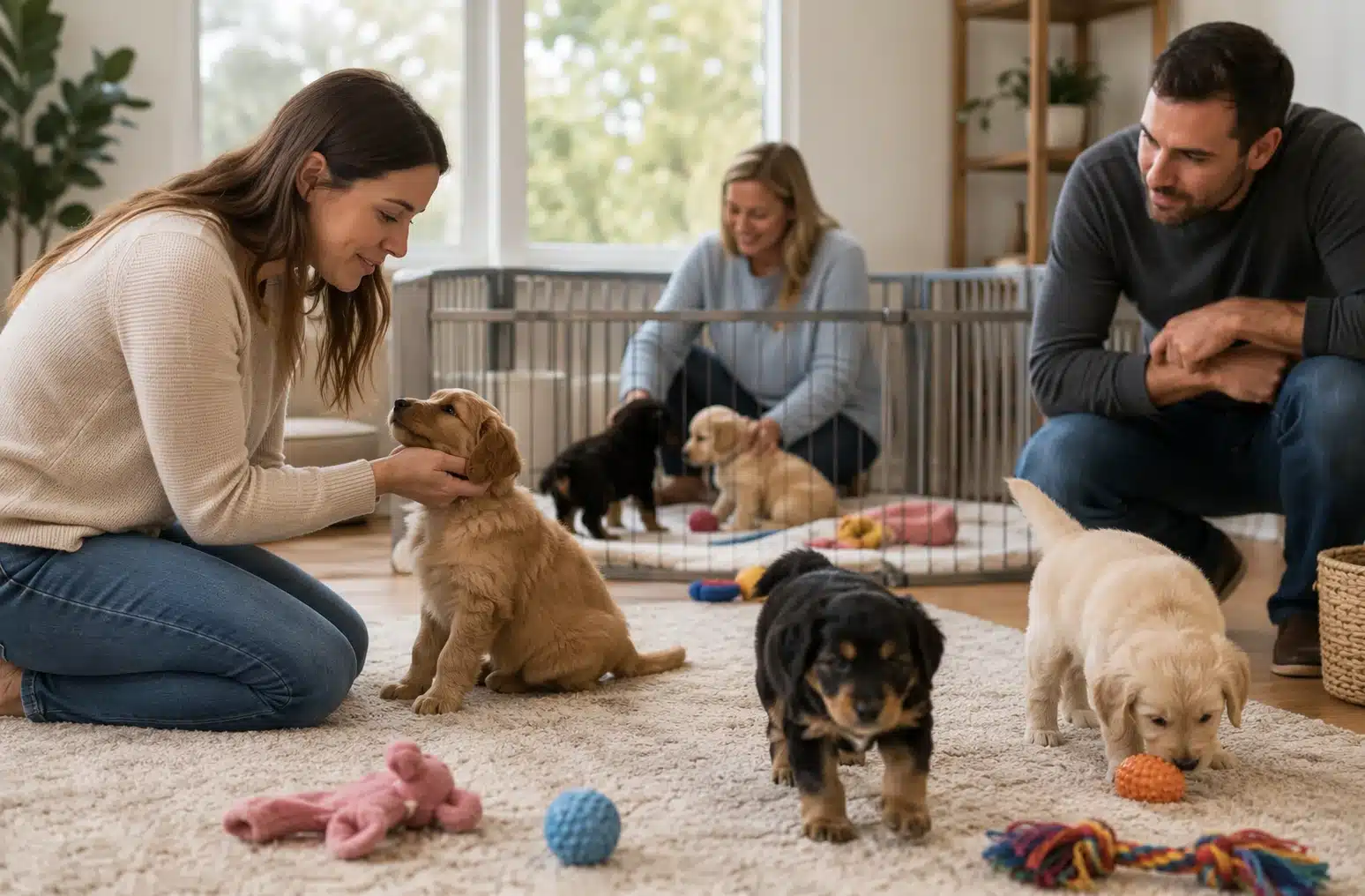
A strong day-to-day setup often includes:
- Gentle handling by multiple people
- Safe play on different surfaces
- Short crate and car exposure
- Normal home sounds like vacuums, doors, and kitchen noise
- Early grooming touch around paws, ears, and face
Use temperament notes to narrow your shortlist before you choose. Ask for specific observations, not labels like “perfect” or “sweet.” Good notes sound like this:
| What to Ask | Helpful Answer | Weak Answer |
|---|---|---|
| Response to new people | “Warms up fast after a minute” | “Great personality” |
| Energy level | “Playful, then settles in your lap” | “Very cute” |
| Handling tolerance | “Relaxed for brushing and nail touch” | “Does fine” |
Sage Puppies, for example, stands out more when a breeder can match families with this level of detail. That helps you pick the puppy whose daily habits already fit your home.
Also Read: Puppy Health Guarantees: What Good Breeders Include
3. Read the Contract Before You Pay a Deposit
A good puppy contract should protect both sides. If you feel rushed, stop. Read every line before money changes hands, especially if you are buying from out of state or arranging delivery. For online and phone orders, the FTC says sellers must have a reasonable basis for shipping when promised and give a prompt refund if they cannot complete the order as agreed under the Mail, Internet, or Telephone Order Rule.
Confirm the deposit, hold, and refund terms in writing
Start with the money section. You need to know exactly what your deposit does.
Check these points first:
- Is the deposit holding a specific puppy or only a waitlist spot?
- Is it refundable, nonrefundable, or transferable to a future litter?
- What happens if the breeder cancels, delays, or cannot provide the promised puppy?
- What happens if you back out for personal reasons?
| Contract item | What to confirm | Why it matters |
|---|---|---|
| Deposit amount | Exact dollar amount | Prevents surprise add-ons |
| Hold terms | Specific puppy or general waitlist | Changes your rights |
| Refund terms | Full, partial, none, or transfer only | Sets your risk |
| Final payment due | Date and payment method | Avoids last-minute pressure |
If a breeder says one thing by text and the contract says another, the contract usually wins.
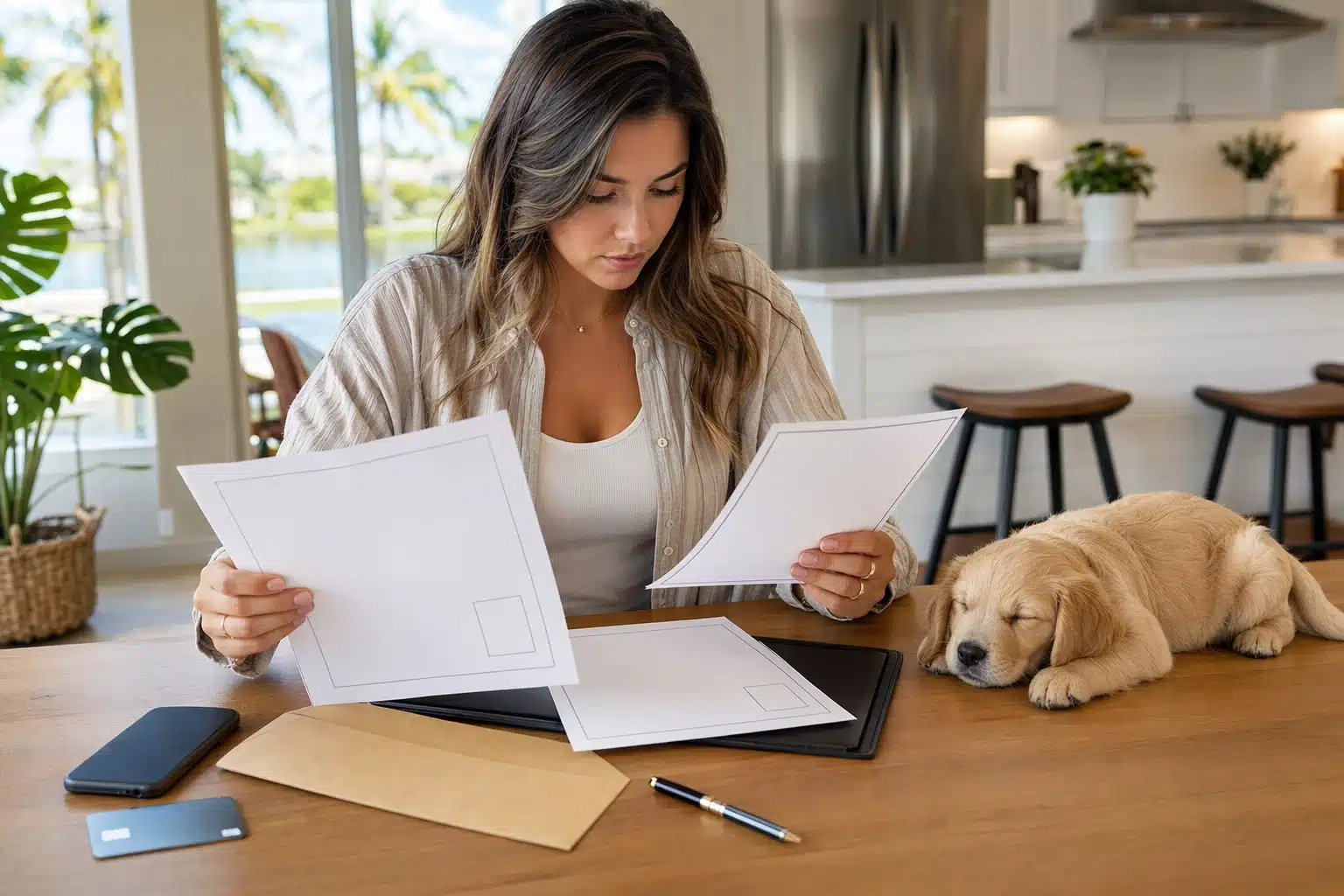
Check the health guarantee for scope and timing
Most buyers look for the words health guarantee and stop there. Do not. Read the deadlines, covered conditions, and remedy.
The AKC notes that buyer protection laws often require a written bill of sale and spell out exclusions, buyer duties, and possible refunds, replacements, or vet cost reimbursement in some cases under puppy lemon law guidance.
Use this quick checklist:
- Early exam window after pickup or delivery
- Covered issues such as congenital or hereditary defects
- Excluded issues such as stress, parasites, or minor treatable illness
- Required proof from a licensed vet
- Remedy offered – refund, replacement, reimbursement, or return only
A guarantee that requires you to return a beloved puppy for any remedy may feel very different once the puppy is home.
Make sure the breeder’s return policy is clear
A strong return clause is a good sign. It shows the breeder cares where the puppy ends up for life.
Look for clear answers to these questions:
- Must you contact the breeder first if you cannot keep the dog?
- Can you rehome the puppy on your own?
- Is there any refund after pickup?
- Who pays travel costs if the dog is returned?
Many reputable breeders require the dog to come back to them rather than go to a shelter or random third party. That is not a red flag. It is often a sign of long-term responsibility. Sage Puppies follows this same buyer-first logic: clear expectations, no vague promises, and support after placement.
4. Confirm Pickup, Delivery, and Travel Details Early
Ask about travel plans before you place a deposit. A good breeder should explain the handoff clearly, not vaguely.
Ask how the handoff is arranged
Get the exact plan in writing. Ask who meets you, where pickup happens, what day the puppy is ready, and what happens if weather or flight delays hit. If a puppy is crossing borders, rules can change fast. The CDC says dogs entering the U.S. may need a CDC Dog Import Form receipt, and APHIS notes that dogs imported for resale or adoption can face added commercial import requirements.
- Ask for the breeder’s pickup or delivery steps
- Confirm the driver, flight nanny, or family member handling transport
- Check who pays for delays, reschedules, or missed connections
If the breeder avoids specifics, slow down.
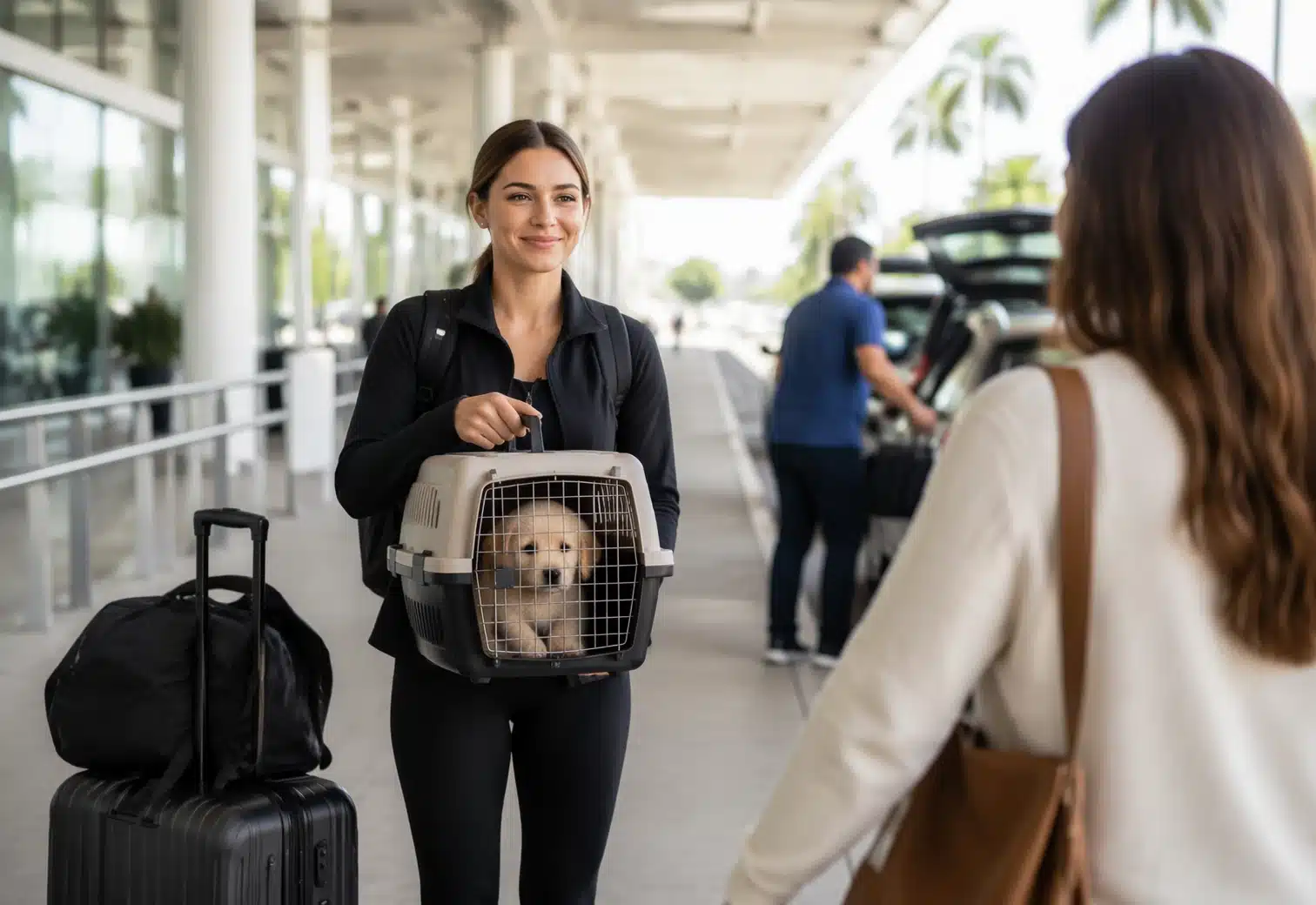
Verify what comes home with the puppy
Do not assume the puppy arrives with everything you need. Ask for a simple checklist.
| Item | Why it matters | Ask before paying |
|---|---|---|
| Health record | Shows vaccines and care to date | Is it signed and current? |
| Food sample | Helps prevent sudden stomach upset | How many days are included? |
| Microchip details | Lets you register ownership fast | Is the chip already registered? |
| Contract copy | Confirms your terms after pickup | Will I get it before travel day? |
Useful questions:
- Will you send records before pickup?
- Is the puppy bathed, fed, and rested before travel?
- Do you provide a carrier, blanket, or toy with scent from home?
Choose a breeder who explains travel without pressure
The right breeder helps you compare pickup and delivery based on your home, budget, and timing. You should never feel pushed into the fastest option. At Sage Puppies, that calm, clear approach matters because families often need time to plan local pickup or nationwide delivery the right way.
- Expect plain answers
- Expect timing windows, not vague promises
- Expect support after the puppy arrives
Also Read: 10 Signs a California Puppy Listing Is a Scam – Sage Puppies
5. Watch for Signs That the Breeder Puts Families First
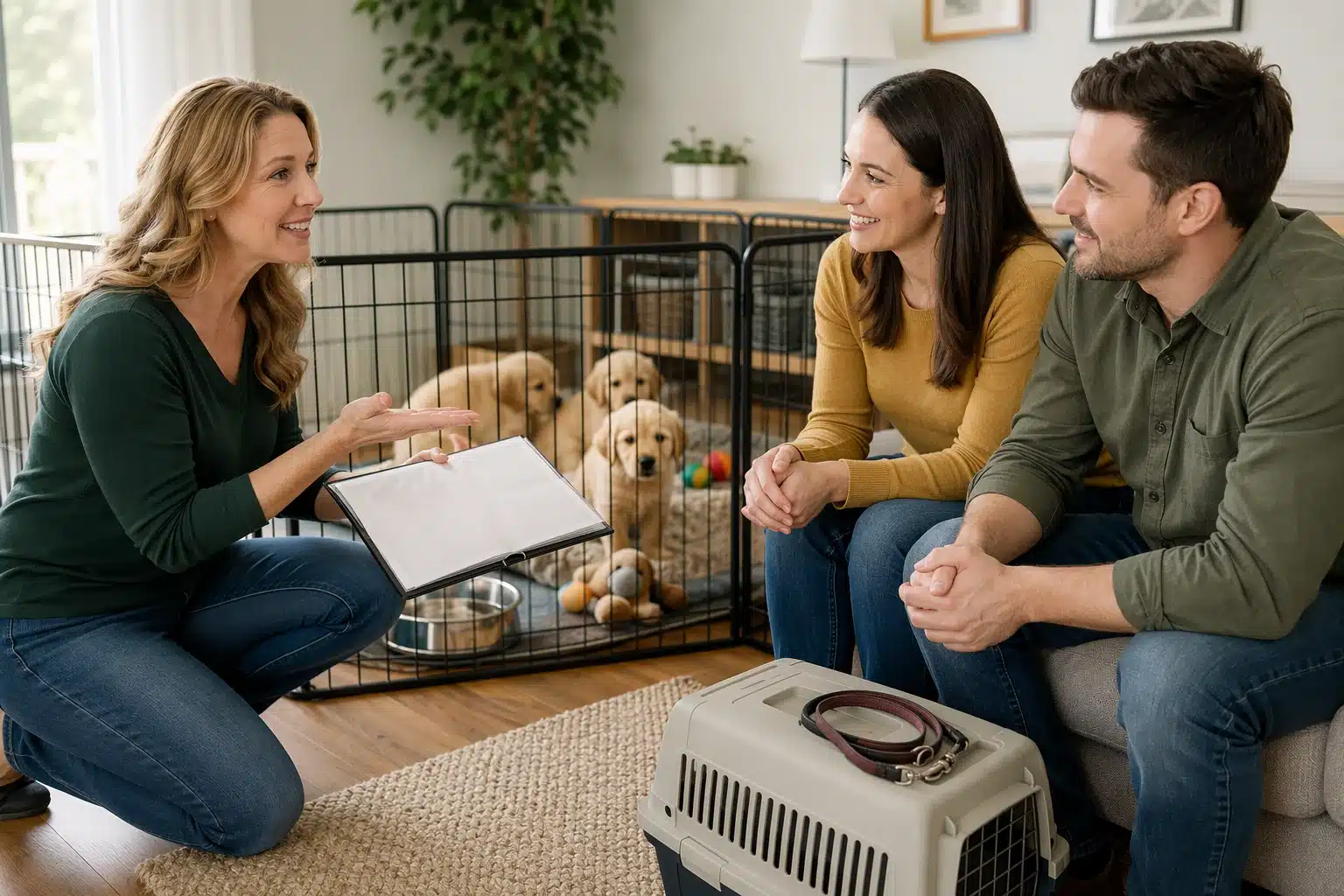
A family-first breeder does not just sell a puppy. They guide, screen, and support you before and after pickup. If you missed the bigger buyer checklist, go back to the parent guide on Puppies for Sale in Florida: What Buyers Should Check First before you place a deposit.
Green flags that usually signal a responsible program
Good breeders act like matchmakers, not cashiers. They ask about your home, schedule, kids, and dog experience because fit matters. The AKC notes that responsible breeders should interview buyers back, not just answer sales questions, and Cornell says strong programs use health testing, early socialization, and lifelong support (AKC breeder signs, Cornell guidance).
Look for breeders who:
- share parent health records clearly
- explain temperament honestly
- let you review the contract early
- discuss pickup or delivery without pressure
- stay available after your puppy goes home
A breeder who cares about your long-term success will welcome thoughtful questions.
| Green flag | What it usually means |
|---|---|
| They ask many questions | They care about fit, not fast sales |
| They know each puppy well | Puppies are raised with hands-on attention |
| They explain pros and cons | They are honest, not pushy |
Red flags that should slow you down
Some warning signs are simple. The breeder dodges health questions. The listing pushes rare colors or tiny size over health and temperament. They want a deposit before a real conversation. AKC also warns that breeders focused first on how fast you can pay are showing you their priorities.
Pause if you notice:
- no clear answers about parent testing
- no return policy or take-back language
- pressure to decide the same day
- poor photos, vague updates, or changing stories
- willingness to place any puppy with any buyer
If the breeder never screens you, they may not be screening anything else either.
Use one simple rule before you commit
Ask yourself one thing: Do I feel informed, not rushed?
That rule catches a lot. Good programs make room for questions, give you time to read, and explain what happens next. You should know the puppy’s background, the contract terms, and the pickup or delivery plan before money changes hands.
Use this quick check:
- Informed – yes to proceed
- Rushed – slow down
- Confused – ask for proof in writing
For families comparing small-breed programs, that calm, clear process is often the real sign that the breeder puts people and puppies first.

If you want a Florida puppy search to feel clear, safe, and well supported, start with Sage Puppies. Their home-raised Havanese, Havapoo, and Cavapoo puppies come from health-tested parents with a transparent, family-first process. Review available puppies, compare pickup or delivery options, and submit an application when you are ready to move forward with confidence.
Frequently Asked Questions
Q1: best Florida puppy breeders
Look for breeders who share parent health testing, clear contracts, real home-raising details, and pickup or delivery steps in writing. Skip anyone pushing same-day deposits. If you compare Florida options with programs like Sage Puppies, consistency and transparency matter most.
Q2: What health records should I ask for before reserving a puppy?
Ask for vaccine and deworming records, a recent vet check, parent testing details, and any microchip paperwork. You also want feeding instructions and a sample contract. Good breeders answer plain questions fast and do not dodge paperwork.
Q3: Is delivery safe if I do not live near the breeder?
It can be, if the breeder explains who handles transport, where handoff happens, and what support you get after arrival. Ask for timing, fees, and backup plans. > Never accept vague promises about shipping without names and steps.
Q4: How do I spot a scam listing fast?
Watch for low prices, rushed deposits, stock photos, no video call, and no breeder address. Scammers avoid specifics. A real breeder can show the puppy, explain the parents, and walk you through the process without pressure.
Q5: Should I choose pickup or delivery for a small-breed puppy?
Choose the option that gives you the clearest handoff and least stress. Pickup lets you meet the breeder in person. Delivery helps if travel is hard. Either way, confirm timing, supplies needed, and who to contact that day.
Conclusion
Buying a puppy in Florida starts with one simple rule: verify everything before you commit. Check health testing, ask for the contract early, confirm who raised the puppy, and make sure pickup or delivery details feel clear and safe.
A careful buyer should look for:
- Parent health testing that matches the breed
- A full review of the sales contract
- A current official health certificate
- Honest answers about socialization, home life, and temperament
- Clear transport plans with no guesswork
Florida law requires dogs offered for sale to come with an official certificate of veterinary inspection and specific vaccine and deworming records under Florida Statute 828.29. If a puppy will cross state lines, USDA APHIS pet travel guidance shows why timing, paperwork, and rabies rules matter. Slow down, ask better questions, and the right puppy match gets much easier to spot.