Quick Summary: Buying puppies in California requires careful vetting of breeders through transparency, health records, and environment checks. Avoid sellers who hide details, rush payment, or refuse to show proof of health testing and proper raising practices. Responsible breeders ask questions about your home and provide clear contracts, ensuring the puppy’s well-being and long-term support.
If you want to buy puppies in California, start with one question: can the breeder prove how the puppy was raised, health tested, and prepared before asking for a deposit? Cute photos are easy. Clear records, honest answers, and safe breeding practices are not.
That is where many families get stuck. Listings can look polished, but it is hard to tell who is responsible, who is cutting corners, and who is simply reselling puppies. If you plan to buy puppies in California, you need more than a quick video call or a friendly text thread.
This guide shows you how to check breeder claims, spot warning signs, understand California buyer protections, and compare local pickup or delivery options with confidence. It is built for serious families who want to buy puppies in California the smart way.
We focus on trust-first screening, practical questions, and real decision points, with the same calm standards families expect from a thoughtful, ethical breeder.
1. Check Whether the Breeder Is Transparent Before You Pay Anything
A good breeder should make it easy to verify who they are, how they raise puppies, and what you are paying for. In California, breeders covered by the state’s dog sale law must give buyers written disclosures such as the breeder’s name and address, the puppy’s birth date, vaccine and deworming records, and known health history under the California breeder disclosure rules. If a seller dodges basic questions, stop there.
What a legitimate breeder should share upfront
Before you send a deposit, ask for:
- The breeder’s full name, business name, and location
- The puppy’s date of birth and current age
- Parent details, including breed and health testing done
- Vaccine, deworming, and vet records
- Clear photos or video of the puppy where it is raised
- A written contract with pickup, delivery, and refund terms
- References or reviews from past families
| Upfront item | Why it matters | What you want to see |
|---|---|---|
| Identity and location | Confirms the breeder is real | Full name, address, phone |
| Health records | Shows care, not promises | Dated vet and treatment records |
| Parent information | Helps assess risk and temperament | Parent photos and testing details |
| Contract terms | Prevents surprises later | Plain language, signed agreement |

If you are buying from out of state or arranging delivery into California, pay close attention to contract terms. Since January 1, 2026, contracts offered to purchasers in California cannot require a nonrefundable deposit under California AB 506 pet sale rules.
A transparent breeder answers questions calmly and in detail. You should never feel rushed to pay.
Red flags that should slow you down immediately
Watch for these warning signs:
- The seller will not share their exact location.
- They want payment before a call or video visit.
- Records look partial, blurry, or inconsistent.
- They avoid showing the puppy with its mother or littermates.
- They push same-day payment with pressure tactics.
- They only accept cash, Zelle, or untraceable apps.
The fastest way to avoid a bad experience is simple – if the breeder hides basic facts before payment, assume bigger facts are hidden too.
2. Verify Health Testing and Veterinary Records for the Parents and Litter
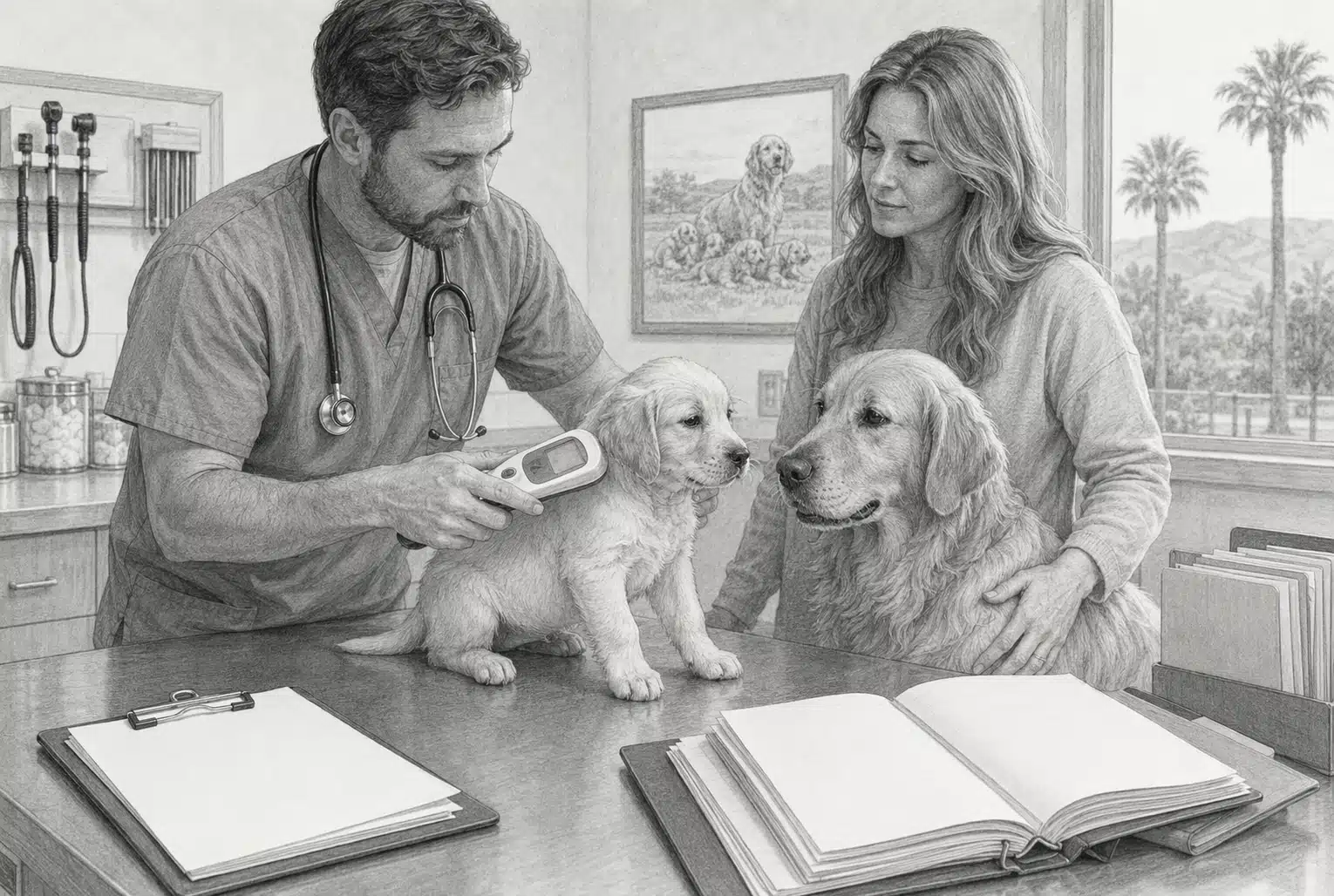
Ask for proof, not promises. A good breeder should show clear records for the puppy, the litter, and both parents before you place a deposit.
The documents you should ask to see
Use this checklist:
- Parent health testing results for breed-relevant issues
- Veterinary exam records for the puppy or full litter
- Vaccine and deworming record with dates
- Any treatment or medication history
- Parent identification that matches the records shown
- A signed disclosure packet for the puppy
California law says breeders must give buyers written disclosures that include inoculations, worming, vet treatment, and either a signed statement of no known disease or hereditary condition, or a vet-backed statement if a condition exists, according to California Health and Safety Code Section 122050.
| Record | What it should include | Red flag |
|---|---|---|
| Parent testing | Date, dog identity, result | Verbal summary only |
| Puppy vet record | Exam date, clinic, notes | No clinic name |
| Vaccine log | Product and date given | Missing dates |
| Deworming log | Product, dose date | “Done at home” only |
If a breeder says “our line is healthy” but cannot show records, treat that as a no.
How to judge the quality of the answer
Listen for detail. Strong breeders answer fast and stay consistent.
Look for these signs:
- They explain what was tested, why, and for which parent.
- They send records with names, dates, and matching dog IDs.
- They welcome follow-up questions.
- They do not get vague when you ask about past issues.
Weak answers sound like this:
- “Our vet checked everything.”
- “We’ve never had problems.”
- “The parents are healthy, so the puppies are too.”
The California Attorney General also warns buyers to confirm medical records with the vet directly if needed and to treat missing records as a red flag in its consumer alert on puppy market schemes.
Why California disclosure rules matter
These rules matter because they push sellers to put health claims in writing. That helps you compare breeders on facts, not charm.
As of January 1, 2026, California also requires sellers to give written notice of the animal’s source, state of birth, inoculations, worming, and vet treatment when the purchaser is located in California. Ask for that paperwork before pickup or delivery, not after.
Registration papers do not prove health. They only show recorded parentage.
Sage Puppies and other trust-first programs should be able to walk you through records calmly, with nothing hidden.
Also Read: 8 Tips for Buying Puppies for Sale in California Safely
3. Ask How the Puppies Are Raised Before They Leave Home
A breeder can have clean papers and still raise poorly prepared puppies. Ask exactly what happens in the home, every day, before pickup or delivery. The first weeks matter a lot. The AVMA review says exposure to relevant, positive stimuli should begin by or before 3 weeks of age and continue with the owner, while the first three months are a key social period according to AKC guidance.
What healthy early socialization should look like
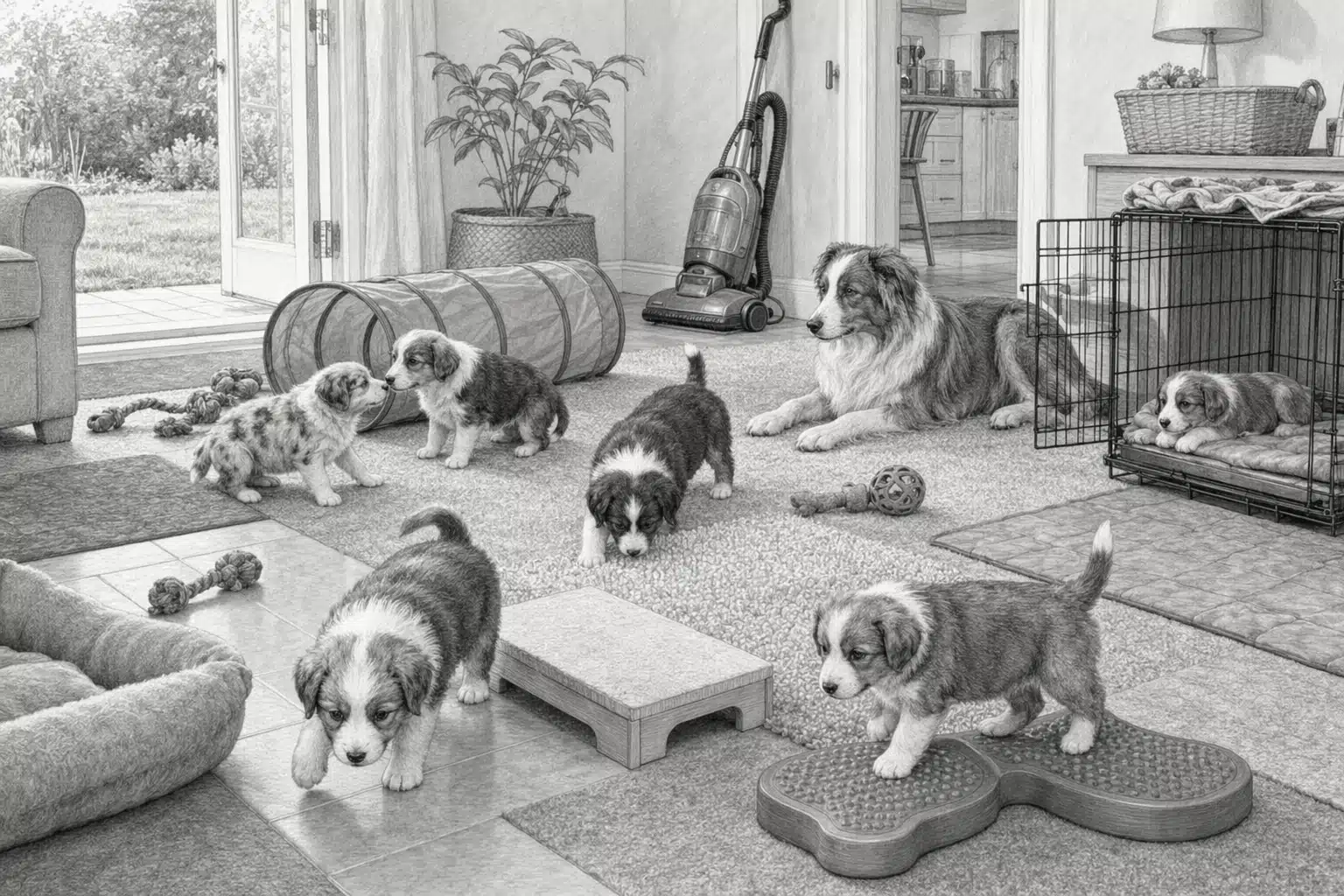
Good early socialization is not chaos. It is gentle, planned, and age-appropriate.
Look for puppies that are raised with:
- Daily human handling
- Time with mom and littermates
- Different surfaces like tile, carpet, grass, and crate mats
- Normal household sounds like vacuums, doors, and kitchen noise
- Short, positive new experiences instead of long, stressful outings
A strong breeder should explain the routine clearly.
| Healthy practice | Why it matters | Green flag |
|---|---|---|
| Handling from early weeks | Builds comfort with people | Puppy stays curious, not shut down |
| Litter interaction | Teaches bite control and dog manners | Play looks normal, not rough nonstop |
| Sound and surface exposure | Lowers fear of daily life | Breeder names specific examples |
| Rest and quiet time | Prevents overstimulation | Puppies can settle after play |
If a breeder says the puppies are “socialized” but cannot describe how, assume the work is light or inconsistent.
What you should look for during a visit or video call
You do not need a perfect house. You need a safe, clean, lived-in environment.
Watch for:
- Puppies moving freely, not huddled in a corner
- Clean bedding, fresh water, and enough room to rest away from potty areas
- Calm, friendly handling by the breeder
- Puppies recovering well after a new sound or person enters
- Mom appearing stable and comfortable, when appropriate to see her
Red flags are easy to miss on a cute video.
- Puppies look dull, dirty, or overly scared
- The space feels bare, isolated, or harsh
- The breeder avoids showing where puppies spend most of the day
- Every answer sounds vague
Ask the breeder to show a normal routine, not just a staged cuddle clip. That tells you far more.
4. Confirm That the Breeder Screens Buyers as Carefully as You Screen Them
A good breeder does not hand a puppy to the first person with a deposit. California’s consumer alert even says to be cautious if a breeder does not ask you questions or show concern for the puppy’s future home California consumer alert.
Questions a thoughtful breeder should ask you
Expect some real screening. That is a good sign, not a hassle.
A careful breeder may ask:
- Who will be home with the puppy each day?
- Have you owned dogs before?
- Do you rent or own, and does your lease allow dogs?
- Do you have kids or other pets?
- What is your plan for training, grooming, and vet care?
- Why this breed, not just this puppy?
- What happens if life changes and you cannot keep the dog?
According to the AKC on how breeders evaluate buyers, responsible breeders often look for financial readiness, patience, and a real match between family and puppy.
If a breeder never asks about your schedule, home, or dog experience, slow down.

What buyer screening says about breeder values
Buyer screening tells you the breeder is thinking past the sale.
It often means they care about:
- Placement over speed
- Temperament fit
- Long-term support
- Fewer returns and rehomes
- Protecting the breed and each puppy
That matters for first-time families. A breeder who screens well is more likely to guide you honestly if a puppy is not the right fit.
| Weak breeder behavior | Strong breeder behavior | What it suggests |
|---|---|---|
| Pushes for fast payment | Asks detailed home questions | Puppy welfare comes first |
| Talks only about color or size | Talks about routine and temperament | Better matching process |
| Avoids contract details | Reviews expectations clearly | Long-term responsibility |
The best breeders want a “yes” that still feels right a year from now, not just today.
5. Read the Contract and Post-Sale Support Before You Commit
A good breeder does not rush this step. They want you to read every line, ask questions, and sleep on it if needed.
What to look for in a fair puppy contract
Start with the basics. The contract should match what you were told by email, text, or phone. If anything changes at the last minute, pause.
In California, sellers must give buyers written health and source disclosures, and as of January 1, 2026, contracts for buyers located in California cannot require a nonrefundable deposit under California Health and Safety Code Article 2.5.
Look for these terms:
- Puppy’s full description, birth date, and price
- Vaccines, deworming, and vet care already given
- Any known illness, defect, or special care need
- Refund, replacement, or return terms
- Spay-neuter or breeding rights, if relevant
- Delivery, pickup, and missed pickup rules
- What happens if you cannot keep the puppy later
| Fair contract signs | Red flags |
|---|---|
| Clear health record | Vague “as-is” wording |
| Signed by both sides | Pressure to sign fast |
| Plain refund terms | No remedy if puppy is sick |
| Return policy explained | Deposit called nonrefundable |
If the breeder avoids sending the contract before payment, treat that as a trust issue.
Why after-sale support matters just as much as pickup day
Pickup day is not the hard part. The first two weeks at home are.
The California Attorney General says buyers should insist on a written health guarantee and ask whether the seller will accept the animal back if needed, according to this California DOJ consumer alert.
Ask:
- Who do I contact after pickup?
- How fast do you respond?
- Do you help with feeding, sleep, crate training, and transition stress?
- If my vet finds a problem, what is your process?
Strong post-sale support often tells you more about a breeder than the sales page does.
A breeder like Sage Puppies should make the next steps feel clear, calm, and supported, not confusing once payment clears.
6. Compare the Breeder’s Process to What Responsible Breeding Should Feel Like
The green-flag pattern
A good breeder process feels calm, clear, and a little selective. That is a good sign. The seller should ask about your home, schedule, kids, other pets, and what kind of puppy fits your life. California’s Attorney General says reputable breeders meet buyers, share records, explain how puppies were raised, and care where the puppy goes in its consumer alert.
You should usually see these steps:
- Application or screening call
- Honest answers about health testing and temperament
- Clear contract and pickup or delivery terms
- Written health and vaccine records
- Ongoing support after placement
If the breeder seems more focused on match quality than speed, that usually means they are protecting both puppy and family.
The stop-and-reconsider pattern
Bad breeder processes feel rushed, vague, or overly slick. If the seller pushes a deposit before screening you, avoids live questions, or keeps changing details, pause. In California, sellers must provide specific written disclosures, and as of 2026, contracts arranged while the buyer is in California cannot require a nonrefundable deposit under AB 506.
Watch for this pattern:
- “Pay now, details later”
- No parent info or missing records
- Meeting only in parking lots or by shipping handoff
- Pressure to decide the same day
- No return policy or take-back commitment
Responsible breeding should feel transparent, steady, and easy to verify – not stressful.

If you want a breeder that makes vetting easier, start with Sage Puppies. Their family-first process, health-tested parents, and clear pickup or delivery options help qualified families buy with more confidence. Review available puppies, pricing, and how it works, then submit an application when the fit feels right.
Frequently Asked Questions
Q1: where to buy puppies in California
Start with breeders who welcome questions, share health testing, and let you see how puppies are raised. Skip listings that rush payment or hide details. If you want pickup outside California, Sage Puppies in South Jordan, Utah is worth considering.
Q2: How do I know a breeder is responsible?
Look for clear records, parent health screening, clean living spaces, and a steady process for matching puppies to families. A good breeder asks you questions too. That shows they care where each puppy goes, not just making a sale.
Q3: Should I avoid breeders who offer delivery?
Not always. Delivery can be fine if the breeder explains how it works, who handles transport, and what support you get after pickup. The red flag is vague answers, no contract, or pressure to pay before you verify basics.
Q4: What papers should I ask to see?
Ask for vaccination records, deworming history, a sales contract, and parent health test results when relevant. You should also get the puppy’s birth date, microchip details if included, and clear notes on food, routine, and early socialization.
Q5: What is the biggest red flag when buying a puppy?
The biggest red flag is secrecy. If a seller avoids direct questions, will not show where puppies live, changes details, or pushes a deposit before trust is built, walk away. Good breeders make the process feel calm, clear, and documented.
Conclusion
A good breeder should make you feel informed, not rushed. The safest path is simple: verify identity, ask for health records, review the contract, and confirm how the puppy was raised. If a seller avoids questions, changes the pickup plan, or pushes payment before proof, walk away.
California buyers have more reason to slow down and check details now. State law effective January 1, 2026 requires key source and medical disclosures, and contracts with nonrefundable deposits can be void in covered situations under California Health and Safety Code Article 2.5. The state also warns buyers to avoid parking lot meetups, verify records, and use traceable payment, according to the California Attorney General consumer alert.