
Quick Summary: First-time puppy buyers in Washington should ask breeders for detailed health testing records of the parents, including breed-specific screenings and verifiable results. They should review veterinary records for the puppy, understand the health guarantees in the contract, and ensure the puppy was raised in a clean, socialized environment. Asking about travel, support, and red flags like vague answers or pressure helps avoid future health issues and scams.
If you are comparing puppies for sale in Washington, one breeder may say the parents are health tested. That sounds good, but Puppy Health Questions start right there: which tests were done, who did them, and will the breeder show you the records before you reserve a puppy?
That is the gap this guide fixes. Many First Time Puppy buyers hear reassuring words, but they do not know how to check if a breeder is careful, honest, and consistent. The result is confusion, missed red flags, and costly health issues later.
This article turns Puppy Health Questions into a clear buyer screen. You will learn what records to ask for, how to read breeder answers, and which Puppy Health Tips matter most before you commit.
At Sage Puppies, we focus on thoughtfully raised Havanese, Havapoo, and Cavapoo puppies, with a trust-first process built for serious families. These Puppy Health Questions help you buy with calm, not guesswork.
What Health Testing Should the Parents Have Done?
Ask for the parent dogs’ exact health tests. Do not accept “our dogs are healthy” as the answer. A good breeder should name each screening, show when it was done, and explain which parent had which result.
Use a simple checklist:
- Patella evaluation
- Eye exam
- Cardiac exam
- Breed-relevant DNA testing
- Any extra screening tied to that line or breed
For small companion breeds, this matters. OFA notes that patellar luxation is strongly suspected or known to be inherited in many toy and miniature dogs, and eye exams in the CAER program are done by board-certified ophthalmologists through a formal screening process according to OFA patella guidance and OFA eye certification standards.
If a breeder cannot tell you the exact test names, treat that as a warning sign.
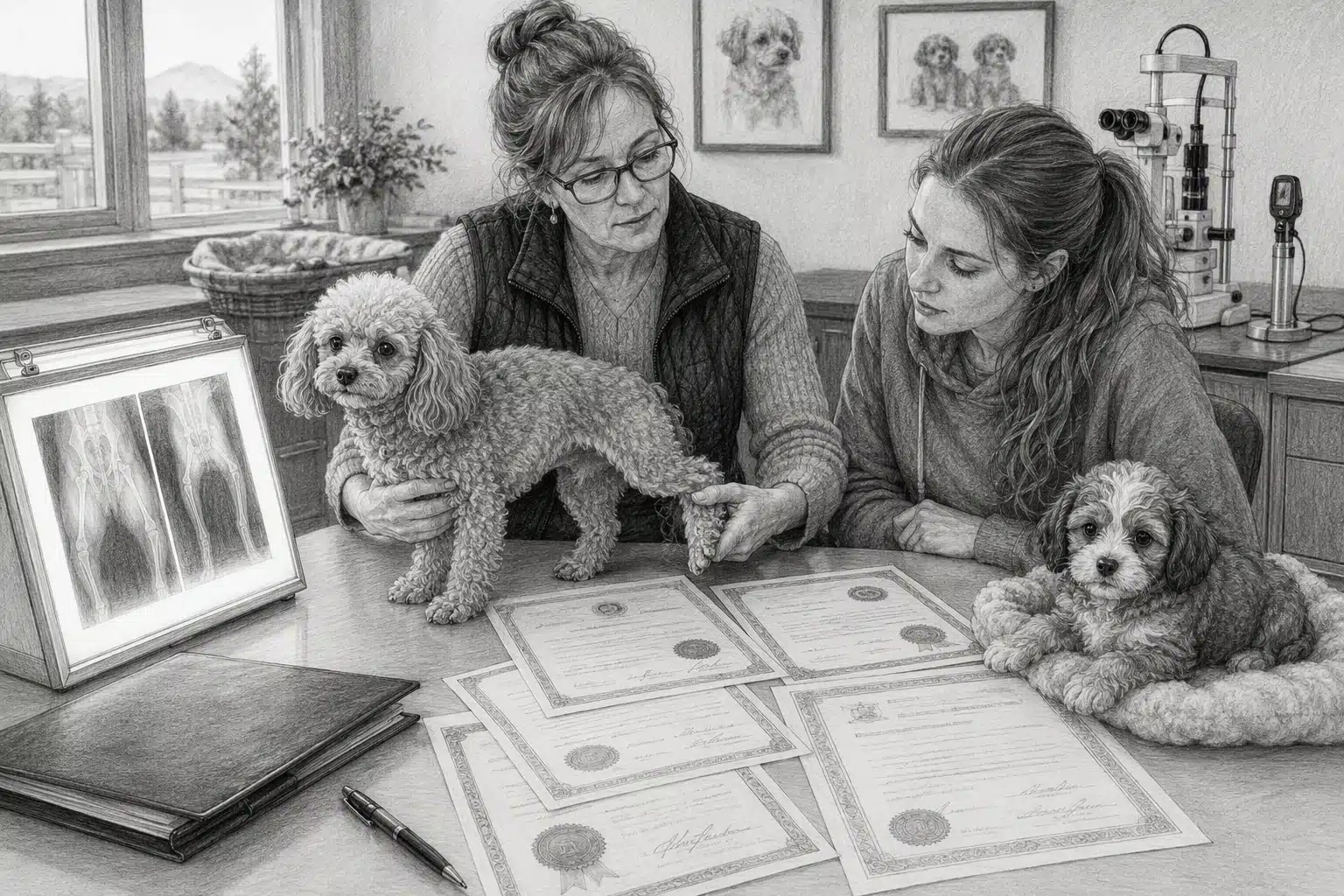
Next, confirm that the results are available through a recognized source, not just a verbal claim or phone photo. The best case is a public record you can verify yourself. OFA’s CHIC program explains that breed-specific screening protocols are built with parent clubs, and dogs only earn CHIC recognition when the required screenings are completed and results are publicly available in the database through OFA CHIC.
Ask for:
- The parent dogs’ registered names
- OFA or other registry numbers
- Copies of the most recent reports
- The age of the parent when tested
Public, verifiable records beat private promises every time.
Last, match the screening to the breed mix and your puppy’s future. A Havanese, Havapoo, or Cavapoo buyer should expect testing that fits small-breed joint, eye, and heart concerns, plus DNA panels relevant to the parent breeds. If you want a hiking buddy, therapy prospect, or family dog with kids, ask how those health results shaped the breeder’s pairing choices.
A careful breeder is not just testing dogs. They are using those results to make smarter matches.
Also Read: 10 Questions to Ask Before Buying a Puppy Locally
Can I See the Parents’ Health Records and Veterinary Proof?
Yes – and you should ask early. A solid breeder will show parent health testing, the puppy’s current records, and clear vet paperwork without getting defensive. For breed-specific screening, the AKC notes that health testing should follow parent club guidance, and many breeders use OFA and CHIC records to document those results through AKC health testing requirements and the OFA database.
Request the puppy’s current medical paperwork
Ask for the puppy’s file before you place a deposit, not after. You want paperwork you can read, save, and bring to your own vet.
Request:
- A vet exam record
- Vaccine record with dates
- Deworming record with dates and product names
- Any fecal test or treatment notes
- A health certificate if travel or delivery applies
| Document | What it should show | Why it matters |
|---|---|---|
| Vet exam record | Date, findings, clinic info | Confirms the puppy was actually seen |
| Vaccine record | Vaccine name and date | Helps your vet continue the schedule |
| Deworming record | Product and dose dates | Shows more than a verbal promise |
| Health certificate | Exam for transport if needed | Important for interstate travel |
If a breeder says, “Our vet checked them all,” but cannot share records, treat that as a red flag.
Ask what the puppy has already received
Do not settle for “up to date.” That phrase is too vague. Ask exactly what the puppy has had so far.
Use this quick checklist:
- Which vaccines were given?
- On what dates?
- Has the puppy been dewormed more than once?
- Were any meds given for diarrhea, parasites, or skin issues?
- Has a microchip been placed yet?
The AVMA explains that puppies need a vaccine series that often starts at 6 to 8 weeks and continues until 16 weeks or older, so one early vaccine does not mean the puppy is fully protected.
Check whether the breeder recommends an early vet visit
A careful breeder should want you to book a prompt exam with your own vet. The CDC advises new owners to take a dog to a veterinarian for a health check-up within a few days after getting it, and AKC notes many breeder contracts require an exam within about three days.
Good breeders welcome a second set of eyes. They do not avoid it.
That early visit helps you:
- Confirm the puppy’s condition at pickup
- Review the vaccine plan
- Catch parasites, cough, or stomach issues fast
- Start a long-term care record with your local clinic
Also Read: Puppies for Sale in Washington: What Makes a Listing Reliable
What Should the Contract Say About Health and Returns?
Go back to the parent guide, [Washington Puppy Health Questions Every First-Time Buyer Should Ask], before you sign anything. This part matters because a breeder’s contract shows what they will actually stand behind.
Look for a clear health guarantee, not a vague reassurance
A good contract should spell out what is covered, for how long, and what proof is needed. “Healthy at pickup” is not enough. You want plain terms for illness found right away and for serious inherited issues found later.
Use this quick check:
| Contract item | What you want to see | Red flag |
|---|---|---|
| Initial health guarantee | Specific exam window and written vet findings | “Buyer accepts puppy as-is” |
| Hereditary coverage | Named defects or a clear standard | Vague promise with no remedy |
| Remedy | Refund, replacement, or credit clearly stated | Breeder decides everything alone |
| Buyer duties | Simple, realistic steps after pickup | Tiny deadlines buried in fine print |
Washington law also blocks certain dog or cat ownership financing contracts as void and unenforceable under RCW 63.10.070. That is a good reminder to read every payment and ownership term closely.
Confirm the veterinarian timeline after pickup
Most breeder contracts require you to book a vet exam fast after pickup. Many use a 48 to 72 hour window, while some give a few days. Across many state pet purchaser laws, buyers often must get a vet certification within a short period to use a health remedy, according to the Animal Legal & Historical Center’s table of Pet Purchaser Protection Acts.
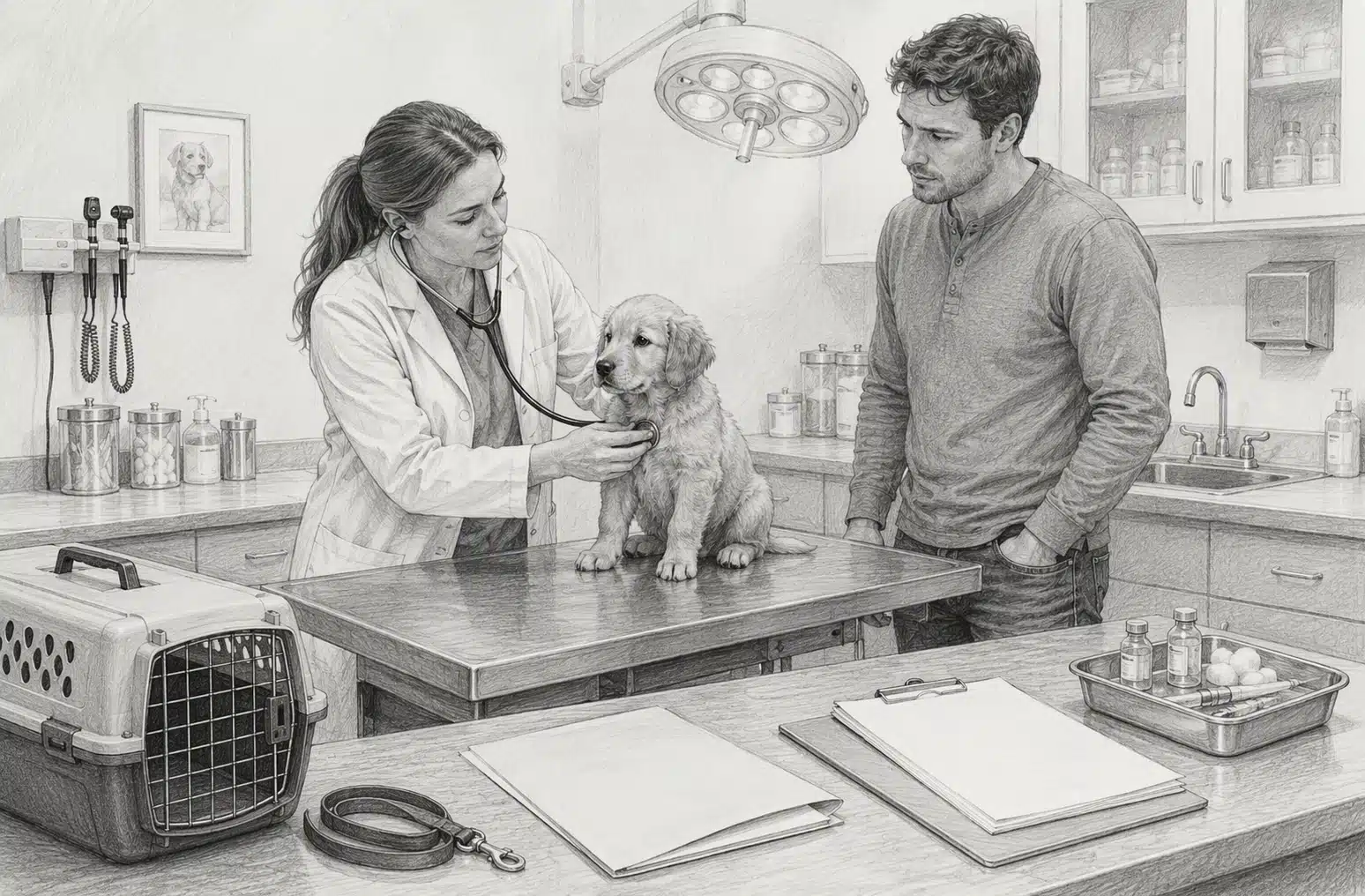
Before you take your puppy home, confirm:
- Exact deadline for the first exam.
- What documents your vet must provide.
- Who pays if a problem is found.
- What happens if the issue is treatable, inherited, or life-threatening.
If the contract says you must act within a set window, book your vet visit before pickup day.
Make sure there is a return-to-breeder clause
Life changes. Health crises happen. A strong contract should say the puppy must come back to the breeder if you cannot keep it.
That clause protects the dog from resale, neglect, or shelter surrender. It also tells you the breeder feels responsible for every puppy long term. For first-time buyers, that is a trust signal worth taking seriously.
Look for language like:
- Buyer must contact breeder first
- Breeder has first right to take the dog back
- No rehoming without breeder approval
- Return terms are clear even if no refund applies
The best contracts protect both sides, but they should protect the puppy most of all.
How Do I Know the Puppy Is Being Raised With Health in Mind?
Start with daily life, not promises. A healthy puppy is usually raised in a clean, calm home with planned handling, careful supervision, and thoughtful screening long before pickup day. If you have not read the broader buyer checklist yet, go back to the main pillar post for the full Washington decision process.
Ask how the puppies are socialized and supervised
Ask what the breeder does each day, not just whether the puppies are “well socialized.” Good answers sound specific.
- Who handles the puppies
- How often they are held and observed
- What sounds, surfaces, and routines they meet
- How the breeder watches for stress, fear, or rough play
Cornell notes that responsible breeders provide early socialization and raise puppies in a clean environment, not in isolation (Cornell breeder guidance).
Ask for examples from this litter, not a generic socialization speech.

Ask how the breeder manages cleanliness and parasite prevention
Cleanliness is not about a spotless photo. It is about a system.
Use this quick checklist:
- How often is the puppy area cleaned?
- What happens after accidents?
- How are food bowls, bedding, and play areas sanitized?
- What is the deworming or parasite prevention plan?
- When are puppies checked if loose stool or vomiting appears?
CDC says puppies can carry germs even when they look healthy, and it advises prompt cleanup of waste, disinfection, handwashing, and routine vet care (CDC puppy illness prevention).
| Good sign | Why it matters |
|---|---|
| Clear cleaning routine | Lowers germ buildup |
| Fecal checks or deworming plan | Helps catch parasites early |
| Fast isolation of sick pups | Reduces spread in the litter |
A breeder should explain the routine with ease. Vague answers are a warning sign.
Ask whether the breeder screens buyers as carefully as buyers screen the breeder
Careful breeders do not sell to everyone who can pay. They ask about your home, schedule, kids, travel, grooming, and support plan.
That matters because good placement protects the puppy’s health and stress level after go-home day.
Look for breeders who:
- Use an application
- Ask follow-up questions
- Match by temperament, not color alone
- Stay available after pickup
That approach fits a trust-first program like Sage Puppies, where the goal is a good long-term fit, not a fast sale.
Also Read: https://sagepuppies.com/florida-puppy-pickup-guide-for-safe-in-person-handover
Which Questions Matter Most for Washington Buyers Choosing Pickup or Delivery?
Washington buyers should ask about travel safety, paperwork, and support before they commit. That keeps pickup or delivery clear, legal, and much less stressful.
- Ask how the puppy will travel safely to you
Ask who handles the puppy in transit, how long the trip should take, and what backup plan exists for delays. If a breeder uses air transport, ask about crate setup, temperature limits, and same-day pickup from the carrier. Federal transport rules require written feeding and watering details for dogs shipped in commerce, and carriers cannot accept unsafe enclosures under 9 CFR 3.14.
A good answer sounds specific, not vague. You want names, steps, and timing.

- Ask what documents arrive with the puppy
For a puppy entering Washington through a sale or change of ownership, ask if you will receive the health certificate or CVI, vaccine record, microchip details if used, feeding instructions, and signed contract copies. Washington says dogs entering the state may need a CVI and current rabies details depending on age and travel setup, and 2026 emergency rules added tighter entry rules for some origins on the Washington State Department of Agriculture page.
| Document | Why it matters |
|---|---|
| CVI or health certificate | Confirms the puppy was examined for travel |
| Vaccine record | Helps your vet plan next care |
| Contract copy | Clarifies pickup, delivery, and buyer duties |
- Ask how follow-up support works after the puppy arrives
Ask who you contact in the first 72 hours, what questions they help with, and whether support happens by text, call, or email. You want help with eating, crate adjustment, potty habits, and your first vet visit. Sage Puppies should be able to explain this plainly.
Also Read: https://sagepuppies.com/havapoo-puppies-near-san-diego-a-california-buyers-guide
Red Flags That Should Make You Pause
Watch for vague or evasive health answers
A good breeder can explain health testing in plain English. If answers stay fuzzy, pause. You should hear what tests were done on the parents, what the results were, and what those results mean for your puppy. The AKC notes that responsible breeders should openly share proof of health records and screenings in its breeder guidance.
- “Our dogs are healthy” is not enough
- “The vet said they look great” is not the same as breed-specific testing
- Missing parent records is a real concern
If you feel talked around instead of informed, treat that as an answer.
Watch for pressure before documentation
Do not rush into a deposit because someone says another family is waiting. Pressure is a warning sign, especially if paperwork comes later. The AKC says buyers should be careful if a seller seems anxious to complete the sale fast or hesitates to provide papers in its puppy scam advice.
| Pressure tactic | Why it matters |
|---|---|
| “Send money today” | Puts emotion ahead of proof |
| “Papers will come later” | Leaves you exposed |
| “No calls, text only” | Makes real verification harder |
Watch for policies that do not match lifelong responsibility
Strong breeders think past pickup day. Weak policies often show up in the contract.
- No return policy if life changes
- No clear health record handoff
- No post-pickup support
- No questions for you as the buyer
A breeder who will not take responsibility for the puppy’s future should not be your first choice.

If you want a clearer, safer way to choose your puppy, start with Sage Puppies. Their family-first process, health-tested parents, and well-supported Havanese, Havapoo, and Cavapoo puppies help Washington buyers ask better questions and move forward with confidence. Review available puppies, pricing, and how it works, then apply when the fit feels right.
Frequently Asked Questions
Q1: What questions should first-time puppy buyers in Washington ask breeders about puppy health testing?
Ask which tests the parent dogs had, who did them, and whether you can review the results. Ask about breed-specific risks, past puppy health patterns, and what the breeder does if a concern shows up after you bring the puppy home.
Q2: How can new puppy owners in Washington ensure the breeder provides health guarantees and veterinary records?
Ask for the health guarantee in writing before you place a deposit. Review the vet record, vaccine dates, deworming notes, microchip details, and any exam findings. A careful breeder will explain each document clearly and give you time to read it.
Q3: What are the key health concerns for first-time puppy buyers in Washington to discuss with breeders?
Focus on knees, heart, eyes, airway issues, dental crowding, parasites, and low blood sugar in small breeds. Also ask how the puppy handles stress, sleep, eating, and travel, since those often affect the first week at home.
Q4: Should I ask to see the puppy with its mother?
Yes. Seeing the puppy with its mother can tell you a lot about care, body condition, and temperament. If an in-person visit is not possible, ask for clear, recent photos or a live video showing normal movement and interaction.
Q5: What is a red flag when a breeder answers health questions?
Watch for vague answers, missing records, pressure to pay fast, or claims that their puppies “never” have issues. > Responsible breeders speak plainly, show paperwork, and explain support after pickup, like the approach careful programs such as Sage Puppies aim to provide.
Conclusion
Buying a puppy in Washington gets much simpler once you turn health worries into a clear list of breeder questions. Ask for proof of parent health testing, not vague promises. Confirm how the puppy was raised, what support comes after pickup, and whether records are easy to review. That matters more than polished ads or quick availability.
Washington also gives buyers useful guardrails. State law limits large-scale dog breeding conditions and sets disclosure rules for some retail pet store sales under Washington statutes. For puppies entering the state, rabies and import rules also matter, according to the Washington Department of Health.
The best breeder answers hard questions calmly, clearly, and with paperwork.



