
Quick Summary: Before visiting an Idaho puppy breeder, ask for proof of health testing, vet records, and a clean, social environment. Look for transparent communication, clear contracts, and well-raised puppies to ensure responsible breeding. The visit should help you confidently decide if the breeder is a good fit for your family and your puppy’s well-being.
Before you set a visit with an Idaho Puppy Breeder, know what to ask for first. You need proof, not promises. That means real health testing records, clear notes on the dam’s living space, early socialization details, and written policies that show the litter was raised with care.
That is where this Puppy Breeder Checklist helps. Many families show up excited, then forget the key questions. Later, they realize they never confirmed the parent dogs were tested, how the puppies were handled each day, or what happens after pickup. A good Puppy Visit Checklist keeps emotion from leading the whole decision.
This guide gives you a simple Puppy Breeder Checklist you can use before you drive, before you schedule, and before you place a deposit. You will learn what documents to review, what to notice during communication, and which red flags mean you should pause.
We write for families who want a well-bred, well-raised small companion, not a quick sale. That includes buyers comparing breeders in Idaho, Utah, and beyond. Use this Puppy Breeder Checklist to ask better questions, spot strong breeder practices, and move forward with more confidence.
1. Confirm the breeder is worth a visit before you go
A good breeder should save you time before you ever get in the car. Ask for proof first, then decide if a visit makes sense.
What a responsible breeder should be willing to share first
Before you visit, ask for the basics in writing. A serious breeder should not get vague, defensive, or rush you to leave a deposit.
They should be willing to share:
- Parent health testing results
- Breed-specific testing used for that pairing
- Vaccination and deworming plan for puppies
- A sample contract
- Pickup or delivery steps
- Photos or video of where puppies are raised
- How they match puppies to families
Cornell says responsible breeders should test for conditions recommended by the breed club and provide early socialization and lifelong support, not just a puppy sale Cornell’s breeder guidance.
Use this quick screen before you book a visit:
| Green flag | Yellow flag | Red flag |
|---|---|---|
| Sends records promptly | Says records come later | Refuses to show records |
| Explains testing clearly | Uses buzzwords only | Says DNA test is enough |
| Shares contract in advance | Wants deposit first | Pressures same-day payment |
| Shows home-raising setup | Only shares glam photos | Avoids any live video or tour |
Tip: USDA licensed does not automatically mean high quality. Licensing can apply in some sight-unseen sales situations, but it is not the same as strong breeding ethics.
Questions that signal real breeder knowledge
Good breeders answer with detail, not sales talk. Ask questions that force clear, specific replies.
Start with these:
- What health issues do you watch for in this breed mix or line?
- Which tests were done on both parents, and can I verify them?
- Why did you choose this pairing?
- How are the puppies socialized before they go home?
- What would make you say no to a family?
- If I cannot keep the dog later, what happens?
The OFA says you should ask to verify health screenings and beware of breeders who offer results that cannot be checked OFA breeder interview questions.
Warning: If a breeder talks only about color, size, or how fast puppies sell, stop there. A careful breeder talks about health, temperament, and fit first.
For families comparing options, this is where a transparent program like Sage Puppies stands out – clear records, family-raised care, and a defined next step.
Also Read: 10 Adorable Havapoo Colors You Need to See (2026)
2. Verify health testing, records, and veterinary care
Ask for records before you drive to see puppies. A careful Idaho breeder should be ready to share clear paperwork, not vague promises. Under USDA dog care rules, regulated facilities must keep a written veterinary care program and medical records that include vaccines, treatments, test results, and each dog’s identity, according to 9 CFR 3.13.
Documents to request before the visit
Request these items in advance:
-
Parent health testing results
- Genetic screening tied to the breed mix
- Any heart, eye, patella, or hip records if relevant
- Registered names or ID numbers that match the parents on site
-
Puppy veterinary records
- Exam date
- Vaccine dates and product names
- Deworming dates and medication used
- Notes on any illness, treatment, or follow-up
-
Breeder care documents
- Written health guarantee or purchase contract
- Feeding instructions
- Microchip details, if already placed
- A sample take-home packet
-
Veterinary oversight proof
- Name of the attending clinic or veterinarian
- A written care plan if the breeder is USDA regulated
If a breeder says, “Our vet handles all that,” but will not show records, slow down.
| Record | Why it matters | Red flag |
|---|---|---|
| Parent test results | Shows breeding decisions were planned | “We do not keep copies” |
| Puppy exam record | Confirms recent hands-on care | No exam date |
| Vaccine and deworming log | Helps your vet continue care safely | Missing product names |
| Contract and health terms | Shows what happens after pickup | Verbal only |

What the records should help you understand
The paperwork should help you answer a few basic questions fast:
- Was this puppy bred with health in mind?
- Has this puppy seen a veterinarian on a normal timeline?
- Do the dates, names, and treatments match the puppy in front of you?
USDA guidance says a written dog care program should cover vaccine schedules, parasite control, annual exams, and preventive care for coat, eyes, ears, skin, teeth, and nails, as explained by APHIS veterinary care guidance. Even if a breeder is not USDA regulated, that is still a smart standard to use.
Look for records that show:
- Consistency – dates line up and forms match
- Specifics – real drug names, doses, and findings
- Follow-through – notes for any issue that came up
- Planning – clear next vaccine or exam due date
Good records do not guarantee a perfect puppy. They do show the breeder is organized, honest, and easier to work with after pickup.
Also Read: Health-Tested Puppies for Sale Near Me: Questions to Ask Breeders
3. Evaluate the visit environment, the dam, and the puppies
What to look for in the home or puppy area
Start with the setting before you fall in love with a face. The space should feel clean, calm, and lived in, not staged for five minutes. A strong odor, heavy waste buildup, or sticky floors are obvious red flags. So are puppies kept far from normal household life with little sound, touch, or movement.
A good breeder area usually includes:
- Clean water
- Safe flooring with traction
- A warm rest area and a separate potty area
- Toys, surfaces, and mild household noise
- Room to move, play, and nap
According to an AVMA literature review on puppy socialization, puppies benefit from diverse, positive early experiences and can struggle later if raised in barren environments.
Ask to see:
- Where the puppies sleep
- Where they play
- How they are cleaned up after
- What daily handling looks like
- Whether they hear normal sounds like vacuums, doors, and voices
You should also watch the dam, if she is available and it is safe for her. She does not need to be wildly friendly with strangers. She should look healthy, alert, and appropriately protective without frantic panic or shut-down fear.
A calm mother in a clean, enriched home tells you more than a polished sales pitch.
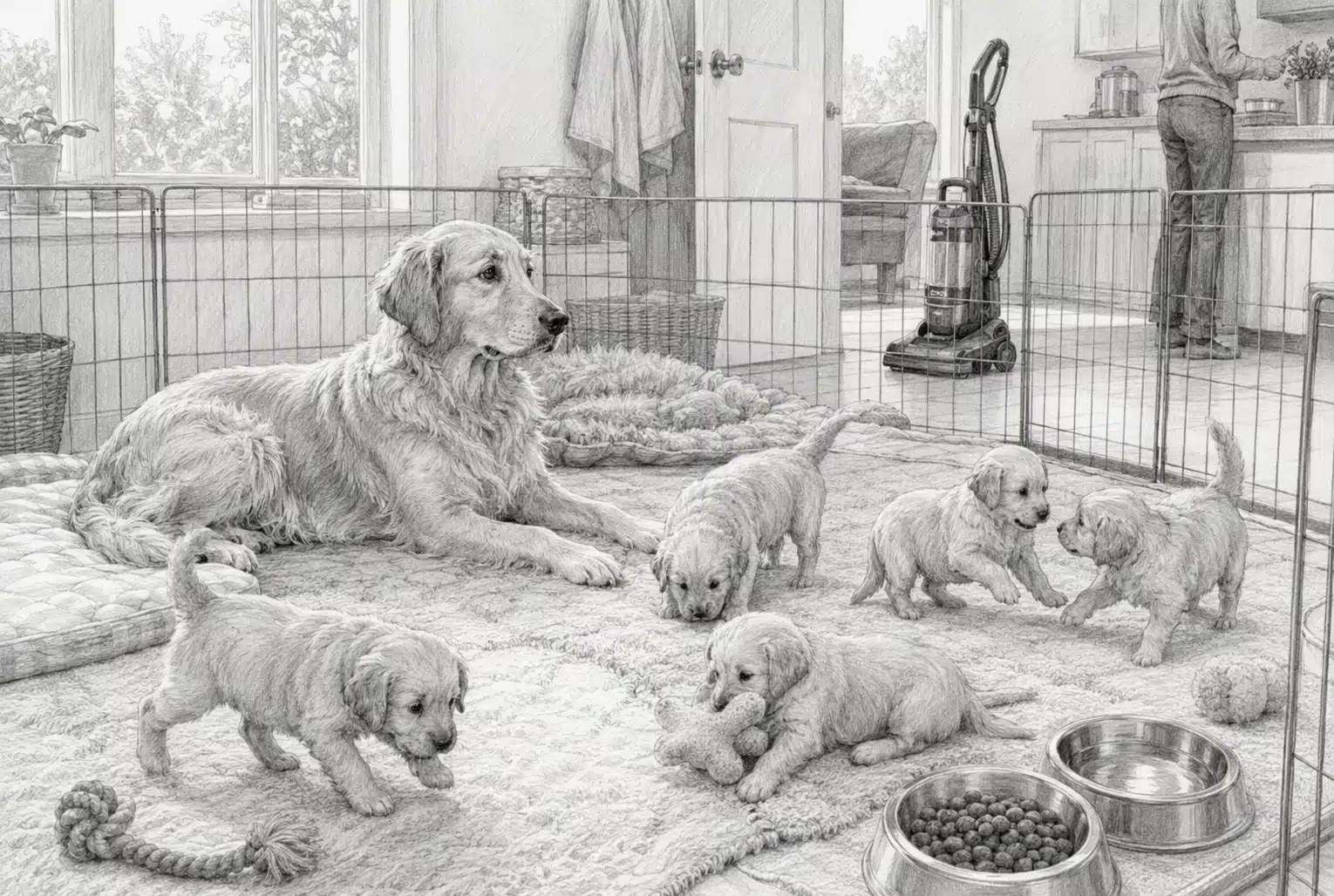
Use this quick check:
| Area | Good sign | Concern |
|---|---|---|
| Cleanliness | Fresh smell, dry bedding, tidy setup | Strong odor, dirty coats, waste buildup |
| Social setup | Puppies near family activity | Isolated shed, garage, or back room only |
| Enrichment | Toys, textures, safe exploration | Bare pen with little stimulation |
| Dam | Healthy, steady, relaxed enough | Extreme fear, panic, or poor condition |
How to read puppy temperament during the visit
Do not judge a puppy on one sleepy moment. Watch the whole litter for 15 to 20 minutes. The goal is not to find the boldest puppy. It is to find a puppy that can notice something new, recover, and re-engage.
The first weeks matter. AAHA behavior guidance notes that gentle handling and structured early exposure during this stage can shape later behavior.
Look for puppies that:
- Approach with soft curiosity
- Recover after a surprise
- Follow people for brief interaction
- Play, then settle
- Accept gentle handling without freezing or thrashing
Be careful with these patterns:
- Constant hiding
- Hard staring or repeated lunging
- Nonstop frantic movement
- Flat, shut-down behavior
- No recovery after mild stress
Try a simple visit checklist:
- Sit quietly and let puppies come to you
- Clap softly or drop a light item nearby
- Watch who startles, then recovers
- Gently touch paws, ears, and chest
- Ask which puppy matches your home pace
The best match is usually the puppy with flexible, steady energy, not the loudest or the shyest.
Also Read: Havanese, Havapoo & Cavapoo Puppy Care Blog
4. Check the contract, support, and return policy before reserving
A good breeder visit should end with clear paperwork, not vague promises. Put extra weight on the written terms. The AKC recommends a written agreement that clearly states each side’s duties, health records, and return terms in its contract guide for puppy buyers.
The written terms families should expect
Before you leave a deposit, ask for the full contract to read at home. If a breeder will not share it until after payment, slow down.
Look for these basics in writing:
- Puppy details – breed, sex, birth date, color, and microchip if placed
- Price terms – total price, deposit amount, and whether the deposit is refundable
- Health records – vaccines, deworming, exam notes, and what paperwork goes home with you
- Pickup or delivery terms – timing, who arranges transport, and what happens if plans change
- Return policy – whether the breeder will take the puppy back later if life changes
- Spay or neuter terms – if the puppy is sold as a pet only
- Registration details – if papers are included, limited, or not applicable
| Contract item | What you want to see | Red flag |
|---|---|---|
| Deposit | Clear refund terms and timing | “Nonrefundable” with no explanation |
| Health clause | Specific records and next-step care | Verbal promises only |
| Return clause | Breeder accepts puppy back | No help if placement fails |
| Delivery | Written handoff plan | Surprise fees or vague shipping |

Tip: Federal rules can apply to sellers who sell puppies sight unseen in some cases, so written pickup or delivery terms matter. The USDA licensing framework for certain sellers appears in 7 USC 2134.
Support after the puppy comes home
The best breeders do not disappear after pickup day. Ask what support you get in the first week, first month, and beyond.
A solid post-home plan often includes:
- Feeding and transition notes
- Sleep and crate tips
- Potty training guidance
- Socialization advice for small breeds
- A clear contact person for early questions
Ask one direct question: If this puppy is not the right fit, what happens next? A careful breeder should have a written return path that protects the dog first.
A return policy is not a bad sign. It usually shows the breeder cares where the puppy ends up.
If you are comparing Idaho breeders with programs like Sage Puppies, this is a place where quality shows fast. Clear support, calm communication, and a take-back policy often tell you more than a polished website.
Also Read: Puppy Care Blog & Resources | Sage Puppies
5. Use the visit to decide whether the breeder fits your family
Use the visit for one thing: a clear decision. A responsible breeder should let you see how puppies live, how adults act, and how they handle your questions. The AKC says you should observe cleanliness, meet at least one parent, and look for puppies that seem lively, clean, and comfortable with the breeder in a home or kennel visit according to AKC guidance.
Use this simple scorecard before you leave:
| Question | Yes = proceed | No = pause |
|---|---|---|
| Did the space feel clean, calm, and safe? | Good sign | Red flag |
| Did the breeder answer hard questions clearly? | Builds trust | Walk away if evasive |
| Did the puppies seem handled, curious, and settled? | Likely good early care | Ask more |
| Did at least one parent seem stable and well cared for? | Better family fit clue | Major concern |
| Did you feel respected, not rushed? | Healthy process | Poor fit |
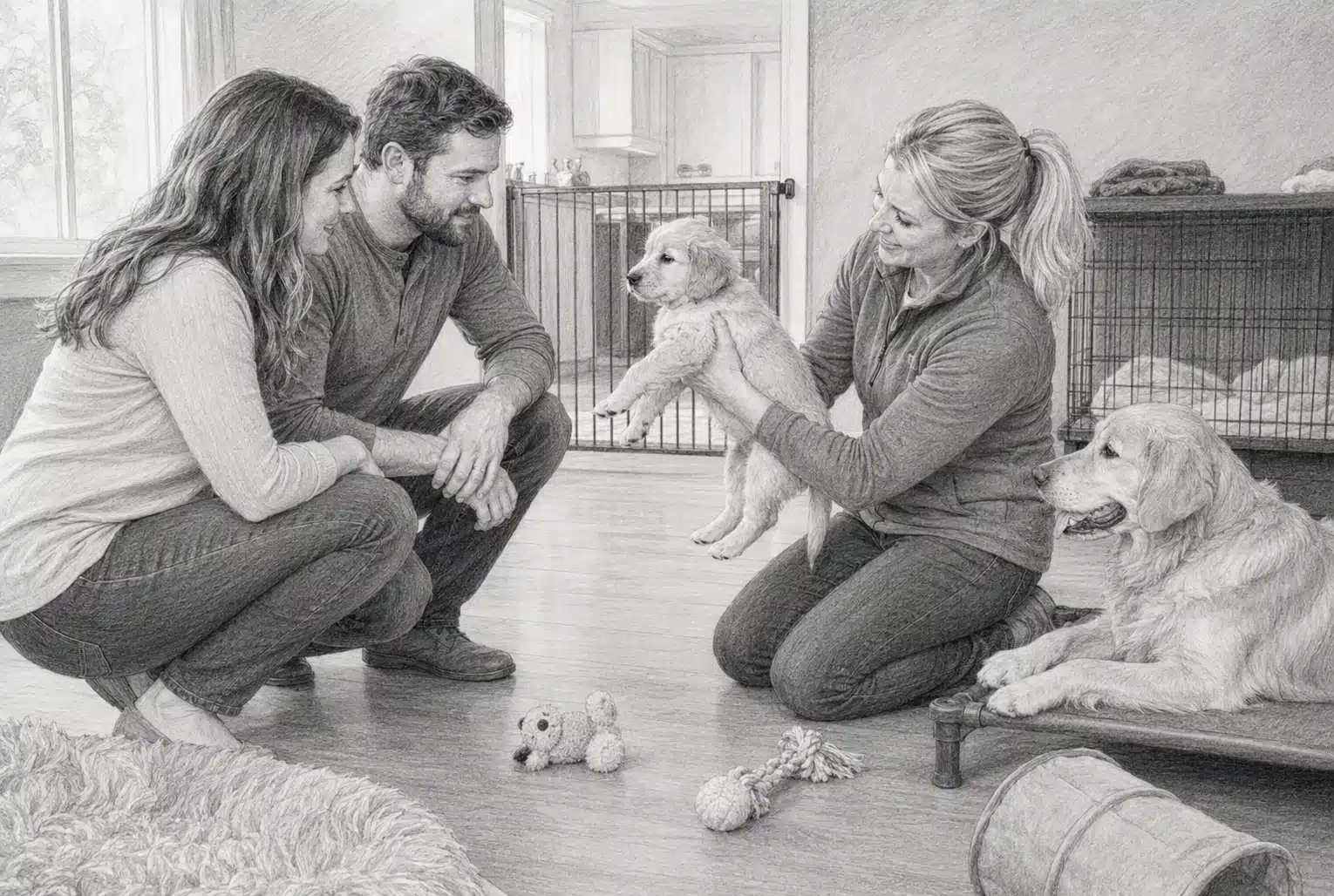
Make the final call with a yes-or-no framework:
- Say yes if you saw consistency. Clean setup, calm dogs, clear records, and a breeder who screens families.
- Say no if you felt pressure, saw sick or fearful dogs, or heard vague answers.
- Say not yet if the breeder looks promising but you still need time to review testing, contract terms, pickup, or delivery.
If you have young kids, your visit matters even more. The CDC says adults should always supervise young children around dogs, even trusted family pets, so calm adult dogs and thoughtful breeder guidance matter for family fit per the CDC.
If the breeder passes, go back to the pillar checklist and move to your next step: application, pricing, and pickup or delivery planning.

Ready to move from checklist to real answers? Sage Puppies makes the next step clear with health-focused breeding, family-raised puppies, and a transparent process for Havanese, Havapoo, and Cavapoo families. Review Available Puppies, Pricing and Reservation, How It Works, and Delivery or Pickup, then submit your application when you feel confident and prepared.
Frequently Asked Questions
Q1: What are essential steps for preparing my home before bringing home a puppy in Idaho?
Puppy-proof first. Remove cords, houseplants, shoes, and small items. Set up a crate, playpen, food area, and potty plan before pickup day. Idaho weather matters too, so have safe indoor potty backup, a warm bed, and a vet chosen near home.
Q2: How do I choose a reputable Idaho puppy breeder to ensure healthy and well-socialized puppies?
Ask for proof, not promises. Review parent health testing, vaccine and deworming records, and a written contract. Check how puppies are raised, handled, and exposed to daily life. A good breeder answers clearly, welcomes questions, and never pushes you to pay fast.
Q3: What supplies are recommended for the first 30 days with a new puppy in Idaho?
Start with the basics:
- Crate
- Exercise pen
- Food and water bowls
- Collar, leash, ID tag
- Same food the breeder uses
- Enzyme cleaner
- Chew toys
- Grooming brush
- Puppy-safe shampoo
- Blanket
- Training treats
Q4: What documents should I review before I visit a breeder?
Review the health record, vaccine schedule, deworming dates, microchip details if offered, sales agreement, and pickup terms. You should also ask about feeding instructions, socialization notes, and what support is available after you bring your puppy home.
Q5: Is it okay to reserve a puppy before visiting in person?
Yes, if the breeder is transparent. Ask for clear photos, recent updates, health records, and a full explanation of the process. Sage Puppies, for example, makes next steps, pricing, and pickup or delivery details easy to understand before you commit.
Conclusion
A good Idaho puppy breeder visit should feel clear, calm, and well documented. You want proof of health testing, honest answers about temperament, clean living conditions, and a written process for deposits, pickup, or delivery.
This checklist helps you stay focused on what matters most:
- Verified parent testing
- Age-appropriate socialization
- Transparent records and contracts
- Realistic pricing and timelines
- A breeder who welcomes careful questions
Idaho also has basic import rules for dogs entering the state, including a Certificate of Veterinary Inspection and current rabies vaccination for dogs 12 weeks and older, according to the Idaho State Department of Agriculture. If your puppy will travel from outside the U.S., the CDC dog import form rules may apply too.
The best breeder visit does not pressure you. It gives you enough clear proof to make a steady, informed choice.




