Havapoo Breed Guide
What Is a Havapoo? Complete Breed Guide
A Havapoo is a small companion dog created by crossing a Havanese with a Poodle, usually a Toy or Miniature Poodle. Havapoos are often affectionate, bright, playful, and low-shedding, but their adult size, coat, energy, and personality can vary because they are a crossbreed rather than a standardized breed.
This comprehensive guide from Sage Puppies in South Jordan, Utah is written for families nationwide who want an honest answer before deciding whether a Havapoo fits their home, schedule, grooming expectations, and long-term plans.

Quick answer
What is a Havapoo?
A Havapoo is a Havanese–Poodle mix. Toy and Miniature Poodles are commonly used in the mix, but the actual parent dogs matter. Many Havapoos are affectionate, bright companions; adult size, coat texture, shedding, temperament, and energy vary. Ask about both parents and the individual puppy rather than relying on the mix’s name for an exact prediction.
Havapoos are also called Havadoodles, Havoodles, or Poovanese. They are not recognized by the American Kennel Club as a standardized breed, so no responsible source should promise one exact size, coat, temperament, or allergy outcome for every puppy.
At a Glance
Havapoo quick facts
- Parent breeds
- Havanese × Poodle; ask which Poodle variety was used
- Adult size
- Parent-dependent; no single guaranteed Havapoo weight or height
- Lifespan
- Individual longevity varies; plan for a long-term commitment
- Temperament
- Often affectionate, social, playful, and responsive; individuals vary
- Coat
- Soft, wavy, curly, or straighter; texture can change with maturity
- Shedding
- May be low, but varies; allergy compatibility is not guaranteed
- Grooming
- Frequent home brushing and combing plus professional grooming
- Exercise
- Daily activity and mental enrichment tailored to the individual
- Best fit
- Homes ready for an involved companion and ongoing care
- Main challenge
- Coat maintenance and building comfort with time alone
These are broad tendencies, not guarantees. A puppy’s ancestry, individual genetics, early development, health, training, and environment all influence the adult dog. A generation label alone does not predict those traits.
The Basics
The Havanese and Poodle mix explained
The simplest definition of a Havapoo is “a Havanese crossed with a Poodle.” That answer is correct, but it leaves out the most important point for future owners: a Havapoo is not a fixed recipe. Each puppy receives a different combination of genes, and even puppies from the same litter can differ in size, coat texture, body shape, confidence, activity level, and sociability.

Visual note: Lifestyle and comparison graphics labeled “illustrative” are educational examples rather than photographs of specific Sage Puppies families or guarantees of an individual puppy’s adult traits.
The Havanese is a small companion breed known for being cheerful, social, intelligent, and closely attached to people. It is the national dog of Cuba and belongs to the Bichon family of companion dogs. Havanese tend to bring warmth, playfulness, expressive communication, and a strong desire to participate in family life.
The Poodle is an intelligent, athletic, highly trainable breed with a dense, curly coat. Poodles come in Standard, Miniature, and Toy varieties. Toy and Miniature Poodles are commonly used in Havapoo pairings, but the variety and mature size of the actual Poodle parent should be confirmed. The Poodle side may contribute quick learning, athleticism, sensitivity, and a curlier coat that holds loose hair instead of dropping as much of it around the home.
Is a Havapoo a recognized dog breed?
A Havapoo is generally described as a crossbreed, hybrid, or Poodle mix rather than a recognized purebred dog. The American Kennel Club recognizes both parent breeds, but it does not recognize the Havapoo as a distinct breed with one official standard. That means there is no universally enforced definition for ideal height, weight, coat, color, structure, or temperament.
This lack of a fixed standard is not automatically good or bad. It simply means families must pay closer attention to the actual parents, the breeder’s goals, health testing, puppy-rearing practices, and the individual puppy. A polished website or a fashionable generation label cannot replace that evidence.
What else is a Havapoo called?
You may see the same mix called a Havadoodle, Havoodle, Havanese Poodle mix, or Poovanese. The name does not tell you which parent was the mother, which Poodle size was used, or what traits the puppy will inherit, so always ask for the parent dogs’ actual information.
Genetics
What do F1, F1b, and multigenerational Havapoo mean?
Generation labels describe a puppy’s family tree. They can help you understand the pairing, but they do not guarantee coat type, shedding, allergy compatibility, size, health, or temperament.
F1
Havanese × Poodle
An F1 Havapoo has one Havanese parent and one Poodle parent. That describes the ancestry, not equal portions of each parent’s personality or appearance. Individual puppies inherit different combinations of traits.
F1b
Havapoo × Parent Breed
An F1b is an F1 Havapoo backcrossed to one of the original parent breeds, often a Poodle. Ask the breeder to identify the exact pairing. The label does not guarantee curl, shedding, size, temperament, or allergy compatibility.
Multigenerational
Havapoo × Havapoo Line
A multigenerational Havapoo has Havapoo ancestry beyond the first cross. Outcomes depend on the breeder’s records, selection, parent traits, genetic diversity, and testing—not on the word “multigen” alone.
When comparing litters, ask what each parent looks like as an adult, how much each parent weighs, what the parents’ coats are like, how they behave in normal home situations, and what health results are publicly verifiable. Those answers are more useful than assuming one generation is always superior. For more detail, read F1 vs. F1b Havapoo: what generation labels can tell you.
Size & Appearance
What does a full-grown Havapoo look like?
Most Havapoos have the soft, expressive “teddy bear” look people associate with small Poodle mixes: dark eyes, a compact muzzle, drop ears, a plumed or fluffy tail, and a coat that ranges from loose waves to tighter curls. Some look more Havanese, with a silkier coat and a slightly longer body. Others look more Poodle, with a curlier coat, finer muzzle, and more athletic outline.
Because no official Havapoo standard exists, there is meaningful variation. Color, markings, leg length, bone, muzzle length, and coat density can differ even within one litter. A puppy photo is not a reliable promise of the final adult coat because texture and color may change as the puppy matures.

How big do Havapoos get?
There is no official Havapoo size standard or universal adult range. For parent-breed context, the American Kennel Club lists Havanese at 7–13 pounds, Toy Poodles at 4–6 pounds, and Miniature Poodles at 10–15 pounds. These are parent-breed references, not a Havapoo size guarantee or measurements of Sage’s parents. An individual puppy’s estimate should use both parents’ actual mature sizes, adult relatives, previous offspring where known, and the puppy’s growth. It is an estimate, not a promised adult weight. See our Havapoo puppy size guide for a fuller explanation.
Be cautious with labels such as “teacup,” “micro,” or “tiny toy.” These are marketing terms, not universally accepted breed sizes. Extremely small adult-size promises can come with added fragility and health concerns. A responsible breeder should prioritize sound structure, stable temperament, and health over producing the smallest possible puppy.

When does a Havapoo stop growing?
The Merck Veterinary Manual describes skeletal maturity in small and medium dogs at roughly 8–12 months, but that is general dog guidance rather than a deadline for every Havapoo. Parent size, individual growth, and health matter, and some dogs continue filling out after height growth slows. Physical growth and behavioral maturity are different: a dog may look nearly adult while still behaving like an adolescent. Training, calm routines, safe exercise, and supervision should continue well beyond the rapid-growth phase.
Havapoo coat types
- Curly: More Poodle-like, often dense and prone to matting close to the skin.
- Wavy: A common loose-wave or fleece-like appearance that still needs thorough brushing.
- Silky or straighter: More Havanese-influenced, sometimes with greater variation in shedding.
Coat type cannot be judged perfectly in a young puppy. Breeders can offer an informed estimate based on genetics, parent coats, and experience with the line, but they should not promise a precise adult texture or “zero shedding.”

Common Havapoo colors and markings
Havapoos can appear in cream, white, black, chocolate, red, apricot, gold, sable, silver, gray, or combinations of these colors. Patterns may include parti, abstract, phantom, tuxedo, or solid coats. Some colors lighten or “clear” with age, especially in Poodle-influenced lines.
Color is visually appealing, but it should remain secondary to health, temperament, structure, and family fit. A rare-color premium does not prove better quality. Families can explore our Havapoo color guide, then return to the more important questions about the puppy’s parents, development, and care.

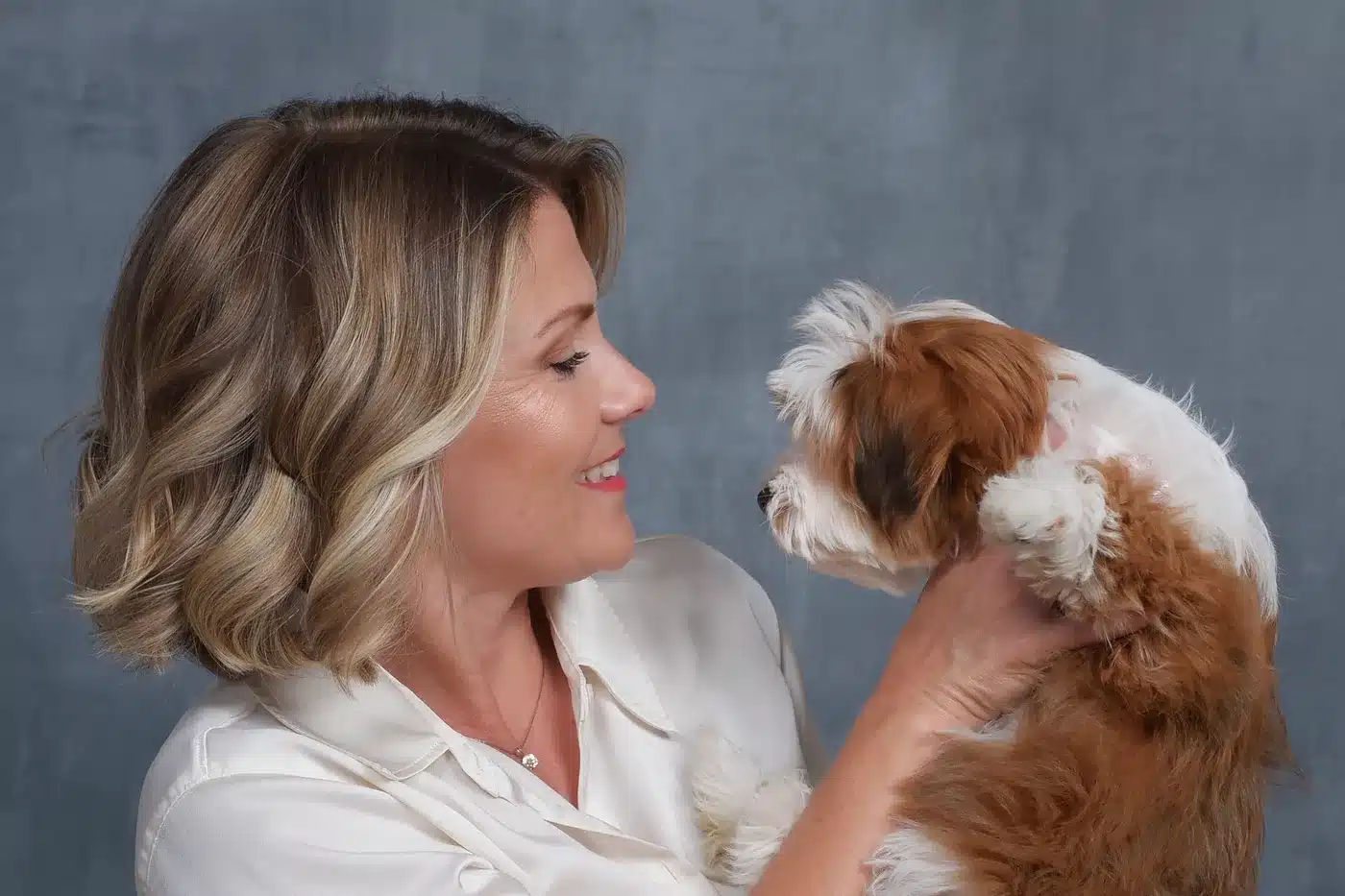
Personality
What is a Havapoo’s temperament?
Havapoos are commonly described as affectionate, playful, intelligent, social, and people-focused. Many enjoy following family members from room to room, participating in daily routines, learning tricks, playing short games, and settling close by when the activity ends. Their manageable size can make them easy to include in home life, travel plans, and family activities.
Those tendencies are one reason the mix has become popular, but temperament is not produced by breed labels alone. Genetics, prenatal health, early handling, socialization, stress, training, household structure, and the individual dog all matter. A responsible breeder observes each puppy over time instead of assigning a personality based only on coat color or a single short visit.
Are Havapoos affectionate?
Many Havapoos are strongly companion-oriented and enjoy physical closeness. They may curl up on a lap, rest against a person, seek eye contact, or stay near the household’s activity. Affection should not be confused with an inability to cope independently, however. Puppies still need gradual, positive practice resting in a crate or pen, entertaining themselves safely, and remaining calm when people leave for reasonable periods.
Are Havapoos good family dogs?
A well-bred, well-socialized Havapoo can be a lovely family dog for households that want an involved small companion. They often fit couples, singles, retirees, and families with respectful children. The best match depends on the puppy’s temperament and the family’s realistic ability to provide training, grooming, exercise, companionship, veterinary care, and supervision.
Families should not choose a Havapoo simply because it is small. Small dogs still need boundaries, training, enrichment, and protection from rough handling. They can develop fear, guarding, nuisance barking, or separation-related behavior if their needs are ignored or if every signal is dismissed as “cute.”
Are Havapoos good with children?
Many Havapoos enjoy gentle children and can become playful, affectionate companions. Their small body size also makes supervision essential. Toddlers may accidentally fall on, squeeze, chase, or pick up a puppy incorrectly. Adults should teach children to let the dog approach, avoid disturbing sleep or meals, use quiet hands, and never carry the dog without permission and support.
The safest household rule is that young children and dogs are actively supervised, not merely in the same room with an adult nearby. A puppy should always have a protected resting area where children do not follow.

Do Havapoos get along with other dogs and cats?
Havapoos often live successfully with other friendly dogs and can do well with cats when introductions are gradual and the animals are compatible. A confident adult dog can model good habits for a puppy, but a large or highly physical dog may accidentally injure a small Havapoo during play. Use gates, leashes, separate rest areas, and short supervised sessions while the relationship develops.
Are Havapoos friendly with strangers?
Many are outgoing or warm up quickly, while others are initially observant. The Havanese and Poodle can both be alert to changes in their environment, so a Havapoo may bark at visitors or unfamiliar sounds. Early positive exposure and calm greeting routines can help. A puppy should never be forced into contact; confidence grows through safe, voluntary experiences.
Are Havapoos good apartment dogs?
Their size can make Havapoos suitable for apartments, condos, and smaller homes when the individual dog’s activity, companionship, and barking needs are met. A yard is convenient but not required. Apartment success depends more on reliable potty routines, appropriate activity, barking management, elevator and hallway manners, and the owner’s schedule than on square footage.
Daily Life
Exercise, training, barking, and alone time
How much exercise does a Havapoo need?
Havapoos need daily physical activity and mental enrichment, but a breed-wide minute target cannot account for every dog. Combine suitable walks, play, sniffing, short training sessions, and rest. Adjust the routine to age, health, weather, size, fitness, and individual energy; ask your veterinarian about safe activity for a growing puppy or a dog with health concerns.
Puppies should not be pushed through long forced walks or repetitive jumping while their bodies are developing. Several short, age-appropriate sessions are more useful than one exhausting outing. Mental work is equally important: food puzzles, scent games, simple obedience, handling practice, and short problem-solving games can satisfy a bright small dog without overloading growing joints.

Are Havapoos easy to train?
Many Havapoos learn quickly because both parent breeds are intelligent and responsive to people. They often enjoy reward-based training, especially when sessions are brief, clear, and upbeat. Intelligence does not mean a puppy arrives pre-trained. Quick learners can also become skilled at demand barking, stealing objects, avoiding the crate, or repeating any behavior that earns attention.
Prioritize practical life skills before elaborate tricks:
- Name response and attention around distractions
- Comfort with a crate, pen, and short periods of separation
- Potty routines and a predictable elimination schedule
- Loose-leash walking and calm doorway behavior
- Cooperative handling for brushing, combing, nails, ears, and teeth
- “Drop,” “leave it,” recall, settle, and polite greetings

Potty training a Havapoo puppy
Small puppies have small bladders, and house training usually requires more management than families expect. Take the puppy to the same appropriate area after waking, eating, drinking, playing, and leaving the crate. Reward immediately after elimination. Indoors, use close supervision, a leash tether, a pen, or a correctly sized crate to prevent repeated accidents.
Punishing accidents can create hiding and anxiety without teaching the desired location. Clean mistakes with an enzymatic cleaner, adjust the schedule, and look for patterns. Sudden regression, frequent urination, straining, diarrhea, or excessive thirst deserves veterinary attention.
Socialization matters more than nonstop social contact
Good socialization means helping a puppy form safe, positive associations with the world. It does not mean passing the puppy to every stranger or visiting uncontrolled dog areas. During the early developmental window, introduce varied people, household sounds, surfaces, car rides, grooming sensations, friendly vaccinated dogs, and veterinary-style handling in ways the puppy can process without panic.
Ask your veterinarian how to balance early positive experiences with local disease risks and your puppy’s vaccination status; uncontrolled dog areas are not a substitute for safe socialization. Continue social learning through adolescence. Calm neutrality—being able to notice a person, dog, stroller, sound, or environment without needing to greet or escape—is often more valuable than excitement around everything.
Do Havapoos bark a lot?
Havapoos are not automatically excessive barkers, but many are alert and expressive. They may bark at door sounds, movement outside, excitement, boredom, fear, or separation. The solution is not simply saying “quiet” repeatedly. Reduce unnecessary triggers, meet exercise and enrichment needs, reward calm behavior, teach an alternate routine, and address the reason for the barking.
Can a Havapoo be left alone?
A Havapoo can learn to remain alone for reasonable periods, but this mix is generally not ideal for a household where the dog will be isolated for most of every workday. Many Havapoos form strong attachments and need gradual practice with separation. A breeder’s early foundations do not mean a puppy is fully house-trained or ready to tolerate a full workday alone.
Start alone-time conditioning before there is a problem. Use very short departures, a safe resting area, a predictable cue, and something appropriate to chew or lick. Return before the puppy becomes distressed, then build duration gradually. Persistent panic, drooling, escape attempts, elimination, destructive behavior near exits, or nonstop vocalization may indicate separation-related distress that warrants qualified behavioral and veterinary help.
Coat Care
Do Havapoos shed, and are they hypoallergenic?
Many Havapoos have relatively low visible shedding, but shedding varies with the individual coat and genetics. Curl alone does not prove how much a dog will shed. Loose hair may stay trapped in the surrounding coat rather than falling onto floors and furniture. That is convenient for some homes, but trapped hair and friction can create mats quickly.
No dog is completely hypoallergenic. People can react to proteins found in saliva, dander, urine, and skin secretions—not only to shed hair. Scientific allergy organizations report no consistent evidence that dogs marketed as “hypoallergenic” always produce lower household allergen levels. Low shedding does not establish allergy compatibility, and a person may react differently to different dogs.
How often does a Havapoo need brushing?
A longer or curlier Havapoo coat may need daily or near-daily line brushing. A shorter, professionally maintained coat may be manageable with thorough brushing and combing several times per week. The correct schedule is the one that prevents tangles from forming at the skin.
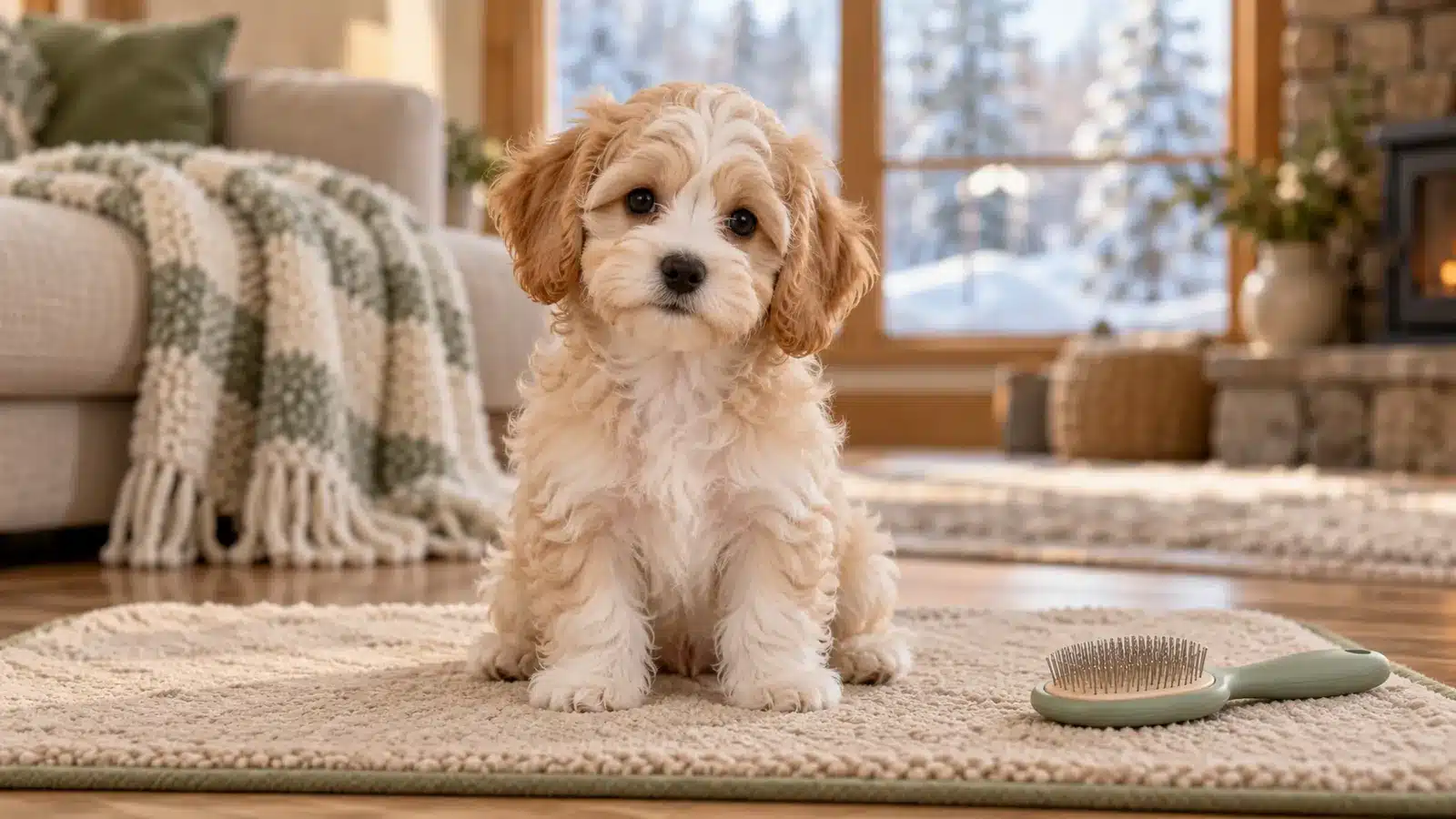
Use a slicker brush to separate the coat and a stainless-steel comb to verify that you can reach from skin to tip. Pay special attention behind the ears, under the collar or harness, in the armpits, between the legs, around the tail, and anywhere the coat rubs. Surface brushing can leave a tight mat hidden underneath a fluffy top layer.

How often should a Havapoo see a professional groomer?
Our Havapoo grooming guide suggests roughly six to eight weeks as a starting interval for professional grooming. Agree on a schedule with your groomer based on coat length, texture, lifestyle, skin health, and home maintenance; some coats need more frequent appointments. Puppies should practice calm handling well before the first full haircut. Short, positive sessions with the brush, comb, dryer sound, paw handling, face handling, and standing on a nonslip surface make future grooming safer and less stressful.
A practical Havapoo grooming routine
| Task | Practical starting schedule | Why it matters |
|---|---|---|
| Brush and comb | Several times weekly; more often for long or curly coats | Prevents painful mats and lets you inspect the skin |
| Professional groom | About every 6–8 weeks as a starting point; adjust with your groomer | Maintains a comfortable length and sanitary areas |
| Ear check | Weekly and after bathing or swimming | Helps catch moisture, odor, redness, or debris early |
| Nail trim | Usually every 2–4 weeks | Supports comfortable movement and paw position |
| Tooth brushing | Daily is best; several times weekly is still useful | Small dogs are vulnerable to periodontal disease |
| Bathing | As needed with dog-safe products | Keeps the coat clean without drying or irritating skin |
Never cut tight mats with household scissors; skin can be pulled into the mat and injured. If a comb cannot pass through comfortably, ask a professional groomer for the safest solution. Shaving a severely matted coat can be kinder than trying to preserve length through painful dematting.
Health
Havapoo health, lifespan, and parent testing
There is no guaranteed lifespan for a Havapoo, and a commonly repeated range is not a prediction for an individual puppy. Plan for a long-term commitment rather than choosing the mix on a promised number of years. Genetics, parent health, body condition, dental care, preventive veterinary care, accidents, disease, and everyday lifestyle all affect longevity.
Crossbreeding does not make a puppy automatically free from inherited disease. A Havapoo can inherit risk from either parent line, and some conditions occur across many breeds and mixed-breed dogs. Responsible planning begins with informed parent selection and continues with appropriate care throughout the dog’s life.
Health concerns families should understand
Patellar luxation
The kneecap can move out of its normal position. Signs may include intermittent skipping, holding up a rear leg, or lameness. Severity varies, and a veterinarian should evaluate suspicious movement.
Inherited eye disorders
Parent breeds can carry eye conditions, including progressive retinal atrophy and other disorders. Current ophthalmic exams and appropriate DNA testing can help breeders make more informed pairings.
Hip and other orthopedic problems
Hip dysplasia and Legg-Calvé-Perthes disease are among the orthopedic issues discussed in small Poodle and Havanese lines. Screening decisions should follow the parent breed and individual line.
Cardiac and thyroid concerns
Some lines may warrant cardiac or thyroid evaluation. A breeder should be able to explain which tests were selected, when they were performed, and what the actual results mean.
Dental disease
Small mouths can crowd teeth and accumulate plaque. Home tooth brushing, veterinary oral exams, and professional dental care when recommended are important long-term responsibilities.
Ear and skin problems
Hairy drop ears can retain moisture, and dense coats can hide irritation. Persistent odor, redness, discharge, itching, hair loss, or sores should be evaluated rather than treated repeatedly without a diagnosis.
This list is educational, not a prediction that a particular Havapoo will develop these conditions. It also is not exhaustive. Your veterinarian is the appropriate source for diagnosis, prevention, vaccination, parasite control, nutrition, and treatment advice for an individual dog.
What health testing should a Havapoo breeder do?
Because a Havapoo has two parent breeds, the breeder should consider the health-testing recommendations for both the Havanese and the specific Poodle variety used. Testing may include orthopedic evaluations, a current eye examination by a veterinary ophthalmologist, cardiac or thyroid evaluation where indicated, and relevant DNA tests. The exact panel can change as parent-club recommendations and testing technology evolve.
Ask to see verifiable results for the actual sire and dam—not only a statement that the parents are “DNA tested” or “vet checked.” A broad genetic panel does not replace physical screening such as patella, hip, eye, or cardiac evaluations. Likewise, a normal puppy wellness exam assesses the puppy at that visit; it does not replace parent screening. A contractual health guarantee is a separate written agreement with its own coverage, exclusions, and obligations. Review all three rather than treating them as interchangeable evidence.
The Orthopedic Foundation for Animals’ Canine Health Information Center works with parent clubs to identify breed-specific screening protocols. A CHIC number generally means the required tests were completed and made public; families should still review the underlying results rather than assuming the number means every result was normal.
Sage Puppies families can review our approach to parent health testing and request the actual reports for both parents behind an available or planned litter. Sage’s published guidance states that screening can vary by parent, breed, and litter, so a general “health-tested parents” statement should not be read as proof of a particular test or result for every parent.
Routine care that supports a Havapoo’s health
- Establish a relationship with a veterinarian soon after bringing the puppy home.
- Follow an individualized vaccination and parasite-prevention plan.
- Maintain a lean body condition rather than feeding to a generic cup amount.
- Use regular tooth brushing and schedule oral care based on veterinary findings.
- Protect a small dog from falls, unsafe jumping, rough play, heat, and extreme cold.
- Monitor changes in appetite, thirst, stool, breathing, energy, movement, eyes, ears, skin, and behavior.
Feeding a Havapoo
Choose a complete and balanced food appropriate for the dog’s life stage and feed an amount that maintains ideal body condition. Puppies usually need multiple measured meals across the day; adults often transition to two measured meals. The correct food and amount depend on age, current weight, expected adult size, activity, treats, health, and veterinary guidance.
Avoid making nutrition decisions from marketing claims alone. Your veterinary team can help assess body condition, growth, stool quality, dental needs, and whether a diet change is appropriate. Keep treats proportionate, introduce new foods gradually, and store food safely.
Compare Your Options
Havapoo vs. Havanese vs. Cavapoo
Sage Puppies focuses on Havanese, Havapoo, and Cavapoo puppies. All three can be affectionate small companions, but they are not interchangeable. The right choice depends on whether you prefer a purebred or crossbreed, the parent temperaments you are drawn to, and how much variation you can comfortably accept.
| Trait | Havapoo | Havanese | Cavapoo |
|---|---|---|---|
| Parentage | Havanese × Poodle | Purebred Havanese | Cavalier King Charles Spaniel × Poodle |
| General style | Bright, playful, social, often cuddly | Cheerful, charming, devoted companion | Gentle, affectionate, people-focused |
| Predictability | Variable by parents and individual genetics | More consistent within the breed standard | Variable by parents and individual genetics |
| Coat | Wavy to curly; often low-shedding | Long, soft, silky double coat | Wavy to curly; shedding can vary |
| Grooming | Regular brushing and professional grooming | Regular brushing; coat may be kept long or clipped | Regular brushing and professional grooming |
| Best question | Do I want a Havanese–Poodle blend and accept variation? | Do I prefer a recognized small companion breed? | Do I prefer Cavalier warmth with Poodle influence? |
These descriptions are broad tendencies, not guarantees for every dog. For a deeper side-by-side review, read Cavapoo vs. Havapoo vs. Havanese. If the mix seems right for your household, explore our Havapoo puppies and breeding program for Sage’s program, current availability, and purchasing next steps.
Lifestyle Fit
Havapoo pros and tradeoffs
Why families love Havapoos
- Affectionate, involved companion temperament
- Small size that fits many living situations
- Intelligence and enthusiasm for reward-based training
- Potential for lower visible shedding; individual coats vary
- Playful energy that can suit a household able to meet the individual dog’s needs
- Potential to live successfully with children and other pets
What owners must plan for
- Frequent brushing and recurring professional grooming
- Variation in size, coat, shedding, and personality
- Strong attachment and possible difficulty with long absences
- Need for early socialization, house training, and alone-time practice
- Small-dog fragility around rough children, falls, or large dogs
- No guarantee of allergy compatibility
A Havapoo may be a good fit if you…
- Want a small dog that participates closely in family life.
- Can provide daily attention, activity, training, and companionship.
- Are comfortable budgeting time and money for coat care.
- Accept that a crossbreed puppy’s adult traits cannot be guaranteed precisely.
- Will teach children respectful dog handling and supervise interactions.
- Value temperament and health over a specific color or the smallest possible size.
Another dog may fit better if you…
- Need a dog that is comfortable being alone for most of the day.
- Want a wash-and-wear coat with little professional grooming.
- Require a guaranteed adult weight, curl pattern, or zero-shedding outcome.
- Prefer a highly independent dog that does not seek frequent interaction.
- Are not ready for puppy training, veterinary costs, dental care, and a long-term commitment.
Choosing Carefully
How to choose a responsible Havapoo breeder
Breeder quality matters more than a fashionable label. A responsible program should be able to explain why a pairing was selected, show verifiable health results, describe the parent dogs honestly, discuss how puppies are raised, and help families understand both the benefits and challenges of the mix.

Questions to ask before reserving a Havapoo puppy
- Who are the sire and dam? Ask for registered names where applicable, adult weights, ages, temperaments, coat types, photos, and relevant family history.
- What health testing was completed? Request actual reports or public database links and ask why each test was selected.
- How are puppies raised? Look for age-appropriate handling, household exposure, safe socialization, grooming foundations, rest, and individual observation.
- How are puppies matched? A thoughtful breeder considers temperament and household fit, not only color, sex, or order of deposit.
- What veterinary care and records are provided? Confirm examination, vaccination and deworming records, microchip details if applicable, and instructions for the first veterinary visit.
- What does the contract say? Read health terms, reservation conditions, spay/neuter expectations if any, and the return-to-breeder provision before paying.
- What support continues after go-home? Responsible breeders expect questions and remain a resource rather than disappearing after payment.
Havapoo breeder red flags
- Guaranteed “100% hypoallergenic,” “never sheds,” or exact adult weight claims
- No proof of parent-specific health screening
- Many breeds and litters available at all times with little information about parents
- Pressure to pay immediately or send money through an untraceable method
- Refusal to meet by video or provide a clear view of the dogs’ living environment
- Puppies offered unusually young or without veterinary records and a written agreement
- Claims that mixed-breed dogs cannot inherit genetic disease
Price alone does not identify quality. A high price can accompany excellent care or clever marketing; a low price may reflect fewer services or serious shortcuts. Evaluate the evidence behind the program. Our separate guide explains how to find a reputable Havapoo breeder.
What about Havapoo adoption or rescue?
Havapoos and similar small Poodle mixes sometimes enter shelters, foster-based rescues, or breed-specific rescue networks. Adoption can be an excellent path for families who are flexible about age, history, coat, and timing. Ask what is known about behavior, health, grooming tolerance, house training, and compatibility with children or other pets. A responsible rescue will be transparent about uncertainty and provide a realistic transition plan.
Bringing Puppy Home
Preparing for a Havapoo puppy
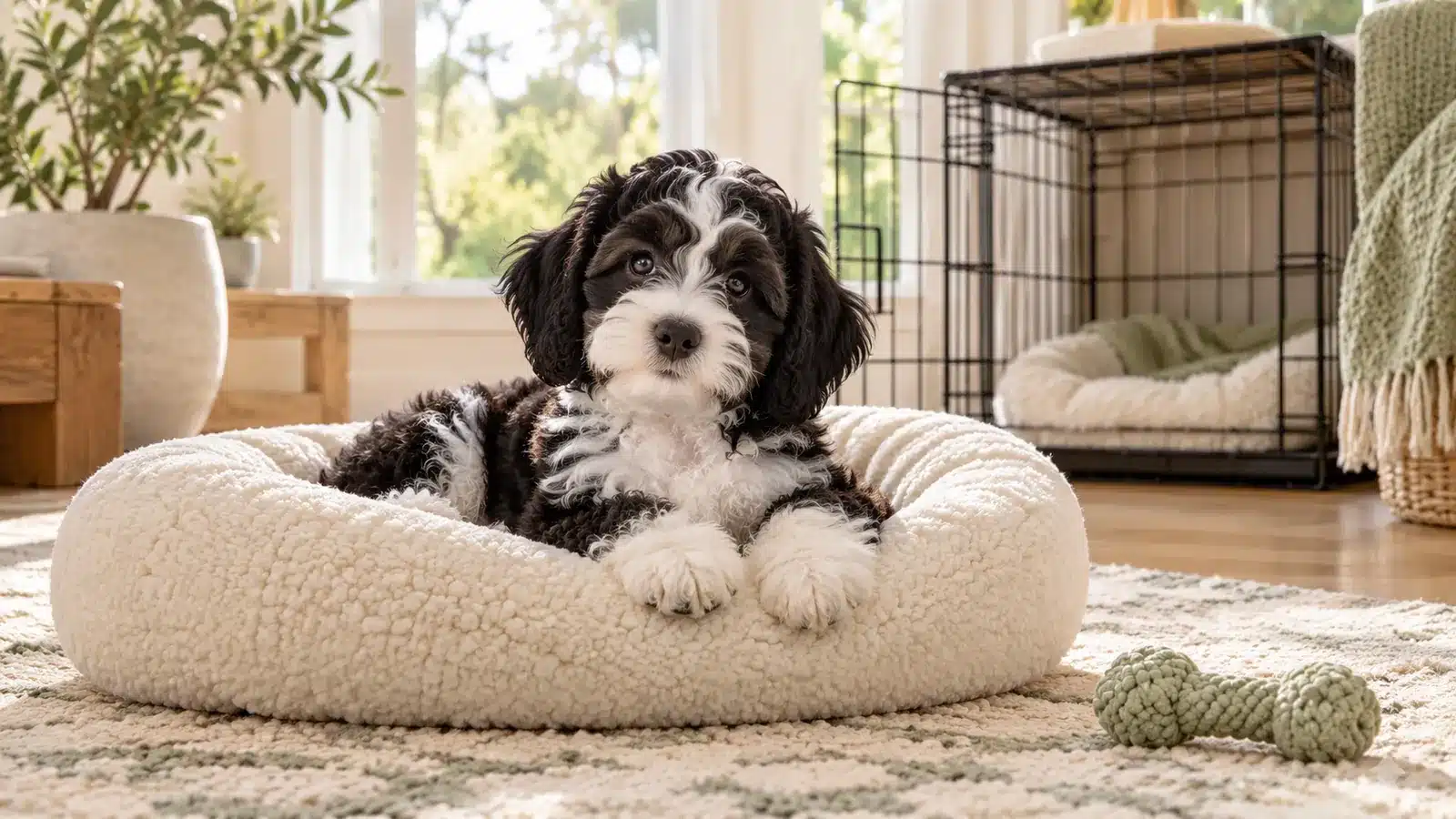
Before go-home day, create a small, calm area with a correctly sized crate, exercise pen, washable bedding, water, safe chew items, and easy access to the potty location. Puppy-proof electrical cords, medications, cleaning products, toxic plants, small objects, stairs, balconies, and gaps where a small puppy could become trapped.
Keep the first days predictable. Use the food and schedule provided by the breeder initially, arrange a veterinary appointment, limit overwhelming visitors, and balance short activity with substantial sleep. Begin the routines you want the adult dog to understand: potty trips, crate rest, calm handling, short training sessions, and brief positive separations.
Families outside Utah should discuss travel early. Most Sage Puppies families bring puppies home through planned delivery, while local pickup is available by appointment in South Jordan. Review delivery and pickup options before reservation so timing, safety, responsibilities, and the first day at home are clear.
Common Questions
Frequently asked questions about Havapoos
What two breeds make a Havapoo?
A Havapoo is created by crossing a Havanese with a Poodle, usually a Toy or Miniature Poodle. The mix may also be called a Havadoodle, Havoodle, Poovanese, or Havanese–Poodle mix. Ask which Poodle variety and which specific parents were used because those details influence likely adult size and coat.
How big is a full-grown Havapoo?
There is no universal Havapoo adult weight or height. Ask about the Poodle variety, both parents’ actual mature sizes, adult relatives, and the puppy’s growth. Those details support an estimate, not a guarantee. Labels such as “mini” or “teacup” do not establish an individual puppy’s future size.
Are Havapoos hypoallergenic?
No dog is completely hypoallergenic. Havapoos are often low-shedding, but allergens also come from saliva, dander, urine, and skin secretions. Allergy response varies by person and dog. Families with significant allergies should consult an allergist and spend time around comparable adult dogs before making a commitment.
Do Havapoos shed?
Many Havapoos shed relatively little, but the amount varies and a curly coat does not guarantee minimal shedding. Shedding can still vary, and loose hair may become trapped in the coat instead of falling around the home. That trapped hair contributes to matting, so low shedding usually means more grooming—not less.
How often does a Havapoo need grooming?
Plan to brush and comb thoroughly several times per week, with daily care for some long or curly coats. Our grooming guide uses roughly six to eight weeks as a starting interval for professional grooming, adjusted with your groomer to the individual coat and home care. They also need regular nail trims, ear checks, tooth brushing, baths as needed, and early practice tolerating handling.
Are Havapoos good with children?
Many Havapoos are affectionate and playful with respectful children. Their small size means adults must prevent rough handling, chasing, dropping, or accidental falls. Young children and dogs should be actively supervised, and the puppy should have a quiet resting area that children are taught to leave undisturbed.
Are Havapoos easy to train?
Havapoos are often bright, food-motivated, and responsive, which can make reward-based training productive. They still require consistency. Begin with potty training, crate comfort, recall, handling, leash skills, calm greetings, and alone-time practice. Short sessions and clear reinforcement generally work better than punishment or long drills.
Can Havapoos be left alone during the workday?
Havapoos can learn to stay alone for reasonable periods, but many do poorly with routine all-day isolation. They are companion-oriented dogs. Build independence gradually from puppyhood and arrange appropriate breaks, enrichment, or trusted care when schedules require longer absences. Severe distress needs professional behavioral and veterinary guidance.
Do Havapoos bark a lot?
Some Havapoos are fairly quiet; others alert-bark at sounds, visitors, movement, excitement, boredom, or separation. Early socialization, adequate activity, environmental management, reinforcement of calm behavior, and teaching a predictable visitor routine can reduce nuisance barking. Sudden new vocalization may also warrant a health check.
How long do Havapoos live?
Longevity varies with the individual dog, and the Havapoo label does not guarantee a particular lifespan. Thoughtful parent testing, healthy body condition, preventive veterinary care, dental care, appropriate activity, safe handling, and early response to changes can support long-term health.
What is the difference between a Havapoo and a Cavapoo?
A Havapoo combines Havanese and Poodle ancestry. A Cavapoo combines Cavalier King Charles Spaniel and Poodle ancestry. Both are small Poodle mixes with variable coats and sizes. Havapoos may appeal to families drawn to Havanese playfulness, while Cavapoos may appeal to those drawn to Cavalier gentleness.
How much does a Havapoo cost?
Purchase prices vary by region, parent testing, breeder experience, veterinary care, puppy development, contract terms, and support. Compare documentation and practices rather than shopping by price alone. Also budget for grooming, veterinary care, food, training, insurance or emergency savings, supplies, travel, and dental care throughout the dog’s life.
The Bottom Line
Is a Havapoo right for your family?
A Havapoo is a Havanese–Poodle mix best known for affectionate companionship, intelligence, playful energy, and a soft coat that is often low-shedding. The same dog also needs regular grooming, early training, thoughtful socialization, daily connection, veterinary care, and realistic expectations about variation.
The right Havapoo is not simply the cutest puppy or the rarest color. It is a healthy, well-started individual whose temperament and likely needs fit the people bringing it home. Start by learning about the parents and program, then compare current puppies or upcoming litters without rushing the decision.