Quick Summary: Bringing home a puppy in Texas requires verifying breeder health records, ensuring vaccination and deworming are on schedule, and preparing a safe home environment. First vet visits should happen within days, with clear documentation of health milestones and parasite prevention plans. Proper early care and proof of health records help prevent surprises and ensure a smooth transition for first-time owners.
Bringing home a Havanese, Havapoo, or Cavapoo puppy in Texas starts with one thing: health proof, timing, and a clear vet plan. The cutest photo does not tell you if the puppy had age-appropriate vaccines, a clean exam, or records that match the puppy in front of you. A solid Puppy Health Checklist does.
That is the gap this guide fixes. Many first-time buyers get broad puppy advice, but not the exact checks that matter before pickup day. First-Time Puppy Care gets easier when you know what paperwork to ask for, what vaccine timing should look like, and how fast to book the first visit after your puppy comes home.
This guide gives you a practical Puppy Health Checklist built for real buyers, especially Texas families who want to verify breeder records without getting buried in jargon. You will also get simple Puppy Wellness Tips that help you spot green flags, question missing details, and avoid preventable mistakes. At Sage Puppies, we focus on well-bred Havanese, Havapoo, and Cavapoo puppies, so this Puppy Health Checklist stays clear, useful, and buyer-first.
Step 1: Verify the breeder’s health records before you reserve
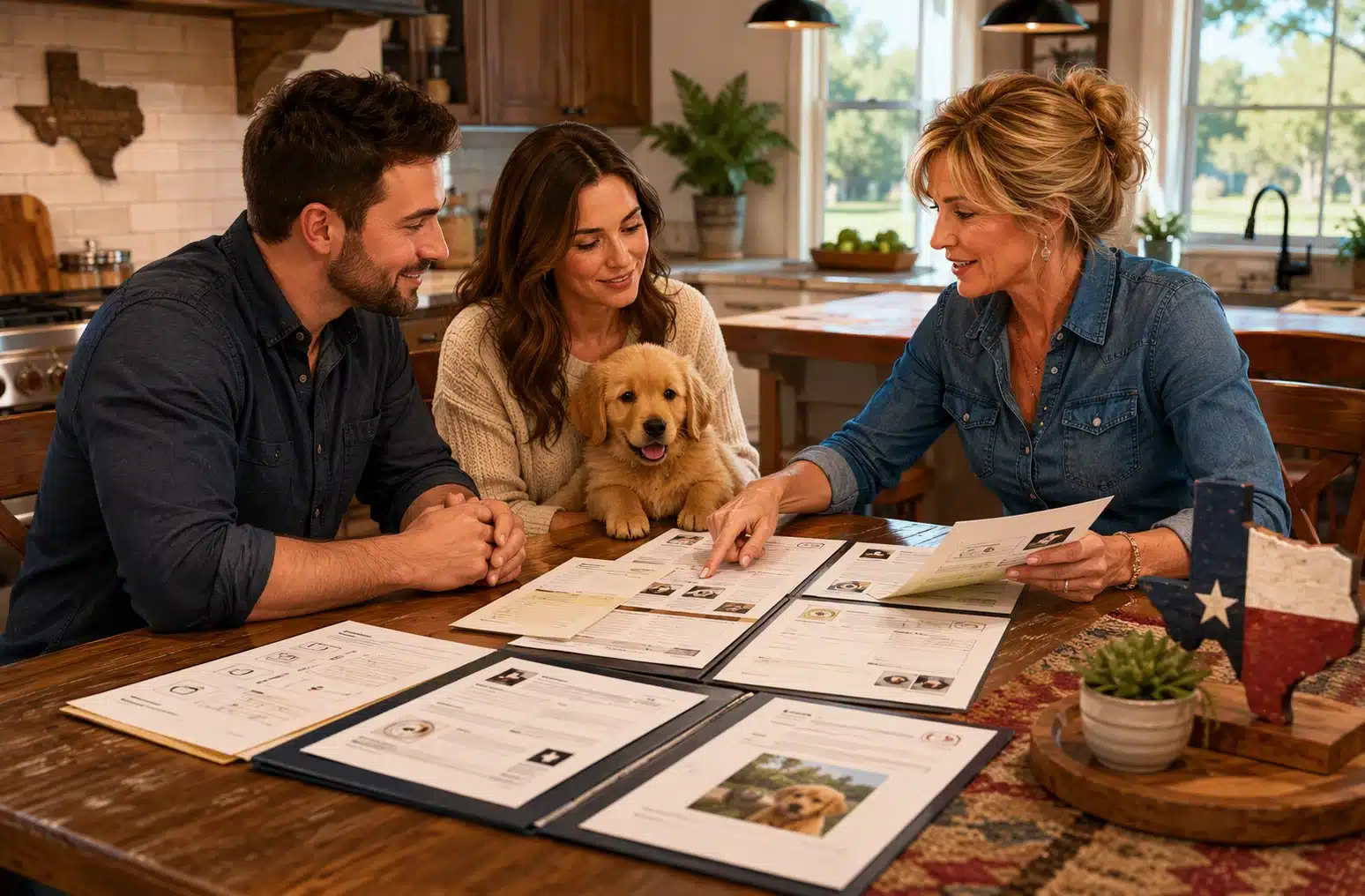
Ask for the health records before you place a deposit. A good breeder will send them without pushback. USDA rules for regulated dog facilities require written veterinary care plans and medical records that track vaccines, treatments, exams, and test results under 9 CFR 3.13. That does not replace breed-specific testing, but it tells you what a real paper trail looks like.
What a complete health packet should include
A solid packet should cover both the parents and the puppy. You want proof, not promises.
- Parent health testing records
- Puppy exam record from a licensed vet
- Vaccination and deworming dates
- Microchip number, if already placed
- Date of birth and litter details
- Feeding and care notes for the first weeks
- Any treatment notes for diarrhea, parasites, eye issues, or ear problems
AKC also says breeders in its health-focused programs should be ready to share proof that breeding dogs had the tests recommended for their breed’s parent club and not rely on a verbal yes.
| Record | What you should see | Why it matters |
|---|---|---|
| Parent testing | Lab or registry result with dog ID | Confirms the right dogs were screened |
| Puppy exam | Vet name, date, findings | Shows the puppy was actually checked |
| Vaccine record | Product name and date given | Helps your vet continue the schedule |
| Deworming record | Drug name, date, dose | Flags gaps or repeat parasite issues |
How to read parent testing and puppy exam notes
Start with the names and IDs. The parent names on the test results should match the sire and dam listed for the litter.
Then check for:
- Test type – DNA panel, eye exam, heart check, patella, or other breed-relevant screening
- Date – current enough to make sense for breeding dogs
- Result – clear, normal, carrier, affected, or a specialist note
- Exam details – not just “looks good,” but actual findings
“Vet checked” is not the same as “health tested.”
If the puppy exam says “mild murmur,” “umbilical hernia,” or “retained testicle,” ask what the breeder’s vet advised and whether follow-up is needed.
What should make you pause before reserving
Some gaps are small. Others are reasons to stop.
- The breeder will not share records until after payment
- Test results do not match the parent dogs
- The packet has only vaccine dates and nothing else
- Notes look edited, cropped, or missing names
- The puppy was treated for illness, but there is no outcome note
- You hear “our lines are healthy” instead of seeing documents
If anything feels vague, slow down. A careful breeder will answer clearly.
This is where boutique programs like Sage Puppies should feel different: calm, organized, and transparent from the first request.
Also Read: 10 Adorable Havapoo Colors You Need to See (2026)
Step 2: Confirm the puppy’s first veterinary milestones are on schedule
Your puppy should not come home with vague health notes or a verbal promise that “everything is done.” You want dates, product names, and a clear next-step plan. The AVMA notes that puppies need a vaccine series starting at 6 to 8 weeks, with the final dose usually given at 16 weeks or older, so timing matters.
What should happen before the puppy comes home
Ask for a simple medical record you can read in two minutes. It should show what was done, when, and what is still due.
Use this quick check:
| Milestone | What you want to see | Why it matters |
|---|---|---|
| First exam | Dated vet check or breeder-supported exam record | Confirms a baseline health review |
| Vaccines | Exact vaccine dates and names | Helps your vet avoid gaps or repeats |
| Deworming | Product used and treatment dates | Puppies often need repeat treatment |
| Microchip | Chip number if already placed | Makes ID easy to confirm |
| Next due date | Written follow-up schedule | Keeps care on track |
If the breeder says the puppy is “up to date,” ask up to date until when? That one question clears up a lot.
A good breeder gives records before pickup, not after you ask three times.
What to schedule within the first few days at home
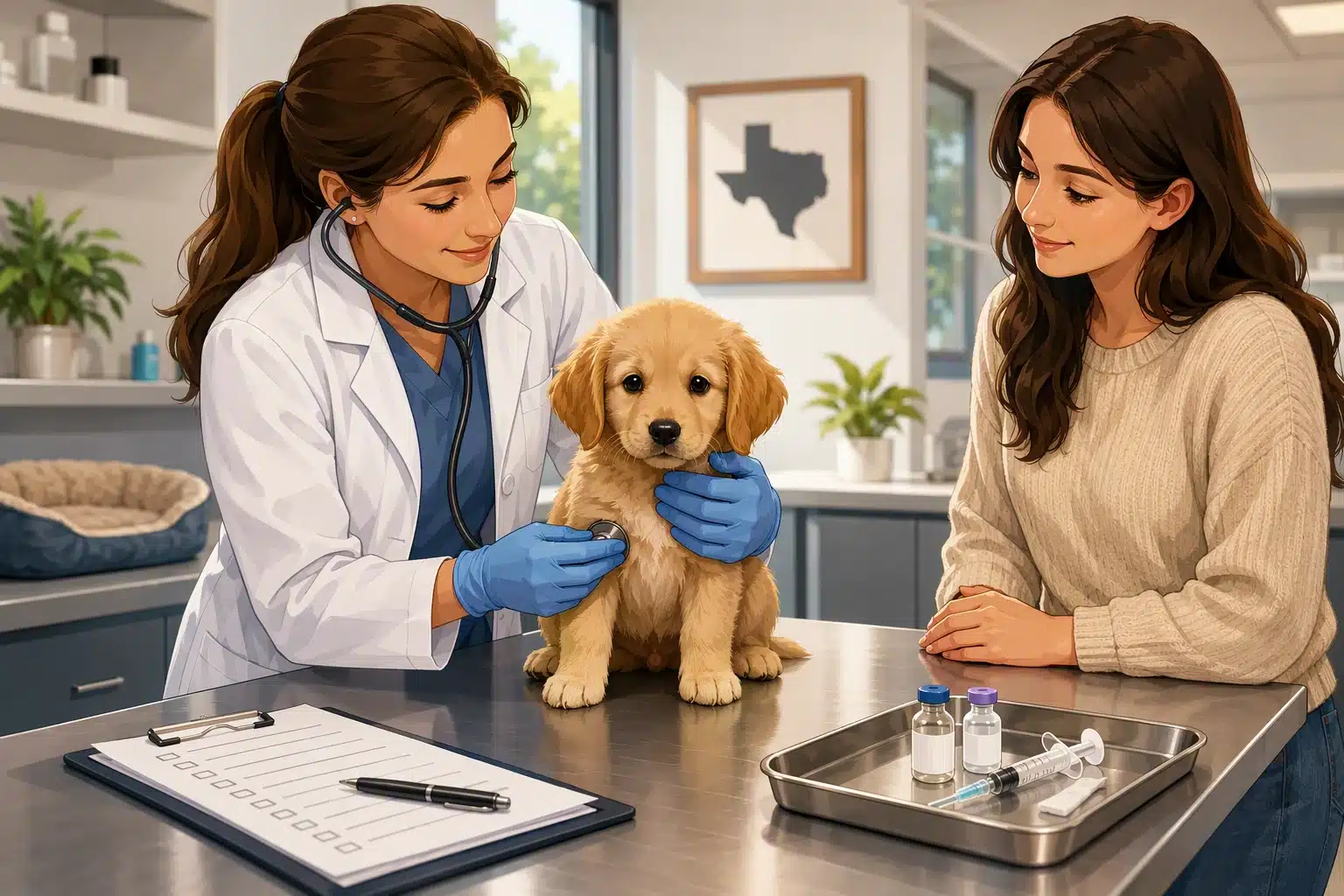
Book your first vet visit before pickup day if you can. PetMD advises seeing a veterinarian within one week of bringing your puppy home, and sooner is even better if anything feels off during the first vet visit window.
Bring:
- Vaccine and deworming records
- A fresh stool sample if your clinic asks
- The food brand and feeding amount
- Notes on sleep, stool, energy, and coughing or sneezing
At that visit, your vet will usually:
- Review records
- Check weight, heart, lungs, eyes, ears, skin, and bite
- Look for parasites
- Set the next vaccine and deworming dates
- Recommend flea, tick, and heartworm prevention based on your area
In Texas, ask about local parasite risk right away. Heat and mosquitoes change the plan.
Which questions to ask your veterinarian
Keep your list short and useful. Ask:
- Are these vaccine records complete and on schedule?
- When is the next vaccine due?
- Do you recommend leptospirosis, Bordetella, or other lifestyle vaccines for our area?
- Should we run a fecal test today?
- What parasite prevention should start now?
- Is this puppy’s weight and body condition where it should be?
- Do you see any signs of a heart murmur, hernia, retained baby teeth, or knee issues?
If you are buying from a careful breeder like Sage Puppies, this visit should confirm good early care, not uncover basic missing steps.
Also Read: Puppies for Sale in Texas: 9 Red Flags to Avoid Online
Step 3: Build a Texas-ready parasite and vaccination plan
Start with your own vet visit in the first few days home, then map out the next 8 to 12 weeks. Puppies do best when vaccines, fecal checks, and parasite prevention all move on one schedule, not as random add-ons. For the bigger guide, go back to the parent post on Texas Puppy Health Checklist for First-Time Buyers.
Core vaccines and why timing matters
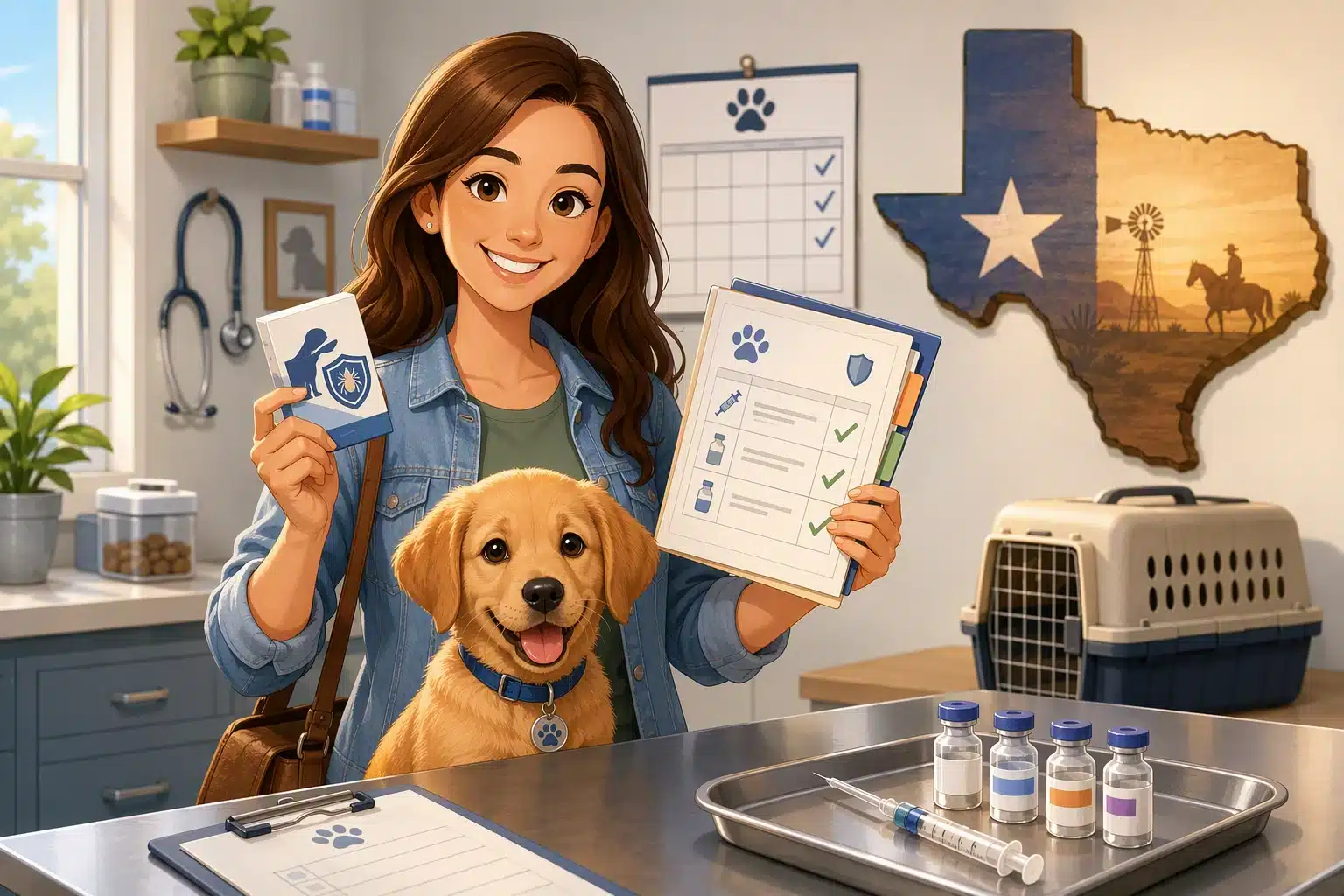
Most puppies need a DA2PP series, leptospirosis, and rabies on a timed schedule. AAHA lists DA2PP, leptospirosis, and rabies as core vaccines, with DA2PP given in at least 3 doses between 6 and 16 weeks, 2 to 4 weeks apart under AAHA vaccine guidance. In Texas, dogs must be vaccinated against rabies by 4 months of age under state law.
Use this simple check:
| Item | What to confirm | Why it matters |
|---|---|---|
| DA2PP dates | Exact dates, not just “up to date” | Gaps can leave a weak protection window |
| Lepto start | Whether your vet wants it at 12 weeks+ | Texas exposure risk can be real |
| Rabies plan | Appointment set before 16 weeks | Texas law sets a clear deadline |
| Records | Vaccine label or vet invoice | Helps your vet avoid repeat shots |
Ask for dates, product names, and the next due date before you leave the clinic.
Parasite prevention in Texas homes
Texas puppies need a plan for heartworms, fleas, ticks, and intestinal worms. Warm weather, mosquitoes, and mild winters make year-round prevention the safer default in many parts of the state.
Your first vet visit should include:
- A fecal test
- A deworming review
- A weight-based monthly preventive plan
- Clear start dates for each product
Focus on practical risk:
- Heartworm risk matters even for mostly indoor puppies
- Fleas thrive in yards, apartments, and shared pet spaces
- Ticks show up on walks, trails, and grassy edges
- Roundworms and hookworms matter because some can affect people too
Do not use random over-the-counter products on a toy or small-breed puppy without vet approval.
How to balance socialization with health protection
Do not wait until every shot is finished to start socialization. The key window for learning is early, so your job is to make exposure safe, not zero. Ohio State notes that the first 12 weeks are a prime socialization period, and the goal is to balance behavior needs with disease prevention.
Use this low-risk plan:
- Invite healthy, vaccinated adult dogs you know well
- Carry your puppy in pet stores or outdoor shopping areas
- Use clean puppy classes that require vaccine records
- Let your puppy hear traffic, doorbells, kids, vacuums, and grooming tools at home
Skip these for now:
- Dog parks
- Shared potty areas with unknown dogs
- Pet store floors
- Standing water and muddy, high-traffic grass
Safe exposure builds confidence. Dirty public ground is the part to avoid, not the whole world.
Step 4: Prepare the home checklist that protects health after pickup
Your puppy can leave a breeder healthy and still struggle if home setup is sloppy. Keep the first week simple, clean, and calm. If you have not read the main guide yet, go back to the parent pillar post, Texas Puppy Health Checklist for First-Time Buyers, for the full buyer-side health review.
Health essentials to have ready on day one
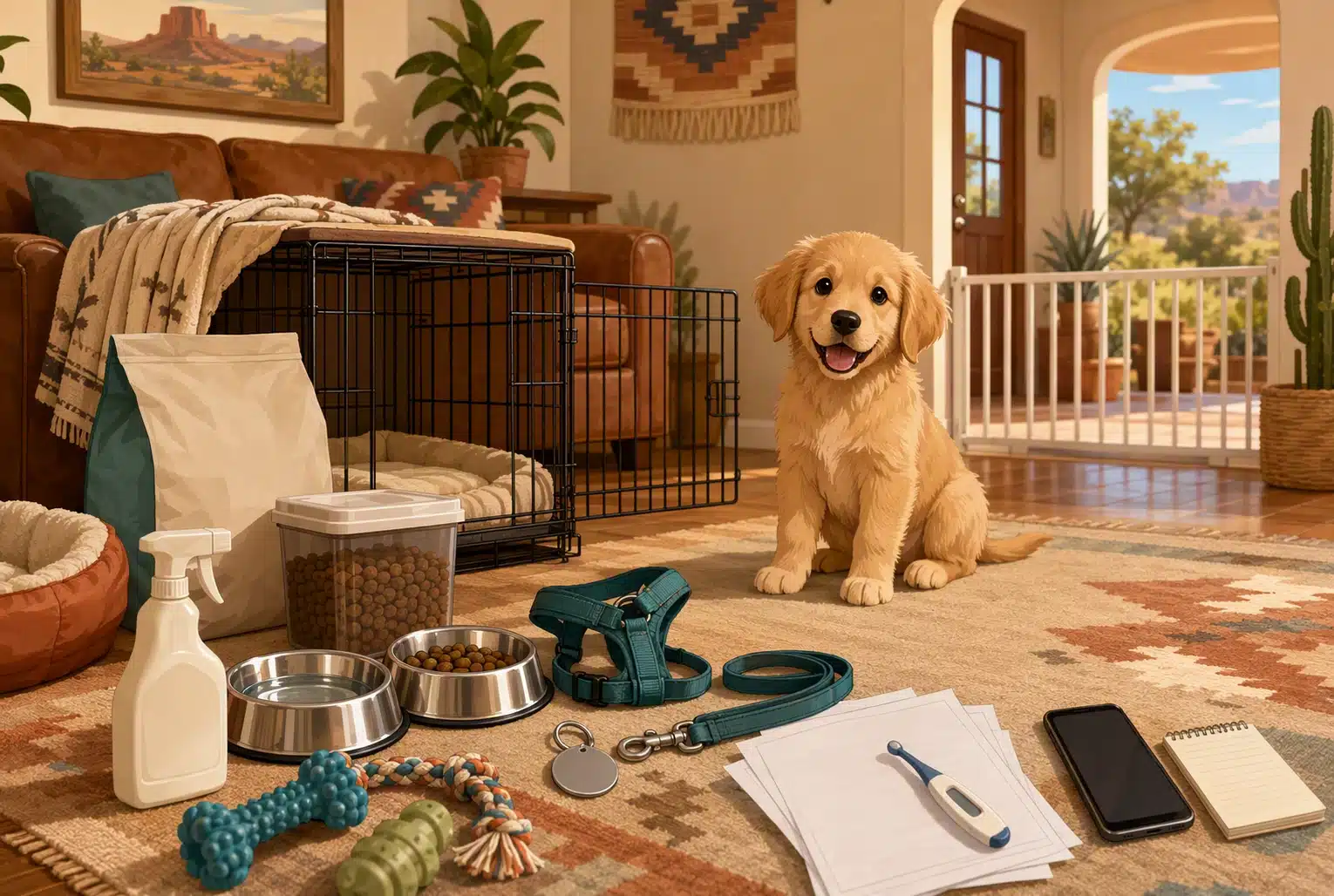
Set up one small puppy zone before pickup. That helps you track eating, drinking, poop, energy, and sleep.
Have these ready:
- Crate or pen with washable bedding
- Food and water bowls
- The same food the puppy is already eating
- Enzyme cleaner for accidents
- Leash, harness, and ID tag
- Safe chew toys
- Paper copies of vaccine and deworming records
- A thermometer and vet phone number in one spot
Use this quick checklist:
| Item | Why it matters | Best day-one standard |
|---|---|---|
| Food | Avoids stomach upset | Keep the same food for now |
| Water bowl | Tracks drinking | Refill with fresh water often |
| Crate or pen | Limits germs and hazards | Quiet area near family activity |
| Enzyme cleaner | Removes odor fully | Clean accidents right away |
| Records folder | Helps at first vet visit | Keep printed and digital copies |
Wash hands after handling your puppy, food bowls, waste, or supplies. The CDC notes that even healthy dogs can carry germs, and it also advises a vet check within a few days after bringing a puppy home CDC puppy guidance.
The first 72 hours at home
Keep traffic low. Skip parties, dog parks, and long errands.
Follow this order:
- Take your puppy to the potty area right away.
- Offer water, then a small meal on schedule.
- Let the puppy rest.
- Start short potty trips after sleep, meals, and play.
- Book the first vet visit if you have not already.
Watch these basics:
- Normal interest in food and water
- Soft but formed stool
- Steady energy between naps
- No coughing, repeated vomiting, or distress
Families with young kids should supervise every interaction. The CDC says children under 5 are at higher risk from germs spread between animals and people animal hygiene advice.
When to call the vet early
Do not wait a week if something feels off. Puppies can fade fast.
Call your vet promptly for:
- Vomiting more than once
- Diarrhea that repeats or contains blood
- No appetite
- Low energy
- Coughing
- Trouble breathing
- Swollen belly
- Pale gums
- Pain when touched
If your breeder is organized, like Sage Puppies aims to be, your records should make that first call easier.
Also Read: 10 Must-Ask Questions Before Buying a Puppy Locally
Common Questions About Puppy Health in Texas
If you have not read the main checklist yet, go back to the parent guide first. It gives the full buyer-side process, while this section answers the questions families ask most.
How recent should the health records be?
Ask for dated records from the last vet exam, not a vague note that the puppy was “checked.” Texas rules require veterinary records to include exam and treatment dates, drugs given, and key findings in the patient record, according to Texas veterinary record rules.
Use this quick check:
| Record | What to confirm | Good sign |
|---|---|---|
| Vet exam | Exam date | Within days of pickup |
| Vaccines | Product and date | Matches age |
| Deworming | Drug and date | Clear schedule |
If dates are missing, treat that as a real red flag.
Should I wait to schedule the first vet visit?
No. Book it before pickup day if you can. Most families should aim for a first visit within the first few days home. That visit helps your vet confirm weight, hydration, stool issues, vaccine timing, and next steps.
A fast appointment also helps establish a proper vet-client-patient relationship. The AVMA notes that this starts with an in-person physical exam, not just a call or text, under federal VCPR rules.
Does Texas weather change anything?
Yes, a little. Texas heat means you should watch closely for:
- Dehydration
- Overheating
- Hot pavement stress
- Faster parasite exposure
Short-nosed or small puppies can struggle even faster in summer. Keep first outings short, use shaded potty breaks, and avoid midday car trips.
Texas also has rabies rules to know. State law requires dogs and cats to be vaccinated against rabies by 4 months of age. If your puppy is traveling into Texas, age and timing rules may matter even earlier.
Heat does not mean your puppy is “tough enough” to adapt. Young puppies need more protection, not less.
Also Read: Puppy Health Guarantees: What Good Breeders Include

If you want a puppy process that feels clear, not risky, start with Sage Puppies. Their family-first program helps first-time buyers look for the right health records, parent testing, and pickup or delivery details before saying yes. You can view Available Puppies, review pricing, and submit an application when you are ready for a well-started Havanese, Havapoo, or Cavapoo.
Frequently Asked Questions
Q1: What are the essential supplies first-time puppy buyers in Texas should prepare before bringing a puppy home?
Start with a crate, bed, bowls, collar, leash, ID tag, puppy food, poop bags, enzyme cleaner, chew toys, and a puppy-safe pen. In Texas heat, add shade, water access, and flea, tick, and heartworm prevention plans.
Q2: How can Texas first-time puppy owners ensure their puppy’s health with proper veterinary care and vaccinations?
Book a vet visit within a few days of pickup. Bring breeder records, vaccine dates, deworming details, and feeding notes. Ask about a Texas vaccine schedule, heartworm prevention, stool testing, and when your puppy can safely visit parks or groomers.
Q3: What are the best puppy socialization and training tips for new owners in Texas to ensure proper development?
Keep socialization safe and controlled before full vaccines. Invite calm guests over, expose your puppy to sounds, surfaces, and car rides, and reward brave behavior. Start crate training, potty routines, name recall, and gentle handling from day one.
Q4: When is a puppy truly ready to come home?
A ready puppy is alert, eating well, gaining weight, and steady on a routine. You should also have vaccine records, deworming history, and clear breeder guidance.
Q5: What breeder records should I verify before pickup?
Check the vaccine record, deworming dates, parent health testing, microchip details if used, and a signed contract. If you are comparing programs, clear paperwork matters. Sage Puppies keeps this part simple and buyer-friendly.
Conclusion
A good puppy health check is simple when you know what to confirm before pickup. Ask for the vaccine record, deworming record, exam notes, and clear breeder answers on eating, stool, energy, and behavior. In Texas, dogs 12 weeks and older entering the state must have a rabies vaccination certificate, and Texas notes that most airlines also ask for a health certificate within 7 to 10 days of travel, according to Texas DSHS pet entry rules.
Keep your focus on proof, not promises.
- Verify the records match the puppy
- Book the first vet visit right away
- Watch closely during the first 72 hours
- Confirm the puppy is alert, hydrated, and ready for a smooth transition
That is how first-time buyers stay calm, ask better questions, and bring home a puppy with fewer surprises.