Quick Summary: Buying puppies online in Texas can be risky due to scams that use fake photos, low prices, and pressure tactics. Key red flags include suspiciously low prices, stolen images, vague contact info, only email communication, and unsafe payment methods like gift cards or wire transfers. To avoid scams, verify breeder details, request live calls, check photos with reverse searches, and choose transparent, reputable sellers like Sage Puppies who prioritize transparency and health testing.
If you want to buy puppies in Texas, start with the listing itself. A bad listing often shows its problems before you ever call, text, or send a deposit. That matters because scam pages now look polished. They use cute photos, rushed wording, and low prices that feel hard to pass up. For families trying to buy puppies in Texas, that can make a fake breeder look real fast.
This guide helps you buy puppies in Texas with more confidence. We rank the clearest warning signs first, then show you how to check a breeder before money changes hands. You will know what to verify, what to question, and when to walk away.
We built this list around scam tactics ordinary buyers can spot on their own. We focused on price, website identity, stolen photos, odd messages, payment demands, and live proof. The order reflects both how often these tricks show up and how risky they are.
Quick Comparison of Puppy Scam Red Flags
| Red Flag | Best for Spotting | What It Usually Looks Like | Why It Matters |
|---|---|---|---|
| Pricing That Seems Too Good to Be True | Best for spotting the fastest, most common scam signal. | Price far below comparable listings or a sudden special offer | Low pricing often hides weak proof, fake listings, or payment pressure |
| Keyword-Heavy Website Names | Best for identifying anonymous listings that hide behind search terms instead of a kennel name. | A site name built around generic terms like ‘cute’ or ‘healthy’ puppies | Brand inconsistency makes it harder to trace who is actually behind the listing |
| Only Email Communication | Best for catching sellers who avoid real-time verification. | Email-only replies, no call option, or repeated excuses about phone issues | Real-time conversation exposes whether the seller knows the puppy |
| Stolen or Inconsistent Photos | Best for exposing listings that recycle images from other breeders. | Mixed backgrounds, mismatched puppy sizes, and inconsistent photo quality | Stolen images can make a nonexistent puppy look real |
| Too Many Litters or Odd Age Mixes | Best for revealing inventory patterns that do not match a real home program. | Puppies from many ages, breeds, or litters displayed simultaneously | A real home program usually has a more limited, understandable rhythm |
| Poor Grammar and Awkward Copy | Best for detecting rushed, non-native, or copied scam content. | Awkward sentences, missing punctuation, and repeated wording issues | Weak writing often accompanies weak verification and weak ownership transparency |
| Unsafe Payment Methods | Best for avoiding irreversible transfers and gift-card requests. | Gift cards, wire transfers, or unusual instant payment requests | Unprotected payments are difficult to dispute or recover |
| Reverse Image Check Failure | Best for confirming whether puppy photos appear elsewhere online. | The same image appearing on multiple sites or older posts | A stolen image can mean the puppy listing is fabricated |
| Refusal to Take a Live Call | Best for checking whether the seller can prove the puppy is real in real time. | Refusal, repeated delays, or only prerecorded clips | Live proof is harder to fake than text or photos |
| Emotion-Driven Urgency Stories | Best for spotting manipulation tactics meant to rush your decision. | Sad backstory, urgent deadline, or free puppy with shipping only | Pressure reduces the chance of proper verification |
| Unexpected Extra Fees | Best for catching add-on charges that appear after commitment. | Extra insurance, paperwork, or crate charges added late | Moving costs around after commitment can signal manipulation |
| Unrealistic Training or Health Claims | Best for separating honest puppy development from exaggerated promises. | Claims of full potty training, full crate training, or complete vaccination too early | Overpromising can hide inexperience or dishonesty |
What to know about buying puppies in Texas safely
Buying a puppy online in Texas can feel simple until the details stop lining up. Many families search across Dallas, Houston, Austin, San Antonio, and out-of-state breeder sites at the same time. That makes it easy to focus on cute photos and miss the signs that really matter.
The safest puppy purchase is usually the one with the clearest proof. A good breeder should be easy to verify, easy to speak with, and steady in every part of the process. Their photos, pricing, health details, pickup or delivery plan, and application steps should all match.
If a seller feels hard to confirm, hard to reach, or oddly rushed, pause first.
1. Pricing That Seems Too Good to Be True
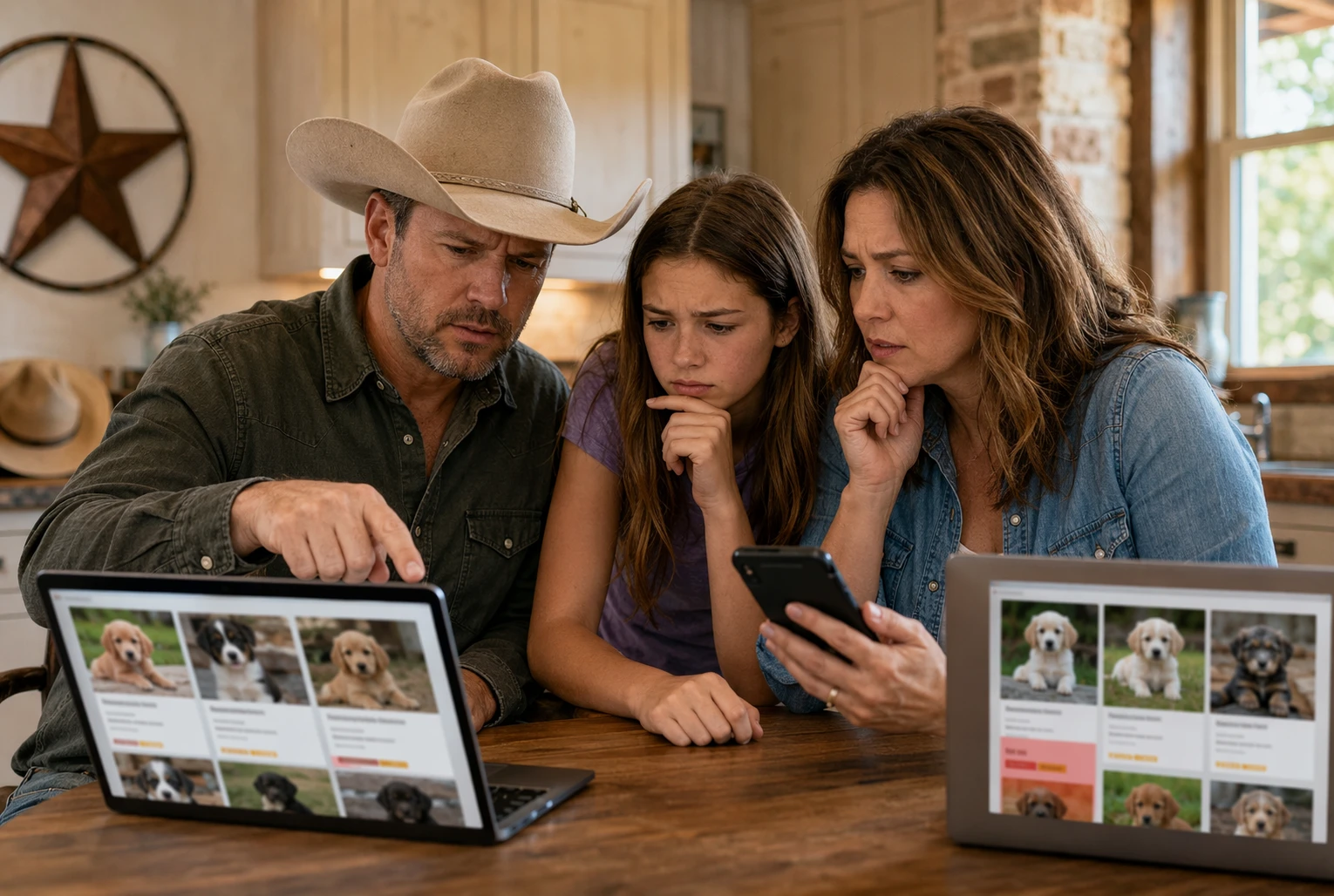
The fastest scam signal is often the cheapest one. If a puppy listing feels like a sudden bargain, slow down. In many puppies for sale in Texas searches, low pricing is used to trigger fast deposits before you verify who is actually behind the ad.
Highlights
- Compare the asking price with several current breeders, not wishful thinking.
- Watch for discounts paired with rush language like “today only.”
- BBB says an unusually low price is a red flag, especially for purebred puppies.
- Texas scam reports often start with cheap listings, then extra fees pile on later, according to recent BBB reporting in Texas.
Specs
- Best for: Spotting the most common first-pass scam trigger
- What it usually looks like: Far-below-market price or sudden special offer
- Verification step: Compare with several reputable breeders before contacting anyone
Pros
- Simple to check quickly
- Easy for first-time buyers to understand
Cons
- A fair price alone does not prove legitimacy
- Some scams use normal pricing too
This ranks first because bargain pricing often hooks buyers before any real proof gets checked.
Last updated: July 28, 2026
Also Read: 10 Small Breed Puppies That Stay Friendly & Easygoing
2. Keyword-Heavy Website Names
Real breeders usually use a real brand name, not a string of search terms. If a site sounds more like an ad headline than a kennel, family program, or business, pause and verify it. The FTC says buyers should search a breeder’s name with words like “complaint” or “scam” before paying FTC guidance.
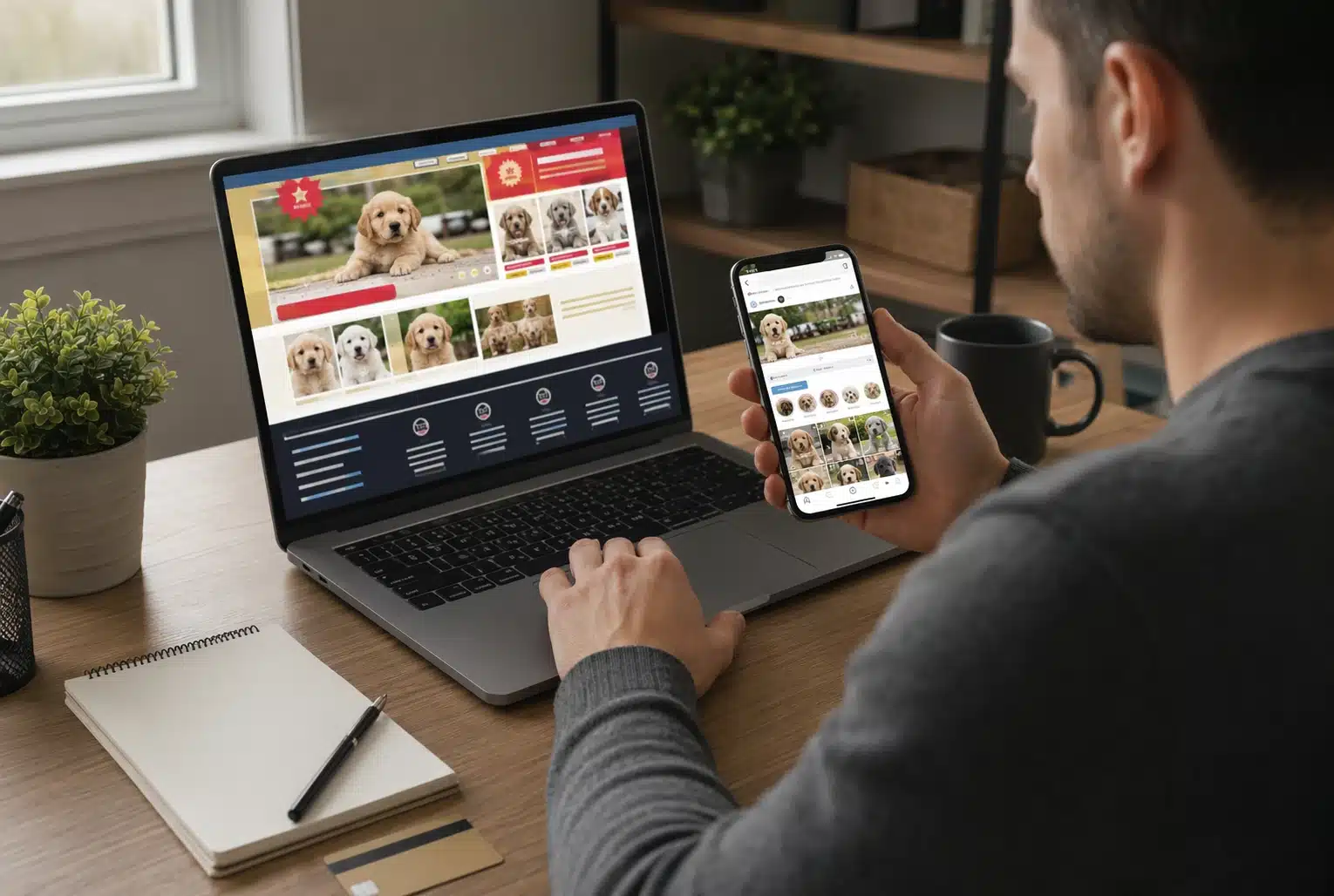
Highlights
- Check for a real kennel or company name in the site title and footer.
- See if the same branding appears on social pages and contact info.
- Be cautious if the site feels built for search traffic, not trust.
Specs
- Best for: Finding anonymous listings disguised as breeder sites
- What It Usually Looks Like: Generic names built around words like “cute” or “healthy” puppies
- Why It Matters: Brand mismatch makes the seller harder to trace across trusted pages, and Texas officials warn scam sites often rely on anonymity and weak contact details Texas Attorney General tips
Pros
- Very useful for early screening
- Helps spot hidden or cloned sites
Cons
- Some real breeders have simple names
- A polished brand can still be fake
This ranks high because scam operators often build disposable sites around popular search phrases.
Last updated: July 28, 2026
Also Read: Puppies for Sale in Texas: What Makes a Listing Trustworthy
3. Only Email Communication
A real breeder should not hide behind one narrow channel. If a seller will only email, you lose the chance to hear how they answer real questions on the spot. The FTC says legit breeders should welcome an in-person or video visit, and the AKC lists no phone calls as a scam red flag.
Highlights
- Ask for a phone or video call before any payment.
- Use specific questions about the puppy, parents, and go-home timing.
- Be cautious if replies are slow, vague, or sound copied.
Specs
- Best for: Catching sellers who avoid live accountability
- What it usually looks like: Email-only replies, no call option, repeated excuses about phone issues
- Why it matters: Real-time talk shows whether the seller truly knows the puppy
- Verification step: Request a call and ask one or two follow-up questions
Pros
- Very practical and buyer-friendly
- Often reveals weak legitimacy fast
Cons
- Email can still be part of a real process
- Some breeders use email first to manage inquiries
It ranks here because scammers often prefer email since it is easier to automate, stall, or drop.
Last updated: July 28, 2026
4. Stolen or Inconsistent Photos
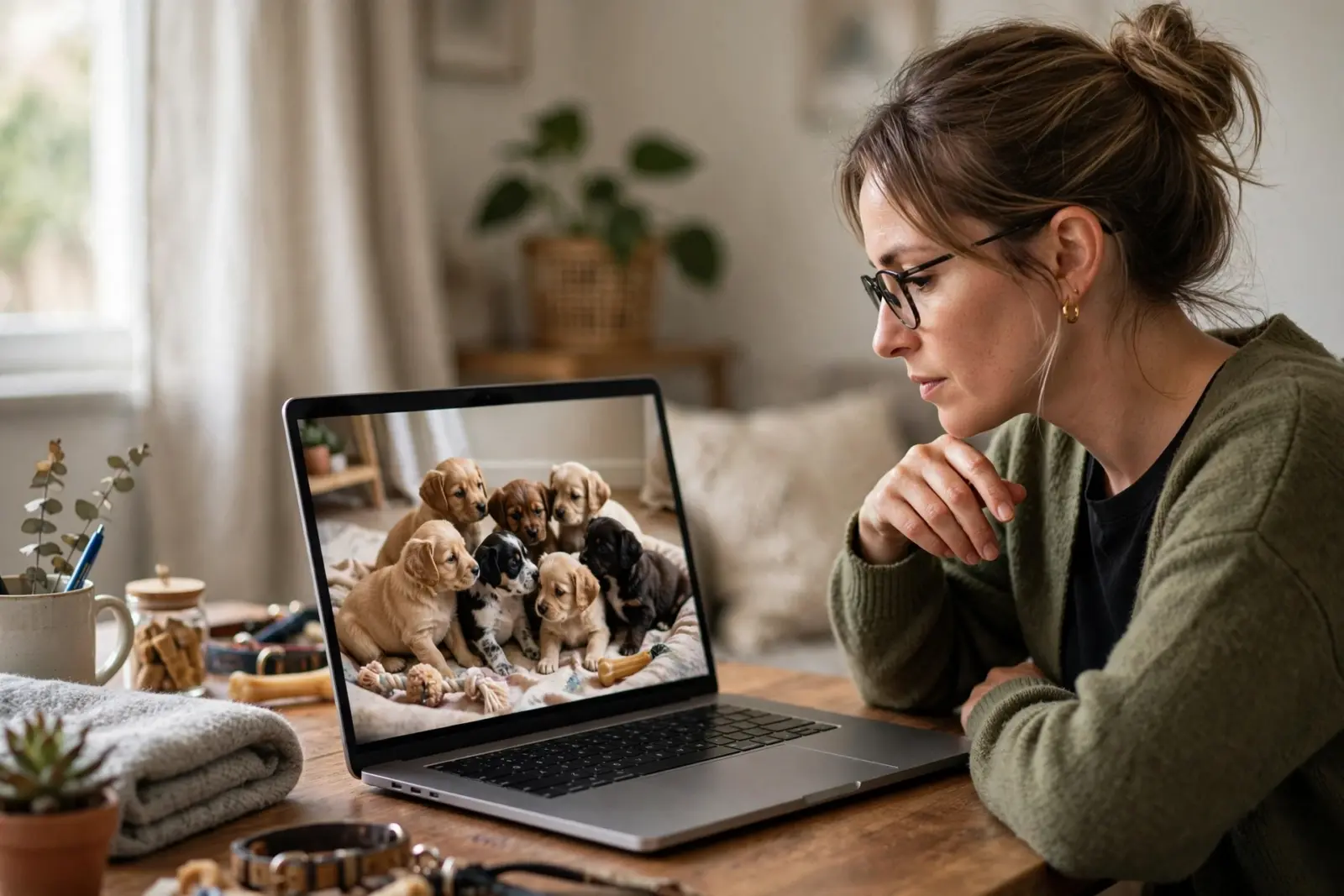
One litter should not look like five different homes. If puppy photos jump between different floors, bedding, lighting, or camera styles, the page may be stitched together from stolen images. The FTC even tells buyers to do a reverse image search when checking pet listings.
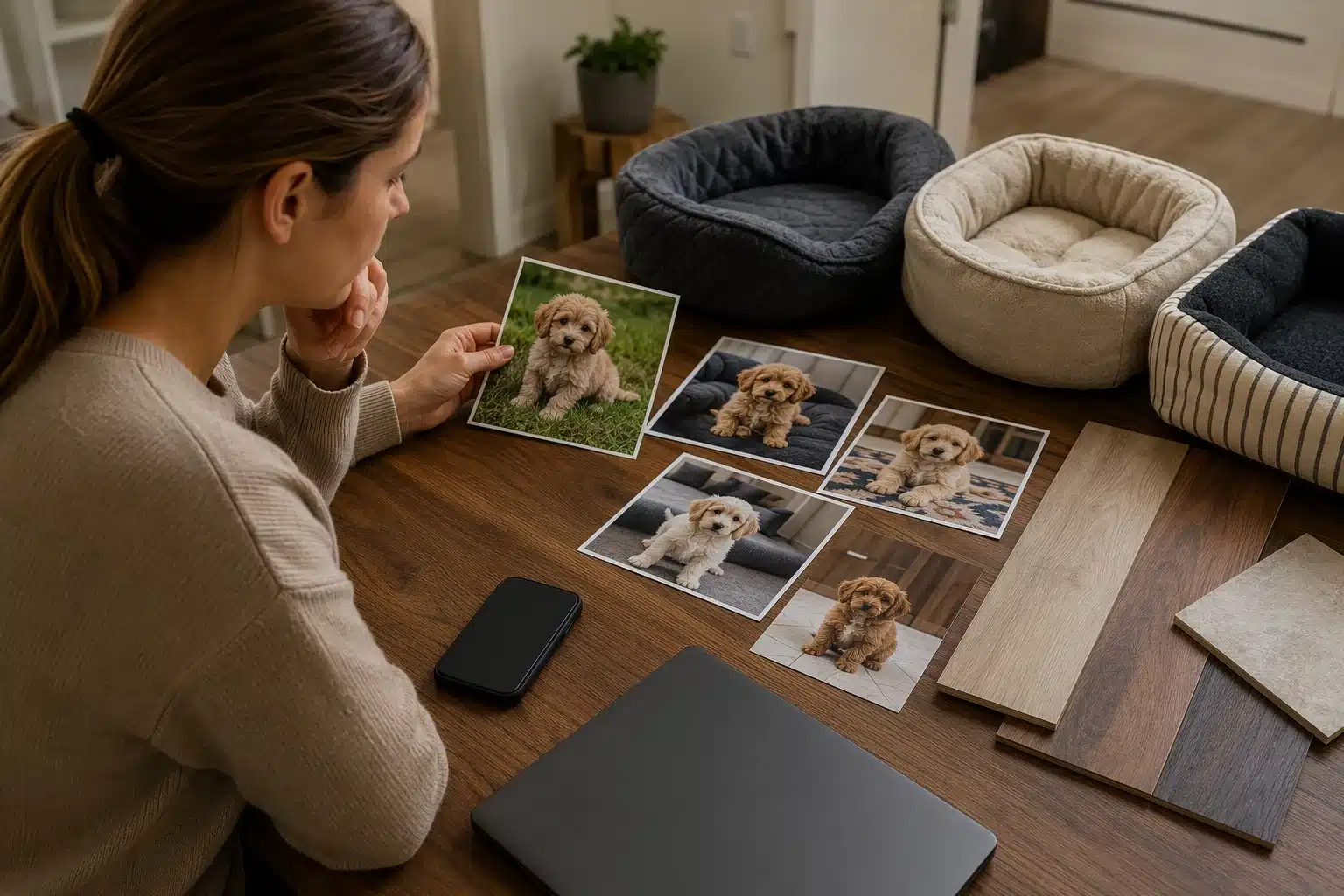
Highlights
- Compare background, flooring, bedding, and lighting across puppy photos.
- Ask for multiple current photos of the same puppy.
- Check whether the photo style matches the breeder’s social pages. If the same image appears elsewhere, walk away.
Specs
- Best for: Detecting recycled images from different sources
- What It Usually Looks Like: Mixed backgrounds, mismatched puppy sizes, and inconsistent photo quality
- Why It Matters: Stolen images can make a nonexistent puppy look real
- Verification Step: Request a current photo with a handwritten note or unique prompt
Pros
- Visible cue that does not require expert knowledge
- Easy to pair with reverse photo checks
Cons
- Real home photos can vary
- Scammers may still use similar-looking images
Photo theft ranks high because cute pictures build trust fast, even in Texas puppy scams.
Last updated: July 28, 2026
5. Too Many Litters or Odd Age Mixes
Real breeding programs are usually narrower than scam pages appear. If one seller seems to have nonstop puppies from many litters, ages, or breeds, slow down. That broad inventory can point to a reseller, broker, or scam network, not one home-raised program.

Highlights
- Check if the same seller posts many unrelated litters at once.
- Notice if ages, sizes, and breed claims feel oddly scattered.
- A calmer, limited rhythm fits reputable puppy breeders in Texas better than constant availability. The USDA tightened oversight for pets sold sight unseen in this retail pet store rule update, and Humane World warns that high-volume puppy mills push large numbers for profit on a constant-sales model.
Specs
- Best for: Identifying inventory that feels too broad or too constant
- What it usually looks like: Puppies from many ages, breeds, or litters displayed at once
- Why it matters: A real home program usually has a limited, understandable rhythm
- Verification step: Ask how many litters are active right now and why
Pros
- Helps judge breeder scale
- Sets realistic expectations on availability
Cons
- Some real programs do manage multiple litters
- Small inventory alone does not prove legitimacy
This ranks here because overloaded listings often signal a reseller or scam network, not a transparent breeding home.
Last updated: July 28, 2026
Also Read: 10 Must-Ask Questions Before Buying a Puppy Locally
6. Poor Grammar and Awkward Copy
Sloppy writing does not prove fraud, but it should raise your risk score. Many Texas puppy scams use rushed or copied text that sounds unnatural, thin, or oddly repetitive, and BBB notes fake pet sites often reuse stolen text from other pages when shopping online.
Highlights
- Read the page out loud. Bad phrasing is easier to hear than see.
- Check the homepage, puppy pages, and contact page for the same mistakes.
- Search a strange sentence to see if it was copied, a step the FTC also supports through seller research.
Specs
- Best for: Recognizing rushed or copied content
- What It Usually Looks Like: Awkward sentences, missing punctuation, repeated wording issues
- Why It Matters: Weak writing often comes with weak verification and weak ownership transparency
- Verification Step: Call and confirm the basics stay consistent
Pros
- Easy to spot
- Often appears with stronger red flags
Cons
- Good breeders can still make typos
- Grammar alone should not decide the purchase
This ranks here because it is a secondary signal, but it often shows up beside bigger warning signs.
Last updated: July 28, 2026
7. Unsafe Payment Methods
If the money is hard to trace, the seller may be hard to recover. Gift cards, wire transfers, and similar payment requests are a major warning sign in Texas puppy scams because they cut down your options if something goes wrong. The FTC says gift cards are for gifts, not payments, and wire transfers are often hard to reverse.
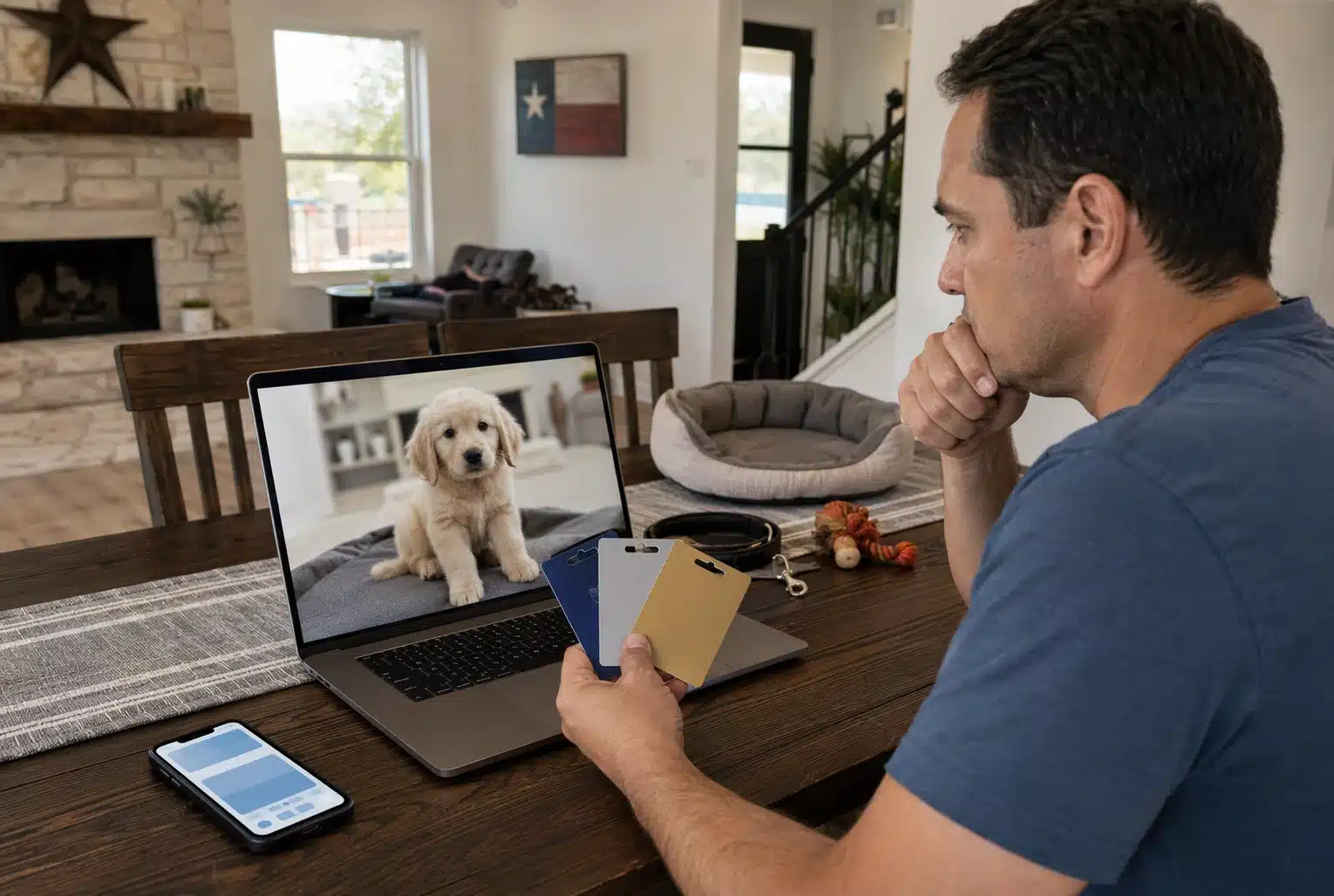
Highlights
- Treat gift cards and wire transfers as stop signs, not conveniences.
- Be careful with prepaid or hard-to-reverse payment requests.
- Make sure the payment method matches the breeder’s stated policies.
Specs
- Best for: Protecting your money before reservation
- What It Usually Looks Like: Gift cards, wire transfers, or unusual instant payment requests
- Why It Matters: Unprotected payments are difficult to dispute or recover
- Verification Step: Ask for formal reservation terms and a clear receipt process
Pros
- Highly actionable
- Strong financial protection signal
Cons
- Not every unusual method is fraudulent
- Some legitimate breeders use deposits with specific terms
It ranks here because payment method quickly separates real business from a scam attempt.
Last updated: July 28, 2026
Also Read: 10 Signs a California Puppy Listing Is a Scam – Sage Puppies
8. Reverse Image Check Failure
If the photo exists elsewhere, the puppy story may not be true. A quick reverse photo lookup puppy check can expose stolen images, even on polished listings.

Highlights
- Search the puppy photo before sending money. The FTC says older matches can signal a scam.
- Check if the same image appears under a different breeder name or older post.
- Use this most when the puppy looks unusually perfect, generic, or widely staged.
Specs
- Best for: Confirming whether a puppy photo is original
- What it usually looks like: The same image appears on multiple sites or older posts
- Why it matters: A stolen image can mean the listing is fabricated
- Verification step: Run reverse image search and compare source dates, as Google also advises
Pros
- Objective and easy to repeat
- Works well against stolen images
Cons
- Not every image is indexed online
- Some Texas puppy scams use original but misleading photos
This ranks here because scammers depend on images that are not theirs.
Last updated: July 28, 2026
Also Read: Puppies for Sale in Texas: Spotting Trustworthy Listings
9. Refusal to Take a Live Call
A live call is one of the simplest reality checks available. If a seller dodges phone or video, keeps delaying, or sends only clips, treat that as a serious warning. The FTC says real sellers should allow an in-person or video visit.
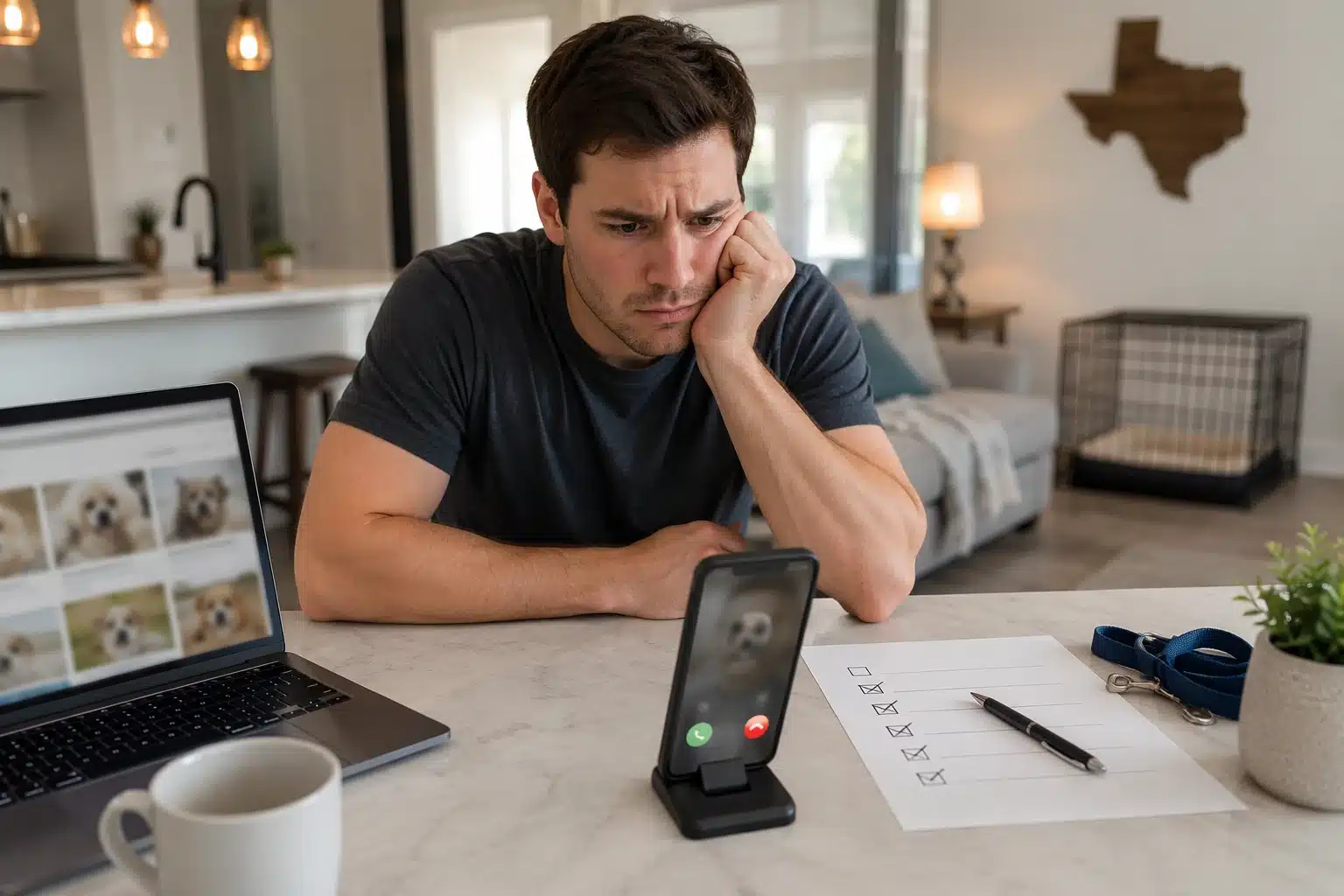
Highlights
- Ask for a live video call, not a recorded clip.
- Request one specific action, like showing the puppy’s belly or reacting with a toy.
- Look for a calm answer, not excuses. BBB notes fake sellers often won’t allow video chat.
Specs
- Best for: Verifying the puppy in real time
- What It Usually Looks Like: Refusal, repeated delays, or only prerecorded clips
- Why It Matters: Live proof is harder to fake than text or photos
- Verification Step: Ask for a live call with a specific puppy task
Pros
- Very effective verification tool
- Builds trust quickly
Cons
- Some breeders need to schedule calls
- It still does not prove the whole program
This ranks high because real-time proof is one of the strongest ways to avoid Texas puppy scams.
Last updated: July 28, 2026
10. Emotion-Driven Urgency Stories
Sad stories are often used to speed up bad decisions. A seller may say the puppy must go today, a child is allergic, or the dog is free if you only cover shipping. That pressure is the point.
Highlights
- Watch for stories that push you to act right now.
- Be careful when emotion replaces records, contracts, and live proof.
- Free-puppy offers with shipping demands are a major FTC scam warning.
Specs
- Best for: Spotting manipulation that rushes the buyer
- What It Usually Looks Like: Sad backstory, urgent deadline, or free puppy with shipping only
- Why It Matters: Pressure lowers careful checks
- Verification Step: Pause, verify details, and never pay under guilt or panic
Pros
- Common pattern and easier to spot once you know it
- Helps families slow down and check facts
Cons
- Some real rehoming cases do exist
- You still need careful proof, as BBB notes in rescue dog scams
It ranks high because guilt can make smart Texas puppy scam checks disappear fast.
Last updated: July 28, 2026
Also Read: Puppies for Sale Near Me: Red Flags to Avoid Scams
11. Unexpected Extra Fees
A real puppy purchase should not keep changing after you commit. The problem starts when a seller adds new charges after you are already attached, like insurance, crate rental, paperwork, or surprise vaccine costs.
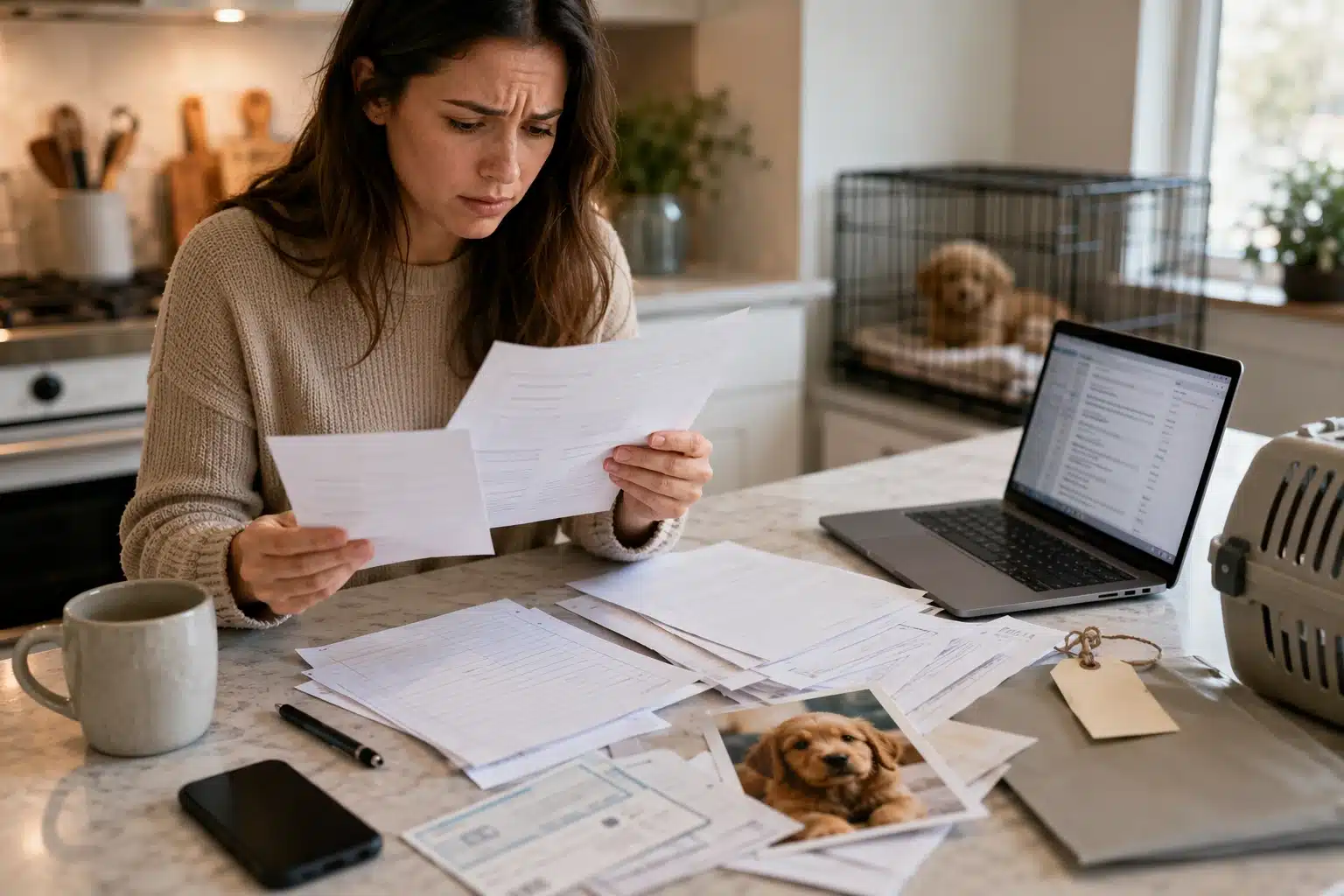
Highlights
- Ask for the full cost breakdown before you reserve.
- Watch for fees that appear only after you say yes.
- Make sure delivery and reservation terms are explained upfront.
Specs
- Best for: Finding hidden costs before reservation
- What It Usually Looks Like: Extra insurance, paperwork, or crate charges added late
- Why It Matters: Moving costs after commitment can signal manipulation
- Verification Step: Request a written breakdown of every expected fee
Pros
- Helps with budgeting and buyer protection
- Sets clearer expectations
Cons
- Some real programs have separate delivery fees
- Fees alone are not always a scam sign
The FTC warns that fake pet sellers often ask for more money for vet bills, crating, shipping, or inspection costs after payment, and BBB reports these schemes can push buyers into sending money several times through extra pet scam charges and repeat payment pressure, which is why this ranks here.
Last updated: July 28, 2026
Also Read: 10 Adorable Havapoo Colors You Need to See (2026)
12. Unrealistic Training or Health Claims
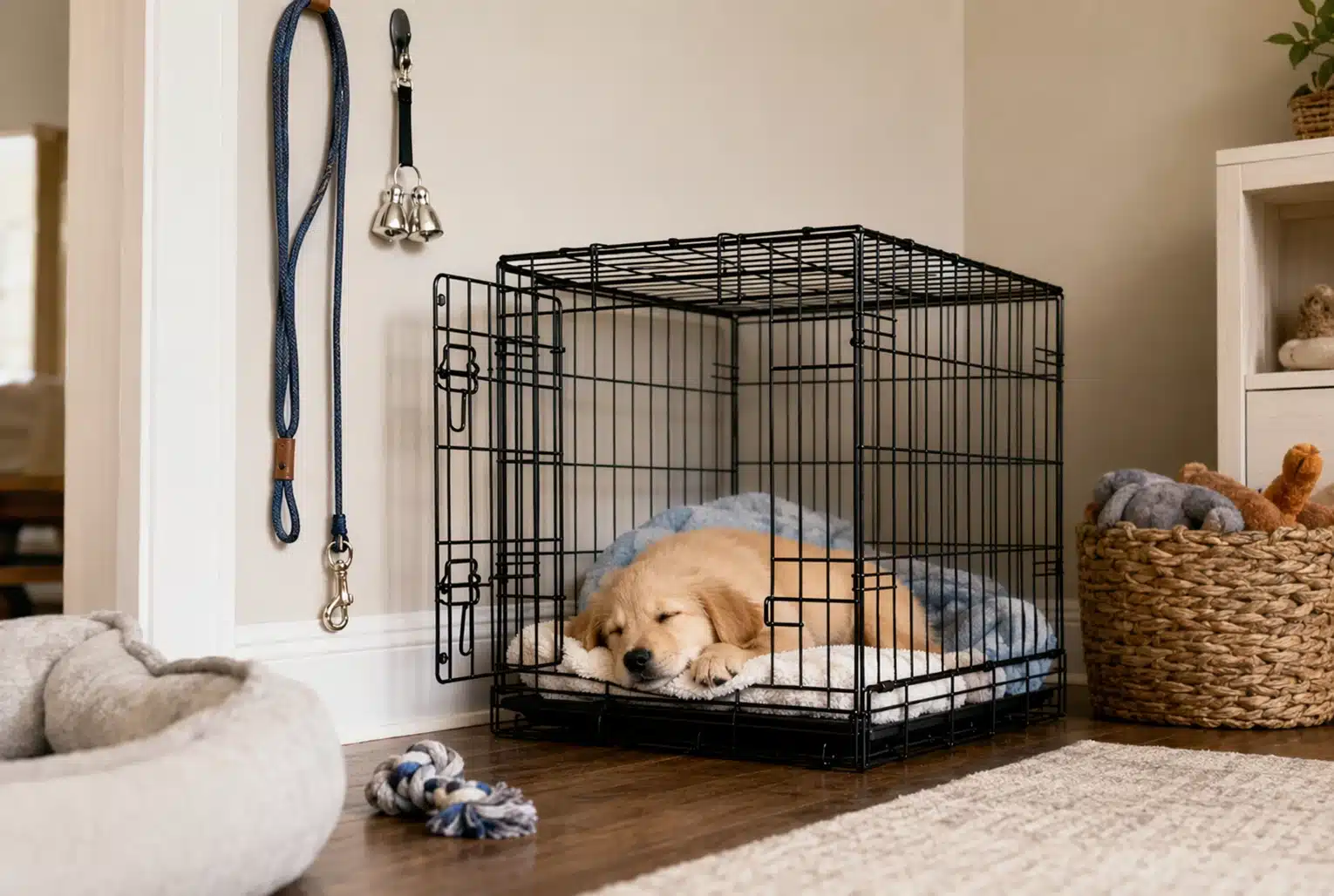
Very young puppies should not be marketed like finished dogs. If a seller says an 8 to 12 week old puppy is fully potty trained, fully crate trained, or completely vaccinated, slow down. That is a common hype pattern in Texas puppy scams, and it can mislead first-time families.
Highlights
- Watch for language that makes a very young puppy sound fully trained.
- Honest breeders explain early socialization and starter routines, not perfect results.
- Puppies usually need vaccine series through about 16 weeks, per UC Davis guidance.
Specs
- Best for: Separating realistic puppy development from hype
- What It Usually Looks Like: Claims of full potty training, full crate training, or complete vaccination too early
- Why It Matters: Overpromising can hide inexperience or dishonesty
- Verification Step: Ask what the puppy has actually learned and at what age
Pros
- Very important for first-time buyers
- Helps reset realistic expectations
Cons
- Some breeders use sloppy marketing language
- Early progress varies by puppy
It ranks here because exaggeration often points to either ignorance or intent to mislead.
Last updated: July 28, 2026
Other Warning Signs to Keep in Mind
Some red flags show up later, after the first screening pass. They still matter because they often point to a seller who is hard to verify or quick to pressure buyers.
- Missing Phone Number or Physical Location – If a breeder will not clearly share real contact details, you have little way to verify who they are or where the puppy is.
- Requests for Shipping-Only Payments – A seller who claims the puppy is free but wants shipping money upfront is using a common scam tactic.
How to choose the right breeder in Texas
Use this quick filter before you send money to anyone.
- Check identity first. Look for a real kennel name, a real website, and matching phone, email, and social details. If names, cities, or contact info shift from page to page, walk away.
- Call before you pay. Ask about the exact puppy, the parents, age, ready date, and how pickup or delivery works. A good breeder answers clearly and does not dodge simple questions.
- Compare a few programs. Put price, photos, and litter details side by side. If one seller lists too many breeds, uses perfect stock-style photos, or pushes a same-day deposit, that is a bad sign.
- Get terms in writing. Ask for reservation terms, payment steps, and a full fee breakdown before you commit.
- Verify the photos. Use reverse image search and ask for current photos if anything feels off.
- Trust the tone. Sage Puppies stands out here because the process is calm, organized, and application-first, with clear next steps instead of pressure.
If the seller tries to rush your choice, treat that as your answer.

If you want a safer way to buy online, start with a breeder that leads with screening, transparency, and clear next steps. Sage Puppies helps Texas families avoid common red flags with health-tested parents, home-raised puppies, and a calm, application-first process. Review Available Puppies, Pricing, and How It Works, then apply when the fit feels right.
Frequently Asked Questions
Q1: best Texas puppy breeders
The best Texas puppy breeders welcome questions, show clear health testing, explain pickup or delivery, and screen buyers too. A good sign is an application-first process. If a seller pushes fast payment before real conversation, walk away.
Q2: How can I tell if a puppy listing is stolen?
Run a reverse image search, check for repeated ads in many cities, and compare the puppy’s age across listings. Stolen listings often use vague details, low prices, and refuse live video calls with the actual puppy.
Q3: Should I avoid breeders who can ship anywhere?
Not always. The issue is not distance. It is transparency. Reputable programs explain transport clearly, share timing, and keep communication steady. Sage Puppies, for example, pairs delivery options with a family-first process instead of a rushed checkout.
Q4: What payment method is safest for a puppy deposit?
Use traceable payment methods with clear paperwork. Avoid wire transfers, gift cards, crypto, or payment apps sent as “friends and family.” Ask for a written agreement that explains the puppy, deposit terms, and next steps.
Q5: Is a low price always a scam?
Not always, but a price far below the normal range should slow you down. Scammers use cheap prices to create urgency. Compare what is included, ask about health records, and see if the seller answers simple questions clearly.