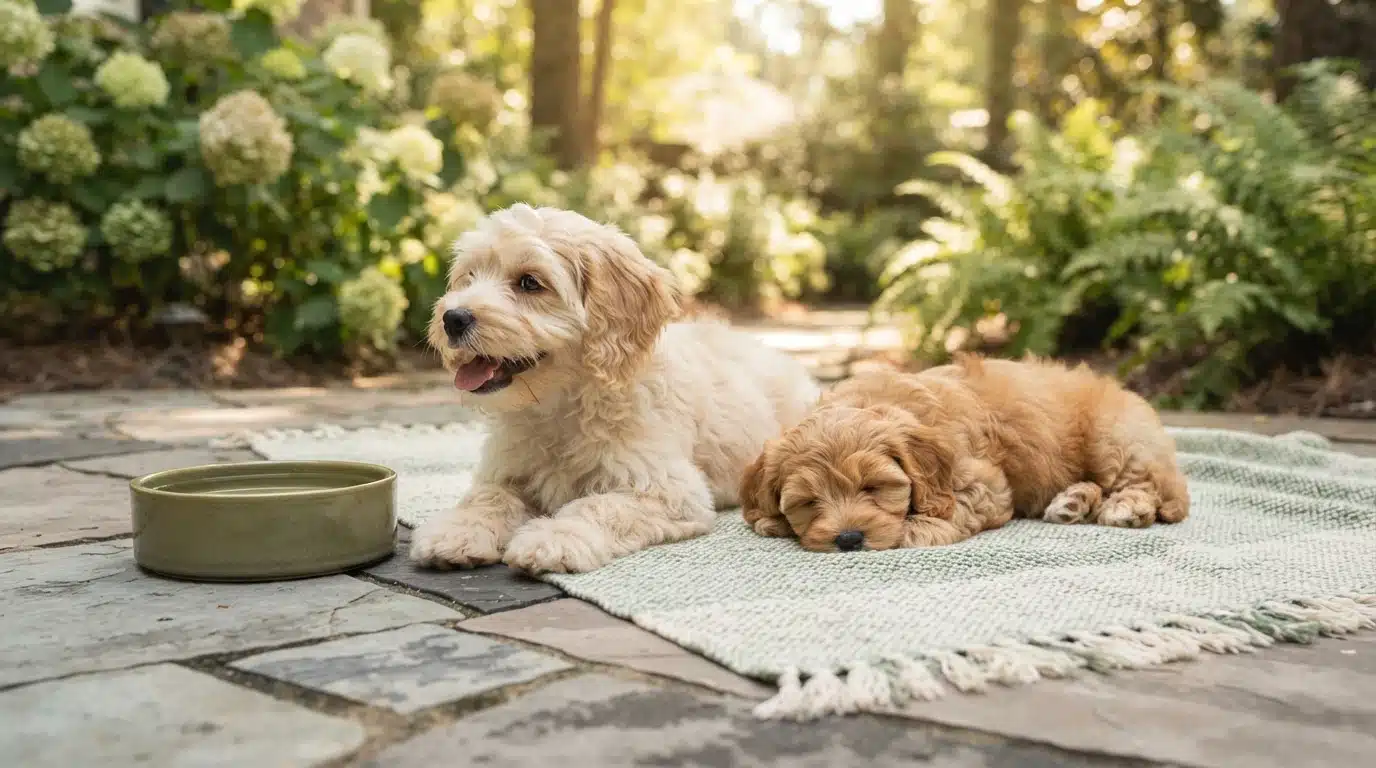
Quick Summary: Puppies are more vulnerable to heat, cold, and travel risks than adult dogs due to immature temperature regulation. To keep them safe, owners should provide shade, water, and short outings in summer, and dry, warm shelter in winter, while securing them properly during car trips. Recognizing early signs of stress and planning ahead can prevent serious illness or injury, especially for small or young puppies.
A young Havanese puppy can ride home to South Jordan in July with one set of risks, then face a very different problem on her first snowy potty break in January. Many families do not think about those changes until the first scare – heavy panting, cold stress, or a rough car trip.
This guide helps fix that. It covers Seasonal puppy safety in plain terms so you can spot risks early, plan ahead, and protect your puppy through heat, cold, and travel. Good Seasonal puppy safety is not just about comfort. It helps prevent avoidable illness, fear, and injury during a puppy’s most sensitive months.
At Sage Puppies, we focus on well-raised Havanese, Havapoo, and Cavapoo puppies and the real-life care questions families ask most. This Seasonal puppy safety hub gives you calm, practical next steps without guesswork.
1. Why Puppies Need More Seasonal Protection Than Adult Dogs
Puppies are not just small dogs. Their bodies handle heat, cold, stress, and dehydration less well, so weather shifts and travel plans can affect them faster than they affect healthy adults.
How immature temperature control changes risk
Young puppies have weak temperature control, especially in the first weeks. The biggest issue is simple: they cannot adjust as fast when they get too cold or too hot. According to the AKC puppy health guide, newborn puppies do not have fully working shivering and blood vessel responses, which makes chilling dangerous. A review on newborn puppy thermal homeostasis also notes that thermoregulation is deficient early on and stabilizes later as puppies mature.
That weak control raises risk in every season:
- Heat can lead to fast dehydration and overheating
- Cold can drop body temperature quickly
- Travel adds stress, missed water breaks, and odd temperatures
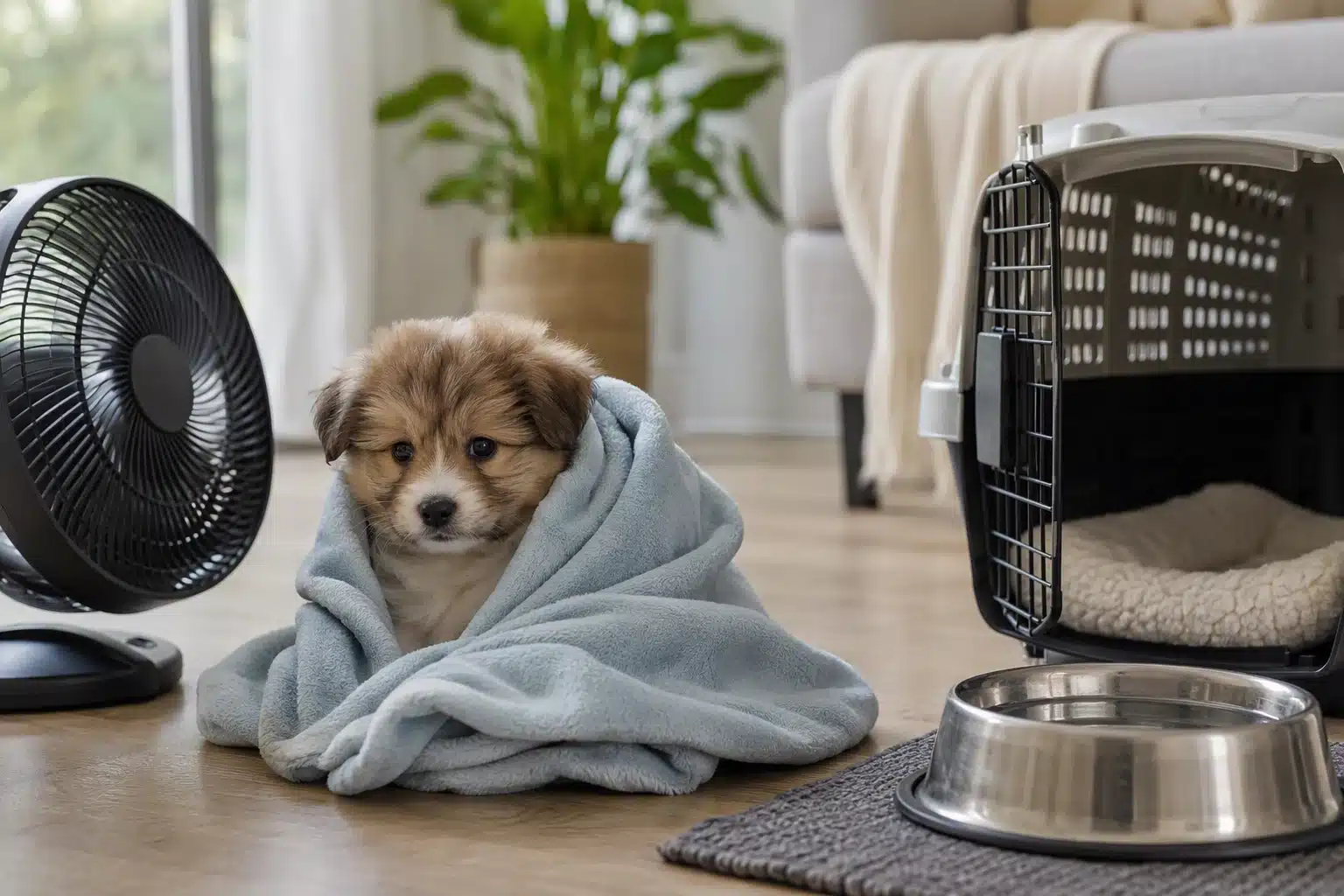
A puppy that seems “just sleepy” may actually be getting too hot, too cold, or too stressed.
Which puppies need extra caution
Some puppies need closer watching than others. Risk goes up when body size is small, the coat is light, or the puppy is very young.
Use extra caution with:
- Toy and small-breed puppies – they lose body heat faster.
- Very young puppies – especially before full body control develops.
- Short-muzzled puppies – they may struggle more in warm air.
- Thin, sick, or underweight puppies – they have less reserve.
- Puppies new to your home – stress can hide early warning signs.
| Puppy type | Main seasonal concern | Why |
|---|---|---|
| Very young | Cold and heat | Poor body temperature control |
| Small-breed | Cold | Less body mass |
| Short-muzzled | Heat | Harder cooling by panting |
| Underweight | Cold and travel stress | Lower energy reserve |
Also Read: 10 Signs a California Puppy Listing Is a Scam – Sage Puppies
2. Heat Safety: How to Keep a Puppy Cool in Hot Weather
The everyday heat triggers families overlook
Puppies overheat faster than many families expect. The risk is not just a blazing afternoon. Warm cars, sunny patios, stuffy crates, fake grass, dark pavement, and high humidity all add up fast. The CDC warns that a parked car can rise nearly 20 degrees in the first 10 minutes, even with a window cracked according to the CDC.
Watch for common trouble spots:
- Midday walks on pavement
- Backyard play with no deep shade
- Errands with “just a minute” car stops
- Outdoor naps on decks or concrete
Small puppies and short-muzzled pups need extra caution.
Signs a puppy is getting too hot
Heat stress often starts quietly. A puppy may slow down, seek shade, or stop playing before things look serious. Cornell notes early signs can include heavy panting, drooling, whining, and reluctance to move, while severe heatstroke can lead to vomiting, weakness, confusion, seizures, or collapse in Cornell’s heat safety guide.
Look for this progression:
- Fast panting that does not settle
- Thick drool or very red gums
- Slowing down, wobbling, or lying flat
- Vomiting, diarrhea, or glassy eyes
- Collapse or trouble breathing
If you see more than mild panting:
- Move your puppy to shade or air conditioning
- Offer cool water
- Wet the coat with cool, not ice-cold, water
- Call your vet right away if symptoms do not improve fast
Do not wait for collapse. Early action matters.
Safe summer habits that actually help
Simple routines prevent most heat trouble. Keep outdoor time short, early, and shaded. Choose grass over asphalt. Bring water every time. Skip forced exercise when the air feels muggy, because dogs cool mainly by panting, and humidity makes that harder.
A quick summer plan helps:
| Situation | Safer choice | What to avoid |
|---|---|---|
| Walks | Early morning or later evening | Midday heat |
| Playtime | 5 to 10 minute bursts | Long chase sessions |
| Rest | Indoors with airflow | Sunbathing outside |
| Surfaces | Grass or shaded paths | Hot pavement |
Helpful habits:
- Test pavement with your hand
- Use fans and shade, not icy baths
- Keep crates well ventilated
- Plan pickup, delivery, or travel around cooler hours
Also Read: 7 Seasonal Puppy Safety Rules for Hot Summer Days
3. Cold Weather Safety: Protecting Puppies From Winter Stress
Why puppies feel the cold faster
Puppies lose body heat fast, especially small breeds, thin-coated pups, and very young dogs. Cornell notes that puppies cannot regulate body temperature well and have very little body fat, which makes them more prone to cold stress according to Cornell Vet. That matters even more for Havanese, Havapoo, and Cavapoo puppies during first winters, windy potty breaks, and snowy sidewalks.
Cold risk goes up when your puppy is:
- Wet from snow or slush
- Standing still instead of moving
- Close to the ground with a short stride
- Out in wind, not just low temps
If your puppy feels cold to you, do not “tough it out.” Head inside early.
Warning signs your puppy needs to come inside
Bring your puppy in right away if you see shivering, paw lifting, tail tucking, hunched posture, whining, or a sudden refusal to walk. The AVMA warns that dogs can develop frostbite and hypothermia, and young pets are more at risk in cold conditions per AVMA cold weather guidance.
Watch for these signs:
- Slow walking or stopping often
- Trying to curl up or hide
- Cold ears, paws, or belly
- Acting sleepy, weak, or confused
- Limping after contact with ice or salt
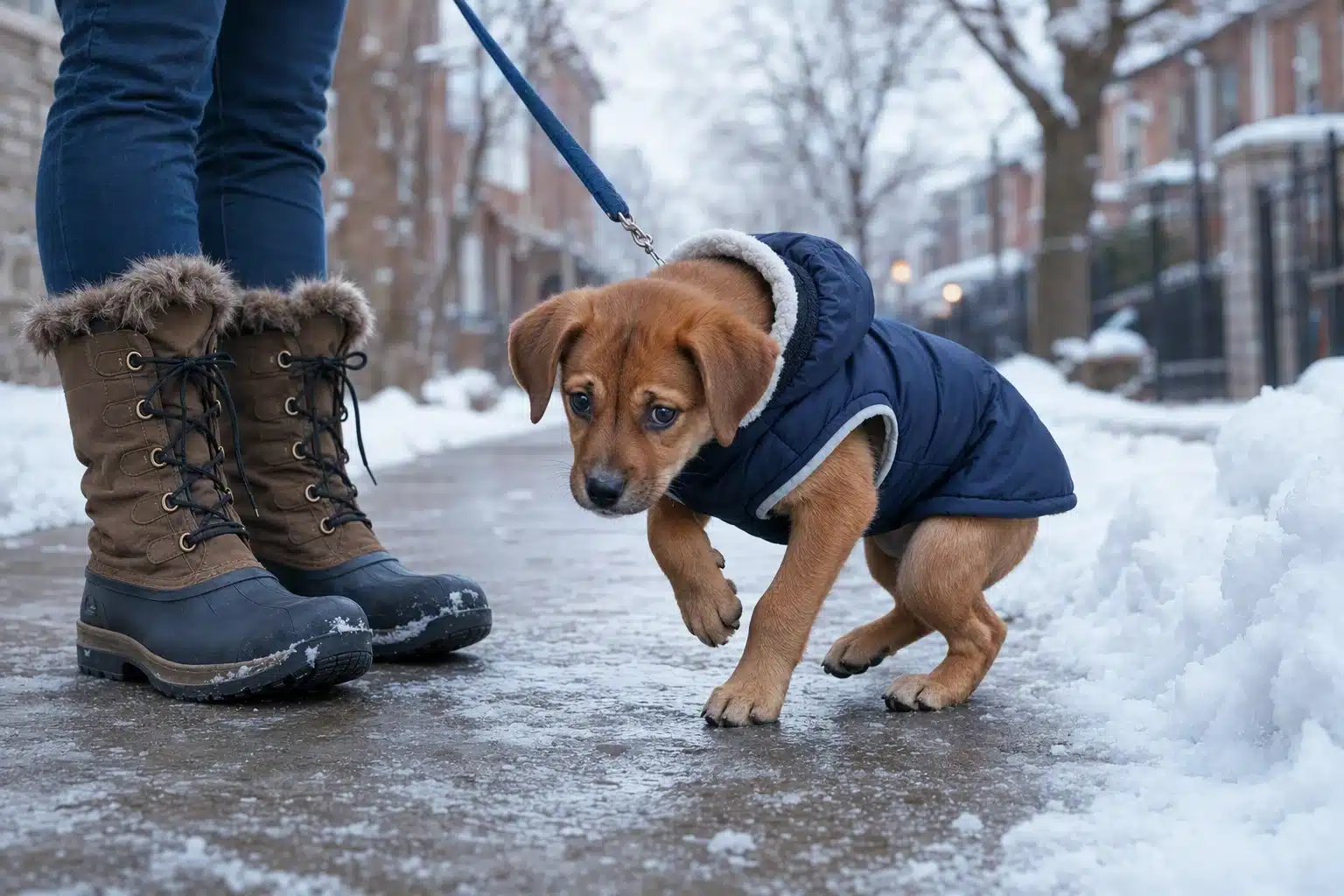
Do not warm a chilled puppy with direct heat like a heating pad. Use blankets, dry towels, and call your vet if your puppy seems weak or hard to wake.
Winter comfort and paw protection
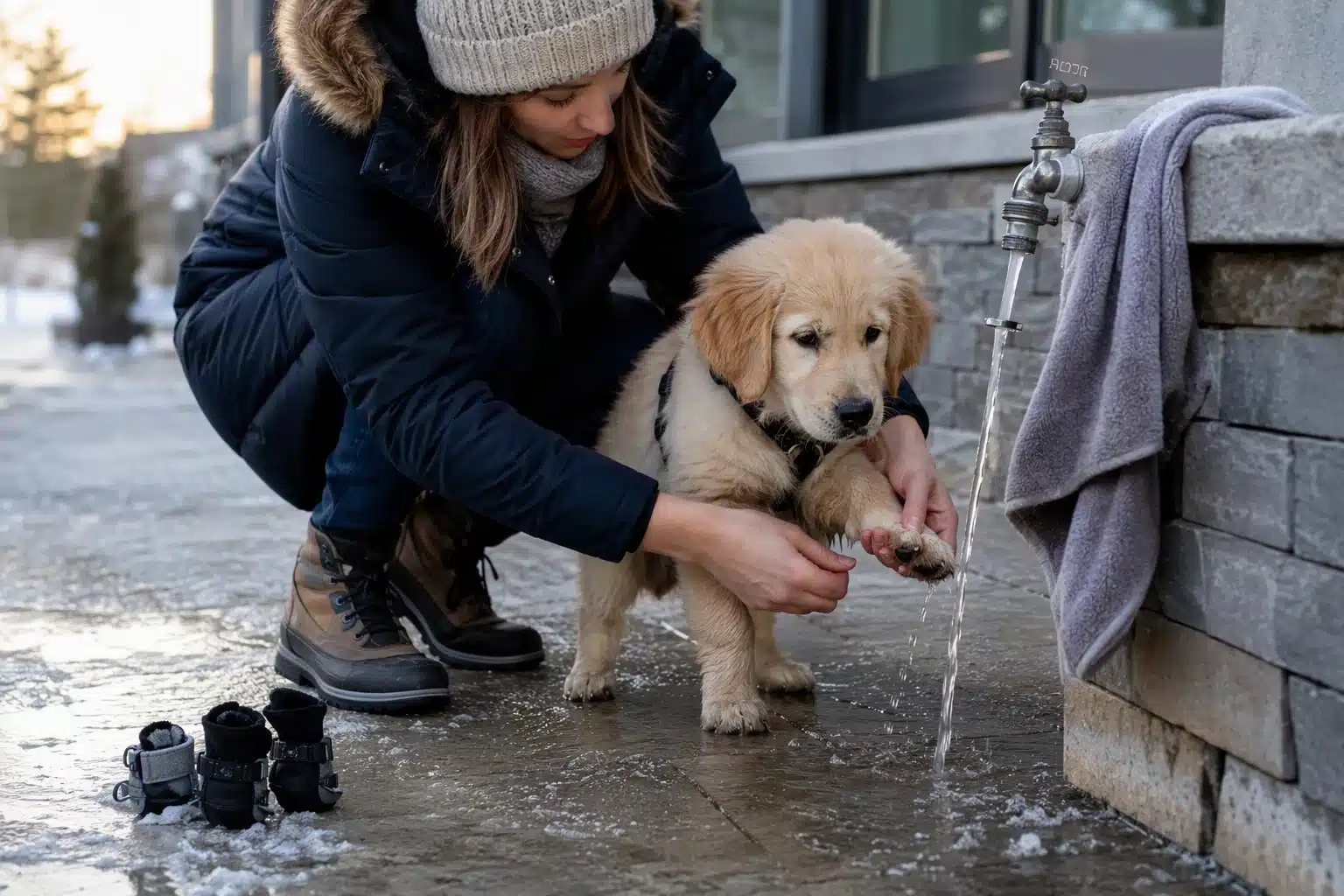
Keep winter outings short, calm, and planned. A dry sweater or coat helps many puppies, but only if it fits well and stays dry. Wet clothing can make a puppy colder.
Use this quick routine after each outing:
| Step | What to do | Why it helps |
|---|---|---|
| 1 | Dry paws, legs, and belly | Removes snow and chilling moisture |
| 2 | Wipe off salt and de-icer | Lowers paw irritation and licking risk |
| 3 | Check pads and toes | Spots cracks, redness, or ice clumps |
| 4 | Offer a warm bed indoors | Helps your puppy recover body heat |
For extra comfort:
- Try booties if your puppy tolerates them
- Use pet-safe de-icer at home
- Set up a draft-free sleep spot off cold floors
4. Travel Safety: How to Keep a Puppy Safe in the Car and On the Move
How to secure a puppy for car travel
Use a crash-secured crate or a puppy travel harness every time. A loose puppy can fall, distract the driver, or get hurt in a sudden stop. The CDC says pets should ride in the back seat in a harness clipped to the seat belt, or in a secured crate with enough room to stand, sit, lie down, and turn around during car travel.
Best setup:
- Small puppies – hard-sided or well-built soft crate, strapped in place
- Calm older puppies – crash-tested harness in the back seat
- Never – front seat, lap riding, or roaming free
A secure puppy is not just safer. Most pups also settle faster when the setup stays the same every trip.
The risks of parked cars in every season
Parked cars turn dangerous fast, even on mild days. Heat is the biggest threat, but cold matters too. The CDC warns that a car’s inside temperature can rise almost 20°F in the first 10 minutes, even with a cracked window on warm days. In winter, a parked car can trap cold and put a small puppy at risk of chilling.
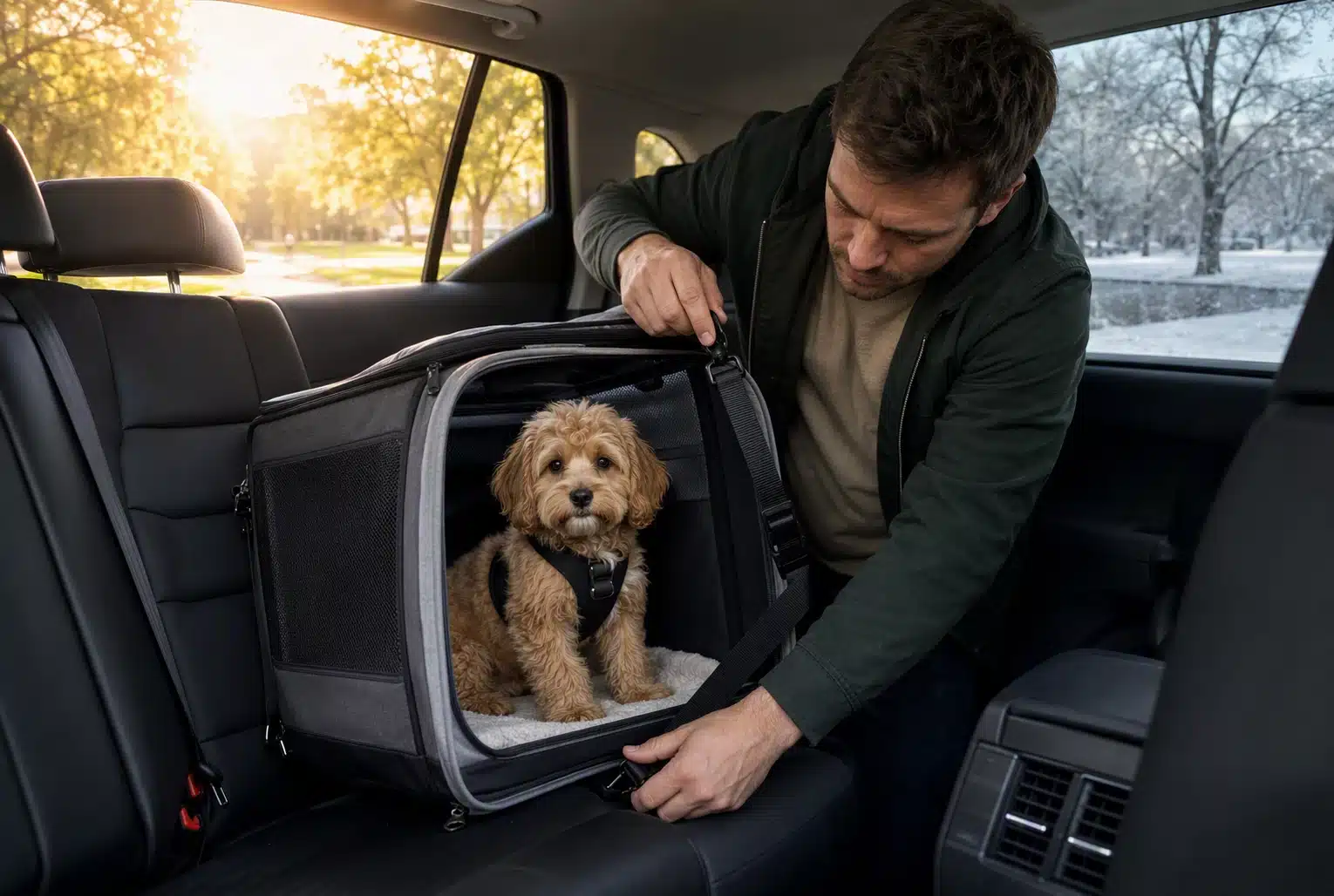
Skip the “just a minute” stop unless one adult stays with the puppy and climate control remains safe. Better yet:
- Use drive-through options
- Take the puppy inside when allowed
- Leave pets at home for errands that are not truly dog-friendly
Tiny breeds lose body heat fast and overheat fast too. That makes short errands riskier than many families expect.
Planning breaks, water, and motion-sickness support
Plan your route before you leave. Puppies need bathroom breaks, a drink, and a calm reset. For longer drives, stop every 2 to 3 hours for leash walks in a safe area. Bring:
- Fresh water and a spill-resistant bowl
- Paper towels, wipes, and waste bags
- A familiar blanket and chew
- Any vet-approved medication
Feed a light meal a few hours before travel, not right before loading up. If your puppy gets sick in the car, ask your vet. One published study found maropitant reduced vomiting from motion sickness in dogs during car travel in clinical trials.
If a puppy drools, yawns, whines, or vomits, pause and reassess before pushing through the trip.
5. Outdoor Safety Beyond Temperature: Paws, Surfaces, Water, and Seasonal Hazards
Puppies get hurt outside from more than heat or cold. Their paws, the ground under them, and the water or yard around them can all create fast, preventable risks.
Paw protection on pavement, snow, and salt
Hot pavement can burn paw pads fast. A simple test helps: if you cannot hold your hand on the surface for several seconds, it is too hot for your puppy, according to the University of Wisconsin School of Veterinary Medicine.
Use these habits on walks:
- Choose grass or shaded paths when you can.
- Walk early or later in the day.
- Keep outings short for young puppies.
- Check paws after every walk for redness, cracks, or limping.
- Rinse and dry paws after snow, slush, or salted sidewalks.
Boots can help some puppies, but only if they fit well and your puppy can walk normally in them.
Salt, ice melt, and packed snow often irritate the skin between tiny toes more than owners expect.
Water and yard hazards that vary by season
Standing water, ponds, and even quiet shorelines need caution. The CDC warns that harmful algal blooms can be deadly for pets, and animals can get sick after drinking the water or licking it off their fur.
Watch for these seasonal hazards:
- Blue-green algae in warm, still water
- Fertilizer, weed killer, and mulch in spring and summer
- Mushrooms after rain
- Antifreeze and ice melt in winter
- Foxtails, burrs, and ticks in dry grass
If your puppy swims, rinse the coat, offer fresh water, and supervise closely.
Also Read: Puppy Seasonal Safety Guide for Heat, Cold, and Holidays
6. Common Mistakes Families Make With Seasonal Puppy Safety
Many families mean well, but they miss how fast puppies get stressed by weather and travel.
Treating puppies like small adult dogs
Puppies tire faster, dehydrate faster, and handle heat and cold less well than mature dogs. That matters even more with toy and small breeds. Common mistakes include:
- taking long walks in midday heat
- skipping shade and water breaks
- assuming a short car errand is harmless
A parked car can heat up about 20 F in 10 minutes, even with a cracked window, according to the CDC heat guidance.
Assuming mild weather is automatically safe
A cool morning can still mean hot pavement by noon. A chilly day can still be too cold for a young puppy with a light coat. Families also forget that travel adds stress. The CDC notes that very young animals need extra planning, and some carriers restrict pets during the hottest or coldest times of year in the CDC Yellow Book travel guidance.
Use a simple check before outings:
- feel the ground
- watch your puppy’s pace and breathing
- shorten the trip before problems start
Also Read: 10 Small Breed Puppies That Stay Friendly & Easygoing
7. A Simple Seasonal Safety Routine for New Puppy Families
What to check before every outing
Run a quick scan before you head out. Check the ground with your hand, look at the weather, and decide if your puppy needs a shorter walk, shade, or a sweater. Pack water, waste bags, and a towel for wet paws or summer cooling. For car rides, secure your puppy in a crate or travel harness. The AVMA says pets should never ride loose or stay alone in a parked car vehicle safety guidance.
When to pause and reassess
Stop right away if your puppy starts panting hard, shivering, lifting paws, slowing down, drooling, or acting unsettled. Those early signs matter. Puppies are less able to handle heat, cold, and stress than mature dogs. If the outing feels off, shorten it or go home. > Cracked windows do not make a parked car safe, and even mild weather can turn risky fast, according to the AVMA’s warm weather pet safety advice.
How to build safer habits from the beginning
Keep your routine simple and repeatable:
- Check weather and surfaces.
- Pack water and essentials.
- Use a secure restraint in the car.
- Keep outings short for young puppies.
- Wipe paws, legs, and belly after walks.
That habit loop builds calm, safe patterns early. It also helps first-time families feel more confident through every season.

Seasonal safety starts with a well-bred, well-started puppy and clear support from day one. If you want a Havanese, Havapoo, or Cavapoo raised with health-tested parents and a family-first process, explore Sage Puppies. You can view available puppies, review pickup or delivery options, and take the next step with confidence.
Frequently Asked Questions
Q1: puppy summer safety
Keep your puppy out of peak heat, usually late morning through early evening. Walk on grass, bring water, and limit play. Watch for heavy panting, drooling, weakness, or red gums. Small breeds and young puppies overheat fast.
Q2: How cold is too cold for a puppy?
Many puppies struggle once temperatures near freezing, especially small breeds, short coats, and very young pups. Keep potty trips short, dry them well, and use a sweater if needed. Shivering means it is time to go inside.
Q3: Is hot pavement really dangerous?
Yes. Pavement can burn paw pads in minutes. Test it with the back of your hand for seven seconds. If it feels too hot for you, it is too hot for your puppy. Choose grass, shade, or early walks instead.
Q4: How often should puppies drink during summer outings?
Offer small drinks every 15 to 20 minutes during warm weather. Do not wait for strong thirst. Bring a travel bowl and stop often. After play, let your puppy cool down slowly instead of gulping large amounts at once.
Q5: What is the safest way to travel by car with a puppy?
Use a secured crate or crash-tested harness, never a loose lap ride. Keep the car cool, plan bathroom breaks, and never leave your puppy parked. For families working with Sage Puppies, ask for pickup or delivery prep tips.
Conclusion
Seasonal puppy safety comes down to simple habits done early and done every time. Watch for heat stress, limit cold exposure, and plan travel before the day gets busy. The biggest mistakes are usually preventable – hot cars, long cold outings, loose rides, and poor trip prep.
The basics matter most:
- Fresh water, shade, and cool timing in warm weather
- Shorter outings and paw checks in winter
- Secure restraint, ID, and paperwork for trips
The CDC warns that even a parked car can turn deadly fast for pets, even when the weather feels mild, and it also stresses planning, microchips, and current vaccines before travel (CDC pet travel guidance; CDC heat and pets).