
Quick Summary: A reputable puppy breeder shows proof of health testing, maintains a clean environment, and asks about your lifestyle. They provide clear contracts, avoid rushing the process, and stay involved after the puppy goes home. Watch out for red flags like vague answers, pushy deposits, or no transparency, and always verify breeder credentials before committing.
If you are searching for a reputable puppy breeder near me in Utah or anywhere in the U.S., start with three checks right away: health testing, a real family screening process, and a contract that protects the puppy for life. Those three signs quickly separate careful breeders from polished sales pages.
The hard part is that many responsible puppy breeders near me claim the same things online. Photos look sweet. Promises sound good. First-time buyers can miss red flags until it is too late.
This guide shows you how to judge responsible puppy breeders near me with clear, buyer-side standards. You will learn what to ask, what paperwork matters, and how to spot gaps before you commit.
At Sage Puppies in South Jordan, Utah, we believe families should know how to compare responsible puppy breeders near me with confidence, whether you work with us or keep researching.
1. Confirm the breeder proves health testing, not just promises it
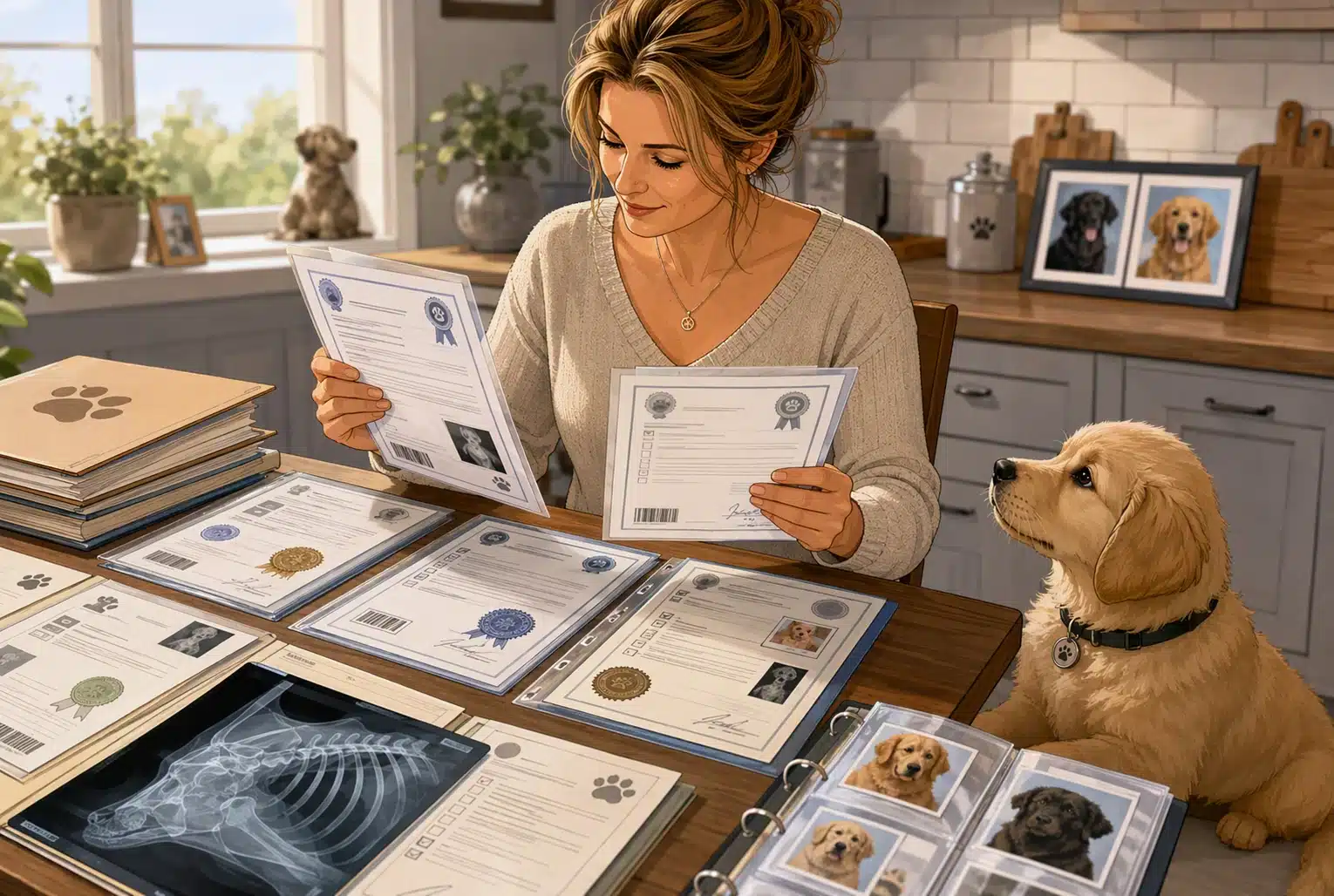
A good breeder does not ask you to trust a vague phrase like health checked. They show records for the parents, explain what each test means, and let you verify it yourself. AKC notes that breed health testing should follow parent club recommendations, not a one-size-fits-all list in breed health testing requirements.
What proof to ask for
Ask for proof on the sire and dam, not just the puppy.
Use this checklist:
- Test names for the breed, such as eye, heart, patella, hip, or DNA screens
- Results documents from the testing lab or registry
- Dates showing the tests were done at the right age
- Registered names or ID numbers that match the parent dogs
- Public database links or CHIC records if available
| Ask for | What you want to see | Red flag |
|---|---|---|
| Parent testing | Actual certificates or registry entries | “Our vet checked them” |
| Breed-specific screens | Tests tied to that breed’s risks | Generic DNA panel only |
| Clear identification | Matching names, chip, or registration | Records that cannot be matched |
How to read health claims without getting fooled
Some claims sound strong but say very little.
Watch for these:
- “Vet checked” – that is not the same as genetic or orthopedic screening
- “DNA tested” – useful, but not enough by itself
- “CHIC certified” – better, but still read the actual results
A CHIC number means the dog completed the breed’s required screenings and the results were made public. It does not guarantee every result was normal, according to the OFA CHIC program.
Ask the breeder to walk you through each result in plain English. If they dodge, rush, or act annoyed, step back.
Why family history matters too
Health testing lowers risk. It does not erase it. Family history gives you the bigger picture.
Ask about:
- parents
- grandparents
- littermates from past pairings
- recurring issues in the line
OFA says breeders improve odds by looking at parents and grandparents, not just one dog in isolation. That matters in small companion breeds where patella, heart, eye, and dental concerns can show up across generations.
At Sage Puppies, this is the kind of paper trail worth looking for – clear parent testing, honest answers, and line history that holds up under questions.
Also Read: Find a Reputable Puppy Breeder Near You: Step-by-Step
2. Look closely at the puppy environment and early socialization
A breeder’s setup tells you a lot before you ask a single question. Puppies learn fast in the first weeks, and the AVMA notes that early, positive exposure helps prevent fear later in life according to its literature review.
What a healthy puppy setting should look like
Look for a space that feels clean, calm, and lived-in. Not fancy. Just safe and well run.
- Bedding should be dry and fresh
- Water should be clean and easy to reach
- Puppies should have room to move, nap, and play
- The area should smell normal, not sharp or dirty
- Surfaces should look easy to sanitize
A good breeder will also show you where puppies spend most of their day, not just one staged corner.
If the breeder avoids photos, video, or in-person viewing, slow down.
| Green flag | Red flag |
|---|---|
| Bright, alert puppies | Strong odor or heavy mess |
| Age-safe toys and space | Crowded pens |
| Regular human contact | Puppies kept apart with little stimulation |
What socialization should feel like
Early socialization should feel gentle and steady, not loud or chaotic. Puppies need short, safe exposure to normal home life, people, sounds, grooming, and handling.
The AKC says puppies have a small window, roughly 5 to 16 weeks, when positive experiences shape confidence during this critical period.
Ask the breeder:
- Who handles the puppies each day?
- What sounds do they hear?
- Have they started crate or grooming exposure?
- How do you introduce new people safely?
Why small-breed puppies need thoughtful handling
Small-breed puppies need extra care because they are easier to overwhelm, drop, or chill. Good breeders know that careful handling matters as much as social exposure.
You want to see:
- Calm holding, not constant passing around
- Gentle play on secure surfaces
- Rest periods between new experiences
- Protection from rough adult dogs or kids
For families comparing local options, this is where boutique programs like Sage Puppies often stand out. Home-raised small-breed puppies should seem comfortable, curious, and appropriately protected, not stressed for the sake of social media content.
Also Read: Puppy Care Blog & Resources | Sage Puppies
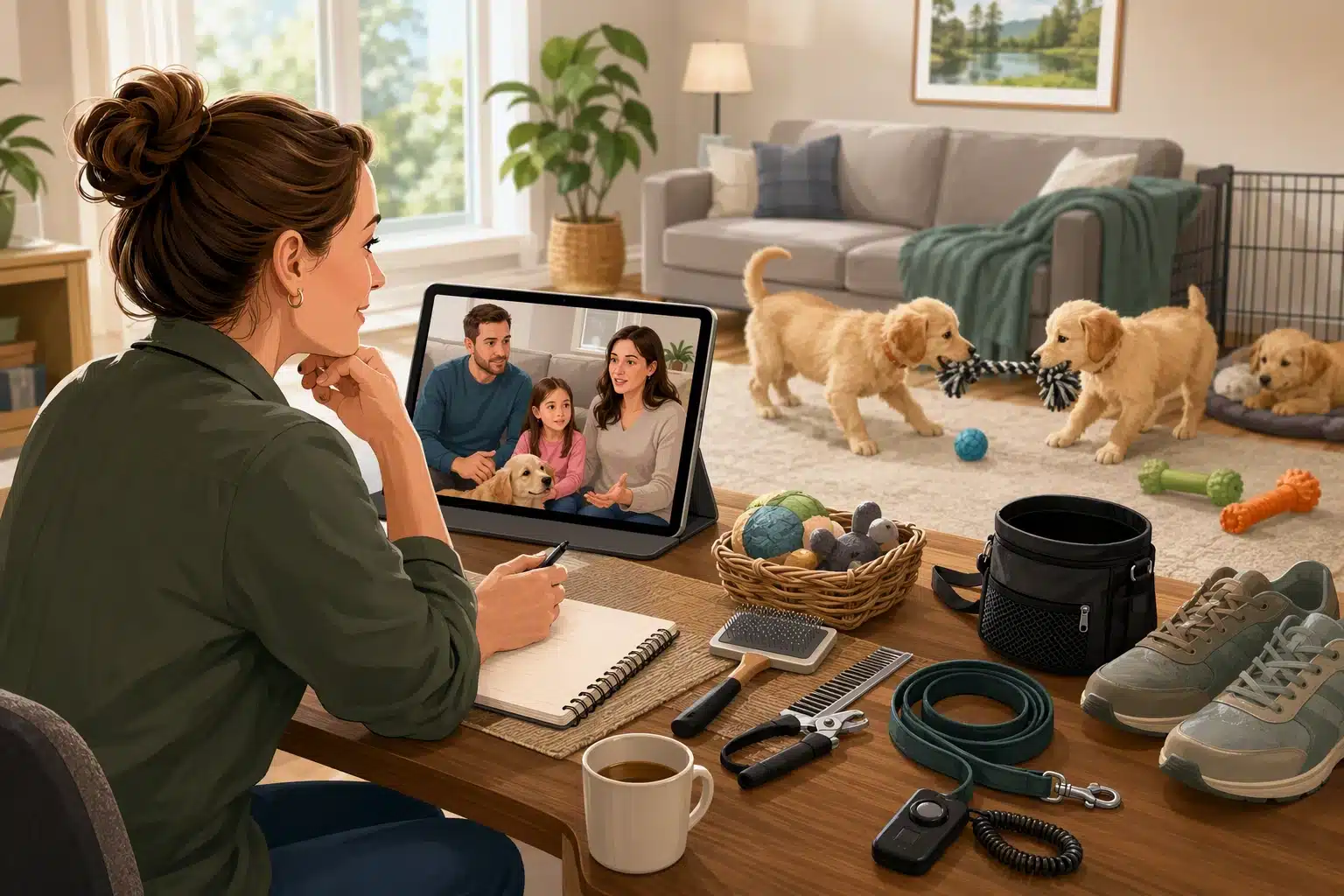
3. Pay attention to how the breeder interviews you back
A good breeder does not just answer your questions. They ask plenty of their own. The AKC notes that responsible breeders should ask many questions because they want their puppies placed in the right homes.
The questions a responsible breeder should ask
If the call feels a little like a home screening, that is usually a good sign. Expect questions like:
- Who lives in your home, including kids and other pets
- Whether you rent or own
- How long the puppy will be alone each day
- What kind of grooming, training, and exercise you can handle
- Why you want this breed, not just any puppy
- What you will do if life changes and you cannot keep the dog
A breeder who asks hard questions is protecting the puppy, not judging you.
They should also talk honestly about fit. A calm breeder may even tell you no, or suggest a different timing, sex, or temperament.
Why deposit-first conversations are a red flag
Be careful if the first goal is payment. A responsible breeder screens first and matches later. If the chat jumps straight to deposit links, shipping, or same-day holds, slow down.
The USDA retail pet rule is one reason buyers should ask more questions. Sellers who market pets without face-to-face buyer observation may fall under federal licensing rules, as explained in this USDA breeder licensing overview.
Red flags include:
- No questions about your lifestyle
- Pressure to pay before meeting by video or phone
- Promises that any puppy will fit any family
- No talk about return policies or long-term support
How Sage Puppies should feel in this conversation
With Sage Puppies, this conversation should feel calm, warm, and clear. You should feel guided, not rushed.
Look for signs like these:
- They ask about your routine, home, and goals.
- They explain breed traits in plain English.
- They help match temperament, not just color or size.
- They welcome thoughtful questions about pickup, delivery, pricing, and process.
For the full trust checklist, go back to the parent guide on choosing a reputable puppy breeder near you.
4. Review the contract before you commit
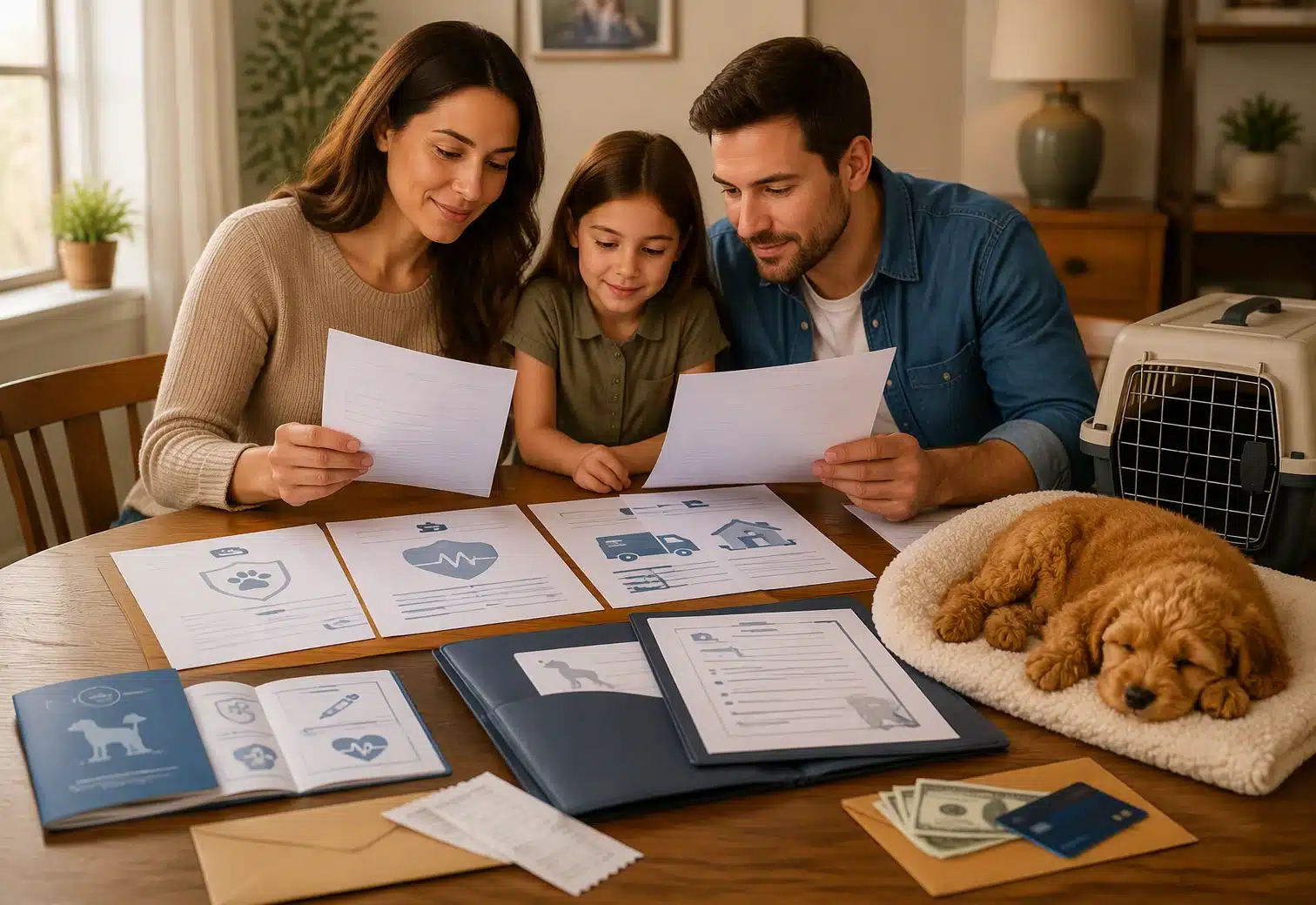
A good breeder does not rush this part. They hand you the contract early, give you time to read it, and answer questions without getting defensive. AKC notes that breeder contracts commonly spell out the purchase price, registration details, health terms, and return rules in writing in its breeder contract guide.
The basics that should always be in writing
Before you send a deposit or plan pickup, check for the core terms.
- Puppy identity – breed, date of birth, sex, color, and microchip if available
- Parent details – sire and dam names or registration details if the puppy is registerable
- Price and payment terms – deposit, balance, and whether any part is nonrefundable
- Health records – vaccines, deworming, and what paperwork you receive
- Health guarantee – what is covered, for how long, and what proof is needed
- Pickup or delivery terms – who arranges travel and who pays
| Contract item | What you want to see | Red flag |
|---|---|---|
| Health terms | Clear dates, steps, and records | Vague promises like “healthy puppy guaranteed” |
| Payment terms | Exact deposit and refund rules | No refund language at all |
| Ownership terms | Names, dates, signatures | Missing buyer or breeder signature |
Why the return-to-breeder clause matters
This clause protects the dog for life. If your situation changes, the breeder wants the puppy back or wants approval before any rehoming. That can feel strict, but it is usually a sign of responsibility, not control.
The AKC’s contract advice says many breeders require buyers to notify them if they can no longer keep the dog, and some contracts allow the dog to be returned at any time in this AKC contract article.
A breeder who never wants the puppy back may be telling you they stop caring once payment clears.
For first-time owners, this clause matters even more. Life changes fast. A solid breeder plans for that.
What to do if a clause feels unclear
Do not sign and hope for the best. Ask the breeder to explain the clause in plain English.
Use this quick checklist:
- Ask what the clause means in a real-life example.
- Ask who pays if a health issue shows up.
- Ask what deadline applies for vet exams after pickup.
- Ask for any promised change in writing.
- Walk away if the answer keeps changing.
A trustworthy program, including one like Sage Puppies, should be able to explain each line calmly and clearly.
Also Read: 10 Signs a California Puppy Listing Is a Scam – Sage Puppies
5. Verify timing, pickup, and post-placement support
A breeder can sound great on the phone and still fail at handoff. This part matters. A safe timeline, clear pickup plan, and real help after go-home day tell you a lot about how they treat puppies and buyers. If you have not read the full trust checklist yet, go back to the parent guide on reputable puppy breeders near you.
Why early placement is a warning sign
If a breeder pushes a puppy out too soon, slow down. USDA says dogs must be at least 8 weeks old and weaned before commercial transport, according to USDA APHIS transport rules. Many small puppies may need a little longer.
Watch for red flags like these:
- “Ready now” at 6 or 7 weeks
- No reason given for the go-home date
- No notes on eating, weight, or confidence
- Pressure to pay fast and pick up faster
A careful breeder places puppies when they are truly ready, not when the calendar is convenient.
How pickup or delivery should be explained
A solid breeder explains the handoff in plain English before you pay the final balance.
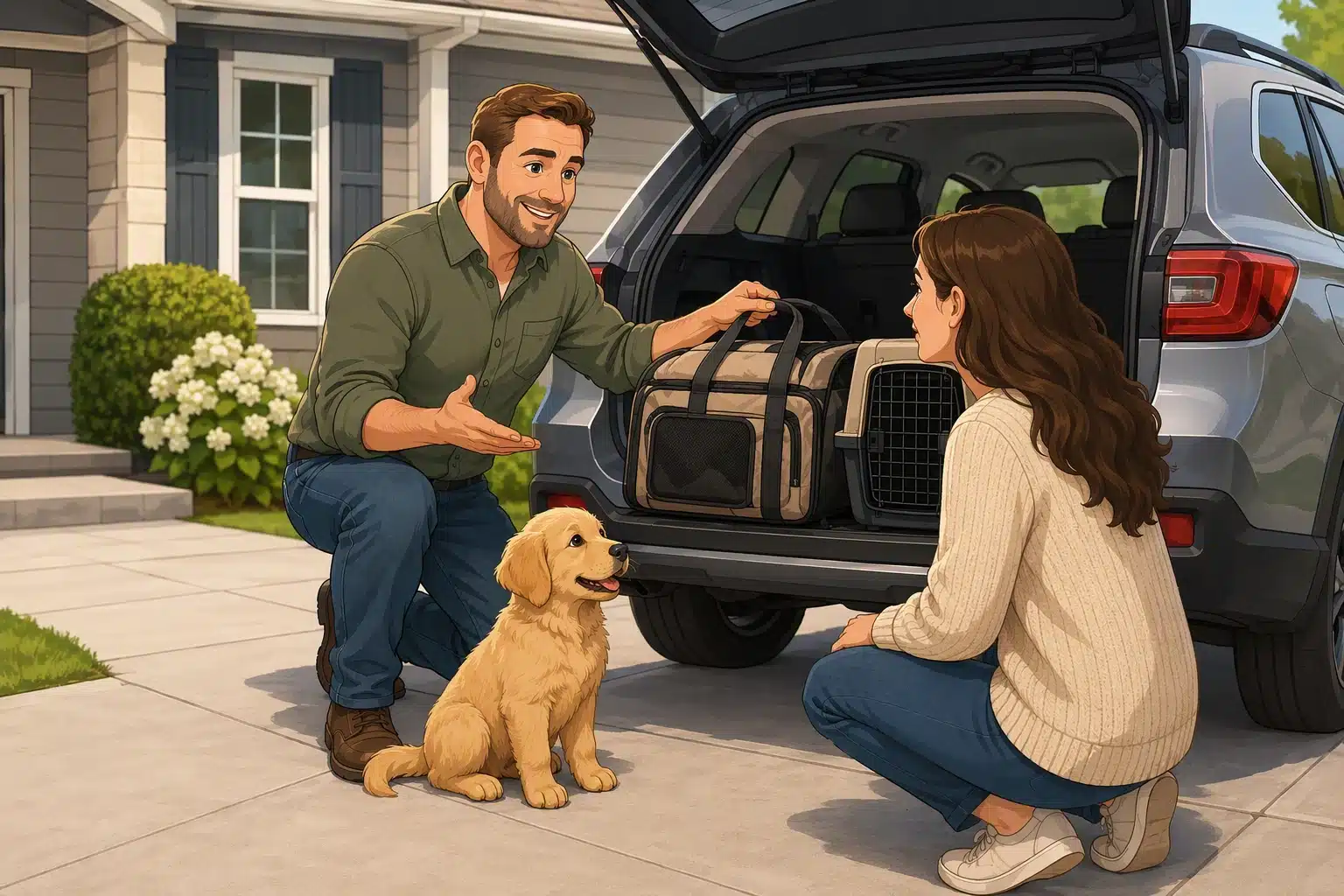
Use this quick check:
| Item | Good sign | Warning sign |
|---|---|---|
| Pickup plan | Exact date, place, and process | Vague last-minute texts |
| Delivery details | Route, timing, carrier, updates | “We ship anywhere” with no specifics |
| Paperwork | Contract, records, care notes | Missing or rushed documents |
The AVMA notes that interstate travel may require a certificate of veterinary inspection. Ask who handles that, and when.
What support should continue after the puppy goes home
Good breeders do not disappear after pickup day.
Look for:
- Feeding and transition instructions
- Help with the first few days at home
- Answers about sleep, potty, and routine
- A clear point of contact if something feels off
Sage Puppies should make this step feel calm, not confusing.
Also Read: 10 Questions to Ask Before Buying a Puppy Locally
6. Watch for the small warning signs that reputable breeders do not ignore
Small red flags matter. Good breeders do not brush them off. They answer clearly, show records, and slow the process down if something feels off. If you have not read the main trust checklist yet, go back to the parent guide on reputable puppy breeder near me first.
Common red flags to notice early
Watch how the breeder handles basic questions. A weak answer now often turns into a bigger problem later.
- They avoid showing where puppies are raised
- They will not let you meet the mother, or explain why in plain terms
- They push a deposit before a call, application, or screening
- They have many breeds or always have puppies ready
- They rely on phrases like “USDA licensed” or “AKC registered” as proof of quality, even though those labels do not guarantee good care according to the ASPCA’s breeder warning guide
- Their vaccine record looks homemade or incomplete
- Pickup is at a parking lot, hotel, or other third-party spot
If a breeder seems annoyed by careful questions, that is useful information. Good breeders expect them.
How to compare two breeders side by side
Use the same simple scorecard for both breeders. Keep emotion out of it for one hour.
| Checkpoint | Breeder A | Breeder B |
|---|---|---|
| Health testing shared before deposit | Clear proof | Missing or vague |
| Parent dogs described honestly | Yes | Partial |
| Home-raising details explained | Yes | Unclear |
| Contract easy to review | Yes | Rushed |
| Pickup or delivery process transparent | Yes | Limited |
| Questions for you as buyer | Thoughtful | Minimal |
You can also check whether a commercial seller appears in the USDA Animal Care Search Tool, but do not treat that alone as trust proof.
When a breeder feels like the right fit
The right breeder usually feels calm, not slick.
- They ask about your home, kids, schedule, and breed fit
- They explain what they know and what they do not
- They tell you the next steps without pressure
- They make pricing, reservation terms, and pickup clear
- They care where the puppy goes
That is the standard families should expect. It is also why programs like Sage Puppies focus on fit, transparency, and steady communication instead of fast sales.

If you want a breeder you can verify, not just hope is honest, take the next step with Sage Puppies. You can review available puppies, learn how the process works, check pickup or delivery options, and apply with confidence. It is a clear fit for families seeking a well-raised Havanese, Havapoo, or Cavapoo.
Frequently Asked Questions
Q1: reputable puppy breeder near me
Start with proof, not promises. Ask for health testing, parent details, a sample contract, and clear pickup or delivery steps. A reputable breeder welcomes questions, shows where puppies are raised, and never rushes payment or pressure.
Q2: How do I spot a red flag fast?
Watch for vague answers, no contract, no parent info, and many breeds for sale at once. If the breeder avoids video calls, pushes deposits before screening, or will not discuss health history, step back.
Q3: Should I visit in person?
Yes, if you can. If not, ask for a live video call. You want to see clean spaces, calm puppies, and real interaction. Good breeders are transparent about home raising, routines, and social time.
Q4: What should the contract include?
Look for price, deposit terms, health details, spay or neuter terms if any, pickup timing, and what happens if a puppy is not a fit. Read every line before you commit.
Q5: Is delivery a bad sign?
Not by itself. Safe delivery can be fine if the breeder still screens families, explains transport clearly, and stays involved after placement. Sage Puppies, for example, offers local pickup and nationwide delivery with clear next steps.
Conclusion
A reputable puppy breeder near me should be easy to verify, not hard to figure out. The big signs are simple: clear health testing, a clean home setting, honest answers, a solid contract, and puppies raised with care and social time. Good breeders also screen you back, keep puppies with mom long enough, and stay available after pickup. The AKC notes that responsible breeders should welcome questions, show where puppies are raised, and include a return clause in the contract in its responsible breeder guide. That matters even more in a market where Humane World for Animals still tracks serious puppy mill concerns in its 2026 Horrible Hundred report.



