
Quick Summary: Buying health-tested puppies requires verifying that breeders have screened the parents for breed-specific issues, not just providing a puppy exam. Ask for detailed records, current results, and clear proof of testing, especially for small breeds like Havanese, Havapoo, and Cavapoo. Reputable breeders focus on responsible raising, early socialization, and matching puppies to families, while red flags include vague answers, missing parent info, or pressure to buy quickly.
If you are looking for health-tested puppies for sale near me, do not ask which puppy is open first. Ask whether the breeder can show real proof that the parent dogs were screened before breeding. That is where many buyers get stuck. A listing may say vet checked puppies for sale near me, but a basic exam is not the same as full health testing.
This guide clears that up. You will learn what health-tested really means, how to verify breeder claims, and how to compare local pickup with delivery if you are searching vet checked puppies for sale near me.
We focus on small-breed puppy buying with a trust-first lens. That matters whether you want a Havanese, Havapoo, or Cavapoo, and whether your search starts in Utah or with vet checked puppies for sale near me anywhere in the country.
What Health-Tested Really Means
Health-tested should mean more than a quick puppy exam. A vet check tells you the puppy looked well that day. It does not prove the parents were screened for inherited problems. The AKC explains that real health testing for breeding dogs includes both genetic tests and physical screening tests tied to the breed, not just routine care or vaccines according to AKC.
Vet Checked Is Not the Same as Health Tested
A breeder can honestly say a puppy was vet checked after a litter exam. That is normal and helpful. It still is not the same as health testing.
- Vet checked means a general exam
- Health tested means the breeding dogs were screened before mating
- Proof should include named tests and results
If a seller cannot show parent records, treat “health-tested” as a marketing line, not a fact.
The Testing That Actually Matters
The right tests depend on the breed and line. Good breeders follow breed club and OFA or CHIC guidance, which may include DNA panels plus exams for eyes, heart, hips, knees, or other known risks. OFA says CHIC certification means a dog completed the breed’s recommended screenings and those results are public in the database through the CHIC program.
| Claim | What it usually means | What you should ask for |
|---|---|---|
| Vet checked | Basic puppy exam | Litter exam record |
| Genetic tested | Some DNA screening | Parent DNA report names |
| Health tested | Full parent screening | OFA, CHIC, specialist results |
Why Good Breeders Test Parents, Not Just Puppies
Most inherited issues start with the sire and dam. Testing parents first lowers risk before a litter is planned. Some important screenings also cannot be done well in very young puppies.
- Ask for the parents’ names
- Ask which tests were done
- Ask where results are recorded
- Verify the records yourself
For small breeds like Havanese, Havapoo, and Cavapoo, that parent-first approach is the standard careful families should expect from programs like Sage Puppies.
Also Read: 10 Signs a California Puppy Listing Is a Scam – Sage Puppies
How to Verify a Breeder’s Health Claims
Ask for the Exact Tests on Each Parent
Start with the parents, not the puppy. A breeder should tell you the exact tests done on both sire and dam, plus the date and result for each one. General lines like “vet checked” or “genetic tested” are not enough.
Ask for:
- The name of each test
- Which parent had it
- The testing lab or registry
- A copy of the report
Breed testing is not one-size-fits-all. The AKC notes that health screening should follow the breed parent club’s recommendations for that breed’s known risks, including both DNA and physical exams like eye, heart, or joint checks in many cases AKC breed health testing requirements.
If a breeder cannot name the tests clearly, treat that as a warning sign.
Check Whether Results Are Current and Verifiable
Next, verify the records yourself. Real health testing should be tied to an identified dog, not just a screenshot with no details. Ask for registered names, registration numbers, and any OFA or CHIC record numbers if available.

Use this quick check:
- Match the parent’s name on the test to the breeder’s parent dog.
- Confirm the test date is reasonable and not outdated.
- Look for public records when available.
The OFA says dogs in the CHIC program receive a CHIC number when required breed-specific screenings are completed and results are made public, but that number alone does not guarantee normal results OFA CHIC program.
Verifiable records beat promises every time.
Review the Contract and Lifetime Support Policy
A good breeder puts health claims in writing. Read the contract before you leave a deposit. It should explain what happens if a serious inherited issue appears, what records you receive, and whether the breeder will stay available after pickup or delivery.
Look for:
- Clear health record transfer
- Return or rehoming terms
- Ongoing breeder contact
- No vague language
OFA advises buyers to ask for the sales contract and see what responsibilities fall on both sides. At Sage Puppies, this kind of clear, calm process matters because trust should feel easy, not forced.
Also Read: Health-Tested Puppies for Sale Near Me: Questions to Ask Breeders
What Responsible Breeding Looks Like in the First Eight Weeks
Home-Raised Care and Daily Handling
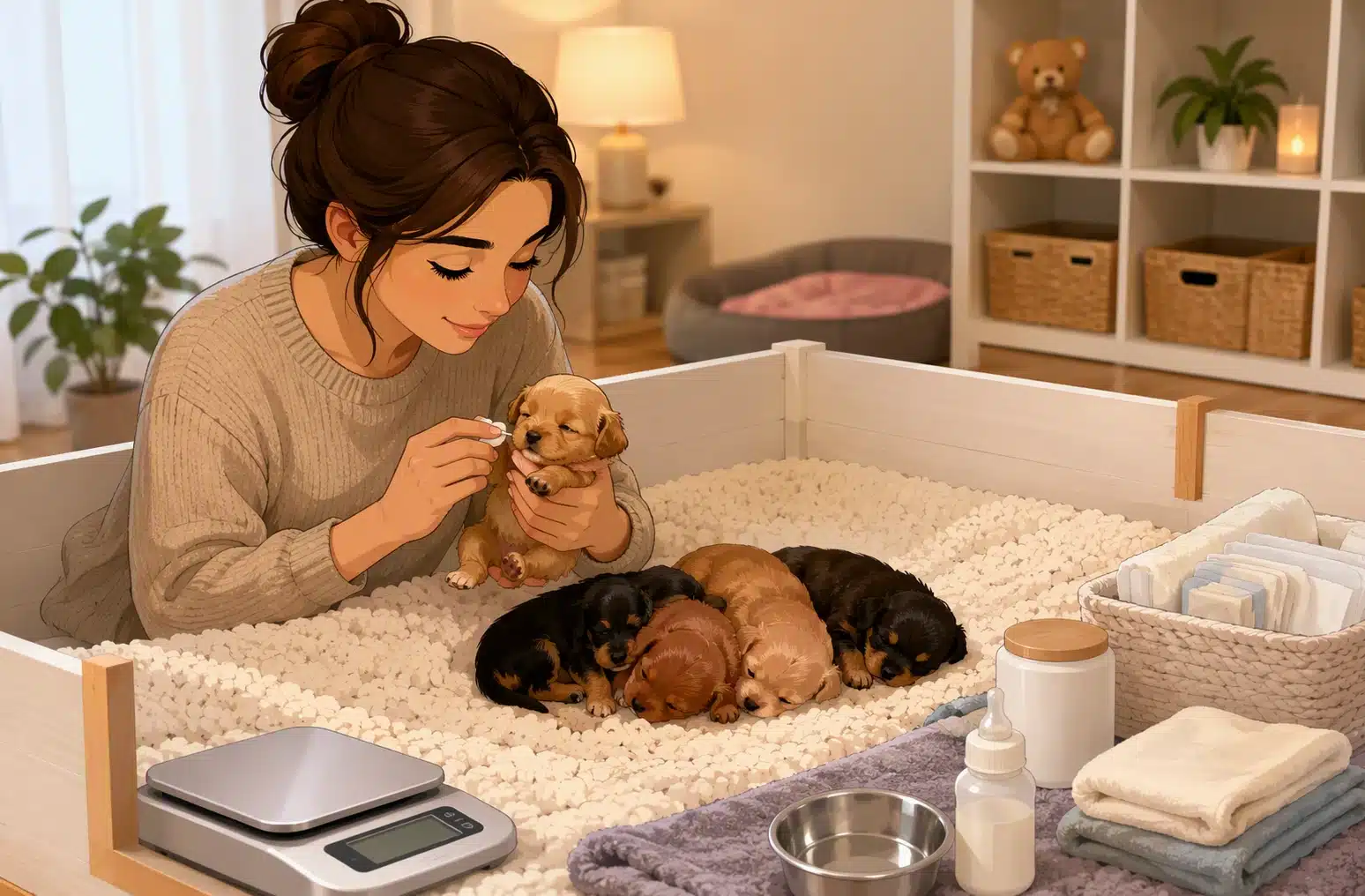
The first eight weeks shape how a puppy meets the world. A responsible breeder does more than feed and clean. They raise puppies in a home, handle them every day, and watch each one closely. The breeder’s role during this stage matters because most puppies go home around 8 to 10 weeks, according to the AKC’s guidance on puppy homecoming age.
Daily care should include:
- gentle touch on paws, ears, and mouth
- clean sleeping areas
- steady feeding and weight checks
- calm exposure to normal household sounds
If puppies are raised away from daily family life, buyers should ask why.
Socialization, Crate Start, and Early Manners
Good breeders start early social skills before pickup day. That means safe new sounds, short separations, supervised play, and calm human contact. The AKC puppy training guide notes that socialization has a tight timeline, and early habits can shape future fear or confidence.
Look for a program that starts:
- positive people exposure
- littermate play and bite feedback
- short crate or pen time
- simple routine building
A puppy does not need polished obedience at eight weeks. It should have a healthy start, basic comfort with handling, and early practice settling down.
Why Temperament Matters as Much as Health
Health testing matters, but temperament matters too. A puppy can come from tested parents and still be a poor fit if the breeder ignores confidence, recovery, and social ease. Small-breed families often need a puppy that can handle grooming, guests, travel, and gentle alone time without falling apart.
At Sage Puppies, this is where home-raised observation really counts. You want a breeder who can tell you:
- which puppy is bolder
- which one is calmer
- how each responds to touch, noise, and change
Also Read: 10 Adorable Havapoo Colors You Need to See (2026)
Where Reputable Puppy Breeders Near Me Are Usually Found
Start with Breed-Focused or Ethical Breeder Sources
Look first at breed clubs, breeder referral pages, and breeder programs that ask for real standards. The AKC says buyers should start with a breed parent club or breeder referral before using classifieds, and its Bred with H.E.A.R.T. program requires breeders to certify breed-specific health testing and agree to accountability standards through AKC breeder sources and AKC Bred with H.E.A.R.T..
Good places to search include:
- Breed club referrals
- Ethical breeder directories
- Local veterinarian referrals
- Families referred by past puppy buyers
Use Caution with Mass Market Listings and Third-Party Sellers
Big listing sites can be a starting point, not your final proof. A polished ad does not confirm how puppies are raised. The ASPCA warns that buying online without first seeing where dogs are kept can hide poor breeding practices, and AKC notes common scam signs like copied photos, no phone calls, and pressure for quick payment.
Watch for these red flags:
- The seller avoids video calls
- They will not show parent dogs
- They use stock-style photos only
- They ask for rushed deposits
- They cannot explain health testing clearly

If a seller feels easier to pay than to verify, slow down.
Local Pickup and National Delivery Should Both Be Transparent
Reputable breeders may offer local pickup or delivery. The key is clarity. You should know who handles the puppy, when travel happens, what records come home, and what support you get after pickup. USDA licensing rules also differ based on how sellers complete transactions, so ask direct questions instead of assuming a badge proves quality.
Use this quick check:
| Fulfillment option | What a good breeder explains | What you should receive |
|---|---|---|
| Local pickup | Exact pickup process and meeting location | Health records and care instructions |
| Delivery | Travel method, handler, timing, and handoff plan | The same records before or at delivery |
A transparent program, including boutique breeders like Sage Puppies, makes both options easy to understand before you commit.
Red Flags That Mean You Should Walk Away
Vague Answers About Health Testing
A good breeder can explain what tests were done, on which parent, and why they matter for that breed mix. If answers stay fuzzy, walk away. “Health checked” is not the same as health tested.
Watch for red flags like:
- No proof of parent testing
- Generic vet notes instead of actual screening results
- Claims that AKC papers prove health
The ASPCA notes that AKC registration does not guarantee health or quality and USDA licensing is not proof of strong care standards according to the ASPCA.
You Cannot See the Mother, Litter, or Living Area
If you cannot see where puppies are raised, assume there is a reason. You should be able to view the mother, littermates, and home or nursery area, either in person or by live video if you are buying from out of state.

Warning signs include:
- The seller wants to meet only in a parking lot or other public place
- The mother is “at the vet,” “with family,” or somehow never available
- The video shown looks pre-recorded, not live
Michigan’s consumer alert says do not purchase a puppy sight unseen and avoid sellers who refuse to show the premises or the puppy’s mother in this state guidance.
Pressure, Deposits, and Too-Good-to-Be-True Promises
Pressure is a red flag. So is a breeder who pushes for money before trust is built. Scammers often want a fast deposit, rush your decision, or promise rare puppies at a bargain price.
Be careful if you hear:
- “Three other families are paying today”
- “Send the deposit now or lose your spot”
- “No refunds, no questions”
- “Perfect health guaranteed” without clear paperwork
A responsible breeder welcomes careful questions. They do not punish you for asking them.
At Sage Puppies or any breeder worth considering, the process should feel calm, clear, and easy to verify.
Also Read: Havanese, Havapoo & Cavapoo Puppy Care Blog
Questions to Ask Before You Reserve a Puppy
A good breeder should answer clear questions without getting defensive. Ask before you place a deposit, not after.
Questions About Health and Records
Start with the parents, not the puppy. Cornell notes that responsible breeders test for breed-related conditions, provide vaccine records, and offer lifelong support, while OFA says health results should be verifiable and not just promised in words alone Cornell guidance OFA breeder interview tips.
Ask:
- What health tests were done on the sire and dam?
- Can I see the actual results, not a summary?
- What vaccines, deworming, and vet checks has this puppy had?
- Has anything shown up in past litters or family lines?
- What records go home with me on pickup or delivery?
If a breeder says “health-tested” but cannot show proof, pause the process.
Questions About Raising and Placement
The breeder should explain how the puppy is raised and how they match puppies to homes. This matters a lot for small breeds like Havanese, Havapoo, and Cavapoo.
Ask:
- Are the puppies raised in a home or kennel setting?
- What early socialization do you do each week?
- How do you handle noise, people, grooming, and crate exposure?
- Can I meet the dam, or learn about both parents’ temperament?
- How do you decide which puppy fits which family?
A thoughtful program, like Sage Puppies aims to provide, should care about fit, not just speed.
Questions About Support After Go-Home Day
Good support reduces stress in the first few weeks. You want clear help, not vague promises.
Ask:
- What happens if I have feeding, sleep, or potty questions?
- Do you provide written care steps for the first days at home?
- If my situation changes, will you help with rehoming guidance?
- What does your contract say about refunds, returns, or health concerns?
- Who do I contact after go-home day?
A breeder who disappears after payment is not a breeder you want.
Also Read: Health-Tested Puppies for Sale Near Me: Where to Find Reputable Breeders
How Sage Puppies Supports a Safer Buyer Experience
Breed Focus and Family Fit
Sage Puppies keeps the process safer by staying focused on Havanese, Havapoo, and Cavapoo puppies instead of trying to be everything to everyone. That matters. A narrow breed focus makes it easier to guide families toward the right energy level, coat care, size, and temperament for real daily life.
AKC notes that responsible breeders should match buyers with the right dog, not just sell the next available puppy, and that breed-specific health testing should follow parent club guidance in many cases according to AKC health testing guidance.
A safer experience starts with honest fit, not fast checkout.
Pickup, Delivery, and Next Steps
Sage Puppies also helps reduce confusion by offering clear paths for Utah pickup and nationwide delivery. That matters for local South Jordan families and for out-of-state buyers who need a simple, well-explained handoff plan.
A careful breeder should walk you through timing, reservation steps, and what happens before homecoming. If you are buying from outside the country, federal rules can apply. USDA APHIS states that dog import requirements may involve both federal and state rules, and buyers are responsible for meeting them under APHIS pet travel guidance.
A Gentle Path from Inquiry to Homecoming
The best buyer experience feels calm, not rushed. Sage Puppies supports that by keeping the path simple:
- Review available puppies
- Ask questions
- Submit an application
- Confirm timing, pricing, and reservation details
- Plan pickup or delivery
Good breeders welcome questions. Pressure is a red flag.
That slower, transparent flow helps qualified families move forward with more confidence and fewer surprises.

Ready to buy with more confidence? Sage Puppies helps families find health-tested Havanese, Havapoo, and Cavapoo puppies through a clear, family-first process. View available puppies, review pickup or delivery options, and start your application when the timing feels right.
Frequently Asked Questions
Q1: where to find reputable puppy breeders near me
Start with breeders who show parent health testing, explain how puppies are raised, and welcome questions. Ask for proof, not promises. If local options feel thin, expand your search and compare pickup or delivery steps carefully.
Q2: What does health-tested really mean?
It should mean the puppy’s parents were screened for breed-relevant issues before breeding. Ask which tests were done, when, and what the results were. A breeder should answer clearly and share records without getting vague.
Q3: What red flags should I watch for?
Watch for always-available puppies, pressure to pay fast, missing parent details, and no clear process. Poor breeders avoid hard questions. If pricing, pickup, or health records feel confusing, slow down and keep looking.
Q4: Is local pickup safer than delivery?
Not always. Safe delivery depends on planning, communication, and the puppy’s age and condition. A good breeder explains timing, travel steps, and handoff details. Local pickup helps you meet in person, but process matters most.
Q5: How do I compare small-breed options?
Focus on size, energy, coat care, and temperament. Havanese, Havapoo, and Cavapoo families often want a friendly, home-ready companion. Sage Puppies keeps that choice simpler by focusing only on those small breeds.
Conclusion
A safe puppy search comes down to proof, not promises. Ask what health-tested means for that breed, verify the sire and dam’s results, review records, and pay close attention to how the puppies are raised and matched to families. Cornell notes that responsible breeders test for conditions recommended by the breed club and provide lifelong support in many cases, not just a quick sale, according to Cornell’s puppy guide. If delivery is involved, confirm travel rules too, since CDC dog import guidance can affect some families. Good breeders welcome careful questions.



