Quick Summary: Finding reputable health-tested puppies requires verifying breeder records, not just trusting marketing claims. Look for clear proof of parent health testing, observe how puppies are raised, and ask responsible breeders detailed questions about temperament and support. Avoid pressure tactics and vague promises, and prioritize breeders who provide transparent records and honest answers, like Sage Puppies, which emphasizes responsible breeding and family placement.
Searching for genetically tested puppies near me sounds simple until you start comparing breeder listings. The hard part is not finding cute puppies. It is figuring out which breeders can prove health testing, stable temperament, and careful placement for each family.
That is where many buyers get stuck. A polished website, a social post, or a low deposit does not tell you if a breeder actually does the right screening. If you are looking for genetically tested puppies near me in Utah, South Jordan, or anywhere in the U.S., you need a better way to check the facts.
This guide shows you how to sort strong breeders from risky ones. You will learn what records to ask for, what warning signs to catch early, and how to compare options when searching genetically tested puppies near me. We focus on practical proof, buyer safety, and the kind of responsible breeding standards families should expect from trusted programs like Sage Puppies.
Start With a Trusted Search Source
A good search source helps you sort fast, but it does not prove a breeder is reputable. Cornell says the best place to begin is the national breed club for your breed, because those clubs often list breeders who follow a code of ethics, while AKC registration alone does not guarantee health quality according to Cornell. If you want a second layer, AKC Marketplace lets you search by breed, state, ZIP radius, and breeder badges on its breeder search platform.
Use breed and breeder filters to narrow the list
Start with your breed and location. If you are in Utah, search your state first, then widen the radius if needed. For small companion breeds, that keeps your list useful.
Use filters like:
- Breed
- State or ZIP radius
- Available now or planned litters
- Breeder badges
- Club membership
A simple first-pass method works well:
- Pick one breed at a time.
- Save 5 to 10 breeders max.
- Remove listings with vague details, stock-style photos, or no parent info.
- Keep breeders who clearly show their program, location, and next steps.
If a breeder offers too many unrelated breeds at once, slow down and look closer.
| Filter | Why it helps | What to watch for |
|---|---|---|
| Breed | Keeps results relevant | Mixed or unclear breed labels |
| Distance | Helps with pickup or delivery plans | No real location listed |
| Badges | Gives extra context | Badge without proof still needs checks |
Look for clear program and profile signals
Once you have a shortlist, read profiles like a buyer, not a browser.
Look for:
- Health testing named clearly
- Parent dog info
- Puppy raising details
- Application or interview process
- Pickup or delivery details
- Recent, real photos
Good programs usually explain how they raise puppies, not just that puppies are “loved.” If you see family-raised care, parent testing, and a clear process, that is a better sign. For example, a boutique program like Sage Puppies should make it easy to find breed focus, family placement steps, and transport options without making you chase basic facts.
Clear beats polished. A simple profile with real details is stronger than fancy wording.
Treat search results as a shortlist, not a verdict
Search tools help you find names. They do not replace your vetting.
Before you move forward:
- Ask for proof of health testing
- Ask which tests were done for that breed
- Ask to speak live or video chat
- Ask what support happens after pickup
A strong breeder welcomes questions and screens you too. If the profile looks good but the answers feel rushed, keep looking.
The goal is not to find the fastest puppy. It is to find the right breeder.
Also Read: 10 Signs a California Puppy Listing Is a Scam – Sage Puppies
Verify the Health Testing Behind the Claim
Ask for the actual test records
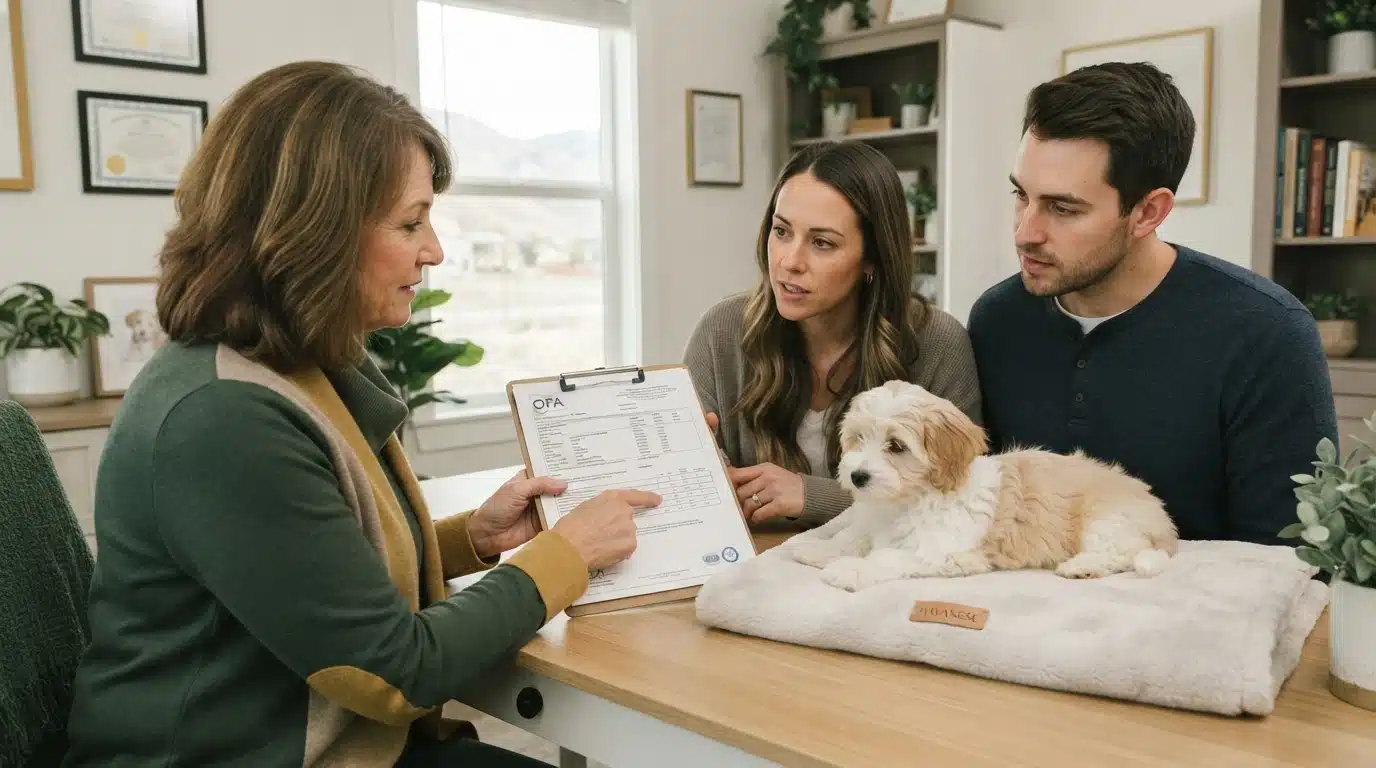
Do not stop at “health tested” on a website. Ask for the real records for the sire and dam. A good breeder should show you the test name, date, dog’s registered name, and the lab or registry that issued it.
According to OFA’s breeder guide, buyers should ask what screenings were done on the parents and verify results in the OFA database when possible. The AKC health testing requirements page also makes clear that recommended testing depends on the breed’s parent club, not a breeder’s own marketing terms.
Use this quick check:
| What to ask for | What you should see | Red flag |
|---|---|---|
| Parent test records | Named sire and dam, dates, results | “Our dogs are cleared” with no proof |
| Registry or lab source | OFA, CHIC, breed-relevant DNA lab | Screenshot with no dog identity |
| Matching names | Same names as pedigree and puppy paperwork | Nicknames that do not match records |
If a breeder hesitates, sends blurry screenshots, or avoids parent names, pause the process.
Match the testing to the breed and family goal
Not every breed needs the same screening. That matters for Havanese, Cavapoo, and Havapoo buyers because small companion breeds can have different risks than large sporting or working breeds.
Ask two simple questions:
- What tests were done because of this breed mix or line?
- Why were these parents paired for health and temperament?
You want more than a DNA panel. DNA tests help, but they are not the whole picture. Some issues need eye exams, patella checks, cardiac exams, or orthopedic reviews, depending on breed guidance and family history.

A strong answer sounds specific:
- “Here are the parents’ results.”
- “Here is what the breed clubs recommend.”
- “Here is what we watch in this line.”
- “Here is what that means for a family wanting a calm, sturdy companion.”
If you are comparing breeders near Utah or nationwide, this is where quality starts to separate. Programs like Sage Puppies should be able to explain testing in plain English, not hide behind vague claims.
Review parent information and pedigree context
Health records make more sense when you see the parent dogs behind them. Ask for:
- Ages of sire and dam
- Temperament notes
- Any known issues in close relatives
- A simple pedigree view
A pedigree does not promise a perfect puppy. It does show whether the breeder knows the line and tracks patterns. CHIC information from OFA explains that breed-specific screening exists to help breeders study health strengths and weaknesses across generations, not just one litter.
A breeder who knows the family line can usually answer fast and clearly.
Be cautious with vague guarantees and buzzwords
Words like vet checked, clear by parentage, elite lines, and healthy bloodline can sound good and still tell you very little.
Watch for these warning signs:
- Health guarantee replaces health records
- “No issues ever” claims
- Only puppy exam records, not parent testing
- Pressure to place a deposit before review
A guarantee helps after a problem. Testing helps lower the odds before one starts.
The best breeders welcome careful questions. The wrong ones act annoyed when you ask for proof.
Also Read: Reputable Puppy Breeder Near Me: 9 Signs to Trust
Evaluate How the Puppies Are Raised Before You Apply
Look for in-home care and daily handling
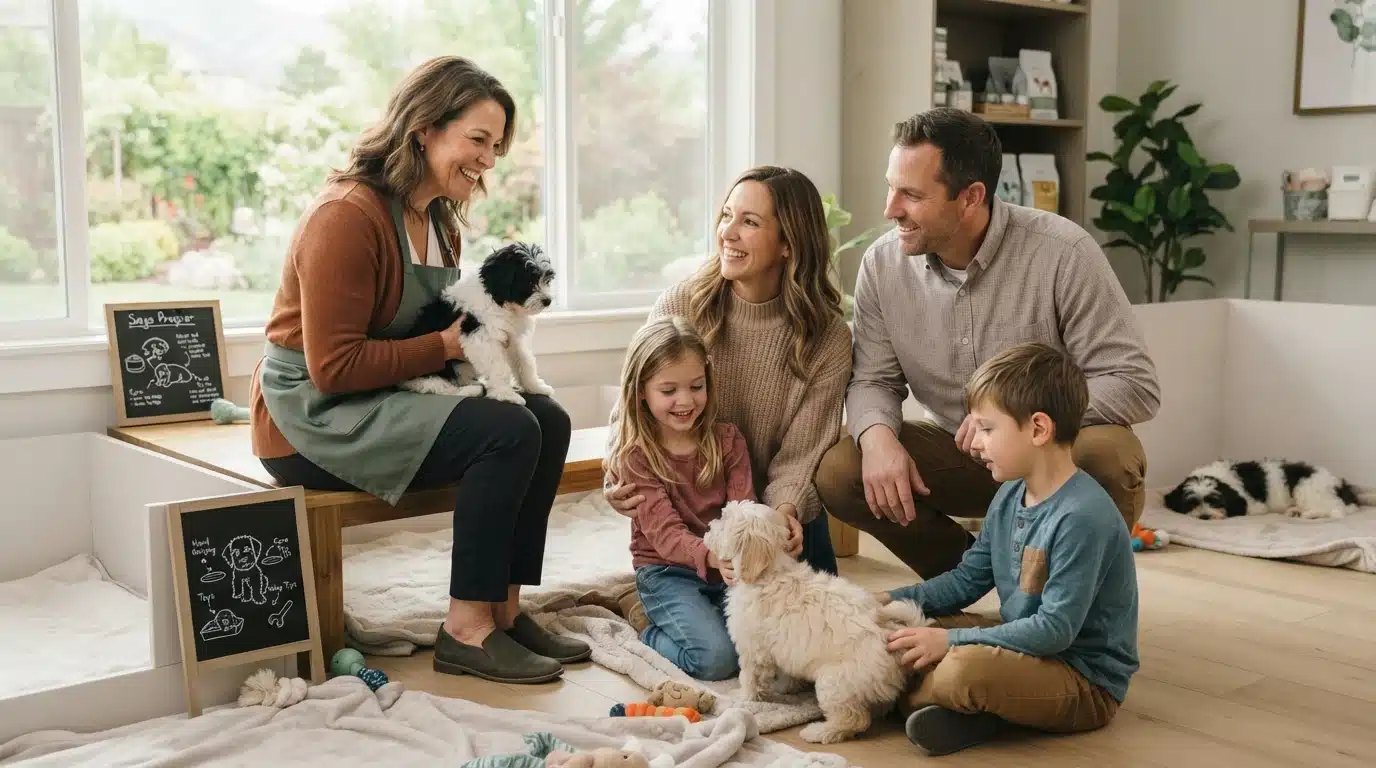
Ask where the puppies spend their day. You want a clear answer, not a vague sales line. Puppies raised in a home usually get more normal sights, sounds, and touch. That matters early. The AVMA review says social exposure should begin by or before three weeks of age and continue with the owner early socialization review.
Good signs include:
- Puppies see normal household life
- They are handled by people every day
- They walk on different safe surfaces
- They hear common sounds like doors, vacuums, and kitchen noise
- They start basic grooming and gentle body handling
Ask for proof, not promises. Request recent videos of the puppies resting, playing, eating, and being handled. Look for clean spaces, calm adult dogs, and relaxed puppies that recover well after a small surprise.
A polished website does not tell you how a litter lives day to day. Videos and live calls do.

Ask how temperament and placement are considered
A good breeder does not treat all puppies as identical. They learn each puppy’s style, energy, and comfort level, then match that puppy to the right home. The AKC states responsible breeders should consider temperament, individual care, and placement in suitable homes responsible breeding practices.
Use questions like these:
- How do you track each puppy’s personality?
- Which puppy fits a home with young kids?
- Which puppy may do better with a quieter family?
- Do you guide placement, or let buyers pick by color only?
| What to ask | Strong answer | Weak answer |
|---|---|---|
| How puppies are matched | Family lifestyle and puppy temperament both matter | First deposit picks any puppy |
| How behavior is observed | Daily notes, handling, play, recovery, confidence | We can usually tell by looks |
| Kid fit | Calm, resilient, people-focused puppies are flagged | Any puppy is fine for any home |
If you are comparing programs, this is where a boutique breeder like Sage Puppies should stand out. Thoughtful matching is part of careful raising, not an extra.
Confirm timing, readiness, and transition support
Do not rush the go-home date. Most puppies go home around 8 to 10 weeks, and the breeder should explain why your puppy is ready then. AKC notes that many breeders send puppies home at 8 to 10 weeks and that the socialization window still needs support after pickup.
Check for this handoff plan:
- Eating well on their own
- Confident with gentle handling
- Started on crate or sleep routines
- Clear feeding and transition notes
- Ongoing support after pickup or delivery
If a breeder cannot explain the puppy’s routine for the first 72 hours in your home, they are not preparing families well.
Before you apply, also read the parent guide on finding reputable health-tested breeders near you. It will help you connect raising practices with health, records, and breeder trust.
Ask the Questions That Reveal a Responsible Breeder
Good breeders do not dodge clear questions. They answer them with records, details, and calm confidence. Cornell notes that responsible breeders test for breed-recommended conditions, provide early socialization, and offer lifelong support according to Cornell Veterinary Medicine.
Questions about health, temperament, and support
Use these questions early:
- What health tests were done on both parents?
- Can you show the actual results, not just say “health tested”?
- What traits is this breed prone to, and how do you screen for them?
- How do you raise and socialize puppies in the home?
- What have you noticed about this puppy’s energy, confidence, and sensitivity?
- Will you stay available after pickup if we have feeding, training, or health questions?
| Ask this | Good sign | Red flag |
|---|---|---|
| Parent health testing | Shares records and explains them | Vague answers |
| Temperament | Describes each puppy clearly | “They are all the same” |
| Lifetime support | Welcomes updates and questions | Disappears after payment |
If a breeder gets annoyed by basic health questions, keep looking.

AKC also says you should expect puppies to go home at about 8 to 12 weeks, not too early, and the breeder should encourage future contact per AKC breeder guidance.
Questions about pickup, delivery, and timing
Ask for the full handoff plan before you reserve:
- Do you prefer in-person pickup, local pickup, or delivery?
- Who handles delivery, and how is the puppy kept safe during travel?
- What happens if weather, health timing, or flight plans change?
- What items come home with the puppy?
- When should our first vet visit happen after pickup?
A solid breeder will explain timing in plain language. At Sage Puppies, this usually means clear next steps for local Utah pickup or nationwide delivery, not last-minute surprises.
A rushed same-day decision is a warning sign. Good breeders care where the puppy goes.
Questions about pricing and reservation terms
Money questions should be simple, written, and easy to review.
- What is the full price?
- What does the reservation fee cover?
- Is the fee refundable, transferable, or date-specific?
- Are delivery costs separate?
- When do we receive the contract to review?
Ask for a written breakdown before you send funds.
| Pricing question | What you want to hear |
|---|---|
| Deposit terms | Clear and written |
| Contract timing | Sent before payment or commitment |
| Final balance | Due date and method explained |
Know the Red Flags Before You Commit
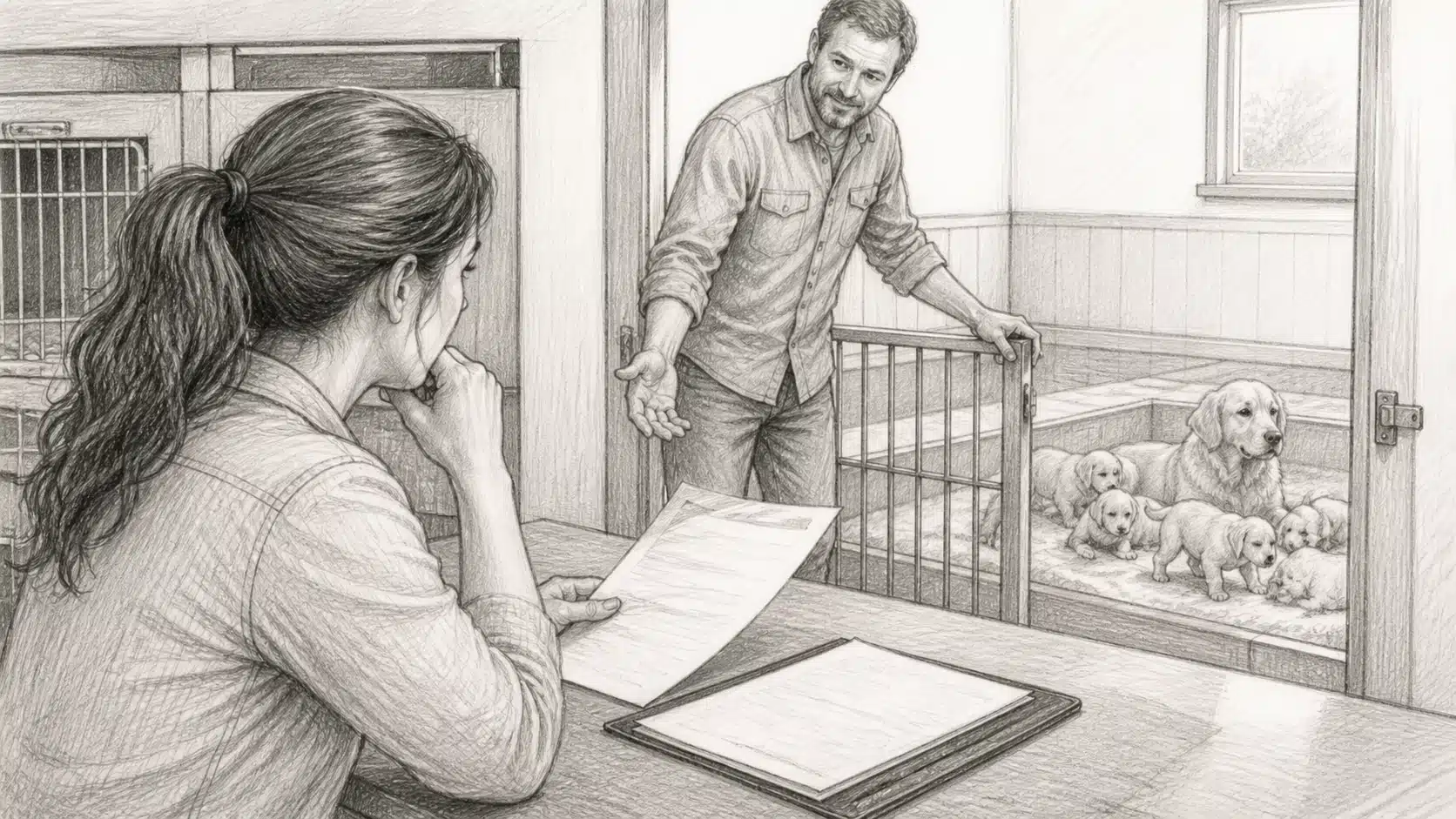
Watch for pressure and secrecy
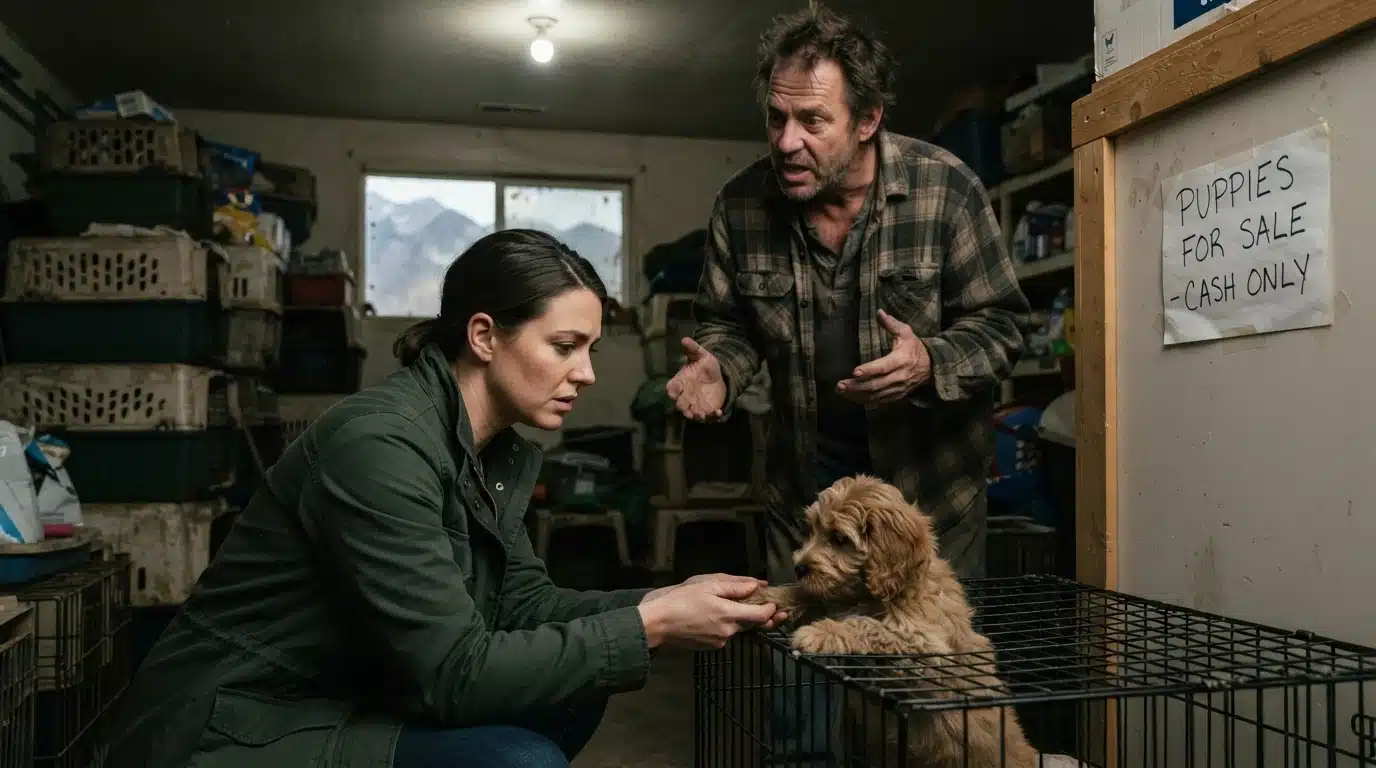
A good breeder does not rush you. If someone pushes for a same-day deposit, avoids your questions, or wants to meet only in a parking lot, step back. The AKC notes that breeders who care most about your cash tend to ask about payment first, not your home, schedule, or experience in its buyer guidance.
- Be cautious if you hear:
- “This puppy will be gone in an hour”
- “You do not need to see where puppies are raised”
- “I will send papers later”
Pressure is a sales tactic. Transparency is a breeding standard.
Watch for missing proof or vague claims
“Health checked” is not the same as health tested. You want real records, not broad promises. OFA says breeders should provide health screening results you can verify and should not hesitate when you ask for them during the breeder interview process.
Use this quick screen:
| Claim | What you should ask for | Red flag |
|---|---|---|
| “Parents are healthy” | OFA or breed-specific test results | No documents |
| “AKC registered” | Registration plus health records | Registration only |
| “Vet said puppy looks great” | Vaccine record and parent testing proof | Only verbal assurance |
- Walk away if the breeder:
- cannot name the tests done
- will not show parent records
- uses vague terms like rare, teacup, or perfect bloodline instead of facts
Trust breeders who make the next step easy
The safest breeders make the process clear, calm, and easy to verify.
- They answer questions fully.
- They show records before money changes hands.
- They explain pickup or delivery in writing.
- They stay available after you bring your puppy home.
That kind of steady process matters. It is one reason careful families often prefer programs like Sage Puppies over rushed online listings.

Ready to move from searching to choosing well? Sage Puppies gives families a clear, family-first path with health-tested parent dogs, home-raised Havanese, Havapoo, and Cavapoo puppies, plus local pickup in South Jordan, Utah, and nationwide delivery. Start with Available Puppies, review How It Works, and submit your application when the fit feels right.
Frequently Asked Questions
Q1: where to find health-tested puppies near me
Start with breeders who clearly list parent health testing, breed focus, and puppy process. Ask for test names, parent records, and vet history. Local pickup helps, but a nearby breeder matters less than proof, support, and honest answers.
Q2: What health tests should I ask a breeder to show?
Ask for breed-relevant genetic screening, eye checks, heart screening when needed, and patella or hip records if the breed calls for them. Good breeders explain what each test means and show parent results without dodging.
Q3: How do I know a breeder is reputable and not just good at marketing?
Look for consistency. The breeder should answer hard questions, explain their waitlist, limit breeds, and know each puppy well. If photos look polished but details stay vague, slow down and verify everything before placing a deposit.
Q4: Is a health guarantee enough to prove good breeding?
No. A guarantee helps, but it does not replace careful breeding, testing, and early care. Read the terms closely. Short windows, broad exclusions, or unclear steps often tell you more than the promise itself.
Q5: Can I buy from an out-of-state breeder safely?
Yes, if the breeder is transparent. Ask for live video, parent records, references, and clear delivery or pickup details. Sage Puppies, based in South Jordan, Utah, serves both local and nationwide families with that kind of process.
Conclusion
Finding health-tested puppies for sale near me comes down to proof, not promises. The best breeders show clear health records, explain breed risks, raise puppies in clean home settings, and ask thoughtful questions about your family. Cornell notes that good breeders test for conditions recommended by the breed club and provide early socialization and lifelong support in many cases, according to Cornell University College of Veterinary Medicine. You also want safe pickup or delivery plans, honest contracts, and no pressure to rush. > If a breeder avoids showing test results, parent details, or living conditions, walk away. Families in Utah and beyond can use this checklist to sort past ads and focus on breeders who put health, temperament, and long-term puppy welfare first.