Quick Summary: Buying puppies in New York requires careful research beyond cute photos and fair prices. Verify breeder transparency by asking for health testing, socialization details, and clear contracts before reserving. Whether you pick up your puppy or opt for delivery, understanding the process and avoiding rushed decisions helps ensure a healthy, well-raised puppy.
If you want to buy puppies in New York, glossy listings can fool you fast. The real test is not the photo set. It is whether a breeder can show parent health testing, explain how the puppies are raised, and give clear answers about pickup or delivery.
That is the hard part for many families. You may see cute pups, fair-sounding prices, and polished websites, yet still have no clear proof of health work, social care, or honest next steps. If you plan to buy puppies in New York, you need more than a listing. You need a way to check what is real.
This guide shows you how to buy puppies in New York with more confidence. You will learn what to ask, what paperwork matters, and how to spot good breeders before you commit. We focus on the issues serious buyers care about most, especially for Havanese, Havapoo, and Cavapoo puppies in New York or through national delivery.
1. Start With the Breeder, Not the Listing
A pretty listing proves almost nothing. Start with the breeder’s name, location, health testing, and process. That tells you far more than cute photos ever will. If a seller offers national delivery, that is not a red flag by itself. What matters is whether they stay transparent from first call to pickup or handoff.
Check the basics that should be easy to verify
Use a quick screen first. Under federal rules, some breeders who sell pets sight unseen or wholesale may need USDA licensing, and you can check records in the USDA Animal Care Public Search Tool. Still, a license is only a floor, not proof of great breeding.
Ask for these basics right away:
- Parent dog names and breed mix
- Health testing done before breeding
- Puppy birth date and go-home date
- Contract sample
- Pickup or delivery process
- Vet record timeline
- Real photos or video of the litter and mother
If a breeder gets vague on simple facts, stop there.
Ask the questions serious breeders expect
Good breeders do not get offended by smart questions. They expect them. The AKC says responsible breeders should know their lines, do pre-breeding health checks, and place puppies with care, not speed according to AKC’s breeder guide.
Ask:
- What health tests were done on both parents?
- What issues show up in your lines, if any?
- How are puppies raised day to day?
- What socialization happens before go-home?
- What support do you give after placement?
A serious breeder answers clearly and in detail. They do not rush past health, temperament, or fit.
Look for buyer screening, not just a quick sale
The best sign is often this: the breeder screens you too.
| Green flag | Why it matters |
|---|---|
| Application or phone interview | They care about fit |
| Questions about kids, schedule, and home | They match puppy to family |
| Clear waitlist or reservation steps | They run an orderly process |
| Contract with return terms | They plan for the puppy’s full life |
Sage Puppies, for example, leans into this kind of family-first process. That matters if you want a Havanese, Havapoo, or Cavapoo raised with care, not moved fast like inventory.
Fast replies are nice. Thoughtful screening is better.
Also Read: 10 Small Breed Puppies That Stay Friendly & Easygoing
2. Verify Health Testing Before You Reserve
A clean puppy exam is not the same as breeder health testing. Your puppy can look great at pickup and still come from parents that were never screened for inherited issues. The OFA says CHIC certification means a dog completed the breed’s recommended screenings and the results are public in the database through the CHIC program.
- Puppy wellness check = a basic vet visit, weight, heart/lung listen, stool check, vaccine review
- Parent health testing = breed-based screening done before breeding, often with specialist exams or imaging
- Best practice = ask for both, not one or the other
If a breeder keeps saying “our vet checked the puppies,” slow down. That does not answer whether the parents were responsibly screened.
| Record type | What it tells you | When it matters |
|---|---|---|
| Puppy exam | Current condition of this puppy | Before pickup or delivery |
| Parent health testing | Risk reduction for inherited problems | Before you reserve |
| Public database result | Proof the testing was actually submitted | Before deposit |
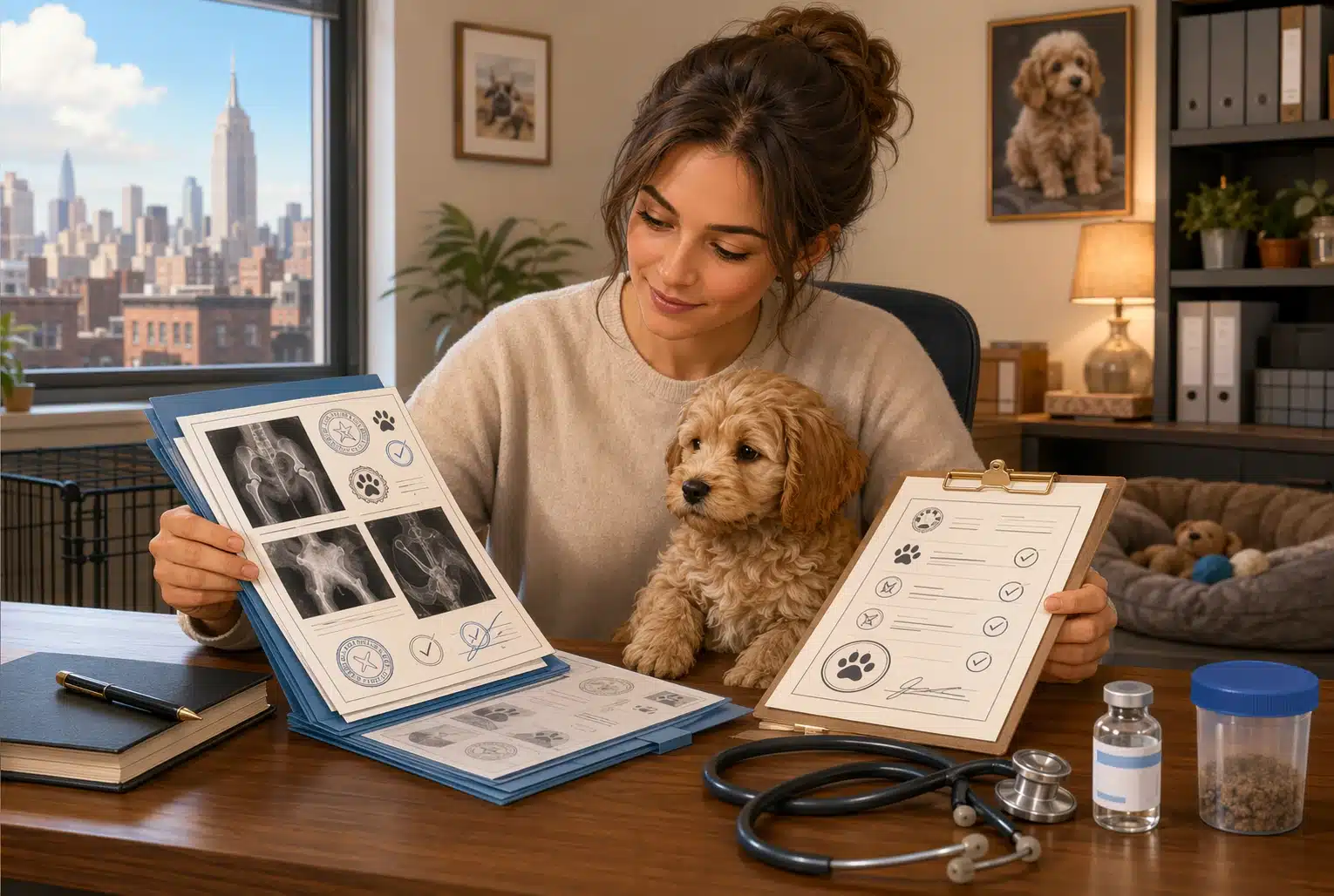
Ask for the exact documents, not a summary. A serious breeder should be able to send records tied to the sire and dam, with names, registration details, and test dates that match the dogs in the pedigree.
- Request OFA or equivalent results for both parents
- Ask which tests were done, by whom, and when
- Confirm whether the results are publicly searchable
- Ask for the puppy’s wellness record separately
- Read the contract to see how health terms are defined
Useful records include:
- Eye exam
- Patella evaluation
- Hip screening
- Cardiac exam
- DNA panel, if relevant to the lines used
- Microchip or permanent ID tied to the tested parent dogs
Breed background matters. Havanese parent club guidance calls for eye, patella, and hip screening, with public OFA reporting for CHIC, and many breeders also add cardiac testing in the Havanese health statement. For Cavalier lines, cardiac screening deserves extra weight because Cavaliers have a known breed concern around mitral valve disease.
- Havanese: eyes, patellas, hips
- Cavapoo: Cavalier-side cardiac focus plus poodle-side eye and orthopedic review
- Havapoo: Havanese core screening plus poodle-related eye and joint review
If you are comparing breeders in New York or arranging national delivery, this is where good programs stand out. Sage Puppies, for example, makes more sense for careful families when records are easy to review before money changes hands.
Also Read: Puppy Health Guarantees: What Good Breeders Include
3. Read the Socialization Story Carefully
A breeder’s socialization story should sound specific, calm, and real. Good programs start early. The key window runs through the first weeks of life, and positive early experiences shape later behavior, according to UC Davis Veterinary Medicine.
Observe the environment and the mother dog
Start with what you can see. The space should feel clean, lived-in, and safe, not sterile or chaotic. Puppies should have room to rest, move, and hear normal home sounds.
Watch the mother dog too. She does not need to perform for you, but she should look settled and able to recover after greeting or watching visitors.
- Look for relaxed body language
- Notice how puppies respond to normal sounds
- Check whether the setup feels like a home, not a holding area
A nervous moment is not always a red flag. A shut-down room full of flat, worried puppies is.

Ask how the litter is handled day to day
Ask simple, direct questions. Who handles the puppies? How often? What do they hear, touch, and practice each day? Strong answers include gentle body handling, short car rides, new surfaces, and calm exposure to household life.
A solid breeder should explain the routine without sounding rehearsed. Research on canine socialization shows early positive exposure matters, but it should stay age-appropriate and not overwhelm the puppy during the sensitive period.
| Good sign | Why it matters |
|---|---|
| Daily gentle handling | Builds comfort with grooming and vet care |
| Normal home sounds | Helps reduce fear of everyday noise |
| Short, positive novelty | Builds confidence without overload |
Focus on readiness, not perfection
You are not looking for a fearless puppy. You want a puppy that can bounce back, stay curious, and accept gentle guidance.
Look for signs of healthy readiness:
- Recovers after a small surprise
- Approaches people with soft interest
- Settles after play
- Tolerates touch without panic
Sage Puppies families should expect a clear, honest socialization story, not big claims about a “perfect” puppy.
4. Read the Contract Before You Reserve
Before you send a deposit, read the full contract line by line. Good breeders expect that. This section connects closely to the parent guide, Puppies for Sale in New York: Buyer Tips Before You Commit, because contracts often show whether a seller is careful or cutting corners.
Confirm what the contract covers
Start with the basics. A solid puppy contract should spell out what you are buying, what records you will receive, and what each side must do next. Contract terms matter because pet sales are still legal sales, and buyer remedies can depend on the written agreement plus state law, as explained by the Animal Legal & Historical Center.
Use this quick check:
- Puppy’s breed, sex, color, and date of birth
- Purchase price, deposit amount, and balance due
- Vaccination and deworming records
- Any health guarantee and its limits
- Return, refund, or replacement terms
- Pickup or delivery terms
- Spay-neuter or breeding rights, if relevant
| Contract item | What to check | Why it matters |
|---|---|---|
| Identity details | Puppy matches listing and records | Prevents mix-ups |
| Health terms | Covered issues and deadlines | Avoids false assumptions |
| Payment terms | Deposit, refund, final balance | Limits payment disputes |
| Delivery terms | Who pays and when risk shifts | Clarifies travel problems |
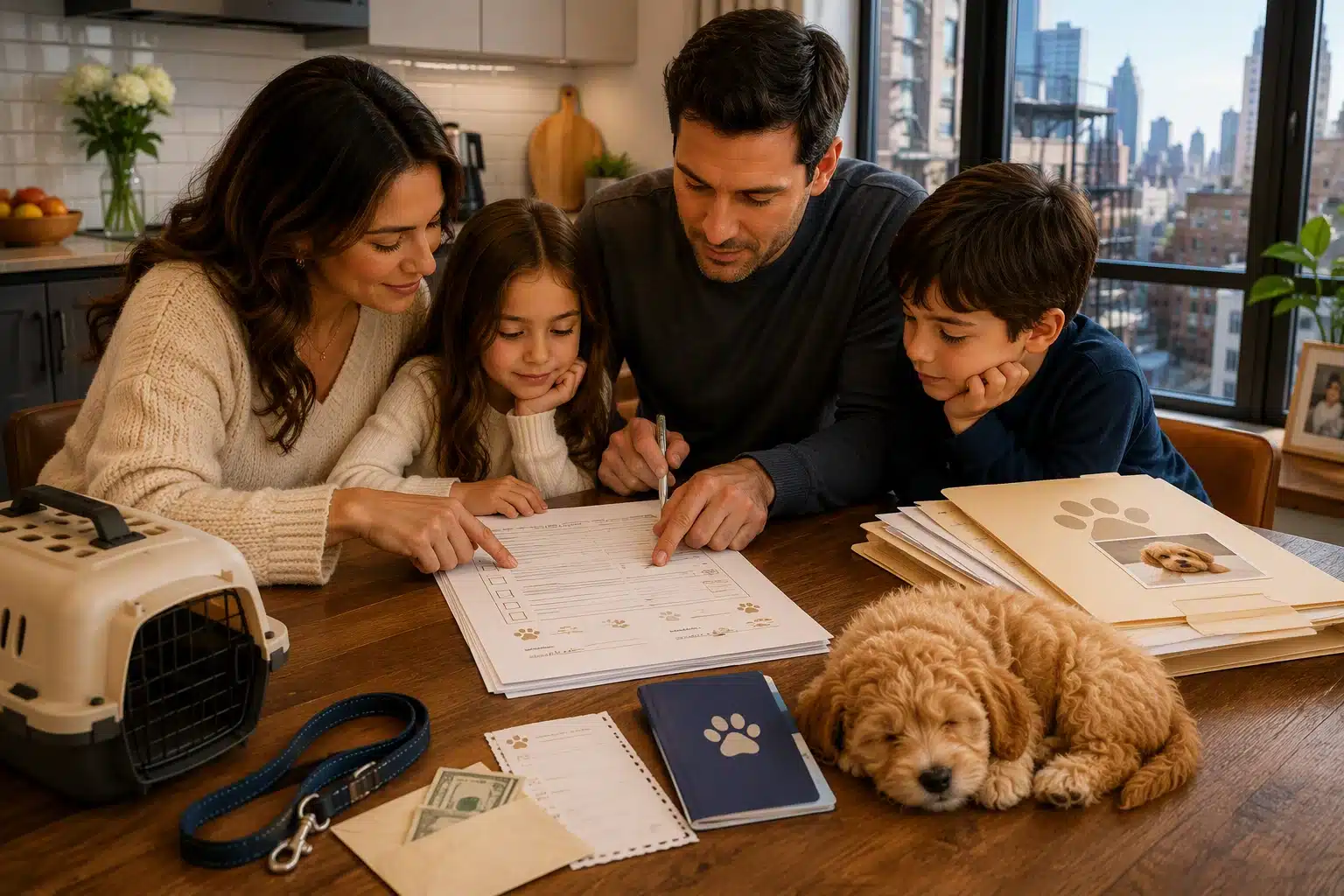
If a seller avoids written terms or says “don’t worry about the contract,” pause the deal.
Understand reservation and timing language
Deposits cause the most stress. The contract should say if your reservation fee is refundable, non-refundable, or transferable. It should also explain what happens if the puppy is not available, fails a health check, or the timing changes.
Watch for pressure language. The FTC warns buyers to slow down if a seller pushes fast payment or demands hard-to-recover methods like wire transfers, gift cards, or crypto in its puppy scam advice.
Check these points:
- When the deposit becomes final
- Whether you can move to another litter
- What happens if the breeder cancels
- When the puppy can go home
- Late pickup or delivery fees
Look for support after the puppy goes home
The best contracts do not stop at pickup day. They explain what support you get in the first days and weeks, when problems usually show up.
Look for:
- A clear time window for your first vet visit
- Instructions if your vet finds a serious issue
- Expectations for food, care, and follow-up
- A return policy if your family cannot keep the puppy
- Ongoing breeder contact for questions
Sage Puppies-style transparency should feel calm and clear, not vague. You should know who to call, what paperwork to keep, and what steps protect both you and the puppy.
Also Read: 10 Adorable Havapoo Colors You Need to See (2026)
5. Decide Whether Pickup or Delivery Fits Your Family Best
Start with the simple question: Will your puppy settle in better with you driving home, or with a planned delivery handoff? Either option can work well if the breeder explains the process clearly. If you want the full buyer checklist first, read the parent guide on buying puppies for sale in New York before you commit.
Clarify how pickup works
Pickup is often the easiest choice if you want face-to-face time and a calm handoff. Ask for the exact pickup window, address, what papers you receive, and how long the drive home should be.
Use this quick checklist:
- Confirm who meets you at pickup
- Ask what the puppy has eaten that day
- Bring a small carrier or secured travel seat
- Pack paper towels, wipes, and a leash
- Plan one adult to focus only on the puppy
A good pickup should feel organized, not rushed.
| Pickup question | Why it matters |
|---|---|
| What time is pickup? | Helps you avoid a late, overtired drive |
| What goes home with the puppy? | Confirms food, records, and instructions |
| Has the puppy ridden in a car before? | Sets your expectations for the trip |
Ask exactly how delivery is arranged
Delivery can be a strong fit if distance makes pickup hard. Ask whether the puppy travels by flight nanny, ground transport, or breeder-arranged hand delivery. Get the route, timing, and handoff plan in writing.

Airlines may have their own boarding paperwork rules, separate from destination rules, according to APHIS pet travel guidance. For broader travel planning, APHIS also notes that requirements can change and should be checked each time you travel with a pet via Pet Travel Process Overview.
Ask these before you pay:
- Who handles the puppy during transit?
- Is the puppy ever shipped alone?
- What happens if weather delays travel?
- Where exactly do you meet the driver or nanny?
Prepare for arrival day
Whether you pick up or choose delivery, make the first hour quiet and simple. Skip visitors. Keep children calm. Offer water, a potty break, and one safe room or pen.
Your arrival-day plan should include:
- A ready crate or playpen
- Fresh water and the breeder’s current food
- A vet visit booked within the breeder’s suggested window
- Cleaning supplies for motion sickness or stress accidents
- A low-key evening with no errands
The smoother the handoff, the easier your puppy’s first night usually goes.
Sage Puppies helps families think through both pickup and national delivery, so the best choice is the one your family can handle calmly and well.
Also Read: 10 Questions to Ask Before Buying a Puppy Locally
Common Mistakes to Avoid
Do not treat a fast reply as proof of quality. A quick text back can feel reassuring, but it proves almost nothing. Good breeders answer fast and answer clearly. Ask for parent health testing, puppy age, socialization steps, and what happens after you reserve. If replies stay slick but thin, slow down.
Do not accept vague health language. Words like “vet checked,” “healthy line,” or “great temperament” are not enough. You want specifics in writing. Ask what tests were done, which parent had them, and what records you will receive. If delivery crosses borders, paperwork matters too. The CDC says dogs entering the U.S. from low-risk countries must meet age, microchip, and form rules under current import guidance.
Do not skip the contract or pickup details. Read every line before you send money. Check payment terms, refund rules, pickup dates, delivery method, and who carries risk if plans change. For travel cases, confirm who handles forms and timing. USDA notes buyers are responsible for meeting destination state or territory rules for dog imports and travel.
If a breeder avoids details, treat that as your answer.

If you want a puppy program that makes the hard checks easier, start with Sage Puppies. Their home-raised Havanese, Havapoo, and Cavapoo puppies come from health-tested parents, with clear pickup and nationwide delivery steps. Review available puppies, pricing, and the application, then ask questions before you commit.
Frequently Asked Questions
Q1: where to buy puppies in New York
Start with breeders who share health testing, parent details, contracts, and clear pickup or delivery steps. Avoid vague listings. If you want a home-raised Havanese, Havapoo, or Cavapoo with national delivery, Sage Puppies is worth comparing.
Q2: How do I know a New York puppy seller is ethical?
Ask for proof of parent health testing, vet records, temperament notes, and living conditions. A good breeder asks you questions too. If they rush payment, avoid calls, or hide details, walk away.
Q3: Is delivery safe for a puppy coming into New York?
It can be, if the breeder explains timing, transport method, handoff, and health paperwork. Ask who handles the puppy, how long travel takes, and what support you get once your puppy arrives.
Q4: What should be in the puppy contract?
Look for purchase terms, health disclosures, spay-neuter expectations if any, return policy, and what happens if a health issue appears. Read every line before you pay a deposit.
Q5: Should I buy from a listing site or directly from a breeder?
Direct breeder contact is usually better. You can ask hard questions, review records, and judge how transparent they are. Listing sites can help you browse, but they should never replace breeder screening.
Q6: What is the biggest red flag before committing?
A seller who will not show health records or answer simple questions. Low prices can also hide poor breeding. > If the process feels rushed or secretive, stop and keep looking.
Conclusion
Buying a puppy in New York should feel clear, not rushed. The safest path is simple: verify health testing, read the contract, confirm how pickup or delivery works, and walk away from pressure. That matters even more now. New York says retail pet stores and brokers are no longer allowed to sell dogs, cats, and rabbits under the state’s updated rules for pet sales New York pet dealer law. Cornell also notes that good breeders test for breed-linked conditions and give support throughout the dog’s life Cornell breeder guidance. If you stay patient and ask for proof, you give yourself the best shot at a healthy, well-raised puppy and a smoother first year together.