Quick Summary: To buy a puppy in Mississippi safely, verify breeder claims by checking their identity, health records, and reputation first. Demand live proof of the puppy via video, confirm listing details match the actual puppy, and review contracts and health documentation carefully. Avoid rushing payments or accepting vague promises, and prefer breeders who are transparent and willing to answer detailed questions.
If you are comparing Mississippi puppies for sale, the words that matter most are not “ready now,” “AKC,” or “vet checked.” The real question is simple: can the breeder prove those claims before you send money? That is where many families get stuck. Listings look polished, texts feel friendly, and the pressure to place a deposit can hit fast.
This guide helps you slow down and check the facts. If you have been browsing Mississippi puppies for sale, you have likely seen the same promises repeated across different sites. Some are real. Some are vague. Some leave out the details you need to make a safe choice.
Here, you will learn how to verify breeder claims step by step, what paperwork should match the puppy being offered, and which red flags matter most in Mississippi. You will also see how to compare local pickup with delivery options without losing sight of health, temperament, and breeder honesty.
We work from the standards serious puppy families care about most: clear records, thoughtful breeding, family-raised care, and calm, informed decisions. If you are sorting through Mississippi puppies for sale, this article gives you a practical way to check the story before you trust the seller.
Step 1: Verify the breeder before you look at the puppy
A cute puppy can make you ignore obvious gaps. Start with the breeder, not the litter. This guide fits the bigger picture in our parent post on Puppies for Sale in Mississippi: How to Check Breeder Claims.
Check for a real identity, not just a post
Ask one simple question first: Who is actually selling this puppy? A real breeder should have a full name, business name if used, phone number, city, and a consistent online history. If you only see a Facebook post, a first name, and “message for details,” slow down.
Use this quick screen:
| What to verify | What good looks like | Red flag |
|---|---|---|
| Name and location | Full name, real town, clear contact info | Nickname only, vague “near Jackson” |
| Sales method | Clear pickup or delivery process | Pushes deposit before a call |
| License claims | Can explain whether USDA rules apply | Drops “licensed” with no details |
| Records | Can describe puppy and parent records | Avoids paperwork questions |
If the breeder sells puppies sight unseen or ships them, federal rules may apply. USDA APHIS says some AWA-regulated breeders must be licensed or registered, and buyers can ask which standard applies to that sale model through APHIS. If a breeder says they are USDA licensed, ask for the exact name on the license.

Tip: “USDA licensed” is not the same as “excellent breeder.” It only tells you one layer of oversight may exist.
A careful program, including boutique breeders like Sage Puppies, should be able to explain identity, location, parent dogs, and delivery terms in plain English before asking for money.
Look for reputation signals that can be independently confirmed
Do not stop at reviews on the breeder’s own site. Look for signals you can check yourself.
Start here:
- Search the breeder’s full name plus “reviews,” “complaint,” and the town name.
- Ask for a recent vet reference, not just testimonials.
- Compare puppy photos across platforms for reused images.
- Ask for records tied to the specific puppy.
Federal record rules matter here. Dealers covered by USDA rules must keep records on acquisition, sale, breed, sex, age, markings, and transport under 9 CFR 2.75. If a breeder cannot match paperwork to the puppy in front of you, that is a problem.
One more Mississippi-specific reminder: false claims happen. In 2025, a Mississippi buyer won a lawsuit over a falsely advertised dog in Madison County, reported by WLBT. That does not mean every breeder is risky. It means you should verify first and feel later.
Warning: If a seller resists basic identity checks, skip the puppy. Good breeders do not act offended by careful buyers.
Also Read: 10 Adorable Havapoo Colors You Need to See (2026)
Step 2: Confirm the puppy is real, current, and actually available
Ask for live proof, not reused images
Photos alone are not enough. The FTC warns buyers to do a reverse image search and to ask for an in-person or video visit before paying because fake pet ads often use copied pictures and vanish after payment according to the FTC.
Ask for live, same-day proof that matches the breeder you are talking to:
- A short video with the puppy walking, turning, and being picked up
- A live video call where they show the puppy right then
- One custom clip where they respond to your request, like:
- showing the puppy next to its food bowl
- gently checking teeth
- calling the puppy by the listed name
- showing the littermates and mother if available
If they only send polished photos, pause. If they dodge a live call, pause harder.
A real breeder may be busy, but they should still be able to show you the actual puppy in real time or explain clearly when they can.
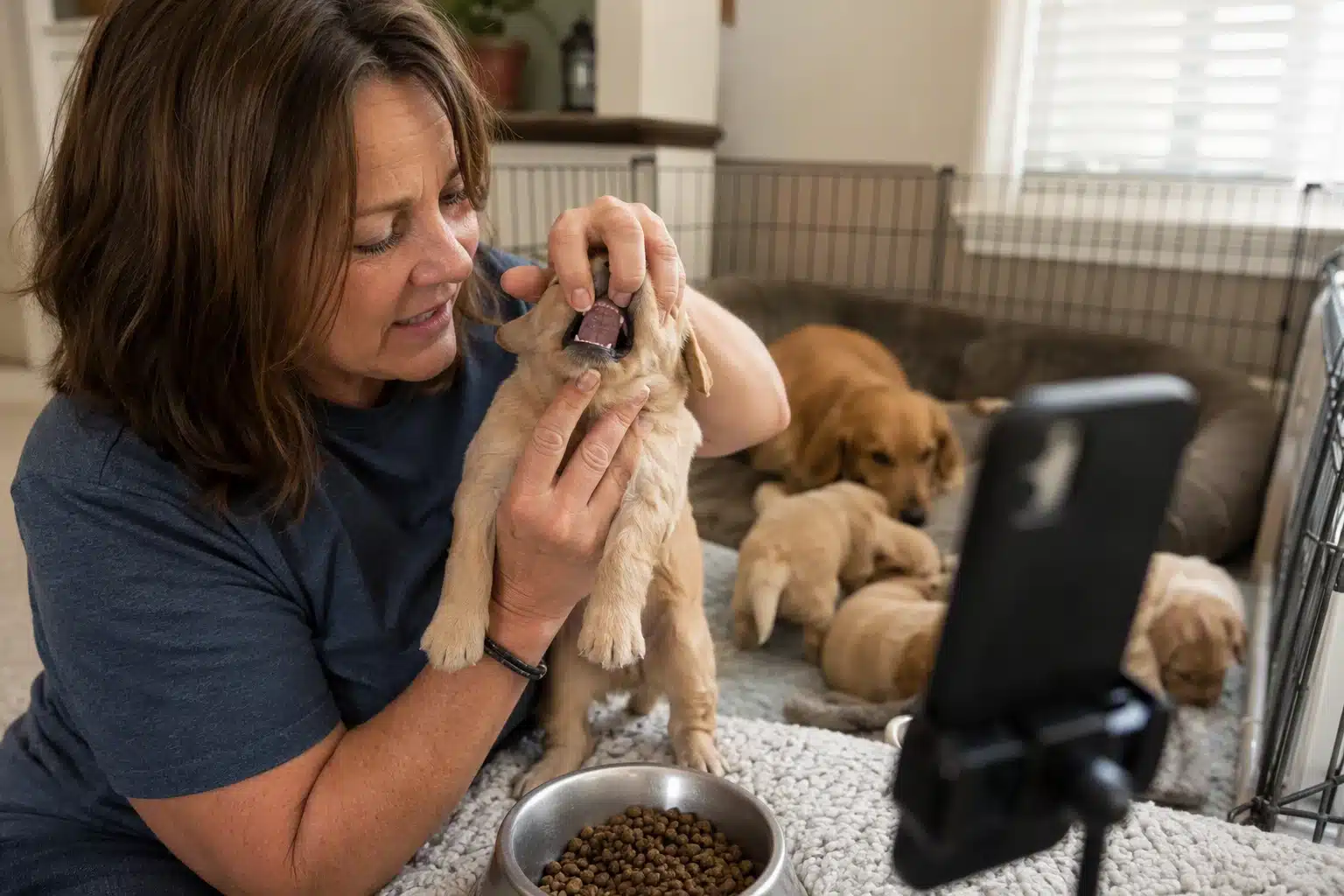
Use this quick check:
| Proof request | Good sign | Red flag |
|---|---|---|
| Same-day video | Natural movement, current setting | Old-looking clip reused for every buyer |
| Live video call | Puppy shown on request | Excuses, bad connection every time |
| Custom detail request | Breeder responds easily | Ignores or changes the subject |
Make sure the listing matches the puppy in front of you
Now compare the listing to the live puppy. Small mismatches matter.
Check these details side by side:
- coat color and markings
- size compared with littermates
- sex
- age and posted birth date
- location, pickup plan, or delivery plan
- name used in the ad and in messages
The FTC also says to look closely at seller photos and avoid listings that rely on stock-style images or vague item details when buying through online marketplaces.
Ask direct questions:
- Is this puppy still available today?
- Has any deposit already been placed?
- When was this listing last updated?
- Can you text a fresh video before I apply or reserve?
If the puppy in the new video looks different from the ad, treat it as a stop sign, not a small issue. Good programs, including boutique breeders like Sage Puppies, make availability and next steps clear instead of making you chase basic facts.
Also Read: Health-Tested Puppies for Sale Near Me: Questions to Ask Breeders
Step 3: Review the health records and breeder claims line by line
Confirm the veterinary and vaccination paperwork
Ask for the puppy’s records before you send final payment. A real breeder should show clear vet paperwork, not a text that says “shots are done.”
According to the 2022 AAHA canine vaccination guidelines, puppy vaccines follow a schedule and risk-based plan, so dates and product names matter. You want records that match the puppy’s age, exam date, and next due care.
Use this quick check:
- Veterinary clinic name and phone number
- Puppy date of birth
- Exam date
- Vaccine names and dates
- Deworming dates and product
- Microchip number, if already placed
- Notes about any illness, murmur, hernia, bite issue, or meds
| Record item | What good paperwork looks like | Red flag |
|---|---|---|
| Exam sheet | Dated and clinic-issued | Handwritten list with no clinic info |
| Vaccines | Specific vaccine names and dates | “Up to date” with no details |
| Deworming | Product and schedule listed | No proof beyond a message |
| Microchip | Number matches contract | Number missing or different |
If the breeder will not let you verify the clinic, slow down. Honest breeders expect careful buyers.
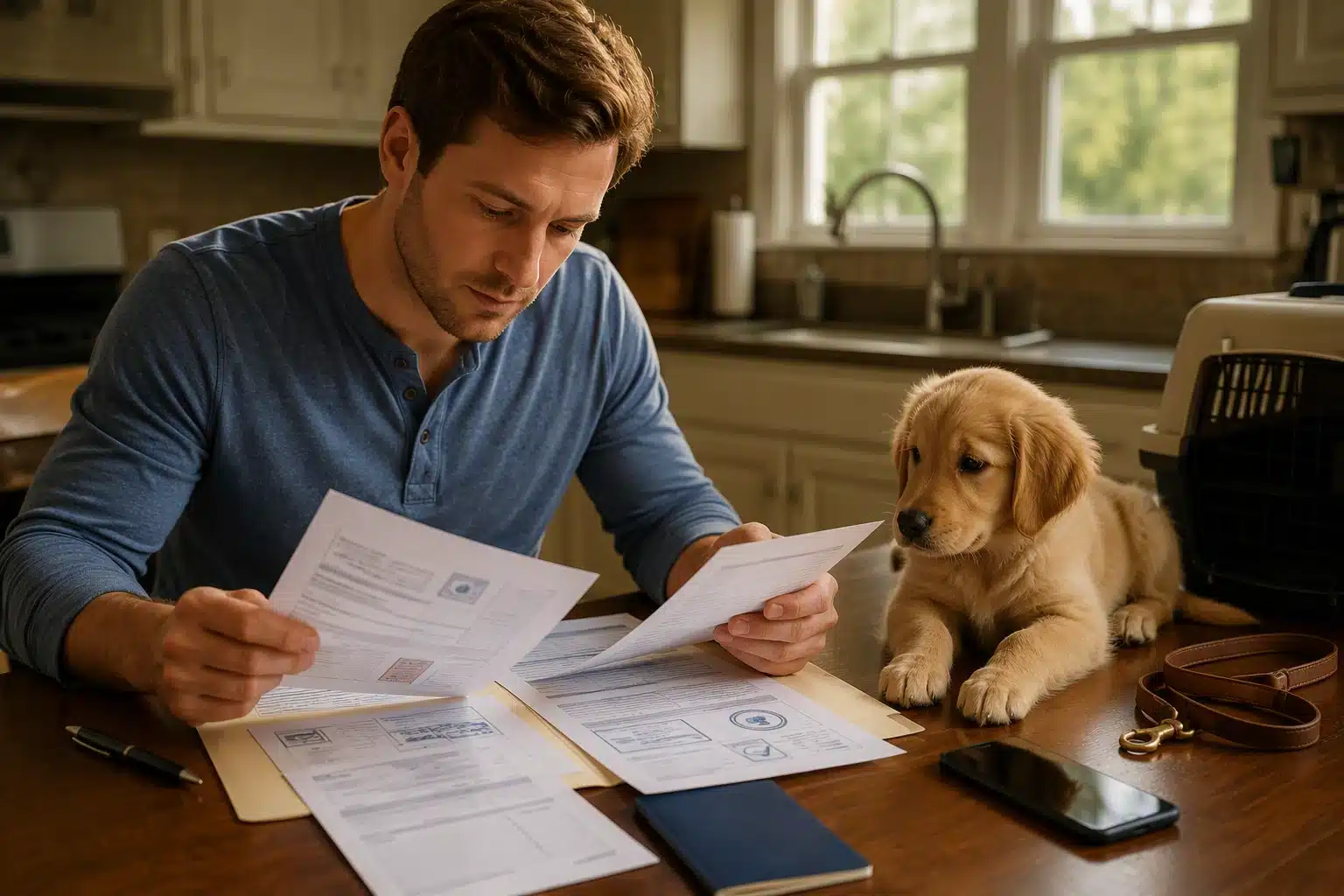
Read the contract instead of skimming it
The contract tells you what the breeder will actually stand behind. It matters more than friendly messages.
The AKC says breeder agreements should be in writing and clearly state obligations. Read every line, especially the parts that affect refunds, returns, illness, and registration.
Look for these points:
- Who the seller is – full legal name, address, and puppy details.
- Health terms – what is covered, for how long, and what proof is required.
- Return policy – whether the breeder takes the puppy back if life changes.
- Delivery terms – who handles transport, when risk transfers, and what happens if plans change.
- Registration terms – full, limited, or no registration.
A few contract warning signs:
- Vague words like healthy with no definition
- A guarantee that becomes void for normal vet care choices
- No return-to-breeder clause
- Pressure to sign fast
- Blank spaces left unfilled
A fair contract protects both sides and keeps the puppy out of bad rescue or resale situations.
Verify registration and health-testing claims carefully
“AKC registered parents” is not the same as proven health testing. Registration tracks identity and pedigree. It does not prove the parents passed breed-specific screenings.
Check claims one by one:
- Ask for the registered names of both parents
- Ask for actual test results, not a promise
- Match names on the test papers to the parents listed in the ad
- Confirm whether the breeder means DNA panel, OFA testing, or both
- Ask which tests were done for that breed mix, and why
The AKC notes that a CHIC number means the dog completed the required breed health testing, but it does not guarantee normal results or a perfect puppy. That is why you still need to read the reports themselves.
Also, if a breeder says the puppy is AKC-registrable, AKC says you should receive the registration application at delivery, not an excuse that papers are coming later.
Good breeders welcome line-by-line questions. If answers get slippery when you ask for proof, treat that as your answer.
Step 4: Confirm the pickup or delivery plan is safe and specific
Prefer clear pickup details over vague shipping promises
A real breeder gives you a plan, not a sales line. If the message says “we ship anywhere” but skips the route, handoff, carrier, or who stays with the puppy, slow down.
Ask for these details in writing before you pay:
- Pickup location and exact handoff process
- Delivery method – ground nanny, in-cabin flight nanny, or local pickup
- Name of the person releasing the puppy
- Name of the person meeting you, if delivery is used
- What happens if delays hit because of weather, traffic, or flight changes
- What records travel with the puppy at handoff
A good plan should feel boringly clear. That is a good sign.
| Question to ask | Good answer sounds like | Red flag sounds like |
|---|---|---|
| Where do we meet? | Exact address, date window, and backup plan | “We’ll text you later” |
| Who handles transport? | Named person or service with direct contact | “Our shipper” with no details |
| How do I get records? | Sent ahead and handed over at pickup | “They come later” |
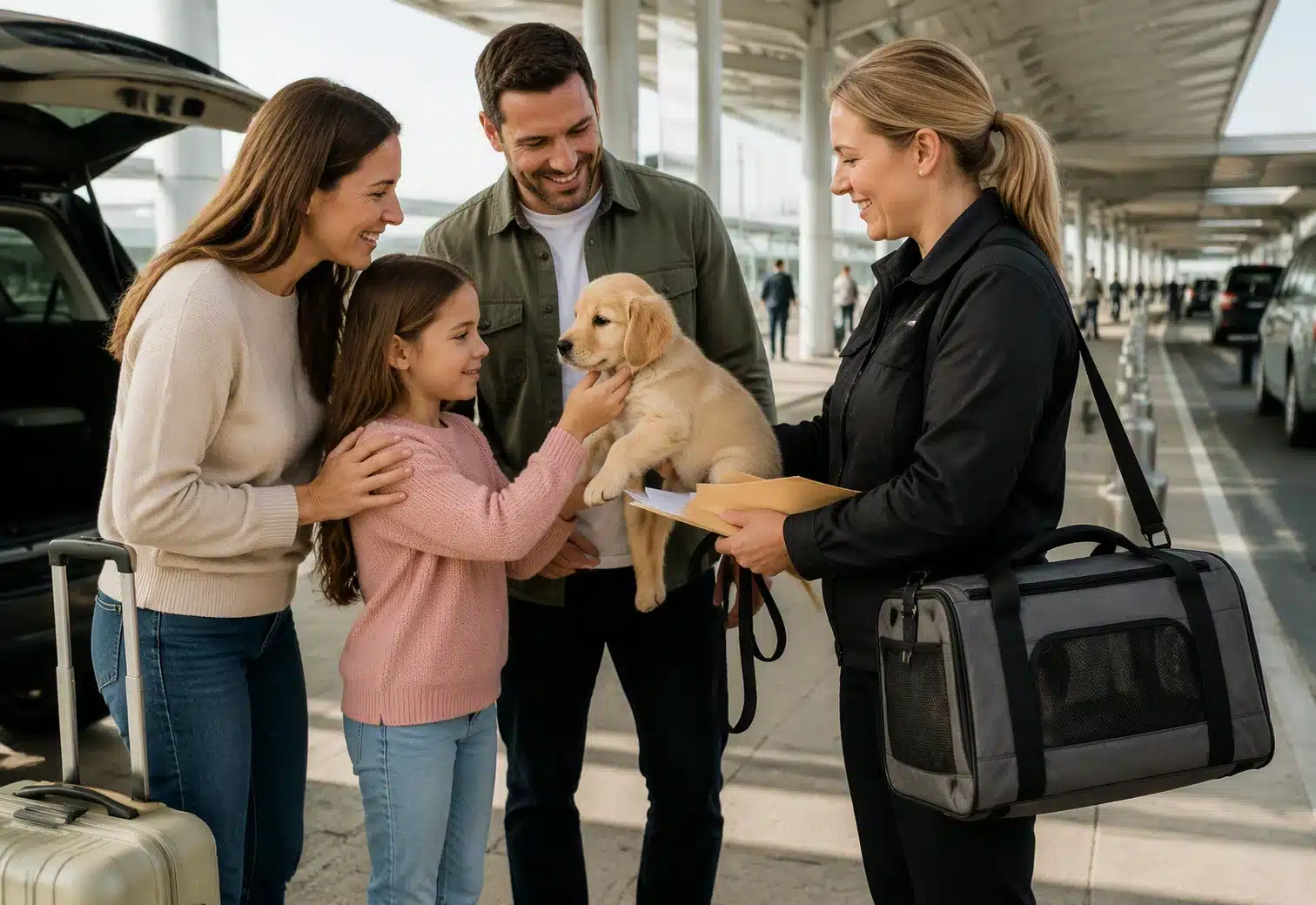
If a breeder pushes fast payment before sharing pickup or delivery details, treat that as a trust problem, not a minor gap.
If you are comparing local pickup with national delivery, check the breeder’s process page first. A clear, family-first handoff matters as much as the puppy itself. That is one reason families often prefer programs like Sage Puppies, where the steps are explained instead of glossed over.
Check that timing fits the puppy’s age and readiness
Timing matters. Under federal rules, a dog cannot be transported in commerce unless it is at least 8 weeks old and weaned under 9 CFR 2.130. For dogs entering the U.S., CDC says they must be at least 6 months old, healthy, and meet import rules in CDC’s current dog entry guidance.
Use this quick check:
- Confirm the puppy’s birth date.
- Count forward to the legal and practical travel date.
- Ask if the puppy has had its final pre-go-home health check.
- Make sure the breeder will delay travel if the puppy is stressed, sick, or too small.
A safe breeder will postpone travel if the puppy is not ready. A risky one will say, “It should be fine.”
Also Read: Puppy Care Blog & Resources | Sage Puppies
Step 5: Know when to walk away
Use a simple stop rule so feelings do not run the decision. If a seller dodges one major proof item, pause. If they dodge two, walk away.
The FTC says to move on if a breeder will not let you visit, video chat, or even talk by phone, and to avoid sellers who want payment by gift card, wire transfer, or crypto because those are common scam signs in FTC pet scam advice. ABC News also notes that meeting in a random parking lot instead of showing where the puppy was raised is a serious red flag in online pet sales reporting.
Use this quick table:
| Red flag | What it usually means | Your move |
|---|---|---|
| No live video of puppy with breeder | Puppy may not be real or seller is hiding conditions | Stop |
| Price keeps changing with shipping or “insurance” fees | Scam or bait-and-switch | Stop |
| Only app payments or wire transfer | Hard to recover money | Stop |
| Won’t show mom, records, or pickup address | Low transparency | Stop |
| Pressures you with “someone else is paying now” | Urgency tactic | Stop |
Your stop rule can be this:
- Ask for the same three items from every breeder:
- Live video
- Health records
- Clear pickup or delivery details
- Mark each answer yes or no.
- If you get two no answers, end the conversation.
A good breeder will not rush you. Calm answers are a green flag.
Also Read: Reputable Puppy Breeder Near Me: 7 Signs You Can Trust

If you want a calmer way to compare breeder claims, start with a program built for transparency. Sage Puppies helps families move from guesswork to clear next steps with health-tested parent dogs, home-raised Havanese, Havapoo, and Cavapoo puppies, plus clear pickup and nationwide delivery options. Review available puppies, read how it works, check pricing and reservations, then submit an application when you feel ready.
Frequently Asked Questions
Q1: where to buy puppies in Mississippi
Start with breeders who welcome questions, share parent health records, and explain pickup or delivery clearly. Ask for recent puppy videos, vet paperwork, and references. If you compare Mississippi options with programs like Sage Puppies, use the same checklist for every breeder.
Q2: What breeder claim should I verify first?
Check the health claim first. Ask exactly what tests the parent dogs had, when they were done, and whether you can review proof. If a breeder only says “vet checked” or “healthy lines,” treat that as marketing, not real verification.
Q3: Is national delivery a red flag?
Not by itself. The issue is how the breeder handles it. Good breeders explain the route, timing, handoff, and puppy prep in plain terms. They should answer who transports the puppy, what updates you get, and what happens if plans change.
Q4: How do I spot a fake Mississippi breeder listing?
Watch for copied photos, vague location details, rushed sales talk, and prices that make no sense. A real breeder can discuss the puppy’s parents, routine, and personality. If answers stay generic, step back and keep looking.
Q5: Should I pay a deposit before seeing paperwork?
You can, but only after the breeder answers key questions and shows real documents. Review health records, contract terms, pickup or delivery details, and refund rules first. If the breeder pressures you to pay fast, pause the process immediately.
Q6: What if I want a small-breed puppy shipped to Mississippi?
Ask for breed-specific details, not just shipping details. Small breeds need careful travel planning, feeding guidance, and stress control. Breeders focused on Havanese, Havapoo, or Cavapoo puppies should explain how they prepare each puppy before travel and arrival.
Conclusion
Checking breeder claims in Mississippi comes down to one simple habit – verify, do not assume. A clean website, AKC papers, and smooth answers are not enough. As this guide showed, you need to match every claim to proof: health records, parent details, vet history, living conditions, pickup or delivery terms, and a contract that makes sense.
The biggest takeaway is this: good breeders welcome calm questions. Bad sellers rush, dodge, or hide behind vague promises. That matters even more in a state where local buyers may rely on private sales, and where the Mississippi Attorney General’s Consumer Protection Division handles complaints about deceptive business practices through its consumer protection office. Federal pressure is also rising. In 2026, USDA said compliance among dog breeding facilities had risen to over 92% in 2025 while enforcement against chronic violators increased under a new coordinated crackdown.
The right puppy match should feel clear, documented, and steady – not rushed.