Quick Summary: Buying puppies in Illinois requires checking for transparency, health testing, and clear records rather than just photos. Responsible breeders provide detailed paperwork, honest communication, and a calm environment, helping families make confident choices. Sage Puppies exemplifies this approach by focusing on breed fit, health, and transparent processes for family-raised Havanese, Havapoo, and Cavapoo puppies.
Looking at Illinois puppies for sale can feel simple until every breeder page starts to sound the same. The real difference usually shows up in the details: health records, the questions a breeder asks you back, and a clear plan for pickup or delivery. That is where careful programs stand apart from polished listings.
This guide helps you sort through Illinois puppies for sale without guessing. Many families struggle to compare breeders fairly, especially when photos look great but the paperwork, parent testing, or communication feel vague. First-time buyers often miss red flags until after they place a deposit.
You will learn how to compare Illinois puppies for sale with more confidence by checking health testing, breeder practices, contract clarity, and what support you get before reservation day. We also frame what ethical, family-raised programs should look like for Havanese, Havapoo, and Cavapoo buyers.
Our approach is trust-first and practical, shaped around the same standards serious families use when comparing boutique breeders like Sage Puppies.
How to Compare Illinois Puppy Breeders at a Glance
Start with the breeder, not the fluff. If you want the full Illinois buying framework, read the parent guide first, then use this quick screen to sort serious breeders from polished listings.
Start with the breeder’s transparency, not the puppy photos
Cute photos do not prove much. Clear records do. In Illinois, licensed breeders and related animal businesses fall under state licensing and inspection rules through the Illinois Department of Agriculture. That does not make every seller equal, but it gives you a first checkpoint.
Use this fast comparison table:
| Checkpoint | Good sign | Red flag |
|---|---|---|
| Identity | Full business name, location, phone, real people | First names only or vague location |
| Paperwork | Sample contract and health record offered early | “You get that later” |
| Process | Clear pickup or delivery steps | Deposit pressure first |
| Parent info | Parent details and living setup explained | Avoids basic questions |
Ask these first:
- Who bred this puppy?
- Can I review the contract before I reserve?
- What records come home with the puppy?
If a breeder leads with urgency, not answers, slow down.
Compare health testing by proof, not by promise
“Health tested” is too vague on its own. Ask what tests were done, on which parents, and where you can verify them. The AKC notes that breed health testing should follow parent club guidance, and OFA tells buyers to ask for results they can confirm, not verbal claims alone, in its health testing requirements and breeder interview checklist.
Use this checklist:
- Parent names
- Test type
- Date completed
- Result
- Proof you can verify
- What the breeder does if a problem appears
For small companion breeds, you want specifics, not broad comfort words.
A clean vet check for the puppy is not the same as full parent health testing.
Look at the breeder’s screening process for buyers
Good breeders do not sell to everyone. They ask about your home, schedule, kids, training plans, and breed fit. AKC says responsible breeders should interview buyers back, not just collect a deposit.
Quick scorecard:
| Buyer screening | What it tells you |
|---|---|
| Application required | Breeder cares about placement |
| Phone or video call | They want a fit, not a fast sale |
| Questions about lifestyle | They are matching temperament |
| Ongoing support | They expect a long-term relationship |
Sage Puppies stands out here because the process feels calm and clear, not rushed.
Also Read: Reputable Puppy Breeder Near Me: 9 Signs to Trust
What Healthy, Well-Raised Puppies Should Come With
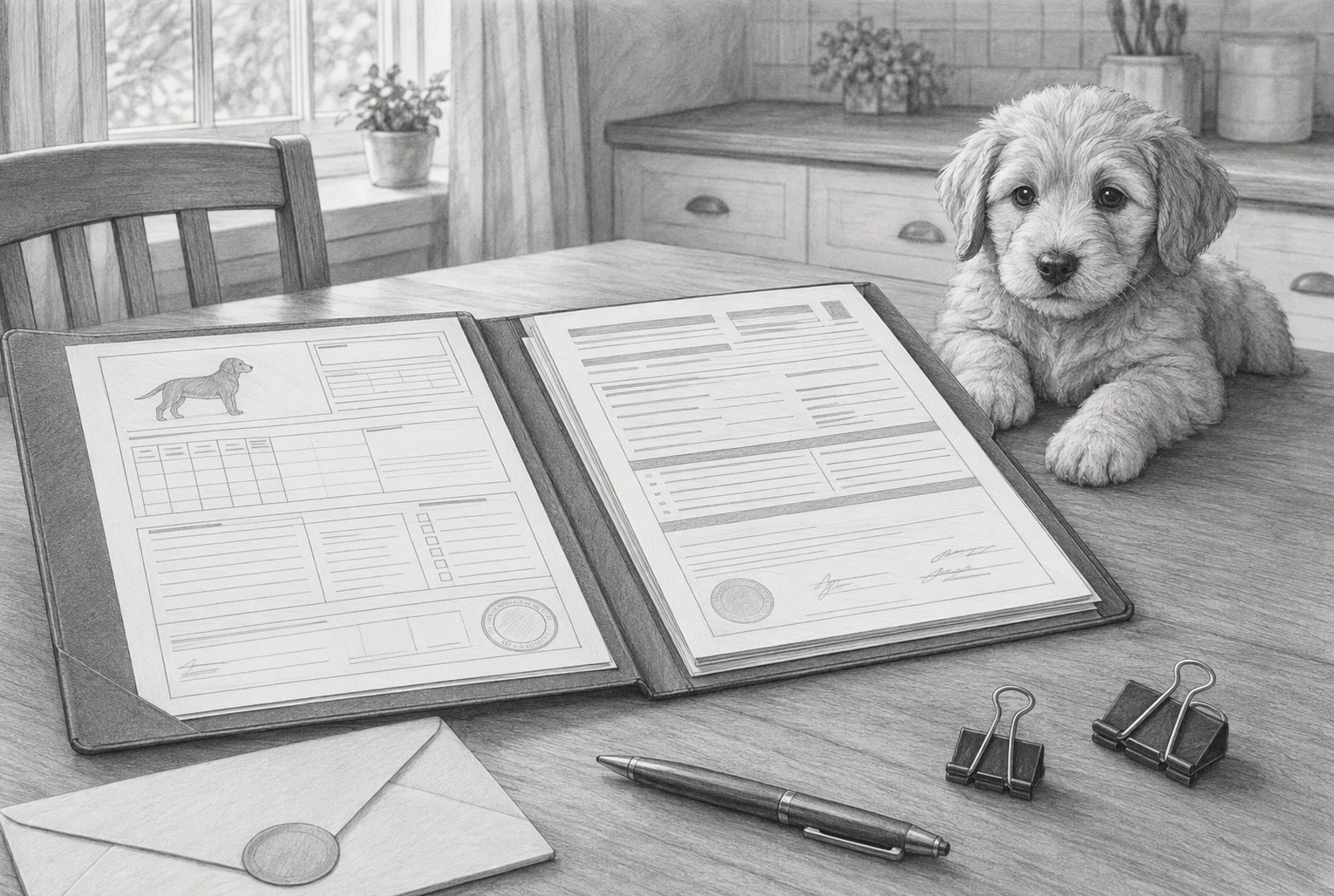
A healthy puppy should come with more than a cute face and a pickup date. You should get clear records, plain answers, and a take-home packet that helps your first week go smoothly. If a seller makes paperwork hard to see before payment, slow down.
The paperwork that should be easy to review before payment
Ask to review the basics before you send a deposit or final payment. A good seller should not act guarded about this.
Use this checklist:
- Vaccination record
- Deworming or parasite record
- Vet exam note or health record
- Parent dog health testing details
- Sales agreement and refund terms
- Pickup, delivery, or flight nanny terms
Under USDA rules for regulated dog sellers, medical records should include the dog’s identity, vaccine and treatment dates, and exam or test results under 9 CFR § 3.13. That does not mean every breeder is equal. It does mean you should expect organized records, not vague promises.
| Document | What you should see | Red flag |
|---|---|---|
| Health record | Dates, puppy ID, treatments, vet details | Missing dates or no puppy ID |
| Contract | Clear illness, return, and refund terms | Hard-to-read or rushed wording |
| Parent testing | Named tests and parent identity | “Parents are healthy” with no proof |
Registration papers are not the same as health proof.
Why clear health records matter for family planning
Good records help you plan your home, budget, and first vet visit. They also help your vet know what is due next.
The USDA says written veterinary care for dogs should include vaccines for major diseases and parasite control, plus preventive care for coat, nails, eyes, ears, skin, and teeth according to APHIS guidance. That matters to families with kids, older adults, or other pets at home.
Focus on these points:
- Timing – Know when the next shots, stool test, or checkup is due.
- Exposure risk – Ask whether the puppy has been around other litters or public places.
- Home setup – Plan sleep, potty, feeding, and cleaning routines around the puppy’s age and vaccine stage.
Clear records lower surprises. They do not promise a perfect puppy, but they help you make safer choices.
What a strong take-home packet should explain
A solid take-home packet should answer the questions you will ask on day one.
Look for:
- Current food and feeding schedule
- Crate and sleep routine
- Potty training pattern
- Socialization notes
- Medications or supplements, if any
- First-week transition tips
- When to book your vet visit
The best packets feel practical, not fancy. Sage Puppies, for example, stands out more when a breeder explains how the puppy has been raised at home, what the puppy already knows, and what the family should keep consistent.
If the packet only sells the puppy but does not teach you how to care for it, it is too thin.
Also Read: 10 Adorable Havapoo Colors You Need to See (2026 Guide) – Sage Puppies
How to Judge a Breeder’s Care Standards Without Visiting in Person
You do not need a farm visit to spot strong care standards. Ask for a live video call, recent unedited clips, and clear answers. Good breeders show daily life without getting defensive.
What a clean, calm puppy environment should look like
Look for calm, bright, home-like spaces. Puppies should rest, play, and move easily. The breeder should show where they sleep, eat, potty, and spend time with people.
A solid setup usually includes:
- Clean bedding that looks dry and changed often
- Fresh water within reach
- Safe flooring with traction, not slick surfaces
- Space to move away from littermates and nap
- Toys, chew items, and mild household sounds
- A mother dog who seems relaxed, not frantic or shut down
The breeder should also talk about air flow, cleaning, noise, and routine care. Responsible breeding guidance points to good housing, hygiene, light, ventilation, and suitable space as basic welfare signs in a breeder program responsible dog breeding guidelines.
If every photo is tightly cropped, heavily filtered, or only shows one puppy on a blanket, ask to see the full room.

Questions that reveal how puppies are socialized
Ask what puppies experience before they go home, not just whether they are “socialized.” The best answers are specific.
Use questions like:
- Who handles the puppies each day?
- What ages do social steps start?
- Which sounds, surfaces, and rooms do puppies meet?
- Do they meet calm adults, children, or other safe pets?
- How do you respond if a puppy seems unsure?
- What crate, grooming, or car ride exposure have they had?
Good breeders describe short, positive exposures and never force scared puppies. The AVMA review says puppies are most open to learning early, and positive exposure by or before three weeks helps prevent later fear AVMA socialization review.
| Strong answer | Weak answer |
|---|---|
| “We do daily handling, new textures, and gentle grooming.” | “They play a lot.” |
| “We go at each puppy’s pace.” | “They just get used to it.” |
| “We track reactions and match support to the puppy.” | “All puppies are the same.” |
How a breeder talks about temperament and fit
Listen for honesty over sales talk. A careful breeder does not promise that every puppy is perfect for every home.
They should explain:
- How they watch each puppy’s confidence, energy, and recovery
- Why one puppy may fit a quiet home better than a busy one
- What support the family should continue after pickup
- Limits of early temperament reads at young ages
A breeder you can trust will sometimes tell you to wait for a better match.
This is where boutique programs like Sage Puppies stand out when they focus on family-raised observation, clear fit guidance, and no-pressure matching.
Also Read: 10 Signs a California Puppy Listing Is a Scam – Sage Puppies
Common Red Flags When Comparing Illinois Puppies for Sale
1. Listings that hide the breeder or the parent dogs
If a listing shows only cute puppy photos, slow down. A good breeder should tell you who raised the litter, where the puppy lives, and who the parent dogs are. The ASPCA says responsible breeders are transparent and encourage buyers to meet the litter and at least one parent when possible, not hide behind vague profiles or third-party listings ASPCA’s responsible breeding criteria.
- No breeder name
- No parent dog photos or details
- No clear location
- No direct contact with the actual breeder
If you cannot tell who bred the puppy, you cannot judge how the puppy was raised.

2. Pressure tactics and deposit urgency
Be careful with sellers who push you to pay fast. Lines like “five families waiting” or “deposit in the next hour” often block good questions. Illinois law says puppies cannot be separated from their mother for sale before 8 weeks old, so rushed timing is a real warning sign Illinois puppy sale law.
Watch for:
- Nonrefundable deposits before a call
- Refusal to share records until after payment
- Same-day pickup pressure
- Sudden price drops tied to “today only”
Good breeders screen you too. Calm process beats fake urgency every time.
3. Claims that sound impressive but are hard to verify
Words like licensed, vet checked, or health guaranteed can sound strong but mean little without proof. Ask for the actual records, dates, and names. In Illinois, licensed facilities fall under the Department of Agriculture’s animal welfare rules, but a label alone does not tell you how open or careful a seller is.
Use this quick check:
| Claim | What to ask for |
|---|---|
| Health tested | Parent test results |
| Vet checked | Exam date and record |
| Licensed | License details and seller name |
How Sage Puppies Helps Qualified Families Buy with Confidence
Our focus on companion breeds families actually live with
Sage Puppies stays narrow on purpose. The program centers on Havanese, Havapoo, and Cavapoo puppies that fit real family life, not trend chasing. That matters when you want a small companion dog with a softer learning curve, manageable size, and a temperament built for home living.
Instead of offering every breed under the sun, Sage Puppies keeps the process simple:
- Focus on a few breeds families already know and love
- Help buyers compare coat care, energy, and trainability
- Match puppies to home life, kids, and daily routine
- Keep expectations realistic from the first call
That boutique focus helps qualified families ask better questions before they reserve.
If you are comparing Illinois puppy sellers, start with breed fit first. A pretty puppy is not enough. The breed has to work in your home six months from now too.
Health, temperament, and family-raised care
Confidence comes from what happens before pickup day. Sage Puppies puts weight on health-tested parents, early handling, and home-raised care so families are not guessing about a puppy’s start. That lines up with what behavior experts and breed educators stress. The AVSAB puppy socialization statement says the first three months matter most, and the AKC socialization guide notes that good breeders begin that process before puppies ever go home.
Families can look for signs like these:
- Clear discussion of parent health testing
- Calm, people-focused puppy handling
- Early crate and routine exposure
- Honest talk about grooming and training needs
- A breeder who cares where each puppy goes
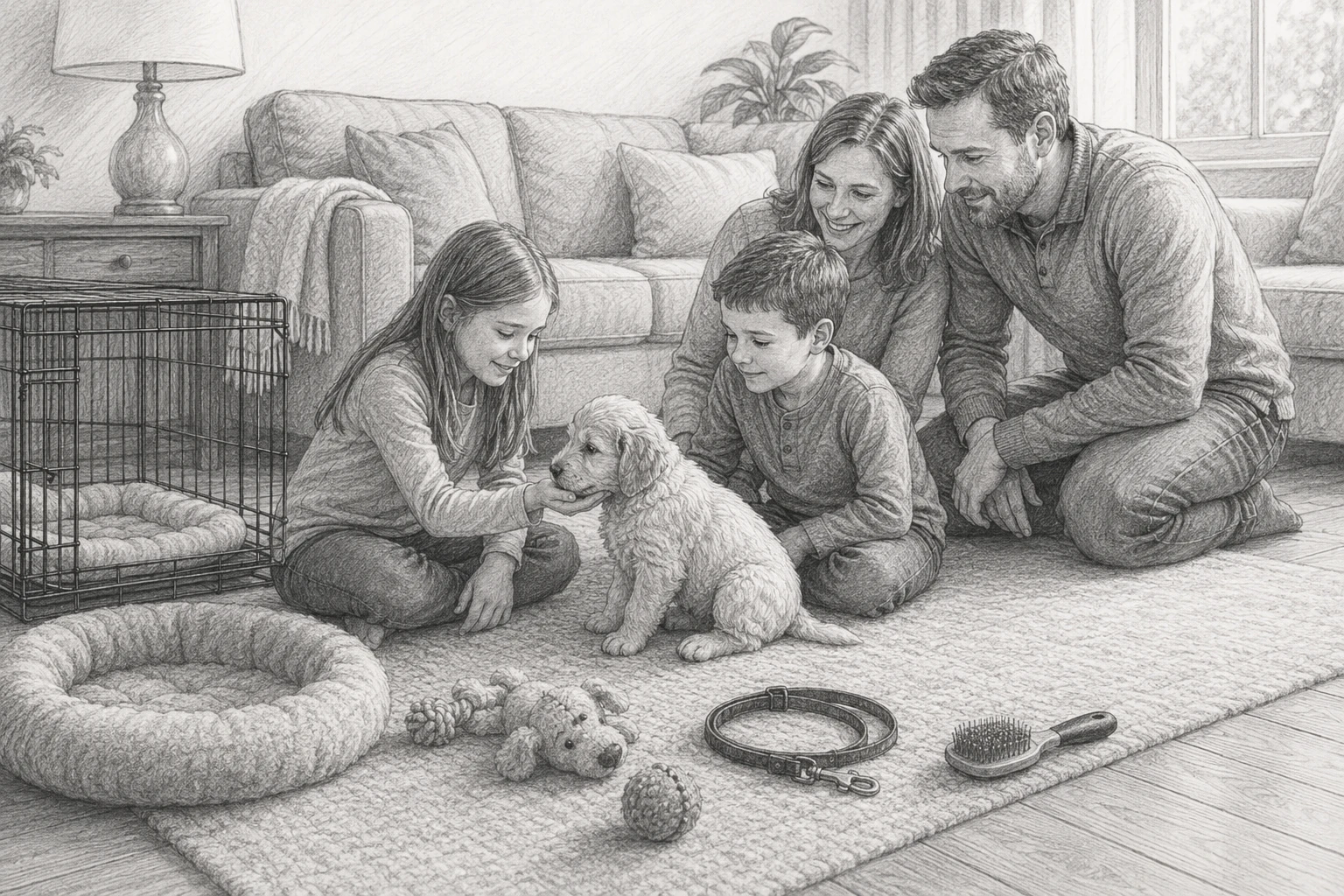
Pickup and delivery made clear from the start
A good breeder removes confusion around logistics. Sage Puppies helps families understand local pickup, travel timing, and nationwide delivery options early, so there are fewer last-minute surprises.
That clarity should cover:
- When a puppy can go home
- How travel or pickup works
- What paperwork comes with the puppy
- Who handles updates and next steps
For families flying or crossing state lines, simple planning matters. Ask for a written outline that covers timing, handoff, and what you should bring home on day one.
| What buyers need clear upfront | Why it builds confidence |
|---|---|
| Pickup or delivery plan | Prevents rushed decisions |
| Go-home timing | Helps you prepare your home |
| Health records and contract | Reduces confusion |
| Communication steps | Keeps expectations clear |
If you want an easier way to compare Illinois puppy sellers, start with a program that puts health records, parent testing, and pickup or delivery details in plain view. Sage Puppies helps families shop with confidence through a transparent, family-first process for Havanese, Havapoo, and Cavapoo puppies. Review available puppies, pricing, and next steps, then apply when the fit feels right.
Frequently Asked Questions
Q1: where to buy puppies in Illinois
Start with breeders who share health testing, parent details, pricing steps, and pickup or delivery terms before you apply. Ask for recent puppy photos, socialization notes, and sample contracts. If you are open to out-of-state options, Sage Puppies also works with Illinois families.
Q2: How do I compare Illinois puppy breeders fairly?
Use the same checklist for each breeder. Compare health testing, parent temperament, living setup, waitlist rules, deposit terms, and support after pickup. A simple side-by-side chart helps you spot gaps fast and avoid choosing based on photos alone.
Q3: What paperwork should come with a puppy?
You should expect clear records, not vague promises. Ask for vaccination and deworming history, microchip details if included, contract terms, and parent health testing proof. Read every line before reserving so you understand timing, fees, and your responsibilities.
Q4: Is delivery safe for small-breed puppies?
It can be, if the breeder explains the process clearly. Ask who handles transport, how travel timing works, and what support you get on arrival. Good programs give you direct answers, not broad reassurances.
Q5: What are red flags when shopping for puppies?
Watch for missing health records, rushed sales, changing prices, and pressure to pay quickly. Be cautious if the breeder avoids video calls, will not show where puppies are raised, or cannot explain how they match puppies to families.
Conclusion
Buying a puppy in Illinois gets much simpler when you compare sellers on proof, not promises. The strongest takeaways are clear: check health testing, read every contract line, confirm pickup or delivery details, and ask for records before you reserve.
Illinois law also gives buyers useful guardrails. State law says puppies cannot be separated from their mother before 8 weeks in covered sales under 225 ILCS 605/2.2. For pet shop sales, Illinois also requires written disclosures, microchip notice, and certain buyer remedies under 225 ILCS 605/3.15.
That is why careful families often favor breeders with calm communication and complete paperwork. When a program like Sage Puppies pairs family-raised care with clear records and honest process, comparison becomes less stressful and far more confident.