
Quick Summary: To find a healthy puppy in Florida, verify the breeder provides current health certificates, detailed testing results, and a clean, well-raised environment. Ask specific questions about the puppy’s origins, health tests, socialization, and contract terms, and be wary of breeders who dodge questions or rush transactions. State law requires breeders to show official veterinary inspection forms, and responsible breeders welcome transparency and thoroughness, ensuring a good start for both puppy and family.
If you are searching puppies florida near me, pause before you fall for the cutest face. Your first job is to confirm the breeder can show a Florida health certificate, real health testing, and a clean, home-raised setting you would feel good walking into with your family.
That is the hard part for most buyers. Listings make every puppy look the same, but breeders are not the same. Some share clear records, answer direct questions, and raise puppies with care. Others avoid paperwork, rush deposits, or hide how their dogs live. If you have typed puppies florida near me into Google more than once, you have already seen how crowded and confusing the market can feel.
This guide cuts through that noise. You will learn what Florida buyers should ask for, which papers matter, what warning signs to catch early, and how to tell the difference between polished marketing and real breeder standards.
We write from a trust-first, breeder-vetting view shaped by what qualified puppy families actually need – health records, honest answers, strong care, and a process that feels right. If you are comparing puppies florida near me, this guide will help you vet breeders with more confidence and less guesswork.
Step 1: Confirm the breeder is selling puppies the right way in Florida
Florida buyers should ask for the legal paperwork first, not last. A breeder selling a puppy in Florida should be ready to show a current Official Certificate of Veterinary Inspection, or OCVI, for that puppy. Florida law says dogs offered for sale in the state must be accompanied by that certificate, and the buyer gets a copy at sale, according to Florida Statute 828.29.
What Florida buyers should expect to see
Ask for these items before you leave a deposit:
- The puppy’s OCVI
- Vaccine and deworming dates
- The breeder’s full name and address
- The puppy’s breed, sex, age, and color
- The examining vet’s name and signature
- A clear sale record that matches the puppy you are buying
A careful breeder will not act annoyed by this. They should expect it.
If the breeder says, “We will send the paperwork later,” slow down. In Florida, that is a bad sign.
Use this quick check:
| Document or detail | What you should verify | Red flag |
|---|---|---|
| OCVI | Current and tied to that puppy | Generic form with missing details |
| Vaccine record | Dates match age of puppy | Dates look rushed or incomplete |
| Seller info | Name and address are clear | Seller identity is vague |
| Vet info | Licensed vet listed | No clinic or signature |
Why transport and in-state sales matter
Florida treats in-state sales and dogs brought in for sale differently, so you need to ask where the puppy started and how it got to you. The Florida Department of Agriculture notes that dogs entering Florida to be sold must meet the state pet sale law, while ordinary private pet travel follows different movement rules on FDACS.
That matters because some sellers blur the line between:
- A breeder selling their own puppy
- A broker shipping puppies into Florida
- A resale listing posing as a local breeder
Ask these direct questions:
- Was this puppy born and raised by you?
- Did the puppy enter Florida for sale?
- Who handled transport?
- When was the health certificate issued?
A trustworthy breeder answers plainly and keeps records straight. That is the standard qualified families should expect.
Also Read: Florida Puppy Pickup Guide for Safe In-Person Handover
Step 2: Verify real health testing, not just general claims
Ask for the exact tests, not a generic promise
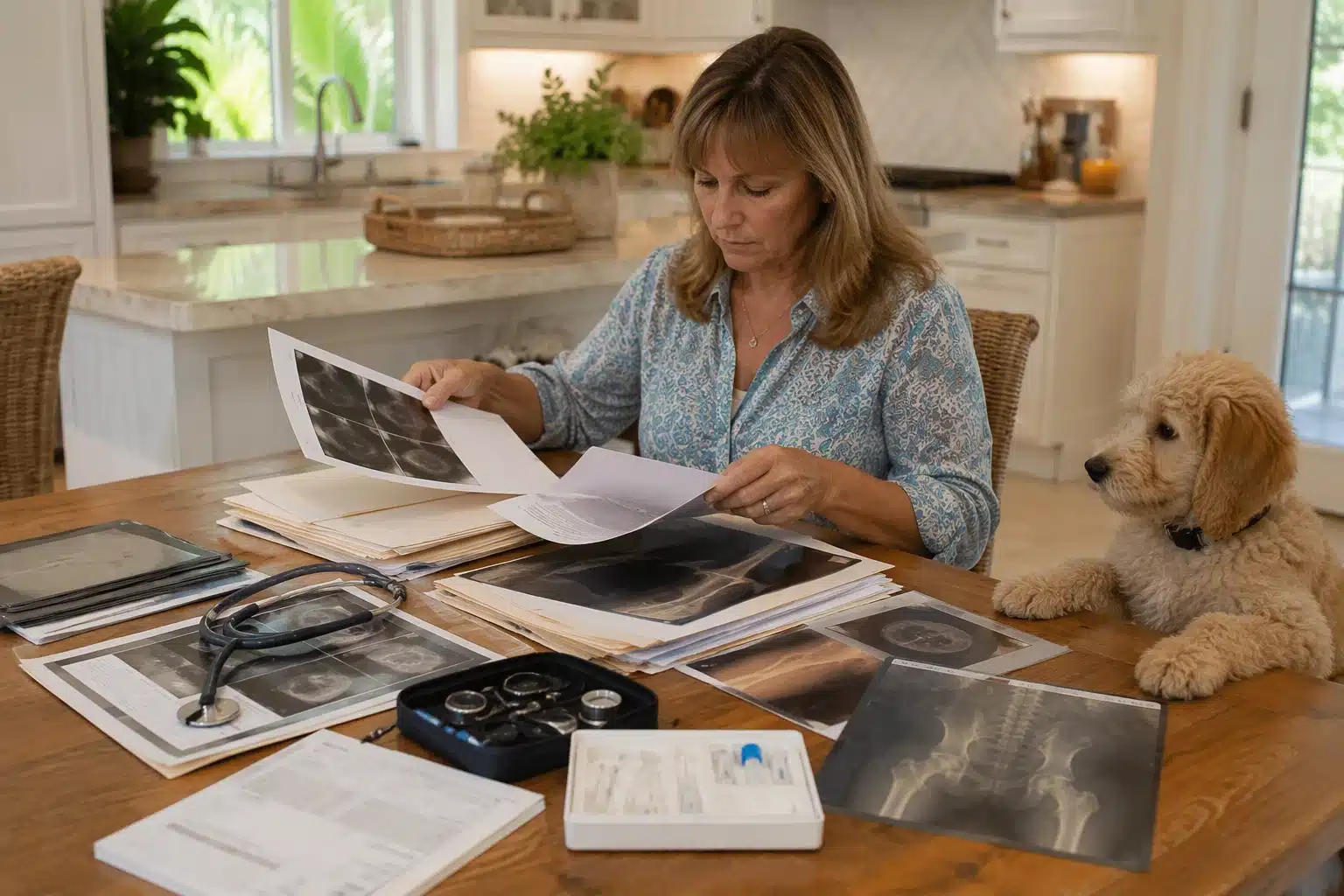
“Health tested” means very little on its own. A good breeder should name the exact tests done on both parents, who performed them, and when. The AKC notes that health testing should match the breed parent club’s recommendations, not a breeder’s personal opinion or a vague “vet checked” claim AKC health testing requirements.
Ask for a short list you can review line by line:
- Test name – hips, patellas, eyes, heart, or breed-specific DNA panels
- Parent tested – sire, dam, or both
- Date completed – recent and done before breeding
- Result – normal, clear, carrier, affected, or grade listed
- Source – OFA, specialist report, or lab record
A quick vet visit for shots is not the same as breeding health screening. That matters most with companion breeds, where eye, heart, joint, and inherited disease risks may need separate checks.
| Claim you hear | What to ask back |
|---|---|
| “Our dogs are health tested” | “Which tests were done on each parent?” |
| “The puppies are healthy” | “Can I see the parents’ results, not just puppy records?” |
| “Our vet says they look great” | “Which formal screenings were submitted or documented?” |
If a breeder gets annoyed when you ask for records, treat that as a warning sign.
How to confirm the records are legitimate
Start by checking whether the breeder can show named documents, not screenshots with key details cut off. The OFA explains that CHIC certification means a dog completed the breed’s recommended screenings and the results are made public in the database OFA CHIC program. That makes it much easier to verify what is real.
Use this checklist:
- Match the dog’s identity – registered name, call name, microchip, tattoo, or registration number should line up.
- Check both parents – one tested parent is not enough.
- Confirm dates – results should predate the litter.
- Look for issuing body – OFA, specialist clinic, or recognized lab.
- Watch the wording – “clear by parentage” is not the same as direct testing.
- Ask for complete pages – not cropped snippets.
Federal rules for regulated breeders also require medical records to include vaccines, treatments, and screening or test results, with dates and findings federal veterinary care record rules. Even if a small breeder is not federally regulated, solid recordkeeping still shows care and honesty.
The best breeders make this easy. They expect smart questions and answer them calmly.
Also Read: Find a Reputable Puppy Breeder Near You: Step-by-Step
Step 3: Evaluate how the puppies are actually being raised
What a healthy puppy environment should feel like
You can learn a lot before anyone hands you paperwork. The space should feel clean, calm, and lived in, not hidden, rushed, or staged for visitors.
Look for basics first:
- Clean bedding with no strong urine smell
- Fresh water and age-fit food setup
- Room to move, rest, and play
- Normal noise levels, not nonstop barking or chaos
- Puppies who seem curious, not shut down or panicked
Federal dog care rules also require proper space, compatible grouping, and separation rules for young puppies and adult dogs in many regulated settings, according to USDA housing standards.
A good visit usually shows you this:
| Good sign | What it suggests | Concern if missing |
|---|---|---|
| Puppies rest, then bounce back to play | They feel safe in the space | Constant stress or poor routine |
| Floor and bedding look dry | Regular cleaning | Weak sanitation habits |
| Dam looks relaxed with puppies | Stable care and handling | Fear, tension, or overbreeding signs |
| Home or nursery feels integrated into daily life | Real exposure to normal sounds | Puppies may be under-socialized |
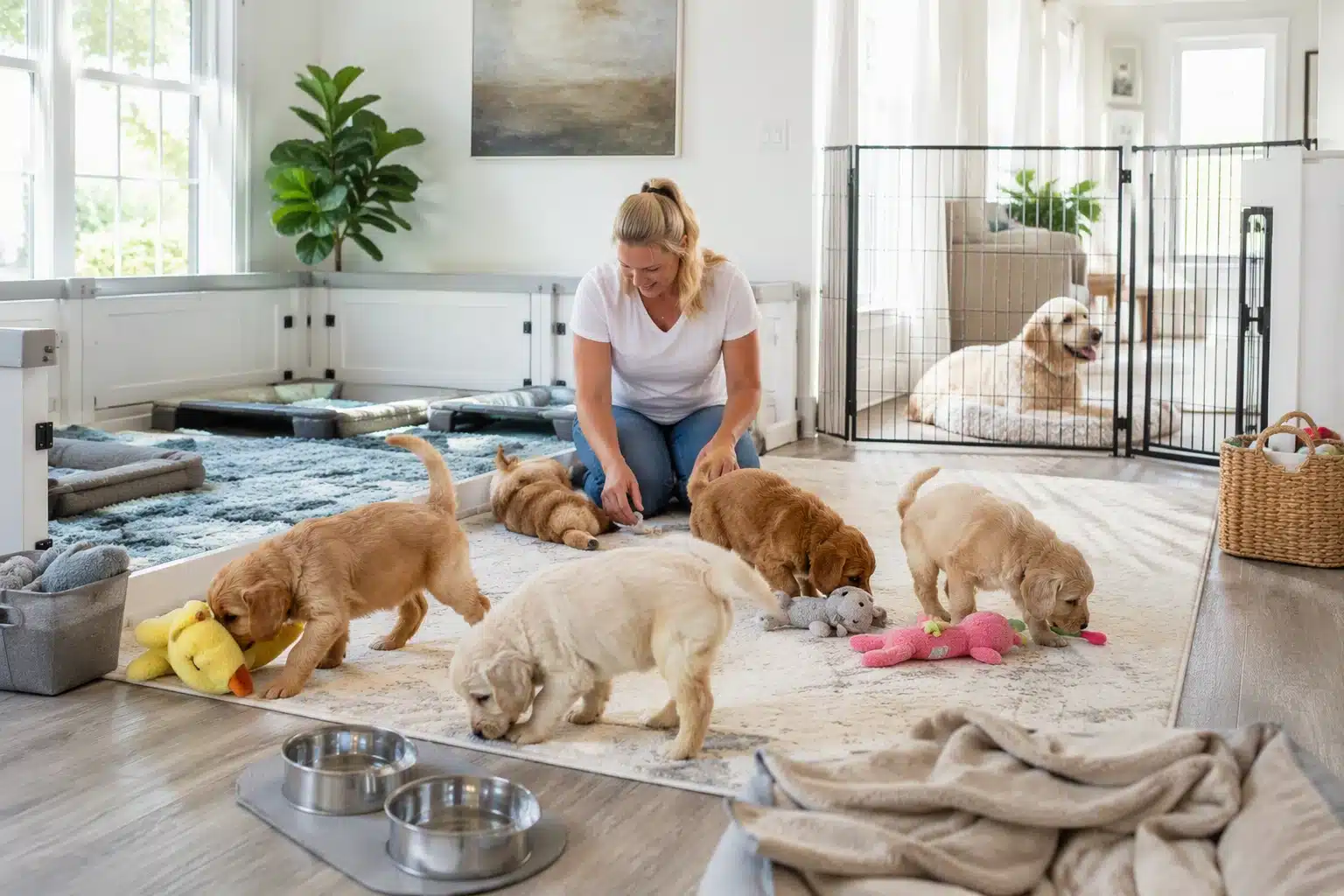
If the breeder only shows tight close-up videos, ask for a live video tour of the full puppy area, including sleeping space, play space, and where the mother stays.
A boutique home setup, like families often expect from programs such as Sage Puppies, should feel open and ordinary in the best way.
Socialization details worth asking about
“Socialized” is too vague. Ask what the breeder actually does each week.
Use this checklist:
- Who handles the puppies daily? Adults only, or gentle children too?
- What sounds do they hear? Vacuums, dishes, doors, TV, traffic?
- What surfaces do they walk on? Tile, rug, grass, crate tray, small steps?
- Do they spend time alone in short sessions?
- Have they started crate exposure, grooming, and nail trims?
- How do they balance safety with exposure?
That last point matters. The early social window is especially important in the first 12 weeks, and Ohio State notes that poor socialization during that period can lead to major behavior problems later, while still stressing the need for smart disease prevention during exposure in this veterinary guide.
Ask for examples, not slogans:
- “Tell me yesterday’s puppy routine.”
- “What new thing did this litter experience this week?”
- “How do you respond if one puppy seems timid?”
The best breeders track each puppy’s confidence, recovery, and temperament, not just weight and color.
Step 4: Judge the breeder by the questions they ask you
A good breeder does not just answer questions. They screen you, too. Humane World notes that responsible breeders do not sell to the first person with cash and should thoroughly interview buyers before placing a puppy. That matters in Florida, where fast online sales and shipped puppies can hide poor sourcing.
Questions that indicate a thoughtful breeder
Listen for questions that check fit, stability, and long-term care.
- Why this breed, and why now?
- Who will handle daily care, training, and potty breaks?
- Do you rent or own, and are pets allowed?
- Have you had dogs before? What happened to them?
- Are there kids, older adults, or other pets at home?
- How long will the puppy be alone each day?
- What is your plan for grooming, vet care, and training?
- Will you return the dog to the breeder if life changes?
Those questions show the breeder cares where the puppy lands. Humane World says responsible breeders often ask about household rules, landlord approval, veterinary references, and require that the dog be returned to them if you cannot keep it at any point in its life.
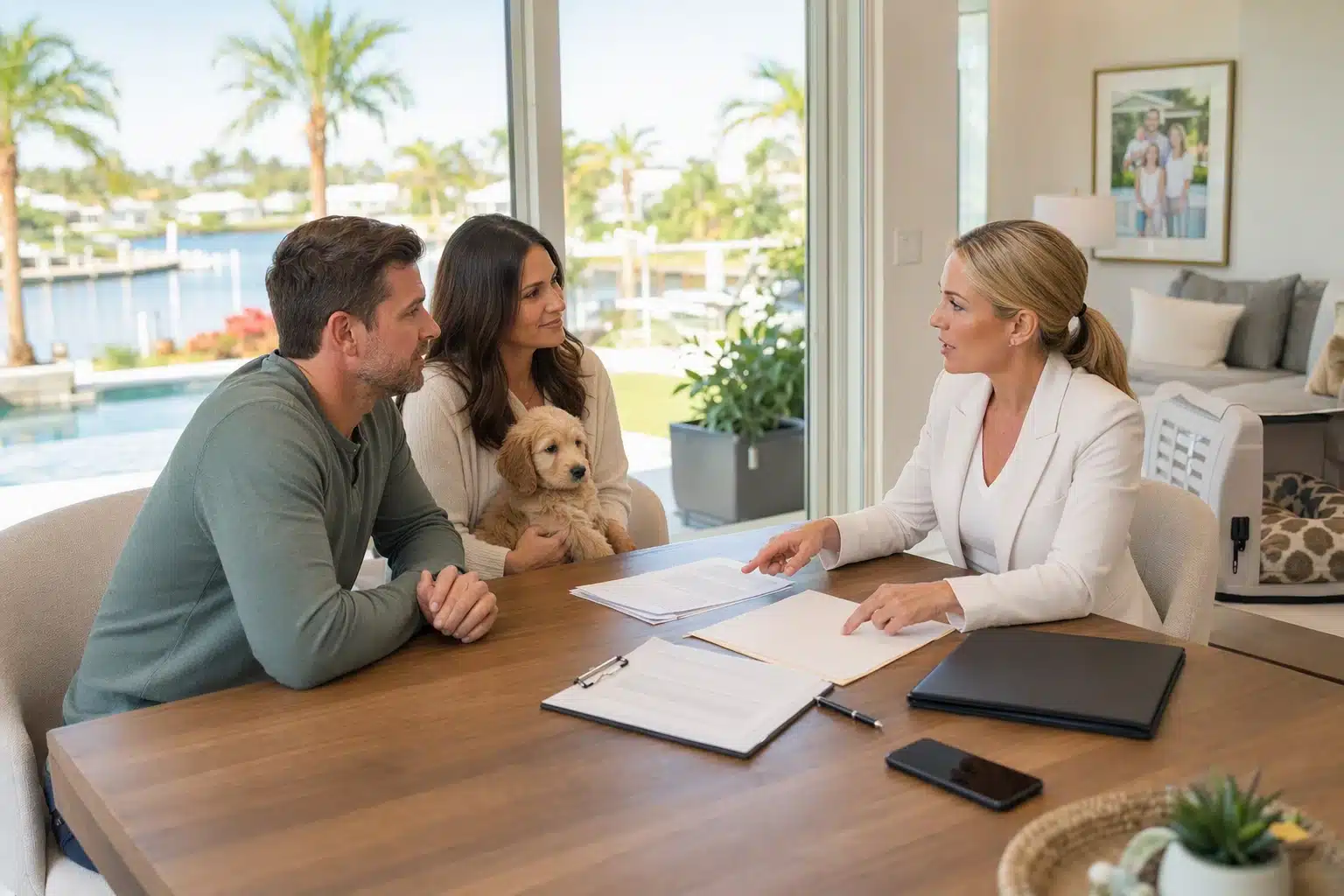
Tip: If the breeder asks hard questions with a calm tone, that is usually a good sign, not a bad one.
Questions that should make you pause
Some questions are not screening tools. They are sales tools.
- Can you send a deposit today?
- Which puppy do you want before we talk by phone?
- Do you need financing right now?
- Want us to meet in a parking lot or ship without a visit?
- Is color your top priority?
- Do you want breeding rights without any discussion?
Pause if the breeder skips your lifestyle and jumps to payment, delivery, or upgrades. That often means they care more about moving puppies than placing them well. In a trust-first program like Sage Puppies, the conversation should feel steady, personal, and a little selective.
Also Read: 10 Adorable Havapoo Colors You Need to See (2026)
Step 5: Read the contract, return policy, and next-step logistics before you commit
A solid breeder contract protects both you and the puppy. Read it before you send a deposit, not after. In Florida, a dog offered for sale must come with a current official certificate of veterinary inspection, and the buyer should receive a copy at sale under Florida Statute 828.29.
What a fair puppy contract should cover
Look for clear language on these points:
- Puppy identity – breed, sex, birth date, color, microchip, and parents
- Price terms – total cost, deposit amount, refund rules, and final payment date
- Health paperwork – what records you receive and when
- Return terms – whether the breeder requires the puppy returned to them if you cannot keep it
- Spay or neuter terms – if sold as a pet, what limits apply
- Breach terms – what happens if either side fails to follow the agreement
A fair contract should also explain any short health window for a vet exam after pickup. That does not replace the breeder’s duty to provide records. It just sets the first step for you.
| Contract item | What you want to see | Red flag |
|---|---|---|
| Deposit | Written terms and refund conditions | “Nonrefundable” with no exceptions |
| Health records | Specific documents listed | Vague promise to send later |
| Return policy | Clear surrender or rehoming process | No return option at all |
| Buyer duties | Reasonable care expectations | Punitive fine-heavy language |
If a breeder rushes you past the contract, slow down. Pressure is a warning sign.
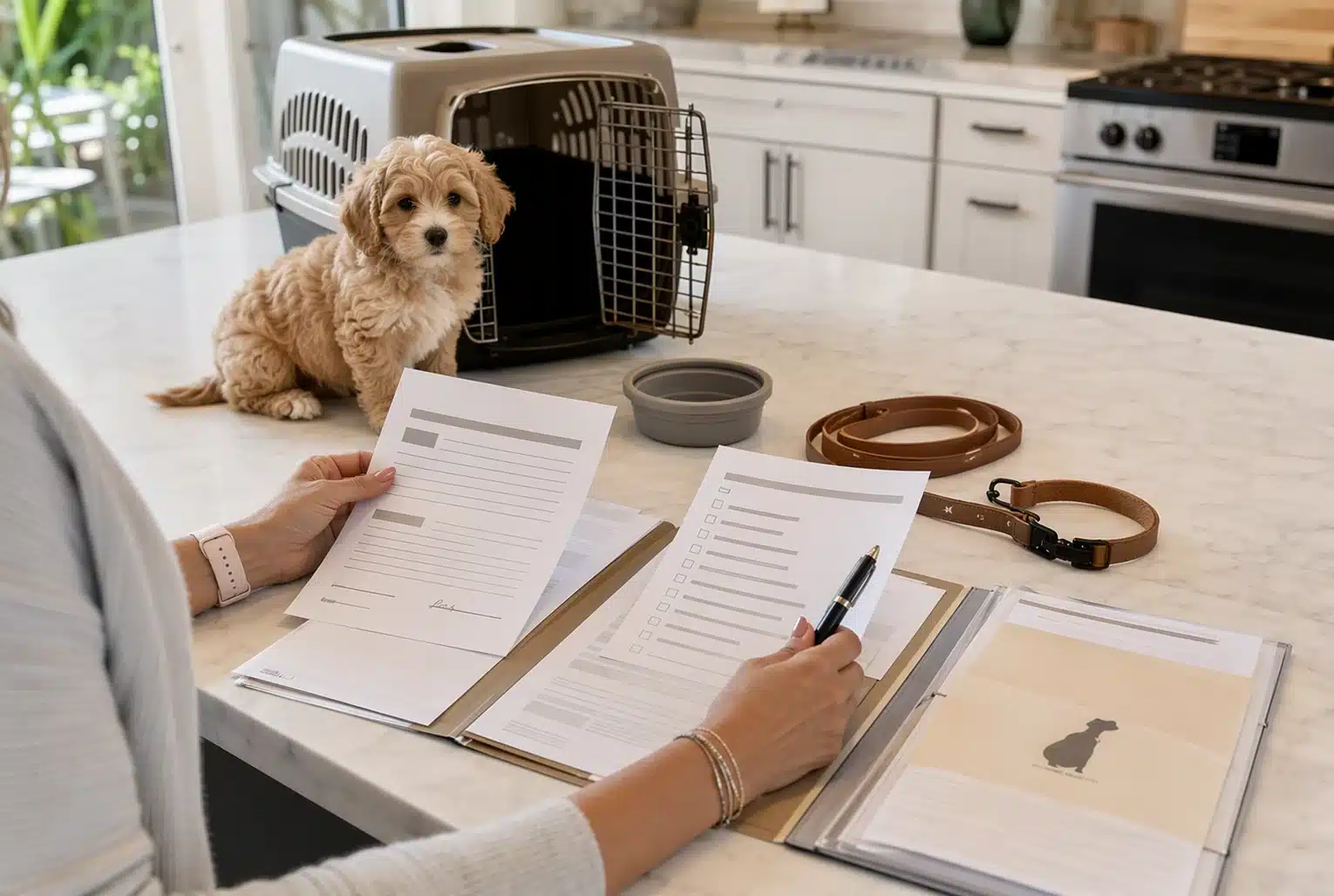
Clarify pickup, delivery, and support before you pay
Logistics matter more than most buyers expect. Ask for the full handoff plan in writing.
Use this checklist:
- Pickup date and location – home pickup, airport handoff, or nanny delivery
- Travel documents – health certificate, vaccine record, feeding guide, and microchip info
- Delivery cost – exact fee, who handles transport, and what happens if plans change
- Support after go-home day – breeder contact, first-week guidance, and emergency process
Florida also requires dogs entering the state to have an official health certificate, and dogs 3 months or older need current rabies proof under FDACS movement rules.
For families comparing programs, this is where a transparent breeder stands out. Sage Puppies, for example, makes pickup and nationwide delivery part of the process conversation early, which helps families plan without guesswork.

If you want a simpler, trust-first path, start with Sage Puppies. Sage Puppies helps families avoid the usual breeder guesswork with health-tested parent dogs, home-raised care, early socialization, and a clear, family-first process. You can review available puppies, pricing, pickup or delivery options, and apply when the fit feels right. For Florida families who want confidence, not pressure, it is a smart next step.
Frequently Asked Questions
Q1: Puppies for sale in Florida
Start with the breeder, not the puppy. Ask for parent health testing, vaccine records, a written contract, and the breeder’s license details if required. Meet by video or in person. If the seller rushes you, avoids questions, or skips paperwork, walk away.
Q2: What paperwork should a Florida puppy buyer ask for?
Ask for a health certificate, vaccine and deworming records, microchip details if used, sales contract, and parent test results. You should also see the puppy’s date of birth and breeder contact info. Good breeders hand this over without acting annoyed or vague.
Q3: How can I spot a backyard breeder fast?
Watch for multiple breeds, constant available litters, cheap pricing, parking lot meetups, and no proof of health testing. Photos alone mean nothing. If the breeder cannot explain temperament, socialization, or where puppies are raised, that is a serious warning sign.
Q4: Is it okay to buy from an out-of-state breeder?
Yes, if the breeder is transparent and organized. Many families do this. Sage Puppies, for example, serves families beyond Utah with clear pickup and delivery steps. Still ask for videos, records, contract terms, and a live call before you reserve.
Q5: What should I ask on the first breeder call?
Ask how often they breed, what health tests parents had, how puppies are socialized, what food they eat, and when they can go home. Also ask what happens if your vet finds a problem. Clear answers matter as much as kind tone.
Conclusion
Finding a good puppy in Florida comes down to proof, not promises. The safest breeders welcome questions, show health testing, explain how puppies are raised, and give you time to review every record. They do not dodge visits, rush payment, or hide where the litter lives.
The strongest takeaway is simple:
- Verify the breeder
- Verify the parents
- Verify the paperwork
- Verify the puppy’s early care
Florida gives buyers useful checkpoints. State law requires dogs offered for sale in Florida to have a current official certificate of veterinary inspection, and the form itself shows the health record details you should expect to review on the state OCVI document.
If a breeder is honest, organized, and calm under fair questions, that is a strong sign.
A well-bred companion dog starts with careful screening on both sides – breeder and buyer. That balance protects your family and gives your puppy the best start.



