Quick Summary: Finding healthy puppies in Utah requires checking for clear parent health testing, detailed records, and transparent early socialization. Reputable breeders explain their process, provide proof, and prioritize temperament and fit over quick sales. Avoid listings with vague promises or social media scams by asking specific questions about health, raising, and delivery plans.
If you are comparing Healthy Puppy Sales in Utah and a breeder cannot clearly explain parent health testing, early care, and pickup or delivery details, pause there. That confusion is often the first sign of trouble.
Most families get stuck in the same place. Listings look cute, promises sound good, but it is hard to tell which puppies were bred with care and which ones were not. That makes Puppy Adoption Utah searches feel risky, especially for first-time buyers.
This guide fixes that. You will learn how to check health testing, ask better questions, compare breeder transparency, and spot the gaps fast. You will also see what to review before you reserve, including pricing, process, and travel plans.
At Sage Puppies, we focus on small companion breeds raised with purpose, not volume. We know families searching for Healthy Puppy Sales want clear answers, not pressure. If you have seen claims from so-called Organic Puppy Breeders, use this guide to compare facts. Good Healthy Puppy Sales should be easy to explain.
What Healthy Puppy Sales Should Include
A healthy puppy sale should show you proof, process, and preparation. If a breeder cannot explain those three pieces clearly, pause. For the full Utah buying path, go back to the parent guide on finding healthy puppies for sale in Utah.
Health testing starts with the parents
Healthy puppies do not start with a cute listing. They start with well-screened parents. Cornell notes that responsible breeders test for conditions recommended by the breed’s parent club and give puppies a good start in life through clean housing, vaccines, and early socialization according to Cornell’s breeder guidance.
Ask for both DNA and physical screening results when they apply to the breed. AKC explains that health testing is a breed-specific evaluation of the sire and dam meant to lower the risk of inherited disorders in its health testing overview.
| What to ask for | Why it matters | Good sign |
|---|---|---|
| Parent test results | Shows planning before breeding | Breeder shares copies fast |
| Breed-specific screenings | Matches known risks | Tests fit the breed, not generic claims |
| Parent temperament notes | Helps predict fit | Breeder describes strengths and limits |
A breeder saying “parents are healthy” is not the same as showing records.
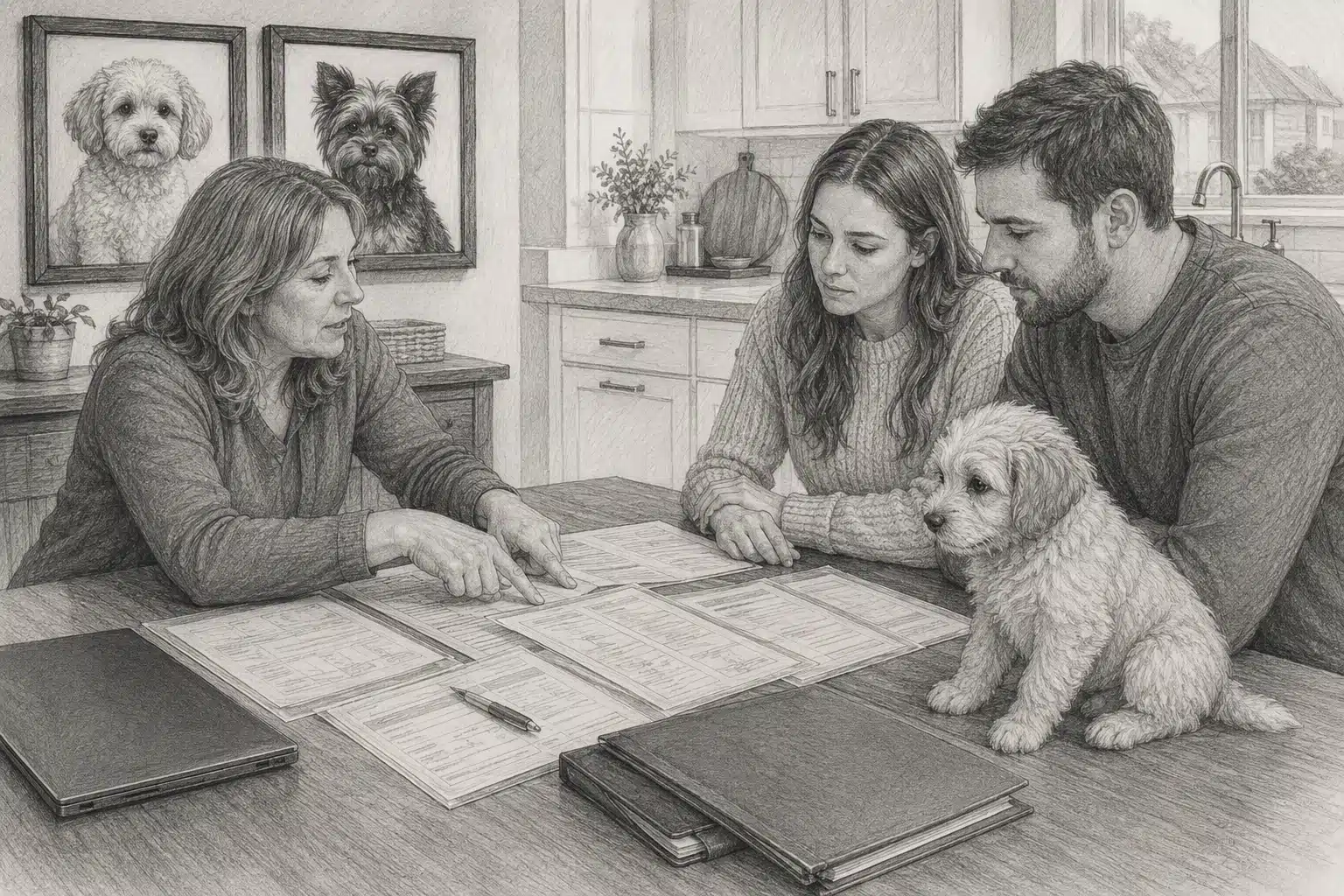
Written records matter more than vague claims
A good sale includes a paper trail, not promises on a phone call.
You should receive:
- A dated vet record for the puppy
- Vaccination and deworming details
- Parent health testing records
- A written contract
- Clear pickup or delivery terms
If a breeder avoids sending records before a deposit, treat that as a warning. Written documents help you compare programs fairly and spot gaps early.
- Ask if names on records match the parent dogs listed for the litter
- Ask what the breeder will provide on go-home day
- Ask who to contact if your puppy has a health concern after pickup
Clear records protect both sides. Honest breeders usually welcome detailed questions.
Early care should be visible in the process
Healthy puppy sales should also show how the puppy was raised, not just what was tested. Early social time matters. Puppies learn from their mother, littermates, handling, sounds, and daily routines before they ever meet you.
Look for visible early-care steps such as:
- Home-raised or closely supervised housing
- Regular handling by people
- Clean sleeping areas
- Age-appropriate grooming exposure
- Feeding routine and transition plan
- Notes on confidence, energy, and temperament
At Sage Puppies, this kind of transparency should be easy to follow from first inquiry through application, reservation, and pickup or delivery.
If you can see the process, read the records, and understand the breeder’s choices, you are likely looking at a healthier start.
Also Read: How to Spot Complete Puppy Vet Records Before Buying
Ask for the Right Health Tests Before You Reserve
Start with the parents, not the puppy photo. Health testing should match the breed behind the litter. A good breeder will explain what was tested, when it was done, and why it matters for that pairing.
For Havanese, the Havanese Club of America says CHIC screening includes hips, patellas, and an annual eye exam, with BAER no longer a current CHIC requirement according to newer HCA guidance. For Cavalier lines, breed guidance is heavier on cardiac, eyes, hips, and patellas, because Cavaliers carry different risks, including mitral valve disease. You can verify those breed-specific lists through the OFA CHIC program and the American Cavalier King Charles Spaniel Club health statement.
That matters for Utah buyers looking at Cavapoos or Havapoos too. A mix should reflect the risks of both parent breeds, not just one.
Ask for:
- The registered names of both parents
- The exact tests completed
- The date of each test
- Whether results are publicly verifiable
- Which parent breed each test is meant to cover
If a breeder says, “Our vet checked them and they look great,” keep asking. That is not the same as health screening.
| Puppy type | Tests you should expect to discuss |
|---|---|
| Havanese | Hips, patellas, annual eye exam |
| Cavapoo | Cavalier-related cardiac and eye screening, plus patellas and hips where relevant |
| Havapoo | Havanese screening, plus poodle-side testing that fits the parent line |
A lot of buyers hear three phrases and treat them as equal. They are not.
- Genetic tests check for specific inherited mutations.
- Clearances are formal screenings like patella, hips, eyes, or cardiac exams.
- Vet checks are routine wellness exams for the puppy before go-home.
You want all three, but they do different jobs. A puppy wellness exam can confirm the puppy is healthy today. It does not replace parent clearances. A DNA panel can be useful, but it does not replace an eye exam by a specialist or a cardiac exam on a Cavalier parent.
Use this quick filter:
| Term | What it tells you | What it does not prove |
|---|---|---|
| DNA test | Risk for named inherited conditions | Overall soundness of joints, heart, or eyes |
| OFA or specialist clearance | A screened body system at a point in time | That no issue will ever appear later |
| Puppy vet exam | Current puppy health status | Quality of the breeding pair |
Ask one more thing: How did these results change your breeding choices? Strong breeders do not just collect paperwork. They use it.
Look for answers like:
- “We retired that parent after a weak result.”
- “We only paired this dog with a mate that balanced a known risk.”
- “We repeat annual exams where the breed calls for it.”
- “We can show you the parent records before you place a reservation.”
That last part matters. At Sage Puppies, this should feel normal, not awkward. Clear records, clear next steps, and no rush. Before you reserve, review the parent testing, then move on to the breeder’s Application, Available Puppies, and Pricing/Reservation pages so the health side and the fit side line up.
Also Read: Havanese, Havapoo & Cavapoo Puppy Care Blog
How to Judge a Reputable Utah Breeder From the First Conversation
Start with the call, not the puppy photos. A good breeder will tell you a lot in the first ten minutes. If the talk feels rushed, vague, or salesy, move on. For the full screening process, go back to the parent guide: How to Find Healthy Puppies for Sale in Utah.
A reputable breeder asks you questions too
A careful breeder does not treat you like a checkout cart. They ask who lives in your home, how long the puppy will be alone, whether you rent, and what kind of temperament fits your family.
Look for questions like these:
- Do you have young kids or other pets?
- Have you owned a puppy before?
- What energy level do you want?
- Are you open to waiting for the right match?
That back-and-forth matters. It shows they care where the puppy goes, not just how fast it sells.
If the breeder will take a deposit before learning anything about your home, that is a red flag.
A quick checklist helps:
| First-call sign | What it usually means |
|---|---|
| They ask about your lifestyle | They care about long-term fit |
| They explain parent testing and upbringing | They value transparency |
| They avoid your questions | They may be hiding weak spots |
Look for fit-based guidance, not pressure
A solid breeder guides. They do not push. You should hear honest answers about breed traits, grooming, size, energy, and timeline. You should not hear “this puppy will be gone in an hour” over and over.
Good guidance often sounds like this:
- “This puppy may be too mellow for a very busy house.”
- “You may want to wait for the next litter.”
- “Here is what pickup, timing, and prep really look like.”

Pressure usually sounds different:
- “Send money now to hold your spot.”
- “Health records come later.”
- “All our puppies are perfect for everyone.”
The ASPCA notes that a USDA license is not a quality stamp by itself, so do not let a breeder use that line as proof of excellence ASPCA’s breeder warning.
Verify location, pickup, and delivery details early
Ask where the puppy is raised, where pickup happens, and who handles delivery. Get clear answers before you apply or reserve.
Use this short list:
- Full city and state
- In-person pickup details
- Delivery options and timing
- Health paperwork provided for travel
This matters even more if you live outside Utah. USDA APHIS says interstate pet travel rules vary by destination state, and planning early helps you meet health and document needs APHIS interstate pet travel guidance.
In Utah, dogs entering the state must be current on rabies vaccination, and puppies under eight weeks cannot be imported unless with the mother.
At Sage Puppies, this kind of early clarity should be easy to find in the Application, How It Works, and Delivery/Pickup details. That is the standard to expect.
Why Small-Breed Families Should Care About Temperament and Early Development
Temperament is not a bonus. It shapes daily life. A sweet small-breed puppy can still struggle if its natural energy, confidence, or sensitivity does not fit your home. A busy house with kids needs a puppy that can recover well from noise and movement. A quieter home may do better with a gentler, lower-key pup. Early mismatch often shows up as stress barking, fear, clinginess, or hard transitions. According to the AVMA literature review on puppy socialization, early positive exposure helps prevent fearful responses and later behavior problems.
- Think about your real routine
- Ask how the breeder matches puppies
- Look for calm, honest notes on each puppy’s style
Pick for fit, not just looks. Coat color will not help with school pickup chaos.
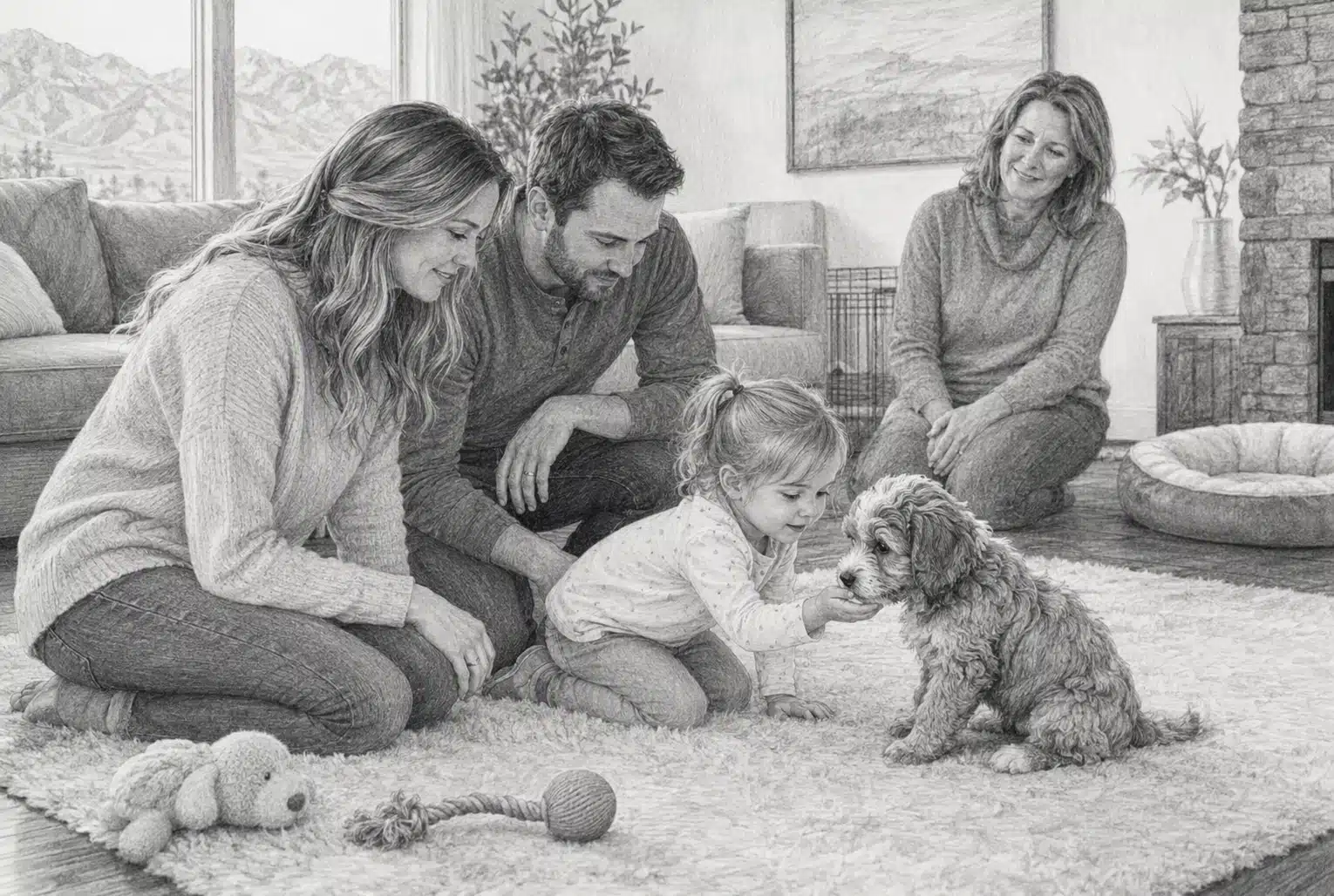
Early handling matters because the handoff to your home happens fast. The puppy leaves littermates, meets new people, hears new sounds, and starts a new sleep routine all at once. Gentle touch, nail and ear handling, short crate rests, safe car rides, and normal home sounds can make that shift easier. The key is not flooding a puppy with stress. It is steady, positive practice. UC Davis notes that the prime social development window is about 3 to 14 weeks, and puppies learn best from multiple brief, positive experiences during that time in their puppy socialization guide.
| Early experience | Why it helps at home |
|---|---|
| Gentle body handling | Eases grooming and vet visits |
| Household sounds | Lowers startle and noise worry |
| Short alone time | Supports better settling |
| Car rides | Helps with pickup or delivery day |
Healthy puppy sales should never feel like a simple payment and handoff. You need support for the first days, when appetite, sleep, potty habits, and confidence can all wobble. Good breeders prepare families for that window with clear next steps.
- Ask what the puppy has already practiced
- Confirm what food and routine the puppy knows
- Make sure pickup or delivery details are clear
- Use the breeder’s application process to discuss fit
At Sage Puppies, this is where transparency matters most. You should leave with a plan, not just a puppy.
Also Read: Puppy Care Blog & Resources | Sage Puppies
Common Mistakes That Lead Buyers to the Wrong Puppy Listing
Cute photos are not proof. The FTC warns that fake puppy ads often use irresistible pictures to push fast deposits, then vanish after payment in its guide on avoiding pet scams. Before you fall for a listing, ask for:
- parent health testing
- a live video of the exact puppy
- recent vet records
- clear answers about where the puppy was raised
If the seller avoids specifics, move on.

Fast and easy is not the same as responsible. A listing that says “ready today” or “shipping anywhere now” can feel convenient. It can also hide weak screening and poor breeder care. The FTC reported that in 2025, nearly 30% of people who lost money to scams said the fraud started on social media, with $2.1 billion in reported losses in 2025 from scams that began there, according to new FTC social media scam data. Use this quick check:
- Ask who raised the puppy.
- Ask how matching works.
- Ask what happens if the fit is wrong.
A careful breeder screens you too. That is a good sign, not a hassle.
Choosing the puppy is not the end. Buyers often stop checking once they feel attached. That is when mistakes get expensive. Confirm the next steps in writing:
- reservation terms
- pickup or delivery details
- timeline
- what records come home with the puppy
Sage Puppies makes this part clear, which helps families choose with a steady head, not just heart.

If you want a clear next step, start with Sage Puppies. You can review available Havanese, Havapoo, and Cavapoo puppies, see pricing and reservation details, and submit an application with confidence. It’s a practical way to find a health-tested, family-raised puppy in Utah or arrange nationwide delivery.
Frequently Asked Questions
Q1: How can I identify a reputable breeder for healthy puppies in Utah?
Look for breeders who share parent health testing, explain how puppies are raised, and answer hard questions clearly. Ask for proof, not promises. A good breeder also screens buyers, sets fair expectations, and stays transparent about pickup, delivery, and pricing.
Q2: What health tests should I expect from a responsible Utah puppy breeder like Sage Puppies?
Expect breed-focused testing on the parents, not vague claims that puppies are “vet checked.” Ask what was tested, why it matters, and whether results are available. You should also hear about early socialization, home raising, vaccine timing, and parasite prevention.
Q3: What are the common health issues in French Bulldogs and how does Sage Puppies ensure prevention?
French Bulldogs often face breathing, spine, skin, and heat issues. Sage Puppies focuses on Havanese, Havapoo, and Cavapoo, not French Bulldogs. That matters because responsible breeders stay within their breeds, know common risks, and make health decisions around those specific lines.
Q4: Should I avoid breeders who always have puppies ready now?
Not always, but be careful. Constant availability can signal volume breeding. Ask how often litters are planned, how puppies are matched, and whether there is a waitlist. Good breeders care about fit, not just fast deposits.
Q5: Is pickup better than delivery for a healthy puppy?
Either can work if the process is clear and low stress. What matters more is the breeder’s planning, communication, age at go-home, and travel prep. Ask exactly how handoff works so your puppy arrives safe, calm, and well supported.
Conclusion
Finding healthy puppies for sale in Utah comes down to a few clear checks. Ask for real parent health testing, not vague promises. Look for clean records, open answers, and a breeder who raises puppies with steady social care. Cornell notes that responsible breeders test for breed-linked conditions and provide lifelong support, which is a strong filter when you compare options Cornell’s breeder guidance. If you plan pickup, transport, or a move across state lines, remember Utah requires rabies proof for dogs entering the state Utah’s rule on dogs entering the state. The best choice is the breeder who makes health, fit, and transparency easy to verify.