Quick Summary: When buying health-tested puppies, always ask breeders for proof of parent health records, including DNA and physical exams, not just vague claims. Verify test results through official databases and ensure records include dates, results, and matching IDs. Good paperwork confirms the puppy’s identity, health history, and breeder’s care, helping you make a confident, informed choice.
If you are comparing dna tested puppies near me, one question matters most: can the breeder show the records behind the claim? A lot of listings say the parents are “health tested.” That sounds good, but it often means very little without proof.
This guide helps with that exact problem. First-time buyers often see terms like DNA clear, vet checked, or health guarantee and assume they all mean the same thing. They do not. Some records matter a lot. Some are basic. Some are too vague to trust.
Here, you will learn which documents to ask for, how to read them, and how to spot gaps before you place a deposit. If you have been searching dna tested puppies near me, this will help you compare breeders with a clear checklist, not guesswork.
At Sage Puppies, we focus on well-raised Havanese, Havapoo, and Cavapoo puppies for Utah families and nationwide delivery buyers who want real answers, not sales talk. If you are looking at dna tested puppies near me, start with records.
What ‘Health-Tested’ Should Mean on Paper
“Health-tested” should point to real parent records, not a sales phrase. You want proof for the sire and dam, with names, dates, and test results you can verify.
DNA Tests, Screening Exams, and Why Both Matter
DNA tests and screening exams do different jobs. A DNA panel can flag known gene variants. A screening exam checks the dog’s body for traits or conditions that may not show up on a DNA report.
According to the AKC, good breeding health testing includes both genotypic testing and phenotypic screening, and the right tests depend on the breed’s parent club guidance and breed risks AKC health testing overview.
Look for records such as:
- DNA test reports from a known lab
- Eye exams
- Cardiac exams
- Patella, hip, or elbow evaluations, if relevant to the breed mix
- Dates showing tests were done before breeding
A clean DNA panel alone does not prove a dog passed all needed health screens.
How to Recognize a Real Health Claim
A real health claim is specific. It names the parent dogs, the tests done, and where results can be checked. Vague lines like “vet checked,” “genetic tested,” or “healthy bloodline” are not enough.
Use this quick filter:
| Claim style | What it means | What to ask for |
|---|---|---|
| “Health-tested parents” | Could be real or vague | Ask for copies of both parents’ records |
| “DNA clear” | Only part of the picture | Ask what conditions were tested and by which lab |
| “OFA/CHIC listed” | Stronger if public and current | Ask for registered names or record numbers |
The OFA CHIC program says a dog earns CHIC recognition only after completing the breed’s recommended screenings, and results must be publicly available in the database OFA CHIC program.
If a breeder cannot show paperwork, treat the claim as unproven.
Before you place a deposit, ask for:
- Parent names
- Test dates
- Actual result sheets
- Public database links or record numbers
Also Read: Puppy Care Blog & Resources | Sage Puppies
The Parent Records to Ask For First
Start with the parents, not the puppy. Most breed-level health screening happens on the sire and dam, because puppies are too young for many meaningful tests.
Breed-Specific Test Results for the Sire and Dam
Ask for copies of the actual test results for both parents, plus each dog’s registered name so you can match the paperwork. AKC notes that parent clubs set breed-specific testing recommendations, and those can include both DNA and physical exams like eyes, hips, patellas, and cardiac checks according to AKC.
For small breeds common in this search:
- Havanese buyers should ask for hips, patella, annual eye exam, and BAER hearing results when available per the Havanese health statement
- Cavalier lines should raise the bar on cardiac records, plus eyes, hips, and patellas
- For Cavapoo or Havapoo, ask what testing was done on each parent breed line, not just a broad “vet checked” claim
Request:
- Parent names and registration info
- Test date
- Testing lab or registry
- Result status
- Proof the record belongs to that exact dog
If a breeder says “our dogs are health tested” but will not send records before a deposit, treat that as a warning.
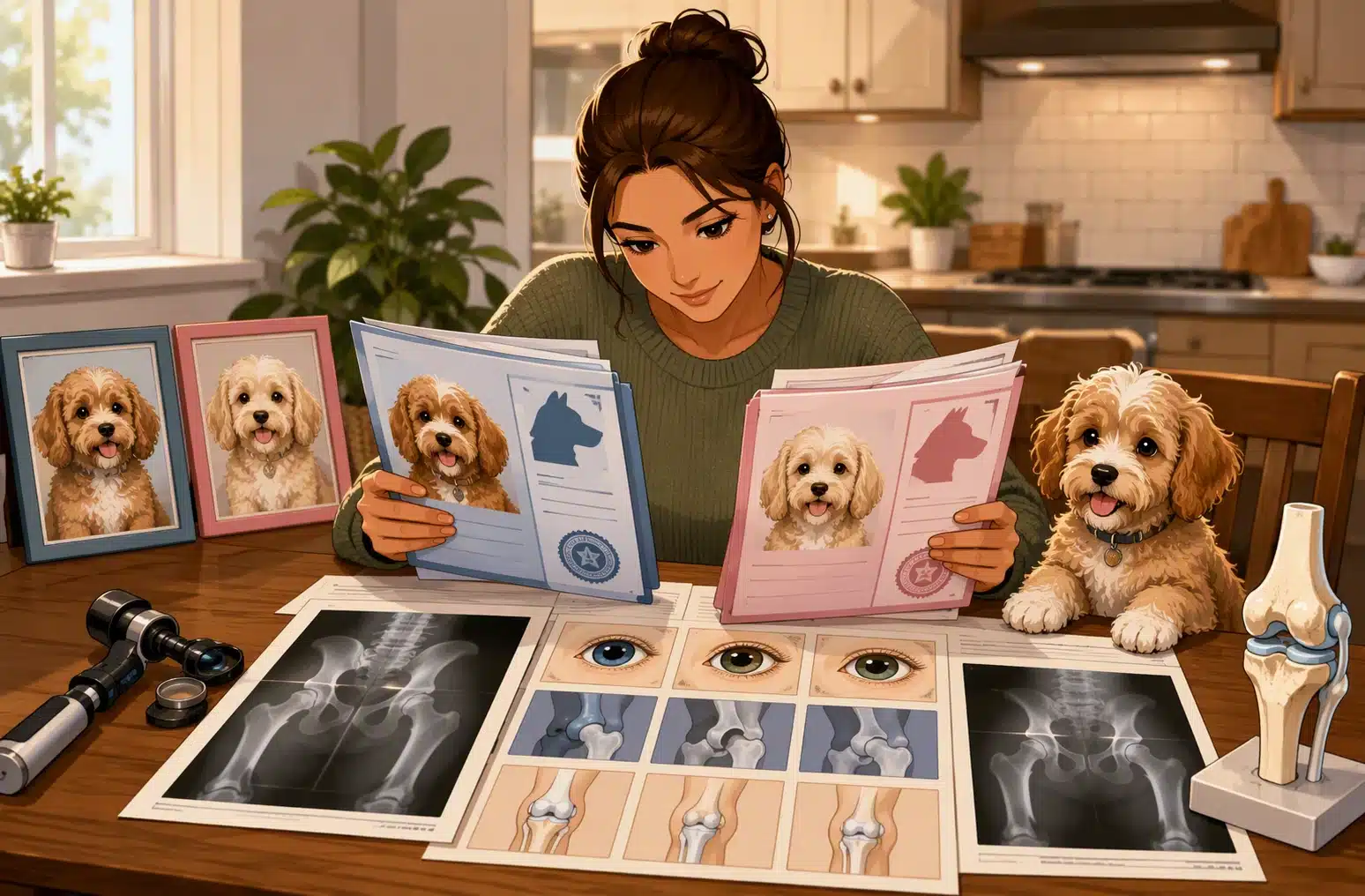
How to Read a Result Without Being a Veterinarian
You do not need medical training. You just need to check a few basics.
Use this quick filter:
| What to check | Good sign | Red flag |
|---|---|---|
| Dog identity | Name, number, microchip match | No way to confirm dog |
| Test type | Breed-relevant exam or DNA test | Generic wellness note |
| Date | Recent when the test should be repeated | Old or undated record |
| Result | Clear, normal, passing, or disclosed finding | Vague wording like “looks good” |
A clean vaccine sheet is not the same as parent health testing. A puppy exam is not a substitute either.
“Vet checked” means very little on its own. Health testing should show what was tested, when, and for which parent.
Why Parent Health History Matters Too
Test results matter most, but family history still helps. Ask whether the breeder tracks issues in parents, grandparents, and past litters. That is often where patterns show up first.
Good questions:
- Have any close relatives had heart, eye, hip, knee, liver, or seizure issues?
- Have past puppies needed surgery early in life?
- Did either parent produce the same problem in more than one litter?
A careful breeder will answer plainly, not defensively. At Sage Puppies or any breeder you trust, you want records plus context. Both matter.
Also Read: 10 Signs a California Puppy Listing Is a Scam – Sage Puppies
The Puppy’s Own Records You Should Receive
Vaccination and Deworming Dates
Ask for the puppy’s actual treatment record, not a verbal summary. You want dates, product names, and what was given each time. USDA rules for covered sellers require dog medical records to include the animal’s identity, the names of vaccines and treatments, and the dates they were given under federal veterinary care rules.
Your copy should clearly show:
- Vaccine name given at each visit
- Date administered
- Dewormer or parasite treatment name
- Date each dose was given
- Any note about the next due date
A vague line like “up to date” is not enough. Puppies follow age-based schedules, so timing matters. The AAHA canine vaccination guidelines also stress that puppy vaccines are given as a series, not one-and-done.
| Record item | What you should see | Red flag |
|---|---|---|
| Vaccines | Product name and exact date | “Shots done” only |
| Deworming | Drug name and each dose date | No product listed |
| Parasite care | Notes on stool testing or treatment if used | Seller cannot explain protocol |
If the breeder cannot match the record to the puppy by name, color, collar, or ID, slow down.
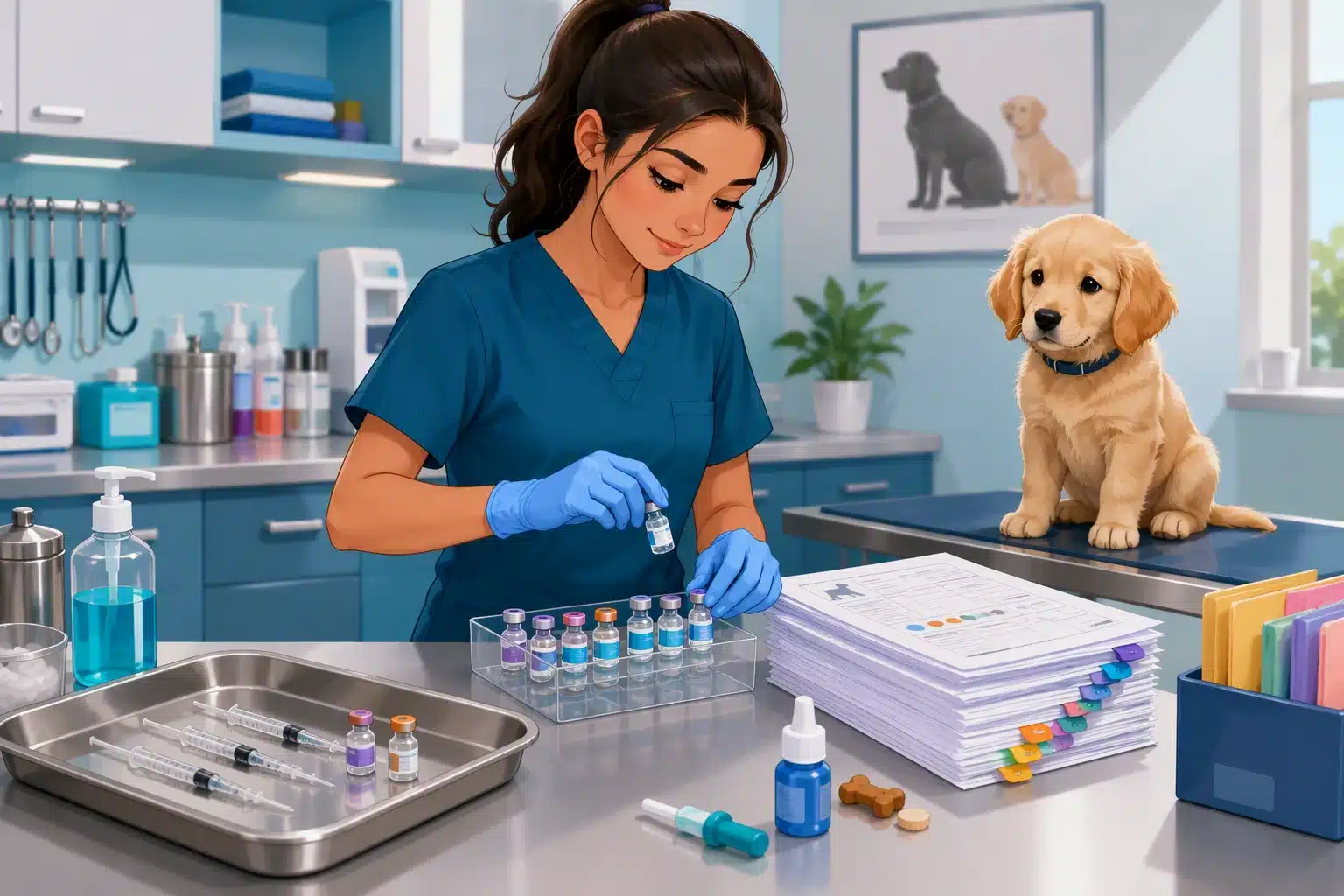
Microchip and Identification Details
If your puppy is microchipped, ask for the microchip number, the brand or registry, and proof that the chip links to your puppy. AAHA recommends microchips backed by accessible registries and reminds owners to keep contact details current.
Use this quick checklist:
- Confirm the chip number on paper.
- Ask who must register or transfer it.
- Check whether the breeder already started registration.
- Make sure the puppy also has a clear matching ID in the file.
For puppies traveling across state lines or by air, identification records matter even more. Good paperwork helps avoid mix-ups and makes follow-up care easier.
Veterinary Exam or Health Declaration
You should receive either a recent veterinary exam record or a written health declaration signed by the breeder. Best case, it includes the exam date, basic findings, and any notes on eyes, ears, heart, skin, stool, or bite.
Look for:
- Exam date
- Puppy’s identifying details
- Findings or “appears healthy” note
- Any treatment started
- Instructions for follow-up care
If your puppy will be delivered or flown, ask whether a separate travel health paper is included. The AVMA notes that interstate travel often requires a Certificate of Veterinary Inspection for pets crossing state lines or flying. A clean, specific record shows care and planning, which is what thoughtful families should expect.
The Contract and Disclosure Details That Protect You
What Should Be Written Down Before You Commit
A good puppy contract should answer the hard questions before money changes hands. If a breeder says something matters, it should be in writing.
Use this checklist:
- Puppy identity – breed, sex, birth date, color, and microchip if placed
- Seller identity – breeder name, address, and USDA license number if one applies
- Health record – vaccines, deworming, meds, exam dates, and any known issue
- Parent details – sire and dam names, registration info if promised
- Sale terms – total price, deposit, pickup or delivery plan, and what happens if timing changes
- Return or remedy terms – refund, replacement, or vet cost terms if a serious issue shows up
- Spay-neuter or breeding terms – only if they truly apply to your puppy
California law requires breeders to give buyers written disclosures including inoculations, worming, vet treatment, and any known disease or hereditary condition at sale, with signatures from both sides in many cases under the state breeder disclosure rules.
If a breeder avoids plain written terms, treat that as a warning sign.
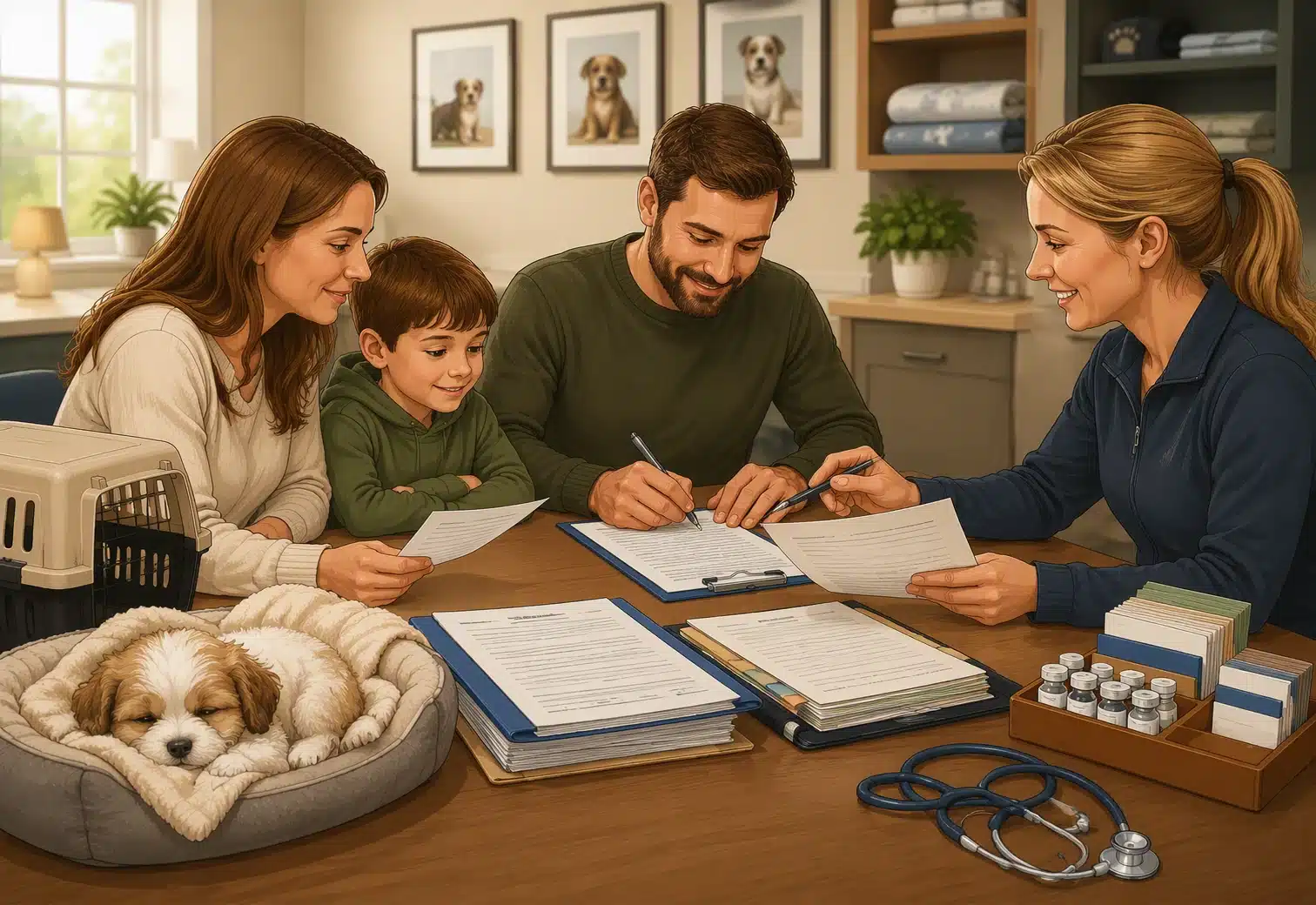
How Disclosure Helps You Make a Better Choice
Disclosure is not just paperwork. It helps you compare one puppy to another with less guesswork.
Here is the simple test:
| Contract detail | Why it protects you |
|---|---|
| Exact health entries | Shows what was actually done, not vague promises |
| Known issue disclosure | Helps you judge risk before you commit |
| Source and seller info | Makes the puppy easier to trace |
| Delivery and timeline terms | Prevents surprise fees or moving dates |
Federal rules also require licensed dealers to keep records showing where dogs came from and key identifying details under USDA recordkeeping rules.
At Sage Puppies or any breeder you trust, clear disclosure should feel normal, calm, and complete.
Also Read: Health-Tested Puppies for Sale Near Me: Buyer Checklist
How to Compare Records Before You Reserve a Puppy
A Simple Buyer Checklist
Compare records side by side before you send a deposit. You want proof, not promises. The strongest file usually includes:
- Parent health testing results with the sire and dam names clearly listed.
- Breed-relevant screening proof, not just a vet note saying the parents are healthy.
- Puppy vet record with exam date, findings, vaccine dates, and deworming dates.
- Microchip or ID match if the breeder uses permanent ID on test records.
- Public verification when possible through OFA or CHIC. The OFA CHIC program says certification means the dog completed the breed’s required screenings and the results are public through OFA.
| Record type | What good proof looks like | What weak proof looks like |
|---|---|---|
| Parent testing | Named reports, dates, issuing lab or registry | “Parents tested” with no documents |
| Puppy vet care | Dated exam and treatment entries | Handwritten list with no clinic info |
| Identity | Registered names, chip, tattoo, or matching ID | Names that do not match across papers |
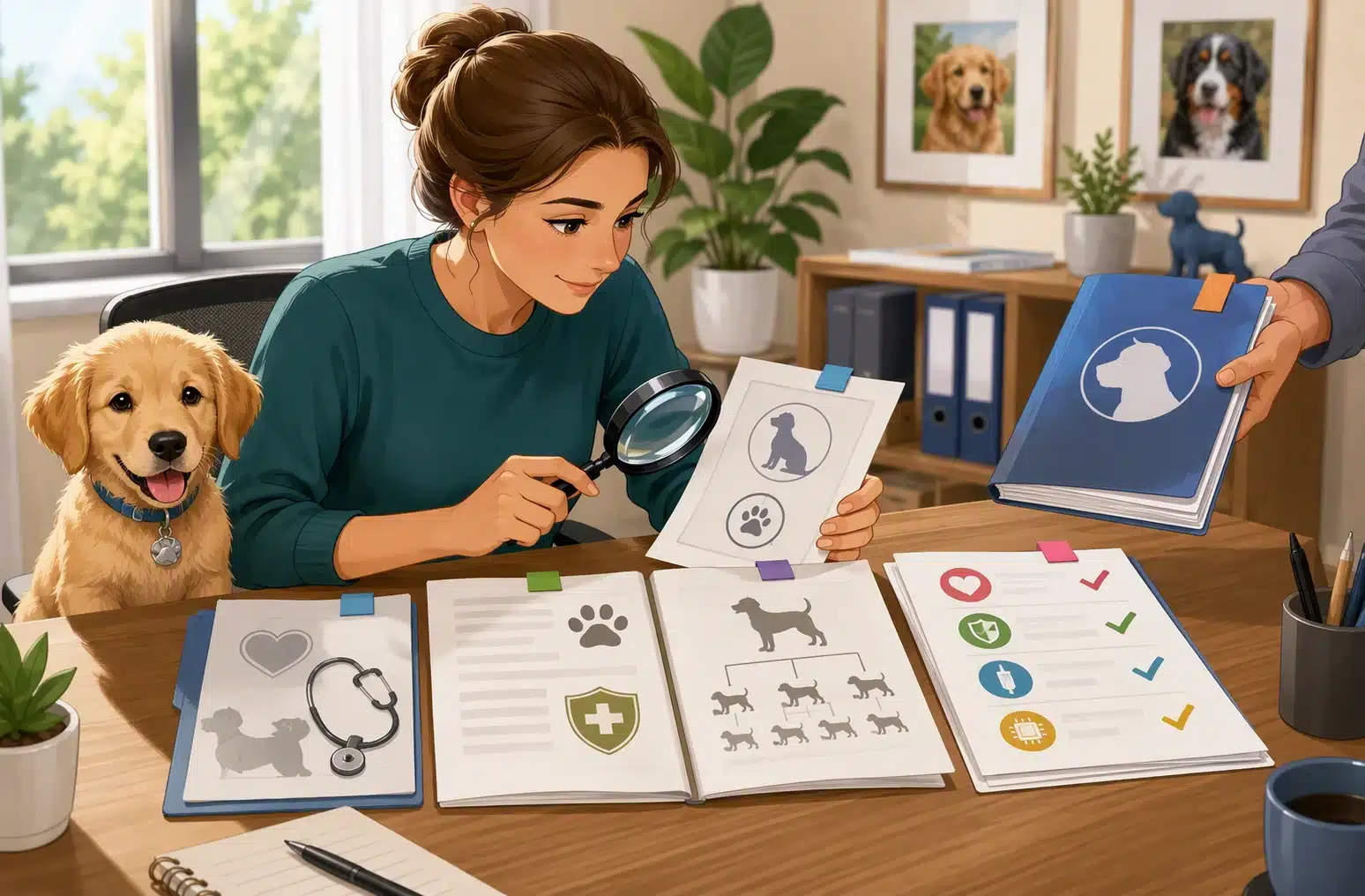
Questions Worth Asking Every Breeder
Ask direct questions and listen for direct answers:
- Which tests were done on both parents, and can I see each result?
- Are these tests recommended for this breed or mix?
- Can I verify them in a public database?
- Do the names on the reports match the parents of this litter?
- Who gave the puppy vaccines and where is the official record?
A breeder should not get defensive when you ask for records. Clear breeders expect it.
The AKC notes that a CHIC number means required tests were completed, but it does not guarantee normal results, so always read the actual reports too per AKC.
Red Flags in the Paperwork
Watch for gaps that make records hard to trust:
- Test results for only one parent
- DNA panel only, with no other screening
- Missing dates, signatures, or clinic names
- Parent names that do not match the litter
- Vaccine history typed out but not tied to a vet invoice or record
- Claims like “vet checked” used as a stand-in for health testing
Good paperwork should answer your questions fast. If it creates more questions, pause the reservation.
At Sage Puppies or any breeder you consider, the goal is simple: records should help you feel calm, not rushed.
Also Read: How to Spot Complete Puppy Vet Records Before Buying
What Sage Puppies Can Share With Serious Buyers
Serious buyers should ask for records early, not after they fall in love with a puppy. A good breeder should be ready to share clear proof, explain it in plain English, and tell you what each record means for your puppy.
What to Request During Your Inquiry
Ask for these items in your first few messages:
-
Parent health testing proof
- OFA or breed-specific screening results
- DNA test summaries when relevant
- The registered names of the sire and dam so results can be checked
-
Puppy medical records
- Vet exam record
- Vaccine and deworming history
- Microchip details, if already placed
-
Litter and identity details
- Date of birth
- Parents’ names
- Registration status, if offered
-
Care and placement details
- Socialization routine
- Feeding plan
- Pickup or delivery process
- Sample contract before you place a deposit
According to Cornell’s breeder guidance, responsible breeders should test breeding dogs for recommended conditions and discuss how puppies are raised. The OFA also notes that buyers should ask to see health screening results and verify that they are real, not vague claims or screenshots without context (OFA breeder interview guide).
If Sage Puppies is the right fit, the records should feel easy to review, not hard to get. Clear paperwork is a trust signal. Evasive answers are not.

If you want a puppy with real records, not vague promises, start with Sage Puppies. You can review available Havanese, Havapoo, and Cavapoo puppies, ask for health-testing details, and see how pickup or nationwide delivery works. Take the next step by viewing Available Puppies, then submit an application when the right fit feels clear.
Frequently Asked Questions
Q1: puppy health records
Ask for parent health test proof, the puppy’s exam notes, vaccine and deworming dates, and any microchip paperwork. Good records show names, dates, and results. Vague lines like “vet checked” or “clear” are not enough.
Q2: What health tests matter most for small-breed puppies?
It depends on breed, but patella, heart, eye, and genetic screening often matter most. Ask which tests were done on each parent and why. A real breeder should explain the results in plain English, not dodge details.
Q3: Is a vet check the same as health testing?
No. A vet check looks at the puppy’s current condition. Health testing usually means screening the parents for inherited issues before breeding. Both matter, but they do different jobs, so you should ask for proof of each.
Q4: How do I verify records if I am buying from another state?
Ask for clear copies before you place a deposit. Match names, dates, chip numbers, and parent identities across all papers. If anything conflicts, pause. Breeders like Sage Puppies should welcome careful questions and give straight answers.
Q5: What is a red flag in puppy paperwork?
Watch for missing dates, unreadable scans, no parent names, or claims without test results. A seller who rushes you, avoids sharing records early, or says paperwork comes after pickup is giving you a real reason to walk away.
Conclusion
Health-tested puppies for sale near me should come with proof, not promises. The right records help you confirm three things fast: the puppy’s identity, the parents’ health testing, and the breeder’s day-to-day care.
A strong file usually includes:
- Parent test results you can verify
- A clear vet record with dates
- Vaccine and deworming history
- Microchip details, if placed
- A signed sales agreement
- Delivery or travel paperwork, if needed
If a breeder says a puppy is health tested, ask which test, for which parent, and where you can verify it.
That matters even more for delivery buyers. Current CDC guidance notes that some dogs traveling into the U.S. need records tied to rabies vaccination and microchip identification on official forms (CDC dog import requirements). USDA also explains that pet travel paperwork may require a USDA-accredited veterinarian (APHIS pet travel overview).