Quick Summary: Check puppy vet records for clear identification, recent exams, and matching details before buying. Look for complete, dated health documents from licensed vets that show ongoing care, not just one visit. Verify breeder and vet info carefully, ensuring all details align with the puppy’s age and your expectations. Missing or vague records should prompt you to pause and ask questions to avoid trust issues.
Cute photos can help you fall in love. Puppy Vet Records are what help you buy with confidence. When an Ohio breeder sends a puppy packet, the real trust test is simple: do the Puppy Vet Records name the puppy, show dated veterinary care, and match the dog you are being asked to bring home?
That is where many buyers get stuck. Some packets look polished but leave gaps in shots, exam dates, puppy identity, or breeder details. Others mix basic Dog Health Records with sales paperwork, which makes it hard to tell what is real, current, and complete.
This guide gives you a practical Vet Record Check you can use before you pay a deposit or schedule delivery. You will learn how to read Puppy Vet Records, spot mismatches fast, and know which missing details should make you pause. We work from a buyer-first, ethical breeder standard shaped by what careful families ask before choosing a small-breed puppy.
Step 1: Confirm the records identify the exact puppy you are buying
Start here. If the records do not clearly point to one specific puppy, the rest of the file means very little. USDA rules for regulated dog records require identifying details like breed, sex, age, color, and distinctive markings for each dog, not just the litter as a whole, under recordkeeping rules for dealers and exhibitors.
Match the puppy’s identity across every page
Check every page side by side before you pay.
- Puppy name or temporary ID
- Breed and sex
- Date of birth
- Color and markings
- Microchip, tattoo, collar, or tag number
- Vet exam date and buyer name, if already assigned
| Record page | What should match | Red flag |
|---|---|---|
| Vet exam note | Breed, sex, age, markings | Only says “puppy” |
| Vaccine record | Puppy ID, date given | No ID tied to shot |
| Health certificate | Exact puppy description | Generic litter language |
| Sales contract | Same puppy name or chip number | Different birth date |
If one page says “female apricot Cavapoo” and another says “red male,” stop and ask why.
Separate litter records from individual records
Some papers are meant for the whole litter. Others should belong to your puppy only. That difference matters.
A breeder may show a litter deworming sheet or vaccine log. That is helpful, but it is not enough by itself. USDA dog medical record rules allow some routine group care on a single record, but the animal’s identity still needs to be documented in medical files under USDA veterinary care requirements.
Use this quick filter:
- Litter record – shared vaccine or deworming entry for multiple puppies
- Individual record – exam findings, puppy description, chip number, treatment notes
- Best case – the breeder gives you both
Ask: “Which pages are for the litter, and which pages are for this exact puppy?”
Watch for recycled or generic paperwork
Generic paperwork often looks neat, but thin.
Watch for:
- Blank spaces left open
- Reused templates with no markings
- Same vaccine dates on every puppy with no IDs
- Cropped scans that hide signatures
- Records sent only after deposit pressure
A careful breeder will not mind if you slow down and compare details. That is a trust test.
Also Read: Health-Tested Puppies for Sale Near Me: Questions to Ask Breeders
Step 2: Verify the core health documents are present and dated
Paperwork should line up like a clean timeline. If dates, names, or vaccine details look vague, pause the sale.
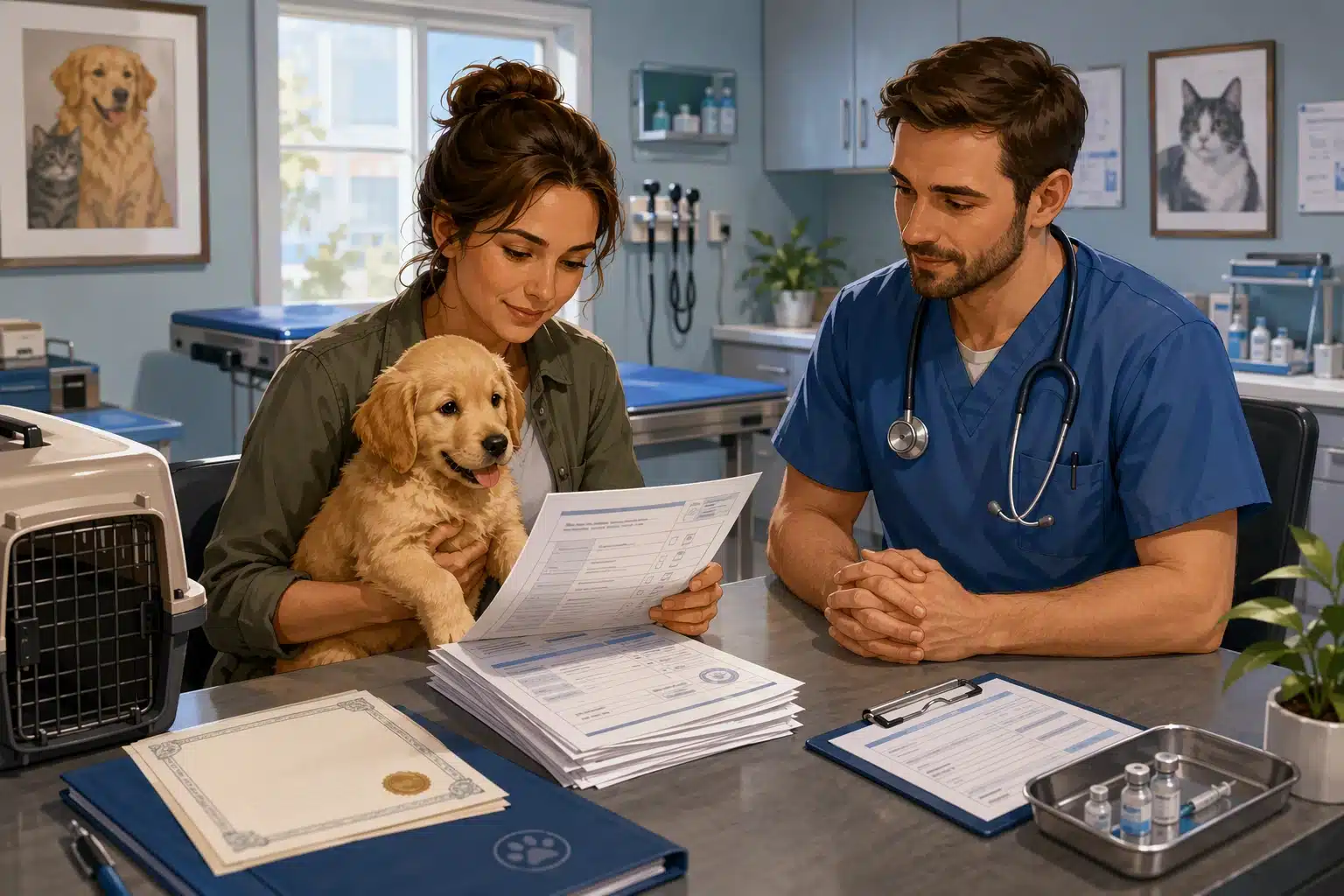
Look for a documented veterinary exam
Ask for a signed veterinary exam record, not a casual note that says the puppy was “checked.” You want a document with:
- The clinic name
- The vet’s name and signature
- The exam date
- The puppy’s breed, sex, color, and birth date
- Notes on general condition, heart, eyes, ears, skin, stool, and weight
If the puppy is being transported in commerce, federal rules say the health certificate must be issued by a licensed veterinarian and the exam date must be no more than 10 days before transport under 9 CFR 2.78.
Use this quick trust test:
| What to check | Good sign | Red flag |
|---|---|---|
| Exam date | Recent and easy to read | Missing or altered |
| Puppy identity | Matches listing and contract | Color, sex, or DOB mismatch |
| Vet details | Full clinic info present | No clinic name or signature |
A real breeder should send this fast. Delays often mean the file is incomplete.
Check vaccine and deworming entries for timing and clarity
You are not just checking that shots happened. You are checking whether the record is clear enough to trust.
Look for each entry to show:
- Date given
- Product name
- What it was for
- Who gave it
- Next due date, if listed
A good record shows a simple sequence. A weak one has blank spaces, crossed-out dates, or “up to date” with no specifics.
For small-breed puppies, timing matters because many are sold young. Ask whether the record starts with early deworming and continues on schedule. If a breeder cannot explain why one treatment was skipped, that matters.
If the vaccine record has no lot sticker, product name, or provider name, ask the vet clinic to confirm it directly.
Confirm the correct travel or transfer document is included
If your puppy is crossing state lines, check the destination state’s rules first. USDA APHIS says interstate pet movement requirements are set by the receiving state or territory, and some states require a health certificate or added vaccines for entry through its state-to-state pet travel guidance.
If the puppy is entering the U.S. from abroad, the paperwork changes. CDC says dogs entering the U.S. from rabies-free or low-risk countries need a CDC Dog Import Form receipt, while dogs from high-risk countries need extra forms and rabies documents.
- Match the document to the trip type
- Check issue and expiration dates
- Make sure the puppy’s microchip or ID matches all pages
Also Read: 10 Adorable Havapoo Colors You Need to See (2026)
Step 3: Read the breeder and veterinarian details like a quality-control report
Start with the names at the top and bottom of the paperwork. If you cannot tell who examined the puppy, where it happened, and how to verify that person, the record is weak.
Check whether the clinic and veterinarian are identifiable
A real vet record should show a clinic name, address, phone number, exam date, and veterinarian name. In Ohio, you can verify a vet through the state’s License Look-Up. Ohio also requires a real veterinary-client-patient relationship, which means the veterinarian must have actually examined the animal or otherwise met legal standards under Ohio Revised Code 4741.04.
Use this quick screen:
| Detail to verify | What good looks like | Red flag |
|---|---|---|
| Clinic identity | Full clinic name and working phone | Only first names or no clinic listed |
| Veterinarian identity | Full DVM name you can verify | “Staff vet” with no person named |
| Exam timing | Clear exam date near sale date | Blank date or date that makes no sense |
If the breeder hesitates when you ask, “Which clinic saw this puppy?” slow down.
Review signatures, stamps, and document formatting
Do not overvalue a stamp by itself. A neat logo is not proof.
Look for:
- A readable signature or printed vet name
- Consistent dates across the page
- Puppy identifiers like breed, color, sex, or microchip number
- Specific care notes, not vague phrases like “all good”
Ohio recordkeeping rules say veterinary records should include basics like owner information, animal identity, exam dates, findings, and treatments. That is why a one-line “healthy puppy” note should not satisfy you.
A missing signature is not the only problem. Mixed fonts, cropped pages, hand edits, and unmatched vaccine stickers can matter just as much.
Compare the record details with the seller’s written claims
Now match the record against the listing, text messages, invoice, and health guarantee.
Check these side by side:
- Breed and sex
- Date of birth
- Vaccine dates
- Deworming products
- Microchip number
- Pickup or delivery timing
If the seller says “vet checked twice” but the file shows one exam, trust the document, not the pitch. Ethical programs, including careful boutique breeders like Sage Puppies, make this step easy because their records line up cleanly across every document.
Step 4: Make sure the record packet shows continuity, not just a single vet visit
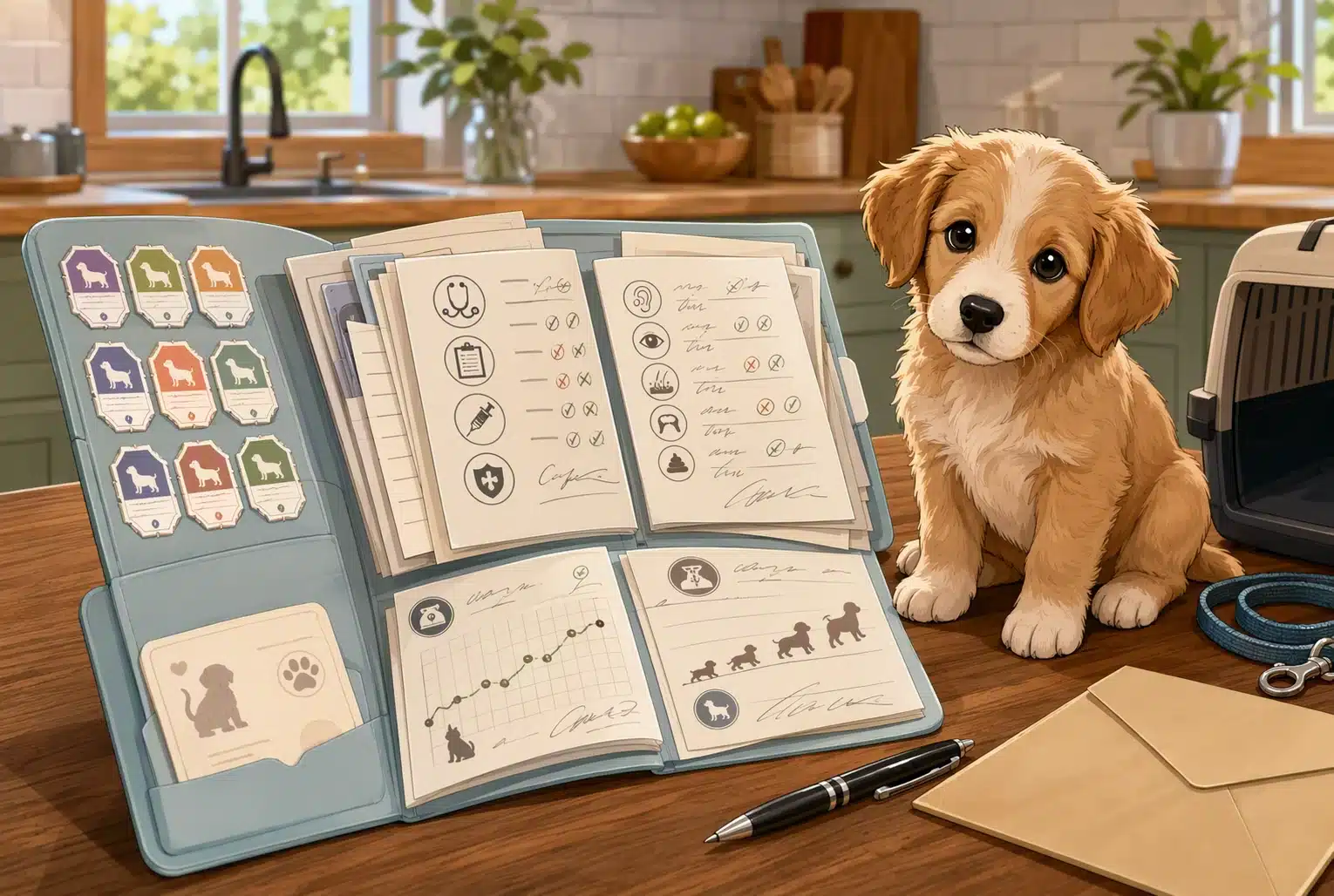
A real health record packet should tell a story. You want to see care over time, not one rushed exam right before pickup. That matters because puppy care usually happens in stages, especially with vaccines, stool checks, and follow-up notes.
Look for more than a one-line summary
Some packets look official but say very little. A single page that reads “puppy examined, healthy” is not enough on its own. Ask for records that show dates, clinic name, vaccine names, lot numbers, exam notes, and the veterinarian’s signature or staff initials.
A stronger packet often includes:
- An initial wellness exam
- Vaccine entries on more than one date
- Deworming dates
- Fecal test or parasite notes if done
- Weight changes over time
- Any note about ears, eyes, stool, skin, or bite
| Weak packet sign | Better packet sign | Why it matters |
|---|---|---|
| One summary sheet | Multiple dated entries | Shows care happened over time |
| No clinic details | Full clinic name and contact info | Easier to verify |
| “Shots given” only | Exact vaccine listed | Confirms what was actually done |
Check for follow-up care when something needed attention
Puppies often need small issues watched. Loose stool, mild giardia treatment, an ear concern, or a hernia note does not always mean “bad breeder.” The key question is what happened next.
If the record mentions a problem, look for:
- The date it was found
- What treatment or advice was given
- A recheck, update, or clearance note
A note about a problem with no follow-up is a bigger concern than a treated issue with a clean recheck.
That pattern fits normal puppy medicine. The AAHA vaccine guidance shows puppy care is done in a series, not one visit, with core vaccines given between 6 and 16 weeks at 2 to 4 week intervals according to AAHA’s canine vaccine recommendations.
Confirm the records are consistent with the puppy’s age
The dates should make sense for the puppy’s birth date. If a 10-week-old puppy has only one vague exam note and no other dated care, pause. If a young puppy shows a long list of vaccines too early, pause again.
Use this quick check:
- 6 to 8 weeks – first core vaccines may begin
- Up to 16 weeks – vaccines are usually repeated every 2 to 4 weeks
- 12 weeks and up – rabies timing depends on law and vet plan
AAHA notes that core puppy vaccines start at 6 to 8 weeks and continue at intervals until the puppy is older than 16 weeks in many cases, per AAHA’s distemper guidance. If the timeline does not fit the age, ask why before you send a deposit.
Also Read: Reputable Puppy Breeder Near Me: 9 Signs to Trust
Common Mistakes to Avoid
Do not accept records that float on their own. A real file should tie to one puppy by microchip, birth date, sex, breed, color, or clear markings. Ohio record rules require movement records to identify each dog with details like microchip number, sex, birth date, and breed under Ohio recordkeeping rules.
- Match the name on every page
- Check dates line up
- Ask what ID links the file to your puppy
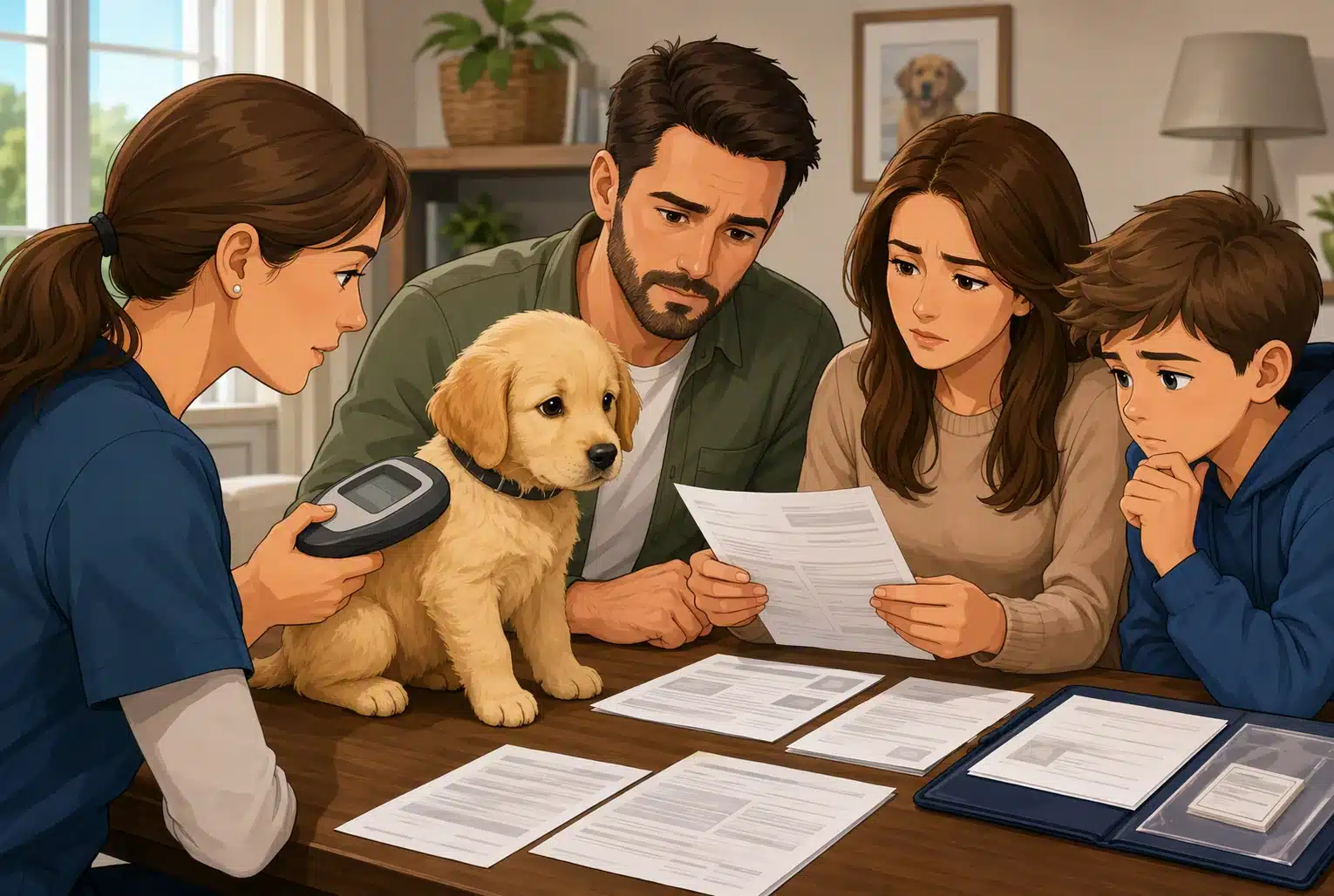
Do not confuse a vaccine sheet with a complete health file. Vaccines matter, but they are only one piece. You also want the exam date, vet clinic details, any findings, and the dog’s identifying info. A Certificate of Veterinary Inspection confirms a licensed vet inspected the animal, not just that shots were claimed.
A breeder saying “vaccinated” is not the same as showing a full, traceable record.
Do not skip the delivery or pickup document review. Read the papers before the puppy changes hands, not later in your kitchen. Check the health certificate, vaccine record, and any transfer form against the puppy in front of you.
- Confirm identity
- Confirm exam date
- Confirm travel or handoff paperwork
Also Read: Health-Tested Puppies for Sale Near Me: Buyer Checklist
What a complete record packet should let you confirm before you pay
The records should answer five buyer questions
A complete packet should help you verify the puppy, not just reassure you. In Ohio retail settings, records commonly include the puppy’s birth date, breeder source, identifying marks, microchip number, and certificate of veterinary inspection, based on Ohio recordkeeping rules.
Before you pay, the paperwork should clearly answer:
- Is this the exact puppy being offered?
- How old is the puppy, and does that match the listing?
- Has a vet examined the puppy and noted any known illness or defect?
- Does the microchip number match the puppy and the file?
- Who bred and handled this puppy before sale?
If the packet cannot tie the puppy’s identity, exam, and source together, treat that as a trust problem.
| Buyer question | Record that should answer it | What to match |
|---|---|---|
| Is this the same puppy? | Exam sheet, microchip record | Sex, color, markings, chip number |
| How old is the puppy? | Birth date record | Listing, contract, timeline |
| Was the puppy examined? | Vet paperwork, health certificate | Exam date, findings, signature |
| Is transport legal and traceable? | CVI if crossing state lines | Dates, issuing vet, puppy identity |
| Who is the source? | Breeder or seller info | Names, address, handoff history |
If one answer is missing, ask for clarification before reserving
Do not fill in gaps with trust. Ask direct questions first.
- “Which page shows the microchip number?”
- “Where is the vet exam date?”
- “Has the vet listed any known condition?”
- “Who had the puppy before you did?”
Ohio says a certificate of veterinary inspection is a legal document signed by a licensed, USDA-accredited vet who personally inspected the animal, according to the state’s CVI guidance.
A good breeder or seller should answer calmly and send the missing page, not dodge the question.
Use the records as part of a broader breeder trust check
Paperwork matters, but clean paperwork alone does not prove strong breeding practices.
Use the packet alongside these checks:
- Compare dates across the listing, invoice, contract, and vet records.
- Confirm names stay consistent across breeder, seller, and delivery details.
- Ask whether parents were health tested for breed-related issues.
- Look for clear pickup or delivery steps and post-purchase support.
Sage Puppies-style transparency is the goal here – simple records, matching details, and no rush. If the packet is complete and the breeder is open, organized, and steady in answers, you are in a much safer spot before sending money.

If you want a puppy with clear, easy-to-review health paperwork, start with Sage Puppies. You can view available Havanese, Havapoo, and Cavapoo puppies, learn how the process works, and take the next step with more confidence. Apply early if complete records and transparent breeder communication matter to your family.
Frequently Asked Questions
Q1: What key elements should I verify in a puppy’s veterinary records before purchase?
Check the puppy’s name or ID, birth date, breed, exam dates, vaccine names, deworming dates, vet clinic details, and any notes on defects, treatment, or follow-up care. Records should match the puppy in front of you.
Q2: How can I ensure a breeder’s puppy records are complete and legitimate in Ohio?
Ask for full vet paperwork before payment, not just a short shot list. Confirm the clinic name, call to verify the visit if allowed, and make sure dates line up with the puppy’s age, delivery date, and seller claims.
Q3: What questions should I ask to confirm a puppy’s health history from the seller?
Ask who examined the puppy, when the last exam happened, what vaccines were given, what dewormer was used, whether any illness was treated, and whether littermates had health issues. Clear answers matter as much as the paperwork.
Q4: Is a handwritten vaccine record enough?
No. A handwritten card can support the file, but it should not be the whole file. You want vet-issued records with clinic details and dates.
Q5: What is a red flag in puppy vet records?
Watch for missing dates, vague vaccine names, no clinic info, altered forms, or records that start too late. Those gaps usually mean you need to pause.
Conclusion
Complete puppy vet records should tell one clear story. The puppy’s exam date, vaccine dates, deworming notes, microchip number, breeder details, and delivery paperwork should all match. If one piece feels vague, missing, or changed by hand, slow down.
In Ohio, dogs shipped across state lines for retail sale must be accompanied by a health certificate from a licensed, USDA-accredited veterinarian under Ohio Revised Code Section 955.50. Ohio rules also require pet stores to document the certificate of veterinary inspection and key source records within 24 hours of getting a dog, according to Ohio Administrative Code 901:1-8-04.
Buyers who verify records before paying usually avoid the biggest surprises later.