
Quick Summary: Buyers in Arkansas should verify who is selling the puppy, check health records and parent screening, and ensure paperwork matches the puppy before paying. Be cautious of pressure tactics and vague answers, especially from retail pet stores or unverified sellers. Confirm delivery details and keep all records to avoid scams and ensure a healthy, ethically sourced puppy.
If you are comparing puppies for sale in Arkansas and a seller says they can hold your puppy with a deposit today, slow down. The real issue is not speed. It is proof. Many families looking at puppies for sale in Arkansas see cute photos, quick replies, and easy payment links, but never get clear answers on health records, breeder standards, or delivery details.
This guide fixes that. You will learn what to verify before you pay, which papers matter, how Arkansas retail pet store rules fit in, and where buyers often miss red flags. We also cover remote purchase questions, which matter if you are viewing puppies for sale in Arkansas from out of state.
Our approach is simple and practical. It is built for careful families who want more than listings. If you want a safer way to compare puppies for sale in Arkansas, start here.
1. Verify who is actually selling the puppy
Start here. You need to know if the person taking your money is the person who bred and raised the puppy, or just a middle step.
Ask plain questions:
- Did you breed this litter yourself?
- Were the puppies raised in your home or brought in from elsewhere?
- Can I see the mother with the litter, live or by video?
- Whose name is on the health records and sales contract?
If answers stay vague, slow down.
A common problem is a polished website that hides a sourcing network. That does not always mean fraud, but it changes what you should verify. If puppies are brokered in, ask for the original breeder’s full name, location, and paperwork before you reserve.
If the seller will not clearly say who bred the puppy, treat that as a warning sign.
Arkansas law also separates direct breeders from retail pet stores. Under Arkansas retail pet store definitions, a kennel breeds and sells dogs but does not usually acquire dogs for resale. A retail pet store offers animals to the public and is regulated differently. The Arkansas Department of Health pet store rules note that retail pet stores must register, while breeding kennels and catteries are excluded from that act.
| Seller type | Main question to ask | What it tells you |
|---|---|---|
| Breeder or kennel | Did you raise this puppy yourself? | You are checking direct origin |
| Retail pet store | Where was this puppy sourced from? | You are checking supply chain |
| Broker or listing service | Who is the breeder on record? | You are checking who is truly responsible |
Look for trust traits that are hard to fake:
- consistent names across records
- clear pickup or delivery terms
- real-time video of the puppy and environment
- direct answers about parents, care, and socialization
- no pressure to pay before verification
Programs like Sage Puppies make this easier by clearly showing who raises the puppies, what breeds they focus on, and how pickup or delivery works.
Also Read: 10 Signs a California Puppy Listing Is a Scam – Sage Puppies
2. Check the health evidence before you reserve a puppy
Ask for the health file before you place a deposit. A good breeder should send it fast, explain it clearly, and welcome questions. If they stall, dodge, or say “the vet handled it,” slow down.
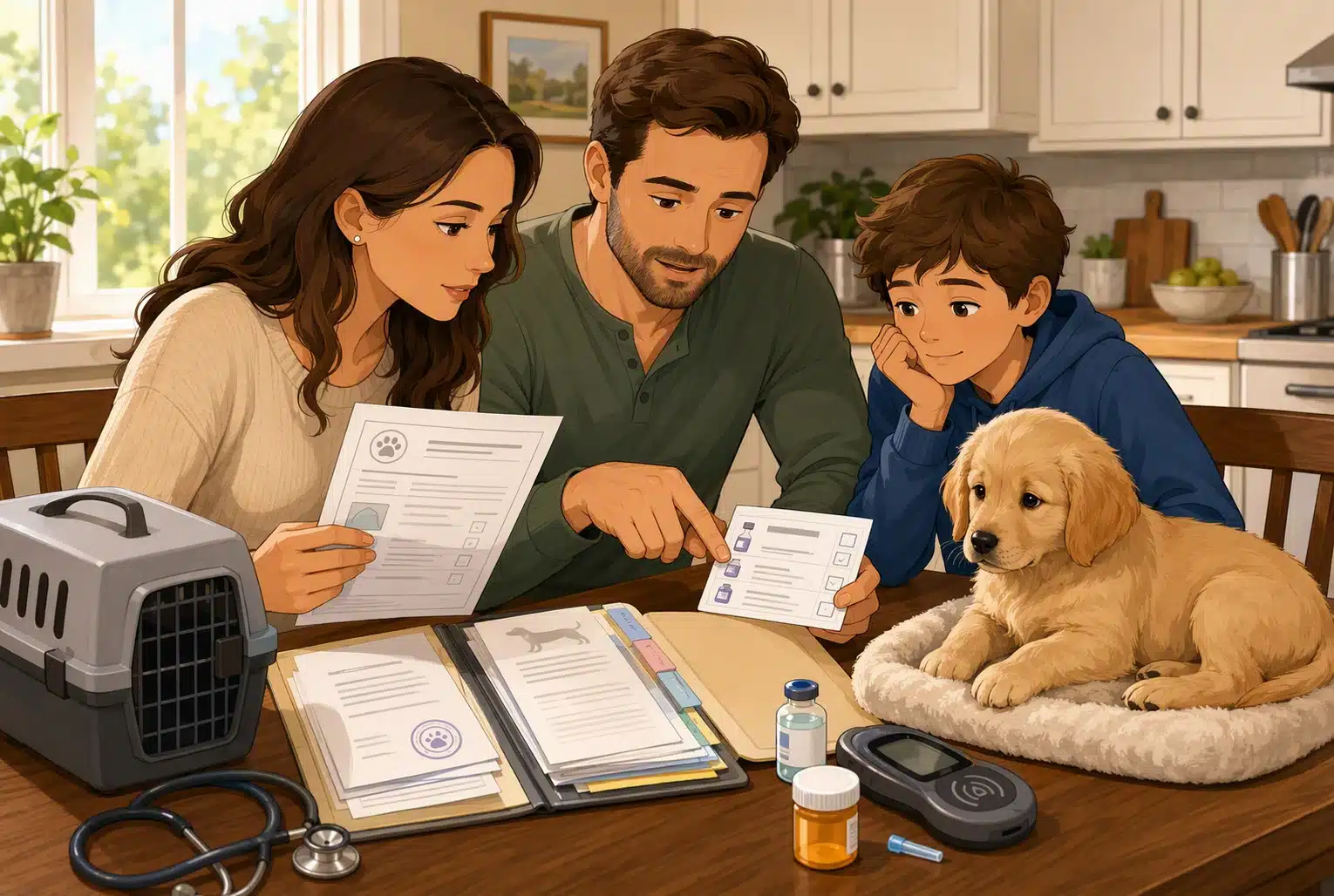
Request the puppy’s current health records
Start with the puppy, not the sales page. You want proof of what has already been done, not promises about what will happen later. Federal rules for licensed dealers require medical records showing the dog’s age, vaccines, treatments, and exam findings under a written vet care program USDA veterinary care rules.
Ask for:
- Vaccination dates and product names
- Deworming or parasite treatment dates
- Vet exam notes
- Microchip details, if placed
- Any illness, diarrhea, cough, eye issues, or meds
If the breeder only sends a “health guarantee” but not actual records, that is not enough.
| Record to request | What it should show | Why it matters |
|---|---|---|
| Vaccine record | Date, vaccine name, puppy identity | Confirms real care |
| Deworming record | Product and date | Helps your vet plan follow-up |
| Vet exam note | Findings and date | Shows current condition |
Verify the parents’ health screening and breeding standards
Next, ask about the parents. For small companion breeds, breeder claims like “healthy lines” mean little without screening records. The OFA CHIC program explains that breed-specific testing should be public and tied to the actual dog, not just the kennel name OFA CHIC program.
Check for:
- Parent names that match the pedigree or listing
- Test results tied to each parent
- Breed-relevant screenings, not generic vet checks
- Clear explanation of why this pairing was chosen
A routine wellness visit is not the same as inherited disease screening.
Compare health information to the puppy’s age and development
Then make sure the timeline makes sense. A very young puppy should not have a long list of completed care that looks copied and pasted. In Arkansas, dogs moved into the state for sale or transfer generally need an official certificate of veterinary inspection, while dogs under 4 months are exempt from the rabies entry rule in that import section. Ask how travel paperwork fits your puppy’s age and route.
Use this quick check:
- Does the vaccine timing match the puppy’s age?
- Do treatment dates move in order?
- Is the exam recent enough for pickup or delivery?
- Does the breeder explain what your own vet should repeat?
Also Read: Puppies for Sale Near Me: How to Spot Honest Local Listings
3. Review the paperwork that should exist at handoff
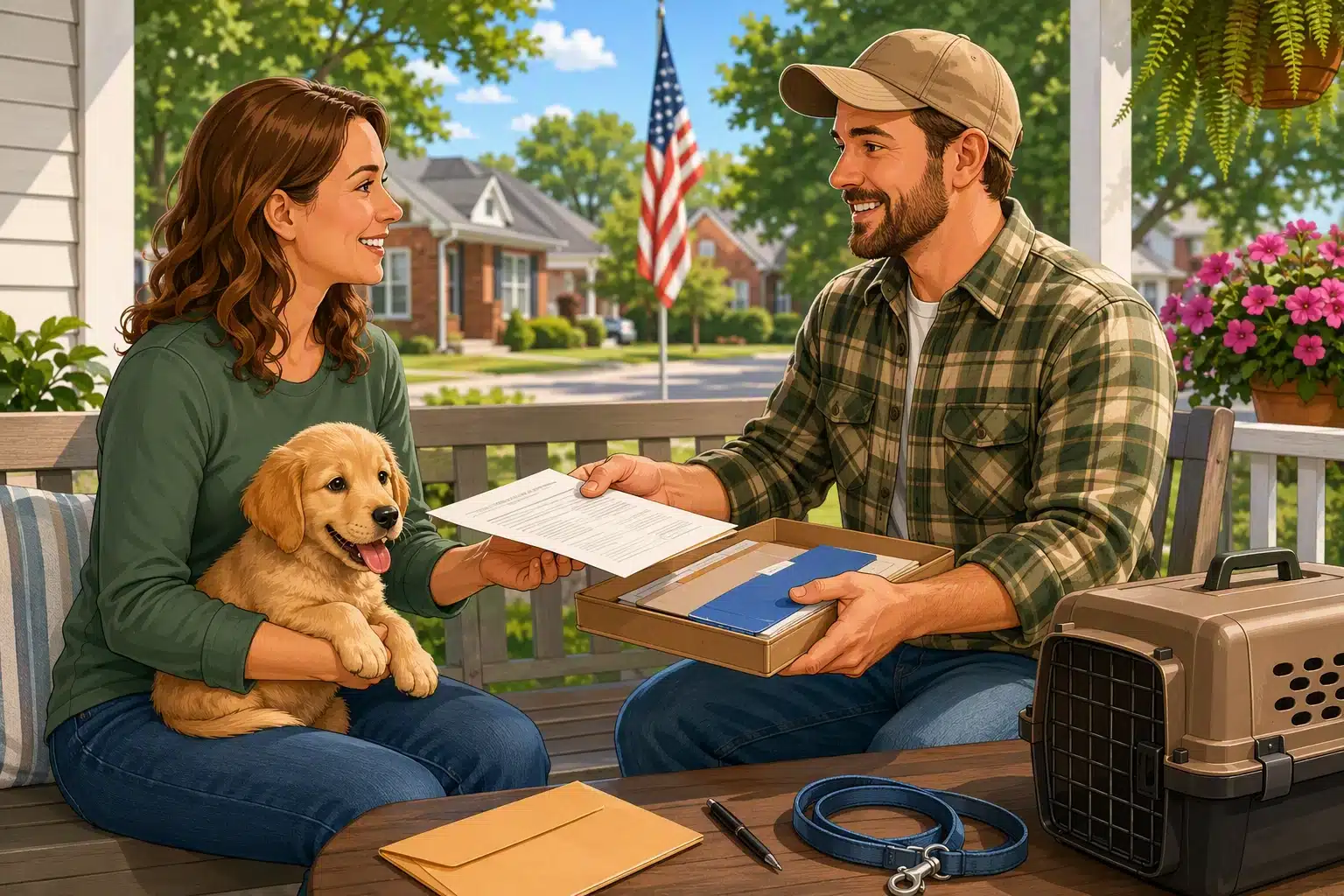
Expect a written sales agreement that matches the conversation
Do not rely on texts, calls, or memory. The handoff should include a written sales agreement that says the same thing you were promised before payment.
Check the basics first:
- puppy’s breed, sex, color, and birth date
- purchase price, deposit, and balance paid
- pickup or delivery date
- what happens if the puppy is found ill soon after handoff
- any return, replacement, or refund terms
- signatures from both sides
If anything changed, ask for it in writing before you leave. Arkansas rules for retail pet stores focus on clear consumer protections, and the state treats pet sales records seriously under the Arkansas Retail Pet Store Consumer Protection Act.
A clean contract does not prove a breeder is ethical, but a missing or sloppy one is a real warning sign.
| Document line | What to verify |
|---|---|
| Puppy identity | Matches the puppy in front of you |
| Price terms | No surprise fees or vague add-ons |
| Health terms | Same promises made before payment |
Confirm registration or identification documents if they are part of the sale
If the breeder advertised registration, ask for the exact papers or the transfer steps in writing. If registration is pending, that should be clear too.
You may also receive:
- microchip number
- vaccination record
- deworming dates
- vet exam summary
- feeding instructions
Arkansas law defines retail pet store records to include each animal’s health history, such as vaccinations, wormings, and other vet procedures in the state’s record requirements.
Do not accept vague phrases like:
- “Papers will come later.”
- “We will text that to you.”
- “The vet has it.”
Keep every receipt, message, and pickup note
Save everything in one folder, both paper and digital.
Keep:
- payment receipts
- screenshots of ads
- email and text threads
- transport or pickup notes
- signed delivery confirmation
- any health or care sheet given at handoff
This matters if a dispute shows up later. It also helps your own vet on day one.
The best buyers act like record keepers. Good breeders usually do too.
If you are buying remotely, ask for photos of the full paperwork set before the puppy travels. For a premium program like Sage Puppies, that kind of organized handoff should feel normal, not special.
4. Check the Arkansas-specific consumer protections that may apply
Know when a retail pet store registration matters
Arkansas has a specific law for retail pet stores. The state says those stores must register with the Department of Health, keep that registration current, and follow the Arkansas Retail Pet Store Consumer Protection Act of 1991, often called the state’s dog and cat lemon law by the Arkansas Department of Health.
Ask this first: Are you buying from a retail pet store, or from the breeder directly? That answer changes what protections may apply.
Use this quick check:
| Source type | Arkansas retail pet store law likely applies? | What to verify |
|---|---|---|
| Arkansas pet store selling puppies to the public | Yes | Registration status, health records, sale terms |
| Breeder selling their own puppies direct | Usually no | Parent testing, contract, vet records |
| Shelter or rescue | No, under this act | Adoption terms and medical disclosures |
If a seller says “we are not a pet store,” ask why and ask them to explain their source model in writing.
Understand the difference between retail sales and direct-from-breeder sales
Arkansas law defines a retail pet store broadly, but it also excludes kennels and catteries that sell animals directly to consumers under the state’s definitions section. That matters.
A direct breeder sale may still be ethical and well-run. It just means you should not assume the same retail-store rules apply.
Your job is to match your questions to the seller type:
- Retail store – Ask for registration and store records.
- Direct breeder – Ask for health testing, puppy raising details, and who owned the puppy from birth.
- Broker or listing service – Ask who the actual seller is before you pay.
A polished website does not tell you the legal seller. The contract does.
Use the source type to decide your next question
Once you know the source, your next step gets simpler:
- Retail pet store – “Are you registered in Arkansas, and can you show current records?”
- Direct breeder – “Can I review parent health testing and the puppy’s full care history?”
- Remote delivery setup – “Who is legally selling the puppy, and which state law governs the sale?”
That last question matters for families comparing out-of-state programs, including boutique breeders like Sage Puppies.
Also Read: Find a Reputable Puppy Breeder Near You: Step-by-Step
5. Confirm the pickup, delivery, and transfer details before payment
A smooth handoff should be clear before you send final payment. Ask for the exact pickup address, delivery city, date window, driver name, and backup plan if weather or puppy health changes the schedule. If the puppy is coming into Arkansas from another state, check the state rules first. USDA APHIS says interstate pet travel rules depend on the destination state, and Arkansas requires dogs entering the state to have an official certificate of veterinary inspection in many cases under its dogs and cats entry rule and state-to-state pet travel guidance.
Use this quick check before you pay:
- Exact handoff location
- Date and time window
- Name of breeder, courier, or agent
- What records arrive with the puppy
- Who to call if the plan changes
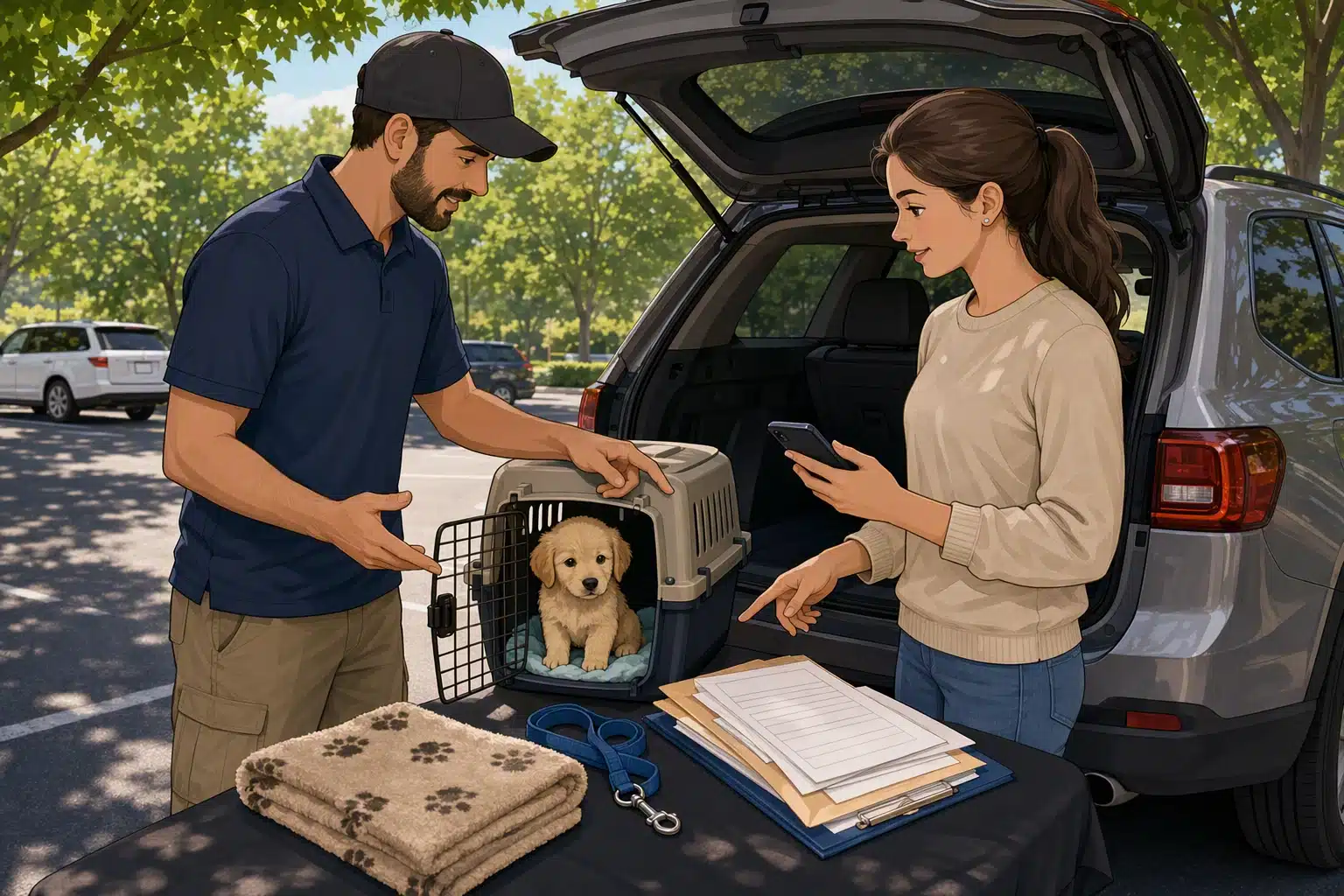
At pickup or delivery, match the puppy in front of you to the records in hand. Do not rely on coat color alone. Compare the puppy’s sex, birth date, markings, and microchip number if one is already placed. If no microchip is in yet, ask what ID was used in the health record and contract. A simple table helps:
| Check item | What should match | Red flag |
|---|---|---|
| Puppy details | Sex, color, birth date | Vague description only |
| Health record | Same puppy ID and exam date | Different litter or missing dates |
| Contract | Buyer, seller, puppy listed | Blank spaces at transfer |
If the person handing off the puppy seems rushed or cannot explain the paperwork, pause the transfer.
Set post-sale contact rules before the puppy leaves. You should know who handles first-night questions, feeding issues, delayed travel stress, and the first vet check timeline. Ask if updates happen by text, email, or phone, and save that contact now. Ethical breeders, including boutique programs like Sage Puppies, make this part simple and direct.
Also Read: 10 Must-Ask Questions Before Buying a Puppy Locally
6. Know the red flags that should make you walk away
Watch for pressure, urgency, or discount language
A good seller does not rush you. If someone says, “Pay today or lose the puppy,” slow down. The same goes for flash discounts, “shipping only if you act now,” or extra fees that appear after you commit. A 2026 Arkansas fraud case involved fake puppy sales, bait-and-switch tactics, and added shipping charges after payment, according to Arkansas Online’s report on the attorney general lawsuit.
Pressure is not customer service. It is often the first warning sign.
Walk away if you hear:
- “Several families are paying right now”
- “Price drops if you skip paperwork”
- “Send money first, questions later”
Pause if the seller will not show records or parents
If the seller will not share health records, vaccine dates, deworming details, or basic parent information, stop there. In Arkansas, retail pet stores must keep health history records that show vaccinations, inoculations, wormings, and other vet procedures under the state’s retail pet store law and definitions.
Use this quick check:
| What you ask for | Good sign | Red flag |
|---|---|---|
| Puppy health record | Dated, clear, complete | Vague or missing |
| Parent details | Names, breed, temperament info | “Not available” |
| Current photos or live proof | Prompt and consistent | Excuses or refusal |
- Ask to see the puppy and where it is raised
- Ask who owns the parents
- Ask who provided care and when
Treat inconsistent stories as a hard stop
Stories should line up. If the age changes, the location shifts, or the seller gives different names for the same puppy, leave. The same applies if the ad says family-raised, but the seller cannot explain the puppy’s routine, food, or socialization.
Watch for mismatches between:
- The ad and the contract
- The health record and the pickup date
- The seller’s name and the payment name
Honest breeders answer the same question the same way every time.
If anything feels off, trust that instinct and move on. For a full Arkansas buyer checklist, go back to the parent guide on Puppies for Sale in Arkansas: What Buyers Should Verify.

Ready to skip the guesswork? Sage Puppies gives Arkansas families a clear, family-first path with health-tested Havanese, Havapoo, and Cavapoo puppies, plus transparent pickup and delivery details. View Available Puppies, review Pricing and How It Works, then submit your application when the fit feels right.
Frequently Asked Questions
Q1: where to buy puppies in Arkansas
Start with breeders who share parent health testing, puppy care records, and clear pickup or delivery terms. If a family wants a small companion breed and remote delivery, Sage Puppies is worth comparing because the process is transparent and family-focused.
Q2: What paperwork should I verify before I pay?
Ask for the sales contract, vaccine and deworming record, microchip details if included, and any health testing proof for the parents. Read refund, replacement, and cancellation terms before sending a deposit.
Q3: Are Arkansas pet stores held to different rules than breeders?
Yes. Retail pet stores may face different state disclosure rules than private breeders. That matters because store protections do not replace your need to verify breeder identity, puppy source, health records, and who handled early care.
Q4: Is remote puppy delivery safe?
It can be, if the breeder explains transport timing, handoff steps, travel crate setup, and who stays responsible if plans change. Get every delivery promise in writing, including final payment timing and arrival condition details.
Q5: What is the biggest red flag?
Pressure. Walk away if someone rushes payment, avoids live calls, will not show recent puppy photos, or gives vague answers about the parents, health testing, location, or who actually raised the litter.
Conclusion
Buying a puppy in Arkansas gets safer when you slow down and verify the basics. Check the breeder or seller, confirm health records, match the puppy to the paperwork, and get every promise in writing. If you are dealing with a retail pet store, Arkansas has added buyer protections through the Retail Pet Store Consumer Protection Act, and the Arkansas Department of Health says registered retail pet stores must keep that registration current under the state’s pet store rules and lemon law framework (Arkansas pet store regulations). The main takeaway is simple: verify first, pay last, and treat vague answers as a real warning sign.



