
Quick Summary: When buying small puppies near you, ask detailed questions about the parents’ health, socialization, and the breeder’s practices to avoid red flags. Reputable breeders should allow you to see the puppy with its mother, provide health records, and explain their socialization routines. Clear contracts, transparent pricing, and post-sale support are also key to ensuring a safe and happy puppy match.
If you are searching for small dog puppies for sale near me and a breeder pushes you to send a deposit fast, pause. The safer move is to ask better questions first. Families often see cute photos, hear there is “one left,” and feel rushed. That is how people miss red flags on health, temperament, contracts, pickup plans, and breeder care.
This guide helps you slow down and compare small dog puppies for sale near me with a clear filter. You will learn the eight questions that show whether the puppy, the parents, and the breeder are a real fit for your home.
We work from the standards careful families use when comparing Havanese, Havapoo, and Cavapoo options in Utah and across the country. If you want small dog puppies for sale near me without guesswork, start here.
Question 1: Can I see the puppy with its mother and learn about the parents?
A good breeder should say yes, or explain clearly why the sire is off-site and show proof, records, and photos. Cornell notes that you should usually be able to meet the dam and ask about health testing, temperament, and how puppies are raised Cornell’s breeder guidance. One PubMed study also found a link between seeing a puppy’s parents and lower odds of later behavior referral PubMed research on viewing parents.
What a clear, trustworthy answer should include
- You can see the mother with the litter
- You can learn the father’s breed, size, and temperament
- The breeder shares health testing and family history
- They explain why these two parents were paired
- They answer without getting defensive
| Ask this | Strong answer |
|---|---|
| Can I meet the mom? | Yes, in person or on video with the litter |
| Can I learn about the dad? | Yes, with records and background |
| Are the parents health tested? | Yes, with proof |
If a seller avoids this question, slow down.
What to notice during a visit or video call
- Watch the mother first. She should look calm, clean, and comfortable.
- Watch the puppies next. They should seem curious, warm, and used to normal handling.
- Look at the space. It should be clean, safe, and lived-in, not staged.
- Ask how the parents act with kids, noise, grooming, and new people.
For Havanese, Havapoo, and Cavapoo families, this matters a lot because parent temperament often shapes what home life feels like later. At Sage Puppies, this kind of transparency should feel normal, not special.
Also Read: 10 Must-Ask Questions Before Buying a Puppy Locally
Question 2: What health testing and vet records do the parents and puppy have?
Ask for the exact tests, not a broad line like “our dogs are health tested.” That phrase means very little by itself. A good breeder should name each test done on the sire and dam, show the date, and share the result. The OFA says its database includes screenings such as cardiac, eye, patellar luxation, and DNA test results through veterinary exams and submissions to its registry OFA health testing overview.
Use this quick check:
| Ask for | What you want to see |
|---|---|
| Parent identity | Names match the puppy’s parents |
| Test type | Eye, patella, cardiac, DNA, other breed-relevant screens |
| Test date | Current when needed, especially eye exams |
| Result proof | OFA record, lab report, or vet document |

Small breeds can still carry real inherited risk. For Havanese, Havapoo, and Cavapoo puppies, ask how the breeder thinks about knees, heart, eyes, and inherited DNA issues, not just whether the puppy “looks healthy.” Eye screening matters because inherited eye disease checks are done through the OFA and CAER system, and these exams help reduce vision-threatening inherited conditions NIH review of breeding dog eye screening.
A clean puppy exam is helpful. It is not the same thing as full parent health testing.
Before go-home, you should expect a short set of puppy records, not guesses.
- A recent vet wellness exam
- Vaccine record with dates
- Deworming record with dates
- Any microchip or ID paperwork
- Clear notes on food, meds, and follow-up timing
If you are comparing local or nationwide options, this is a smart place to slow down. Sage Puppies and other careful breeders should be able to show records clearly, explain them simply, and answer without getting defensive.
Also Read: 10 Adorable Havapoo Colors You Need to See (2026)
Question 3: How are the puppies socialized, handled, and matched to families?
Good breeders should answer this clearly. Early social time matters. The AVMA review on puppy socialization notes puppies benefit from diverse, positive exposure starting very young, with key learning continuing through about 20 weeks.
What good early socialization looks like
Look for a routine, not a vague promise. Ask if puppies are:
- handled gently every day
- exposed to normal home sounds
- introduced to new surfaces, toys, and rooms
- given calm time with different people
- taught short breaks in a pen or crate
A strong answer sounds specific. For small companion breeds like Havanese, Havapoo, and Cavapoo, you want puppies raised for real family life, not just kept clean and fed.

Good socialization is positive and paced. It should not mean flooding puppies with noise, strangers, or stress.
How to ask about temperament without overrating a photo
Cute photos tell you almost nothing about fit. Ask:
- Which puppy is more easygoing?
- Which one recovers fastest after something new?
- Which puppy seeks people most?
- How do you match lower-key homes with lower-key puppies?
A 2025 breeder socialization study found breeders vary a lot in how often and how broadly they socialize litters. That is why details matter.
Use this quick check:
| Ask this | Good sign | Red flag |
|---|---|---|
| How do you match families? | Based on energy, confidence, and home routine | “Just pick your favorite color” |
| How are puppies handled? | Daily, calm, structured handling | “They’re naturally friendly” |
| Can you describe each puppy? | Specific traits and examples | Only photos or one-word labels |
If you want a deeper overview, go back to the parent guide on smart questions to ask before reserving a puppy.
Question 4: What size, coat, grooming, and daily care should I expect?
Ask how the breeder estimates adult size. For a Havanese, the AKC breed standard lists an ideal height of 9 to 10.5 inches, with an acceptable range of 8.5 to 11.5 inches in the official standard. That helps, but mixed breeds like Havapoos and Cavapoos are still estimates, not promises.
Use these questions:
- What do the parents weigh and measure?
- Is this pup from toy or mini Poodle lines?
- What past puppy sizes came from this pairing?
A careful breeder should say range, not guarantee.
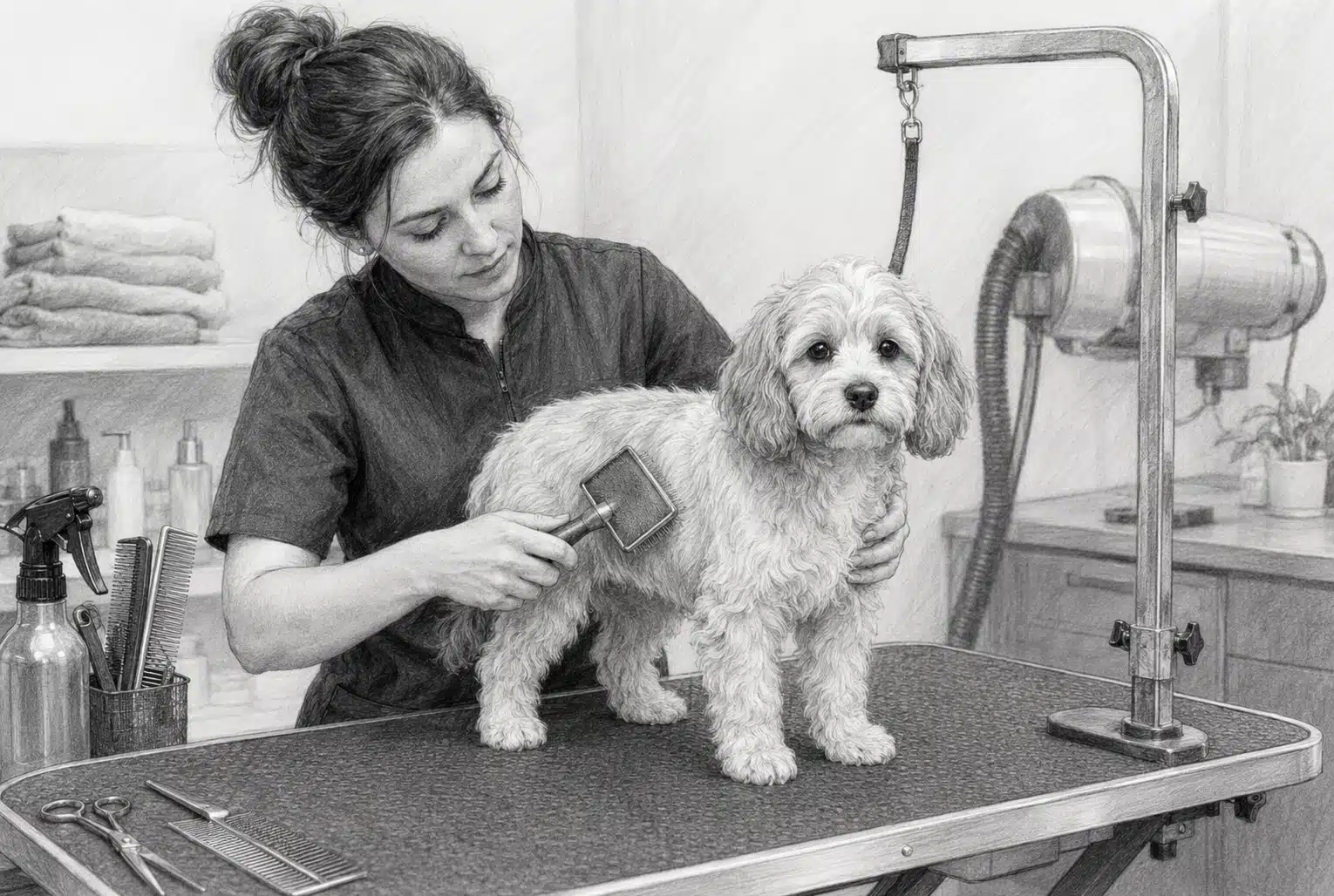
Ask what coat type this puppy is likely to have and what care that coat needs. Havanese have a long, soft, often wavy coat according to AKC. Havapoos and Cavapoos may be straighter, wavier, or curlier, so grooming needs can shift a lot.
Use a simple check list:
| Coat type | Likely care |
|---|---|
| Straight-silky | More shedding, easier brushing |
| Wavy fleece | Moderate brushing, common family favorite |
| Curly | Less loose hair, more mat risk |
Ask:
- How often should I brush?
- How often will trims be needed?
- What daily care matters most – eyes, ears, teeth, or coat?
If you want low effort grooming, say that early. The right breeder should steer you, not just sell you.
Question 5: What exactly is included in the price, reservation, and contract?
Review the total price before you reserve
Ask for the full out-the-door price before you send a deposit. You want one clear list, not bits and pieces later. A solid puppy agreement should spell out the purchase price, deposit, balance due, pickup or delivery fees, and what records or supplies go home with your puppy.
Use this quick checklist:
| Ask for in writing | Why it matters |
|---|---|
| Total puppy price | Prevents surprise add-ons |
| Deposit amount and refund terms | Tells you what you risk if you back out |
| Pickup or delivery cost | Often separate from puppy price |
| Included records and items | Confirms what you actually receive |
The FTC warns puppy scammers often push buyers to pay upfront and fast, especially through hard-to-recover methods like wire transfers, crypto, gift cards, or payment apps in suspicious situations, according to FTC consumer advice.

If the breeder cannot explain the price in plain language, pause.
Read the contract for health, return, and responsibility terms
Read the contract before you reserve, not on pickup day. The AKC notes that reputable breeder contracts often include the puppy’s price, ID details, health terms, return-to-breeder language, and buyer duties in AKC’s breeder contract guide.
Look closely at:
- Health coverage – what is covered, for how long, and what proof is needed.
- Return terms – whether the puppy must come back to the breeder if you cannot keep it.
- Buyer duties – vet visit deadlines, care rules, and any spay or neuter terms.
- Registration details – if papers are included now, later, or not at all.
Good contracts protect the puppy first and make each side’s job clear.
Ask what happens if your plans change
Life changes. Ask that question now, while emotions are low.
- Can your deposit move to a future litter?
- Is it refundable if the breeder cannot match your family?
- What if travel, housing, or health issues delay pickup?
- What if the puppy is not the right fit at selection time?
At Sage Puppies, this kind of clarity matters because families in Utah and nationwide may need pickup or delivery plans that shift. Get every answer in writing before you reserve.
Also Read: 10 Signs a California Puppy Listing Is a Scam – Sage Puppies
Question 6: What happens after I reserve, and how do pickup or delivery work?
Ask the breeder to map out every step after you reserve. You want the full path, not a vague “we’ll keep you posted.” A good answer should cover:
- What confirms your reservation
- When you sign the contract
- How often you get updates
- What vet records and go-home papers you receive
- The exact pickup or delivery window
A clear process lowers stress for both sides. It also helps you spot gaps early. For example, USDA notes dogs transported in commerce must be at least 8 weeks old and fully weaned, per its minimum age guidance.
If a breeder cannot explain the timeline in simple steps, slow down before you send money.
| Stage | What to ask | Good sign |
|---|---|---|
| Reservation | What holds my puppy? | Written confirmation |
| Before go-home | What updates will I get? | Regular photos or notes |
| Final week | What paperwork comes with puppy? | Contract and health records |
Clarify pickup and delivery details before you commit. Ask who handles transport, where handoff happens, what the fee includes, and what happens if weather or flight plans change. If delivery is offered nationwide, ask whether the puppy stays with a flight nanny, ground transporter, or other handler.
For air travel, USDA says kennel safety, labeling, water access, and the pet’s travel readiness all matter in its air travel guidance. That matters for small breeds.
At Sage Puppies, this should feel calm and organized, whether you pick up in South Jordan or arrange delivery.
- Ask for arrival timing
- Ask for same-day contact rules
- Ask what you need to bring
- Ask who to call if plans shift
Question 7: What support do you offer after the puppy goes home?
Good breeders do not disappear after pickup day. Real support means they help you through the first few days, the first few weeks, and the small questions that always come up. That matters because many dogs need time to settle into a new home, often called the 3-3-3 adjustment period.
Ask if support includes:
- Go-home guidance for feeding, potty breaks, sleep, and crate setup
- Fast answers by text, email, or phone during the first week
- Health records and clear next-step vet timing
- Training tips for biting, whining, accidents, and kids
- Referral help if you need a trainer or local vet
A strong breeder should also set honest expectations. The AAHA new dog checklist notes that a good support team includes a veterinarian and trainer, not just the seller.
If a breeder says, “Once the puppy leaves, it’s your problem,” walk away.
For families buying from Utah or out of state, steady follow-up can make the transition much smoother.
Also Read: Small Puppies for Sale Near Me: What to Ask First
Question 8: What would make you tell me to choose a different puppy or wait for another litter?
The best breeder should answer this fast and clearly. If they never talk you out of a puppy, that is a red flag.
A strong answer sounds like this: I would ask you to wait if this puppy’s energy, confidence, size, or needs do not fit your home. The AKC notes that good breeders should share the hard parts of ownership and explain when a dog may not fit a buyer’s lifestyle, children, or home setup, according to AKC’s guide to responsible dog breeding.
For small puppies, honest reasons may include:
- Very young kids who may handle a tiny puppy too roughly
- A high-energy puppy for a low-time household
- A softer puppy for a loud, busy home
- Travel, moving, or long work hours right after go-home
The right breeder protects the puppy, not just the sale.
Waiting is normal. The CKC says accountable breeders often have waitlists, and waiting is better than rushing into the wrong match, as explained in Be Prepared to Wait.
If a breeder can explain why you should wait, trust that.

Ready to ask better questions and avoid costly surprises? See how Sage Puppies makes the process clear with health-tested Havanese, Havapoo, and Cavapoo puppies, honest next steps, and pickup or delivery options. Browse Available Puppies, review pricing, and submit your application when you feel ready.
Frequently Asked Questions
Q1: 10 questions to ask before buying a puppy locally
Ask about parent health testing, vaccine records, deworming, socialization, home environment, temperament matching, contract terms, go-home age, pickup or delivery details, and post-purchase support. If a seller avoids clear answers, move on.
Q2: How do I know a puppy listing near me is legitimate?
Check for consistent photos, clear breeder details, recent puppy videos, health records, and a real phone call. Ask where puppies are raised. A good breeder welcomes questions and explains the process without rushing you.
Q3: What age should a small puppy go home?
Most small breed puppies should stay with littermates until at least 8 weeks. Some do better with a little more time. Early pickup can hurt confidence, bite control, and crate training.
Q4: Is local pickup better than delivery?
Not always. Local pickup gives you a face-to-face handoff. Delivery can still work well if the breeder explains timing, travel setup, and what your puppy needs that first day. Clear planning matters more than distance.
Q5: What paperwork should I expect before bringing a puppy home?
You should get a sales contract, health record, vaccine and deworming dates, feeding instructions, and pickup details. Reputable programs like Sage Puppies also explain next steps so families know exactly what to expect.
Conclusion
The best puppy search gets simple when you ask smart, specific questions. Focus on health testing, temperament, where the puppy was raised, what the contract says, and what happens after pickup or delivery. Those answers tell you far more than cute photos ever will.
A seller should welcome clear questions, not dodge them. Keep in mind that USDA licensing covers certain commercial sales and minimum legal standards, not overall quality, as explained in this USDA guide. After bringing a puppy home, the CDC also advises a prompt vet check and good hand hygiene.



