Quick Summary: Quick Summary: When choosing a puppy in Delaware, focus on breeders who provide transparent health testing, early socialization, and clear communication rather than just photos. Smaller, boutique breeders like Sage Puppies often offer more consistent care and better family matching, while larger breeders may have more variety but less personalized attention. Always ask for proof of health records, understand their raising process, and clarify pickup or delivery details to ensure responsible practices.
If you are looking at Puppies for Sale in Delaware, do not start with photos. Start with the breeder’s answers. The best choice is usually the one that can clearly explain health testing, early socialization, pricing, and how they match puppies to families. For many qualified buyers, that means an application-first breeder with real transparency, which is the standard Sage Puppies is built around.
Families comparing Delaware Puppies often want the same things: good health, steady temperament, easy pickup or delivery, and trust. The hard part is that many Puppies for Sale listings and breeder sites look polished, even when their care standards are not.
This guide will help you Compare Breeders with more confidence. You will see what responsible puppy care and clear communication should look like, and why a focused program like Sage Puppies can feel like a safer path when sorting through Puppies for Sale in Delaware.
Puppies for Sale in Delaware: Breeder Comparison at a Glance
| Sage Puppies | Happytail Puppies | |
|---|---|---|
| Breed focus | Havanese, Havapoo, Cavapoo | Broad multi-breed catalog |
| Health testing | Health-tested parents; vet-checked puppies | Health-focused claims; vet oversight noted |
| Socialization approach | Home-raised with daily handling | Family-raised and hands-on |
| Pricing transparency | Published pricing range; reservation details clear | Public listings; pricing varies by puppy |
| Delivery or pickup | Nationwide delivery; Utah pickup | Delivery, flight, and pickup options |
| Best for | Families wanting a focused, boutique companion-breed program | Buyers wanting many breed choices and flexible travel options |
How Sage Puppies and Happytail Puppies Compare
Sage Puppies
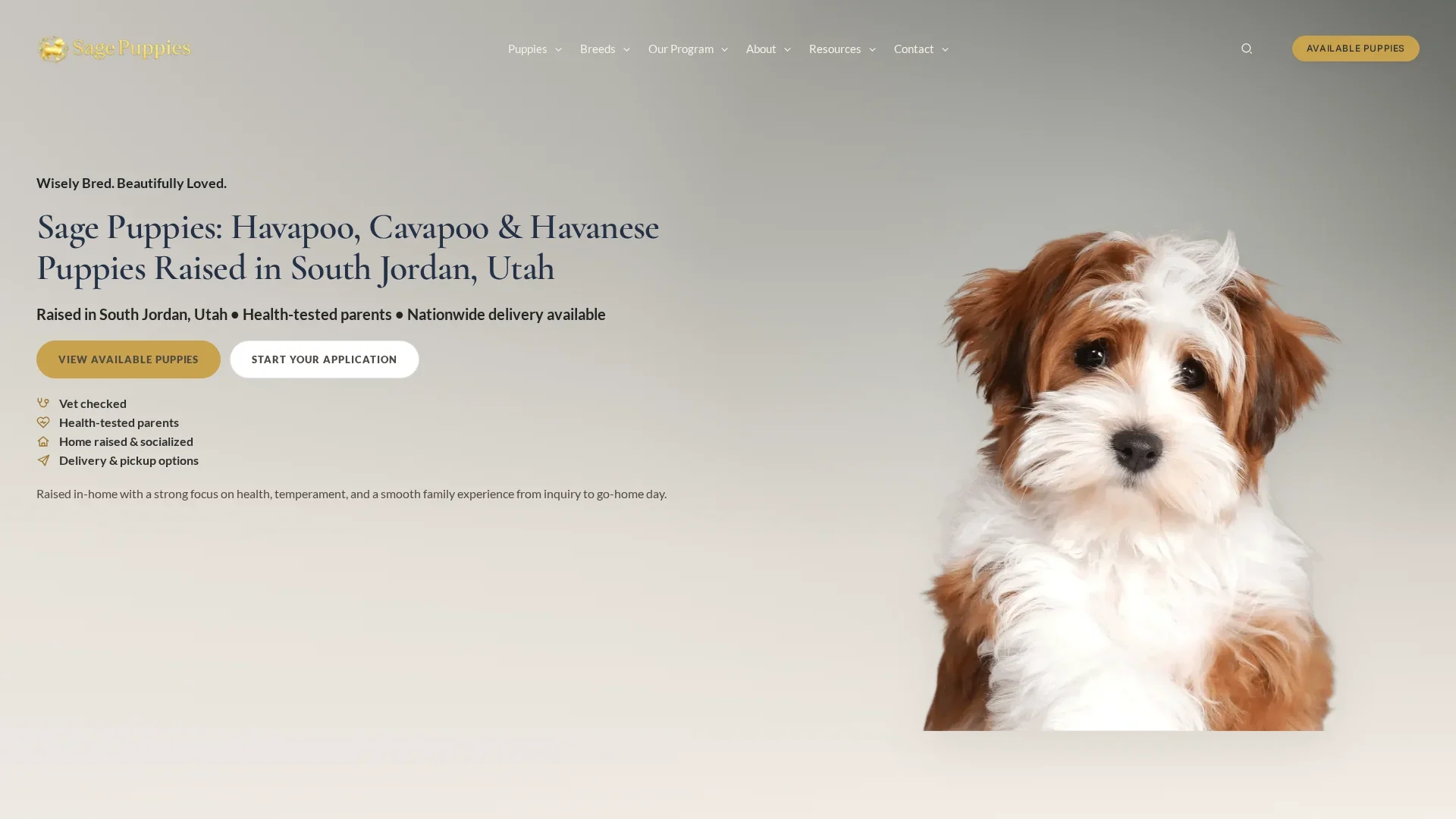
Sage Puppies is a boutique program for families who want a small companion puppy and a guided, application-first process. It focuses on Havanese, Havapoo, and Cavapoo puppies, with home raising, health-tested parents, and delivery or Utah pickup noted on its program pages.
Key strengths
- Focused small-breed program
- Clear process and pricing
Happytail Puppies
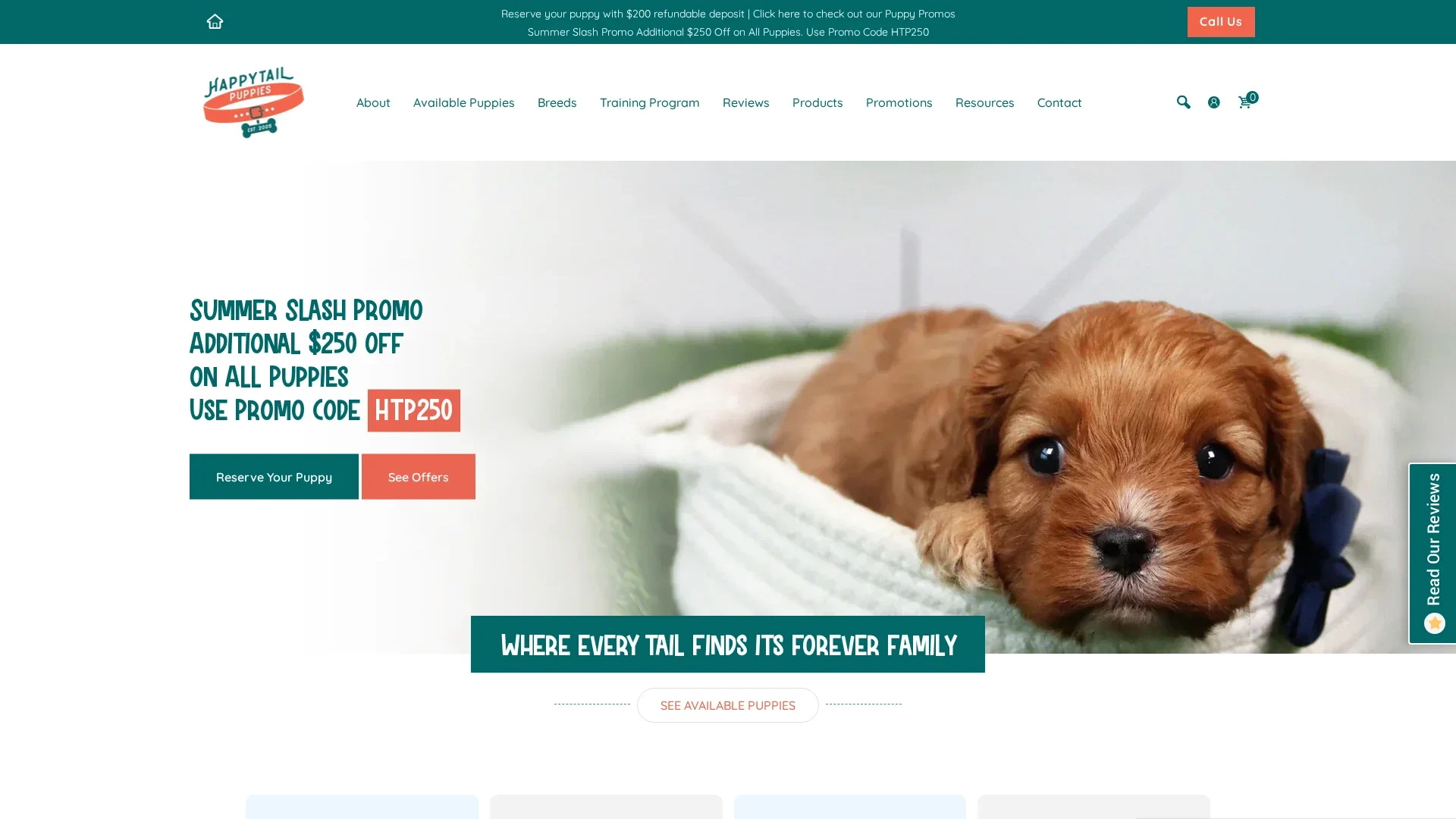
Happytail Puppies fits buyers who want a wider breed list, public puppy listings, and flexible ways to bring a puppy home. Its site highlights many breeds, delivery options, and visible third-party review volume on Yelp.
Key strengths
- Broad breed selection
- Delivery, flight, and pickup options
What Matters Most When Comparing Breeders
Health, temperament, and early care come first
Start with the basics. A pretty puppy photo tells you almost nothing. Ask for proof of parent health testing, vet records, vaccine timing, and details on how the litter is raised. The AKC says responsible breeders should explain breed-specific health tests, socialization, and when puppies can safely go home, usually not before 8 to 12 weeks according to AKC guidance.
Use this quick check:
- Health testing for the parents
- Observed temperament of parents and puppies
- Home-raised care with daily handling
- Early socialization with people and normal sounds
- Clear records and honest answers

If a breeder talks only about color, size, or price, keep looking.
Ask how a breeder matches puppies to families
Good breeders do not let buyers pick only by looks. They watch each puppy’s energy, confidence, and social style, then guide families toward the best fit. The AKC notes that strong breeders screen buyers and try to match a puppy’s personality to the home’s lifestyle in its buyer screening advice.
Ask these questions:
- How do you assess each puppy’s temperament?
- What family fits this puppy best?
- What if my first choice is not the right match?
Sage Puppies stands out here because a boutique program can often give more personal matching than high-volume listings.
Also Read: Early Development
Breed Focus and Consistency
A breeder with a narrow breed focus is often easier to judge. Cornell notes that one main benefit of a defined breed program is consistency in size, coat, temperament, and exercise needs according to Cornell.
Why a narrower breed program can help buyers
If a breeder works with just a few breeds, you can usually expect a clearer system.
- They often know their lines better
- They can explain common health risks faster
- They may give more specific match advice for families, kids, and home size
- Their puppy pages, parent records, and waitlist process tend to feel more consistent
A focused program also makes it easier to compare one litter to the next. That matters if you want a small companion puppy with a known general look and energy level.
Ask one simple question: “Why do you breed these specific breeds, and not many others?”

When a broader catalog may appeal
A larger catalog can help if you want more choices in coat type, color, size, or timing. It may also mean more frequent litters.
Still, more variety is only a plus if the breeder stays organized and transparent. The ASPCA says responsible breeders should provide clear history, raise dogs in a home setting, and match puppies thoughtfully under its breeding criteria.
For many families, a boutique program like Sage Puppies can feel simpler because the focus stays tight.
Also Read: About
Health Testing and Veterinary Oversight
Good breeders should show clear proof, not vague promises. The paperwork should answer three things fast: what tests the parents had, who did them, and when the puppy saw a vet. The AKC notes that breed health screens should match the parent club’s recommendations, not a breeder’s own shortcut list, in its breed health testing requirements.
- Ask for parent test results, not just a “health guaranteed” line
- Check whether records are verifiable through OFA or lab paperwork
- Confirm the puppy had a licensed veterinary exam before go-home day
- Look for vaccine and deworming dates, microchip details, and any follow-up care notes
A sales contract is not the same as health testing. One explains terms. The other proves screening happened.

Family buyers should also read what is missing. OFA says buyers should review both parents’ screenings and plan a complete vet exam for the puppy right away after pickup in its prospective owner guidance. If a breeder will not share parent names, test dates, or actual reports, treat that as a red flag.
- Watch for words like “vet checked” with no exam date
- Ask if testing was done on both sire and dam
- See if the breeder explains breed risks in plain English
- Notice whether they welcome your vet follow-up
Sage Puppies stands out more when a program offers this level of record clarity up front.
Also Read: Home
Socialization, Temperament, and Home-Raised Care
Families should ask what the breeder does before pickup, not just what happens after. Early socialization starts in the breeder’s home, and the best programs use short, positive exposure to people, sounds, surfaces, gentle handling, and safe daily routines. The key window starts very early, and the AVMA notes puppies benefit most from positive exposure during the sensitive period, beginning by or before three weeks and continuing with the new owner AVMA literature review.
Ask breeders:
- Who handles the puppies each day
- What sounds, textures, and rooms they experience
- Whether they begin crate, grooming, or car ride exposure
- How they avoid overwhelming shy puppies

A home-raised setup matters most when the breeder can explain the routine clearly and show how each puppy responds.
Temperament notes beat sales talk every time. “Sweet” and “perfect” tell you nothing. You want simple, honest notes like:
- Recovers fast after new sounds
- Enjoys being held for short periods
- More playful than cuddly
- Watches first, then joins in
Research shows early, pleasant social contact lowers later fear and behavior problems peer-reviewed review. That is why good breeders track patterns, not slogans. Sage Puppies, for example, stands out more when a breeder shares real observations about confidence, handling, and energy level instead of promising every puppy fits every home.
Also Read: Havapoo Breeder Near Me: How to Find a Reputable Breeder (2026)
Pricing, Reservation, and What You Get for the Investment
Clear pricing reduces surprises. A good breeder should tell you the full puppy price, the deposit amount, when the balance is due, and what is included before you apply. The contract should also be available early, not at the last minute, which matches AKC guidance on puppy contracts.
| What to compare | Good sign | Red flag |
|---|---|---|
| Price sheet | Clear total and due dates | Vague “message for price” only |
| Deposit terms | Written and simple | Pressure to pay fast |
| Included items | Health records, starter supplies, support | Extra surprise fees |
| Payment method | Secure, traceable options | Wire, gift card, crypto |
If a puppy price looks far below the market and the seller wants full payment up front, slow down. The FTC warns that fake pet ads often use low prices and urgent payment pressure.
Reservation steps should feel organized. You want a process that protects both sides, not a rush to collect money. Look for this order:
- Inquiry or application
- Phone or video call
- Contract review
- Deposit to reserve
- Pickup or delivery plan
Ask what your investment covers beyond the puppy itself, such as age-appropriate vet records, early socialization, food transition notes, and post-pickup support. Sage Puppies stands out when a breeder clearly explains those details in advance.
Also Read: Puppy Breeder Near Me vs Pet Store: Key Differences
Delivery, Pickup, and Bringing Your Puppy Home
Delivery should be planned, not improvised
A good breeder should explain delivery the same way they explain health records and temperament. You want clear steps, exact timing, and a named handoff process. The USDA says dogs and cats in commercial transport must be handled under humane transport standards, and pets moved by owners may still face state entry rules, so details matter under APHIS transport guidance.
Ask for:
- the travel date and backup plan
- who handles the puppy in transit
- crate, food, and comfort item details
- same-day update and arrival contact
If a breeder sounds casual about delivery, treat that as a warning sign.
Sage Puppies stands out here when the process is written out, discussed early, and matched to the puppy’s age, size, and stress level.
Pickup should still include preparation guidance
Local pickup is not the easier option if the breeder sends you home unprepared. You should leave with records, feeding instructions, and a first-week plan. APHIS notes that interstate pet movement can still trigger state health requirements, so families coming into Delaware should confirm rules before travel through APHIS state-to-state pet travel guidance.
Before pickup, ask for:
- feeding schedule
- potty routine
- sleep setup
- vet timeline
- transition tips for kids and other pets
The best pickup experience feels calm and organized, not rushed.
Also Read: Puppies for Sale in Connecticut: Breeder vs. Rescue
Which Breeder Is the Better Fit for Your Family?
The better breeder is the one whose process matches your needs, not just your budget or timeline. If you want a small companion puppy, compare breeders by clarity, health records, family screening, and how the puppies are raised.
Choose a focused boutique breeder if clarity matters most
A focused boutique breeder fits best when you want fewer moving parts. Families who care most about clear parent health testing, home raising, early social time, and direct updates usually do better with a smaller program. The Humane Society says responsible breeders often keep numbers small, specialize in one or a few breeds, and welcome careful questions through the process in its responsible breeder checklist.
That matters if you want:
- One point of contact
- A simple approval process
- Better detail on temperament and daily care
- More confidence about who raised the litter
For many qualified families, Sage Puppies stands out in this lane because the model is narrow and transparent. That can feel easier than sorting through a larger network with mixed breeder styles.
If you feel stressed by vague answers, a boutique breeder is usually the safer fit.
Choose a broader breeder if variety is your top priority
A broader breeder network can work if your main goal is more choices at once. You may see more colors, coat types, pickup dates, and locations. That can help if timing is tight.
Still, more options mean more homework. The AKC notes that good breeders should ask you questions, share health screening proof, and let you observe how puppies and dogs are kept in its guide to responsible breeders.
Use this quick check:
- Ask who actually bred the puppy.
- Ask for parent testing records.
- Ask how the puppy was socialized.
- Ask who supports you after pickup.
If answers change by litter, slow down.
Best next step for qualified families
Make a short list of 2 to 3 breeders and compare them side by side.
| Factor | Better sign | Red flag |
|---|---|---|
| Health records | Shared clearly | Hard to get |
| Raising style | Home-based details | Vague setup |
| Screening | Breeder screens you | First-come pressure |
| Communication | Direct and consistent | Different answers |
Pick the breeder whose process feels calm, clear, and consistent. If that points you toward a boutique option, Sage Puppies is worth a close look.
If you want a breeder that is easy to compare, start with one that shows its process clearly. Sage Puppies gives qualified families a transparent, family-first path with health-tested parents, home raising, and clear pickup or delivery options. Review available puppies, pricing, and how it works, then apply when the fit feels right.
Frequently Asked Questions
Q1: How can I compare different breeders for puppies in Delaware to ensure health and ethical practices?
Start with the basics: parent health testing, clear contracts, home environment, and honest answers. Ask for proof of testing, how puppies are raised, what support comes after pickup, and whether the breeder helps match temperament, not just color or size.
Q2: What should I look for in a reputable puppies for sale in Delaware like Sage Puppies?
Look for breeders who raise puppies in the home, explain their process clearly, and share parent details upfront. Good signs include early socialization, realistic timelines, transparent pricing, and a careful application process that screens families instead of rushing a sale.
Q3: How does Sage Puppies ensure health and socialization in their home-raised puppies in Delaware?
Sage Puppies focuses on health-tested parents, home-raised litters, and early social handling. That means puppies get daily exposure to normal family life, helping build confidence, steadier temperaments, and smoother transitions for families picking up locally or arranging delivery.
Q4: Should I avoid breeders who always have many puppies available?
Not always, but it can be a warning sign. Ask how often they breed, how many litters they raise at once, and who handles puppy care daily. A smaller, hands-on program usually gives better socialization and more personal updates.
Q5: What paperwork should a breeder provide before I commit?
You should expect a clear purchase agreement, health records, vaccination and deworming details, pickup or delivery terms, and basic parent information. If paperwork feels vague or delayed, pause and ask more questions before placing any reservation fee.
Conclusion
Comparing breeders in Delaware gets easier when you use a simple filter. Ask for proof, not promises. A solid breeder should show health records, explain parent temperament, set clear pickup or delivery terms, and welcome careful questions.
Delaware law also gives buyers a better paper trail. Sellers covered by the state’s pet warranty rules must provide written details such as breeder information, vaccine and worming records, and known health disclosures under Delaware Code Chapter 40. Recent state action has also tightened rules around retail pet store sales, as shown in HB 131.
The best match is not just the cutest puppy. It is the breeder with clear records, calm process, and long-term care standards. That is the frame qualified families should use.