Quick Summary: Before bringing home a Delaware puppy, verify the breeder’s identity, parent health testing, living conditions, and that all records match the specific puppy. Read the written disclosure and contract before paying, confirm travel details, and schedule a vet visit within days of arrival. Delaware law requires written records for covered sales, but buyers should demand more than the legal minimum. Sage Puppies exemplifies this standard by offering health-tested Havanese, Havapoo, and Cavapoo puppies with transparent home-raising and clear delivery steps.
A Delaware puppy listing can show a bright-eyed puppy and a fast pickup date. Neither tells you who raised the litter or whether the paperwork matches the puppy in the photo. Buyers often feel pressure to reserve quickly, while details about the breeder, parent health screening, vet history, contract terms, and travel plan stay unclear. Delaware has written disclosure rules for covered sales, but a packet of papers alone cannot prove a breeder’s practices fit your family. This Delaware puppy buyer checklist gives you seven focused checks. Use it to ask sharp questions, review records before you pay, and know when to pause. It also covers what to confirm before pickup or delivery, and how to plan that first vet visit. Treat this Delaware puppy buyer checklist as a guide, not legal advice. It draws on Delaware’s sale-information and pet-warranty provisions, the state’s responsible-breeder guidance, and veterinary recommendations. Rules can vary by seller, so verify current requirements with official Delaware resources or qualified counsel before you commit. A careful Delaware puppy buyer checklist simply helps you slow down at the right moments.
Delaware Puppy Buyer Checklist at a Glance
| Check | Best for | What to verify | When to do it |
|---|---|---|---|
| Verify who bred and raised the puppy | Confirming the seller and puppy’s source | Breeder identity, rearing location, and access to the puppy’s environment | Before paying a deposit or arranging a visit |
| Review parent health testing | Understanding inherited-health risk and breeder practices | Parent-specific, breed-appropriate screening results | Before selecting a puppy or paying a reservation fee |
| Assess the puppy’s home environment and early development | Evaluating welfare and early developmental care | Living conditions, daily handling, socialization, and temperament matching | During a visit or live video conversation |
| Match the puppy to its veterinary records | Checking the puppy’s documented medical history | Identity, dated vaccines and treatments, and veterinary history | Before final payment and again at handoff |
| Read the written disclosure and contract | Understanding disclosures, payment, and buyer-seller responsibilities | Written health statements, examination status, and clear contract terms | Before signing or paying |
| Confirm pickup, delivery, and travel arrangements | Local pickup and out-of-state puppy travel | Handoff details, contact information, and route-specific documents | Before booking travel or setting a handoff date |
| Plan the first days and veterinary follow-up | A safe, organized transition into the new home | Routine details, complete records, veterinary follow-up, and licensing timeline | Before pickup and during the first days at home |
What Delaware Puppy Buyers Should Verify
Bringing home a puppy in Delaware takes more than picking a breed and a pickup date. The state requires sellers of covered dogs to provide written records and disclosures, and a good breeder will offer far more than the legal minimum.
Use this checklist to ask for proof at every step: health testing, living conditions, socialization, and support after you take your puppy home. Families who verify first tend to avoid surprises later.
This list is practical guidance, not legal or veterinary advice. Pair it with a checkup from your own vet, and ask questions until every answer feels clear.
1. Verify who bred and raised the puppy
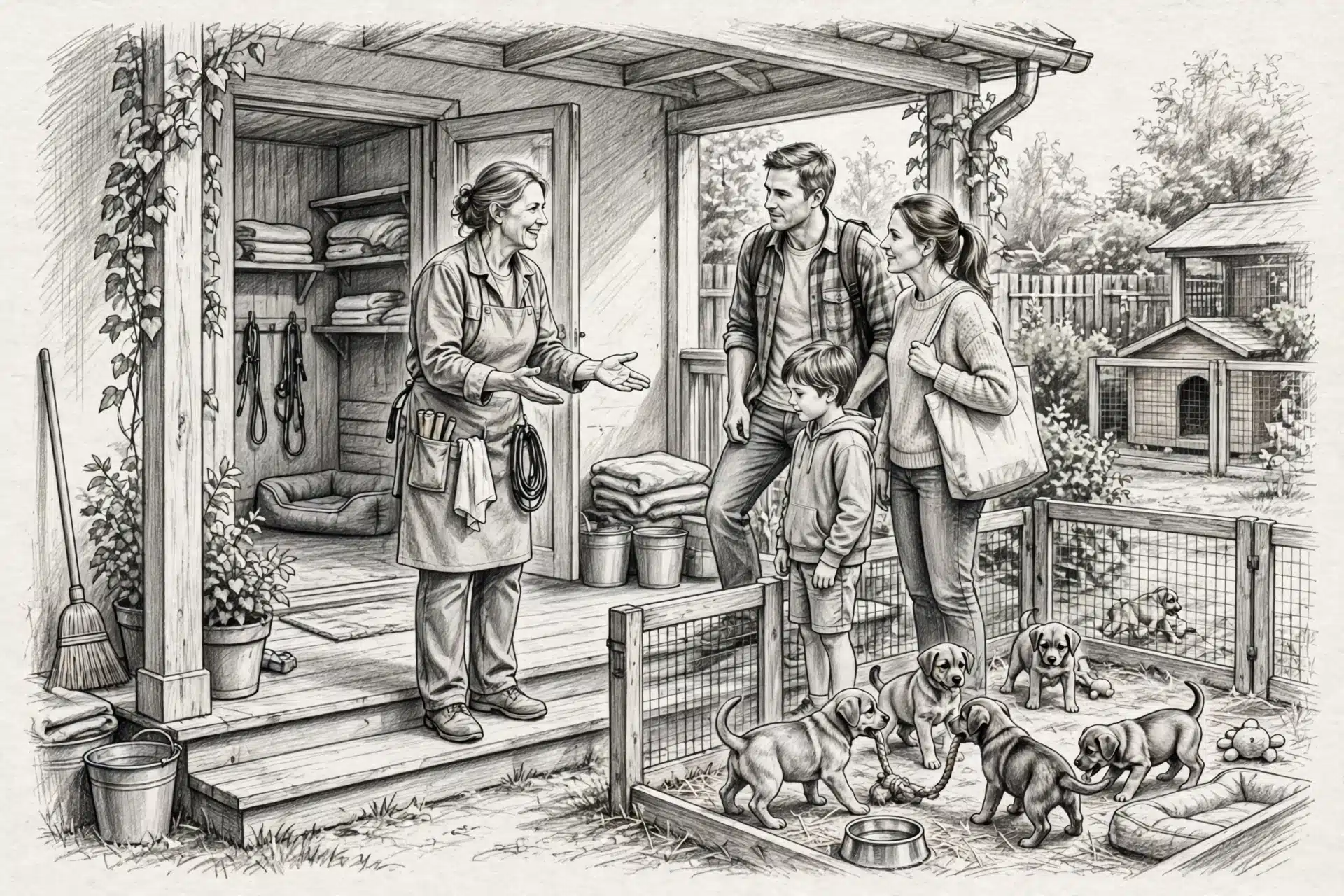
Before you fall for a listing, slow down and confirm the basics. Who owns the puppy, who bred the litter, and where has that puppy actually spent its first weeks? If anyone besides the breeder is handling the sale, ask why.
Highlights
- Ask for the breeder’s name and address, and whether the seller bred the puppy directly.
- Request a visit or a live video tour of the puppy’s everyday living area.
- Ask to meet the mother, and ask about the sire if he lives elsewhere.
- Treat reluctance to identify the source – or a push to meet somewhere unrelated – as a reason to pause.
Delaware’s own breeder guidance suggests seeing where puppies and adult breeding dogs spend their time and talking with a breeder who knows the litter. Ask clear questions and expect clear answers.
One note on the law: a Delaware retail pet store rule set to take effect in 2027 is separate from a direct sale by a breeder. It does not ban breeder-to-family placements.
Good breeders welcome this. It’s how we work at Sage Puppies – families see exactly where their Havanese or Cavapoo puppy was born and raised, even when delivery means the first meeting happens by live video.
Pros
- Makes the puppy’s origin and responsible contact clear.
- A visit or live tour reveals real context about how the litter is raised.
Cons
- A visit is not practical for every buyer, especially with distance involved.
- A tour is only one part of evaluation and does not replace records or follow-up questions.
It ranks first because knowing the source sets up every other check: who answers your questions, who shows the environment, and who provides the records.
Last updated: September 29, 2026
Also Read: Delaware Puppies Near You: A Checklist for Comparing Available Litters
2. Review parent health testing
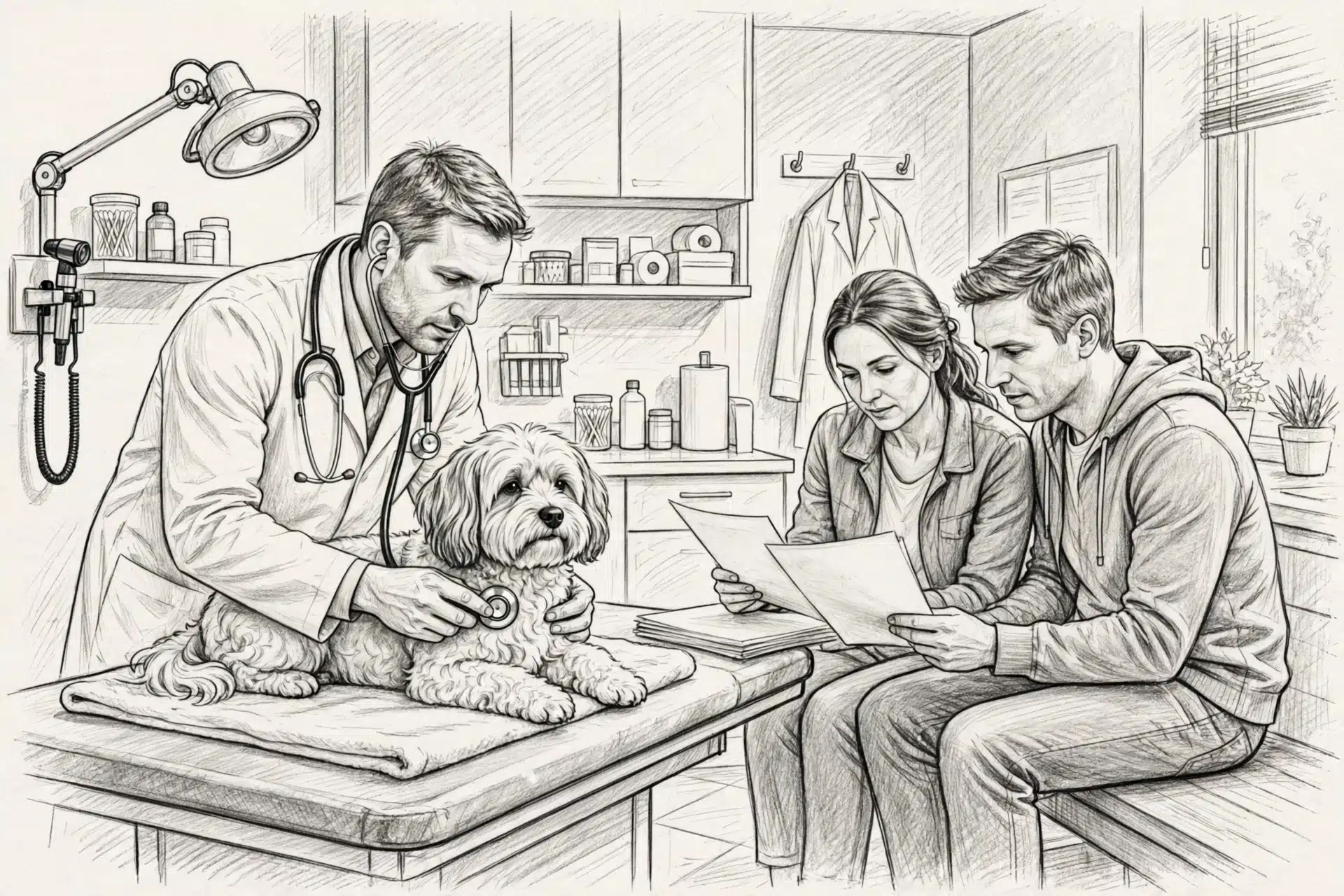
Ask which health concerns are relevant to your puppy’s breed or mix, and which screening tests each parent completed. Request copies of the results or a way to verify them, and have the breeder explain what each test can and cannot establish. A routine vet check is not the same as inherited-disease screening. For mixes like a Havapoo or Cavapoo, ask about health considerations for both parent breeds instead of assuming a mix carries no inherited risk. Programs like the OFA’s CHIC certification publish breed-specific screening results so buyers can verify claims themselves.
Highlights
- Ask for actual test documentation for the sire and dam, not just a verbal assurance.
- Check that the tests fit the breeds in your puppy’s background. The OFA lets you search results by breed and look up individual dogs.
- Ask about known health concerns in the family line, including conditions without a simple test.
- Talk through the results with your veterinarian before you commit.
Pros
- Moves the conversation from broad promises to documented screening.
- Helps you ask informed questions about your dog’s health for years to come.
Cons
- Testing varies by breed and cannot predict every future illness.
- You may need a vet or breed-health resource to interpret the results.
It ranks here because health evidence only means something once you know whose records you are reviewing.
Last updated: September 29, 2026
Also Read: Havanese, Havapoo & Cavapoo Puppy Care Blog
3. Assess the puppy’s home environment and early development
Look for humane living conditions, attentive care, and age-appropriate experiences. Whether you visit in person or take a live video tour, the puppy’s daily surroundings tell you more than any listing or photo can. A responsible breeder will happily walk you through both.

Highlights
- Check cleanliness, room to move, toys and enrichment, and the dogs’ overall demeanor
- Ask where puppies spend their day and who handles them
- Request specific examples of socialization and early routines
- Ask how the breeder evaluates temperament and matches families
Pros
- Gives you real observations, not marketing claims
- Starts a specific conversation about your puppy’s daily life
Cons
- A short visit cannot show every part of care
- Puppy temperament varies, and early traits are not a promise
The first three months matter most. The AVSAB position statement calls early socialization the standard of care, and the AVMA notes that gentle handling, household sounds, and people suit a puppy’s age. Ask to see the mother with her litter. If she is not available, ask why and request a clear account of her health and temperament. This check ranks here because it turns “family raised” into things you can actually see.
Last updated: September 29, 2026
Also Read: Puppy Care Blog & Resources | Sage Puppies
4. Match the puppy to its veterinary records
Ask for records tied to the exact puppy you plan to bring home, not a litter summary. Check that everything is dated, legible, and consistent, and that each page actually describes the same dog.
Then compare the puppy’s birth date, breed or mix, sex, color, and identifying marks across the listing, the health records, and the sale agreement. If any detail shifts between documents, ask why before you pay.

Highlights
- Match the puppy’s identifying details across records and the sale paperwork.
- Review dates and types of known vaccinations and worming treatments.
- Ask for documentation of any veterinary diagnosis, treatment, or medication.
- Keep a copy of all records and share them with your veterinarian.
Specs
- What to verify: Identity, dated vaccines and treatments, and veterinary history
- When to do it: Before final payment and again at handoff
- Best for: Checking the puppy’s documented medical history
Delaware’s written sale-information provisions for covered sellers include the puppy’s birth and breeder details, breed and identifying information, known vaccination and worming records with dates, and any diagnosis, treatment, or medication given while in the seller’s care. Sellers who are exempt from the statute still often provide the same paperwork voluntarily.
Two caveats matter. First, “up to date” is not a schedule. Young puppies need future doses, so have your own veterinarian review what is due next. Second, records document care to date but cannot guarantee future health, and seller obligations and recordkeeping depend on coverage and transaction details.
This step ranks here because individual records turn health claims into a timeline you can hand your veterinarian.
Last updated: September 29, 2026
5. Read the written disclosure and contract
Read the sale documents before you commit, not at the handoff. Delaware’s pet-warranty chapter requires covered sellers to give a written disclosure about known illness or congenital or hereditary conditions, and to state in writing whether the puppy had a veterinary exam before sale (Delaware Code, Title 6, Chapter 40). The law also defines seller exemptions, so its protections may not apply the same way to every sale.

Highlights
- Check that the puppy’s identity and the seller’s information match across every document (required details under § 4002).
- Read health disclosures and any statement about a pre-sale veterinary exam.
- Clarify deposit, balance, cancellation, and delivery terms before sending money.
- Understand health timelines, documentation, and any return or rehoming provisions.
Pros
- Reduces uncertainty about the sale and each party’s stated responsibilities.
- Makes it easier to keep a clear record of what was agreed.
Cons
- Legal coverage and remedies can depend on the transaction and statutory criteria.
- A contract cannot replace independent legal or veterinary advice when needed.
This check lands after health records for a reason: compare the seller’s written statements against the puppy’s documented history before you sign or pay.
Last updated: September 29, 2026
Also Read: 10 Signs a California Puppy Listing Is a Scam – Sage Puppies
6. Confirm pickup, delivery, and travel arrangements
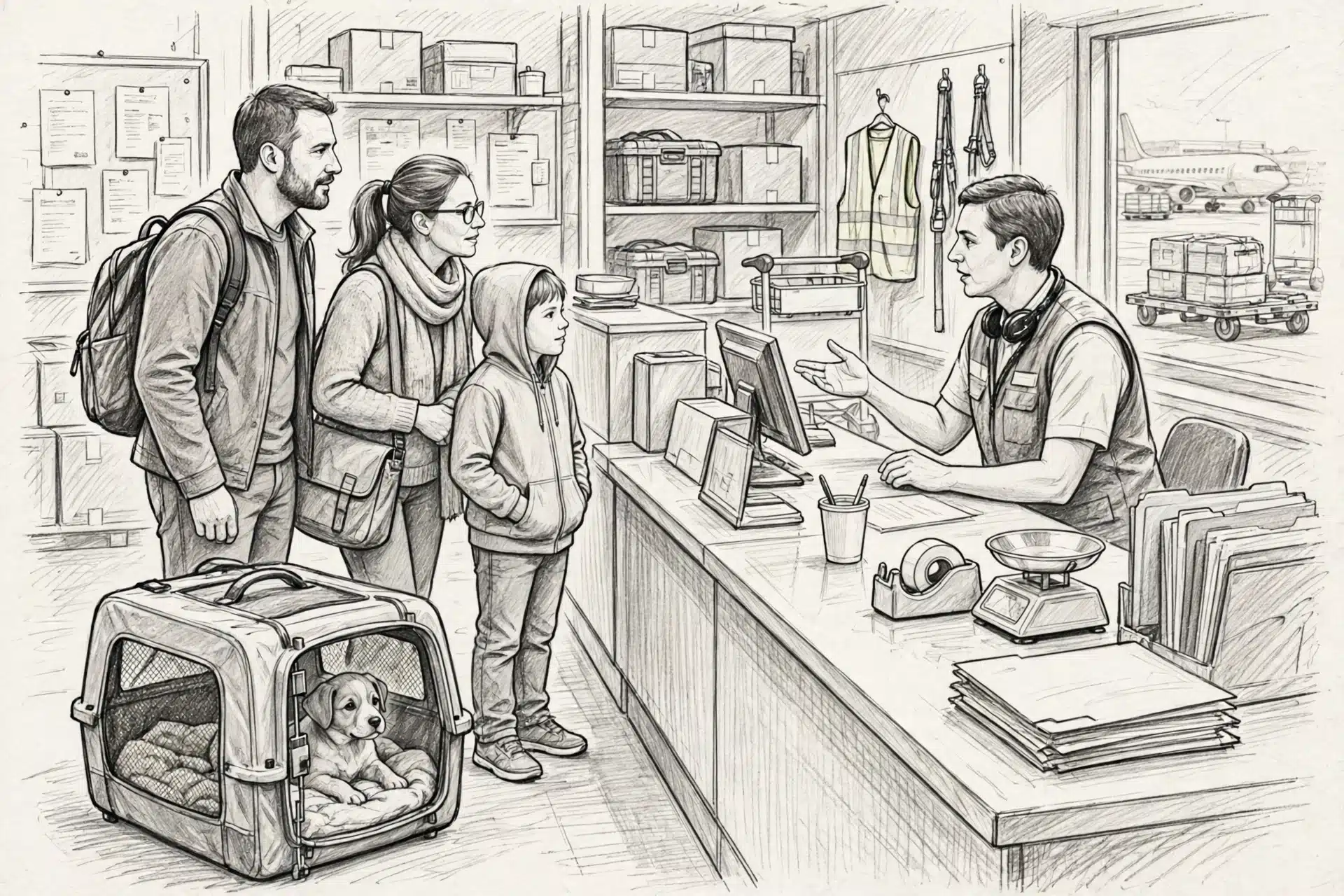
Settle the handoff plan and the paperwork your puppy’s specific route requires. Before travel day, confirm where the puppy will be handed over, who transports it, the timing, and whom to call if plans change.
Highlights
- Confirm the pickup or delivery location, schedule, and named contact.
- Ask which health certificate or travel documentation applies to your route.
- Match any travel paperwork to the puppy’s individual identity.
- Clarify what happens if travel is delayed or the puppy’s condition changes before handoff.
If your puppy is crossing state lines, ask who provides the certificate of veterinary inspection and when it must be dated. Each state sets its own entry rules, and the USDA’s state-to-state pet travel guide is the place to check Delaware’s before you book.
Keep the breeder’s contact information, your agreement, and health records handy during travel. Discuss safe handling and a calm arrival plan rather than assuming delivery logistics are obvious. At Sage Puppies, we walk every family through handoff details and route paperwork before the travel date is locked in.
Cons
- Requirements may vary with destination and transport circumstances.
- A smooth delivery does not establish the quality of breeding or health screening.
It ranks here because a clear handoff plan protects continuity between breeder and family, but only after you understand the puppy’s records and sale terms.
Last updated: September 29, 2026
Also Read: 10 Red Flags to Avoid When Visiting a Local Puppy Breeder
7. Plan the first days and veterinary follow-up
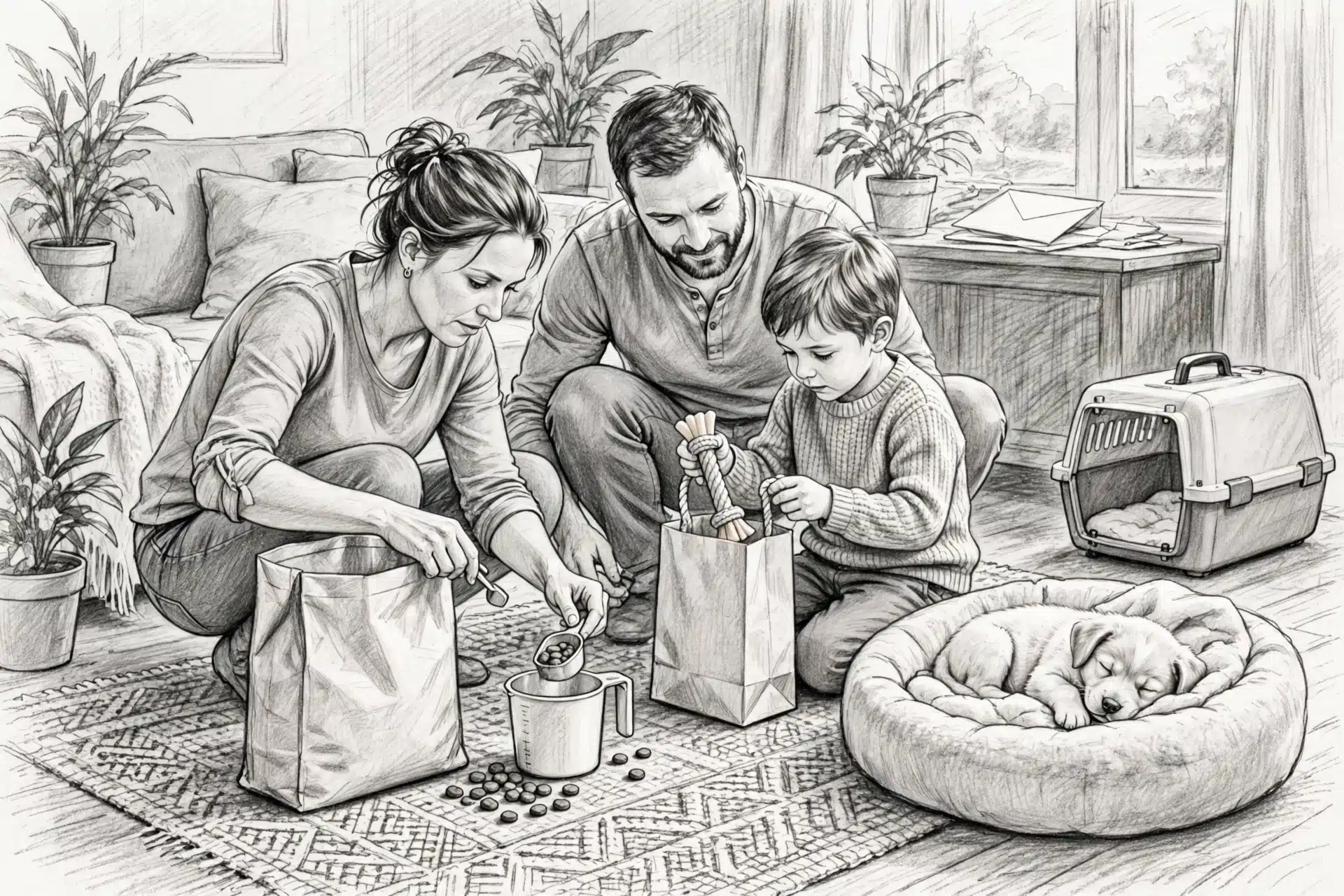
The last step carries the whole purchase forward: keep your puppy’s care continuous. Before handoff, ask what food your puppy eats, its feeding and sleep routine, any current medication, and how to reach the breeder with questions. Then book a visit with a veterinarian you choose and bring the health records, contract, and travel paperwork so care starts with full information.
Highlights
- Get written feeding, routine, and care information for the transition.
- Schedule a first appointment with a veterinarian you choose.
- Bring the puppy’s health records and sale documents to the appointment.
- Check Delaware’s current licensing and rabies requirements as the puppy grows.
Pros
- Helps your family and veterinarian continue care with fewer information gaps.
- Turns the purchase checklist into a practical settling-in plan.
Cons
- The right veterinary schedule depends on your individual puppy and professional advice.
- State rules change, so recheck licensing and rabies requirements against official guidance.
Under Delaware law, dogs six months and older need an individual license with proof of a current rabies vaccine, so mark that date early.
Last updated: September 29, 2026
Also Read: How to Check Delaware Puppy Breeder Credentials Before You Visit
How to Use This Delaware Puppy Buyer Checklist
Seven checks only matter if you use them. Work through them like this:
- Ask for documents first. Get identity, source, health, and sale papers before you pay a deposit. Compare names and puppy details across every page. They should match.
- Weigh health screening highest. Verifiable parent testing and an honest account of how the litter was raised tell you more than any single paper.
- Get written answers. If a breeder explains a missing record or an odd handoff plan only by phone, ask again in writing. Pause if key questions stay open.
- Read slowly. Review the contract and Delaware disclosures at your own pace. Ask a lawyer if anything feels unclear.
- Confirm travel details. Match paperwork to your exact pickup or delivery route, then book a vet visit within a few days of arrival.
- Keep everything. Save the contract, receipt, health records, and messages after your puppy comes home.
A program like Sage Puppies makes this easy by design: health-tested Havanese, Havapoo, and Cavapoo parents, transparent home-raising updates, and clear pickup or nationwide delivery steps. Whatever breeder you choose, expect this level of openness. It is the standard worth holding.

Ready to skip the guesswork? Every puppy at Sage Puppies comes from health-tested parents, raised in our South Jordan home with records you can review and pickup or nationwide delivery that fits your schedule. Browse our available Havanese, Havapoo, and Cavapoo puppies today, then submit an application to reserve your companion.
Frequently Asked Questions
Q1: What should Delaware puppy buyers check before bringing one home?
Start with health records, vaccination history, parent health testing, and the puppy’s socialization. Ask how the puppy was raised, request vet exam paperwork, and confirm what happens after pickup or delivery if a health issue appears.
Q2: How do I know if a breeder is legitimate?
Ask to see where puppies live and meet the mother if possible. Ethical breeders welcome questions, share health testing results, and interview you too. Pressure tactics or refusal to show records are red flags.
Q3: Is a one-page health certificate enough?
It’s a legal minimum, not proof of quality care. Ask for full vet exam notes, vaccination dates, deworming records, and results from parent health testing. Good breeders keep detailed records and share them willingly.
Q4: Can I have a puppy delivered to Delaware from out of state?
Yes. Many programs offer ground transport or flight nanny service. Ask who travels with the puppy, how long the trip takes, and what paperwork arrives with your puppy.
Q5: When should I schedule my puppy’s first Delaware vet visit?
Within a few days of arrival. Bring your records so your vet can review vaccines and deworming. Most breeders, including home-raised programs like Sage Puppies, recommend this as standard practice.
Q6: What questions should I ask before paying a deposit?
Ask about the deposit terms, what it covers, health guarantee details, pickup or delivery timing, and refund policies. Get everything in writing before you pay anything.