Quick Summary: Reading puppy listings in Arkansas quickly involves checking for clear breeder identity, detailed health and care info, and honest socialization details. Beware vague claims, pressure tactics, and listings lacking proof of health testing or parent info. A good listing provides transparent steps for pickup or delivery and avoids overly polished or generic ads, helping families find trustworthy breeders like Sage Puppies.
If you compare listings for puppies in Arkansas, a few words can tell you a lot. Phrases like ready now, teacup, or rare color often signal a listing that needs much closer checking. In many cases, you can tell in seconds if it deserves your time.
That is the problem this guide solves. Most families who want to buy puppies in Arkansas see the same issue fast: cute photos, short captions, and almost no clear facts. You are left guessing about health testing, breeder standards, pickup terms, and whether the puppy truly fits your home.
This article gives you a quick reading system. You will learn what to scan first, which words raise concern, and which details point to an ethical breeder. You will also learn how to buy puppies in Arkansas without getting pulled in by vague claims or pressure.
Our focus is simple and practical. We write for families who want to buy puppies in Arkansas carefully, with clear next steps, strong breeder signals, and a safer path to a well-raised companion puppy.
What to Scan First in the Listing
Start with the breeder’s identity and location
Read the top of the listing like a fact check, not a sales pitch. You want to know who is offering the puppy, where the puppy is located, and how clear that info is.
Scan for these first:
- Breeder or business name
- City and state
- Direct phone number or website
- Whether the puppy is at the breeder’s home, a kennel, or a third-party pickup spot
- Clear note on pickup or delivery
In Arkansas, retail pet stores must register with the state, and the Arkansas Department of Health says that law gives buyers certain consumer rights under the Retail Pet Store Consumer Protection Act. That does not cover every breeder, but it tells you one simple thing: identity and location matter.
If the listing hides the seller’s real name, uses only vague lines like “statewide delivery,” or avoids saying where the puppy lives now, slow down.
| Quick scan | Good sign | Bad sign |
|---|---|---|
| Name | Full breeder name | First name only |
| Location | Specific city and state | “Can meet anywhere” |
| Contact | Real phone and site | Text only |
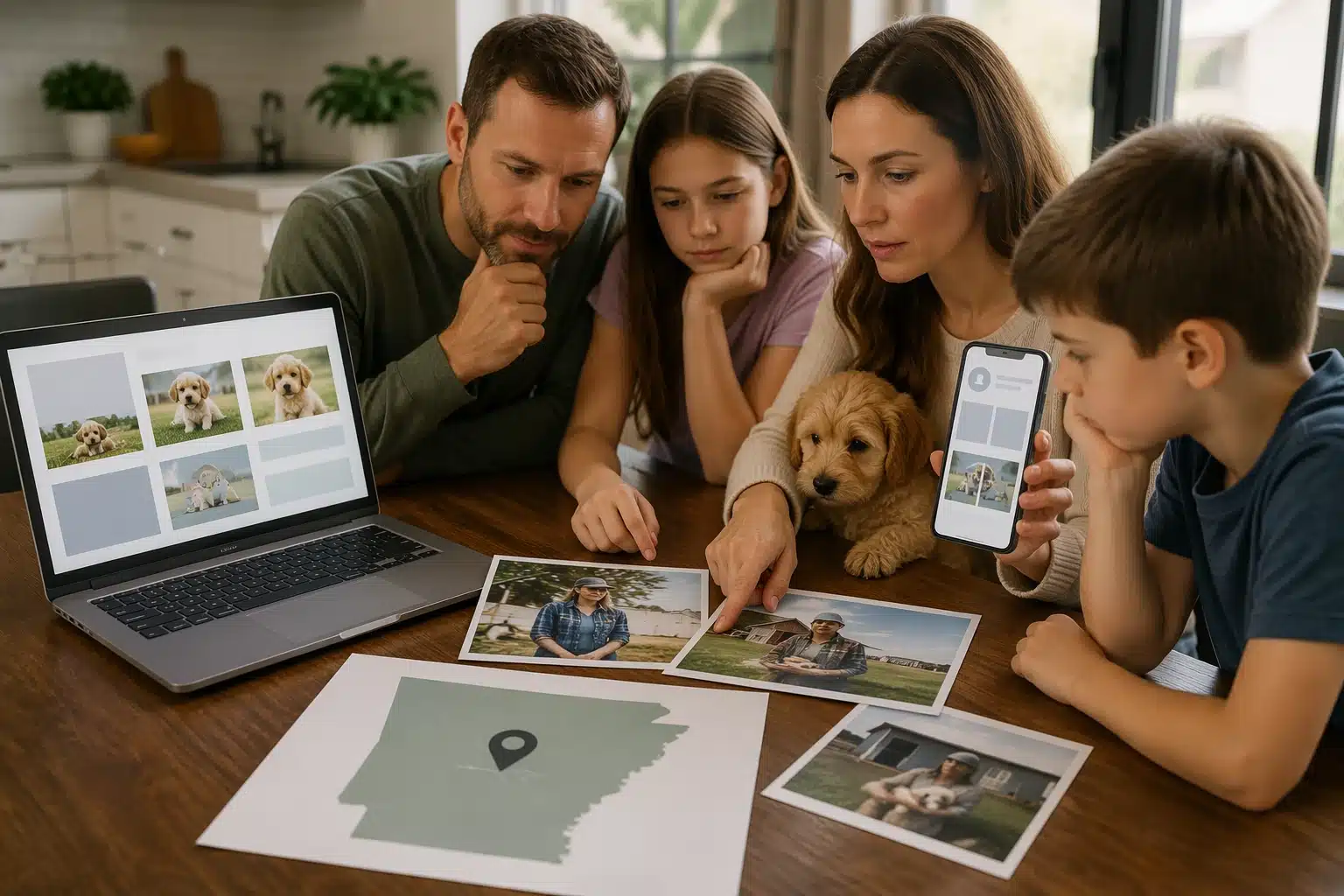
If you cannot tell who owns the puppy in 20 seconds, move on.
Separate facts from sales language
A good listing gives proof before praise. Nice words are fine. They just should not do all the work.
Look for facts such as:
- Age in weeks
- Breed or mix
- Vaccines already given
- Vet check date
- Parent health testing
- Price and what it includes
Arkansas scam cases have included fake puppy sites, stolen photos, and added shipping fees after payment, according to an Arkansas puppy scam report. So treat lines like these with care:
- “Rare”
- “Teacup”
- “Ready now, must go today”
- “Shipping insurance required”
- “Discount if you pay by wire”
Facts lower risk. Urgency raises it.
A strong breeder, including boutique programs like Sage Puppies, makes the basics easy to verify before asking for your trust.
Also Read: 10 Adorable Havapoo Colors You Need to See (2026)
How to Judge Health and Care Signals
A good listing should show proof, not warm words. You want clear health details, real parent info, and basic care records you can verify fast.
Look for specific health testing, not just a vet check
A “vet checked” line is not enough. That only tells you a puppy was seen once. It does not replace breed-related testing on the parents.
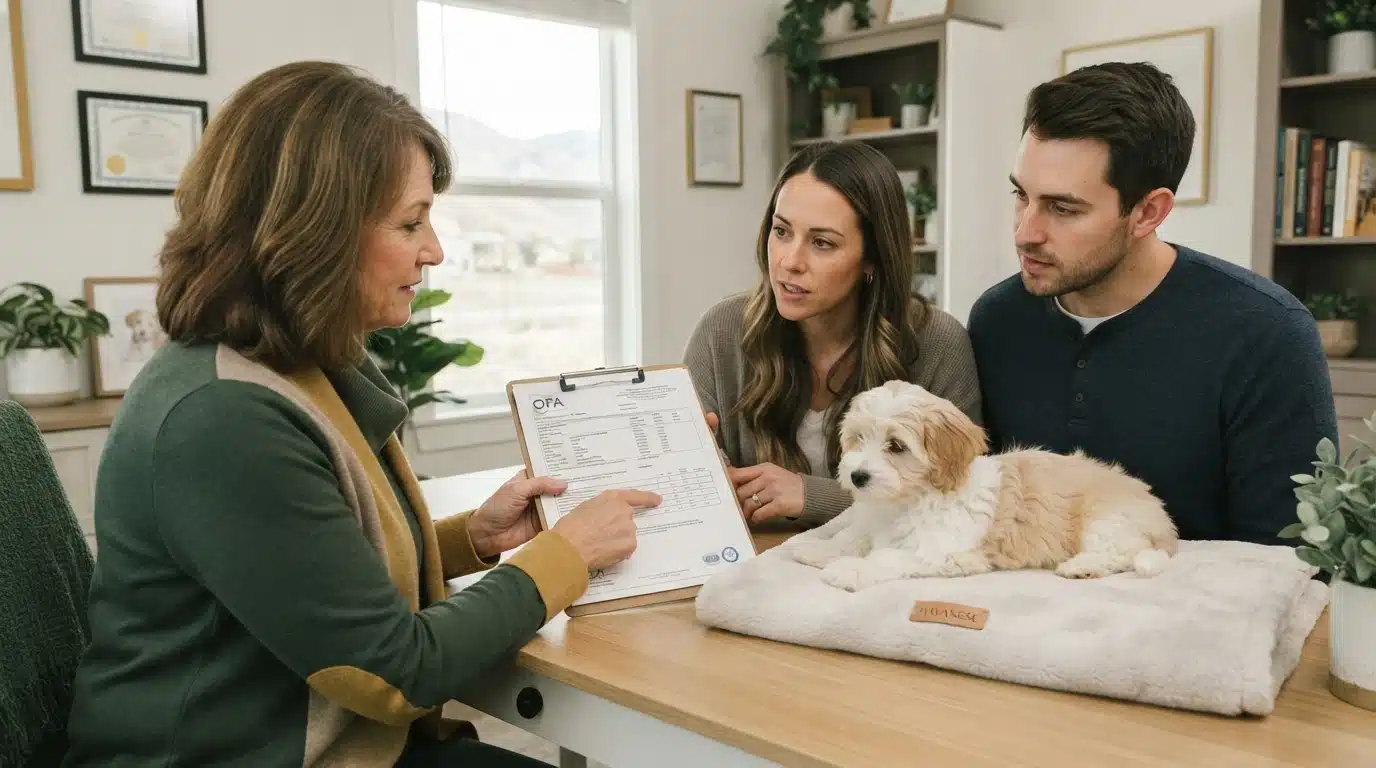
The Orthopedic Foundation for Animals says buyers should ask for proof of parent screenings and review the parents when possible, not just a sales claim on the puppy listing OFA guidance for prospective owners. Better listings usually name the test type, the parent, and the result.
Use this quick filter:
| Listing phrase | What it means | Green or red flag |
|---|---|---|
| Vet checked | Basic exam only | Yellow flag |
| DNA tested parents | Good start, but ask which panel | Yellow-green |
| OFA or CHIC-listed parents | Public, trackable health records | Green flag |
| Health guaranteed, no test names | Marketing claim without proof | Red flag |
Look for details like:
- OFA results
- CHIC numbers
- Breed-specific DNA panels
- Heart, eye, patella, or hip testing when relevant
If a breeder cannot show the actual parent testing, treat the listing like it has no testing.

Check whether the parents are visible and described
A strong listing usually shows at least one parent, often the mother, and tells you something useful about temperament, size, and home life.
That matters because parent behavior gives you a clue about what this puppy may be like. OFA also advises buyers to see at least one parent and review family health background when possible OFA CHIC program overview.
Scan for:
- Clear photos or video of the parents
- Notes on temperament, not just color
- Adult weight range
- Where the parents live
- Whether they are family-raised or kennel-kept
Be cautious if the listing:
- Never names the parents
- Uses only puppy glam shots
- Avoids size or temperament details
- Says “parents on site” but shows nothing
Read care details like vaccines, deworming, and age
Care notes should be plain and dated. The AKC explains puppies need a vaccine series over time, so one early shot does not mean “fully vaccinated” AKC puppy vaccination schedule.
Check the listing for:
- Birth date
- Go-home age
- Vaccine record
- Deworming schedule
- Food and transition notes
A quick table helps:
| Care detail | What you want to see |
|---|---|
| Age | At least 8 weeks before going home |
| Vaccines | Dates and which shot was given |
| Deworming | More than “up to date” |
| Records | Copy provided at pickup or delivery |
“Up to date” is too vague. Good breeders list what was done and when. That level of detail is what families should expect from a careful program like Sage Puppies.
Also Read: 10 Small Breed Puppies That Stay Friendly & Easygoing
How to Read Temperament and Socialization Clues
Notice how the breeder describes the puppy’s daily environment
A good listing should tell you how the puppy is being raised, not just how cute it looks. That matters because puppies are most open to learning from about 3 to 12 weeks, and early experience shapes how they handle people, sounds, and new settings later on, according to EU breeder socialization guidance.
Look for clear phrases like:
- Raised in the home
- Handled daily
- Exposed to normal household sounds
- Around children or supervised visitors
- Started on crate, grooming, or car ride practice
- Spends time on different surfaces like grass, tile, or carpet
Listings get stronger when they mention the mother and litter setup, not just the puppy alone.
If a listing says only “well socialized” but gives no examples, treat that as weak proof.

Use this quick filter:
| Listing clue | What it suggests | What to ask next |
|---|---|---|
| Names daily sounds and routines | Real home exposure | “What noises has the puppy heard?” |
| Mentions different surfaces or objects | Better confidence building | “What new things has the puppy tried?” |
| Shows only posed photos | Less proof of daily life | “Can I see playtime videos?” |
| Never mentions the mother or littermates | Missing context | “How long is the puppy with mom and siblings?” |
Look for temperament matching language
The best breeders do not promise that every puppy is perfect for every home. They talk about fit.
The AKC notes that by 6 to 8 weeks, puppy personalities are clearer, and breeders should think about which puppies fit which owners best in their socialization guide.
Good listing language sounds like this:
- Calm and cuddly
- More playful and outgoing
- Gentle with handling
- Best for a quieter home
- May do well with kids who know dog manners
Watch for vague filler like:
- Great with everyone
- Perfect family dog
- Amazing personality
Those lines are too broad on their own.
A careful breeder matches energy, confidence, and handling style to your home. That is a much better sign than a flashy ad.
If you want a helpful benchmark, Sage Puppies tends to explain temperament in practical family terms, which makes listings easier to trust fast.
What Pickup, Delivery, and Reservation Details Reveal
Read the reservation process before you inquire
A good listing tells you how the puppy is reserved, not just how to pay fast. Look for a clear order: application, approval, deposit, contract, pickup or delivery plan. If the steps feel vague, slow down.
Use this quick screen:
| Reservation detail | Green flag | Red flag |
|---|---|---|
| Deposit terms | States if deposit is refundable or applied to price | No refund terms shown |
| Puppy hold policy | Explains when a puppy is marked reserved | “Message me fast” pressure |
| Family approval | Breeder asks about home, kids, schedule, and breed fit | First payment wins |
| Timing | Gives a realistic pickup window | “Take home today” with no prep |
A careful process often means the breeder cares where puppies go. That fits the kind of calm, family-first approach many buyers want from programs like Sage Puppies.
If a listing hides the deposit rules, assume the hard parts are hidden too.

Check whether pickup and delivery are spelled out
Pickup and delivery details show whether the seller plans ahead or makes it up later. The listing should say where the puppy starts, who handles transport, what fees apply, and what paperwork comes with the puppy.
For domestic travel, USDA notes that state rules can differ, and owners should check the destination state’s pet entry requirements at APHIS interstate pet travel guidance. For international travel, APHIS says country rules can change often and may require a health certificate from a USDA-accredited vet, so vague “worldwide shipping” claims are not enough according to APHIS pet travel overview.
Check for:
- Local pickup address or region
- Delivery method – ground nanny, flight nanny, or airport pickup
- Health paperwork timing
- Who pays transport costs
- What happens if plans change
Clear travel details usually signal a breeder who thinks past the sale.
Also Read: 10 Questions to Ask Before Buying a Puppy Locally
Red Flags That Should Slow You Down
Some listings look fine at first glance, then fall apart when you ask one basic question. Slow down if the seller avoids details, pushes for fast payment, or seems to sell every kind of puppy under the sun.
Vague health claims with no documentation
“Vet checked,” “healthy bloodline,” and “no issues” are not proof. A solid listing should point to real records, not soft wording. Cornell notes that responsible breeders test for breed-specific conditions and should share those results with buyers, not just promise the parents are healthy in general Cornell’s breeder guidance.
Look for:
- Parent health testing names
- Vaccination and deworming records
- A clear vet timeline
- Answers about known breed risks
If the breeder gets vague the moment you ask for paperwork, treat that as your answer.
Pressure to pay before asking questions
A rushed seller wants your deposit before you feel ready. That is backwards. Good breeders expect questions. The AKC says breeders should answer your questions and ask plenty of their own to make sure the puppy is a good fit AKC’s breeder question list.
Pause if you hear:
- “Send money now or you’ll lose the puppy.”
- “We can talk after the deposit.”
- “No time for a call, just text payment.”
- “Other families are waiting, so hurry.”
A careful process protects both sides. Pressure usually protects only the seller.
Too many breeds, too little depth
One listing can show ten breeds, nonstop litters, and almost no detail on temperament, parent dogs, or home life. That should make you cautious. Depth matters more than volume.
Use this quick check:
| Listing signal | Better sign | Red flag |
|---|---|---|
| Breed focus | Clear specialty | Many unrelated breeds |
| Parent details | Named, explained, documented | Barely mentioned |
| Puppy fit info | Temperament and family match | Only color and price |
Programs with a narrow focus, like Sage Puppies with Havanese, Havapoo, and Cavapoo puppies, can often explain their dogs with much more clarity.
A Fast Comparison Framework You Can Use on Any Listing
Use this quick test before you fall for the cutest face. Compare every listing with the same three-part filter: health, home, and handoff.
- Health – Look for proof, not claims. Arkansas rules for retail pet stores require permanent health records with vaccines, worming, and other vet care, and the state says the law exists to help buyers get pets that are healthy and temperamentally sound under Arkansas pet store regulations.
- Home – Ask where the puppy is actually raised. A clean family home, daily handling, and clear parent details matter more than polished ad copy. If the listing avoids the living setup, slow down.
- Handoff – Check how the puppy gets from breeder to you. USDA APHIS notes some sellers are regulated under the Animal Welfare Act, while some direct sellers are exempt, so the key is still transparency about who bred, housed, and transported the puppy under USDA guidance.
| Filter | Green flag | Red flag |
|---|---|---|
| Health | Named tests and records | “Vet checked” only |
| Home | Clear raise-up details | Vague location or setup |
| Handoff | Written pickup or delivery steps | Rush to pay before details |
If one of the three parts is weak, the whole listing gets weaker.
Decide what is missing before you decide what is exciting. That keeps emotion from doing all the work.
Use this checklist:
- Missing parent health info
- Missing age, weight range, or breed mix clarity
- Missing recent photos
- Missing contract terms
- Missing who owns the puppy now
- Missing pickup or delivery details
Then score the listing:
- 8-10: worth a call
- 5-7: ask questions first
- 0-4: move on
Good listings make your next step easy. Great ones make your risk low.

If you want a listing that is easy to read and easier to trust, start with Sage Puppies. Their Havanese, Havapoo, and Cavapoo puppies come from a transparent, family-first program with health-tested parents, clear next steps, and pickup or nationwide delivery options. Browse Available Puppies, review Pricing and How It Works, then submit an application when the right fit feels clear.
Frequently Asked Questions
Q1: best Arkansas puppy breeders
Look for breeders who share parent health testing, clear pricing, pickup or delivery details, and recent puppy photos or videos. Good listings also explain home raising, temperament work, and what comes home with the puppy. Skip vague ads and pressure tactics.
Q2: How fast can I spot a risky puppy listing?
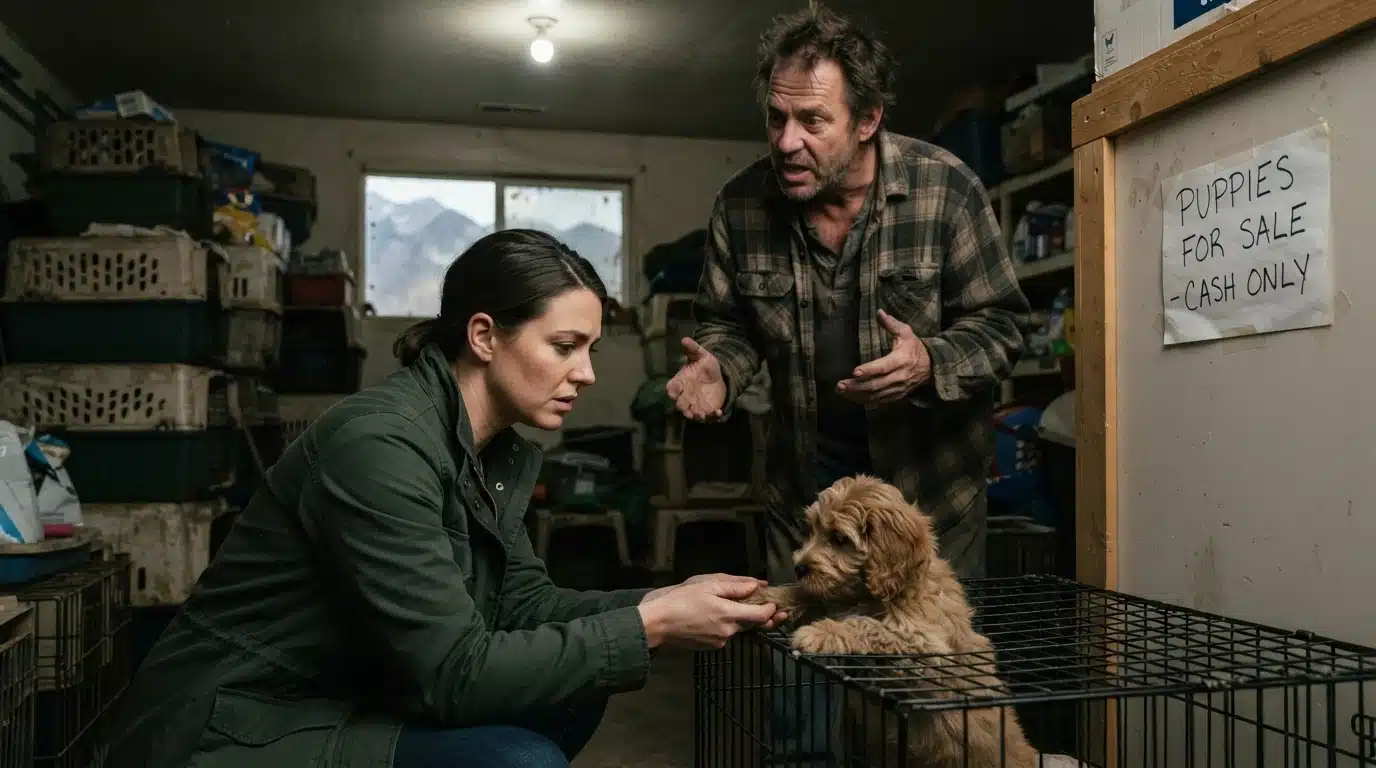
You can usually tell in under a minute. Watch for stock photos, no parent info, cash-only language, same-day meetups, or no mention of vet records. If the seller dodges simple questions, move on fast.
Q3: What health paperwork should a listing mention?
A strong listing should mention age-appropriate vet checks, vaccine records, deworming history, and parent testing when relevant to the breed. If paperwork only appears after you pay, treat that as a warning sign.
Q4: Is delivery a red flag?
Not by itself. Ethical breeders may offer delivery or pickup. The key is transparency. You should know who handles transport, timing, total cost, and what support you get before and after your puppy comes home.
Q5: What if the listing looks polished but feels thin?
Trust that instinct. Nice photos do not equal a good breeder. Ask for parent details, daily care routines, socialization notes, and a live call. Breeders with nothing to hide usually answer clearly and calmly.
Conclusion
Reading Arkansas puppy listings fast comes down to a few simple checks. Look for clear health records, honest age and price details, breeder identity, and signs that the puppy was raised for family life, not pushed as a quick sale. Slow down if a listing feels vague, rushed, or too polished.
Arkansas rules for retail pet stores require records on vaccinations, worming, and other veterinary care, which helps you know what real paperwork should look like under the Arkansas Retail Pet Store Consumer Protection Act. If pickup or delivery crosses state lines, the destination state may also require a health certificate or other entry steps, as USDA APHIS notes in its interstate pet travel guidance.
The best listing is not the cutest one. It is the one that answers hard questions clearly and early.