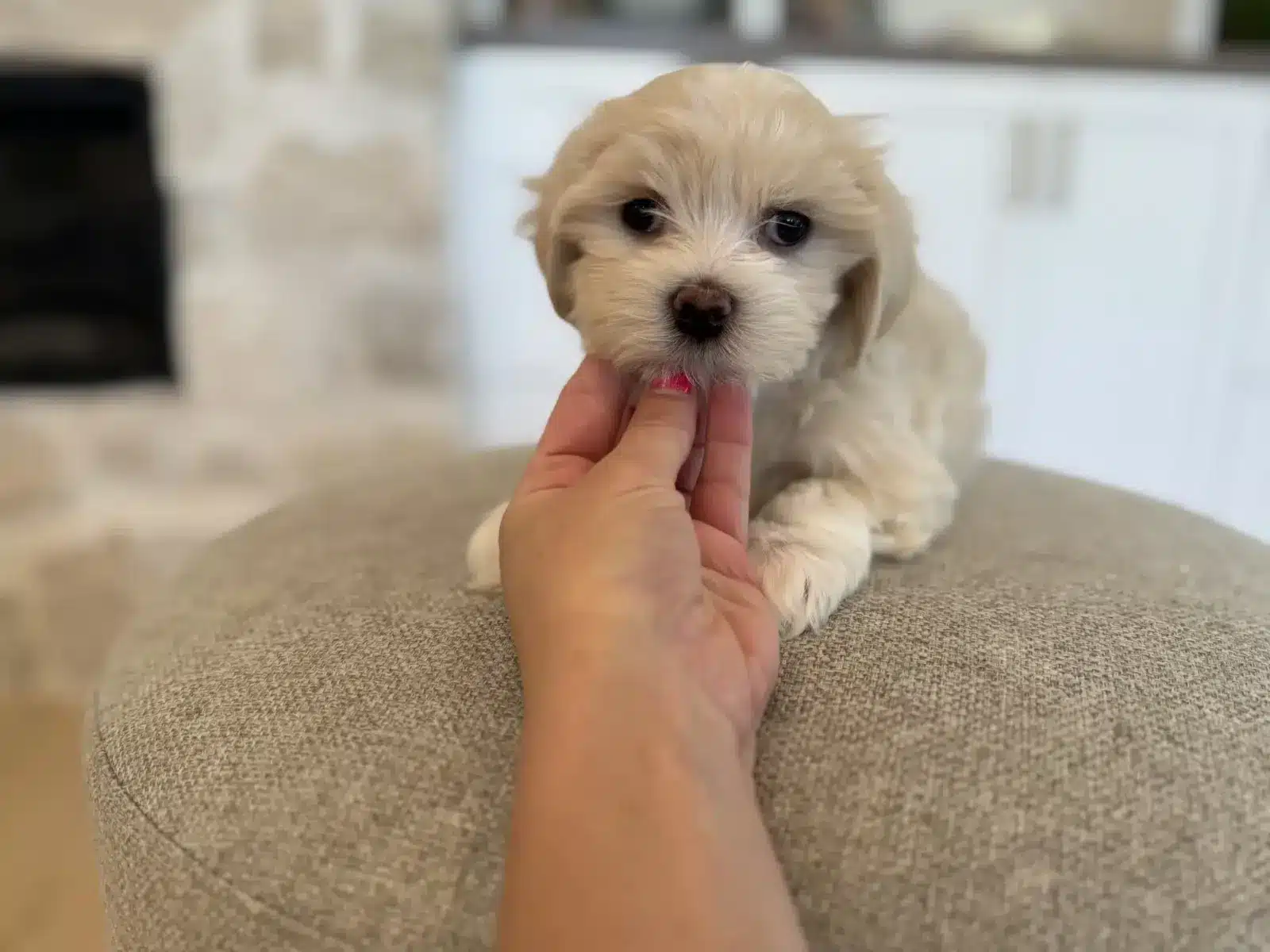
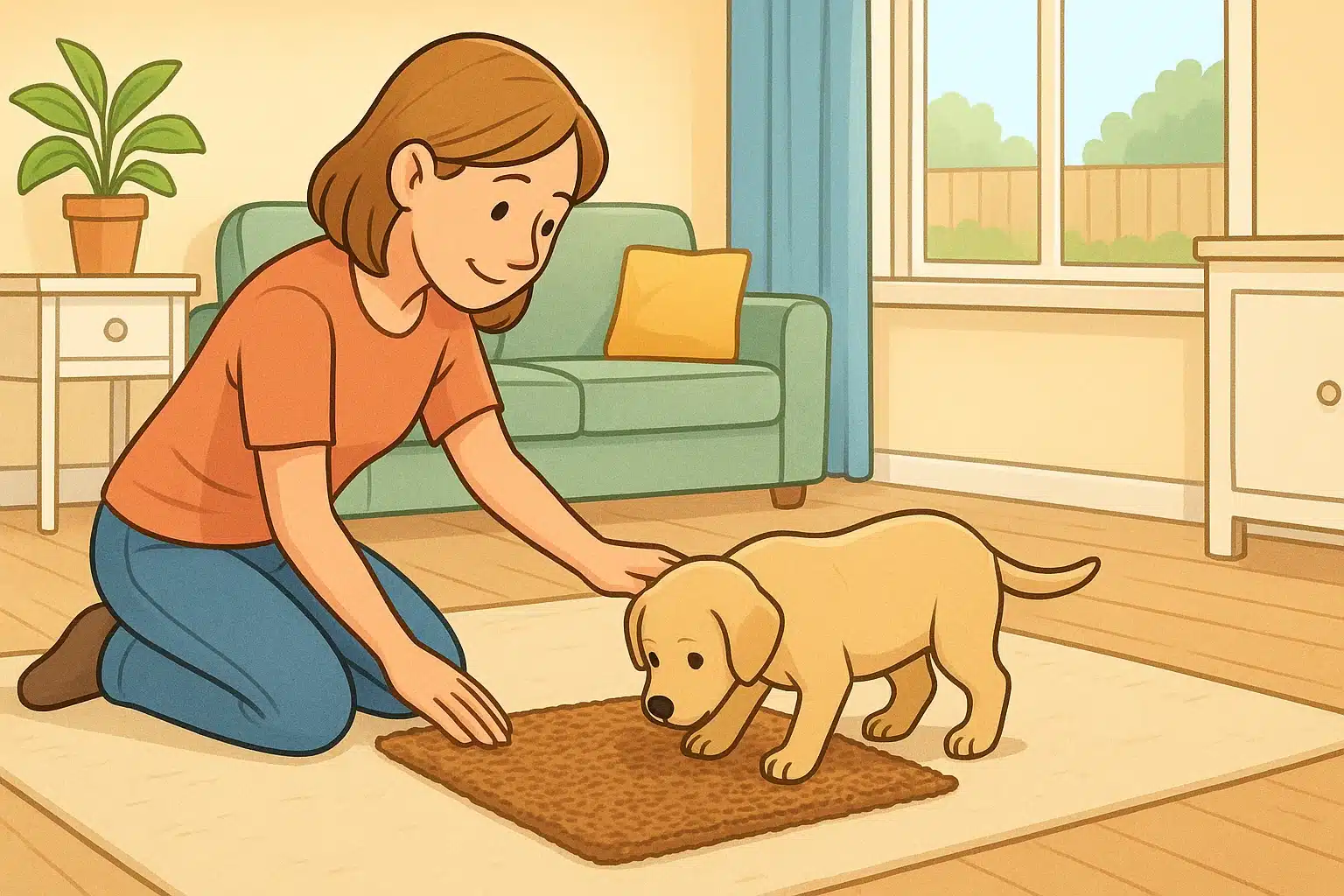
Puppy socialization and puppy exposure are related, but they are not the same. Exposure means a puppy encounters a person, dog, sound, surface, place, object, or handling experience. Socialization means the puppy has enough safety, choice, and positive support to learn, “I can handle this.” For families bringing home a Havanese, Havapoo, or Cavapoo through Utah pickup or nationwide delivery, the goal is not to race through a giant checklist. It is to create calm, repeatable experiences that fit the individual puppy.
Exposure is what your puppy encounters. Socialization is what your puppy learns from the encounter.
A successful experience does not require your puppy to greet, touch, or play with everything. Calm observation, voluntary curiosity, and the ability to recover are often better signs of confidence than nonstop interaction.
Puppy Socialization vs. Exposure: What Is the Difference?
It is easy to assume that a puppy becomes socialized simply by seeing many things. But the puppy’s emotional response matters more than the number of boxes checked.
The puppy notices something new.
The experience may be positive, neutral, uncomfortable, or frightening. Exposure by itself does not tell us what the puppy learned.
The puppy builds a safe, useful association.
The puppy has appropriate distance, an ability to opt in or out, and something positive paired with the experience.
The goal is not to make your puppy greet everyone.
A confident puppy can notice a jogger, child, bicycle, dog, vacuum, delivery cart, or unfamiliar surface without needing to rush toward it or flee from it. Neutrality counts. In many real-life situations, calmly observing and then returning attention to the owner is the most useful response.
Think quality over quantity. Ten calm, puppy-led experiences are more valuable than fifty rushed encounters that leave the puppy tired, trapped, or worried.
Why “More Exposure” Can Sometimes Make Fear Worse
When an experience is too intense, too close, too long, or impossible to escape, a puppy may learn that new things are unsafe. Repeating an overwhelming experience does not automatically create confidence. It can instead make the puppy more watchful, avoidant, or reactive the next time.
This is why “they just need to get used to it” can be risky advice. A puppy who freezes while being passed from person to person is not necessarily becoming comfortable. A puppy who is chased by an overexcited dog is not necessarily learning healthy dog skills. A puppy who is held beside a loud appliance may simply be learning that warning signals do not result in relief.
Confidence grows when the puppy can process the experience, make a choice, receive support, and return to a relaxed state.
Use the C.A.L.M. Method to Build Puppy Confidence
C.A.L.M. is this guide's memory aid for choice, distance, positive pairing and a short session. It is not a certified training method or a tested Sage protocol. Use it to organize the practical principles below.
- C — Create choice. Let the puppy approach, pause, retreat, or observe. Avoid dragging the puppy closer, holding the puppy in place, or allowing people to surround the puppy.
- A — Adjust distance. Begin far enough away that the puppy can look, sniff, move normally, and respond to you. Distance is not failure; it is one of the best tools for keeping a puppy under threshold.
- L — Link the experience with something good. Pair the new sight, sound, person, surface, or handling step with food, play, praise, gentle touch, or access to something the puppy enjoys.
- M — Move on while the puppy is successful. End before the puppy is exhausted or overwhelmed. A short, easy experience followed by rest is often more useful than a long outing.
During each session, ask: Can my puppy disengage from the new thing? Can my puppy sniff, eat, play, or respond to me? Does the body look loose rather than rigid? Does the puppy recover quickly after a surprise? Those answers are more informative than how close the puppy got.
A quiet doorbell example
Imagine a puppy who backs away when the doorbell rings. Begin farther from the sound at a manageable volume, pair a brief sound with something the puppy enjoys and allow retreat. If the puppy remains worried, reduce the challenge or stop. The goal is comfortable recovery, not reaching the front door. This is an illustrative scenario, not a claim about a Sage puppy or a guaranteed result.
How to Tell Whether Your Puppy Feels Safe
Puppy body language must be read in context. One yawn or one moment of hesitation does not prove a puppy is afraid. Look at the whole body, the environment, and whether the puppy becomes more relaxed or more distressed as the experience continues.
Green signals
- Loose, wiggly body
- Soft eyes and normal blinking
- Sniffing and exploring
- Voluntary approach and retreat
- Taking food or engaging in play
- Quick recovery after a small surprise
Yellow signals
- Slowing down or leaning away
- Turning the head or avoiding gaze
- Lip licking, repeated yawning, or paw lifting
- Ears held back or tail lowered
- Hiding behind a person
- Refusing a treat the puppy usually likes
Red signals
- Freezing or cowering
- Frantic escape attempts
- Persistent trembling or panic
- Growling, snapping, or repeated lunging
- Inability to re-engage after gaining distance
- Distress that continues after the trigger is gone
Do not punish a growl. A growl communicates discomfort. Increase distance, end the interaction, and consider what made the puppy feel trapped or unsafe. Punishing the warning does not resolve the underlying emotion.
How to Socialize a Puppy Safely Before Vaccinations Are Complete
New owners are often told either to keep a puppy completely isolated or to take the puppy everywhere. Neither extreme is ideal. Early learning matters, and infectious-disease risk also matters. The safest plan balances both.
Ask your veterinarian about your puppy’s age, vaccine history, health, local disease prevalence, and which environments are appropriate. A veterinarian who knows the puppy and the local risk is the right person to give individualized clearance.
The AVSAB puppy-socialization statement emphasizes safe early experiences without overwhelming the puppy. Its current humane-training position recommends reward-based methods. Those principles inform this guide; your veterinarian should tailor disease-risk precautions to your puppy.
Controlled experiences
- Invite calm visitors into a clean home and let the puppy choose whether to approach.
- Carry the puppy or use a clean stroller, carrier, blanket, or cart liner in public.
- Watch traffic, people, carts, bicycles, and other movement from a safe distance.
- Practice short car rides or relaxed observation from a parked vehicle.
- Use a private, clean yard or patio when your veterinarian considers it appropriate.
- Arrange time with healthy, appropriately vaccinated dogs whose temperaments are known.
- Consider a well-managed puppy class with health requirements, sanitation practices, controlled group size, and reward-based instruction.
Delay or avoid
- Dog parks and uncontrolled dog gatherings
- Unknown dogs or dogs showing signs of illness
- Pet-store floors and communal potty areas
- High-dog-traffic grass, sidewalks, or apartment relief areas
- Shared water bowls and poorly cleaned communal equipment
- Areas with feces, standing water, or unclear sanitation
- Any location your veterinarian identifies as a significant local risk
Safe socialization does not require putting a young puppy on the ground in a busy public area. A puppy can learn from sights, sounds, smells, movement, people, and environments while being carried or positioned on a clean barrier.
A Practical Puppy Socialization Checklist
Use this list as a menu, not a race. Introduce only a small number of experiences at a time, repeat the easy ones, and adapt the pace to your puppy.
- PeopleAdults, respectful children, older adults, people wearing hats, uniforms, sunglasses, or carrying bags—without requiring direct contact.
- HandlingBrief touches to paws, ears, face, collar area, body, and tail; supported lifting; towel contact; and gentle grooming preparation.
- Household soundsDoorbells, appliances, dishes, television, laughter, doors, and vacuum sounds introduced at a manageable volume and distance.
- SurfacesCarpet, tile, wood, rubber mats, gravel trays, stable platforms, grass in an approved area, and other secure, nonslip textures.
- Movement and objectsStrollers, carts, umbrellas, walkers, wheelchairs, bicycles, skateboards, rolling luggage, and people moving in unusual ways.
- EnvironmentsDifferent rooms, porch or patio, car, quiet parking lot, veterinarian-approved public observation points, and calm visits to trusted homes.
- Dogs and animalsCarefully selected, healthy animals with known behavior; no forced play and no expectation that the puppy greet every dog.
- Rest and independenceSettling on a mat, resting behind a gate, spending short periods in a crate or pen, and learning that calm separation is safe.
- TravelCarrier practice, secure car restraint, engine sounds, short rides, potty planning, and recovery time after travel.
- Everyday careBrushing, comb sounds, nail-tool sounds at a distance, collar and harness practice, tooth-care preparation, and calm examination positions.
Special Considerations for Havanese, Havapoo, and Cavapoo Puppies
Small companion puppies can be social and curious, but their size changes how introductions should be managed. A friendly child, large dog, crowded room, or slippery floor can feel much more intense to a small puppy than it does to an adult dog.
- Ask children to sit on the floor and let the puppy approach instead of carrying or hugging the puppy.
- Choose calm canine partners and interrupt play before the size difference becomes unsafe.
- Use nonslip surfaces during handling and grooming practice.
- Support the puppy’s chest and rear when lifting; do not let visitors pass the puppy around.
- Make coat care part of socialization because regular brushing, face handling, paw care, and professional grooming are likely to be part of adult life.
- Teach calm observation, not constant greeting, so the puppy can function comfortably in busy family and travel settings.
Read more about Sage Puppies’ early development and puppy socialization foundations and our guide to puppy training foundations before go-home.
A Gentle Seven-Day Confidence-Building Plan
This is an illustrative plan, not a tested seven-day program or a deadline for progress. Repeat a day, skip a step or reduce the challenge when your puppy needs more time, and follow your veterinarian's advice about suitable environments.
Common Puppy Socialization Mistakes
- Forcing greetings: Moving the puppy closer after the puppy has leaned away, hidden, frozen, or tried to leave.
- Counting encounters instead of reading the puppy: Treating the checklist as the goal rather than watching the puppy’s emotional response.
- Luring the puppy into a trap: Using food to pull the puppy so close that retreat becomes difficult. Reward at a distance where the puppy still feels safe.
- Using a dog park as the main socialization plan: Unknown dogs, uncontrolled play, sanitation concerns, and limited ability to leave can make dog parks inappropriate for young puppies.
- Staying too long: Continuing after the puppy becomes tired, frantic, mouthy, avoidant, or unable to settle.
- Punishing fear signals: Correcting barking, growling, or retreat without addressing the puppy’s discomfort.
- Skipping recovery: Filling every day with outings and visitors instead of protecting naps, quiet time, and predictable routines.
What to Do When Your Puppy Is Afraid
Fear is information, not disobedience. Increase distance, lower the sound or movement, reduce the number of people or animals present, and give the puppy a clear path away. Pair the easier version of the experience with food, play, or calm attention, then stop while the puppy is recovering.
Do not insist that the puppy “face the fear” at full intensity. Return to a level where the puppy can think and make choices. Progress may look like watching from farther away, approaching for one second, sniffing the object after it stops moving, or simply relaxing in the same room.
Contact your veterinarian if fear appears suddenly, worsens, affects eating or sleep, or may be related to pain or illness. Seek help from a qualified reward-based trainer or veterinary behavior professional when the puppy shows persistent panic, aggression, serious escape behavior, or fear that is expanding to more situations.
How Sage Puppies Starts the Foundation
At Sage Puppies, early development is the beginning of the process—not a claim that a young puppy is fully socialized or fully trained. Puppies are introduced to gentle handling, normal household rhythm, age-appropriate sounds and surfaces, calm human interaction, and opportunities to recover and rest.
We pay attention to the individual puppy rather than assuming every puppy should respond the same way. Families continue the work after go-home with predictable routines, veterinarian-guided health precautions, thoughtful exposure, and reward-based learning.
Families can also use our new puppy preparation guide and first puppy grooming appointment guide to plan calm next steps.
Puppy Socialization vs. Exposure FAQs
What is the difference between puppy socialization and exposure?
Exposure means a puppy encounters something. Socialization means the encounter is managed so the puppy can build a safe, useful association. Choice, appropriate distance, positive pairing, body language, and recovery determine whether exposure becomes good socialization.
Should my puppy meet every person and dog?
No. A puppy can learn valuable social skills by calmly observing people and dogs without greeting them. Carefully selected interactions are safer and more useful than teaching a puppy to rush toward every person or animal.
Can I socialize my puppy before the vaccination series is complete?
Many controlled experiences can begin before the full series is complete, but the plan should follow your veterinarian’s advice about local disease risk and your puppy’s vaccine history. Carried outings, clean barriers, trusted visitors, healthy vaccinated dogs, and well-managed puppy classes may provide safer options than dog parks or high-traffic public ground.
How do I know if my puppy is overwhelmed?
Watch for a stiff or lowered body, leaning away, hiding, repeated lip licking or yawning, a tucked tail, refusal of normally valued food, freezing, escape attempts, growling, or difficulty recovering. Increase distance or end the session when stress is rising.
What does it mean if my puppy will not take treats?
A puppy may be full, tired, distracted, or not interested in that food. But if the puppy usually enjoys the treat and suddenly refuses it near a new stimulus, the experience may be too intense. Add distance, simplify the situation, or stop and try again another day.
Is it too late to socialize an older puppy or adult dog?
No. Dogs can continue learning throughout life, although later work may need to be slower and more structured. Use gradual, positive experiences and seek professional help when fear, panic, or aggression is significant.
Find a puppy raised with confidence-building foundations.
Explore available Havanese, Havapoo, and Cavapoo puppies, learn how the Sage Puppies process works, or submit an application so we can understand your family, timing, and preferred match.
Veterinary note: This article provides general puppy-care education and is not a substitute for veterinary advice. Ask your veterinarian to tailor vaccination, parasite-prevention, class attendance, public-ground access, and socialization recommendations to your puppy and local disease risk.