
Quick Summary: Verify Iowa puppy sellers before paying by checking their identity across sources, confirming licenses, and reviewing health and registration documents. Always call the vet reference and watch for red flags like pressure tactics, inconsistent details, or untraceable payments. Only proceed when all records match, the seller is transparent, and payment terms are clear and traceable.
If an Iowa puppy seller asks for a deposit before sharing their legal name, license number, and a vet reference, stop there. That is the point where Puppy Seller Verification needs to start, not after you pay.
The problem is simple. Many families see cute photos, feel rushed, and send money before checking who they are dealing with. That is how buyers get stuck with fake listings, missing records, sick puppies, or sellers who vanish. Iowa Puppy Regulations add another layer, because buyers often do not know what records to ask for or how to check them.
This guide gives you a clear Puppy Seller Verification process before any payment leaves your account. You will learn what to request, what to confirm, and which red flags mean walk away fast. These Puppy Seller Tips are built for careful families who want proof, not promises. We use the same practical Puppy Seller Verification mindset trusted buyers use to screen breeders before they commit.
Step 1: Confirm the seller’s identity matches across every source
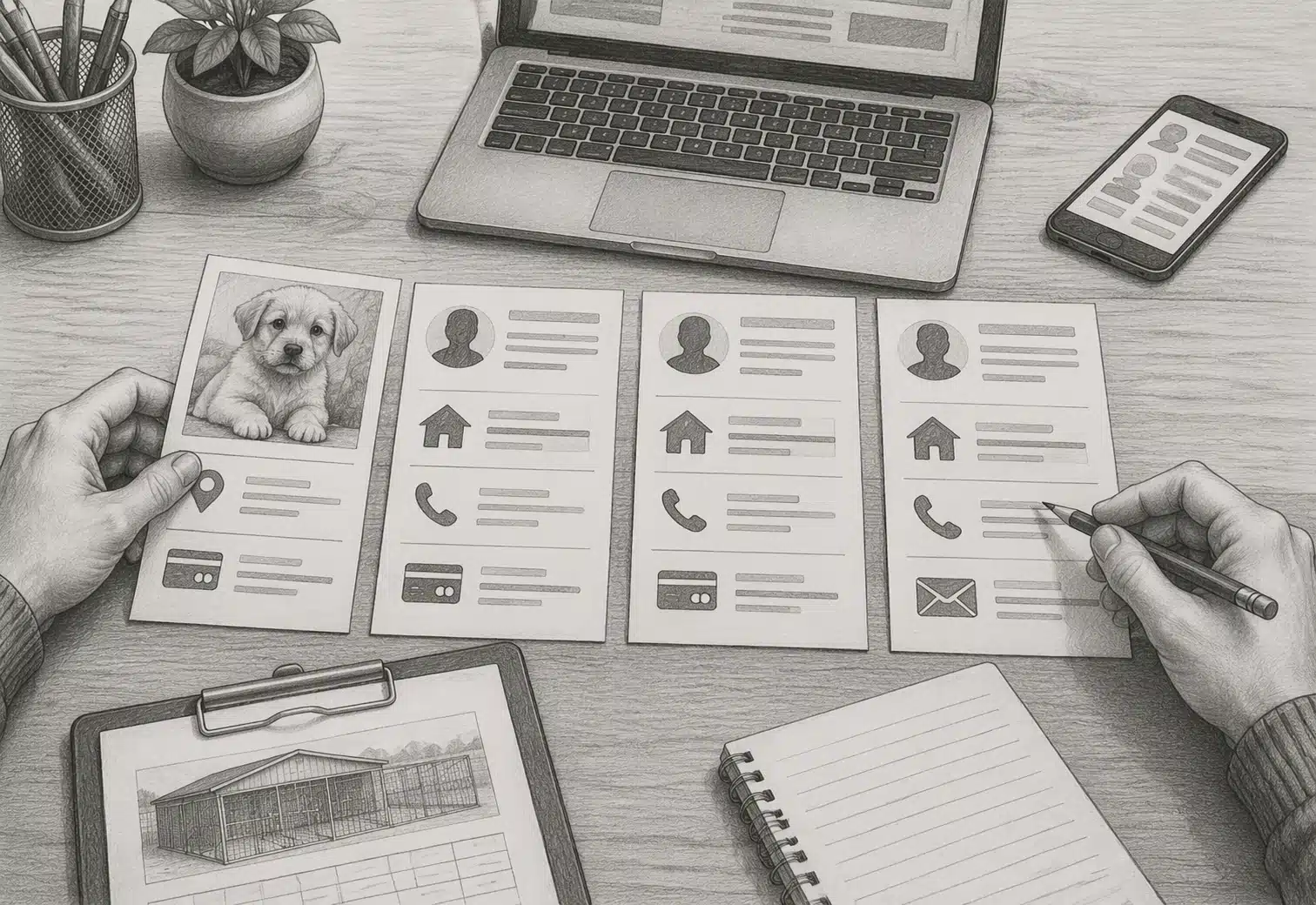
Start here before you ask about price, pickup, or a deposit. A real Iowa puppy seller should match the same name, city, phone number, email, and business name everywhere you look.
Match the name, location, and contact details
Compare the seller’s website, social pages, puppy listing, and payment request side by side. Iowa also requires commercial breeders to operate with a state license or permit under Iowa Code section 162.8, so the business details should line up with public records if the seller falls under that rule.
Use this quick check:
| Source | What should match | Red flag |
|---|---|---|
| Website | Business name, city, phone | No street area or no phone |
| Social media | Same kennel name and contact info | Brand-new page with little history |
| Listing site | Same puppy photos and seller details | Different city or different seller name |
| Payment request | Same legal name or business | Payment goes to a random person |
- Check spelling closely.
- Look for the same city across each source.
- Confirm the phone number is identical.
- Make sure the email uses the same brand or owner name.
If the seller says they are licensed in Iowa, ask for the exact license name and number before you pay.
Check whether the seller can be traced publicly
A safe seller leaves a real trail. Iowa’s public animal welfare licensing list shows company name, owner, city, license number, and expiration date for many regulated sellers. If the seller claims federal licensing, check the USDA APHIS public search too.
Run this trace test:
- Search the seller name in quotes.
- Search the phone number by itself.
- Search the email address.
- Check state and federal records if licensing is claimed.
- See whether old posts, reviews, or breeder pages connect to the same person.
The FTC warns that scammers often vanish after payment and may avoid phone or video contact.
No public trail does not always prove fraud. But mismatched identities, changing contact details, and untraceable payment names are strong reasons to stop.
Also Read: Puppies For Sale Near Me: How to Spot Real Listings
Step 2: Verify the Iowa license or permit before you send a deposit
Start with the seller’s legal right to operate. In Iowa, commercial breeders, dealers, pet shops, and other animal businesses need state authorization under Chapter 162, and the state publishes a searchable animal welfare licensing list. Match the business name, owner name, city, license number, and expiration date to what the seller told you.
Then ask for the most recent inspection report. Iowa says licensed facilities are inspected at least once a year, usually without notice, and licenses are not transferable if the owner or location changes, according to the state’s Animal Welfare FAQ. That matters because a seller may show you an old license tied to someone else.
Use this quick check:
| What to verify | What should match | Why it matters |
|---|---|---|
| Business identity | Name, owner, city | Scammers swap names often |
| License status | Active and unexpired | Expired means do not pay |
| Establishment type | Breeder, dealer, pet shop | Tells you what role they legally hold |
| Inspection trail | Recent report exists | Shows state oversight happened |
Iowa’s rules are there to protect buyers from more than paperwork issues. Chapter 162 says the law aims to ensure humane care, regulate sale and housing, allow sale only of animals that appear free of contagious disease, and protect the public from zoonotic disease. In plain English, the license check helps you avoid sellers with poor housing, weak recordkeeping, or sick puppies moving through hidden channels.
A valid license is not proof of a great breeder. It is the minimum starting line.
Watch for the gaps scammers use:
- They send a photo of a license, but refuse a searchable name.
- The license is active, but for a different city or owner.
- They claim they are “USDA only” and skip Iowa records.
- They ask for a deposit before sharing inspection details.
- They say the puppy is in Iowa, but payment goes to another state.
If anything does not line up, pause. A careful program will welcome verification before money changes hands.
Also Read: Find a Reputable Puppy Breeder Near You: Step-by-Step
Step 3: Ask for the documents a legitimate seller should already have
Request the sale and health paperwork upfront
Ask for documents before you send a deposit. A real seller should not act surprised.
In Iowa, commercial establishments must give buyers a statement of sale with key details, including the seller’s contact info, Iowa license number, the date of transfer, the puppy’s description, and any vaccines, deworming, or other medical care already given under the Iowa Administrative Code.
Your basic document checklist should include:
- Statement of sale
- Vaccination record
- Deworming record
- Any vet exam paperwork
- Microchip details, if already placed
- Parent information if the seller claims health testing or specific lineage
| Document | What it should show | Why it matters |
|---|---|---|
| Statement of sale | Seller name, address, phone, license number, puppy details | Confirms who is actually selling |
| Health record | Vaccines, deworming, dates, products used | Helps your vet check proper care |
| Vet paperwork | Exam date, clinic name, findings | Shows the puppy was seen, not just listed online |
If a seller says, “I will send paperwork after payment,” treat that as a risk sign.
If the puppy is registered, verify the registration details carefully
Registration papers matter less than health and honesty, but if the seller advertises a registered puppy, check the details closely.
Ask for:
- The registry name
- The puppy’s registered name or litter number
- The registered names of the parents
- A photo or scan of the paperwork with private payment details hidden
Then compare those details to the ad, the contract, and the seller’s name.
If the seller claims USDA licensing, verify that separately. USDA dealers must be licensed if their business falls under the federal rules, and APHIS provides an Animal Care Public Search Tool for public lookup.
Registration does not prove good breeding. It only proves someone filed registration information.
Use the paperwork to spot inconsistency, not just collect documents
Anyone can send files. Your job is to see whether they match.
Check for these consistency points:
- Seller name matches the payment account
- Address matches the license or business record
- Puppy sex, color, and birth date match the listing
- Vaccine dates fit the puppy’s age
- Vet clinic name is real and reachable
- Different documents use the same puppy ID, litter ID, or microchip number
A fast way to review is this:
- Put the ad next to the paperwork.
- Highlight every name, date, address, and puppy detail.
- Circle anything that changes from one document to another.
- Ask for one clear explanation before you pay.
Small errors happen. Multiple mismatches usually mean you should walk away.
Step 4: Call the vet reference and confirm real care, not just a name drop
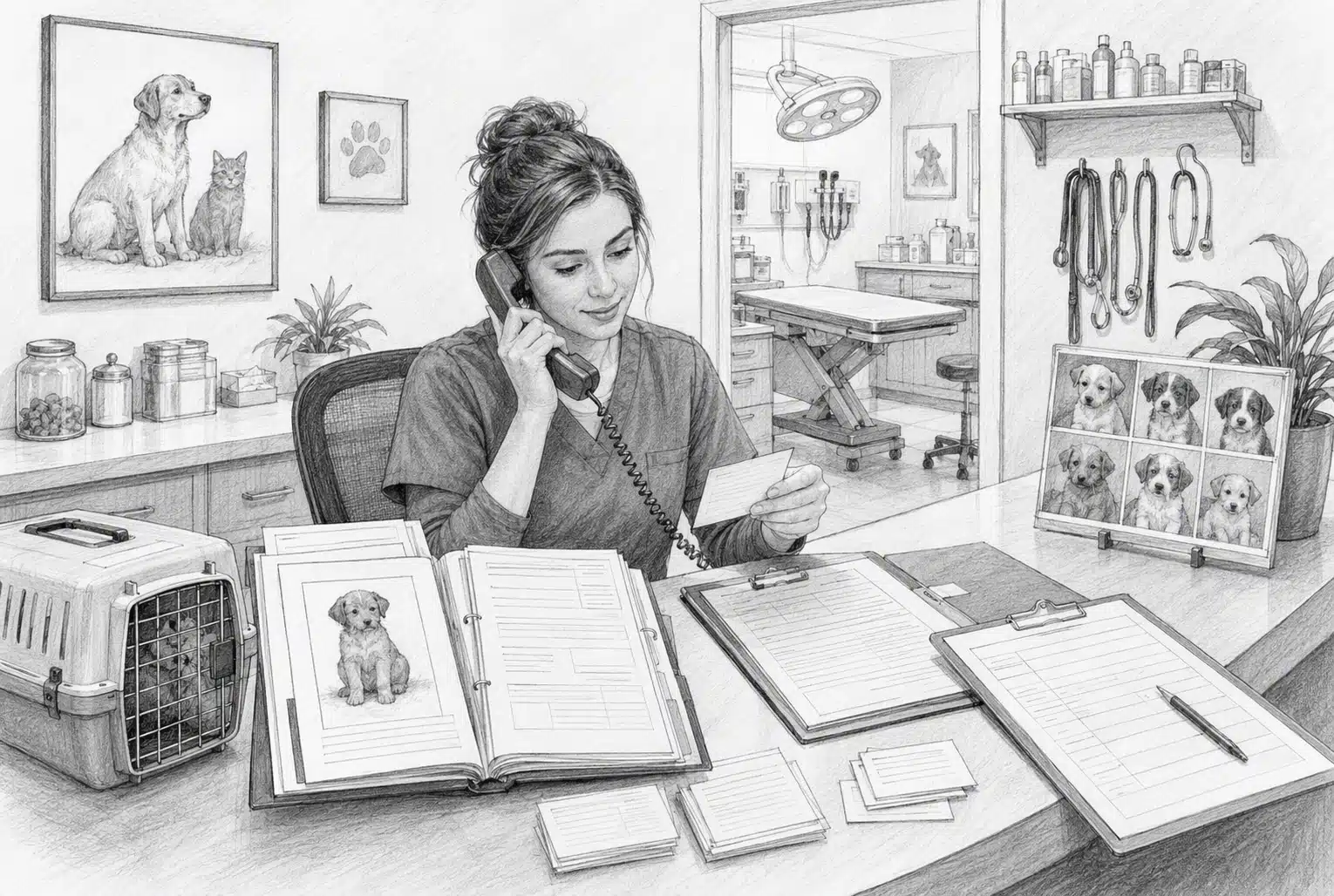
A seller can say, “Our vet knows us,” and still give you nothing useful. Call the clinic yourself. Ask for the practice manager or a staff member who can confirm whether the breeder is a real client.
What to ask the clinic
Keep it simple and polite. The clinic may not share private details, but they can often confirm basic facts.
- Does this breeder use your clinic regularly?
- Have you seen the parent dogs, the puppies, or both?
- Can you confirm the seller brings litters in for exams, vaccines, or parasite care?
- Do the records you have match the seller’s name, business name, and address?
- If the puppy is coming into Iowa, has the seller discussed a Certificate of Veterinary Inspection, which Iowa requires for dogs entering the state according to the Iowa Department of Agriculture FAQ?
If the clinic refuses to confirm even a basic client relationship, pause payment.
What a real vet relationship usually looks like
A real breeder-vet relationship usually sounds steady, not scripted.
- The clinic recognizes the seller fast
- Staff can confirm routine care without long pauses
- Names, dates, and litter details line up with the paperwork
- The seller already gave you records with vaccines, parasite meds, and other care notes
That matters because Iowa rules require sellers in commercial settings to provide buyers with a statement that lists vaccines, parasite treatment, and other medical care under Iowa administrative rules.
Why this step matters before payment
This call helps you catch the quiet scams.
A fake seller may borrow a clinic name, send old records, or use papers from another litter. Once you send a deposit, your leverage drops fast.
Use this quick check before paying:
- Match the clinic name to the records.
- Match the seller name to the clinic file.
- Listen for hesitation or vague answers.
Honest sellers expect this step. Careful families should too.
Also Read: 10 Small Breed Puppies That Stay Friendly & Easygoing
Step 5: Read the red flags that should stop the payment
If something feels rushed, hidden, or oddly hard to verify, stop paying. This step matters because scammers count on emotion, not trust. The FTC warns that sellers pushing gift cards, wire transfers, crypto, or payment apps are often trying to make your money hard to recover according to the FTC.
Pressure tactics are the biggest warning sign
A real seller can want a quick decision. A scammer wants a blind decision.
Stop if the seller:
- Says another family is waiting, but refuses to answer basic questions
- Demands a deposit in minutes, not after review
- Pushes you to skip video calls, records, or pickup details
- Insists you must pay in one risky way only
Pressure is not proof that a puppy is in demand. It is often proof that the seller does not want to be checked.
If you hear, “Pay now or lose the puppy,” slow down. Honest breeders explain their process and let you verify facts first.
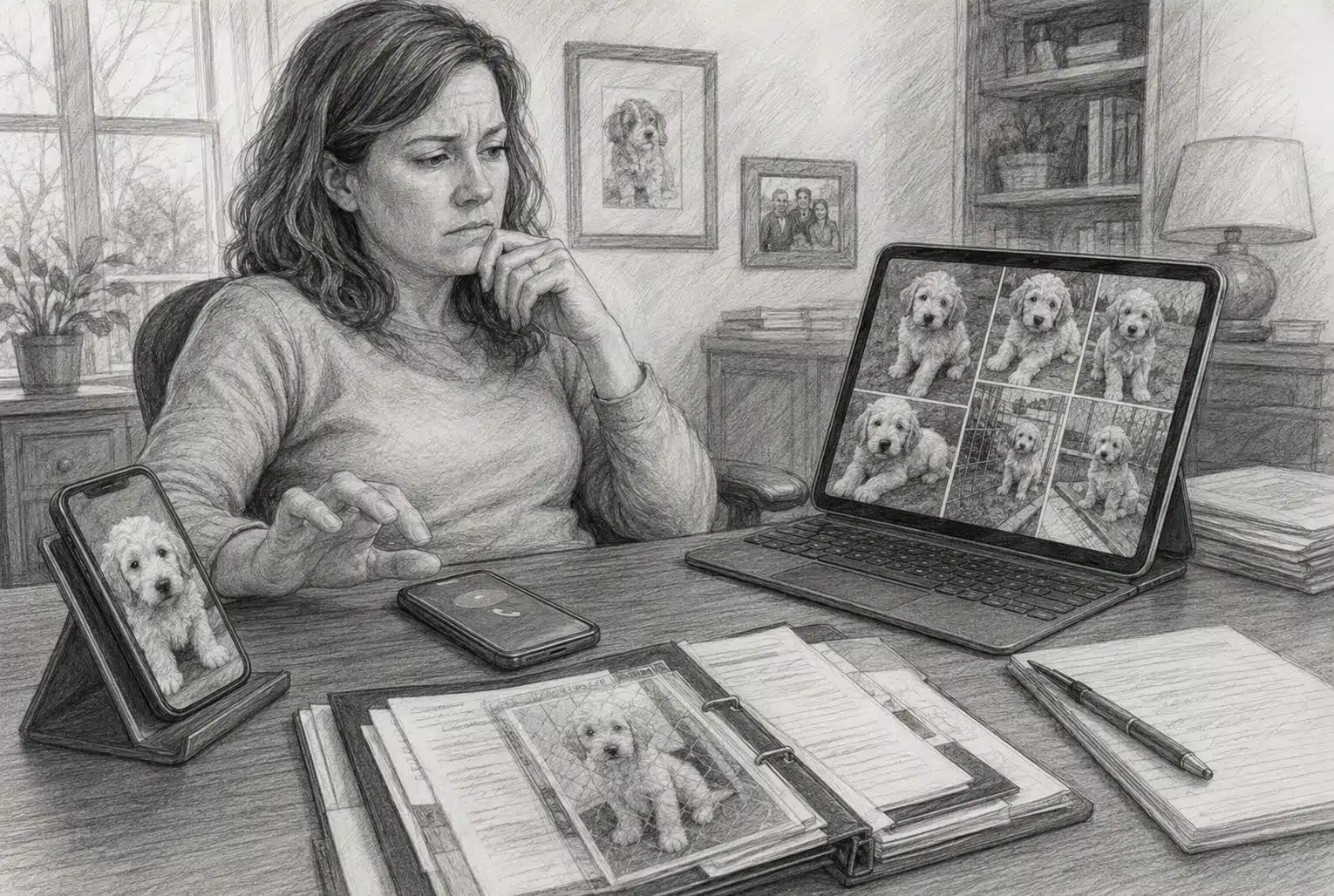
Photo and communication problems are a clue, not a coincidence
Small inconsistencies add up fast. The AKC notes that scam listings often use copied photos and avoid phone or video contact in its puppy scam guide.
Watch for:
- Photos that look too polished or appear in multiple ads
- Replies that ignore your exact questions
- No live video of the puppy, mother, or home setting
- Different names, phone numbers, or email addresses across listings
- Strange grammar shifts or messages sent only at odd hours
One weak sign may be explainable. Three weak signs together usually mean stop.
When to walk away without debating
You do not need to convince a bad seller to become a safe seller. Walk away if:
- They refuse a live video call.
- They will not match their name, address, and phone number across records.
- They ask for extra shipping, crate, insurance, or vet fees after the first payment.
- They dodge questions about records or pickup.
| Red flag | What it usually means | Best move |
|---|---|---|
| Gift card or wire request | Hard-to-recover payment | Stop immediately |
| New surprise fees | Scam escalation | Do not send more |
| Refuses verification | Identity problem | Walk away |
Also Read: 10 Adorable Havapoo Colors You Need to See (2026)
Step 6: Use the final pay-or-walk-away checklist
Before you send money, do one last pass. In Iowa, commercial breeders must operate with a state license or permit, and sellers must give buyers a statement that includes key sale and care details under Iowa’s animal welfare rules. If that basic paper trail is missing, stop.
Only pay when the basics line up
Use this quick test:
- Seller name matches the license or business record
- Puppy details match the ad, photos, and health records
- Vaccines, deworming, and other care are listed
- Pickup, delivery, and total price are clear
- Payment method is traceable, not cash-only, wire-only, or gift card based
| Pay | Walk away |
|---|---|
| Records match across messages and documents | Names, dates, or puppy details keep changing |
| Seller answers direct questions clearly | Seller dodges simple proof requests |
| You get written terms before paying | You are rushed to “reserve now” |
Get the next step in writing
Ask for one message or document that confirms:
- The puppy you are buying
- The amount due today
- What happens next
- When you get records
- Pickup or delivery details
- Refund or deposit terms
If a seller will take your money but will not send clear written terms, that is your answer.
Know when a trusted breeder should feel easy to work with
A real breeder usually feels calm, not slippery. The Iowa Department of Agriculture says licensed facilities are inspected at least annually and inspection reports can be found through the state’s animal welfare resources. Good sellers act like they expect questions.
- They welcome checks
- They explain their process in plain English
- They do not pressure you
- They make the next step feel simple and safe
Read the parent guide, How to Verify Iowa Puppy Sellers Before You Pay, before you send any deposit.

If you want a simpler, safer path, start with Sage Puppies. Sage Puppies gives families a clear, family-first process, health-tested parent dogs, and straightforward pickup or nationwide delivery details before you commit. Browse Available Puppies, review pricing and reservation steps, and apply when you feel ready.
Frequently Asked Questions
Q1: What are the red flags to watch for when verifying Iowa puppy sellers?
Watch for rushed payment requests, prices far below market, no video call, and missing parent or health records. Sellers who avoid pickup details, refuse clear answers, or keep changing location and contact info should make you pause fast.
Q2: How can I verify Iowa puppy seller authenticity before paying?
Ask for the seller’s full name, kennel name, phone, address, and recent puppy photos or live video. Match details across records, contracts, and vet paperwork. A real seller stays consistent and gives time for questions before taking money.
Q3: What questions should I ask Iowa puppy breeders regarding health and registration?
Ask what health testing was done on both parents, which shots and deworming the puppy received, and who the vet is. Also ask what registration applies, what papers you get, and when records will be handed over.
Q4: Should I ever pay a deposit before seeing records?
Yes, but only after you review the contract, health record sample, seller identity, and clear pickup or delivery terms. If anything feels vague, wait.
Q5: Is shipping a puppy always a scam?
No. The risk is hidden fees, fake transport updates, or no written plan. Legit sellers explain timing, carrier details, and total cost before payment.
Conclusion
Before you pay, slow the deal down and verify the seller from two angles – legal status and real-world consistency. Iowa law requires state authorization for commercial breeders, dealers, pet shops, and other covered animal businesses under Iowa Code Chapter 162. The state also says licensed facilities get unannounced annual inspections, and inspection reports can be found through IDALS Animal Welfare FAQ.
That means your best filter is simple:
- Match the seller’s name, city, and phone details
- Confirm license status if one should apply
- Ask for health records and exact pickup terms
- Refuse rushed, hard-to-trace payment methods
- Walk away from gaps, pressure, or changing stories
A safe puppy purchase usually feels clear, patient, and easy to verify.




