Quick Summary: Verify a puppy’s health results by asking for each test with body part, method, date, and outcome, then searching the parents’ names yourself in the free public OFA database and confirming anything missing with the vet clinic. A complete file has three layers: the puppy’s own vet and vaccination record, clinical screening for each named parent (hips, patellas, eyes, cardiac), and DNA variant panels for both parents, and a DNA panel alone proves nothing about joints, eyes, or heart. Finish with your own vet exam before pickup, and meet the dam in person, since breeders who hide behind vague answers or cropped PDFs rather than published registry numbers are red flags. For Havanese, Havapoo, and Cavapoo litters, patella grading, eye exams, and cardiac checks carry the most weight.
A breeder hands you a health certificate, but no registry number, body part, date, or result. Until those four details check out against a public source, you have verified nothing. Most families comparing health-tested puppies for sale near me see a tidy folder and a reassuring smile. Few can tell a clinical screening record from a DNA variant report, or know which tests their breed’s club actually requires. That gap is where weak puppy health test results slip through. This guide breaks a health file into three layers, walks through a verification process you can finish before paying a deposit, and shows how to read each result. It draws on what ethical Havanese, Havapoo, and Cavapoo programs document, so you can judge any breeder, including us, by the same standard.
Clinical Screening Records vs DNA Panels: At a Glance
| OFA and CHIC clinical health screening records | Consumer and breeder DNA variant panels | |
|---|---|---|
| What it screens | Radiographic hips and patellas, eye exams, and other body-part specific conditions set by the breed’s CHIC program | Specific inherited variants reported for conditions the panel covers, plus breed and trait markers |
| How it is performed | In-person examination or radiographs by a veterinarian or specialist, with results read and submitted to the registry | At-home cheek swab mailed to a lab, with results delivered digitally in about two to four weeks |
| Public record you can check | Yes, registry databases list individual dogs, body part, test type, date, and normal or abnormal result | Usually private by default, though some labs and registries allow results to be released to a public database |
| Breed-specific relevance | High, because CHIC requirements are set per breed and per parent breed | Variable, since coverage differs by breed and many conditions have no identified variant |
| What it cannot tell you | Does not predict every future disease, and a missing listing is not proof of a hidden failure | Cannot detect structural, joint, eye, or cardiac problems that only imaging or an exam can reveal |
| Best use for a buyer | Primary evidence for structural and clinical risk in a parent’s breed | Useful supporting evidence for known inherited variants and breed identity |
Clinical Screening Records and DNA Panels Compared
OFA and CHIC clinical health screening records
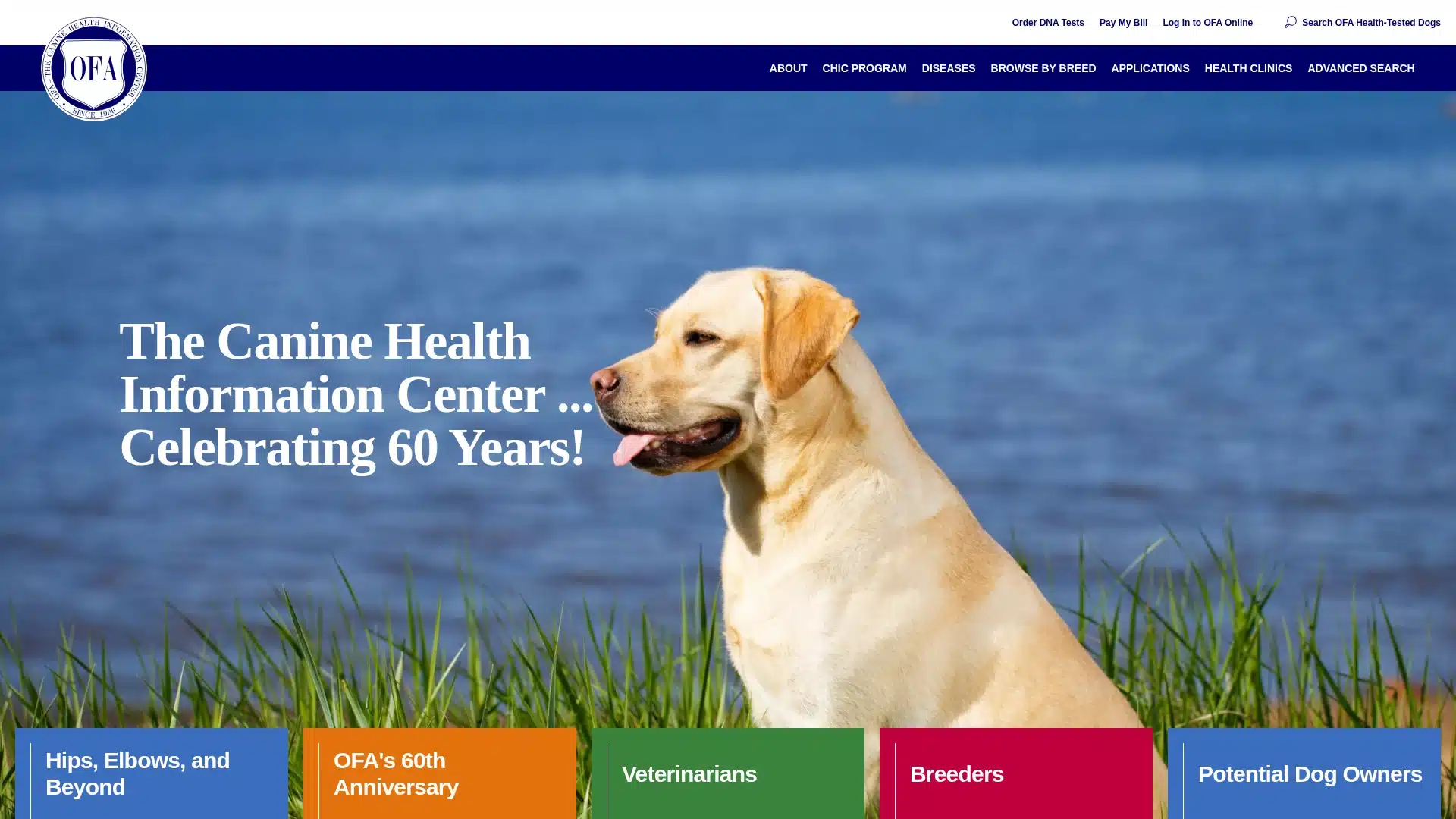
OFA and CHIC registries record a breeder’s clinical results, such as hip radiographs, patella grading, and eye exams, in a public database any buyer can search. Serious health-tested puppies for sale near me should have parents with these listings, because a vet or specialist performs each test and the registry files the outcome under the dog’s name.
Key strengths
- Public record with the dog’s name, test type, date, and result
- Breed-specific requirements set by CHIC programs
Consumer and breeder DNA variant panels
DNA panels use a mailed cheek swab to report inherited variants, breed ancestry, and trait markers, with results in two to four weeks. They add useful support for known genetic risks, but they cannot detect joint, eye, or cardiac problems only an exam or imaging reveals. At Sage Puppies, both layers together form the health picture behind each litter.

The Three Layers of a Puppy’s Health File
A complete puppy health file has three layers, and each one proves something different. Before you pay a deposit, ask for all three:
- Layer one: the puppy’s own vet exam and care record
- Layer two: clinical screening results for each named parent
- Layer three: DNA variant results for both parents
Breeders who show only one layer are showing you a fraction of the picture. Here is what each layer should contain and what it can and cannot prove.
Layer One: The Puppy’s Own Exam and Care Record
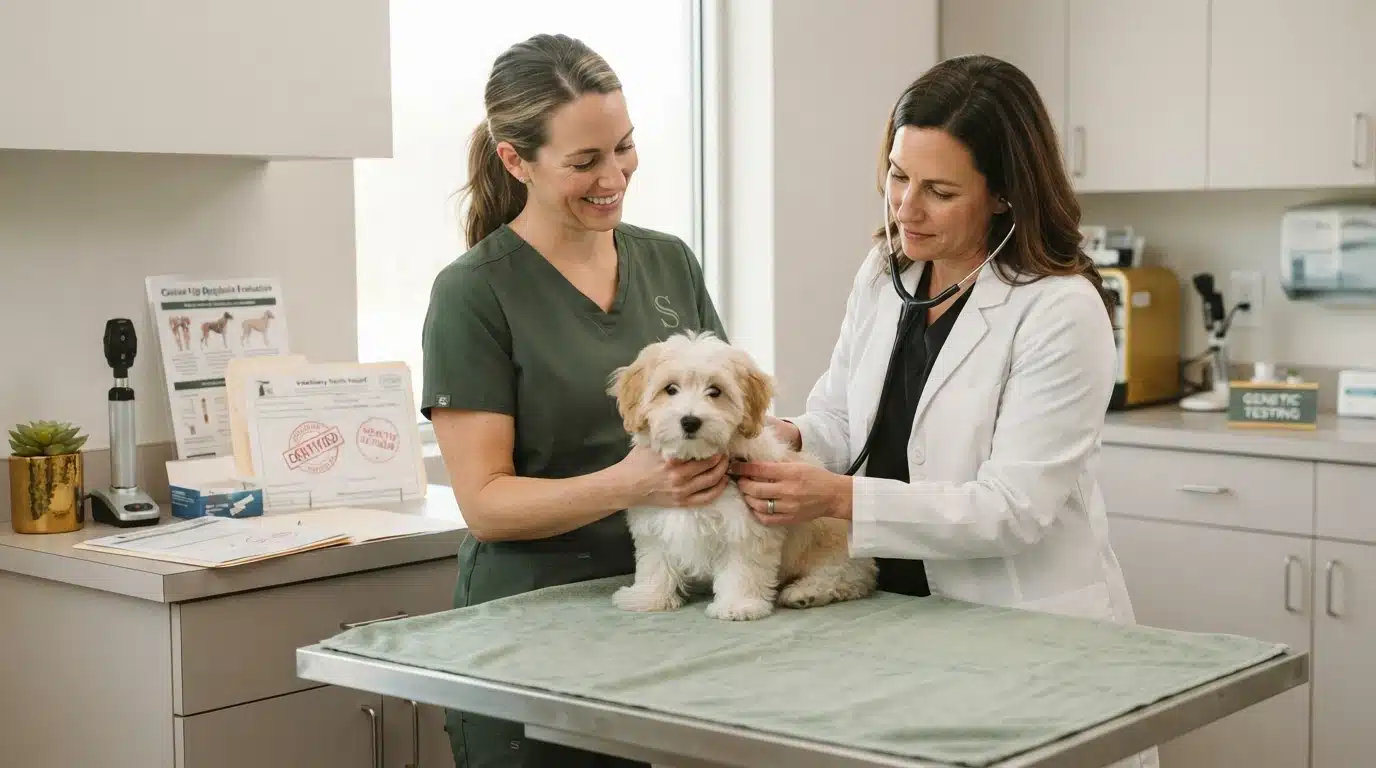
This layer covers the puppy’s first weeks: a vet exam before pickup or delivery, vaccinations given with dates, deworming history, and any treatments. Ask who examined the puppy and request the clinic’s name. A record from a licensed veterinarian carries far more weight than a breeder’s handwritten note. Keep in mind what this layer cannot prove. A clean puppy exam says nothing about inherited conditions that appear later, which is exactly why the next two layers matter. When comparing health-tested puppies for sale near me, this record is your baseline, not your finish line.
Layer Two: Each Named Parent’s Clinical Screening
Clinical screening means hands-on testing done by a veterinarian or specialist: hip and elbow radiographs read by OFA, patella grading, eye exams by a board-certified ophthalmologist, and cardiac checks. The key word is named. Ask which actual sire and dam produced your litter, then look up both dogs in the OFA database search by their registered name. If a breeder cannot tell you the parents’ names or the results do not match, treat it as a red flag. For Havanese, Havapoos, and Cavapoos, patellas and eyes deserve special attention.
Layer Three: DNA Variant Results
DNA panels test for inherited gene variants linked to specific diseases, such as progressive retinal atrophy in Havanese. Ask to see the actual results for both parents, not a generic “parents tested clear” line. Remember the limits: a DNA panel cannot detect every disease, and it does not replace clinical exams. The strongest file shows DNA results paired with current OFA and eye certifications. Breeders like Sage Puppies who document both parents across all three layers make this verification much easier for you.
Search our guide to finding health-tested puppies near you to see how these layers come together in practice.
How to Verify a Puppy’s Health Test Results Step by Step
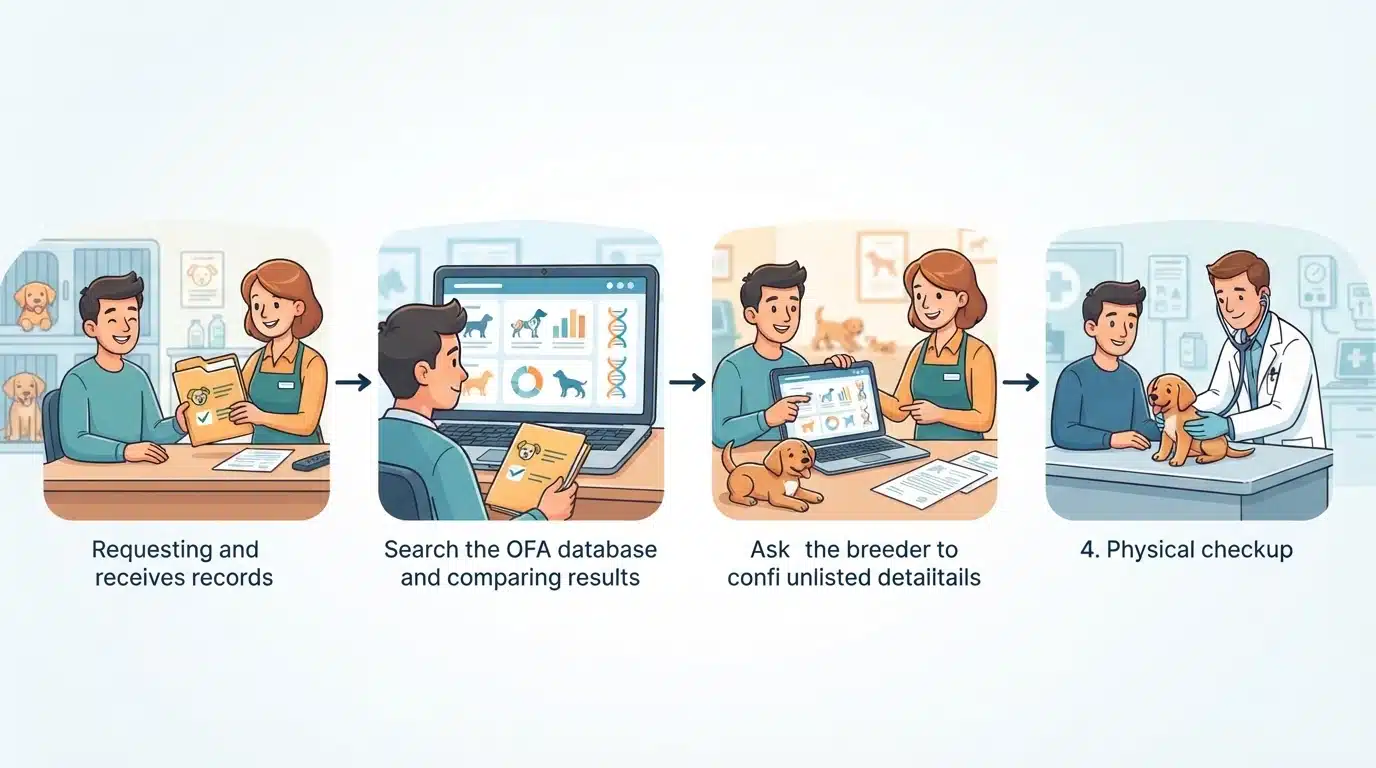
Verifying a puppy’s health test results takes about an hour. You ask the breeder for records, check them against public registries yourself, confirm anything missing, and finish with a local vet exam before money changes hands. Here is the full process.
- Request the records in writing: body part, test method, date, and result.
- Search the OFA database for the dog and compare what you find.
- Ask the breeder to confirm anything that does not appear publicly.
- Get a vet exam before pickup as your final check.
Ask for Records by Body Part, Method, Date, and Result
A vague “health tested” claim proves nothing. Ask for each result spelled out: which body part was tested (hips, knees, eyes, heart), which method was used, the date, and the actual result. For Havanese, that usually means patella grading, eye exams, and cardiac checks. For Cavapoo and Havapoo puppies, expect a DNA variant panel plus patellas and eyes. A serious breeder sends you puppy health records and parent records without hesitation. One-word answers or screenshots with cropped dates are a reason to walk.
Pull the Public Record Yourself
Do not trust a PDF alone. The Orthopedic Foundation for Animals (OFA) keeps a free public database where you can search any registered dog by name or number. Look up each parent and confirm the results match what the breeder sent. A CHIC certificate on the dog’s page shows the breeder met the breed club’s required tests. If a dog’s results were submitted, they usually appear within weeks, so older claims that never showed up online deserve a direct question. Checking the OFA database search yourself takes five minutes and removes most guesswork.
Handle Missing Records and Direct Confirmation
Some results will not appear online yet. Recent eye exams often stay in paper form because the ophthalmologist database lags. When a record is missing, ask the breeder for the veterinarian’s or specialist’s contact information and confirm the result directly with the clinic. Also know the limits: a DNA variant panel screens only for known gene variants, so a “clear panel” does not rule out every condition. Keep copies of everything you receive, including emails. Documentation matters when you are weighing a deposit and reservation decision.
Complete the Check Locally Before You Pay
Schedule a vet exam before pickup, ideally within the first few days home. Bring every record you collected and ask your vet to read the patella grading, hip radiographs, and eye results alongside their own exam. Utah buyers can do this the same week they meet a litter; remote buyers should line up a vet before delivery day. A breeder who resists your vet visit is telling you something. For anyone comparing health-tested puppies for sale near me, this final local check is what turns paperwork into confidence.
Wait, output only the section. Remove that line. Final answer below.
Reading Each Result Without Overreacting
Normal Results and What They Cover
A “normal” result is genuinely good news, but it only covers what was tested. For hips, the OFA grades dogs into seven categories, and Excellent, Good, and Fair all fall within normal limits, according to OFA’s hip grading details. A normal eye exam clears that eye on that day. A clear DNA result means the dog does not carry the specific variants on the panel, not that it is free of every inherited condition. Read each clearance as one checked box, not a full health guarantee.
Borderline, Abnormal, and Affected Findings
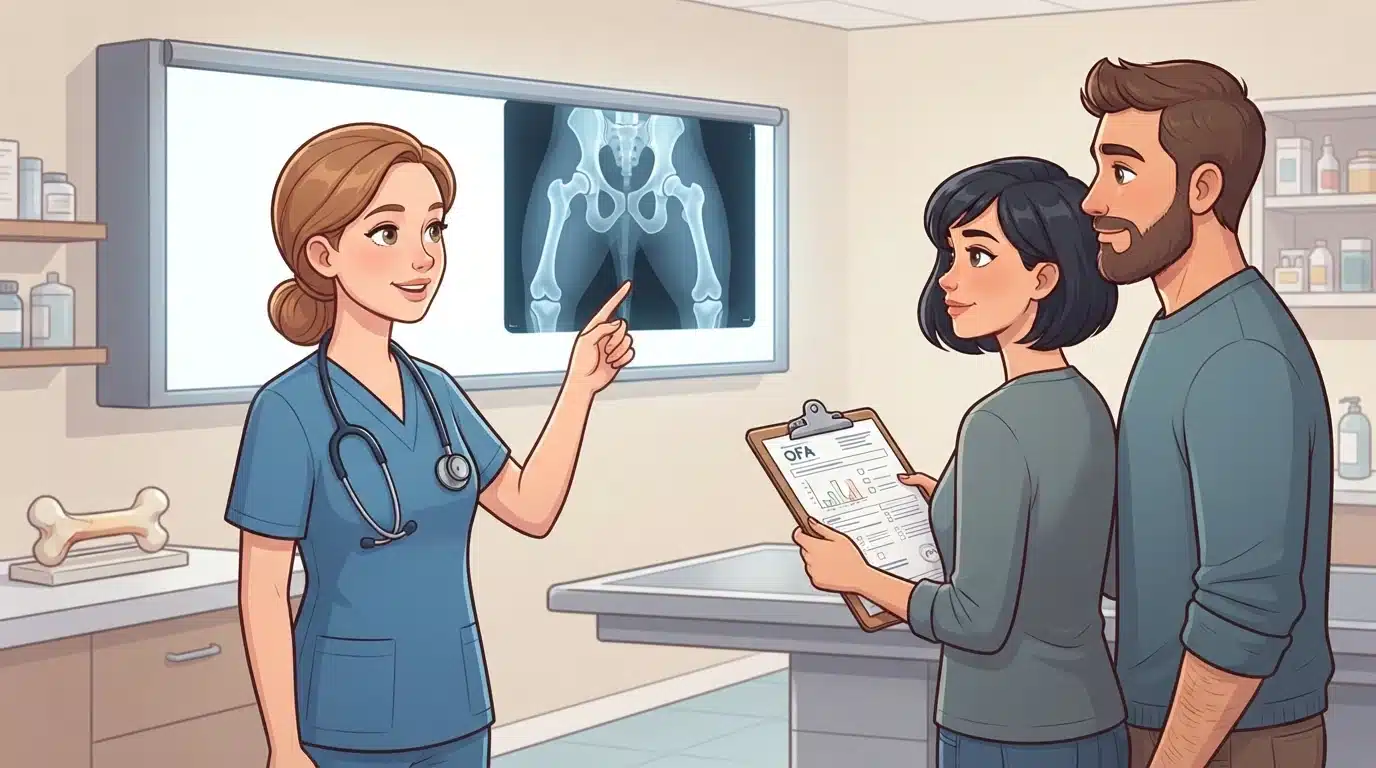
Three words matter here, and they mean different things. “Borderline” hips sit between normal and dysplastic; radiologists often disagree on them, so OFA usually requires a new x-ray before it will issue a rating. “Abnormal” or dysplastic ratings (Mild, Moderate, Severe) fail, per the same OFA scale. “Affected” on a DNA panel means the dog carries two copies of a disease variant, which usually rules it out of a breeding program. Ask the breeder to explain any borderline or odd result in writing.
The Limits of Any Single Result
No one test proves a dog is healthy. X-rays capture joint structure at one moment in time, eye exams expire within about a year, and DNA panels only screen known variants. That is why responsible breeders layer results: cleared parents, current exams, and breed-appropriate testing together. Three radiologists agreeing on a hip phenotype happens about 95% of the time, per OFA’s own FAQs, which makes a published rating far stronger than an emailed photo. When you evaluate puppies for sale near me, judge the whole picture, not one line.
What Counts as Proof When You Buy Nearby
Buying close to home gives you something online listings cannot: you can check the evidence yourself. Proof falls into three buckets, and each one answers a different question.
In-Person Access and the Dam
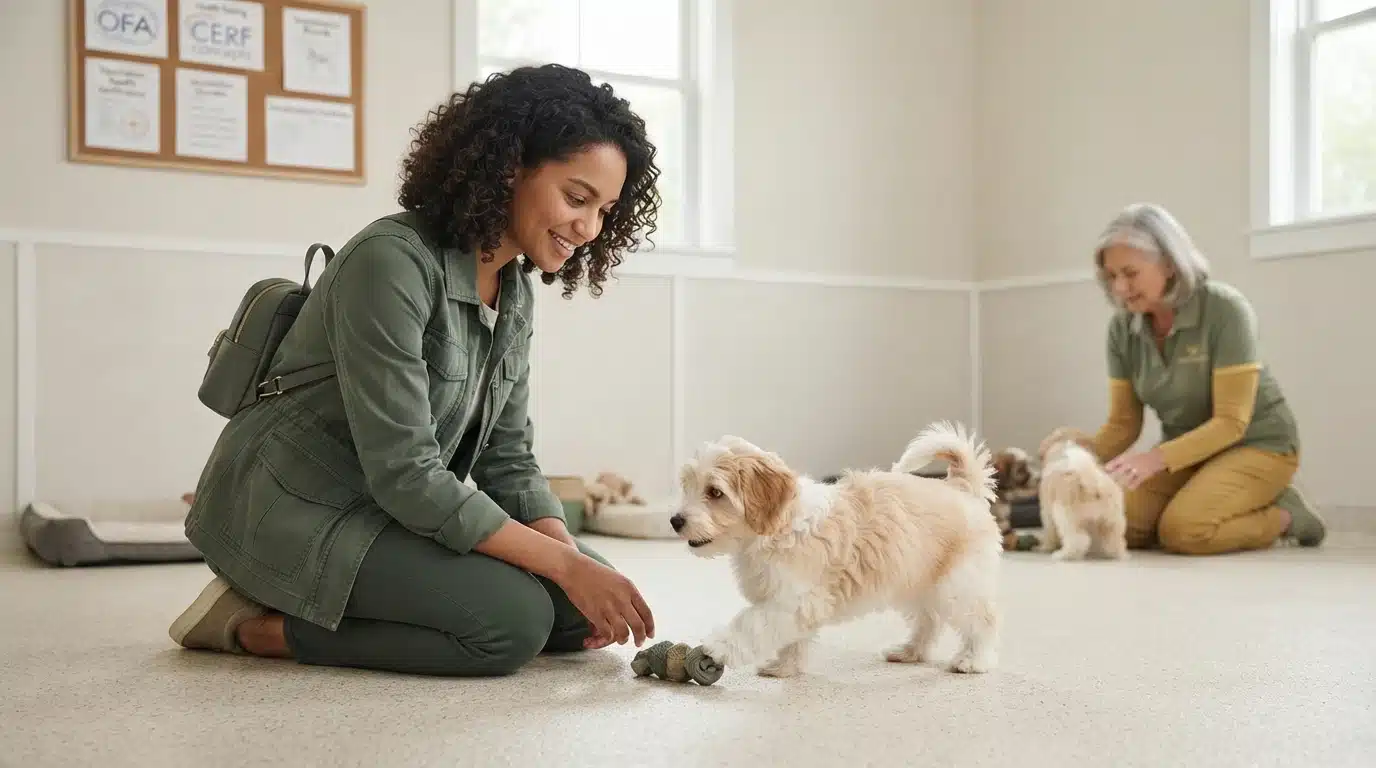
Ask to meet the mother and see where the puppies live. A breeder who raises dogs in the home will usually say yes without hesitation. Watch how the dam moves, since a stiff gait or a hop in the back legs can hint at hip trouble even before radiographs confirm it. Meeting a parent dog face to face beats any photo, and if a breeder steers you toward a public parking lot instead of their space, treat that as a red flag. Local families can also schedule a visit to meet the parent dogs before placing a deposit, which turns trust into firsthand observation.

Records That Exist Before Go-Home Day
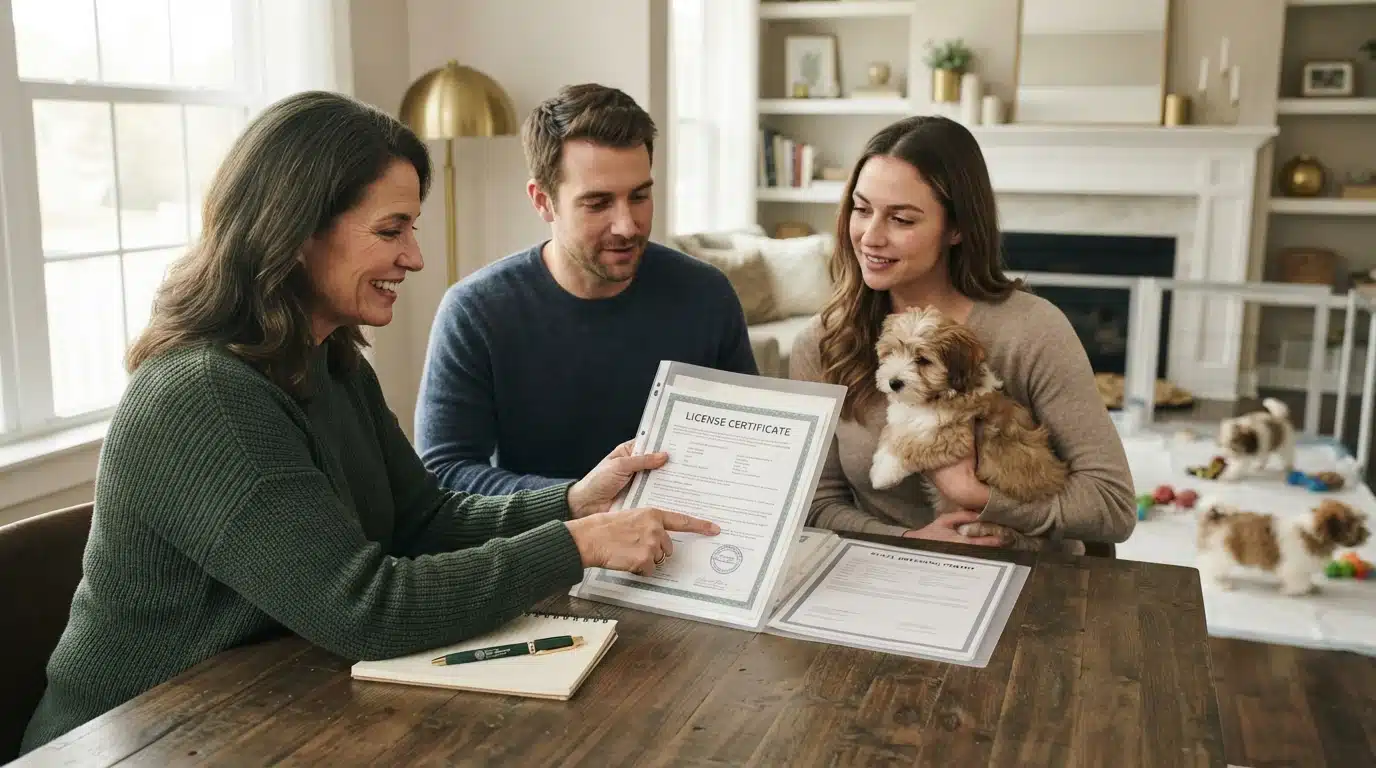
Real health documentation predates pickup. That includes the dam’s OFA or CHIC listing, eye exam results, and patella grading for small breeds like Havanese and Cavapoos. Ask for copies of the vet exam record and the vaccination and deworming log for the litter. Then cross-check the registry numbers against the OFA database search yourself, because a printed PDF is easy to fake while a public listing is not.
Questions That Get a Straight Answer
Ask three things: Which tests were done on both parents? Where are the results published? May I see the litter’s vet records? A confident breeder answers with specifics. Vague answers like “they’re healthy” are a signal to slow down and keep looking.
Which Verification Path Should You Choose
Short answer: no, a DNA test alone is not enough. It rules out inherited gene variants but says nothing about hips, knees, eyes or heart, which are the problems Havanese, Havapoo and Cavapoo families actually run into. Use both records together, and weigh each one for what it can prove.
| Path | What It Proves | What It Misses |
|---|---|---|
| Clinical exams (OFA) | Hips, patellas, eyes, heart at time of exam | Gene variants a dog silently carries |
| DNA panel | Carrier or affected status for listed variants | Structural and eye conditions with no single gene cause |
Choose Clinical Records for Structural and Eye Risk
Start here, because hips, patellas, eyes and heart fail on exam findings, not on genes. Ask for the parents’ OFA numbers, then confirm each one yourself in the OFA database search. Breed-specific requirements matter, so a Havanese should show patellas and cardiac results, not just a hip score. A CHIC certificate signals the parents met every screening their breed club asks for.

Use DNA Panels as Supporting Evidence
DNA panels catch variants like the ones screened in poodles and cavaliers before they appear in a puppy. Treat them as one layer, not the whole answer. Published results add weight because labs can release genetic test results to the OFA, which makes them public record. Ask which lab ran the panel and which variants it covered, since panels differ. A clear-pass DNA report with no eye exam still leaves the biggest risks unverified.
Your Best Position as a Buyer
Ask for three things before you place a deposit: parents’ OFA numbers you can look up yourself, a named DNA lab’s variant list, and a written plan for the puppy’s first vet exam. A breeder who publishes test numbers, as responsible programs raising health-tested puppies for sale near me do, has nothing to hide. Hesitation or a photo instead of a registry number means keep looking.

Health-tested shouldn’t stay a promise on paper. When a breeder shares registry numbers openly, you can check them yourself before you commit. If you want a Havanese, Havapoo or Cavapoo raised that way, start with Sage Puppies: apply, ask questions, and meet a puppy whose results you can verify.
Frequently Asked Questions
Q1: How do I verify a puppy’s health test results before buying?
Ask for each result with body part, test method, date, and outcome. Then search the parents’ names in the OFA database yourself and confirm anything missing directly with the clinic before paying a deposit.
Q2: Is a DNA panel alone enough proof a puppy is healthy?
No. DNA results cover inherited variants only. Hips, patellas, eyes, and heart need clinical exams and imaging, so pair the panel with OFA listings and current eye certifications.
Q3: What should I do if a parent’s results are not in the OFA database?
Ask the breeder for the vet or specialist’s contact details and confirm the result directly. Recent eye exams can lag online, so missing listings deserve a question, not automatic trust.
Q4: Which tests matter most for Havanese, Havapoo, and Cavapoo puppies?
Patella grading, eye exams, and cardiac checks, plus a DNA variant panel for mixes. Ask how the breeder meets each parent breed’s club requirements.
Q5: Can I trust a breeder’s emailed PDF of health records?
Treat it as a starting point. Cross-check registry numbers in the public database, because printed documents are easy to alter while published listings are not.
Q6: When should my own vet examine the puppy?
Book a vet exam before pickup or within the first few days home. Bring every record and ask your vet to read the parent results alongside their own exam.
Conclusion
Verifying a puppy’s health test results comes down to four checks: ask for each result with body part, method, date, and outcome; search the parents in the OFA database yourself; confirm anything missing with the clinic; and get a vet exam before pickup. A DNA panel alone is never enough, because hips, patellas, eyes, and heart show up on exams, not swabs. Breed-appropriate requirements matter too, so a Havanese should carry patella and cardiac results alongside any panel. The strongest files layer all three records for both named parents. Breeders who publish registry numbers have nothing to hide, which is exactly why programs like Sage Puppies document both layers. Judge every breeder you compare, including us, by the same public evidence.