Quick Summary: Verify a puppy’s health claims in three layers: its own exam and care records, its parents’ OFA or CHIC screenings, and accredited DNA panel results. Look up registration numbers yourself in public databases, read individual results rather than relying on a CHIC number, and have your own veterinarian review the puppy within the contract’s exam period. Before paying, confirm the written contract, total costs, take-back policy, and go-or-no-go criteria, and walk away if records cannot be verified or unusual fees appear.
Two listings can both say “health tested.” In one case, the buyer walks away with an OFA certificate number, a CHIC number, and a full puppy DNA report. In the other, the buyer holds nothing but a screenshot of a vet visit summary. The difference matters, because those words mean very different things on a website that sells health tested puppies near me. This guide gives you a verification sequence you can run yourself, using public registries instead of trusting a breeder’s claims. You will learn to tell apart the three record types, look up a parent’s OFA results, check CHIC requirements for Havanese lines, and read a DNA panel for Cavapoos and Havapoos. The steps come from breed club requirements and registry databases, so your final go or no-go decision rests on documents, not promises.
Step 1: Find Health-Tested Puppies Available Near You
Start with the breeder’s own records, not a listing site’s description. Search these channels in order:
- Breed club breeder directories, which list members who follow required health screenings.
- The OFA breeder listing, where programs publish litters from health-tested parents.
- Local searches for “health tested puppies for sale near me”, then screen each result the same way.
- Breed-specific Facebook groups and referrals, useful for word-of-mouth but never a substitute for paperwork.
Depth matters more than distance. A litter two hours away with verified records beats a closer one with none, so filter every source by documentation before you worry about location.

Where Local Health-Tested Puppies Are Actually Listed
Club directories and the OFA’s own listings are the two places serious breeders actually publish. Search for your breed’s parent club first, then use the OFA breeder search to find litters whose parents carry public test results. Classified ads and marketplace sites list plenty of puppies, but few of those listings link to real records, so treat them as leads to screen rather than proof of anything.
Local Pickup, Nationwide Delivery, or Both
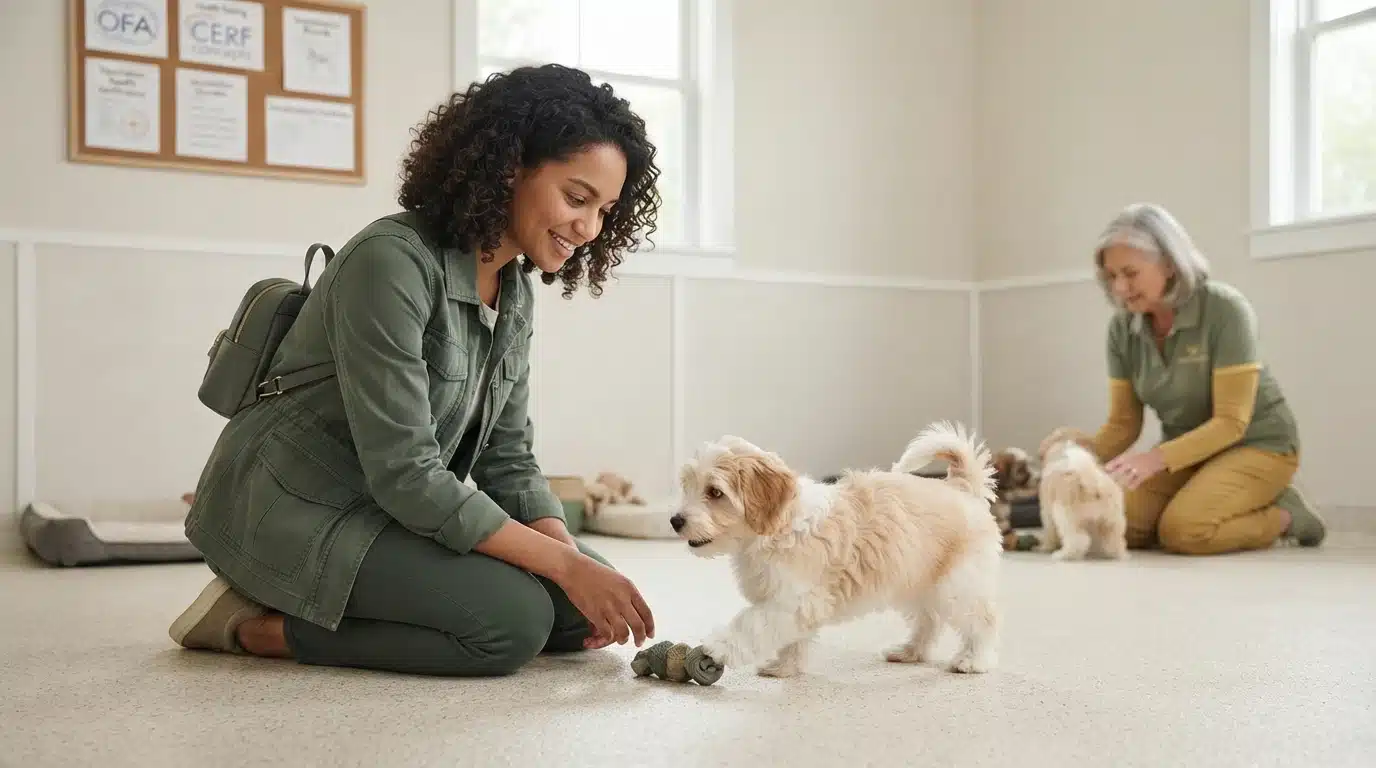
Decide early how the puppy will reach you, because it changes which breeders you can realistically vet. Local pickup lets you meet the dam, see the home, and collect records in person. Ground or flight delivery works too, but ask for scans of every certificate before money moves. A breeder who hides behind delivery logistics instead of documents is a warning sign either way.
Questions to Ask Before You Request Records
Ask three things before you ever request paperwork:
- Which health tests did both parents complete, and at what ages?
- Do the parents carry CHIC numbers, and can you share them now?
- Who interprets the results, and will you explain clear, carrier, and affected designations?
A confident breeder answers quickly and sends documents without being asked twice.
Sage Puppies Availability and Program Overview
Sage Puppies, based in South Jordan, Utah, breeds Havanese, Havapoo, and Cavapoo puppies for local pickup and nationwide delivery, with each litter listed on its available puppies page. Families apply first, then Cassie matches puppies to homes. Whatever program you choose, confirm the parent records yourself before reserving.
Step 2: Separate the Three Types of Health Records
Breeders often hand you three different papers and call them all “health records.” They are not the same. A puppy health record covers that puppy’s own vet visits; parent health screening covers the mother and father’s clinical exams; a DNA report covers inherited gene variants. Each answers a different question, so keep the layers separate from the start.
| Record type | Purpose | Who it covers | Main limit |
|---|---|---|---|
| Puppy exam and care record | Confirms vaccinations, deworming, and vet checks | The puppy only | Says nothing about inherited risk |
| Parent clinical screening | Confirms hips, patellas, and eyes on adults | Mother and father | Results age; eye exams must be current |
| DNA variant report | Identifies clear, carrier, or affected status | Individual dog tested | Does not screen hips, knees, or eyes |
Layer One: The Puppy’s Own Examination and Care Record
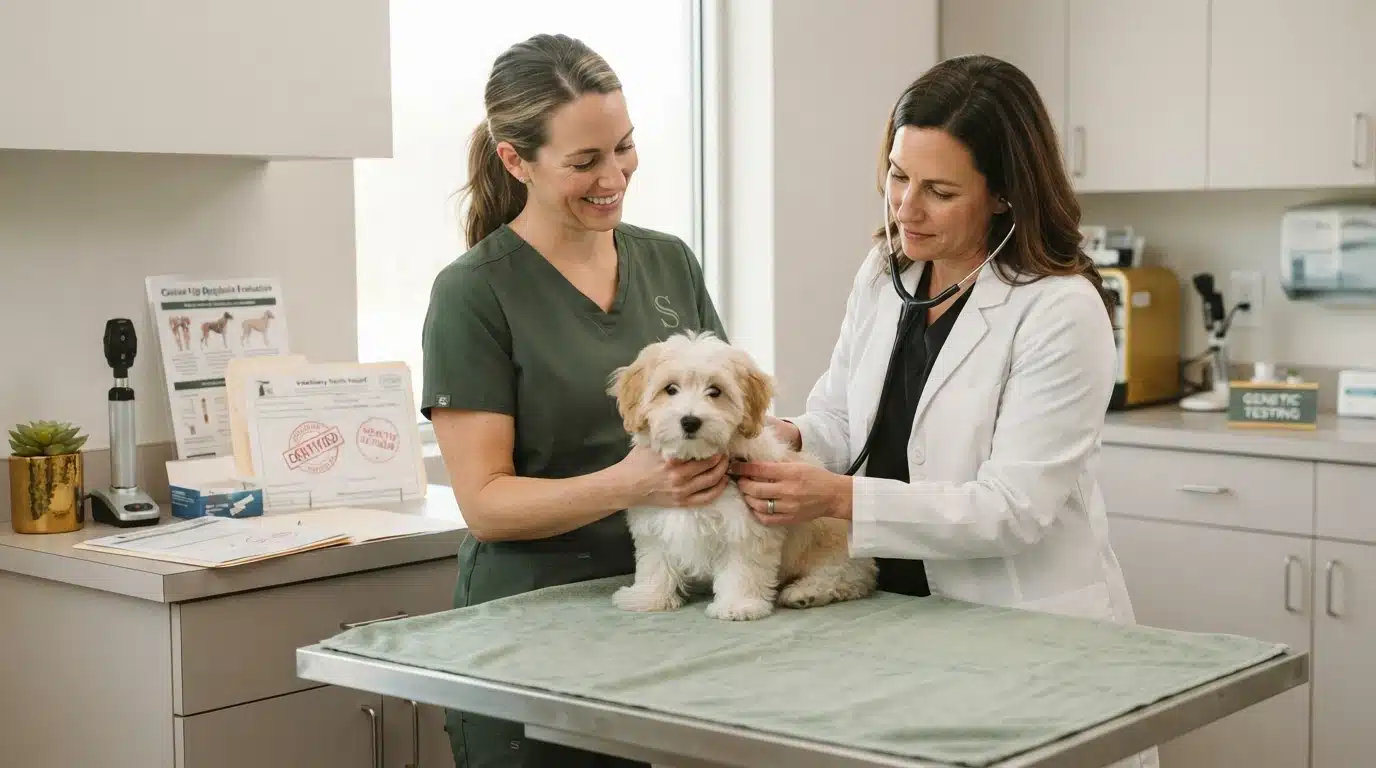
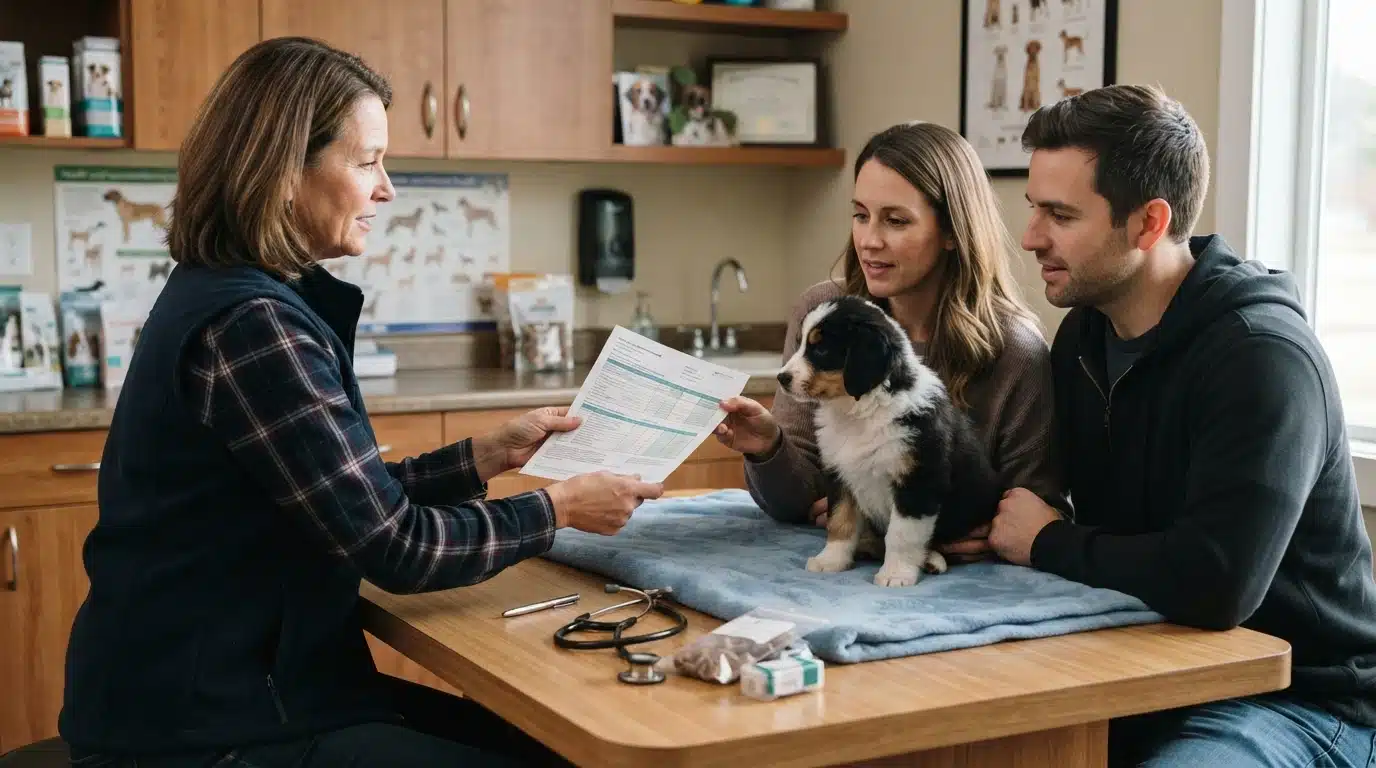
This is the paper your vet reads first. It lists vaccine dates, deworming doses, weights, and any exam notes. Ask for it, then have your own veterinarian review it after pickup. It proves good early care, but it cannot predict inherited disease. When you compare health tested puppies near me, treat this record as the floor, not the ceiling.
Layer Two: Parent Clinical Screening
Adult screening happens before breeding. For Havanese lines, the Havanese Club of America lists three required tests for a CHIC number, per its 2025 statement:
- OFA hip evaluation, or a PennHIP exam
- OFA patella (kneecap) certification
- An eye exam by a veterinary ophthalmologist
Patellas and hips are done at mature ages, and the eye exam repeats annually. Ask for certificates with the parents’ registered names, then confirm them in OFA’s searchable database.
Layer Three: DNA Variant Results
DNA panels identify whether a dog is clear, a carrier, or affected for specific gene variants. A carrier is healthy but carries one copy, so pairings matter. These results never replace orthopedic or eye exams.
What a CHIC Number Does and Does Not Prove
A CHIC number, issued through the OFA’s CHIC program, confirms the required tests were completed and posted. It does not guarantee passing scores on every one, so read each result, not just the number. Our own health testing records page walks through reading them line by line.
Step 3: Verify Parent Records in Third-Party Databases
A paper certificate proves little on its own. The real check happens in the registry’s own database, where anyone can look up a dog without asking the breeder for anything.
Run the OFA Record Search Yourself
The Orthopedic Foundation for Animals keeps a searchable public database, so you never need to trust a screenshot. Use the OFA’s Advanced Search page and enter the registered name or number of each parent. Start broad: search by kennel name to pull up every dog the breeder has tested. If a parent’s hip, patella, cardiac, or eye results are listed, the record shows the test, the age at testing, and the result. Print or screenshot what you find.

Read an OFA Certification Number Correctly
An OFA number encodes the test and result, so learn the pattern before you trust it. Verify the number this way:
- Go to the OFA search page.
- Type the full certification number, such as HV-1234E25F-P, into the search field.
- Confirm the returned dog matches the parent’s registered name.
- Check that the result letter and the breed prefix match what the breeder claimed.
A CHIC number works differently. Per the OFA’s CHIC program, it is issued once a dog meets its breed’s required tests, but it does not promise passing results, only that testing was completed.
Confirm DNA Reports With the Laboratory
DNA panels for Havanese, Havapoo, and Cavapoo parents should come from an accredited lab, not a home swab emailed as a photo. Labs such as UC Davis forward results to the OFA database, per UC Davis VGL. Match the dog’s name and ID on the report to the database entry, and read clear versus carrier designations carefully.
When a Record Is Missing, Private, or Hard to Find
Sometimes nothing appears. Owners can withhold results, so a blank search is not proof of a failed test, but it is a fair question to ask. Ask for the registration number and the lab name, then search again yourself. Breeders who document openly make this easy; some, like Sage Puppies, walk buyers through the lookup step by step, and our guide to health-tested puppy parents covers the questions worth asking before you search.
Step 4: Review the Puppy’s Own Care Documents
Before you pay a deposit, ask for this checklist in writing: vaccination and deworming records, a signed vet exam note, the parent health screening results, any DNA panel reports, and a dated purchase or health agreement. These documents prove the puppy in front of you was actually cared for, not just bred.
Request These Documents in Writing
Email beats memory. Ask the breeder to send the puppy’s vaccination and deworming schedule, the veterinary exam record, and any parent test results as files you can save. A short written request sets a paper trail and filters out sellers who never had real records to begin with.
Check the Records for Internal Consistency
Now read closely. Puppy shots follow a set schedule, so the dates should line up with the puppy’s stated birth date and each vaccine should come with a clinic or veterinarian name. Deworming entries usually appear several times in the first eight weeks. Gaps, out-of-order dates, or the same hand-drawn stamps for every litter are warning signs.
Schedule an Independent Veterinary Review
Plan a vet visit within a few days of pickup, before the puppy fully settles in. Most breeders allow 48 to 72 hours for this check, so confirm the window in your contract. Your own veterinarian can weigh the puppy, check the heart and patellas, and confirm the vaccine record matches clinic standards. Sage Puppies builds this review period into its paperwork, which is a fair question to ask any program you consider.
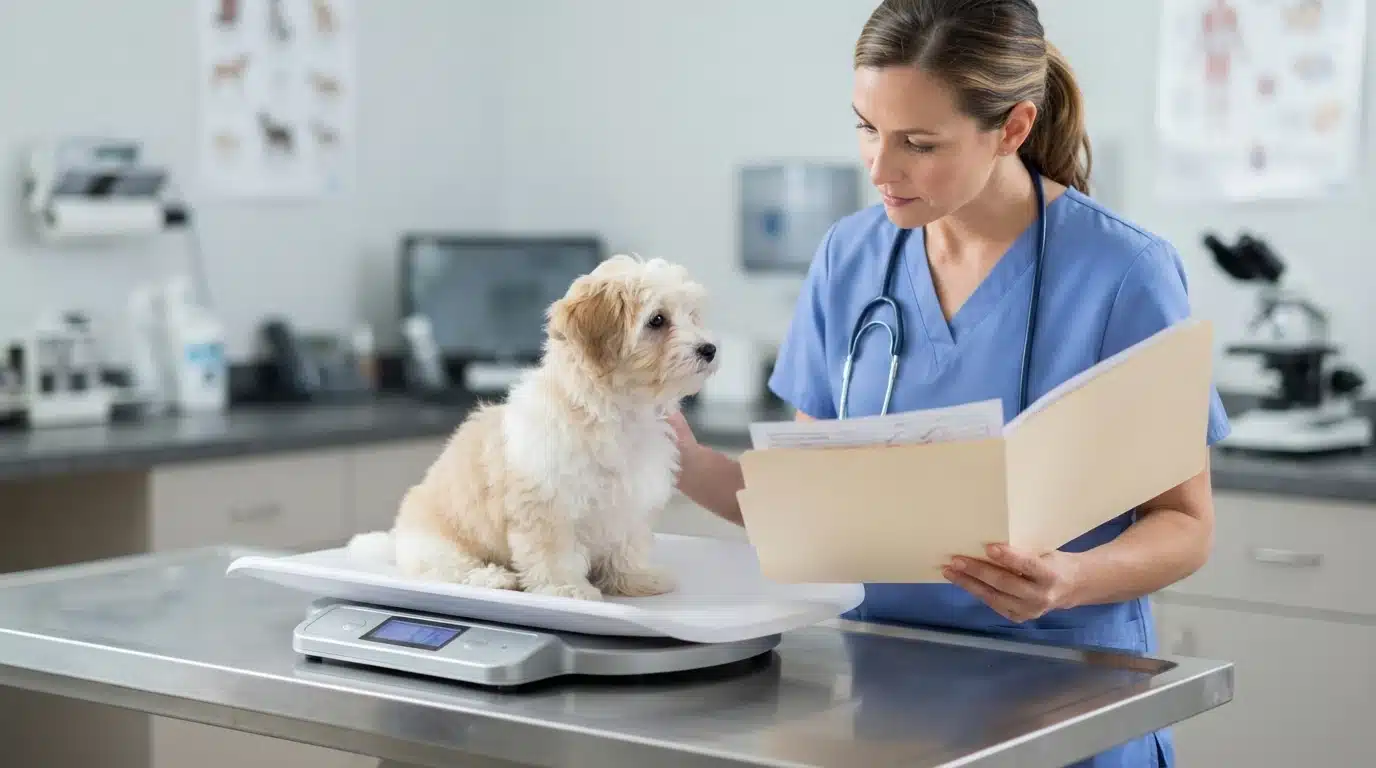
Paperwork That Should Travel With the Puppy
On pickup day, collect the printed vaccine and deworming record, feeding instructions, any signed contract, and the parent screening results if they were not sent earlier. Keep digital copies too. If paperwork is missing at handoff, wait for it before the puppy leaves, and put that in writing.
Step 5: Check the Breeder, Contract, and Sale Process
Health papers only matter if the sale behind them is honest. Before you pay anything, read the paperwork, understand the deposit terms, and confirm who is actually selling you the puppy.
Read the Contract Before You Discuss a Deposit
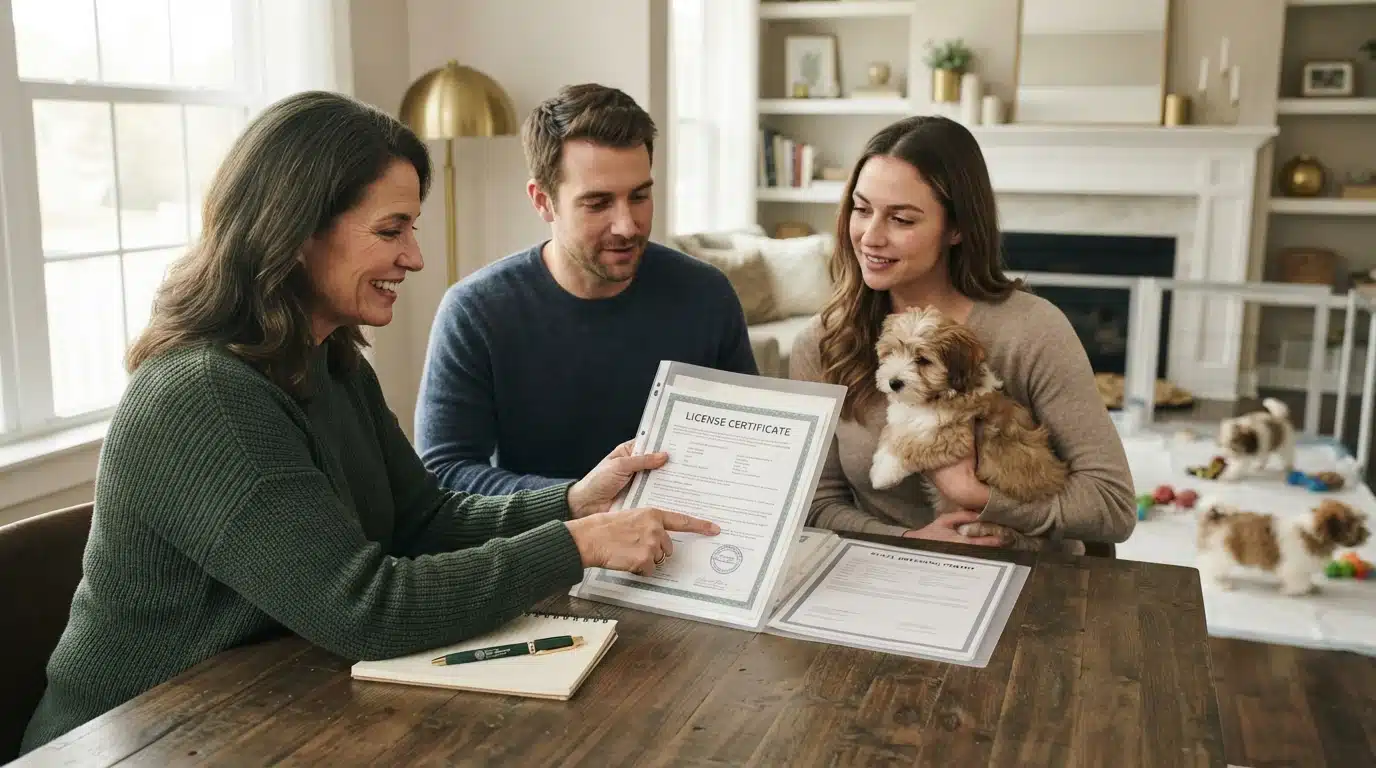
Ask for the full contract as a document you can read at home, not a paragraph to skim during a call. A solid agreement lists the puppy’s identification, the health exam window, vaccination and deworming records provided, and what happens if a problem appears. Ask about the take-back policy too. A breeder committed to their dogs will take a puppy back at any age. If someone writes a contract for a Utah puppy purchase, the payment schedule and health terms should be in writing, never verbal.
Understand Deposits, Refunds, and Take-Back Terms
Deposits should buy you a position in a litter or a specific puppy, and the contract should say whether the deposit is refundable, transferable, or applied to the balance. Get the total price in writing, including any delivery fee. Some programs offer a short health exam period after pickup, often 48 to 72 hours, so confirm your deadline and what documentation your vet visit requires.
Look for Red Flags in How the Sale Is Run
What are the warning signs of a puppy scam or an unverified breeder?
- Pressure to pay by gift card, wire, or payment app
- Requests for extra crate, shipping, or “insurance” fees after deposit
- Refusal to video chat, visit, or show the puppy’s mother
- No written contract or no veterinary records
- Photos that match other websites’ listings
- Puppies “always available” at odd hours with no waitlist
Any two of these together usually mean walk away.
Confirm the People Behind the Program
Verify the breeder’s name, location, and club memberships independently. A real program has references from past families, a consistent phone number, and a named person accountable for the sale. Ask to speak with one or two previous buyers. Owners who stand behind their dogs answer these questions easily, and they will not mind that you asked.
Step 6: Make the Decision With a Written Plan
At this point you have verified the registries, read the records, and confirmed the parents’ screening. Now turn all of it into a short written plan so your final choice rests on documents, not on a cute photo.
Build a Total Cost Worksheet With Assumptions Labeled
List every cost in one sheet: purchase price, travel or delivery, the first vet exam, vaccines, food, crate, and grooming. Mark each number as confirmed or estimated, and total it before you commit. Budgets work best when the assumptions are visible, so label anything you guessed. Sage Puppies publishes its prices on its pricing and reservation page, which makes the biggest line easy to confirm in advance.
Set Written Go and No-Go Criteria Before You Pay
Decide what would stop the purchase before emotions get involved. No-go items include a parent with no verifiable OFA or CHIC record, missing DNA results, or a request for unusual crate and shipping fees. A go decision means every record you searched matches the contract, the exam window is in writing, and references checked out. Score each puppy against your list.
Plan the First Thirty Days After Go-Home
The plan should cover the transition, not just the payment. Schedule a vet visit inside your contract’s exam period, often 48 to 72 hours, and confirm what documentation your vet must provide. Then set up feeding, a crate routine, potty breaks, and your first grooming appointment. Small steps written down ahead of time prevent most first-month stress.
Questions to Ask Sage Puppies Specifically
Bring a short list. Ask which parent health screenings apply to your litter, how vaccination and deworming records are documented, what the take-back policy says, and what support continues after go-home. A breeder who answers with documents is showing you how they work.

Ready to meet a puppy whose records you can check yourself? Sage Puppies shares each parent’s health testing openly and walks you through the paperwork before you commit. Visit Sage Puppies to start the application, ask your verification questions, and bring home a Havanese, Havapoo, or Cavapoo with confidence.
Frequently Asked Questions
Q1: How do I find health-tested puppies available locally?
Start with breed club directories and the OFA breeder search, then screen every local listing against public records. Ask for each parent’s OFA or CHIC number and verify it yourself before reserving.
Q2: What does a CHIC number actually prove?
Only that the breed’s required tests were completed and posted. It does not guarantee passing scores, so read each individual result.
Q3: Can a puppy pass a vet exam but still carry genetic disease?
Yes. A puppy exam covers vaccinations and current health only. Inherited risk shows up in parent screenings and DNA panels.
Q4: What if a parent’s records don’t appear in the OFA database?
Ask for the registration number and lab name, then search again. Owners can withhold results, but an unexplained gap deserves a straight answer.
Q5: When should my vet see the new puppy?
Within your contract’s exam window, usually 48 to 72 hours after pickup. Confirm the deadline in writing first.
Q6: What DNA results matter for Havapoo and Cavapoo parents?
Look for clear or carrier designations from an accredited lab, ideally one that forwards results to OFA, then ask how the pairing avoids affected puppies.
Conclusion
Verifying a local puppy’s health test results comes down to three layers: the puppy’s own exam and care records, the parents’ clinical screenings, and DNA panel results. Each answers a different question, so check all three. Run the OFA lookup yourself, confirm CHIC requirements for Havanese lines, and read clear versus carrier designations from an accredited lab. Then turn everything into a written go or no-go list before money moves. If a parent’s records can’t be found, a contract is verbal, or odd fees appear after a deposit, walk away. Searching for health-tested puppies near me should end with documents in your hand, not promises on a screen. A breeder who welcomes the verification sequence is telling you something good.